🚀 Inspiration
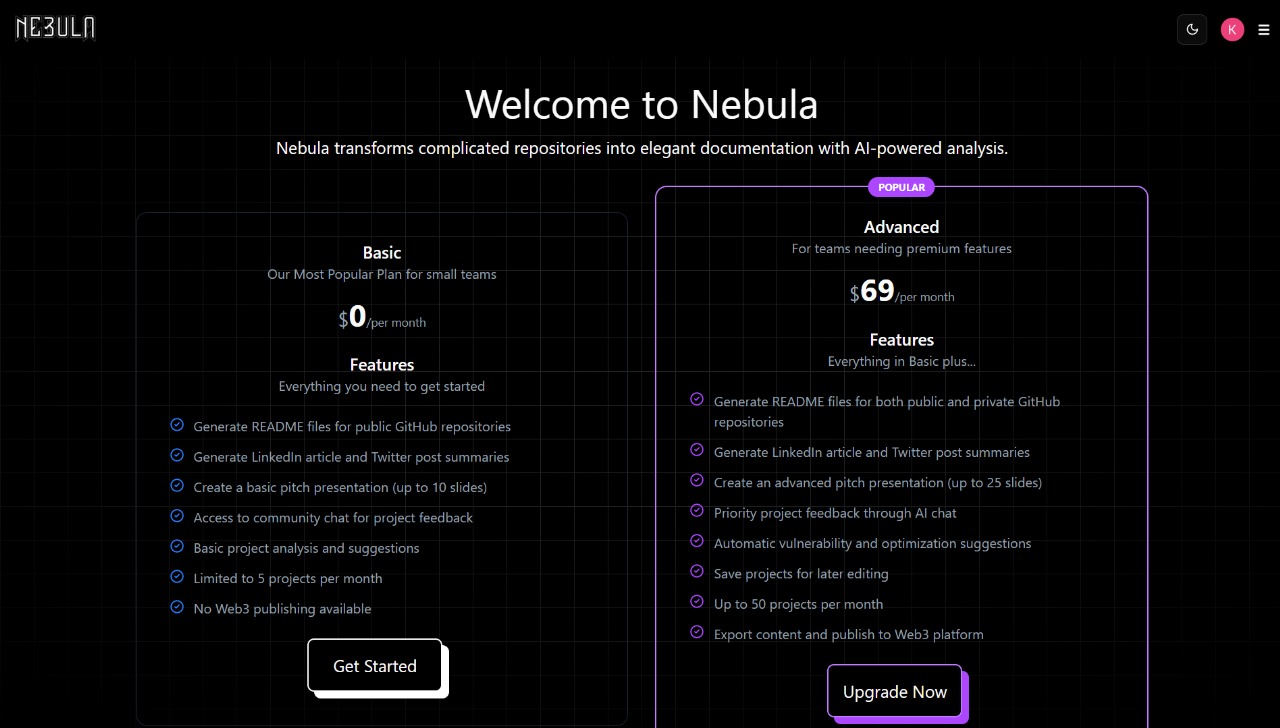
In the labyrinth of GitHub repositories, countless projects remain misunderstood or overlooked—not because of poor code, but due to poor context. We noticed that even the most brilliant developers often fail to document their work in a way that makes it accessible, monetizable, or engaging. Copilot-like tools generate code, but they don’t capture the story behind that code. This inspired us to build Nebula—an AI-powered, decentralized platform that gives voice to your repositories and lets your code speak volumes.
🧠 What it does
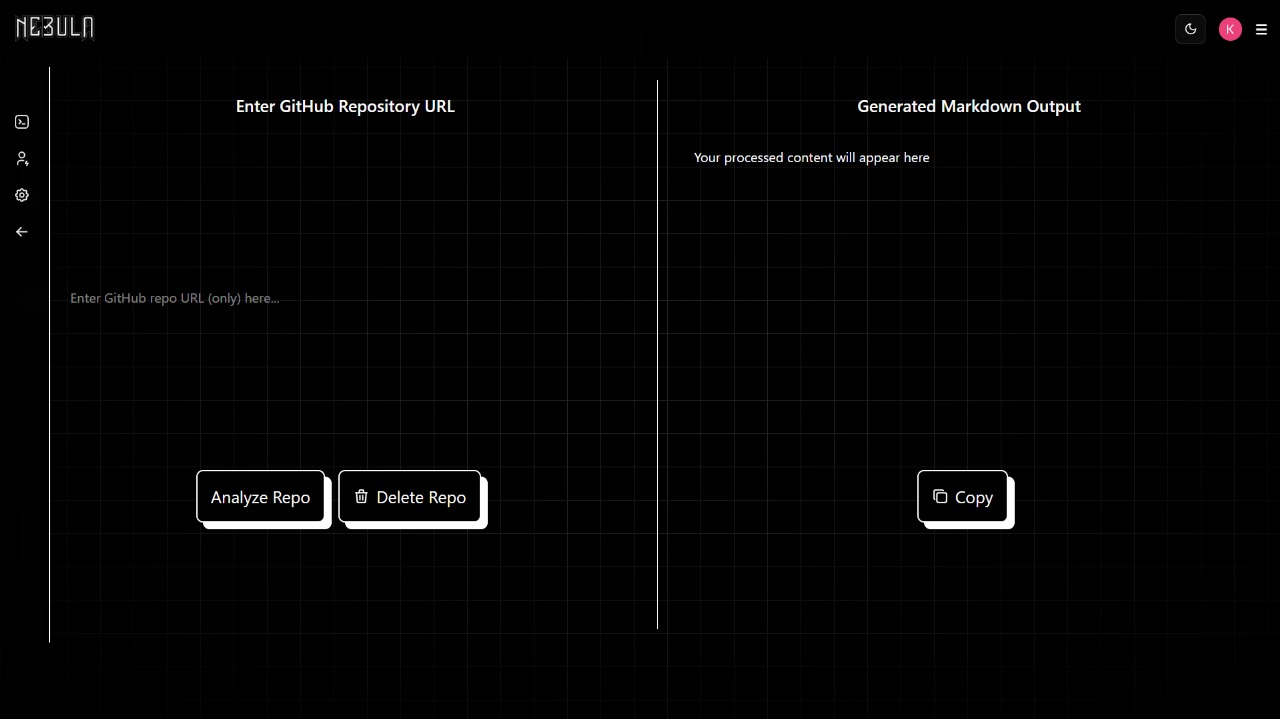
Nebula is an all-in-one platform that:
- Ingests a public GitHub repository
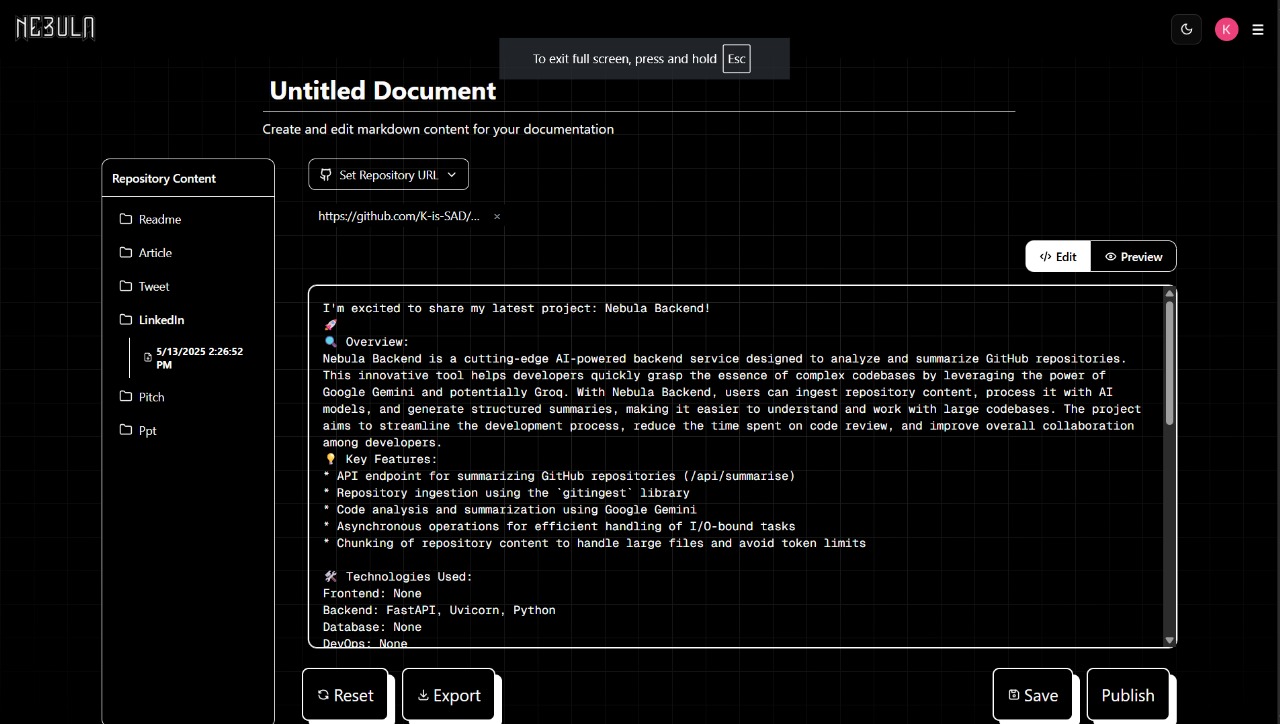
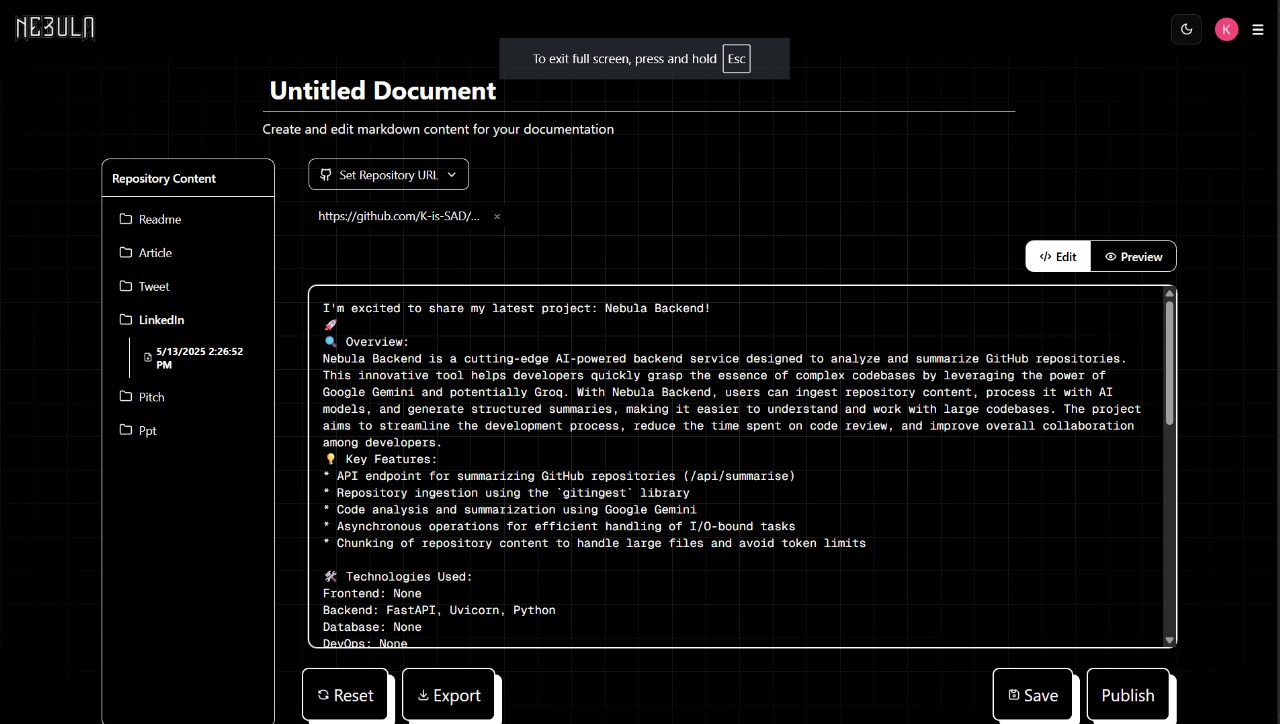
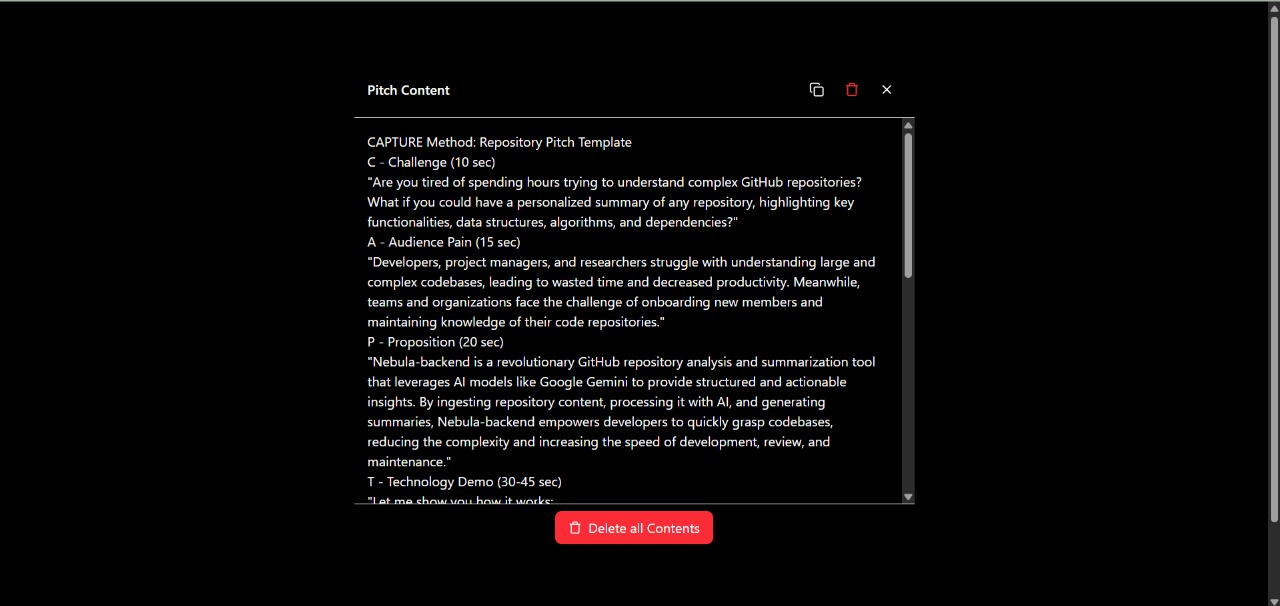
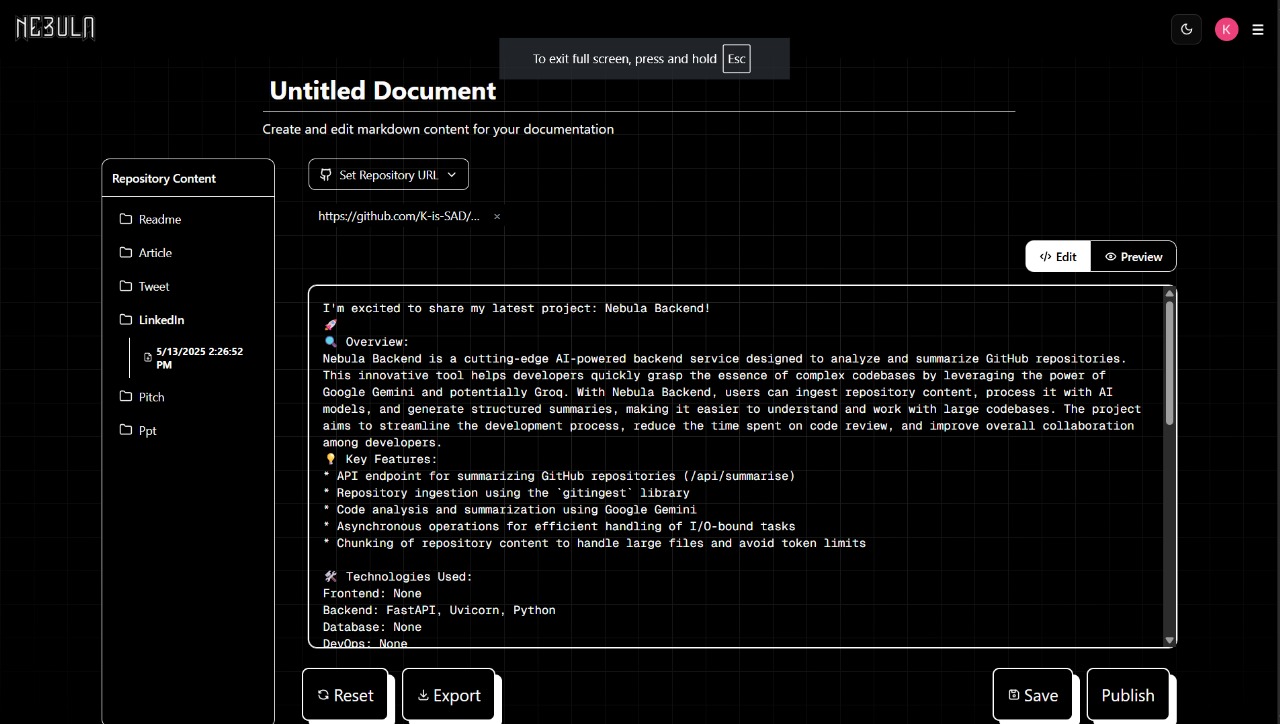
- Generates detailed README files, LinkedIn articles, tweet threads, and pitch decks
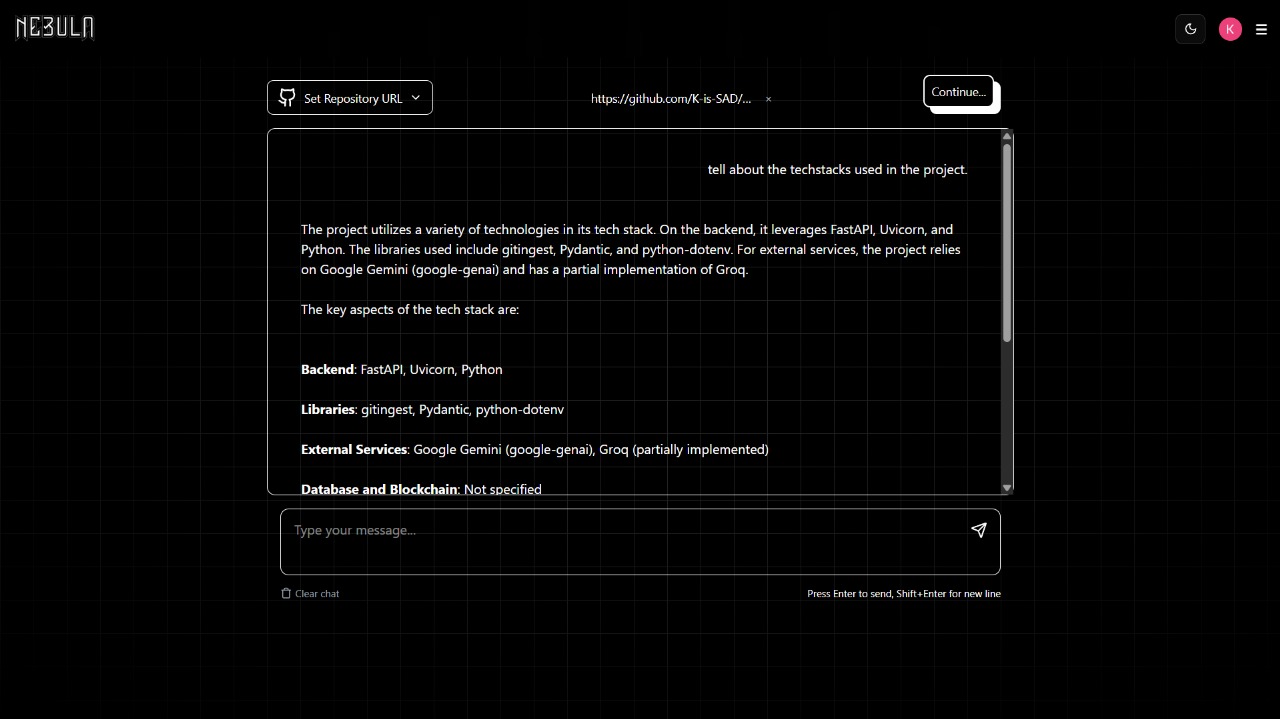
- Powers a contextual AI chatbot that knows your code inside out
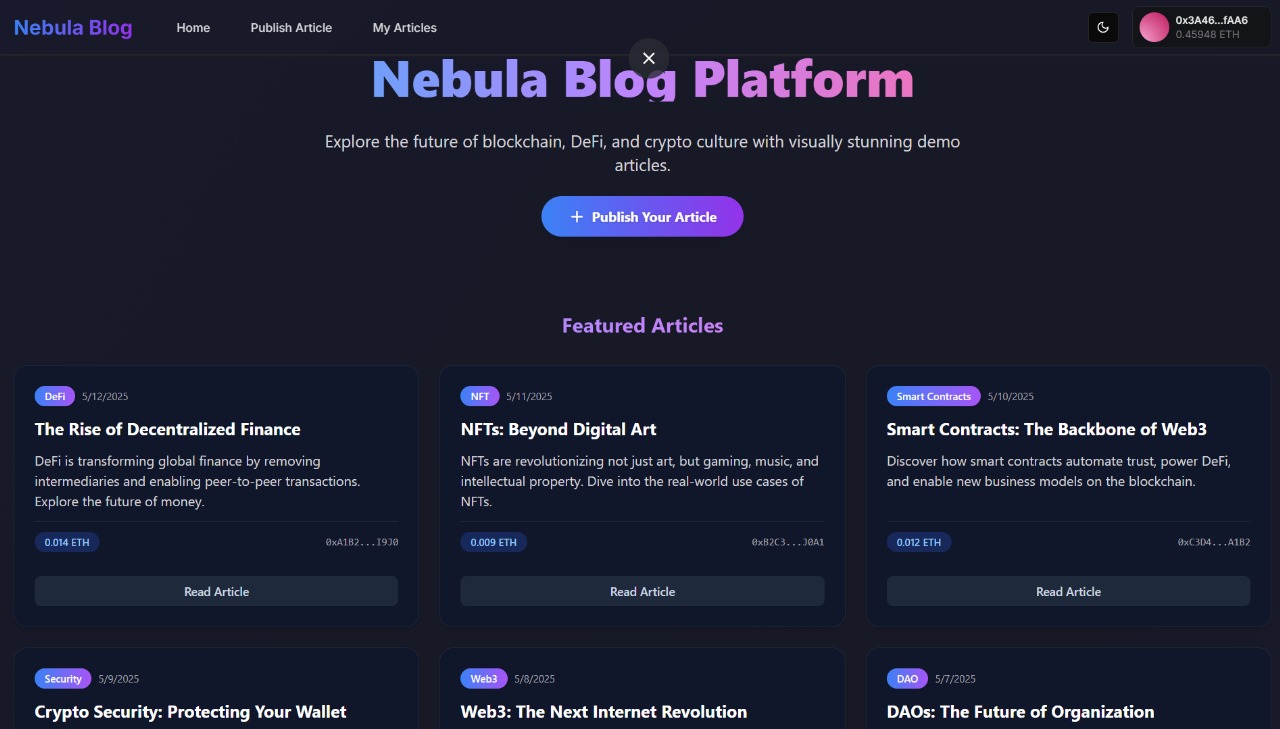
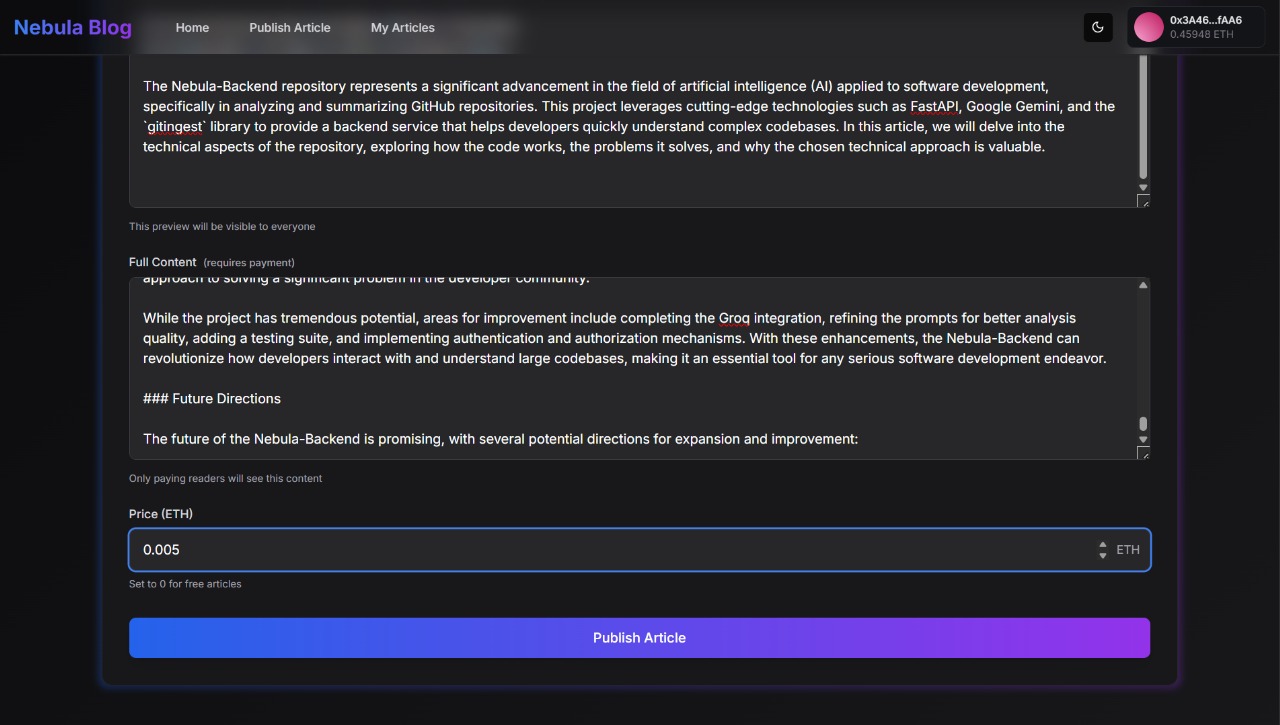
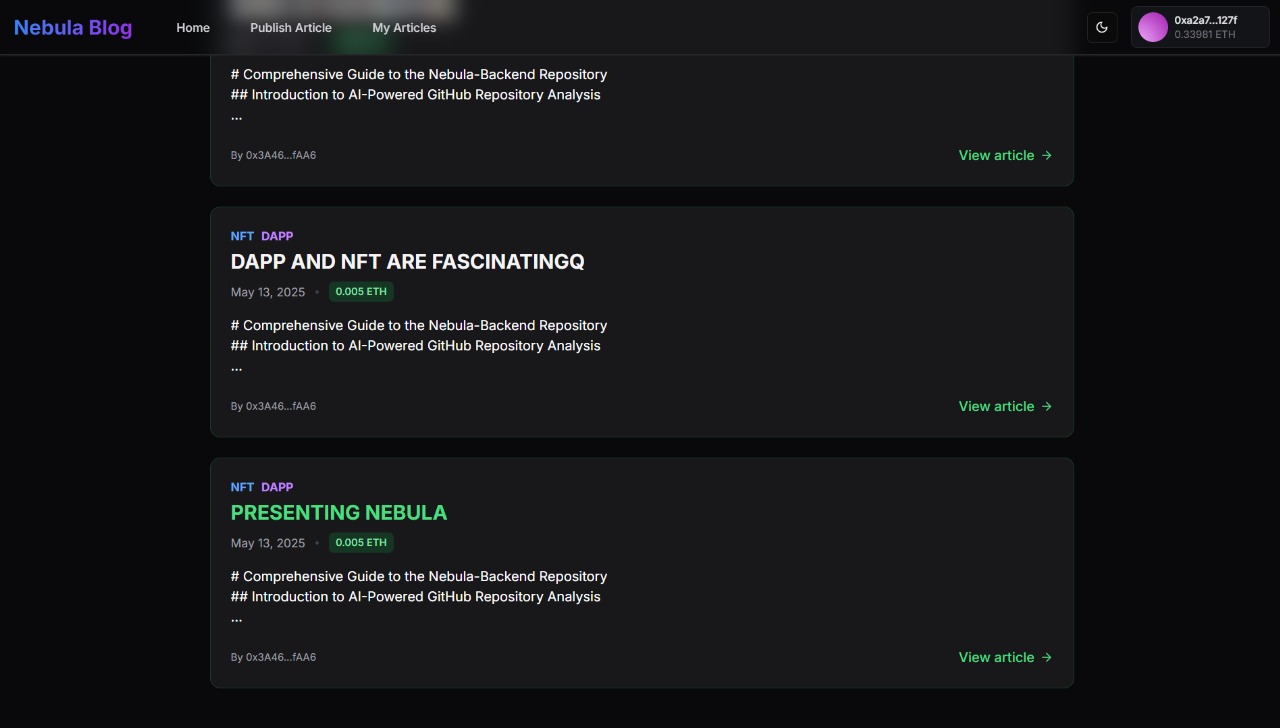
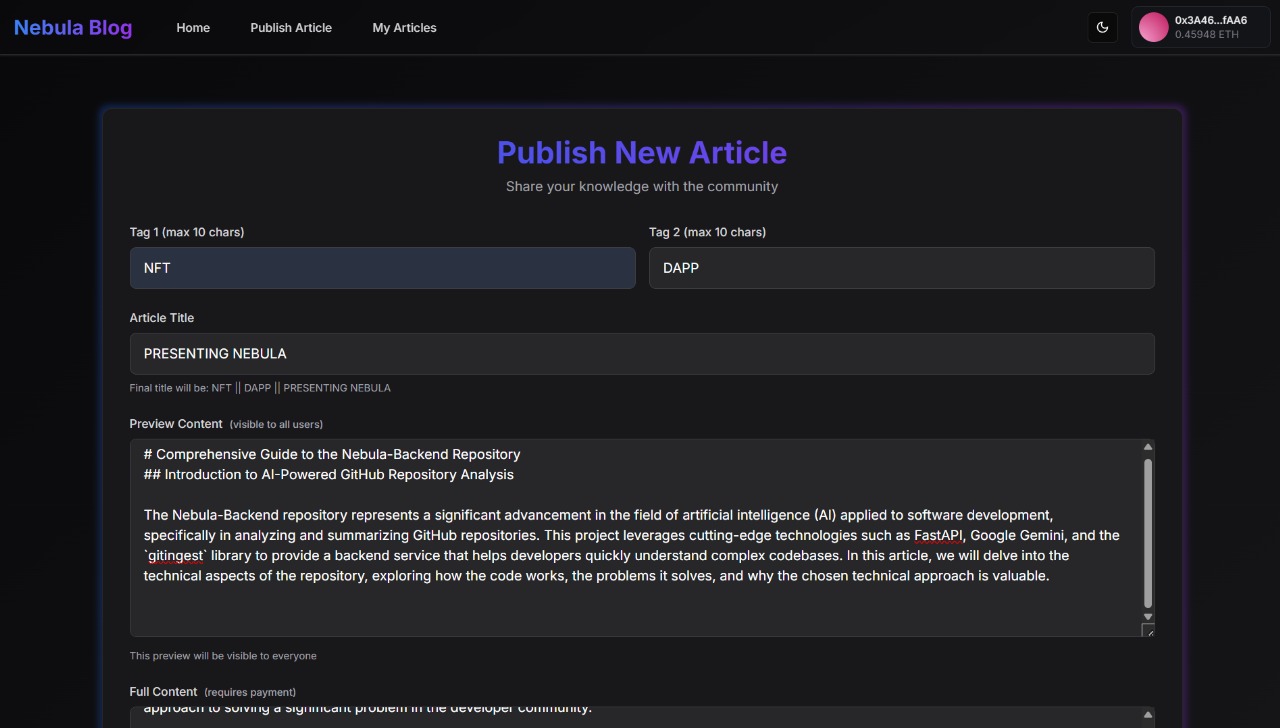
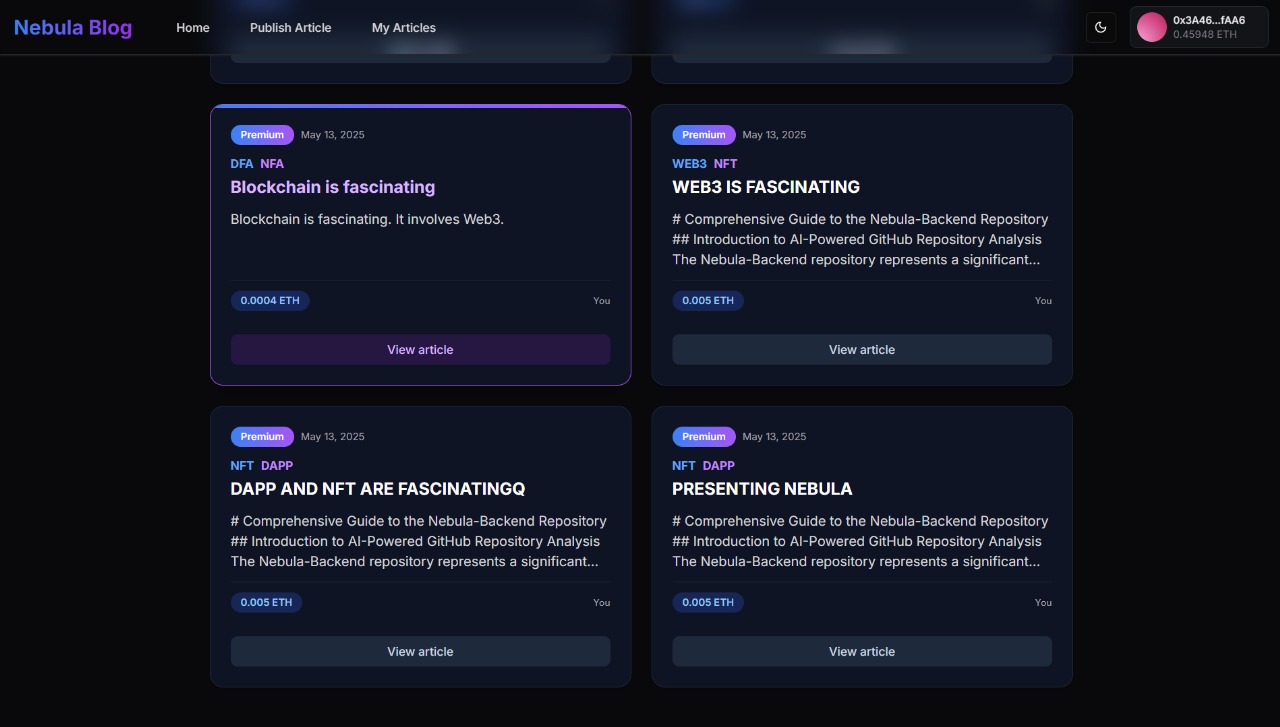
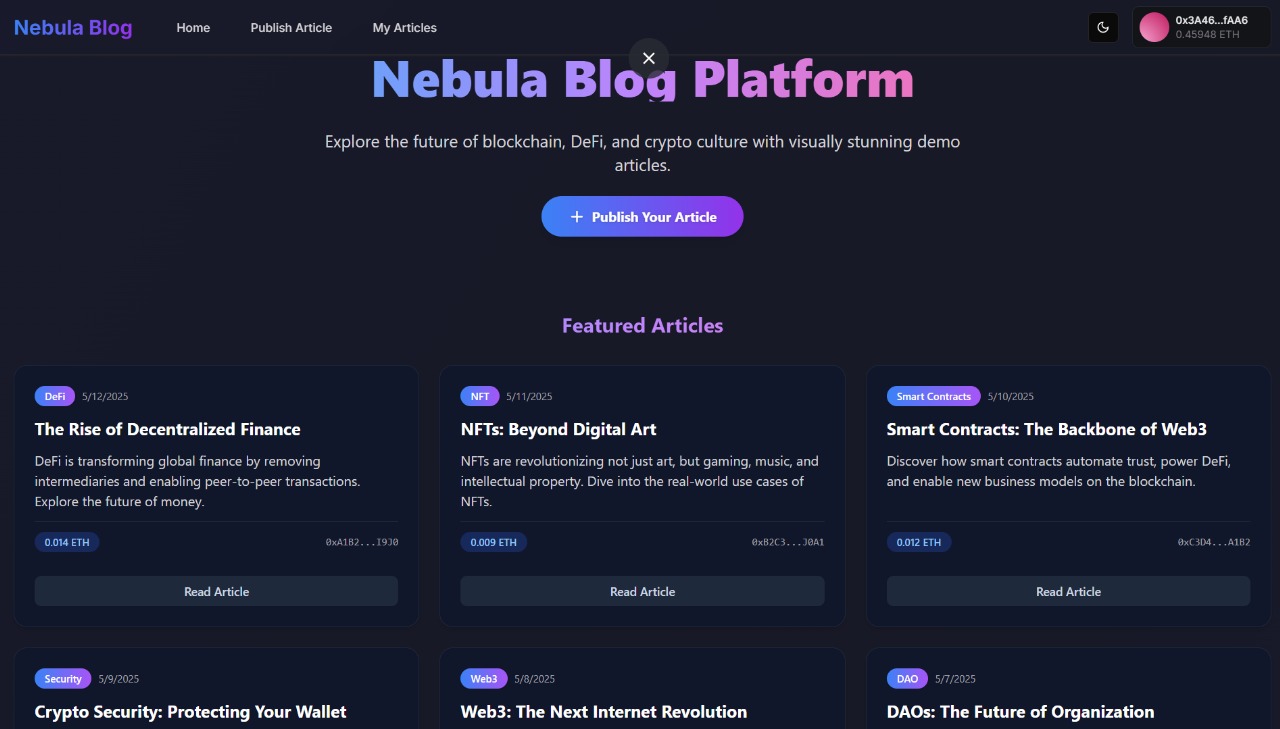
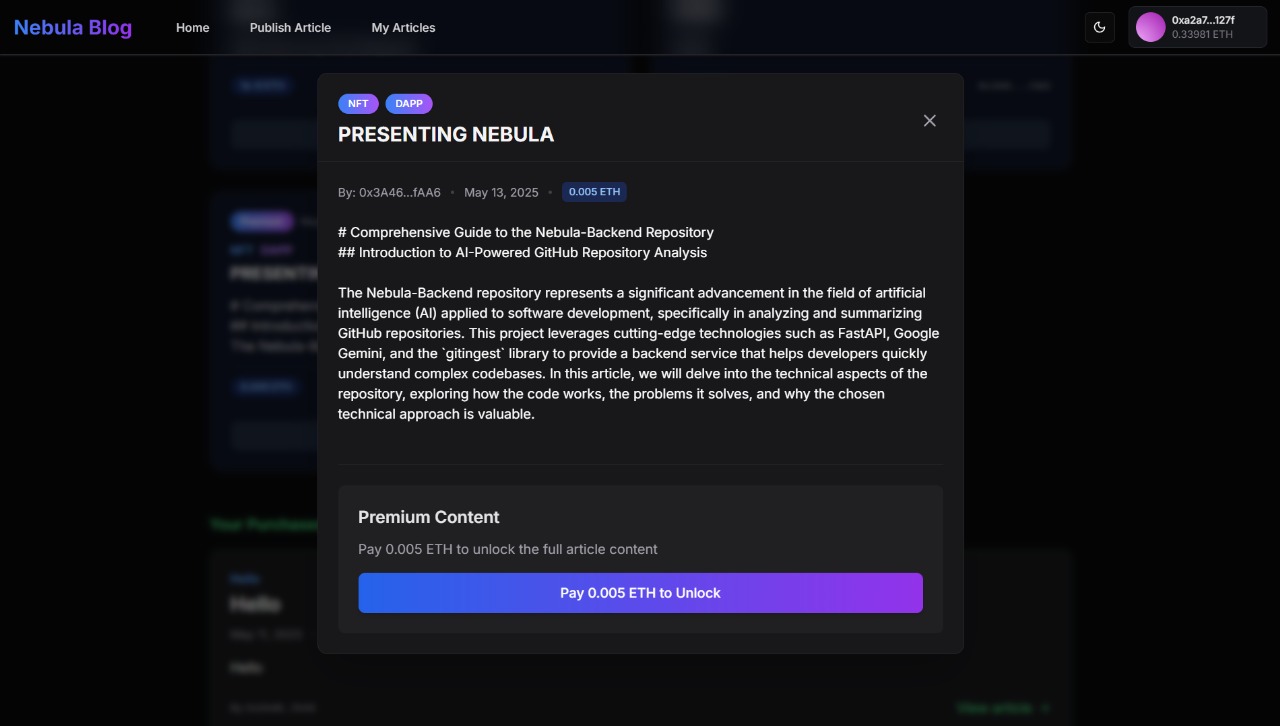
- Allows decentralized publishing and monetization of your technical content
We believe every repository has a story, and Nebula makes sure everyone understands it.
🛠️ How we built it
Our architecture was carefully designed to combine fast performance with powerful AI and seamless Web3 integration:
🧩 Backend (FastAPI + Python)
We used FastAPI to handle the backend logic for:
- GitHub repository ingestion
- Generating file-level summaries
- Creating vector embeddings for semantic search
This backend used Gemini to generate accurate, structured summaries and extract architectural understanding from codebases.
🧠 AI Generation Engine
For all multi-format content creation—like READMEs, LinkedIn articles, tweets, and pitch decks—we used LLaMA 70B models via Grok. These models helped us generate content that is not just technically correct, but also narrative-rich, SEO-friendly, and adapted for specific platforms.
💬 AI Chatbot
Our chatbot leverages vector embeddings to provide deep, context-aware answers. It remembers previous queries, follows conversational threads, and guides users through their own codebases—offering suggestions, documentation insights, and architecture explanations.
🌐 Frontend (Next.js)
The frontend was built using Next.js, enabling users to:
- Upload GitHub links
- Preview and export generated content
- Chat with the AI about their repository
- Publish and monetize their technical content
🔐 Web3 Integration
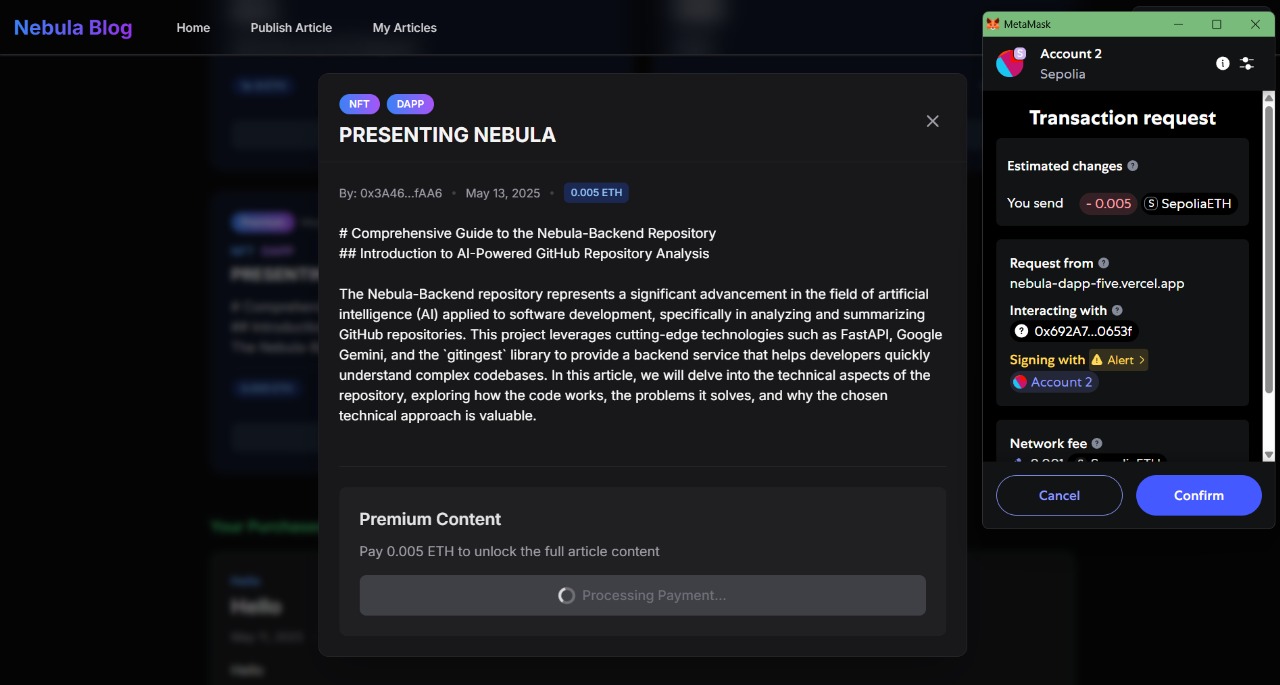
We wanted developers to not just generate content, but to own it and earn from it. For this, we built a full Web3 stack:
- ThirdWeb for smart contract deployment
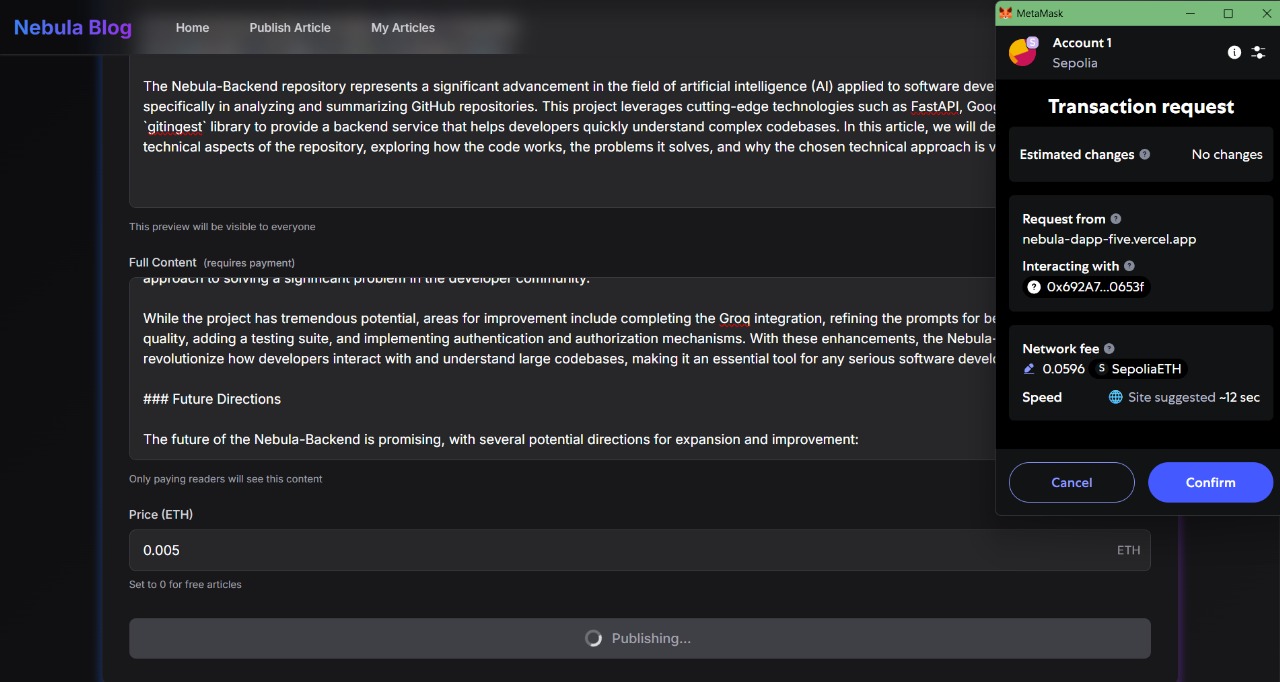
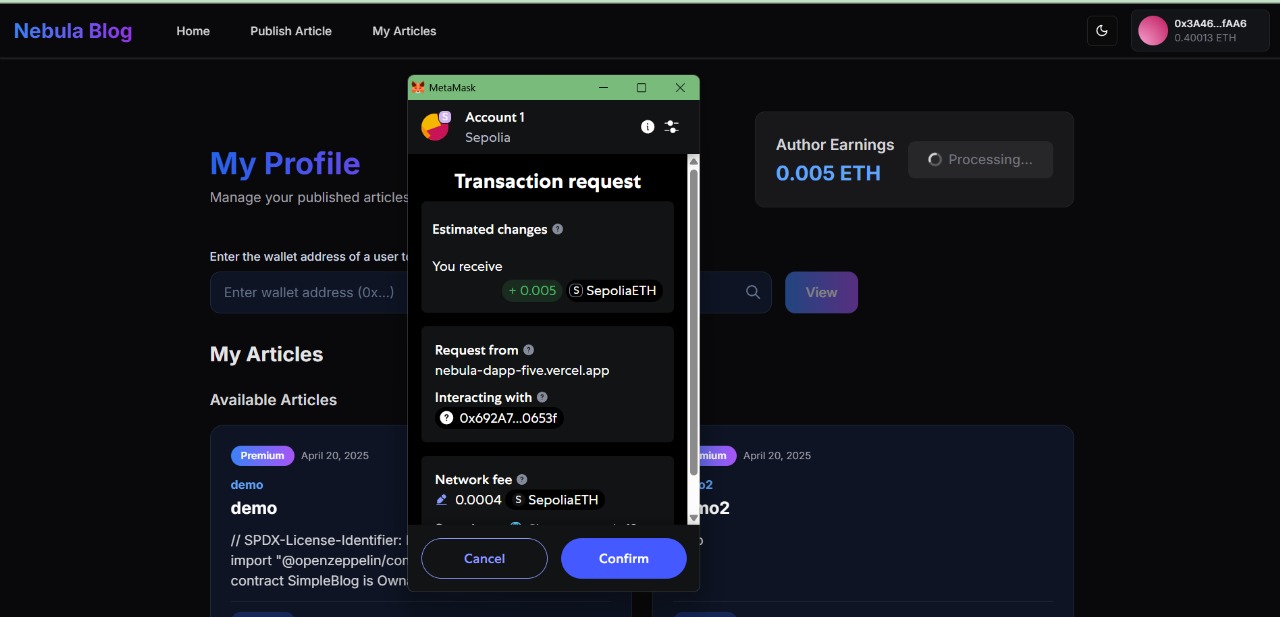
- MetaMask for wallet-based authentication and transactions
- Sepolia testnet to simulate live Ethereum environments for content publishing
This allowed users to publish their generated articles and presentations as on-chain assets, setting prices and enabling paid access.
💰 Web2 Payments
For users who preferred traditional monetization, we integrated Lemon Squeezy, which made it easy to:
- Sell generated content
- Collect payments via credit cards or PayPal
- Offer free or paid access tiers
This hybrid Web2 + Web3 model ensured accessibility for all users.
🧠 Vector Store + MongoDB
- We used a vector store to efficiently retrieve the most relevant code chunks during Q&A or summarization.
- MongoDB stored metadata, user sessions, embeddings, and all generated assets.
⚠️ Challenges we ran into
- Embedding context complexity: Generating accurate vector representations for large monorepos took careful memory optimization and design tuning.
- Multimodal generation: We had to deeply engineer prompts and parsing logic to get structured outputs (e.g., for decks, threads, blogs) from LLaMA 70B.
- Web3 user onboarding: Getting non-crypto users to smoothly use MetaMask and understand contract interactions was a UX challenge.
- Latency across AI layers: Balancing between Gemini-based summaries and Grok’s LLaMA 70B outputs required queuing, caching, and rate-limiting optimizations.
🏆 Accomplishments that we're proud of
- A real-time, context-aware chatbot that truly understands your code.
- Generated full-stack content across multiple formats and platforms.
- Let users publish code summaries as Web3 assets, creating the world’s first GitHub-to-blockchain publishing pipeline.
- Integrated Web2 payments alongside decentralized alternatives for broader usability.
📚 What we learned
- AI can generate powerful content, but great results come from smart orchestration—embedding, summarization, and generation must all align.
- Developers don’t just need assistance—they need a platform that respects their work, provides visibility, and enables ownership.
- Web3 isn't just for DeFi—it can revolutionize technical publishing and monetization when used correctly.
- Simplicity in UX is critical when introducing Web3 tools to developers who live in traditional environments.
🔮 What's next for NEBULA
- Private repo support with GitHub OAuth and encrypted vector stores.
- Code-level audits and security suggestions based on open vulnerabilities and misconfigurations.
- Developer reputation system tied to published assets.
- Browser plugin for GitHub that lets users instantly launch Nebula on any repository they browse.
- Multi-language repository support, enabling translation and generation in different natural languages and programming stacks.
👨💻 Tech Stack Overview
| Layer | Tool/Tech |
|---|---|
| Frontend | Next.js, Tailwind |
| AI Gen | LLaMA 70B via Grok |
| Summarization | Gemini |
| Python API | FastAPI |
| JS API | Node.js + Express |
| Storage | MongoDB + Vector Store |
| Web3 | ThirdWeb, MetaMask, Sepolia |
| Payments | Lemon Squeezy (Web2) |
💡 Closing Thoughts
Nebula is more than a tool—it’s a movement toward making code understandable, shareable, and valuable. With its unique blend of powerful AI, developer-centric design, and monetization tools, Nebula is poised to change how developers communicate their ideas and earn recognition for their work.
✨ Your code tells a story. Nebula makes sure the world listens—and pays attention.
Built With
- asternity
- clerk
- express.js
- fastapi
- gemini
- genai
- lemon-squeezy
- llama-70b-(grok-api)
- metamask
- mongodb
- next.js
- sepolia-testnet
- shadcn
- tailwind-css
- thirdweb
- web-sockets
- web3


Log in or sign up for Devpost to join the conversation.