-
-
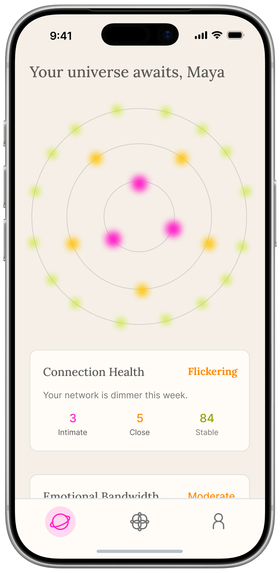
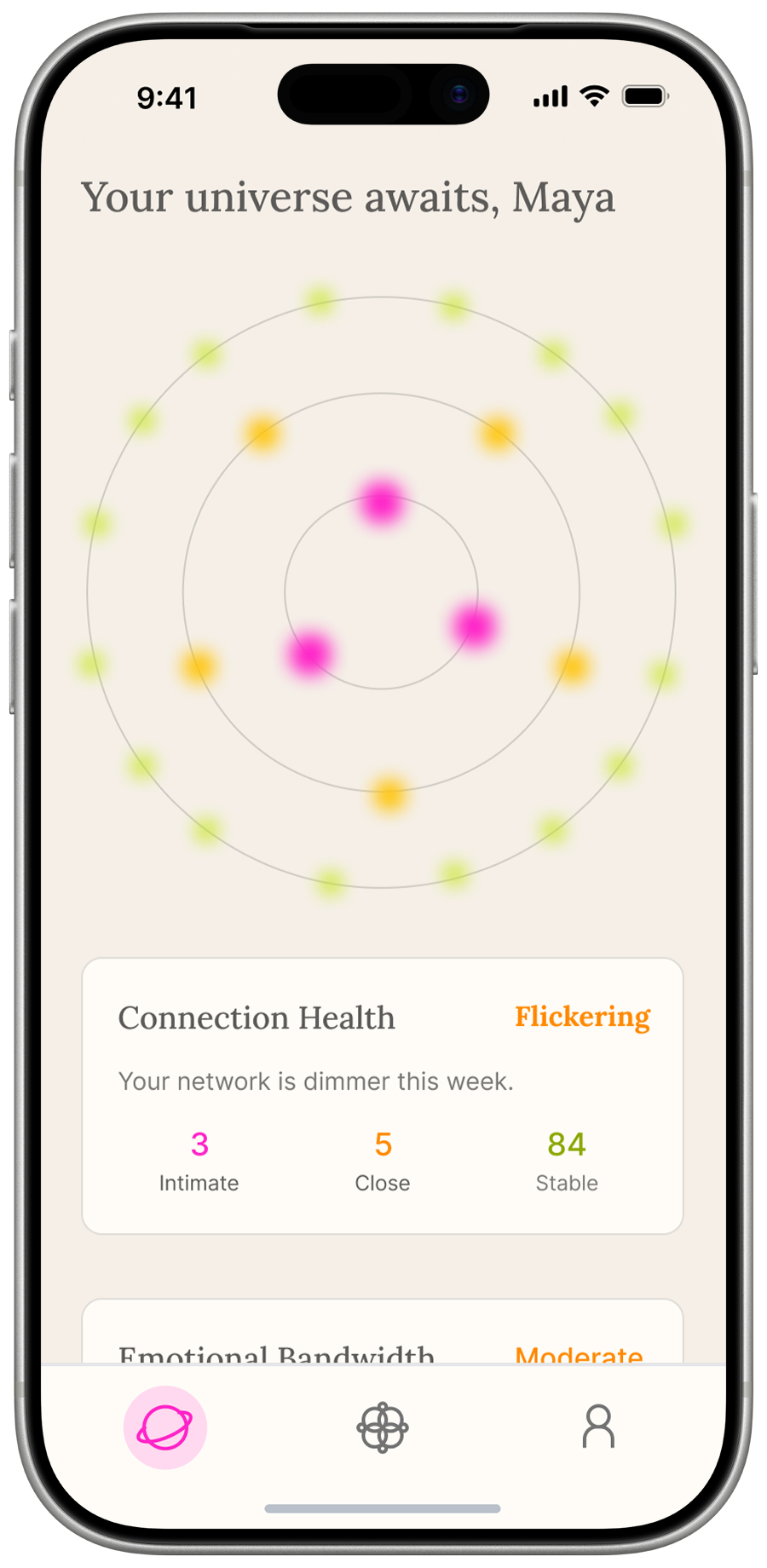
Personal Universe_Part 1
-
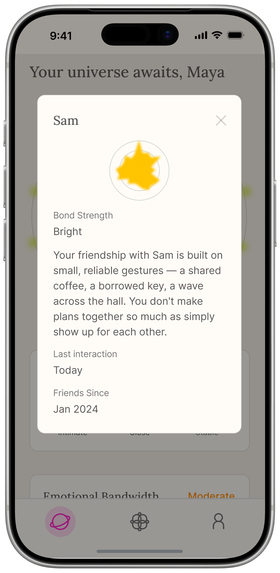
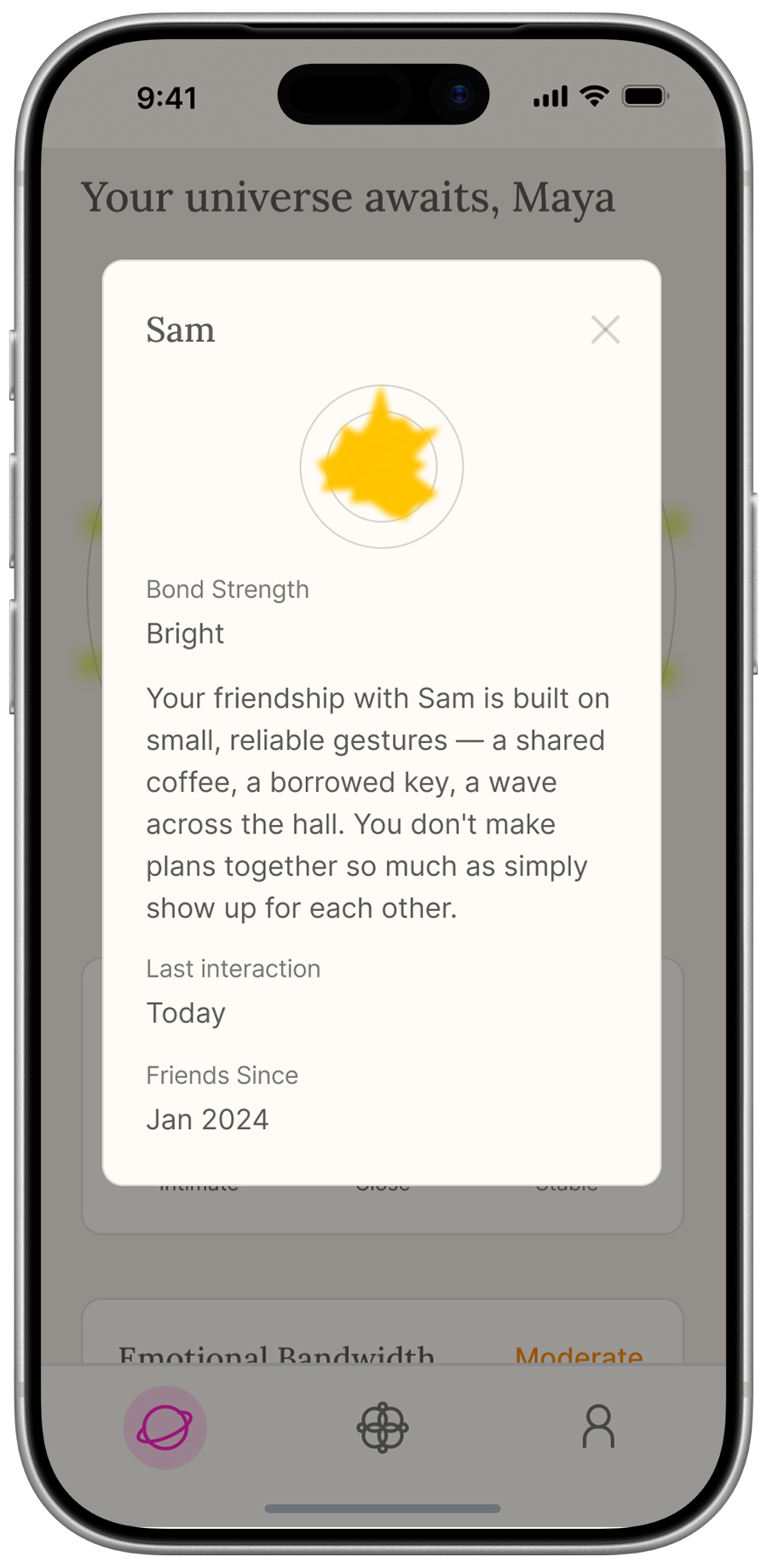
Personal Universe_Single Connection Detail Modal
-
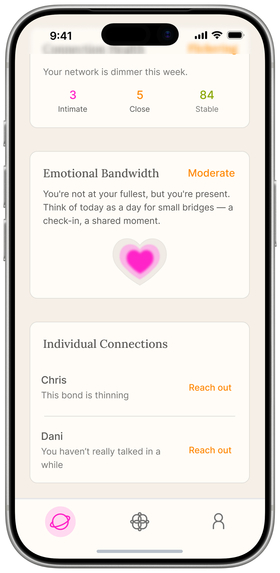
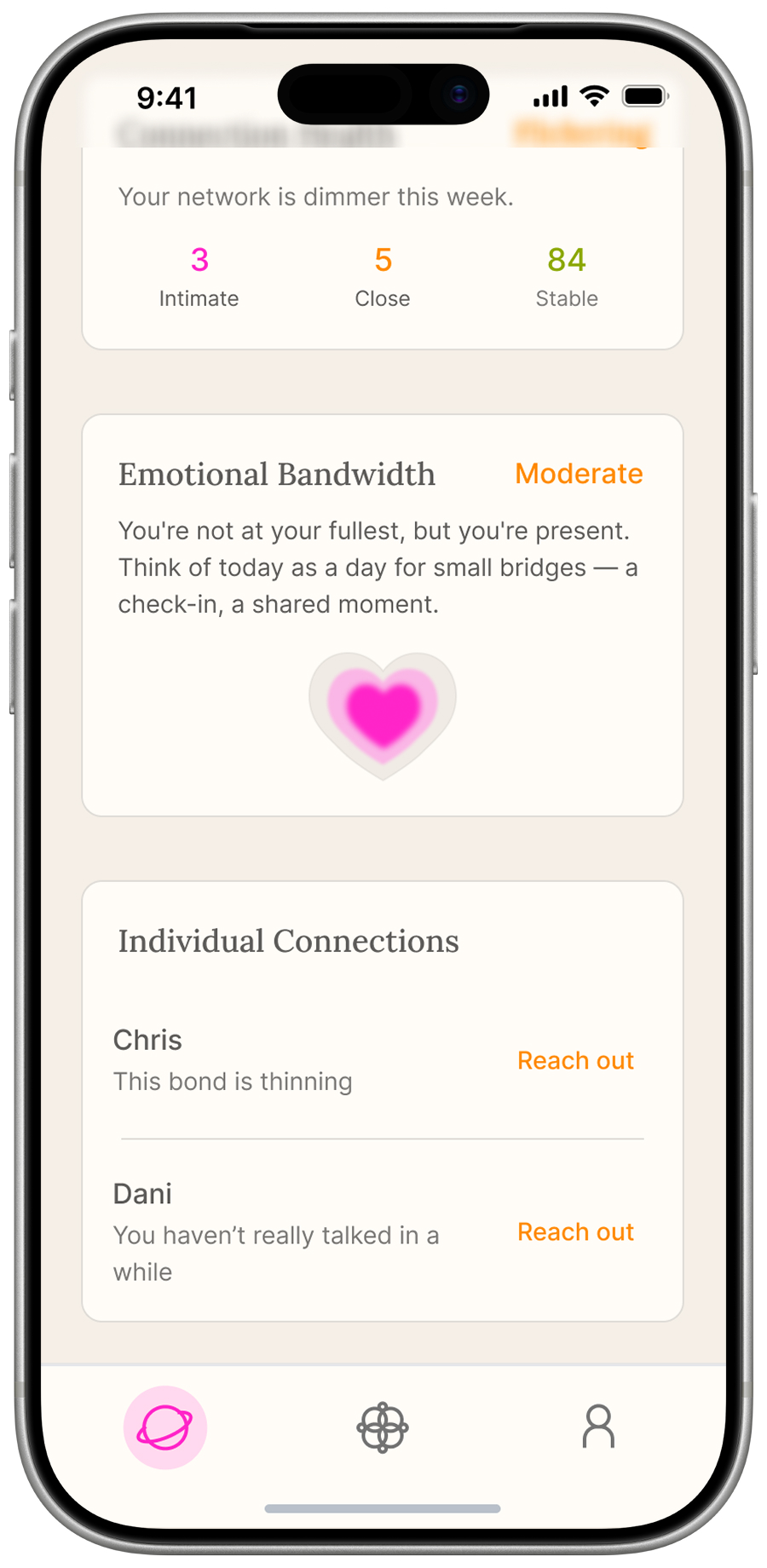
Personal Universe_Part 2
-
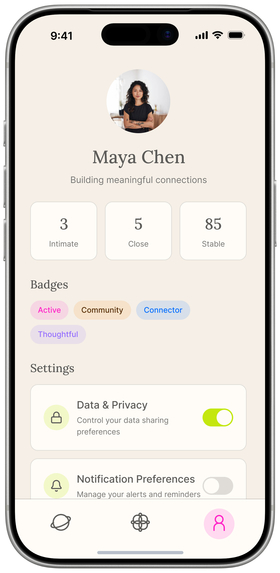
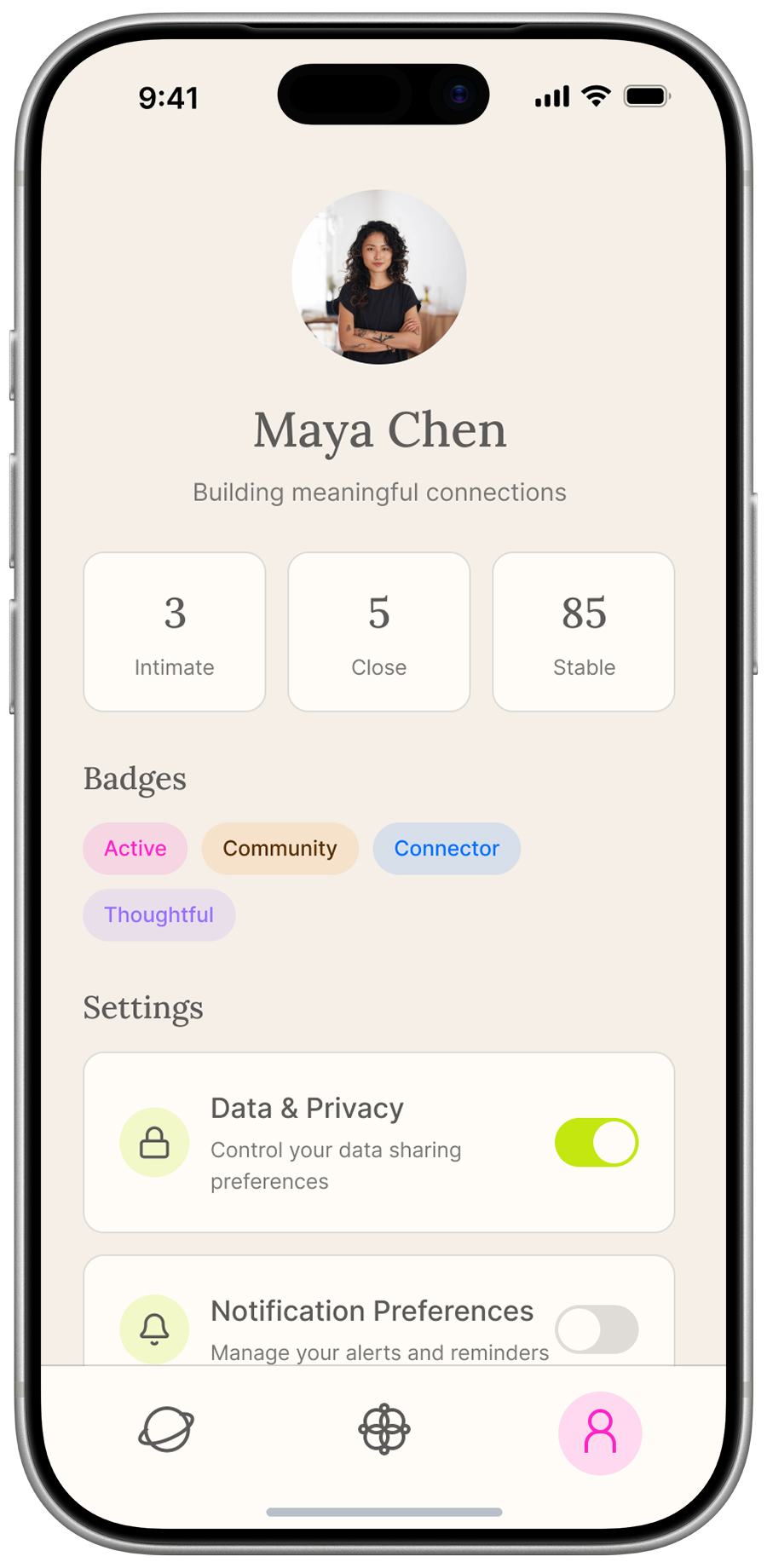
Account Page
-
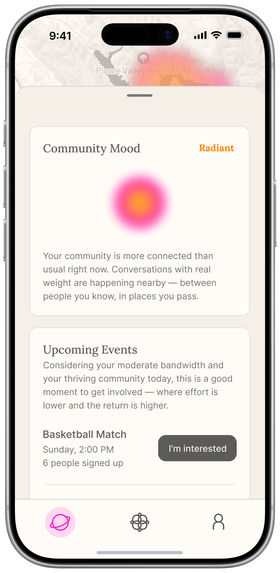
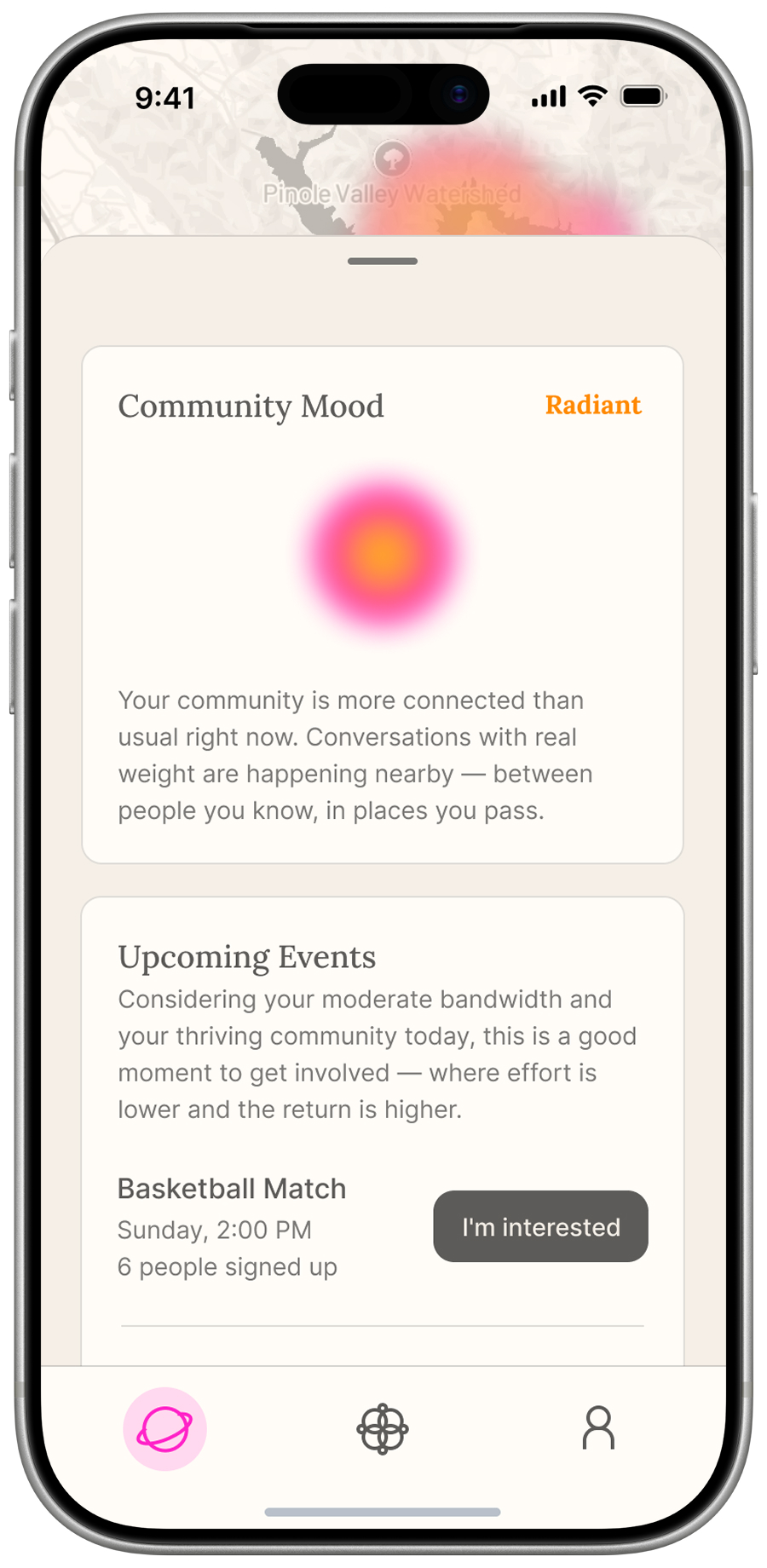
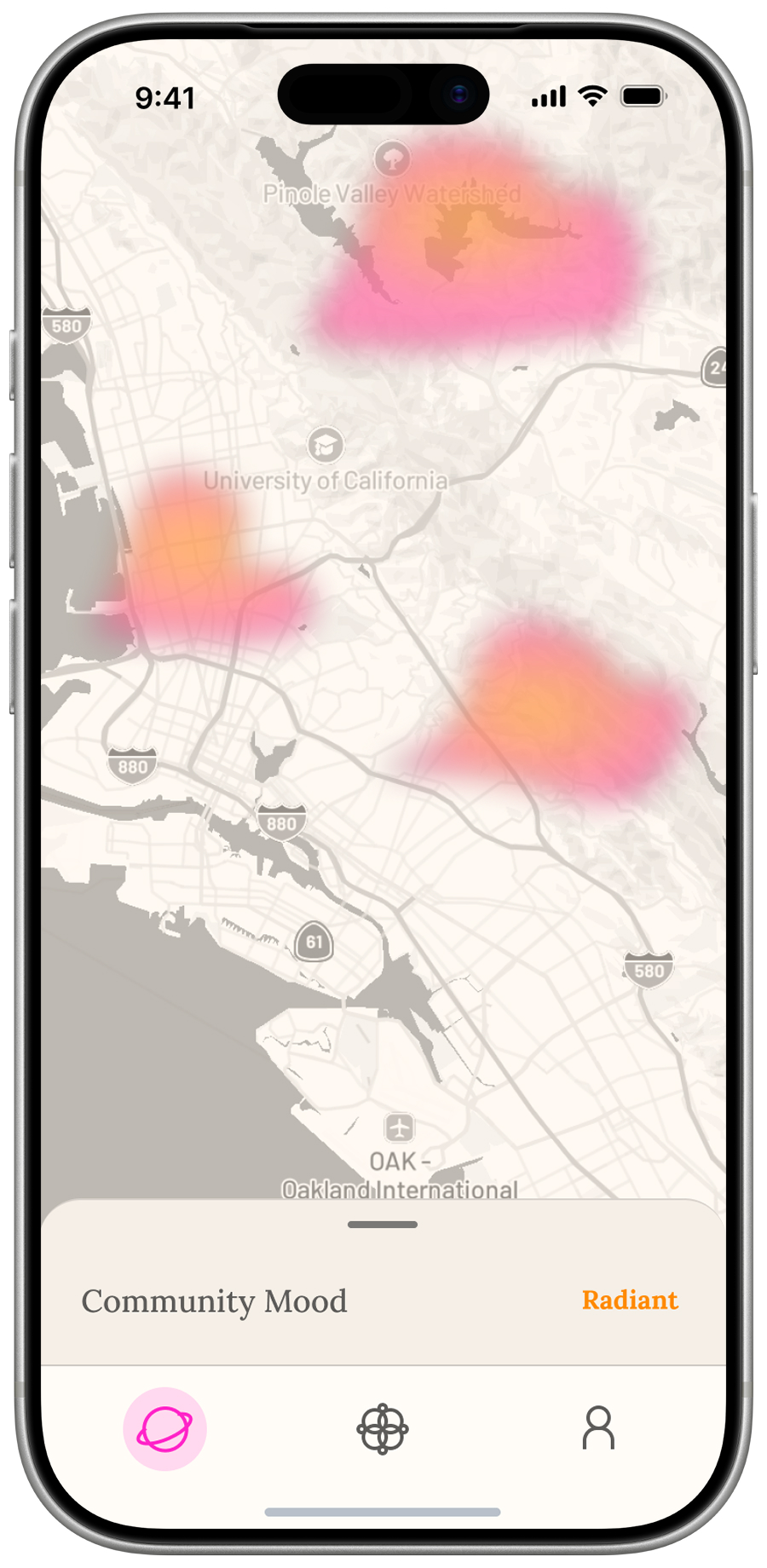
Community Connection Map_Drawer Expanded
-
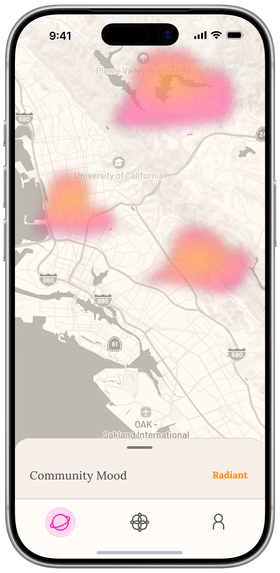
Community Connection Map_Drawer Collapsed
-
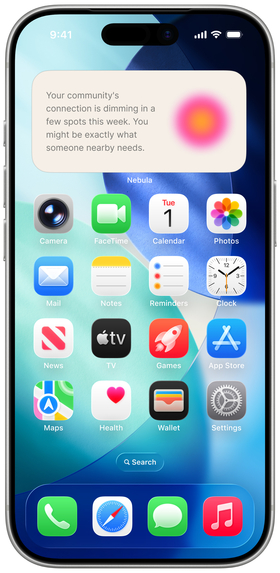
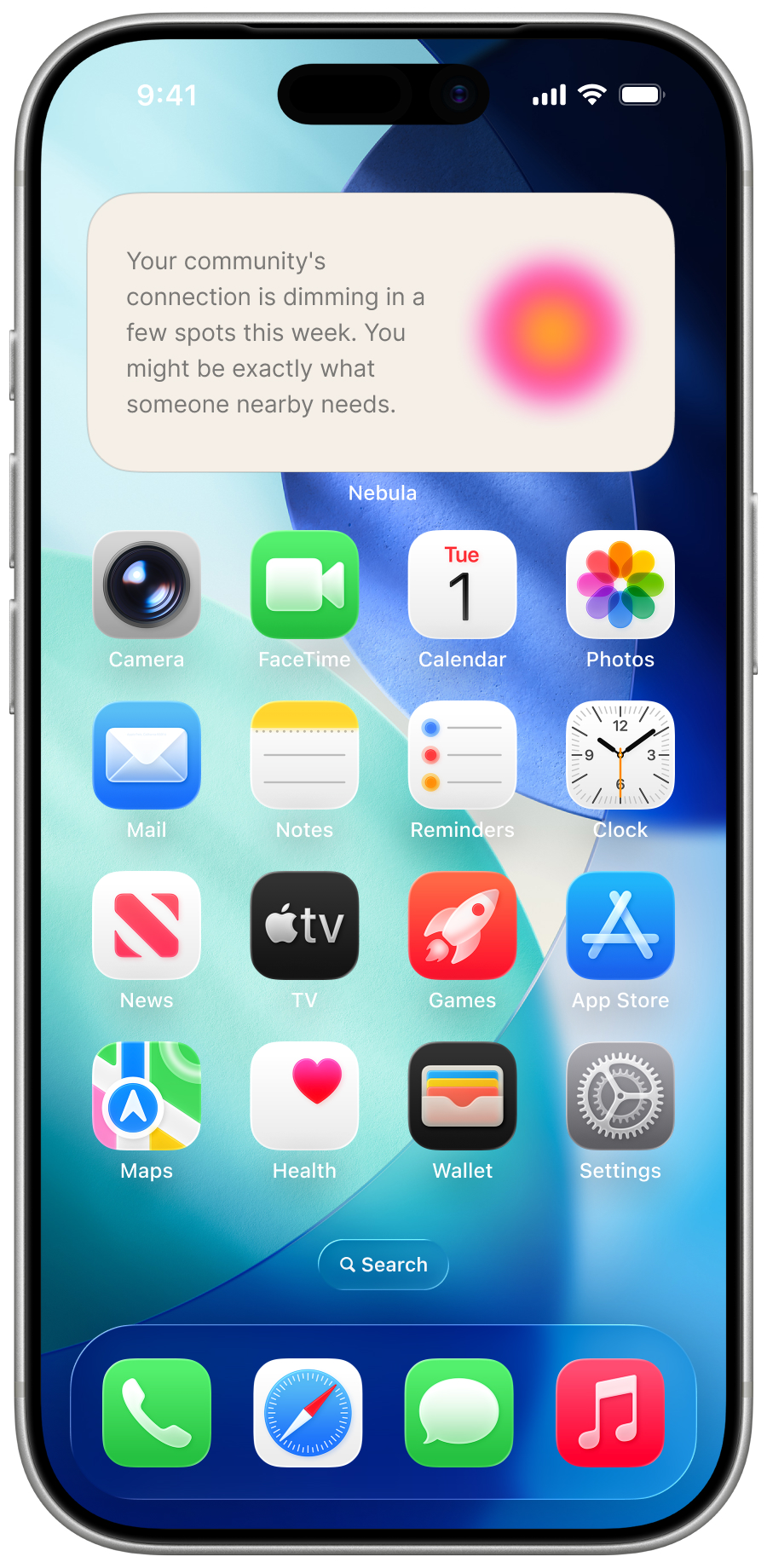
Home Screen Widget
Inspiration
Loneliness is one of the defining health crises of our time — yet it remains almost entirely invisible. According to the Harvard Graduate School of Education, 1 in 5 adults studied reported serious feelings of loneliness and 65% of those affected feel fundamentally separate from the world around them. Additionally, according to the American Medical Association, social isolation raises the risk of serious health conditions — like heart disease, stroke, diabetes and dementia — by more than 25%.
Having personally struggled with these feelings of disconnection and isolation ourselves, we felt this was a deeply important problem to tackle with profound potential to strengthen connections at the individual and community level. We have sensors for nearly everything — temperature, light, sound, heart rate — but nothing that senses the one thing that shapes our wellbeing most. Human connection.
What it does
Nebula is a speculative wellness tool that senses the strength of your human connections, your emotional capacity, and the vitality of your community — and translates that data into opportunities for small, timely moments of reconnection.
At its core, Nebula gives users a living map of their social health. It surfaces a visual portrait of connection strength across different relationships and communities, detects when that vitality is fading, and responds with gentle, actionable nudges — a prompt to reach out to someone specific, a nearby community event worth attending, or a simple micro-action that takes under a minute.
How we built it
We began by unpacking the problem together, making sure community was central to our concept from the start. During independent ideation, we each explored different problem spaces through the lens of different senses, and experimented with Figma Make to prototype possible interfaces for each direction. We then reconvened to compare ideas, align on a single concept, and refined the visual design, layouts, and features in Figma Design. Finally, we assembled the screens into a cohesive flow and added motion and interaction in Figma Make to complete the prototype.The result is a working interactive demo that communicates not just what Nebula looks like, but how it feels to use.
Challenges we ran into
In many ways, tools like Figma Make are changing the process of design — not just the velocity. The biggest challenge for our team was creating a new mental model for collaboration when using these tools. While some aspects of the double diamond model are now obsolete, our team followed a loose process of diverging and converging — exploring multiple problem spaces, then narrowing our focus to one, exploring several possible solutions and design styles, then coming together to refine a single vision. Ultimately, an experimental mindset and clear communication were key to exploring this new paradigm together.
Accomplishments that we're proud of
We're proud of the emotional power of the core concept. Defining a new "sense" — the sense of connection — in a way that feels both scientifically grounded and deeply human was harder than it sounds. We think we landed somewhere that resonates.
We're also proud of the visual design. Nebula has an aesthetic identity that feels intentional: warm, celestial, suggesting something vast and intimate at once. The working interactive demo brings that vision to life in a way that communicates the concept far better than static screens alone could.
What we learned
We learned that speculative design is a discipline in itself. Without a concrete data input or a real sensor to point to, every design decision became a statement about what connection means, how it should be measured, and what the ethics of that measurement might look like. That is a harder and more interesting design problem than most.
We also learned a great deal about AI-assisted design — specifically that the most important skill is not prompting, but judgment: knowing when the output is good enough, when to iterate, and when a response opens up a direction you hadn't considered.
What's next for Nebula
Nebula is a beginning, not an end. The immediate next step is to show more over time: progress, trends, and the arc of someone's social health across weeks and months — not just a snapshot of today.
Beyond that, we see Nebula as a potential tool for systemic change. Community-level connection health data could become a powerful form of advocacy — evidence that cities, employers, and healthcare providers can use to justify real investment in social infrastructure. We're actively interested in exploring healthcare partnerships that could make Nebula's insights clinically meaningful.
The loneliness epidemic is real, measurable, and solvable. Nebula is our first attempt to bring this conversation into the light and spark a change in our personal relationships and community at large.
Built With
- claude
- figma
- make


Log in or sign up for Devpost to join the conversation.