Inspiration
In an era where code is currency, we realized that brilliant projects often go unnoticed simply due to poor documentation or lackluster presentation. Developers spend weeks building incredible tools, but their work rarely speaks for itself in a way non-technical stakeholders or recruiters can grasp. Nebula was born from this realization — a desire to amplify developer narratives, turning raw code into eloquent, compelling stories that resonate with both machines and humans. The inspiration stemmed from our own struggles in hackathons and open-source contributions where documentation became a bottleneck.
What it does
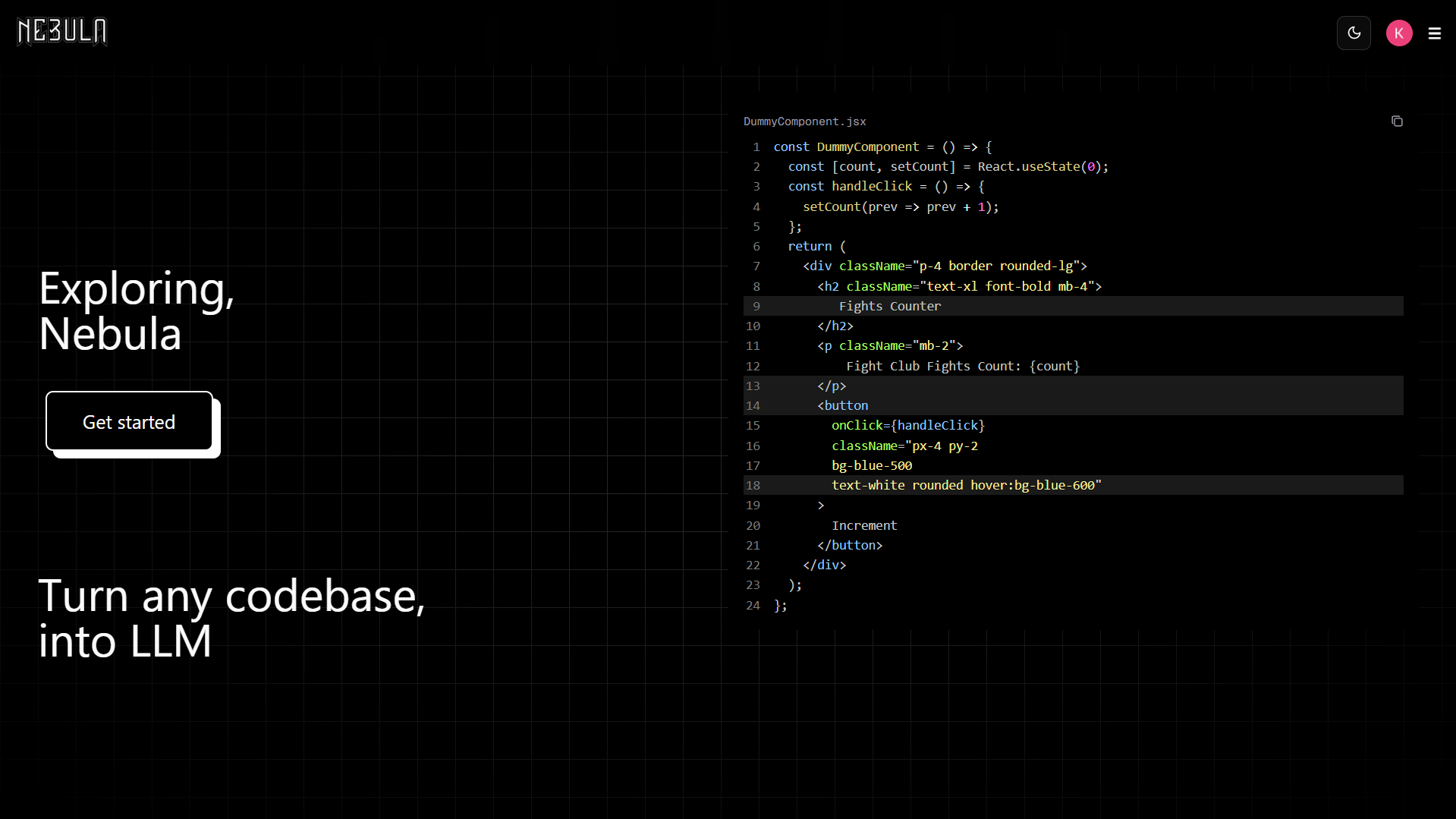
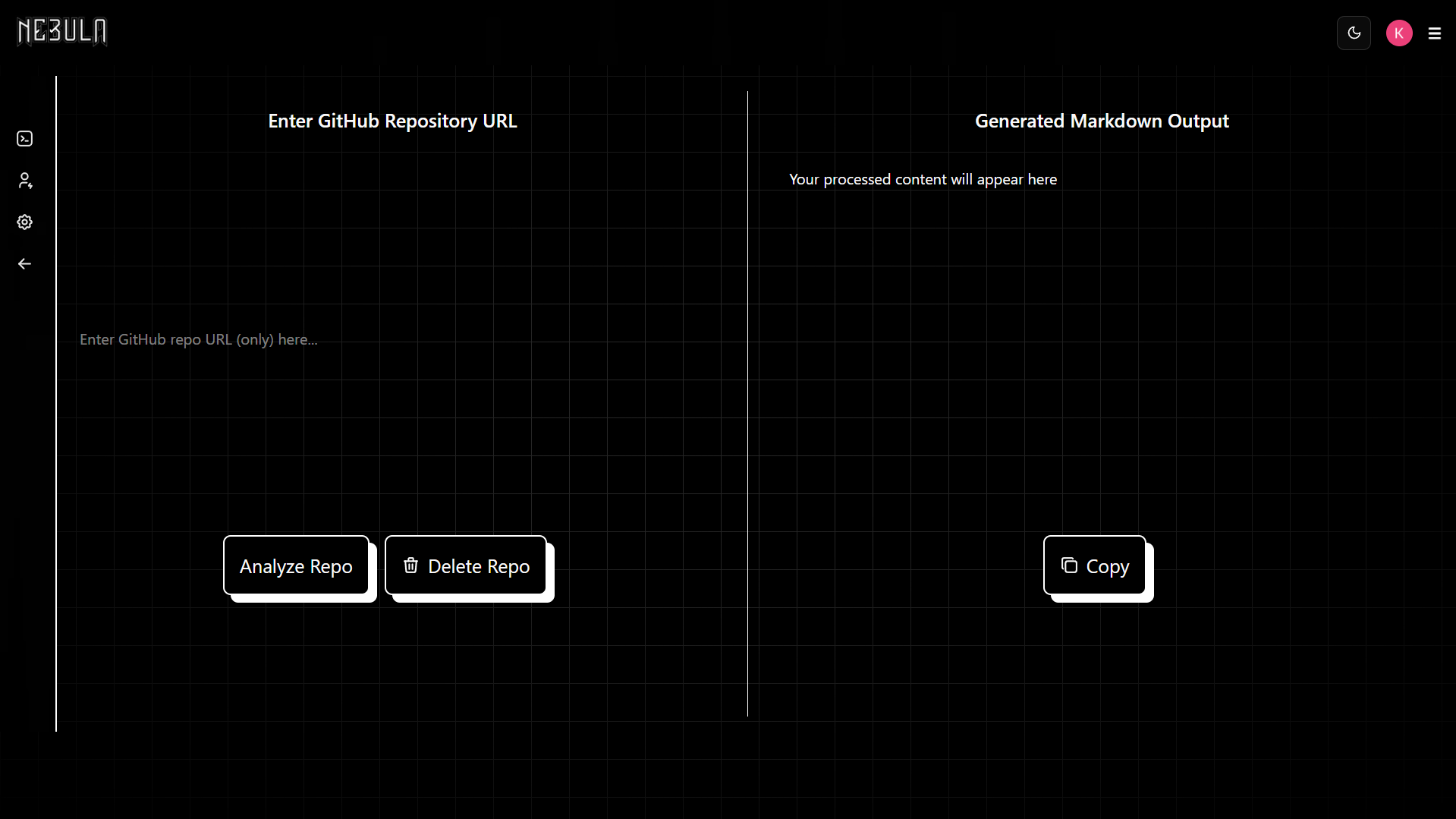
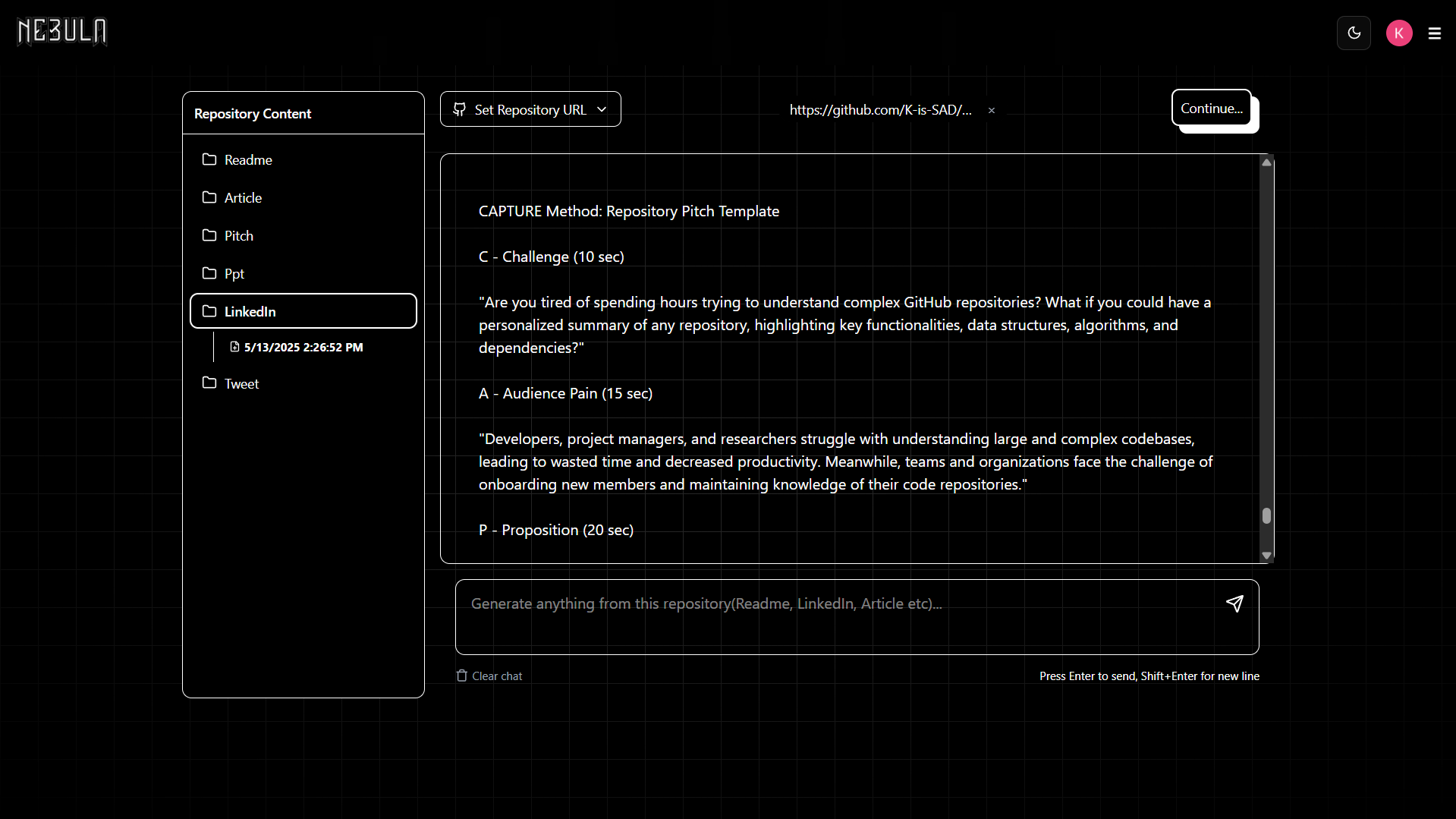
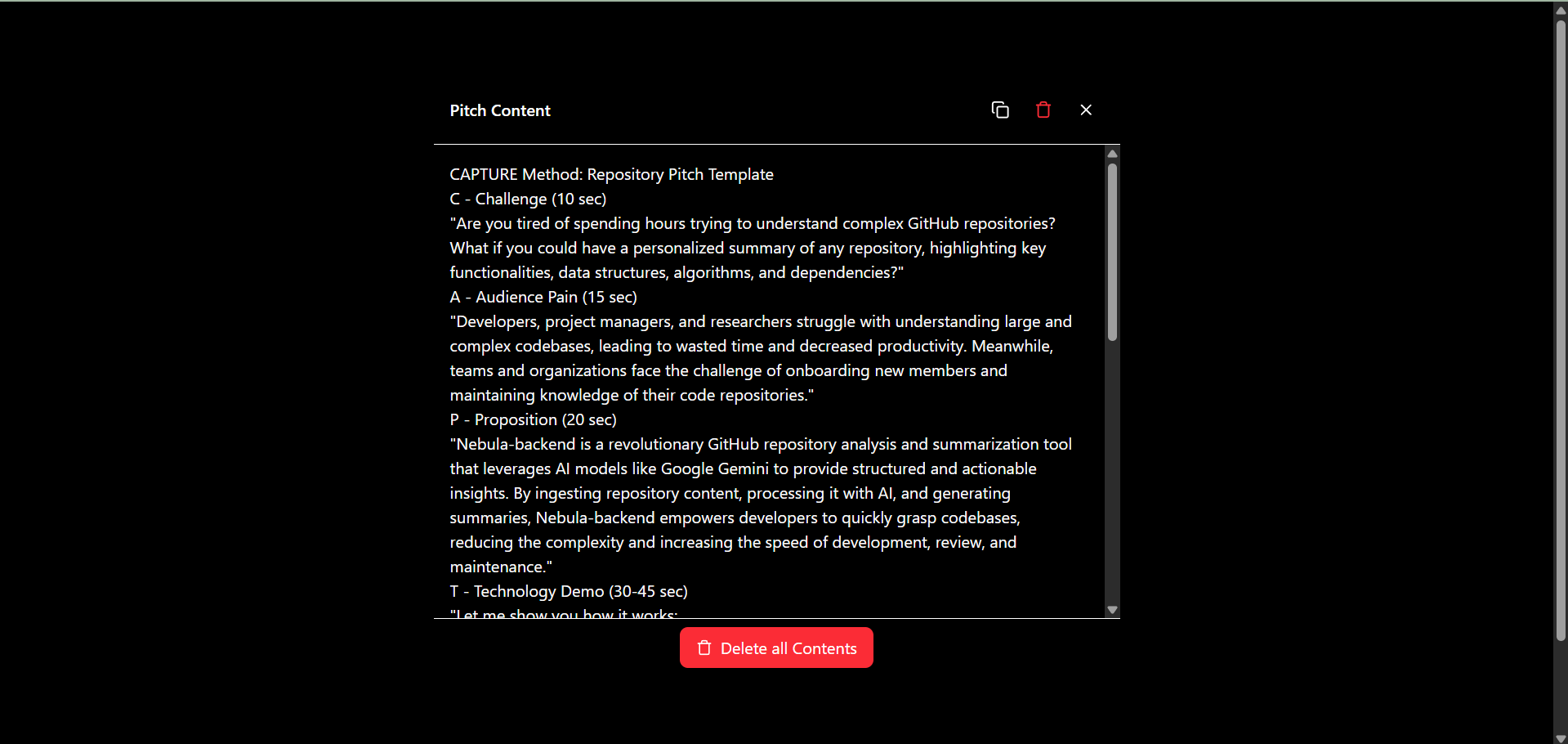
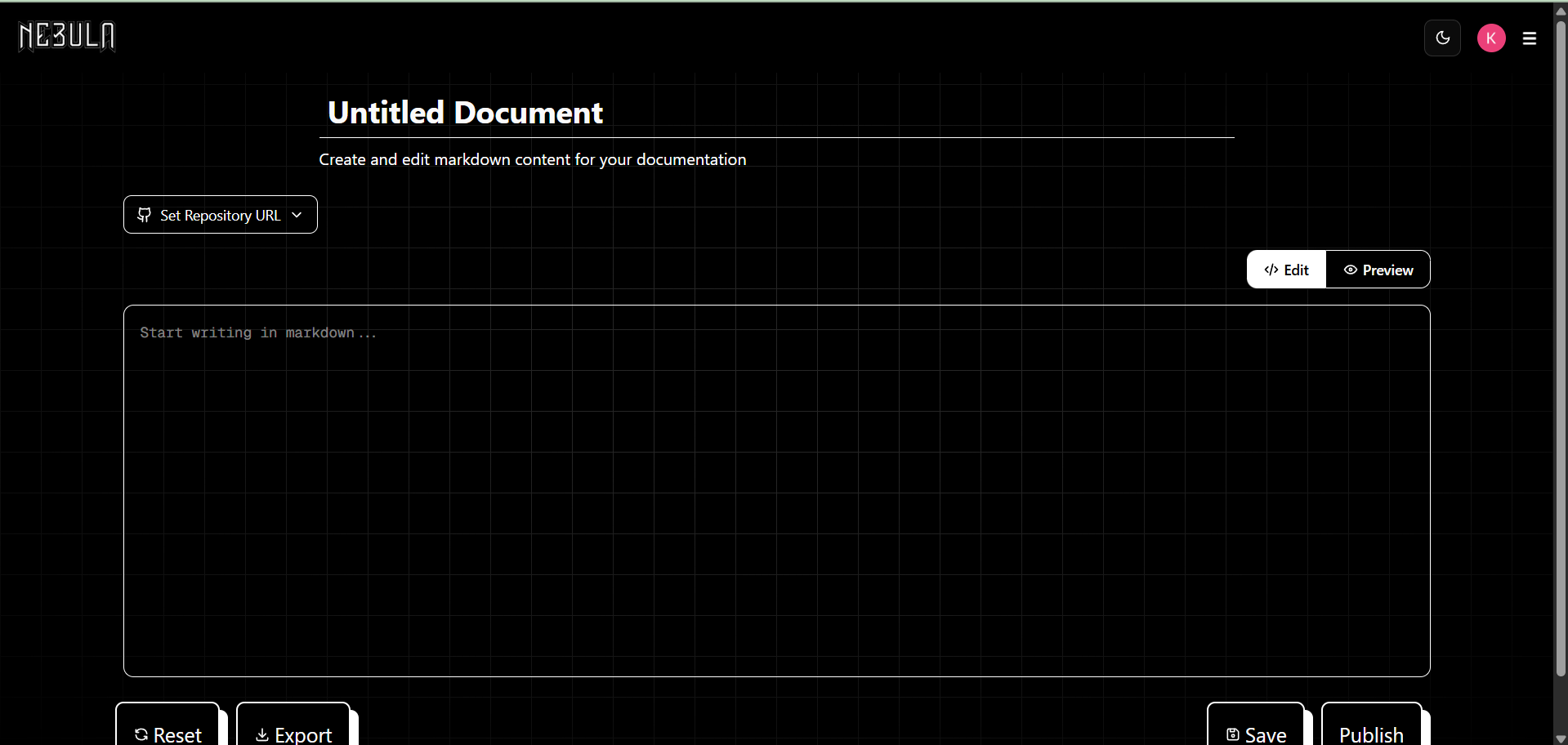
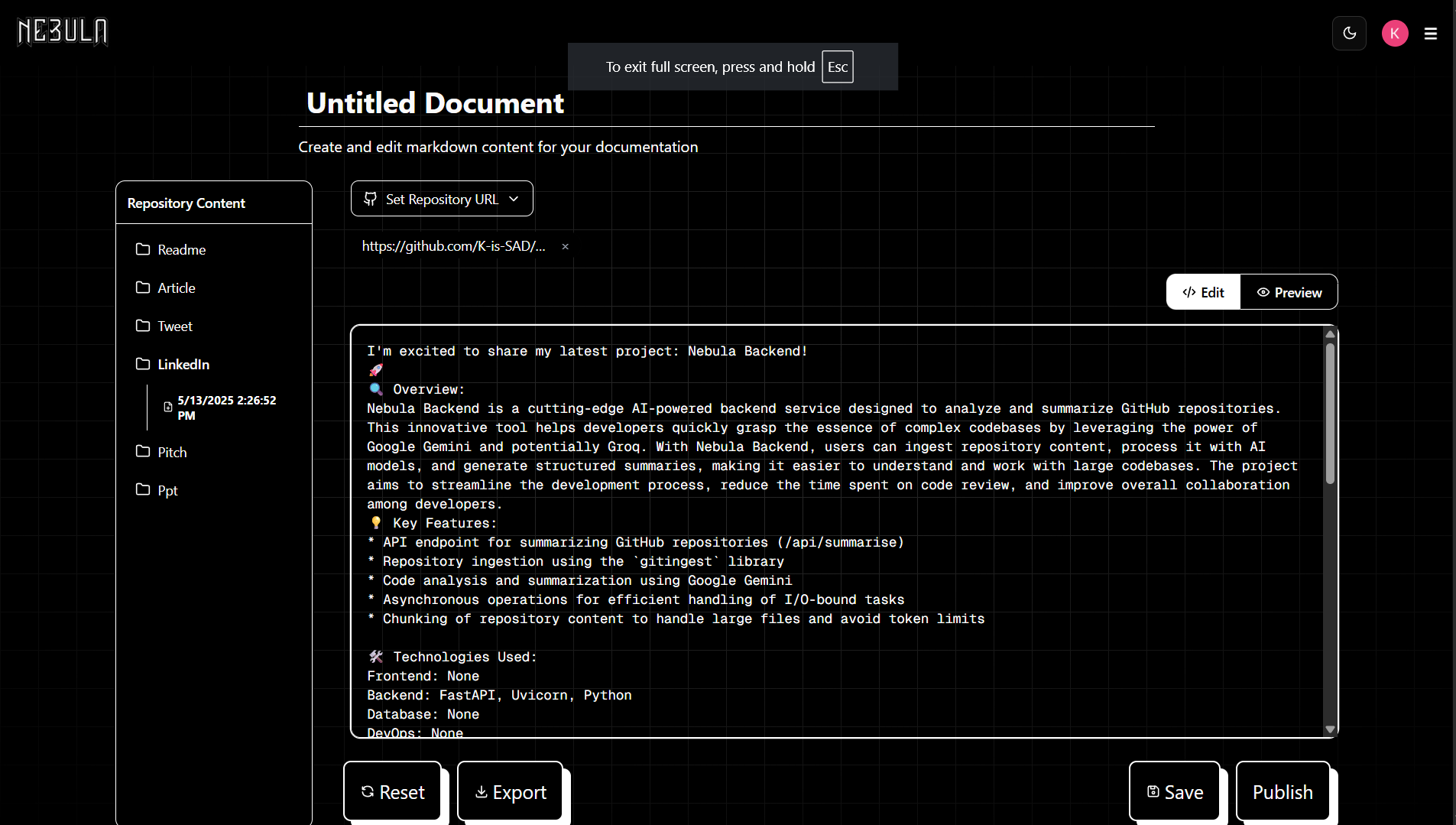
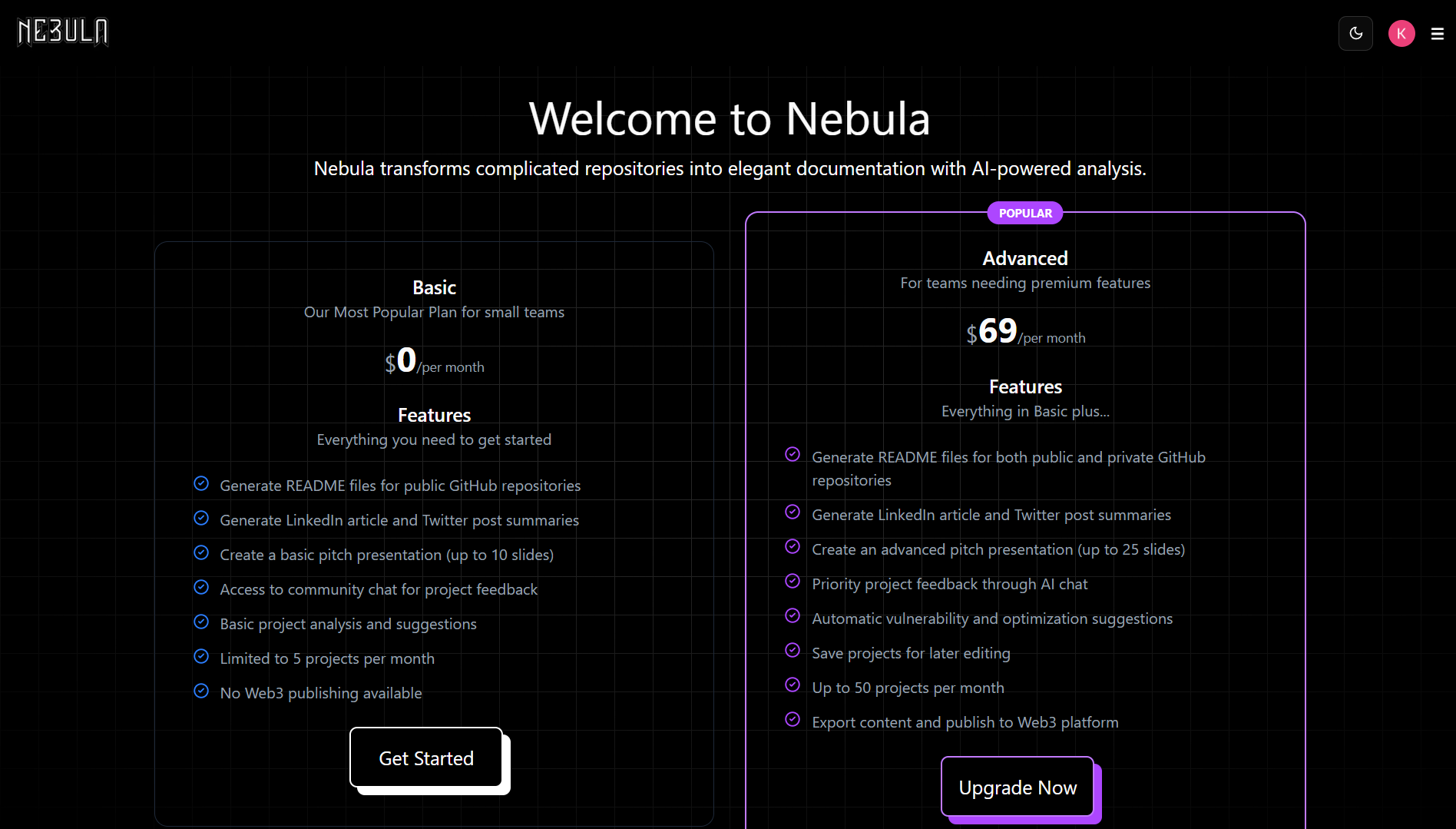
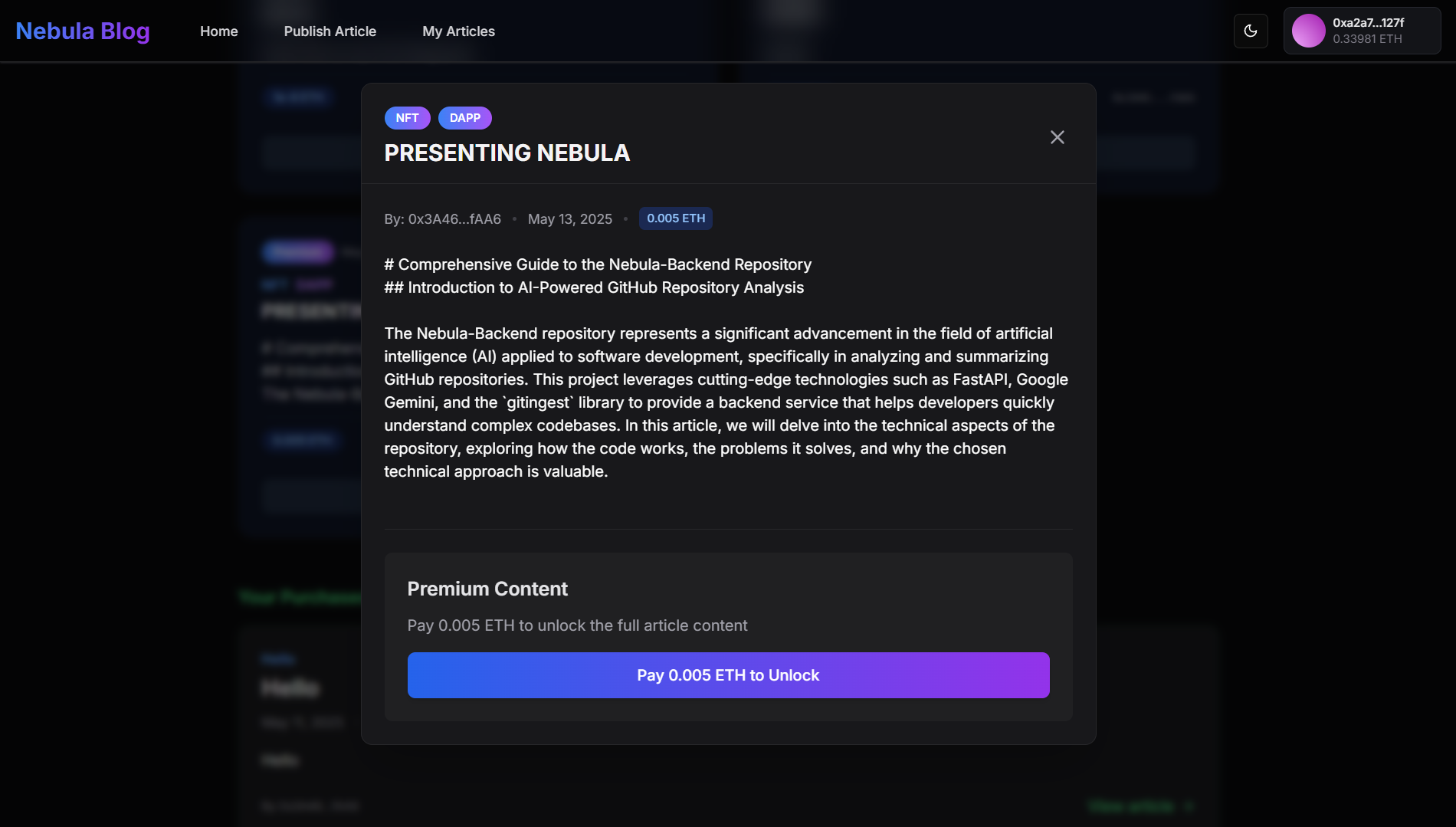
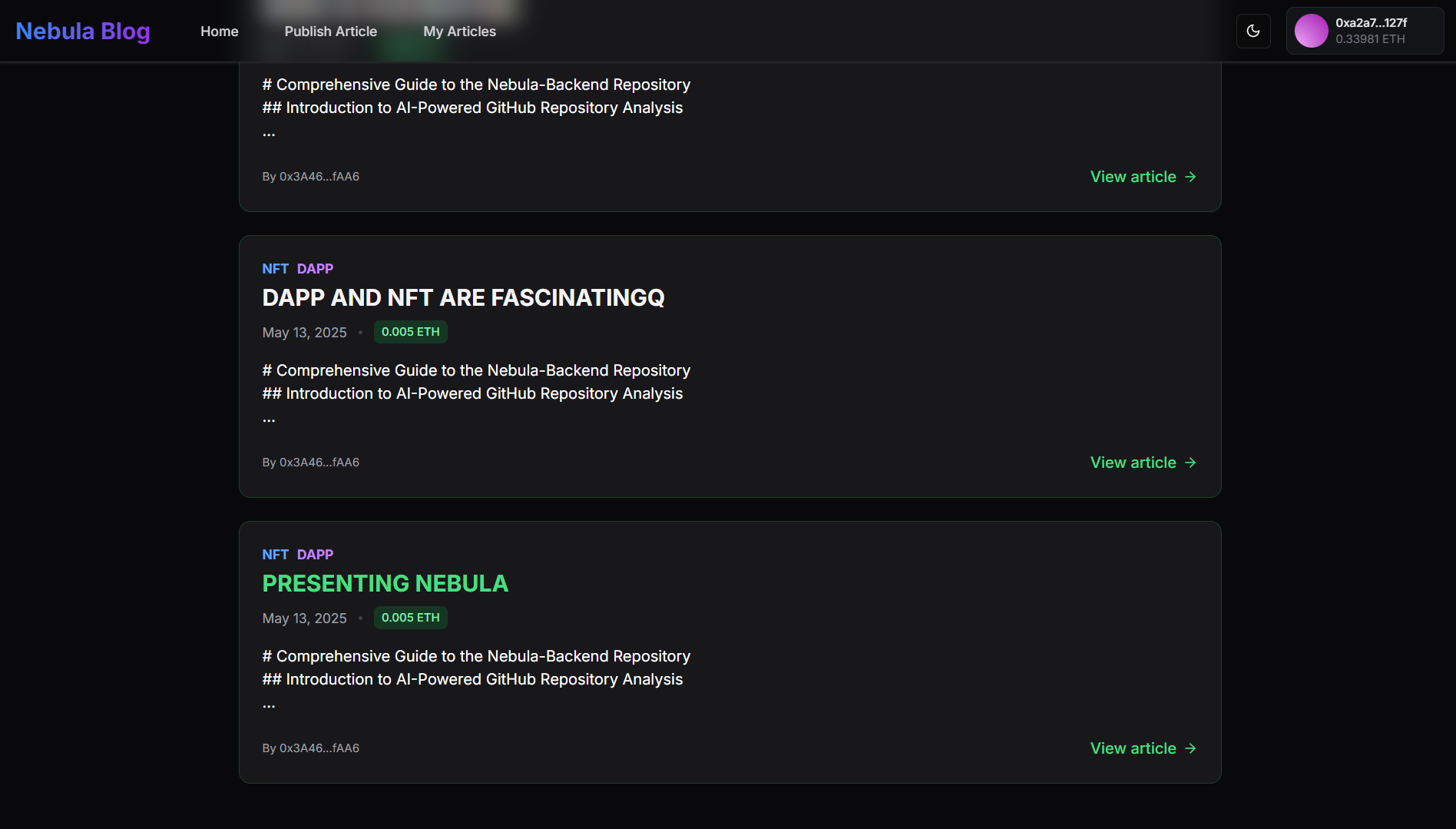
Nebula is an intelligent platform that ingests a GitHub repository and transmutes it into rich, multi-modal content. It auto-generates:
- README files
- LinkedIn articles
- Twitter posts
- Pitch deck presentations
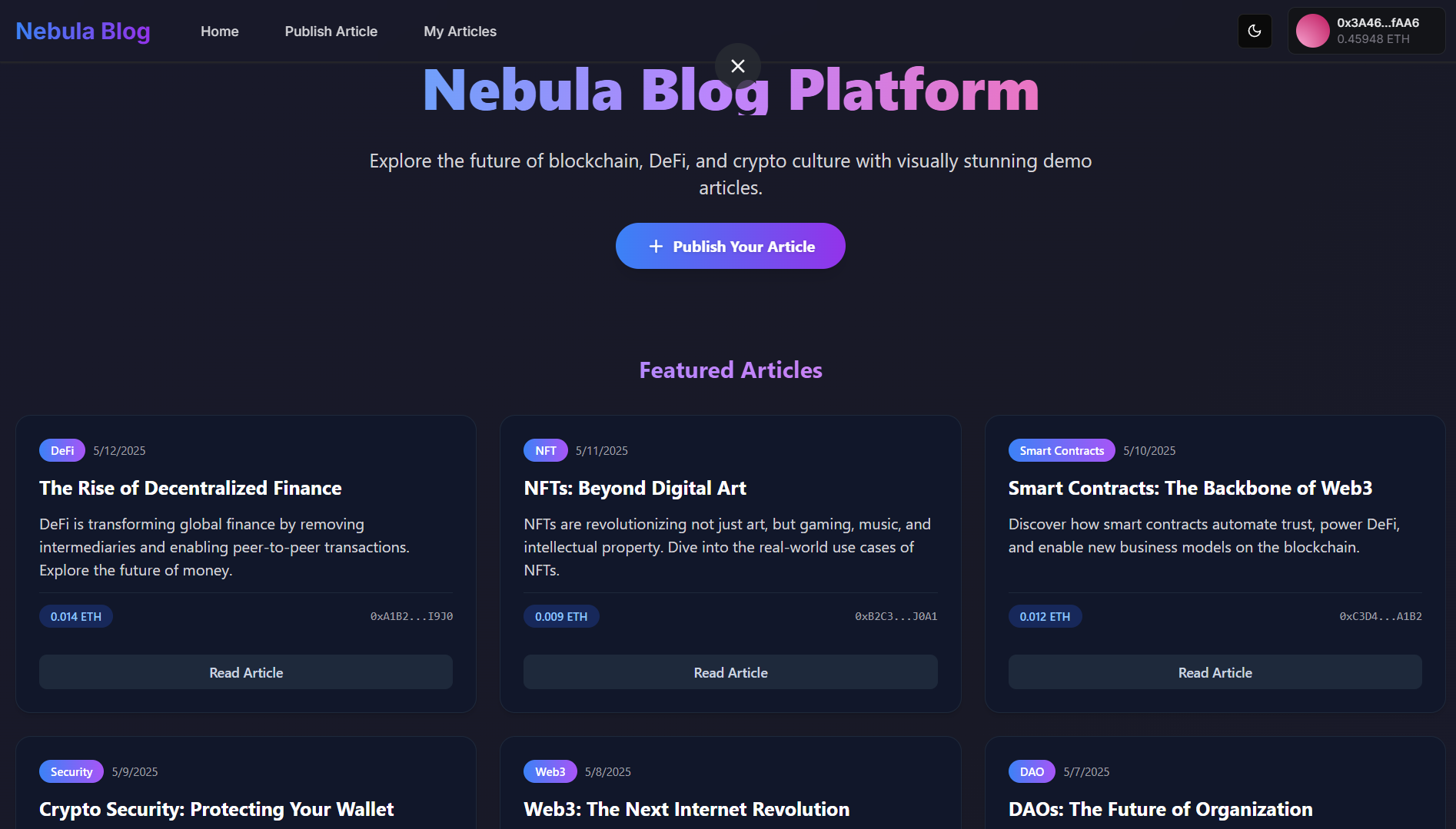
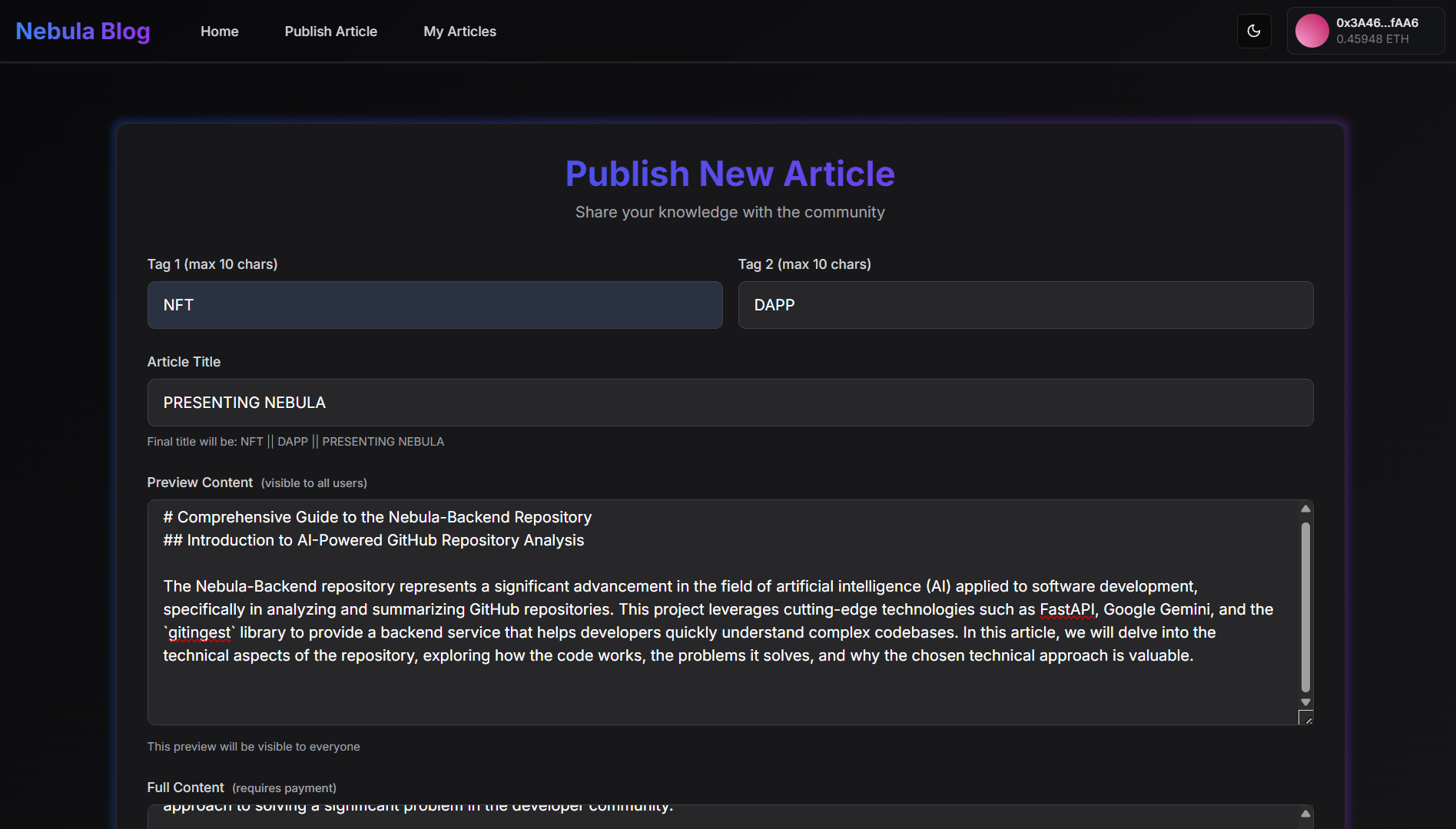
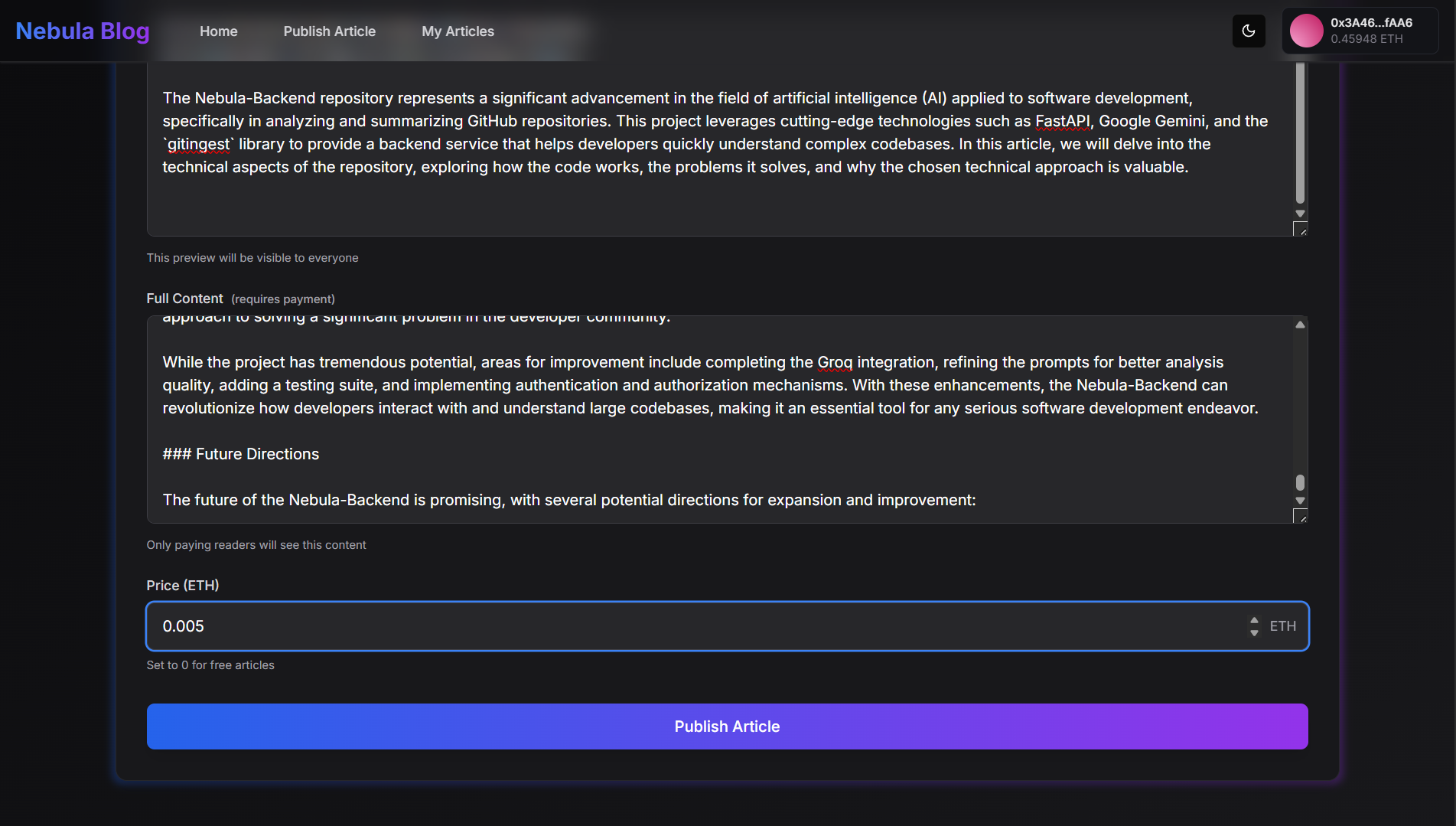
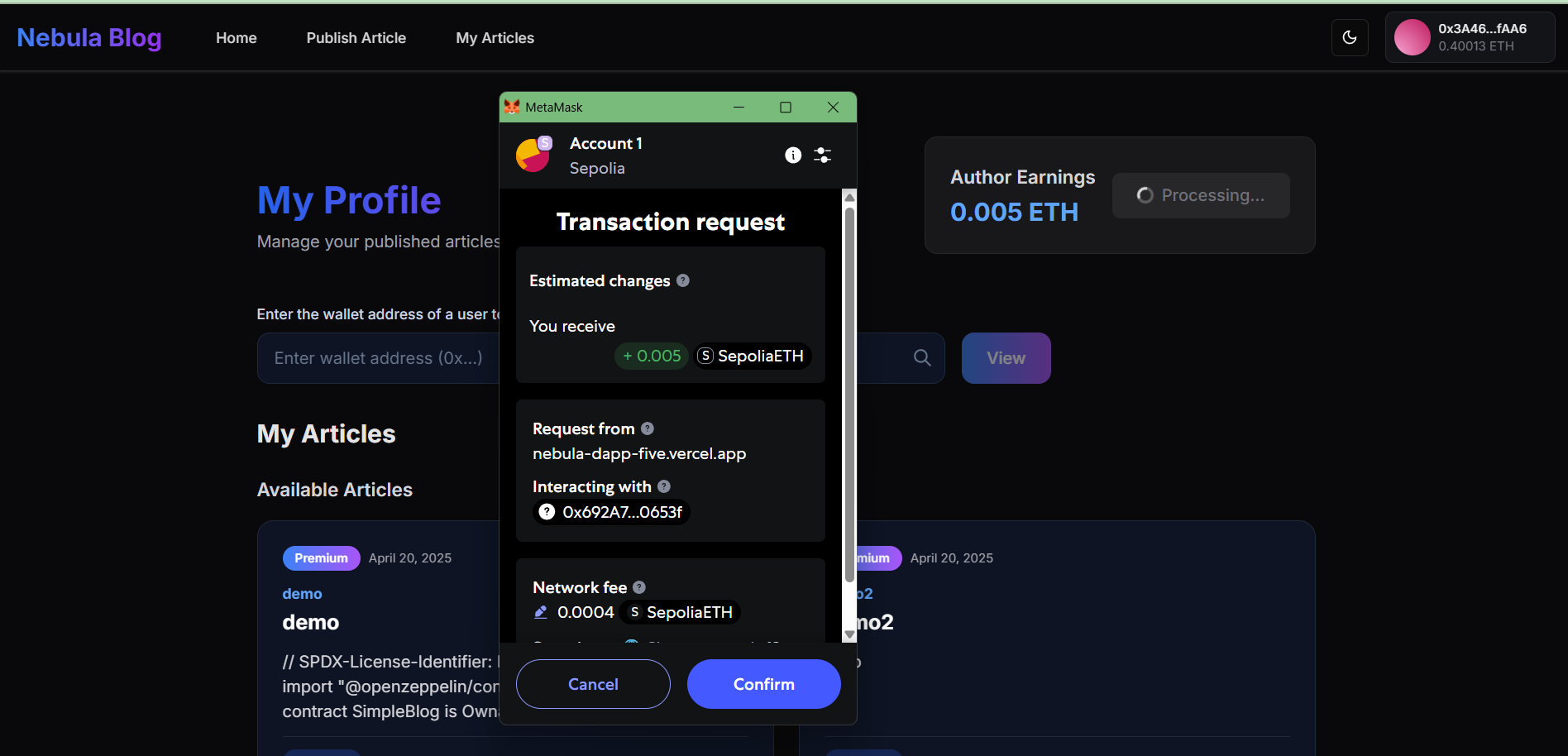
- Web3-compatible exports
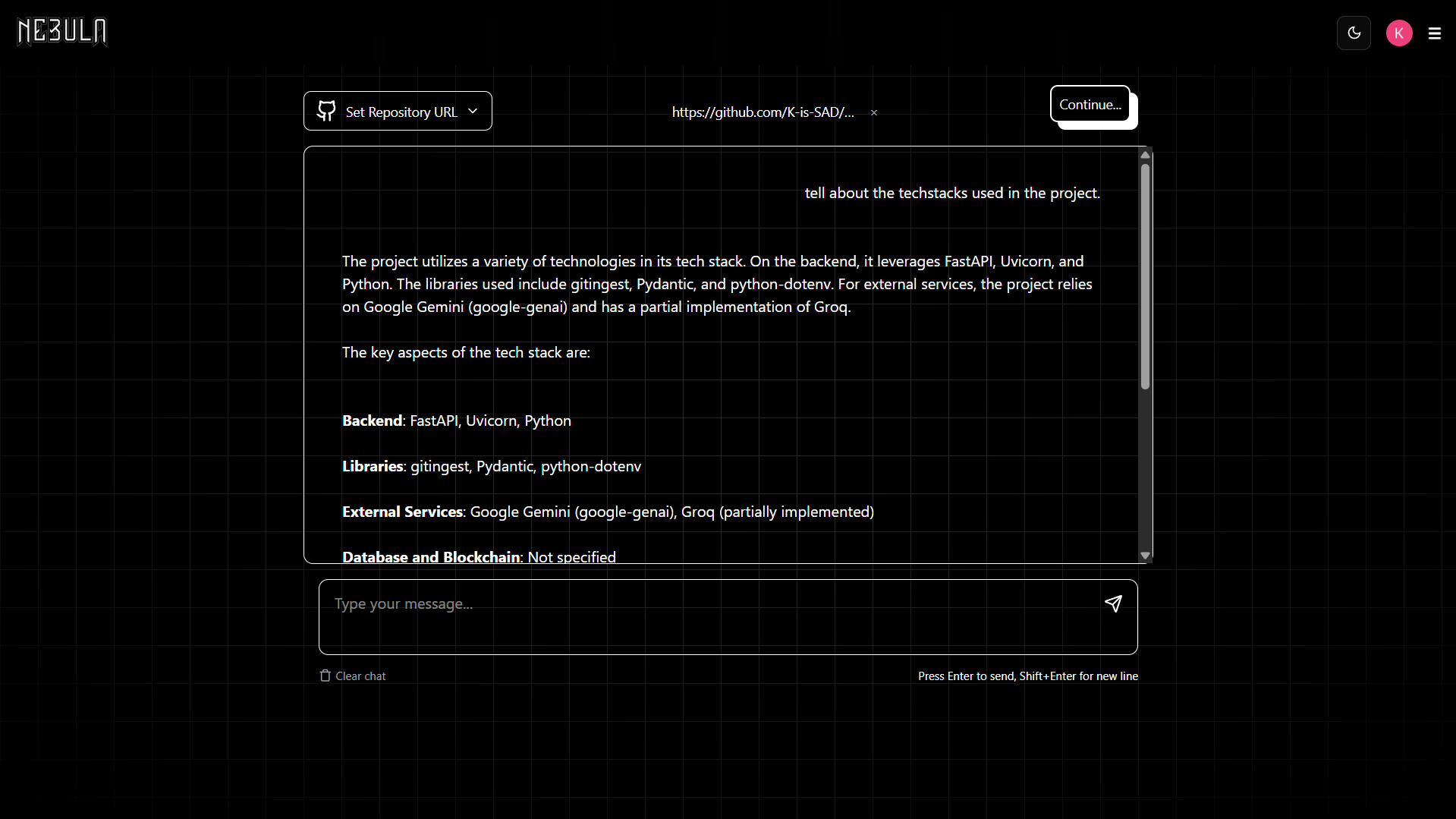
- An AI-powered chat that dissects the codebase to suggest improvements, uncover vulnerabilities, and brainstorm new features.
In essence, Nebula converts your silent lines of code into a resonant digital narrative.
How we built it
We engineered Nebula using a modular architecture combining:
- GitHub API and Gitingist to fetch and parse repository contents
- LLAMA 3.3 70B VERSATILE MODEL AND GEMINI 2.5 FLASH to summarize, analyze, and generate structured content
- LangChain for intelligent prompt chaining and document embedding
- TailwindCSS and Next.js for a sleek, performant frontend
- A backend powered by Node.js with a microservice handling Web3 IPFS publishing
- AI chat capabilities with context-aware memory for iterative feedback and suggestions
The system was rigorously optimized to handle large file trees, convert markdowns into slide decks, and dynamically create social media snippets.
Challenges we ran into
- Abstract summarization of complex codebases proved arduous, especially when lacking comments or structure.
- Balancing conciseness and comprehensiveness in the generated content was intellectually taxing.
- Integrating with Web3 (IPFS publishing) had steep learning curves in terms of security, persistence, and interoperability.
- Maintaining contextuality within AI chat flows across multiple modules tested the limits of token management and prompt engineering.
- Limited time in the hackathon compressed what could have been weeks of fine-tuning into a few sleepless nights.
Accomplishments that we're proud of
- Created a full-stack working prototype in record time during AlgoArena
- Enabled multi-format content generation from a single source of truth — the code itself
- Seamlessly integrated Web3 publishing, which is often treated as an afterthought
- Delivered real-time AI-powered feedback loops within a collaborative UI
- Built a tool that genuinely bridges the gap between developers and non-technical audiences
What we learned
- The power of structured prompting and intelligent chaining in LLMs cannot be overstated.
- Developer tools don't just need functionality — they need empathy and accessibility.
- Understanding code is one thing; communicating code is a whole different art form.
- Web3 integration isn't just hype — it offers meaningful decentralization of developer portfolios.
- Building under constraints forces creative prioritization and ruthless MVP discipline.
What's next for NEBULA
- Private repo support with encrypted temporary processing
- Version-controlled README generation with GitHub Actions integration
- Launching team-based collaborative editing and review modes
- Adding natural language querying for code search and audit
- Deeper security analysis using AI agents
- Expanding Web3 exports to include NFT-based publishing rights
- Preparing for public beta and open-source contributions


Log in or sign up for Devpost to join the conversation.