Inspiration:
The inspiration for Nebula Dash came from a desire to bridge the gap between "web games" and "native apps." Most mobile browser games feel clunky and ignore the unique hardware challenges of a phone. I wanted to create a high-stakes, cinematic odyssey that forces a premium, ultra-wide perspective, proving that the web is a powerful platform for high-octane gaming.
What it does:
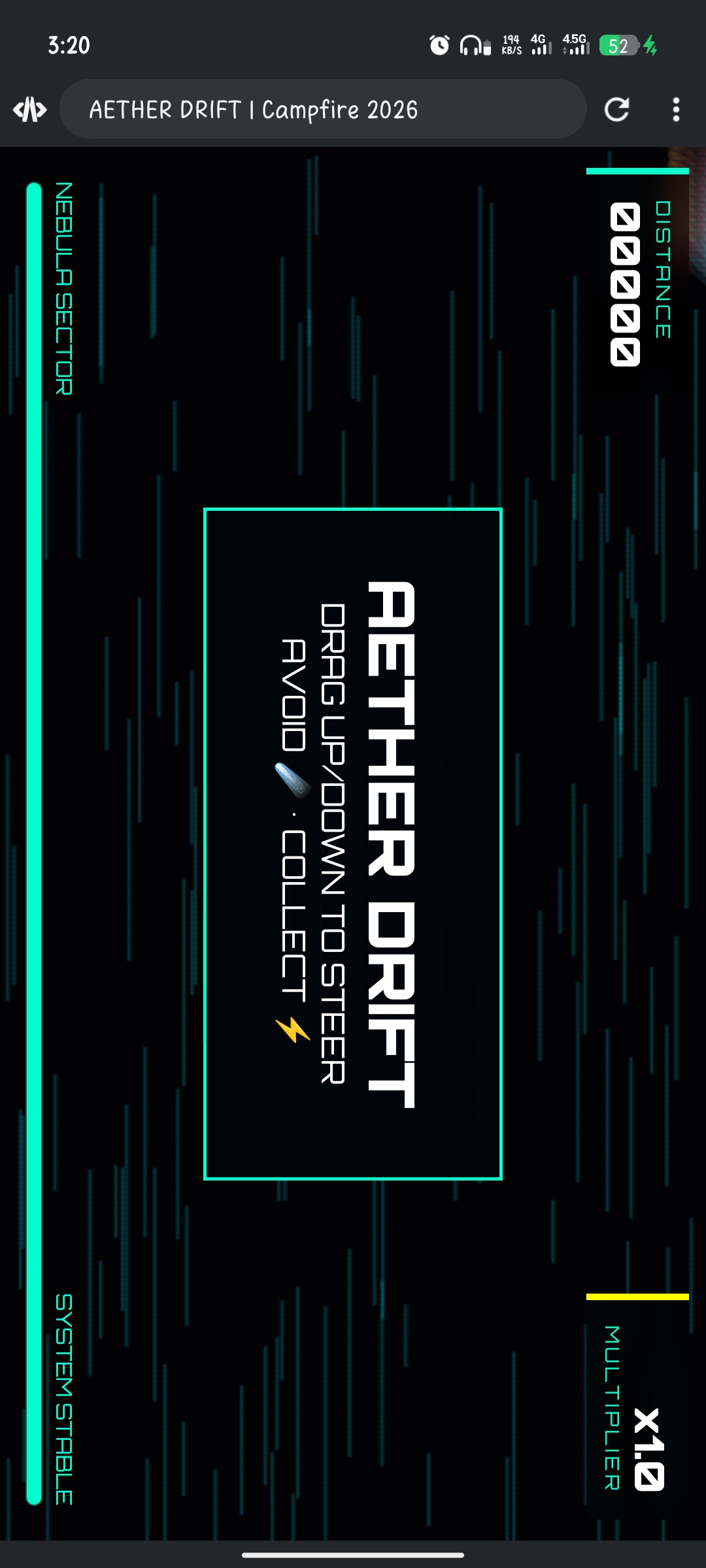
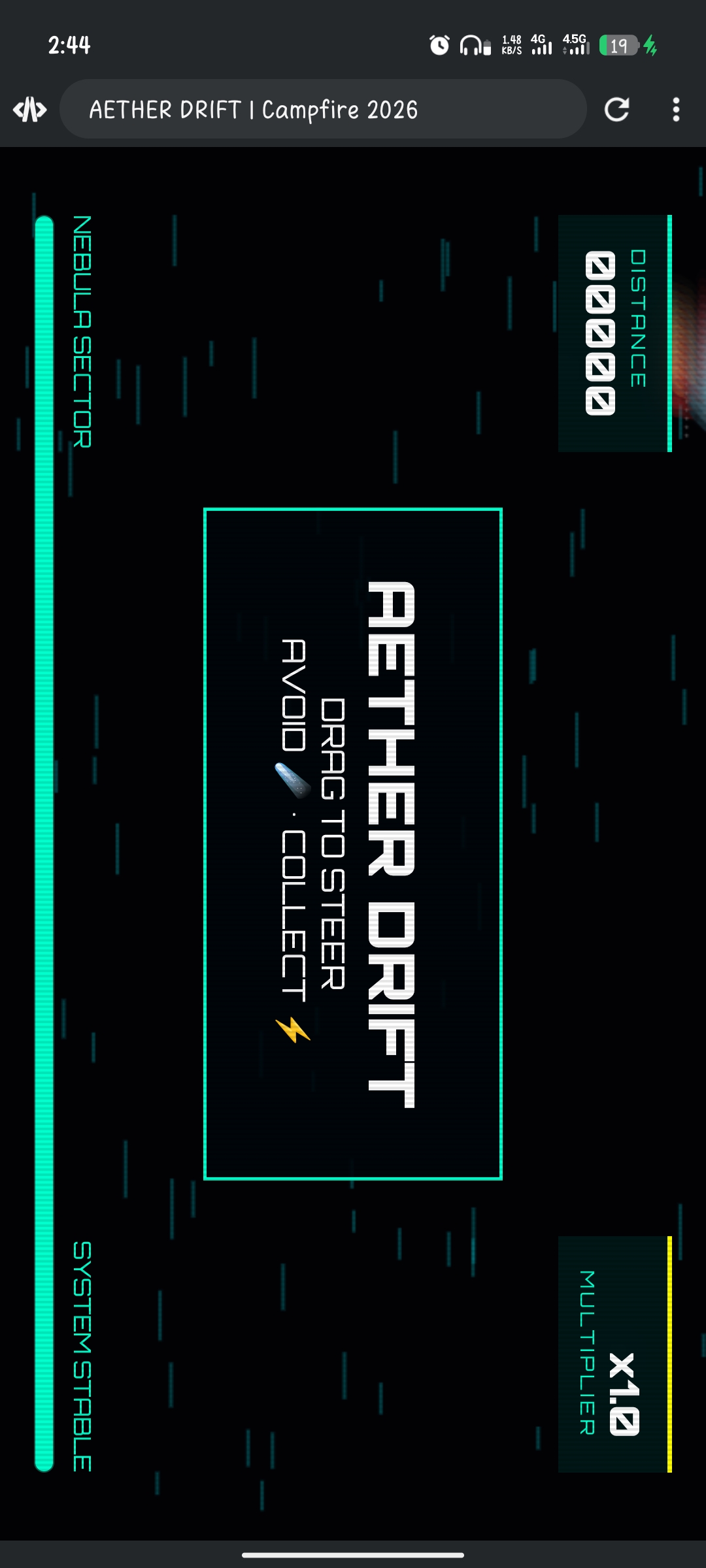
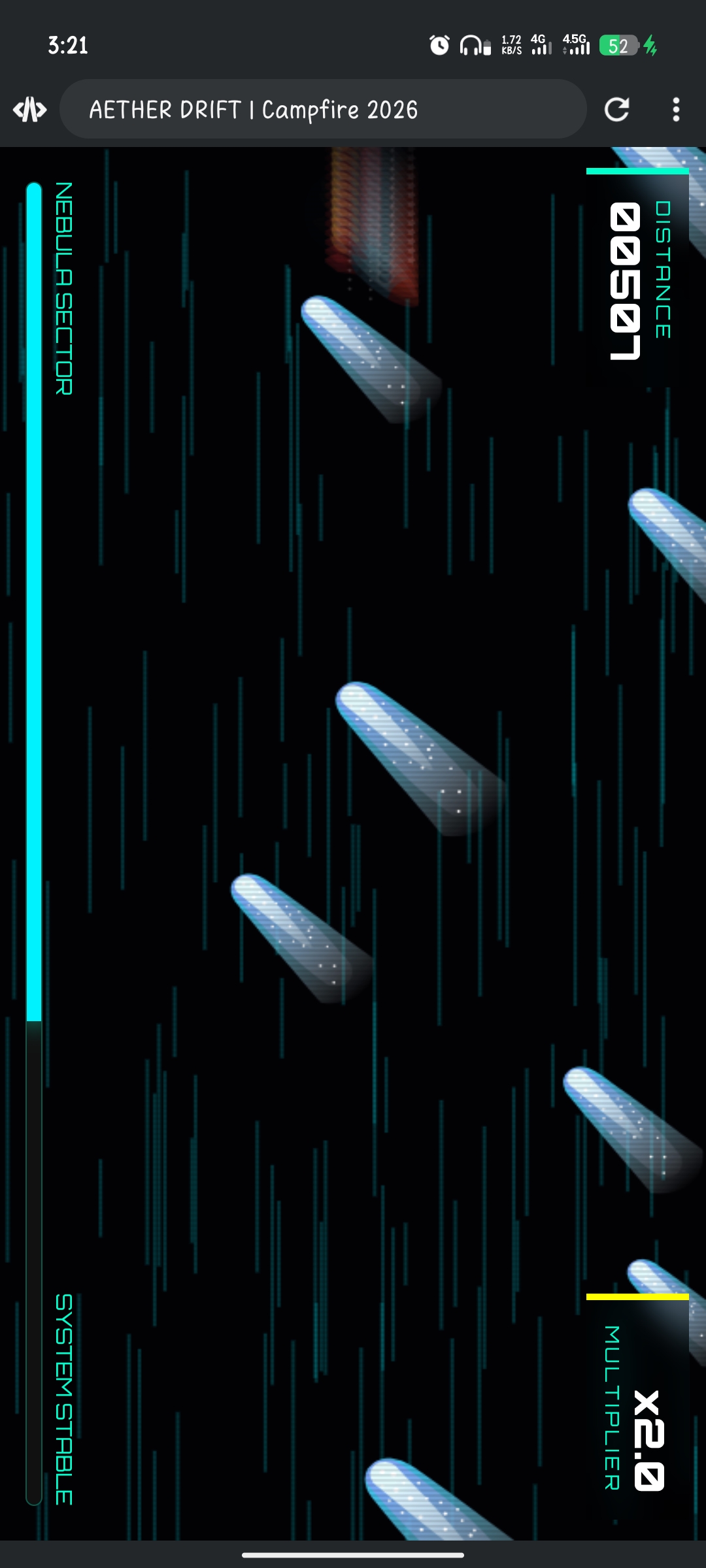
Nebula Dash is a procedural space-endurance game where players pilot a craft through shifting interstellar sectors like the Nebula, Cobalt, and Crimson voids. Players must maintain their energy core by collecting power cells while dodging high-velocity asteroids. The game features a hardcore difficulty curve where speed increases with distance, and just three hits will end your mission, forcing players into a high-concentration "flow state.
How i built it:
The game was engineered from scratch using Pure JavaScript and the HTML5 Canvas API for maximum performance and 60FPS stability. Custom Layout: I used a unique CSS-to-JS bridge to force a 21:9 ultra-wide field of view regardless of device orientation. Physics Engine: I built a procedural starfield and obstacle spawning system that scales complexity based on the player's score. Audio: Integrated the Web Audio API for real-time sound synthesis that doesn't require heavy external assets.
Challenges i ran into:
The biggest technical hurdle was the "Mobile Orientation Trap." On mobile browsers, rotating to landscape often flips the Y-axis or misinterprets touch coordinates. I developed a custom Coordinate Mapping Engine that mathematically recalculates touch deltas to ensure that "sliding down" always moves the rocket "down," providing 1:1 precision controls on any device.
Accomplishments that I am proud of:
I am incredibly proud of the "Juiciness" of the game. Achieving a smooth screen-shake effect, dynamic particle trails, and seamless world transitions while maintaining high performance on a mobile browser was a significant milestone. Solving the complex input inversion issue was also a major win for the project's UX.
What i learned:
This project was a deep dive into Mobile UX optimization. I learned how to manage Canvas state efficiently and how to use CSS transforms to create a responsive, immersive environment that feels like a standalone application.
What's next for Nebula Dash 2026:
I plan to implement a global leaderboard using a Firebase backend and add "Hyper-Drive" power-ups that allow players to temporarily phase through obstacles. I also want to introduce different ship classes with unique handling physics to add more depth to the gameplay.
Built With
- canvas
- css3
- html5
- javascript
- web-audio-api

Log in or sign up for Devpost to join the conversation.