-
-
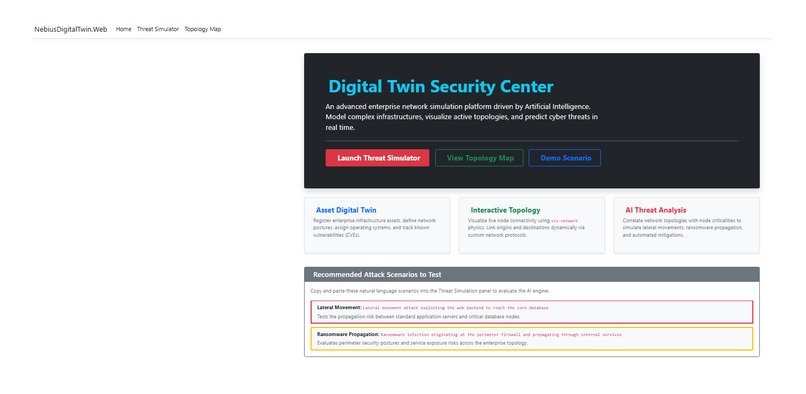
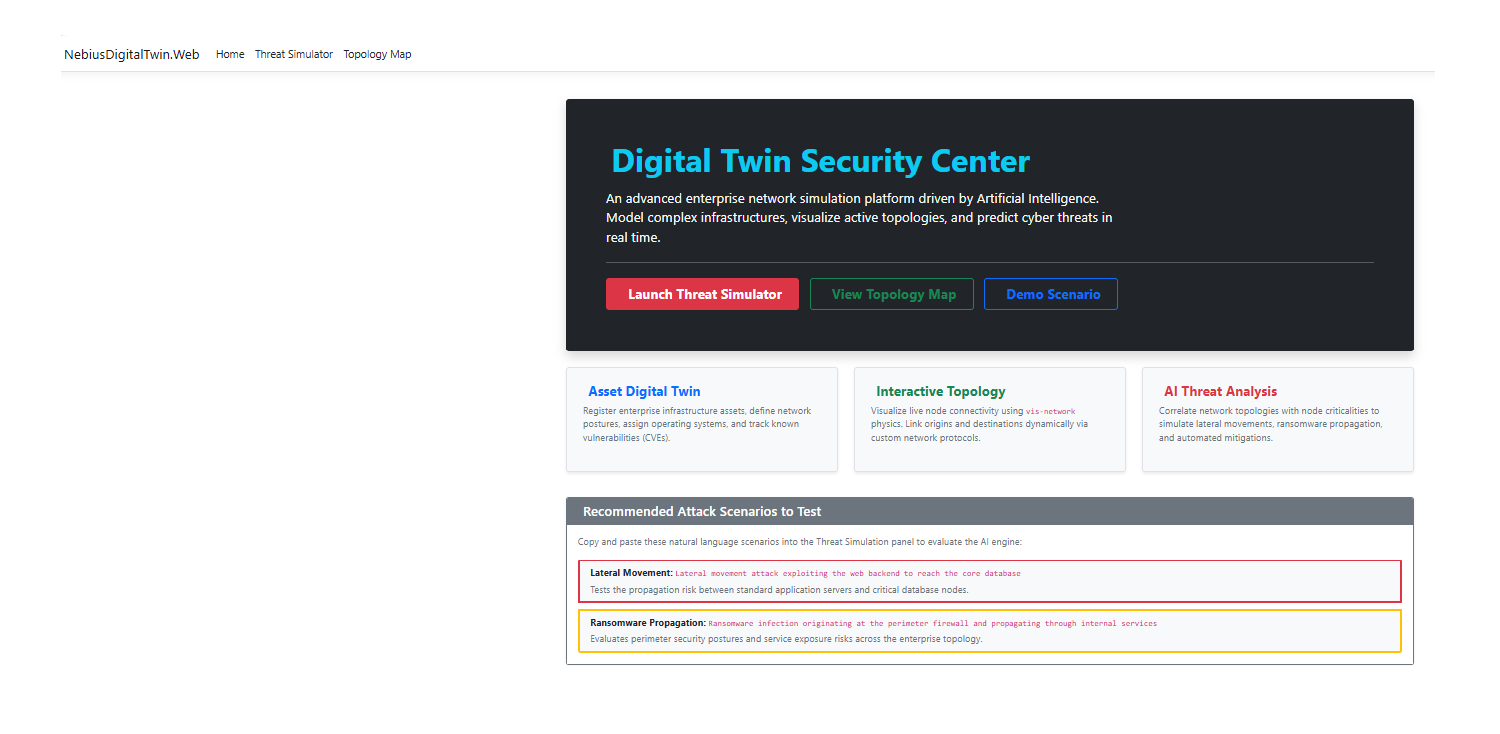
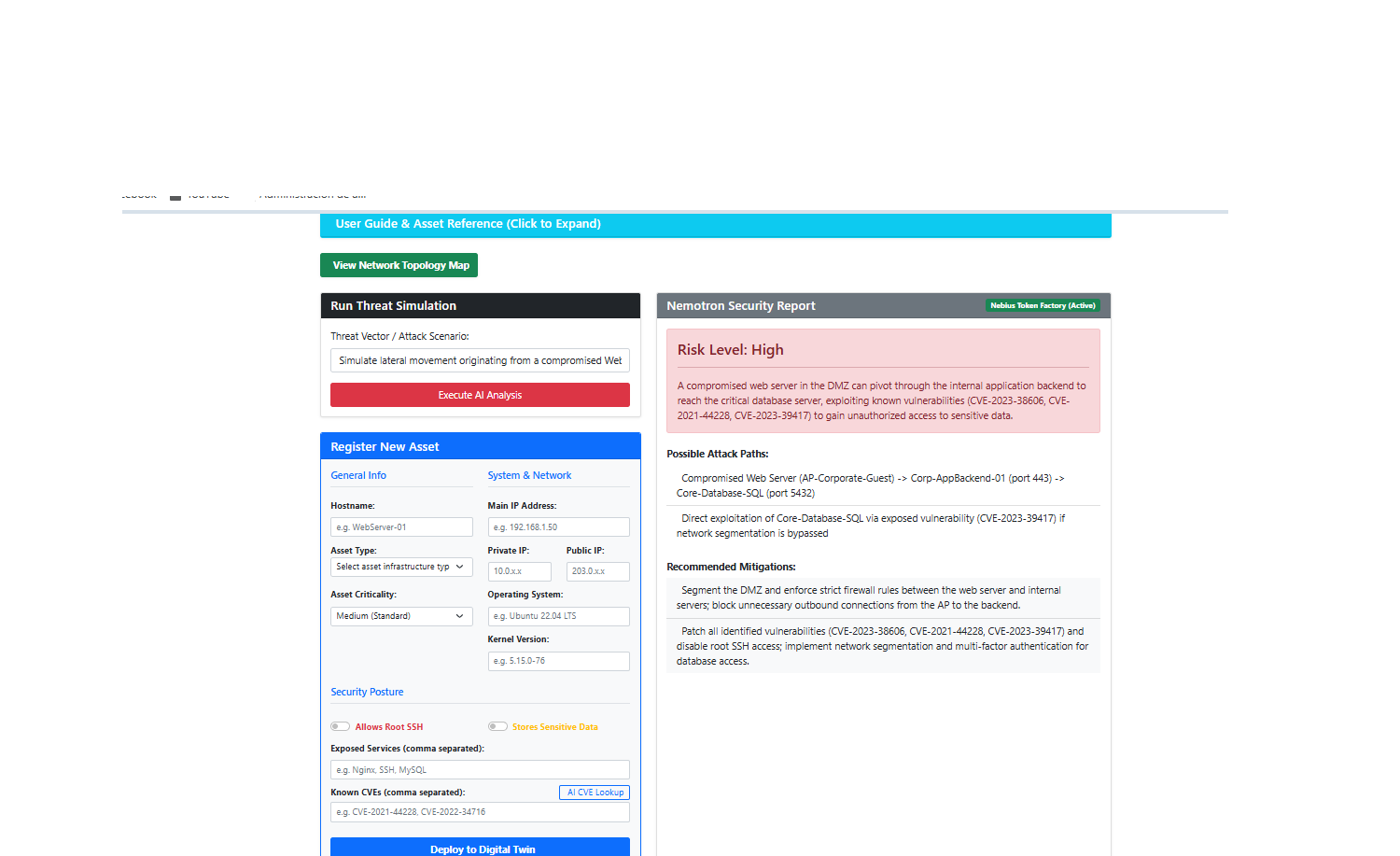
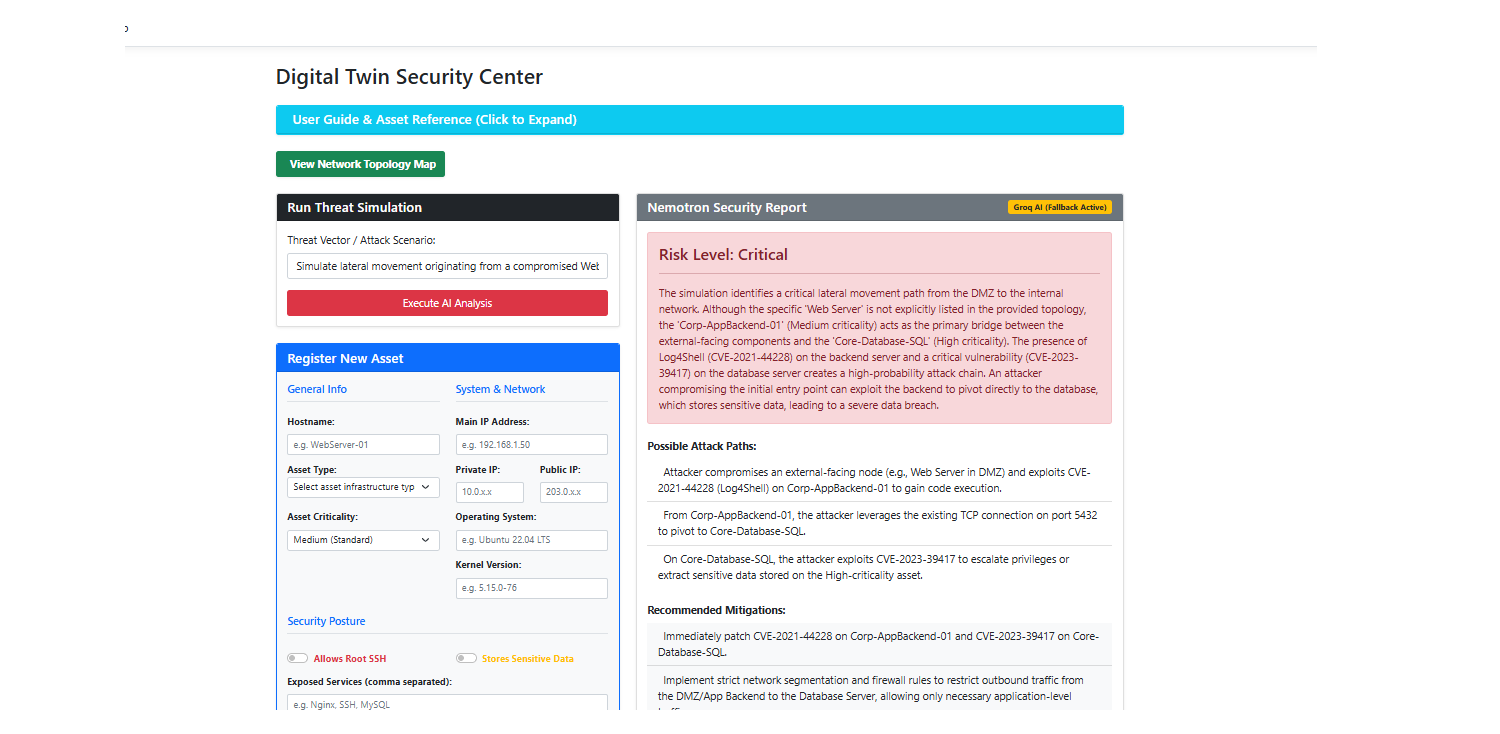
Digital Twin Security Center: Main dashboard overview and threat simulation entry points
-
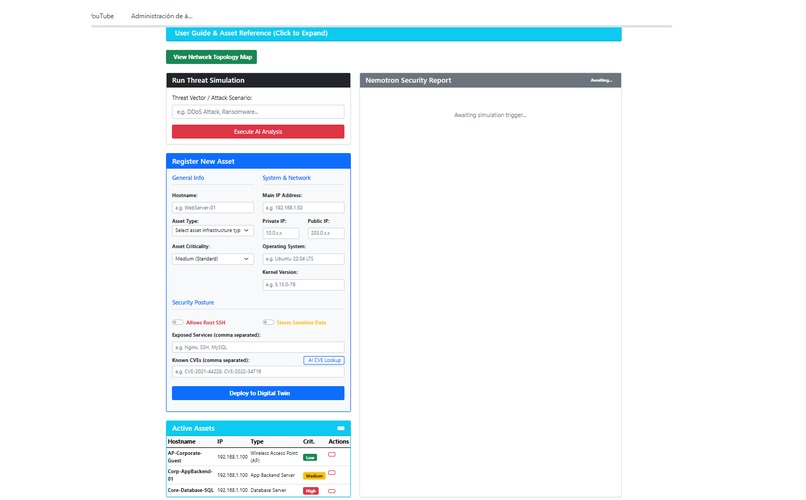
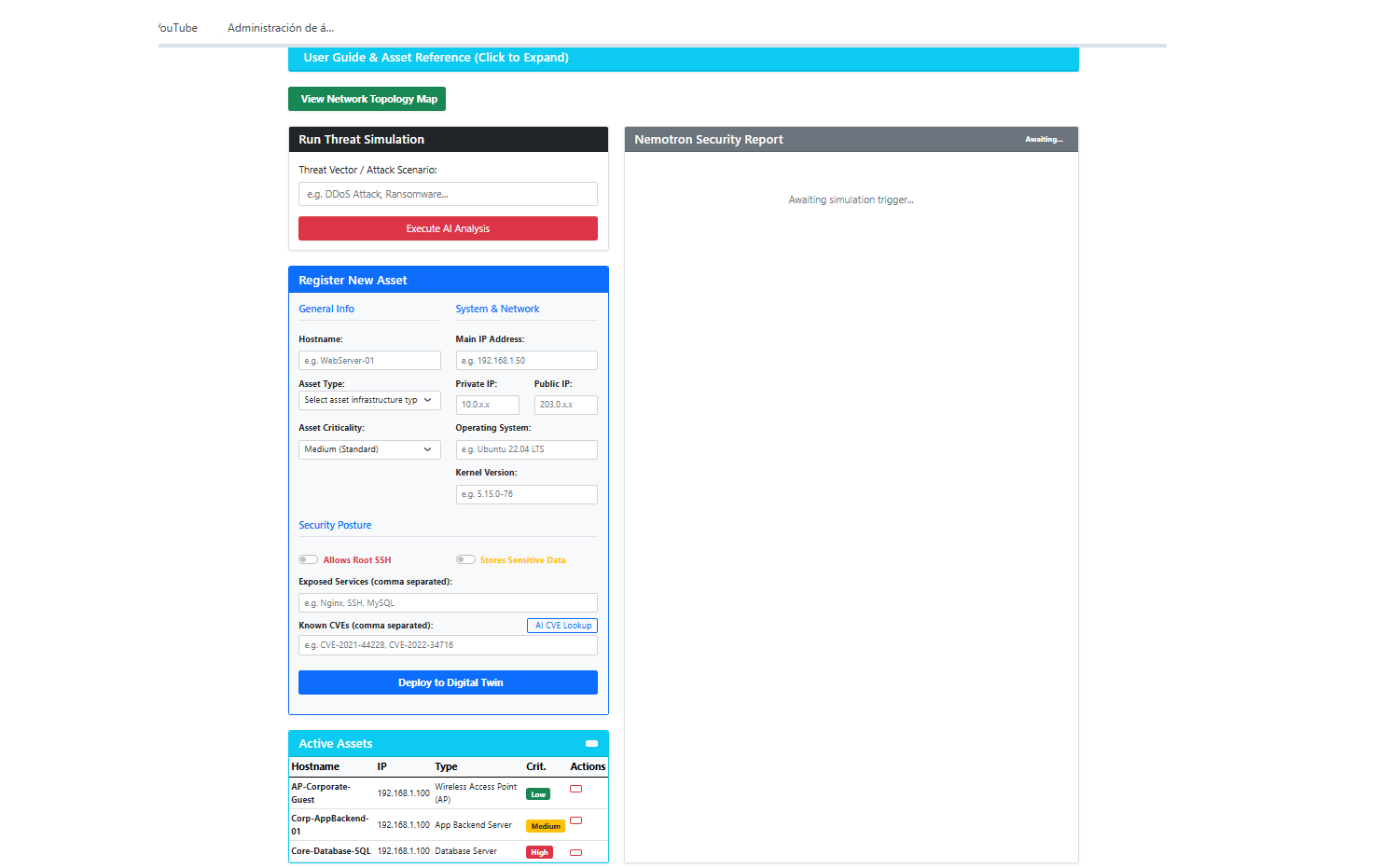
Threat Simulation & Asset Inventory: Registering infrastructure nodes and executing AI threat analysis
-
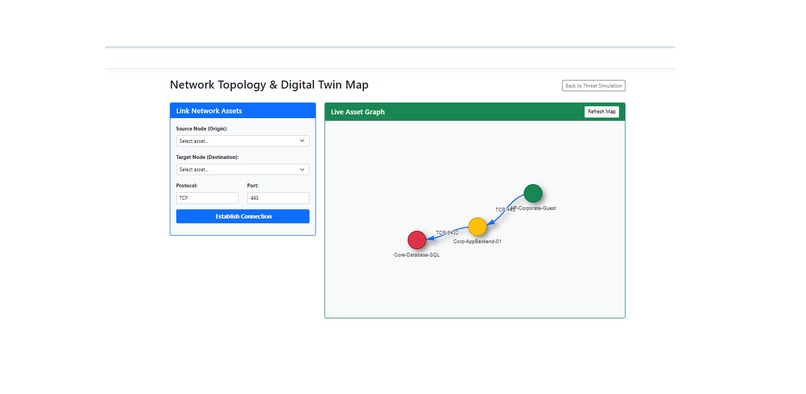
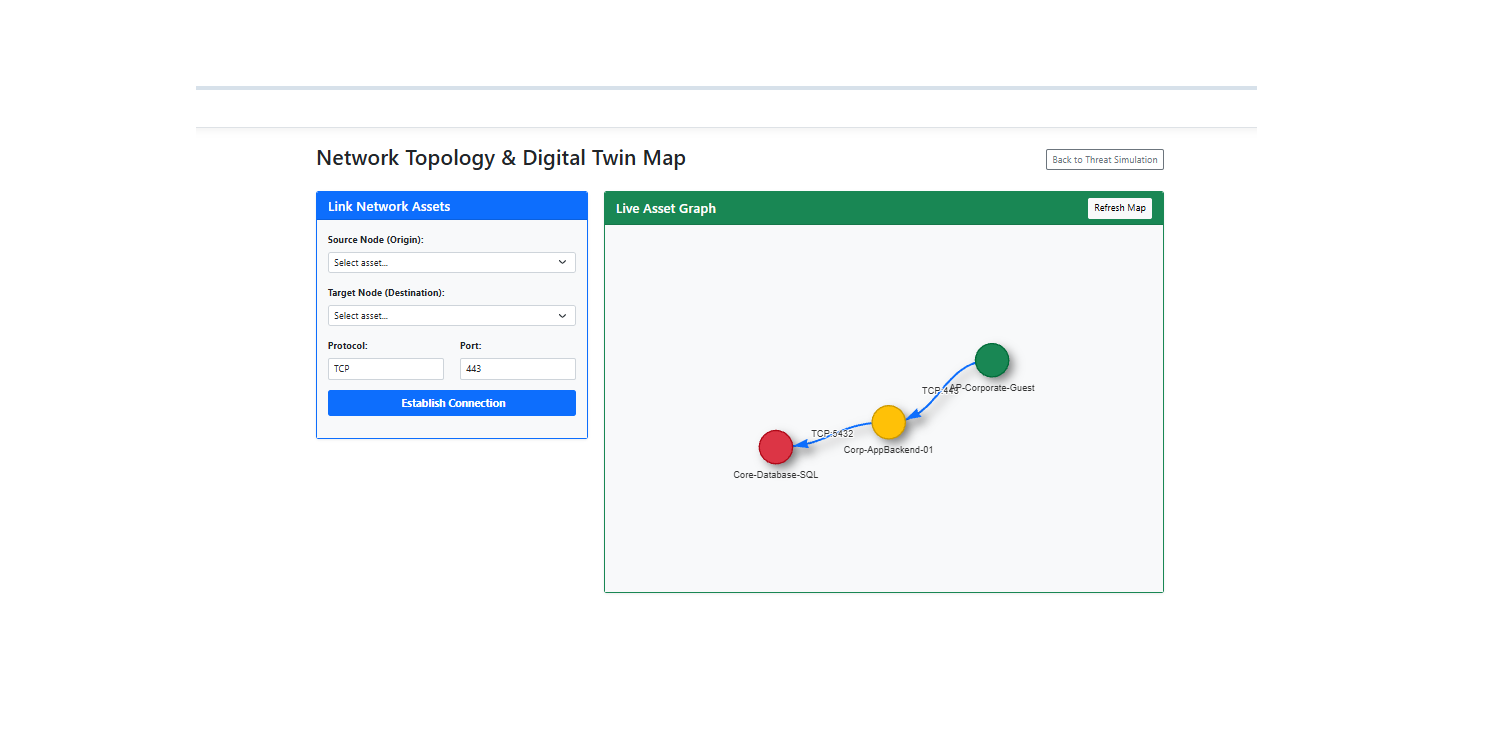
Interactive Network Topology: Visualizing live asset connectivity and critical risk paths using vis-network
-
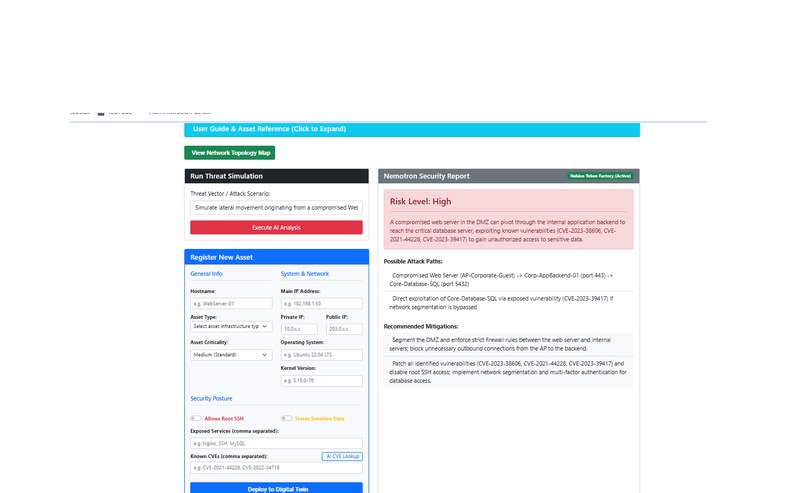
Nemotron AI Security Report: Real-time threat analysis and risk assessment powered by Nebius Token Factory and NVIDIA Nemotron.
-
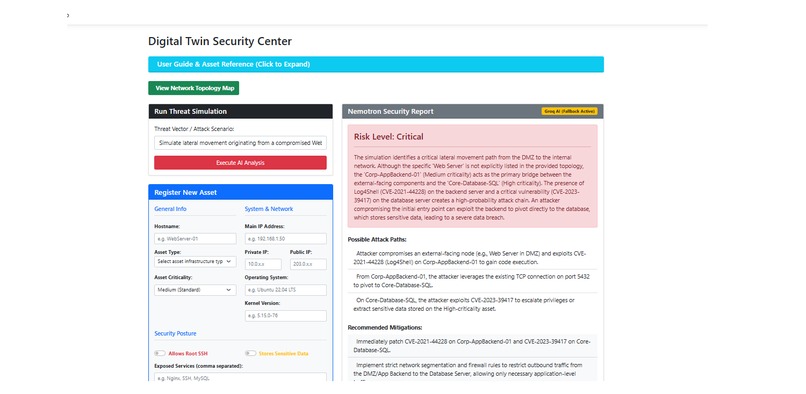
AI Resiliency & High Availability: Automated failover mechanism active, seamlessly switching to Groq AI during assessmen
💡 Inspiration
Modern enterprise infrastructures face complex, multi-layered cyber threats where static vulnerability scanners fall short. I wanted to bridge this gap by building an intelligent, real-time Digital Twin Security Simulation Platform that models critical network topologies, simulates natural language threat vectors, and leverages advanced AI architectures to evaluate risks dynamically.
⚙️ What it does
NebiusDigitalTwin is an enterprise-grade security center built with a modular structure that allows security teams to:
- Manage an Asset Inventory Digital Twin: Register infrastructure nodes (Web Servers, Database Servers, Firewalls, Wireless Access Points) with custom CVE vulnerabilities and network segmentation properties.
- Simulate AI Threat Vectors: Input natural language attack scenarios (such as lateral movement or ransomware propagation) to receive global risk levels, precise attack paths, and prioritized mitigations.
- Orchestrate Multi-Provider AI Resiliency: Ensure zero downtime during critical security assessments via an automated fallback mechanism switching seamlessly between high-performance cloud models.
🛠️ How I built it
- Backend Architecture: Built using .NET 8 and strict Clean Architecture principles separated into modular layers (
Domain,Applicationwith MediatR CQRS pattern,Infrastructure,API, andWeb). - Data Persistence: Uses MongoDB for flexible document modeling of network nodes and simulation histories.
- AI Resiliency Engine: Powered by Nebius Token Factory (NVIDIA Nemotron) as the primary high-performance LLM provider, with Groq configured as an automated high-availability fallback to guarantee continuous availability.
- Frontend & Visualization: Developed with ASP.NET Core Razor Pages / MVC, featuring interactive UI elements and dynamic network topology mapping.
🚧 Challenges I ran into
- Designing a robust multi-provider AI failover mechanism that handles token limits or network timeouts gracefully without disrupting user sessions.
- Structuring a strict Clean Architecture in .NET 8 to maintain clear separation of concerns between domain logic, CQRS handlers, and infrastructure persistence.
🏆 Accomplishments that I'm proud of
- Successfully implemented an automated AI fallback strategy that maintains continuous telemetry and switches dynamically between provider states.
- Delivered a fully functional, enterprise-grade security simulation platform complete with an interactive web frontend and persistent MongoDB storage.
📚 What I learned
The critical importance of robust architectural patterns (Clean Architecture, CQRS) and resilient multi-provider LLM integrations when building production-ready AI applications for enterprise security domains.

Log in or sign up for Devpost to join the conversation.