-
-
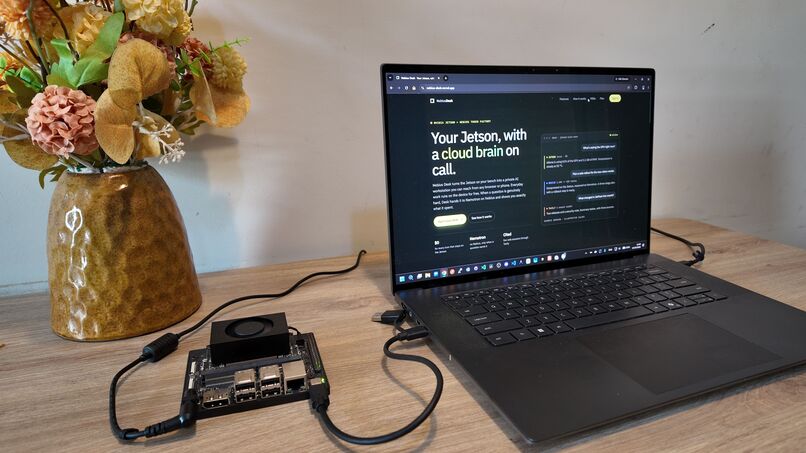
The hardware
-
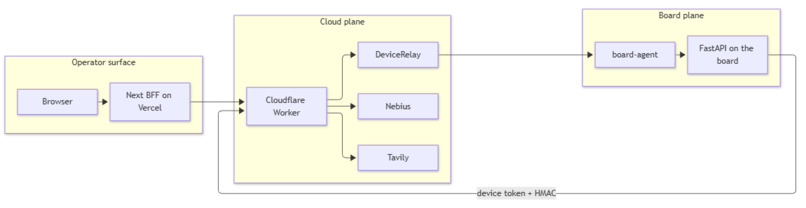
architecture
-
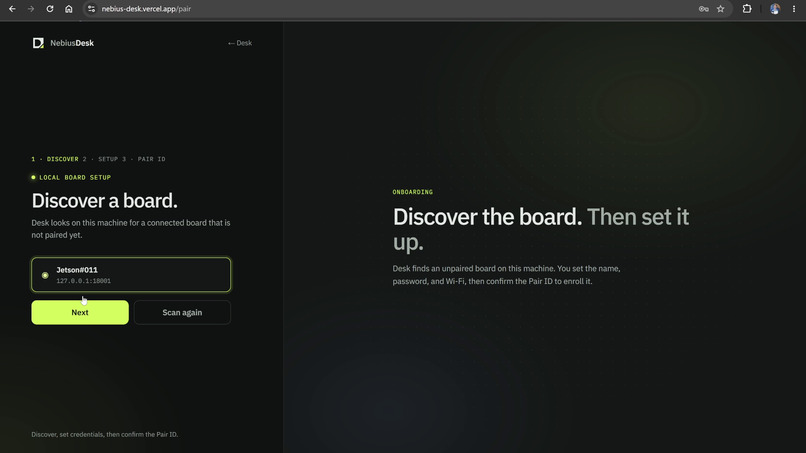
landing
-
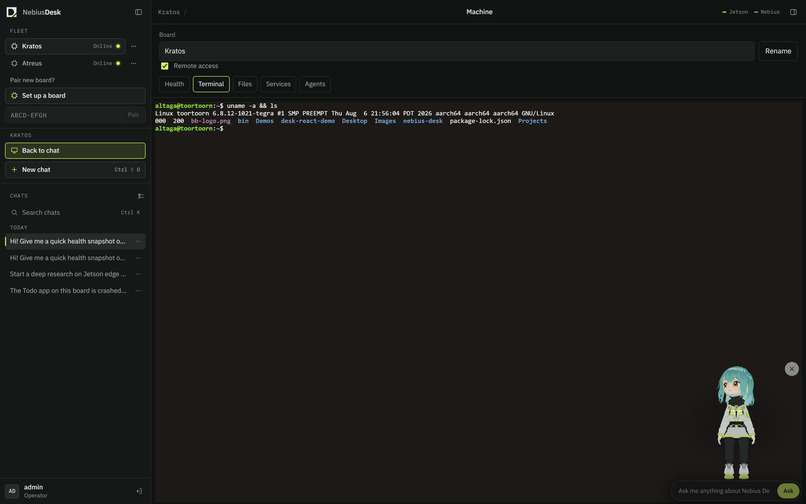
pair
-
Assistant
Nebius Desk: An AI That Has Somewhere to Live
AI agents can think. We gave one a computer, a desk, and actual work to do.
We've reached a point where AI models can write software, diagnose complex problems, and plan entire workflows. But there's still a strange disconnect: most AI experiences happen inside a chat window, while the machines, files, processes, and tools we actually need are somewhere else.
We experienced this firsthand. Over the past few months, our team has been moving between countries, building and shipping projects while constantly on the road. And as much as we love our laptops, pulling one out, finding somewhere to sit, and opening a dozen terminals isn't always practical—especially when you're moving between airports, events, and meetings. But our work doesn't stop just because we're traveling. We needed a way to reach our machines, check on projects, and get actual work done from wherever we happened to be. So we built Nebius Desk for ourselves. It's not just a hackathon experiment; it's something we use every single day.

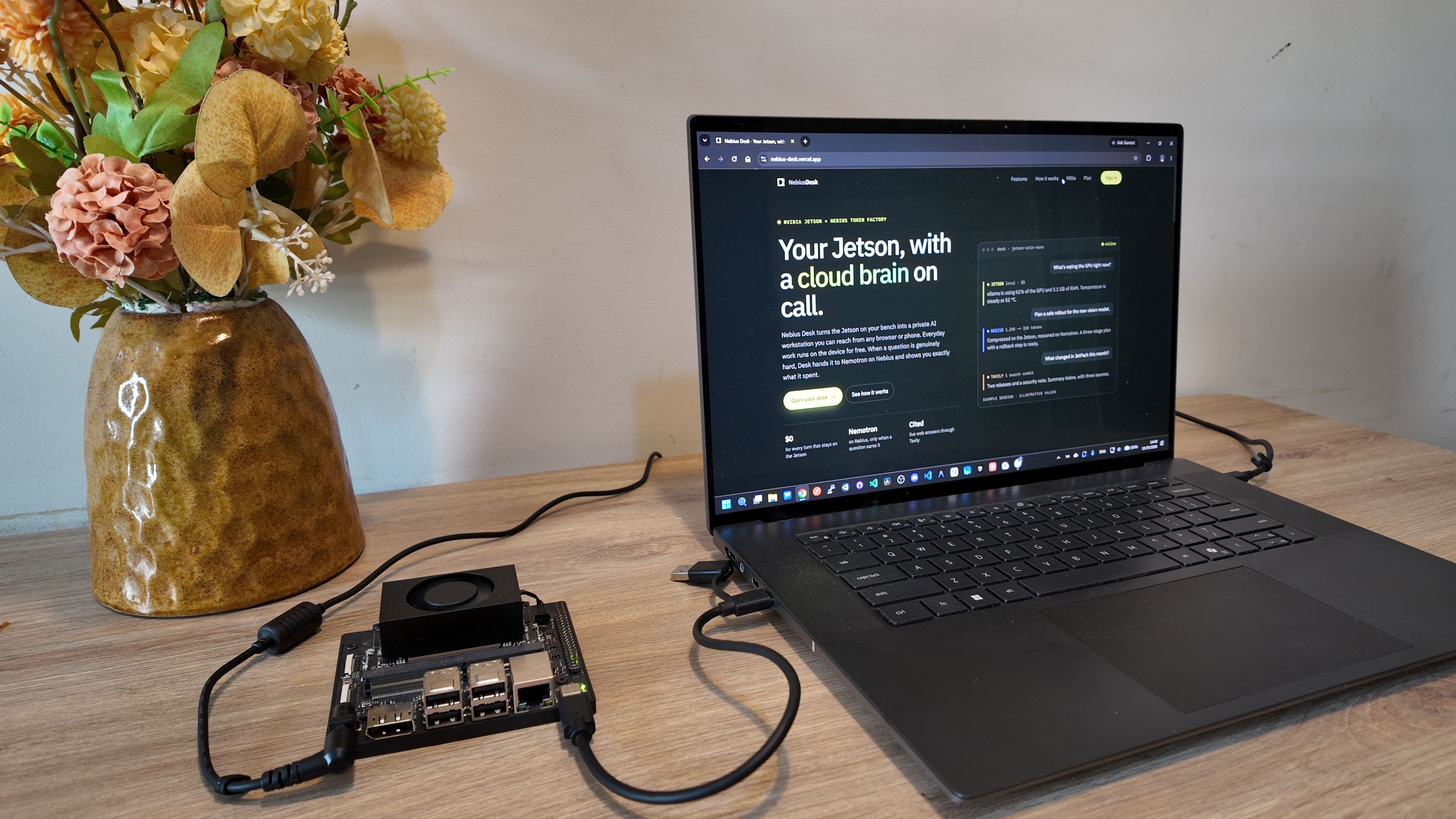
Nebius Desk is a persistent AI operator for your own hardware, combining local execution on NVIDIA Jetson with powerful NVIDIA Nemotron reasoning through Nebius Token Factory.
Your machine handles the work. The cloud supplies additional intelligence when necessary. You stay in control.
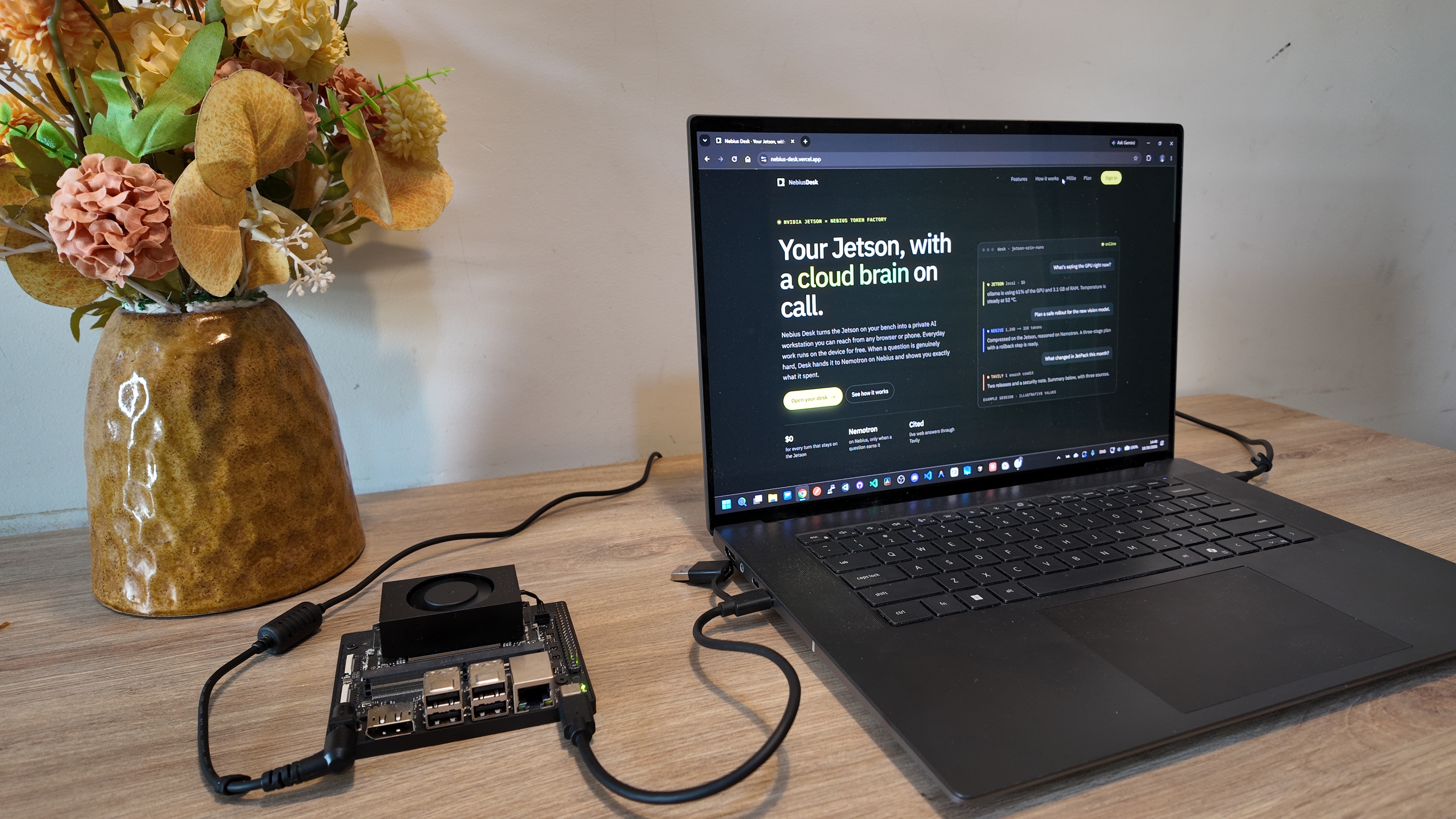
Give your AI a real machine
Imagine opening your laptop and asking your AI:
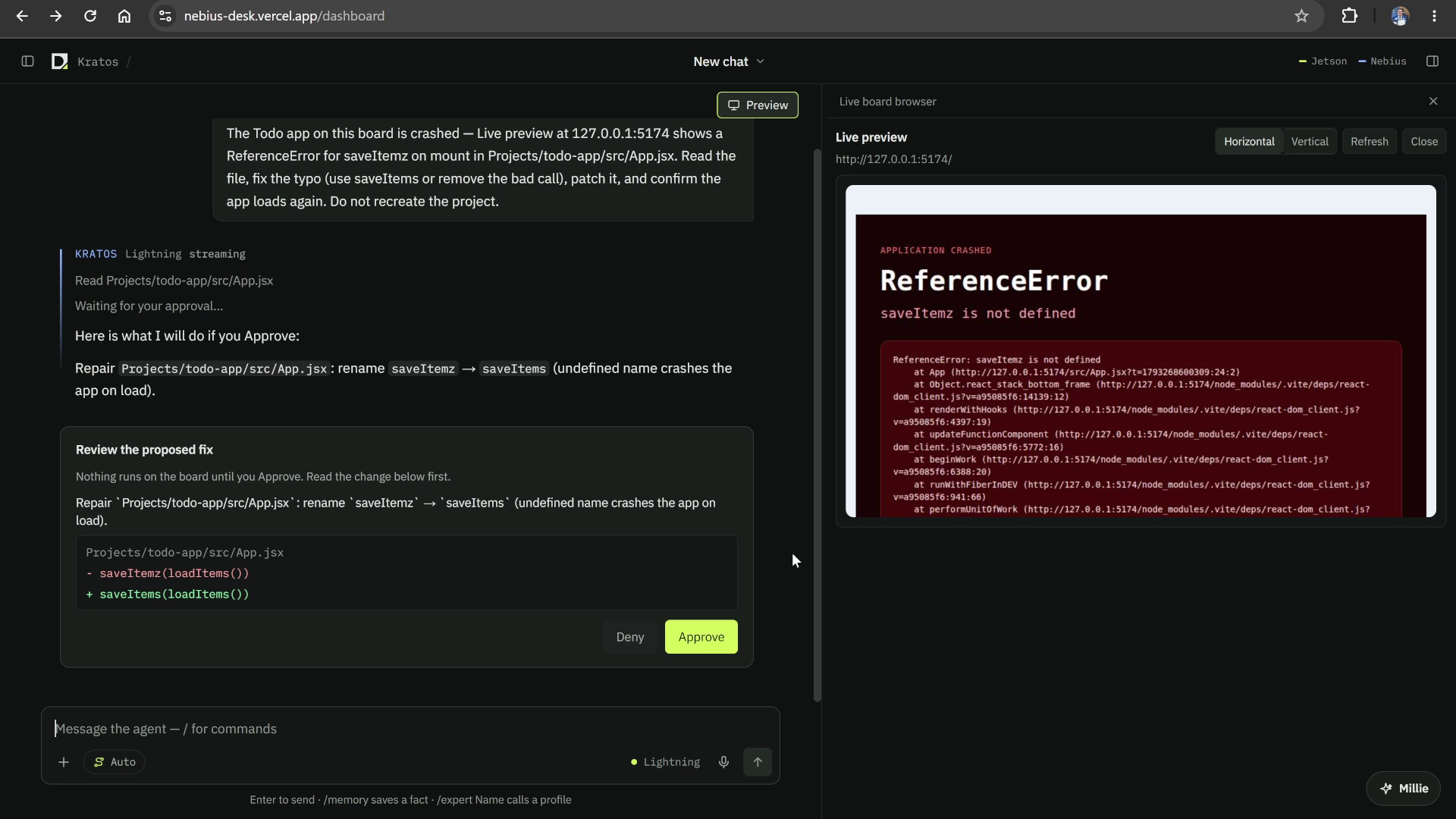
"Something is wrong with my application. Figure out what happened, fix it, and verify that it's working."
A conventional chatbot might explain which commands you should run.
Nebius Desk is designed to go further.
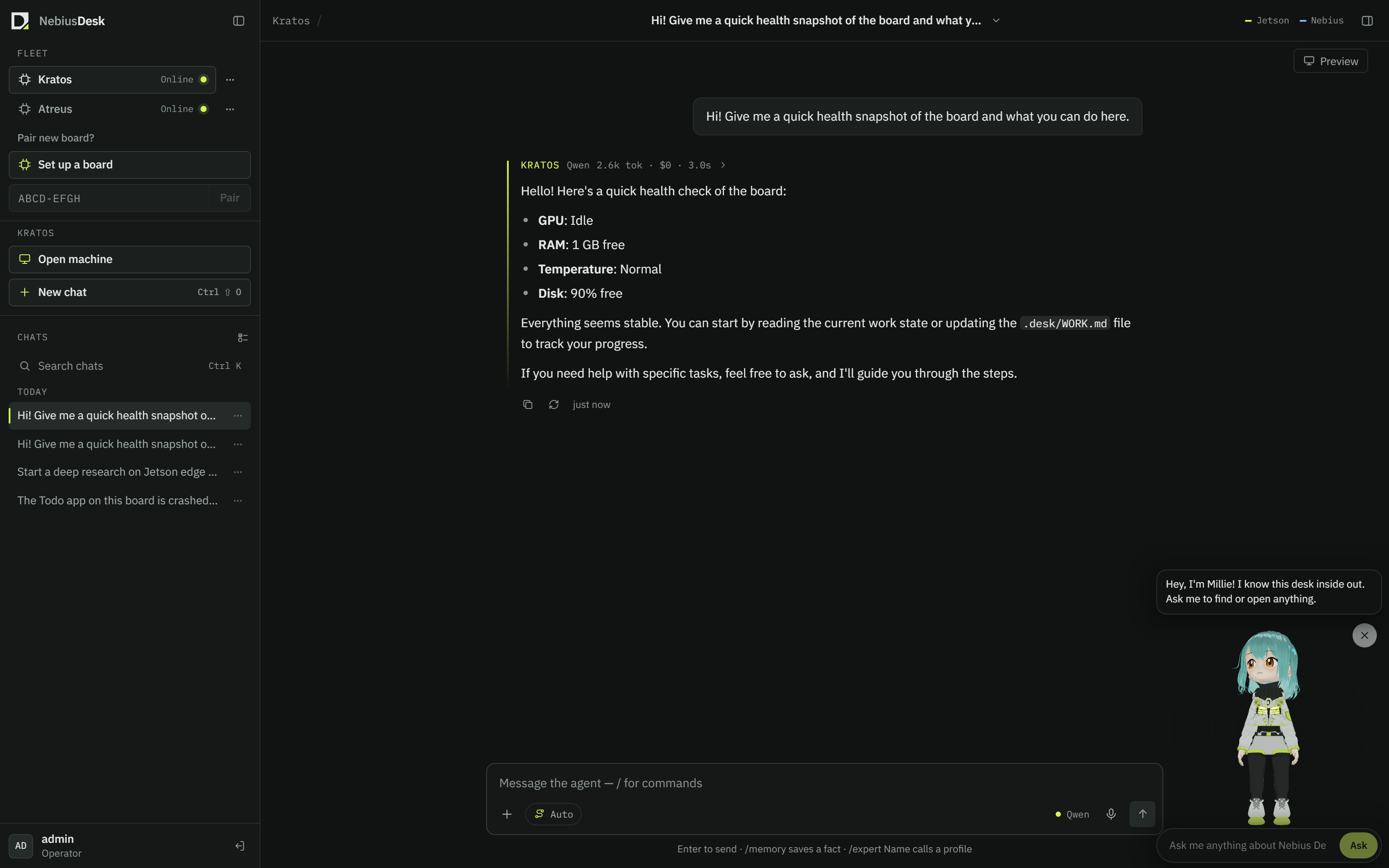
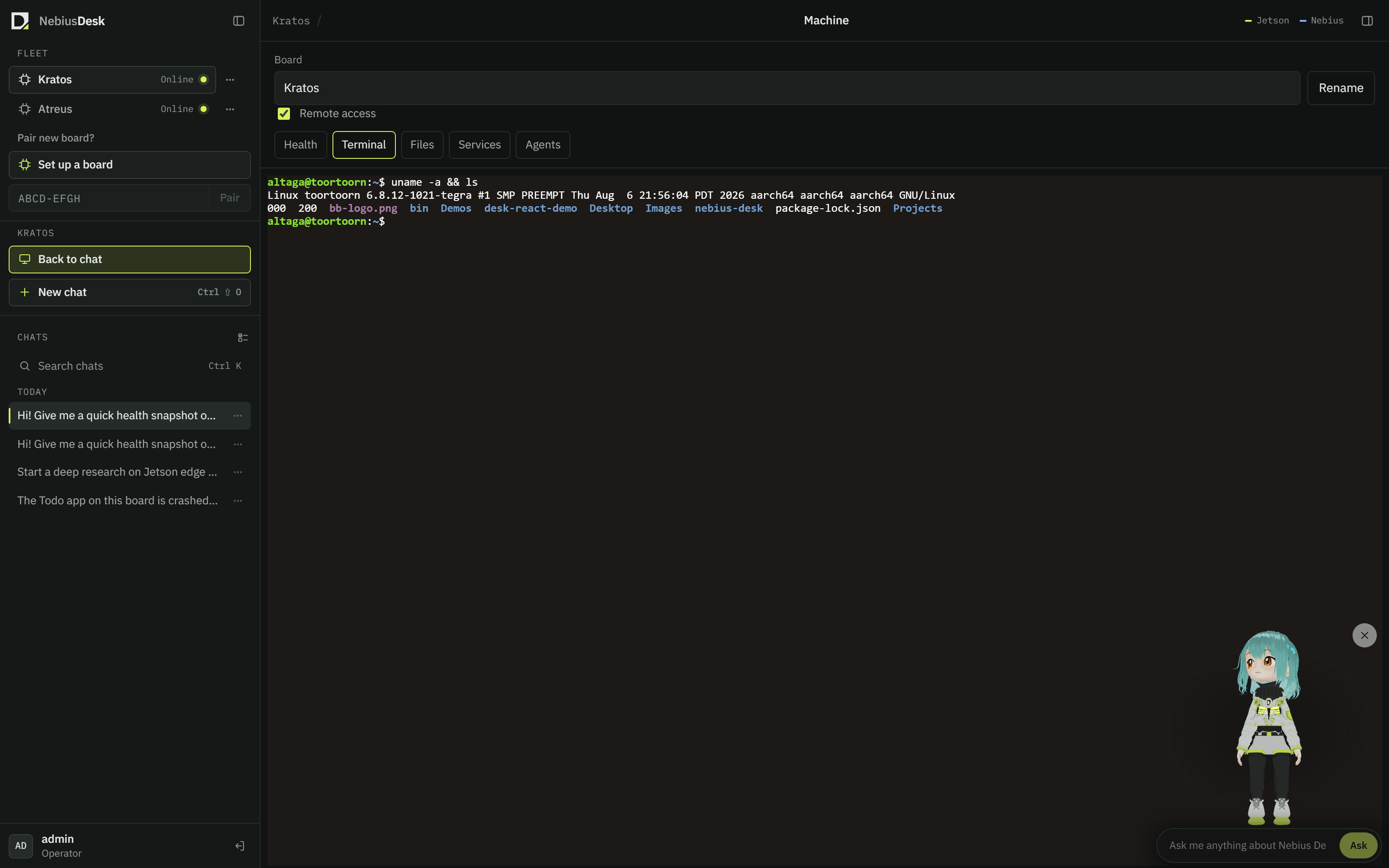
It can inspect the actual machine, read logs, execute shell commands, investigate services, edit files, and run verification checks. If a sensitive operation requires authorization, the agent requests approval before proceeding.
And it doesn't forget the environment when you close the browser.
The machine retains its files, work state, and background jobs. You can reconnect to the same environment and continue where you left off.
This is the difference between an AI that gives you instructions and an AI that can help carry them out.
One desk. Your entire machine.
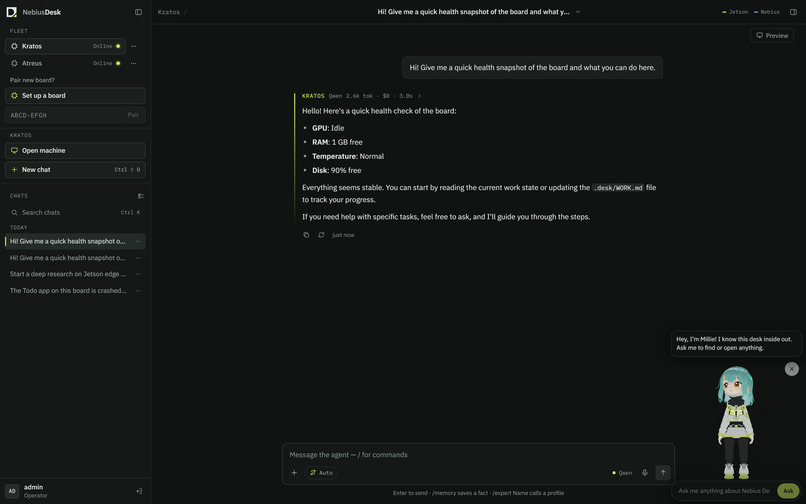
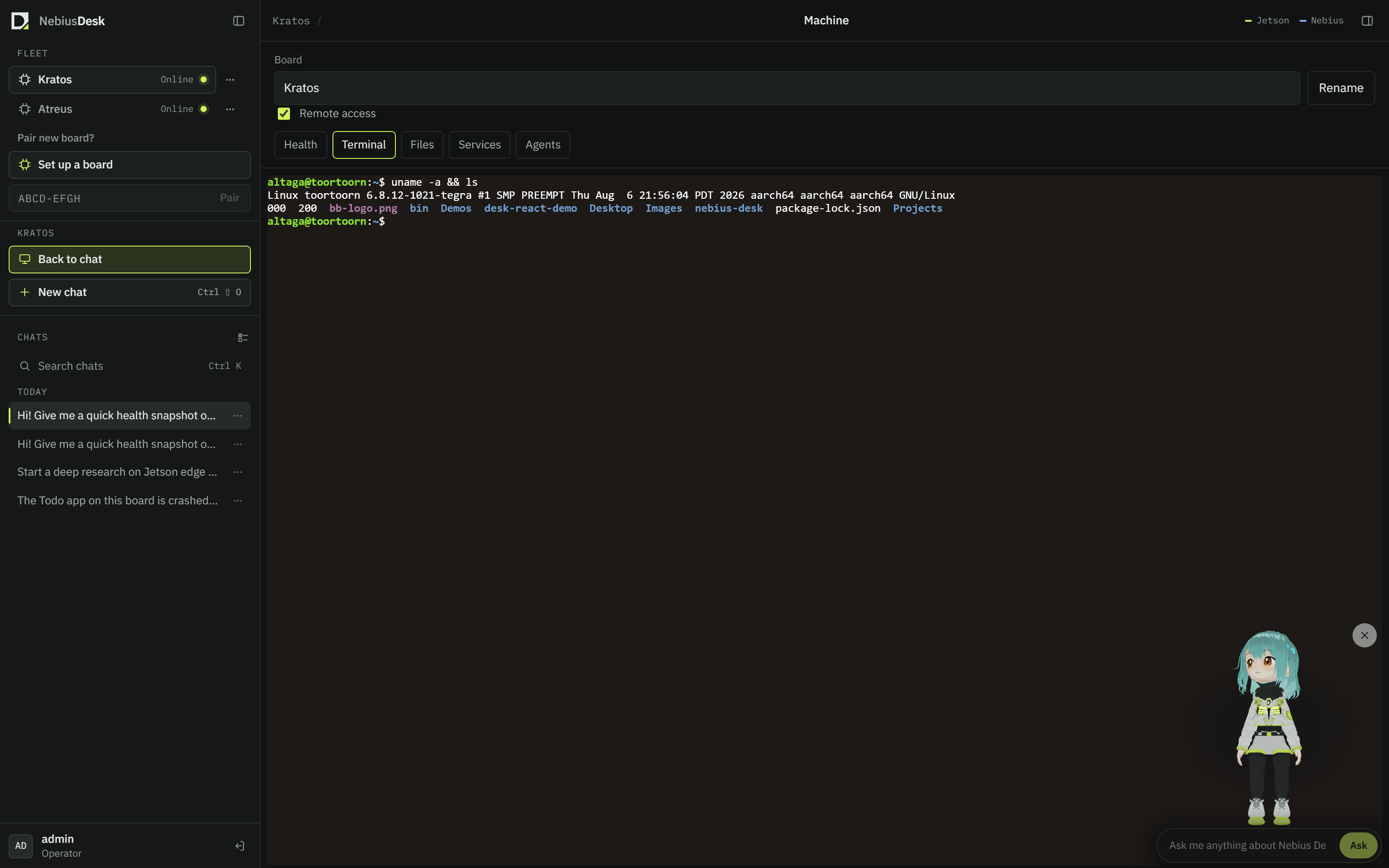
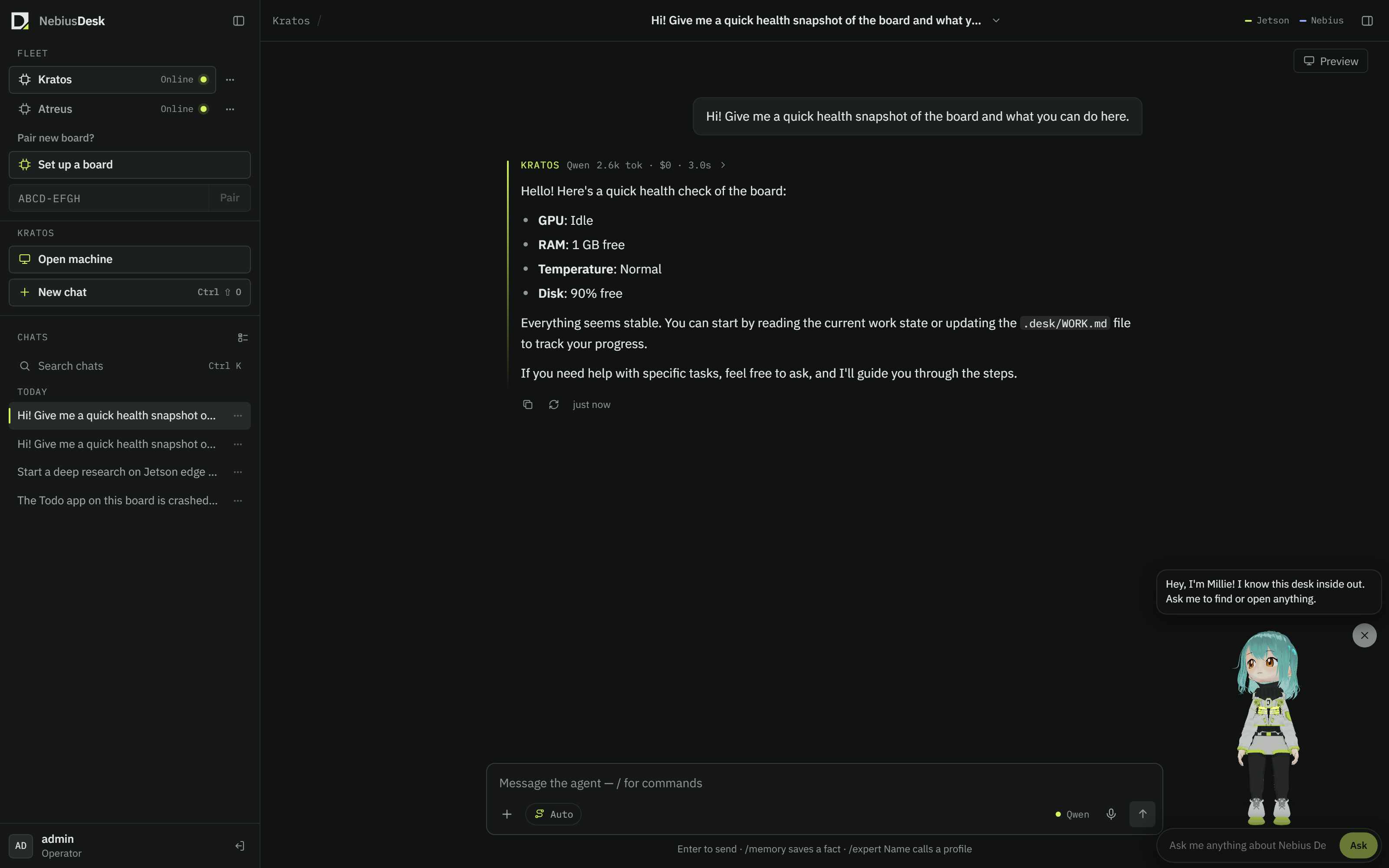
We built Nebius Desk around a simple interface: chat with your AI on one side, and the machine it's operating on just a click away.
From the same workspace, you can browse files, use the terminal, inspect services, check GPU and memory statistics, manage background jobs, and access the agent's working context.
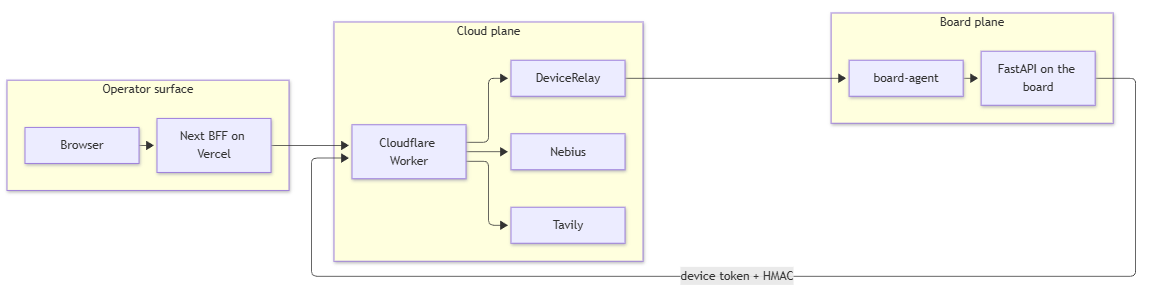
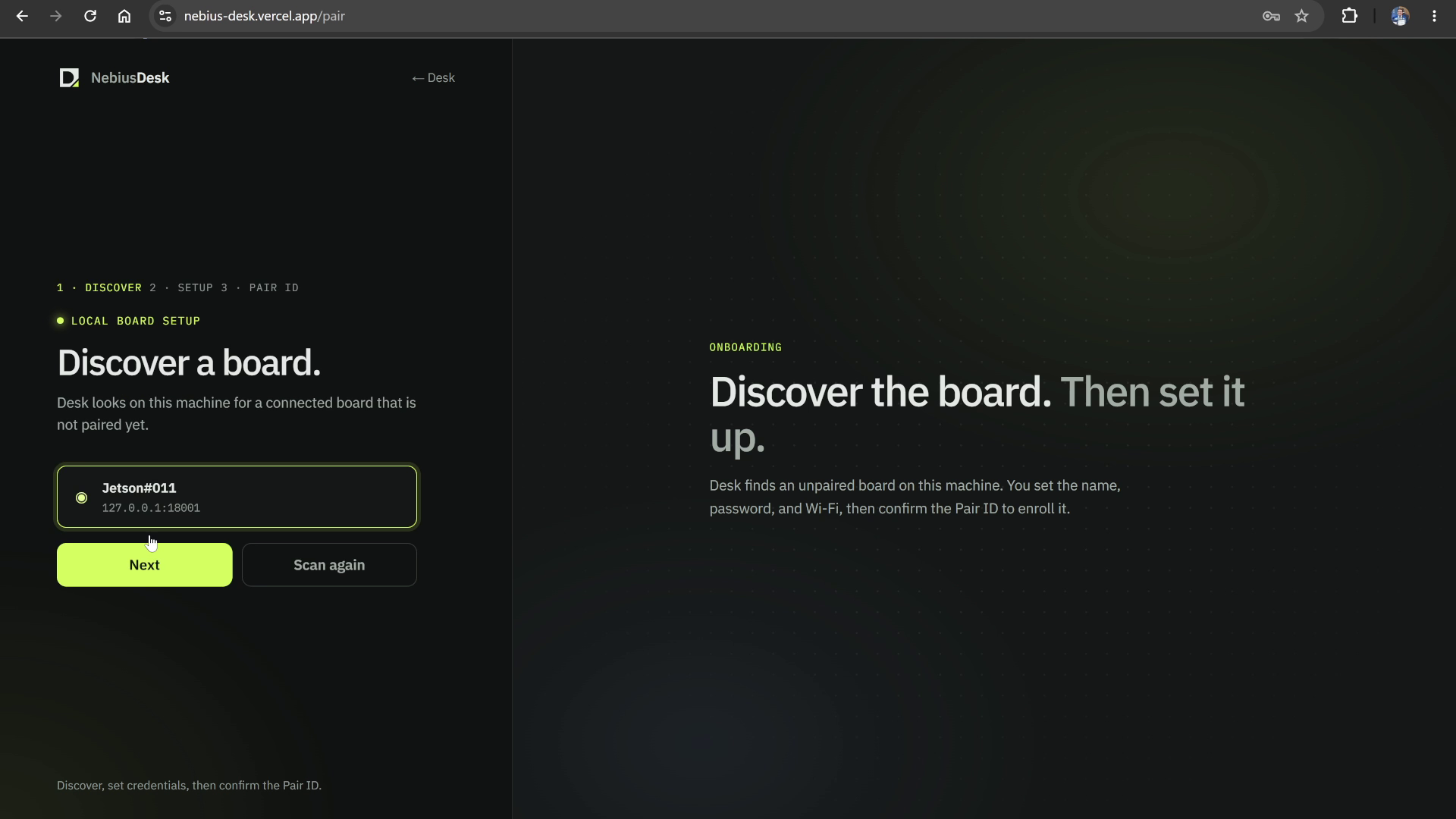
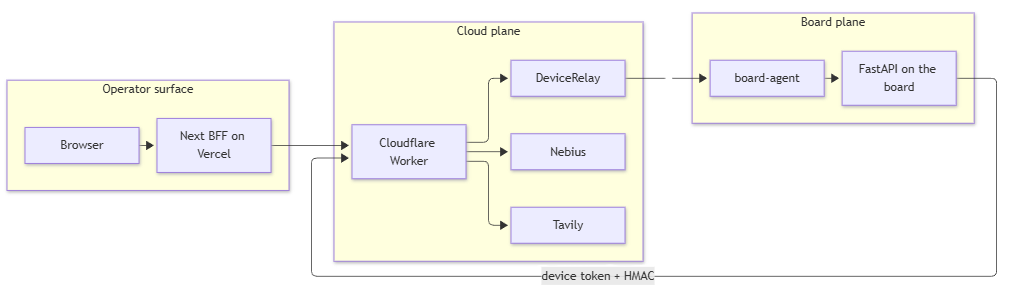
A machine can be paired using a short code. It then establishes an outbound connection through Cloudflare, allowing remote operation without exposing an inbound service port.
And because interacting with an entire machine can be intimidating, we gave the Desk a little personality.
Meet Millie, our interactive 3D guide.
Millie isn't just a decorative avatar or another chatbot. She understands the interface and can navigate it with you: opening screens, highlighting specific controls, and walking new users through their workspace.
Her actions are deliberately restricted to safe interface navigation. She doesn't execute shell commands or modify files.
The idea is to make sophisticated personal AI infrastructure approachable, even when there's a lot happening under the hood.
The intelligence shouldn't cost more than the computer
Here's where NVIDIA and Nebius become central to the product.
A compact Jetson can run smaller models locally, but expecting it to handle every difficult reasoning task isn't realistic.
On the other hand, sending every request to a large cloud model wastes money and compute.
So we built a hybrid inference ladder.
On supported Jetson hardware, Ollama runs Qwen2.5 1.5B for lightweight tasks, routing decisions, and context compression.
When a task requires more intelligence, Nebius Desk can escalate to NVIDIA Nemotron models hosted on Nebius Token Factory.
Our routing architecture includes Nemotron 3 Nano for economical cloud inference, Nemotron 3.5 Lightning for everyday tasks, Nemotron 3 Super for harder reasoning, and a manually selectable Ultra tier.
The system can choose a tier automatically or let the user select one. Before expensive cloud calls, it can compress longer conversation histories locally, while metering tracks model usage and spending.
The goal isn't to use the largest model for everything. It's to use the right amount of intelligence for each task.
The same architecture also supports Docker-based board emulation for development and testing, using Nebius inference without pretending that an emulated board provides a physical Jetson GPU.
An AI operator needs more than a powerful model
Building an agent that can interact with a real machine forced us to tackle problems that don't appear in a typical chatbot.
We needed tools that could observe the environment, execute meaningful operations, and report results back to the model.
We needed persistent jobs, browser automation through Playwright, file operations, service diagnostics, verification recipes, and a structured place to maintain ongoing work.
We also needed boundaries.
Nebius Desk implements approval gates for sensitive changes, constrained filesystem operations, and vetted installation procedures that reject untrusted sources and suspicious commands.
The remote infrastructure uses a separate Cloudflare control plane for authentication, pairing, relay connectivity, inference credentials, and metering. API keys remain at the gateway rather than being distributed to browsers or connected devices.
Underneath the interface, our implementation brings together:
FastAPI for execution and agent tools; Next.js for the web workspace; Cloudflare Workers, D1, and Durable Objects for remote connectivity; Ollama for supported local inference; and Nebius Token Factory with NVIDIA Nemotron for cloud reasoning.
The result isn't just an LLM calling a shell command.
It's an architecture where the machine maintains state, the model makes decisions, and the user retains oversight.
Beyond a developer tool
Our first use case is operating a personal development machine.
But the underlying idea extends further.
Imagine a researcher interacting with a laboratory computer, a developer supervising services remotely, or a small team managing its own edge hardware without depending entirely on a hosted AI environment.
The value isn't simply having another assistant capable of generating text or code.
It's giving intelligent software a persistent place to operate, with access to real tools, a reusable working environment, and human oversight.
There's still work ahead: improving autonomous reliability, expanding reusable workflows, simplifying physical-device onboarding, and making the experience accessible beyond technical early adopters.
But the foundation is here, and we've made the implementation open source.
We believe the next generation of personal AI won't be defined only by how intelligent the models become.
It will also be defined by where they live, what they can actually do, and who controls them.
Nebius Desk. Your AI. Your Machine. Your Rules.
Built With
- ai
- cloudflare-d1
- cloudflare-durable-objects
- cloudflare-workers
- docker
- edge-ai
- expo.io
- fastapi
- nebius-token-factory
- next.js
- nvidia-jetson
- nvidia-nemotron
- ollama
- playwright
- python
- qwen2.5
- react
- sqlalchemy
- sqlite
- tavily
- typescript
- vercel
- websockets

Log in or sign up for Devpost to join the conversation.