-
-
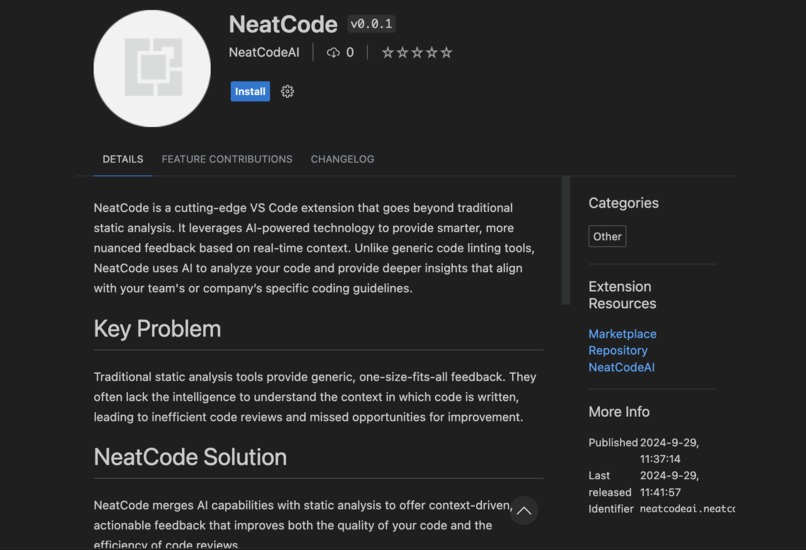
Official Extension on VSCode Marketplace
Inspiration
When working at our internships over the summer, we noticed that whenever we moved into the testing phase for our code, we only received feedback from static analysis tools that were not extremely descriptive. After thinking about some potential solutions to this issue, we decided that integrating AI suggestions in real time while following any coding standards chosen by the user would alleviate the stress of testing code.
What it does
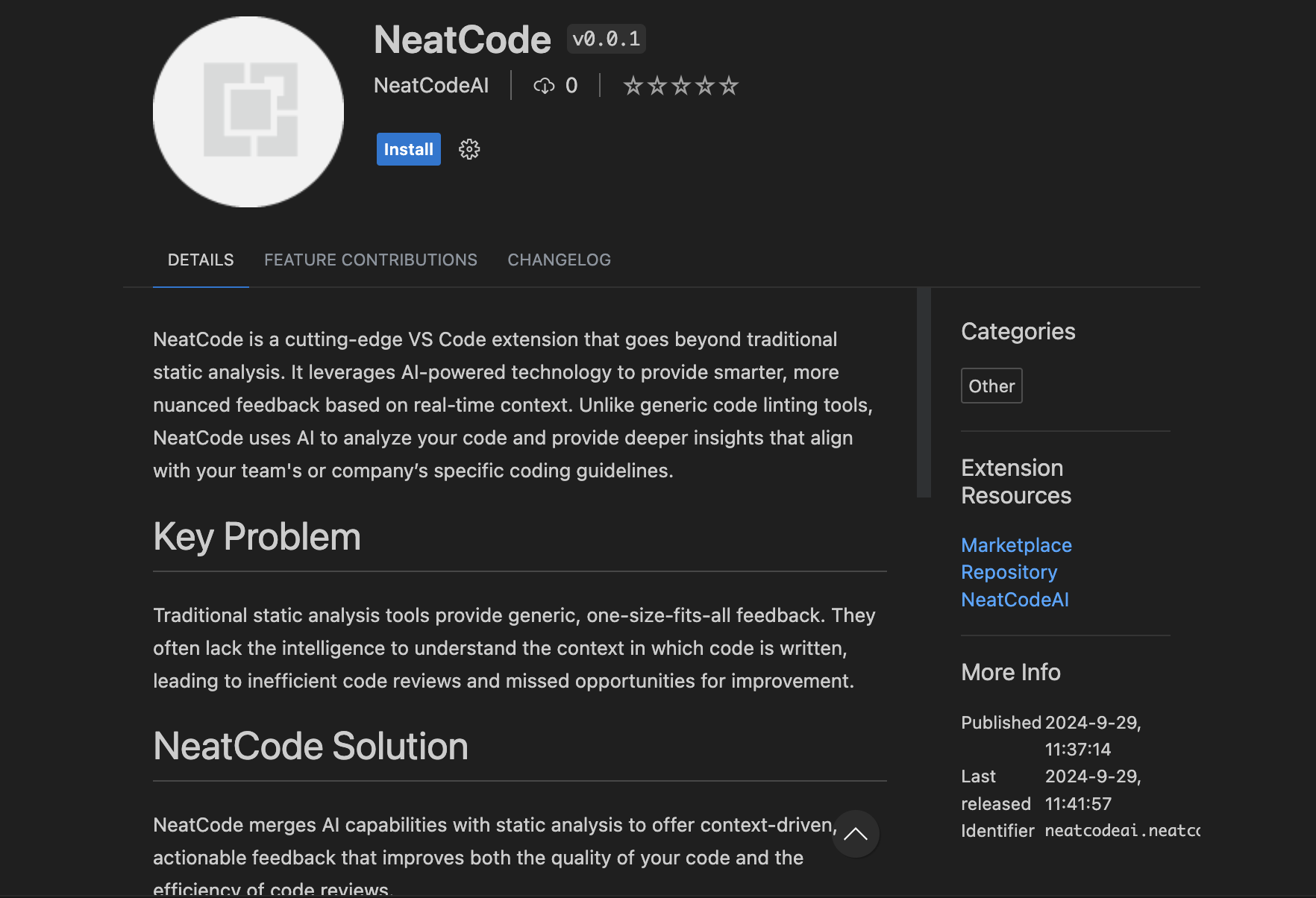
NeatCode merges AI capabilities with static analysis from a guideline of your choice to offer context-driven, actionable feedback that improves both the quality of your code and the efficiency of code reviews.
How we built it
NeatCode uses Node.js for both the front end and the back end, and utilizes ChatGPT 3.5 turbo API to give AI feedback.
Challenges we ran into
Communication with OpenAI's different GPT models turned out to be a much more significant challenge than we thought, and making sure the data was properly formatted made the code extremely inconsistent and caused more errors than we originally expected. In order to account for this, we put in format checking- ensuring the GPT response was something we could consistently parse through and provide accurate data.
Accomplishments that we're proud of
We are extremely proud that we were able to launch an official VSCode extension in the marketplace. This is a project we are extremely passionate about and to see its progress over the hackathon has been a pleasure.
What we learned
We grew our technical skills a LOT, learning node.js, api calling, full stack development, and handling the challenges that come with launching a project in such a short time constraint.
What's next for NeatCode
We want to provide support for all languages rather than just javascript. Additionally, we plan on switching from OpenAI API to using BAML so that API calling will be free and more accurate.
Built With
- eslint
- gpt-3.5-turbo
- node.js
- openai


Log in or sign up for Devpost to join the conversation.