
Nearstack: Simplifying Web3 Development with AI-Powered Insight and Visual Flow.
Inspiration
The inspiration for this project stems from the need to simplify and accelerate frontend development using NEAR BOS components. Traditional methods often involve manually writing and managing complex codebases, which can be time-consuming and prone to errors. By integrating AI-generated component code and a visual canvas to display the flow of components, we aim to provide developers with a more intuitive and efficient way to build, visualize, and manage their applications. This approach makes the development process more accessible, reduces cognitive load, and encourages a smoother workflow, especially in complex projects.
What it does
The project streamlines the frontend development process for NEAR BOS components by offering several key features:
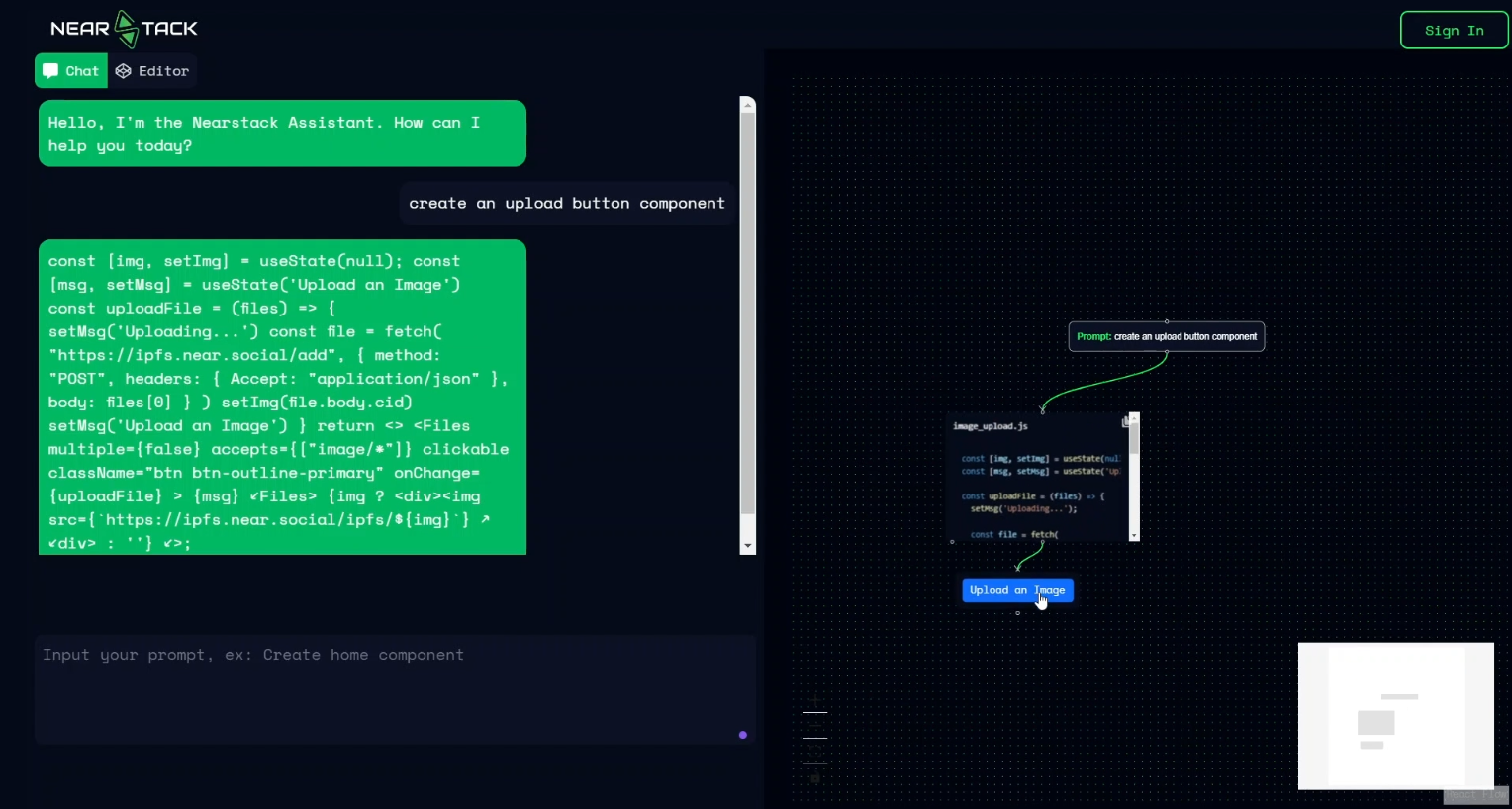
AI-Generated Code: It uses AI to automatically generate NEAR BOS component code, saving time and effort in writing repetitive or complex code blocks.
Visual Component Flow: It includes a canvas UI that visually maps out the flow of components, making it easy to see how different components are connected. For example, if Component A uses Component B, the relationship is visually displayed on the canvas.
Component Relationships: The platform shows real-time interactions between components, helping developers quickly understand how different parts of the frontend relate and work together.
How we built it
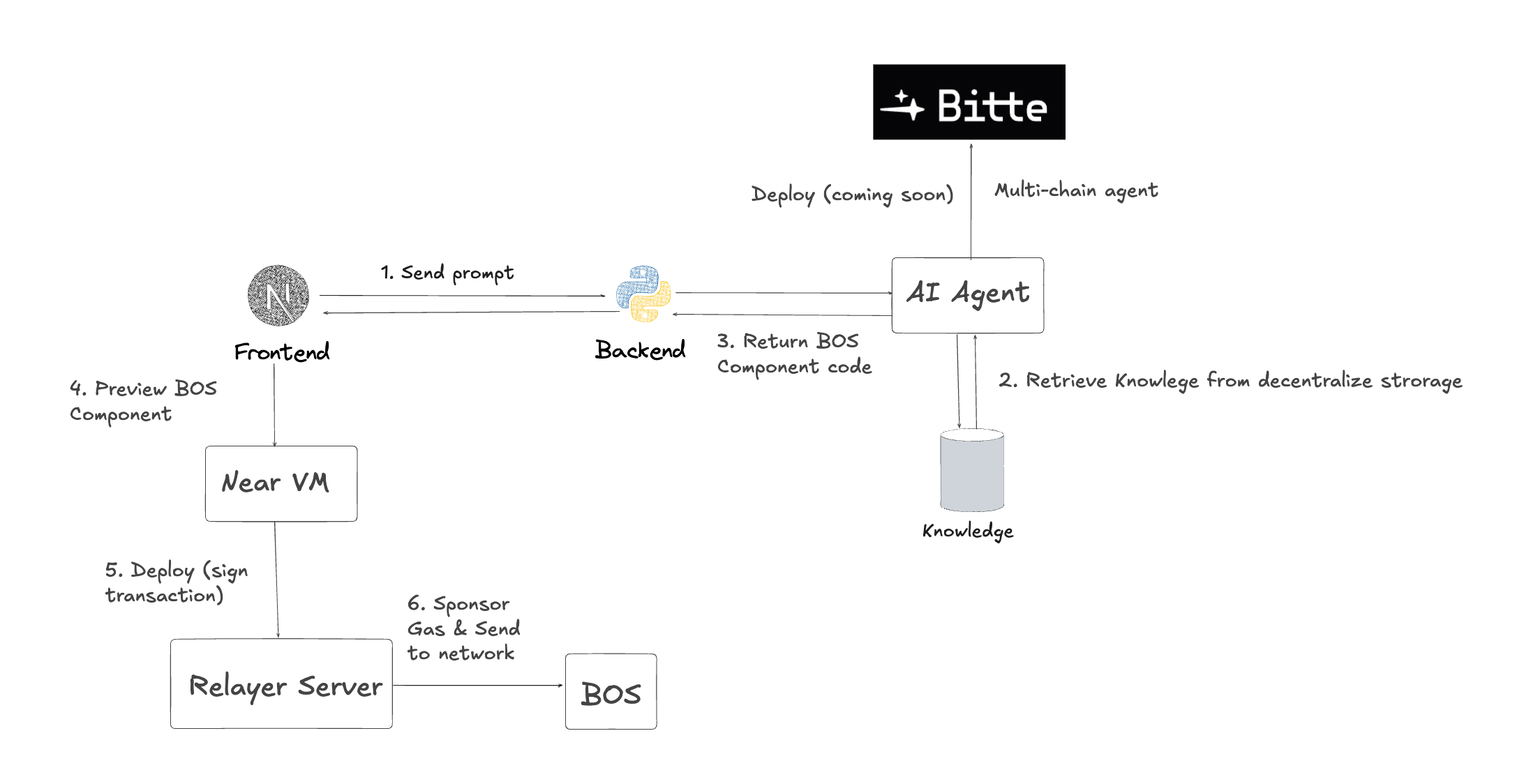
Our system leverages multiple components that interact to streamline the development of Web3 applications on the NEAR ecosystem. Here’s a breakdown of the process:
Frontend: The user starts by sending a prompt from the frontend interface. This prompt serves as an instruction for the system to generate or retrieve specific BOS (Blockchain Operating System) components.
Backend and AI Agent: The prompt is processed by the backend, which communicates with our AI agent. The AI agent retrieves the necessary knowledge from a decentralized storage, such as documentation, code snippets, or examples, and uses this information to create or modify BOS component code.
Return Component Code: Once the BOS component code is generated, the AI agent returns it to the backend, which then passes it to the frontend for the user to preview.
Preview BOS Component: The frontend allows users to preview the generated BOS component within the NEAR VM, giving them a clear view of how the component will look and function within their application.
Deployment: After previewing, the user can deploy the component by signing a transaction. This step confirms that they want the component to be live on the NEAR network.
Relayer Server: Finally, the relayer server sponsors the gas fee required for the transaction and sends it to the NEAR network, completing the deployment process.
Technical Architecture
Accomplishments that we're proud of
AI-Powered Code Suggestions
Enabled developers to write cleaner, faster code with intelligent AI recommendations, improving productivity and reducing errors.
Seamless NEAR BOS Integration
Successfully integrated NEAR BOS components, allowing for efficient Web3 application development with streamlined access to blockchain functionality.
Visual Flow for Component Relationships
Built an intuitive React flow interface that helps developers visualize and manage complex component interactions, enhancing code organization and clarity.
Enhanced Developer Experience
Created a user-friendly platform that simplifies frontend development, empowering developers to focus on innovation rather than technical setup.
Support for NEAR Ecosystem Growth
Contributed to the NEAR ecosystem by building tools and features that make decentralized app development accessible and efficient.
What's next for Nearstack
Advanced AI-Driven Development Assistance
- Expand the AI capabilities to include more advanced code analysis, error prediction, and real-time debugging tips, making development even more intuitive and error-free.
- Integrate AI for code refactoring and optimization, helping developers to continuously improve code quality.
Automated Component Recommendations
- Use AI to suggest the best NEAR components for different use cases, helping developers quickly identify the most suitable tools for their needs.
- Personalized recommendations based on developer history, project requirements, and usage patterns.
Enhanced Visualization and Analytics
- Add more detailed visual analytics on component performance and interaction efficiency within the app, allowing developers to identify bottlenecks and optimize interactions.
- Integrate a dashboard for tracking component usage, data flow, and user engagement metrics.
Thank you for reading
Thank you for your patience in reading this document. It is very long and took you a lot of time! Thank you very much! Of course, you are welcome to try my platform!


Log in or sign up for Devpost to join the conversation.