Inspiration
A while back, I tried a simple test: name five birds that live in my neighborhood. I got stuck at three. Then I tried naming five Pokémon and didn't even have to think.
It turns out I'm not alone. In 2002, Cambridge conservation scientist Andrew Balmford and his colleagues published a study in Science where they showed British schoolchildren flashcards of Pokémon and common local wildlife. By age eight, the kids could identify 78% of Pokémon but only 53% of local wildlife.
The kids weren't short on curiosity. They had learned dozens of made-up creatures because collecting them was fun. As Balmford put it:
"People tend to care about what they know."
He even suggested that conservationists borrow the idea and build their own Pokémon-style game.
That stuck with me. The creatures worth collecting are already in our backyards; most people justdon't know their names. So I built NearNature, which turns the species living in your area into a collection you can start from your couch.
My hope is that NearNature helps people learn the species living right outside their door, and that communities gain a shared language for their local nature, making it something families and neighbors notice and talk about together. Because it's hard to protect what you don't know exists.
What it does
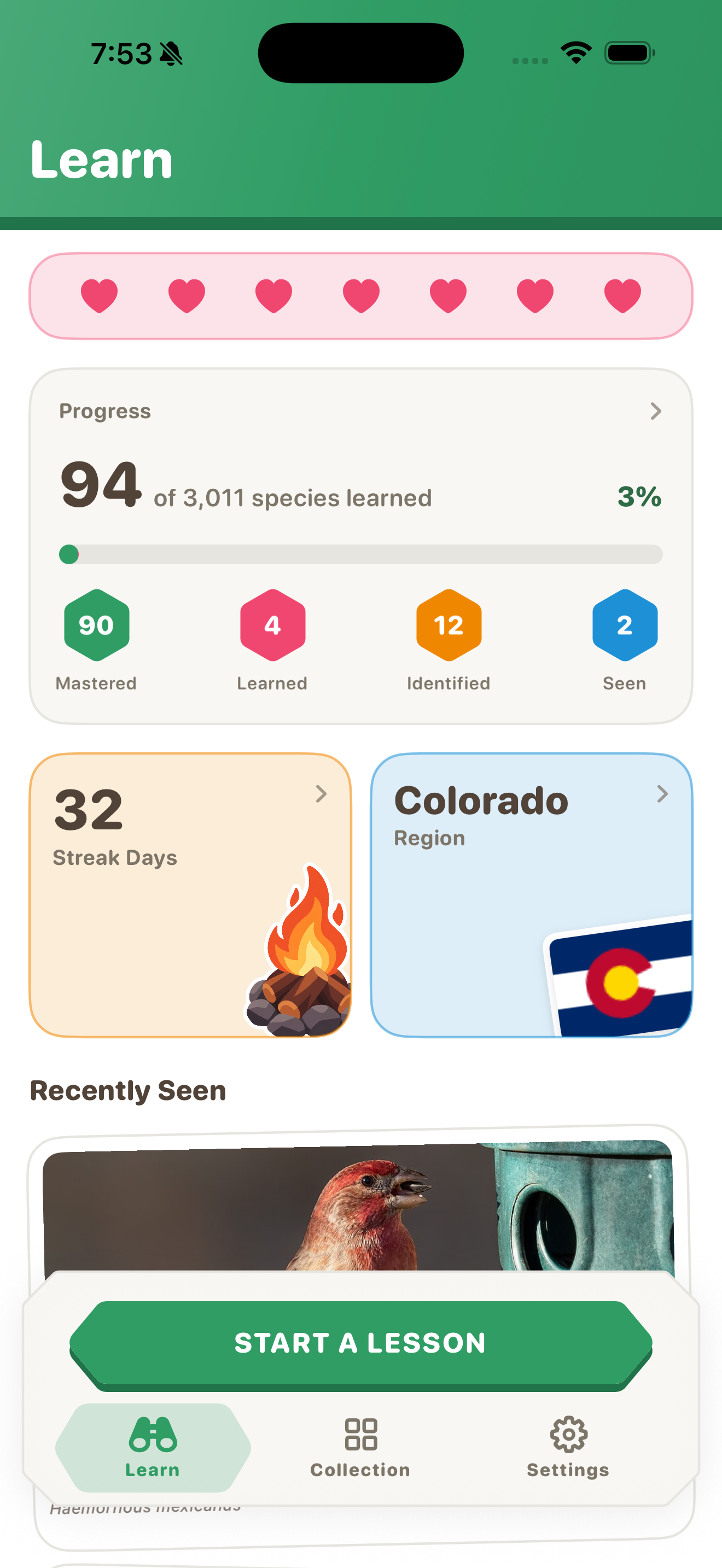
NearNature turns your local plants and animals into a challenge to complete: a real-life collection of the species that share your neighborhood.
- Pick your region. NearNature builds a set of species that actually live near you.
- Choose what to learn. Study everything, or focus on just birds, trees, flowers, amphibians, mammals, fish, or bugs.
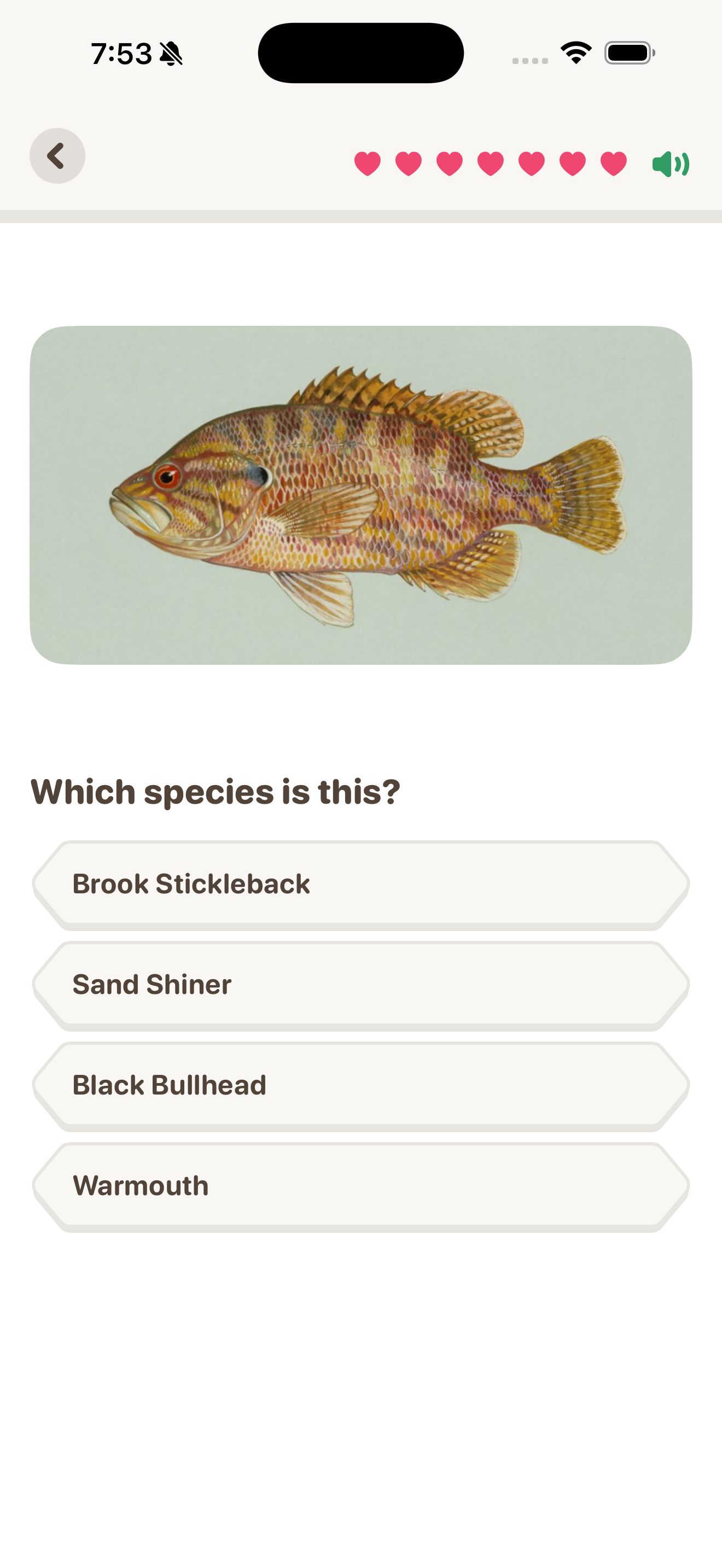
- Play bite-size quizzes. See a species and pick its name. Wrong answers cost a life, so every guess counts.
- Build your collection. Master a species and it's added to your collection, turning what you've learned into something you can see grow. -Smart Reminders NearNature learns when you often do a lesson, can account for outliers, and can remind you right on time. -Level Up Your Collection- Each species can level up from spotted, to identified, to learned, to mastered as you correctly identify the species more often.
How we built it
- Swift + SwiftUI: the native iOS app, including the quiz flow, animations, and collection view
- Supabase:: user accounts, progress, collections, and our species database
- Express.js: a backend API that pulls species data by region, cleans it up, and serves quiz content to the app
- Species data: e.g., sourced from Wikipedia and photos also from Wikipedia (open source)
The app talks to our Express API, which finds species near you using open data on Wikipedia and stores it in Supabase so quizzes load quickly and progress syncs across sessions.
Challenges we ran into
- Researching species at a large scale. Figuring out which species actually live in a given region was my biggest hurdle.
- Messy names. One species can have several common names, and the same common name can refer to different species in different places.
- Finding the right photos. Every question needs a clear, correctly labeled image that the app is allowed to use.
- Making wrong answers tricky. Random wrong answers make quizzes too easy, so we pick similar species from the same group as the other choices that get closer in similarity the closer you are to mastering it.
Accomplishments that we're proud of
- Covering thousands of species.
- Turning a 24-year-old research suggestion into something people can actually play
What we learned
- Real nature data is much messier than game data. Every Pokémon has one official name. Real species have regional names, scientific names, look-alikes, and ranges that change with the seasons.
- Rewards need meaning. Points are nice, but watching your own collection of real species grow is what keeps people coming back.
What's next for NearNature iOS
- Field Mode: confirm real-world sightings to upgrade species in your collection, closing the loop from couch to backyard
- Sound quizzes: learn birds and frogs by their calls, not just their looks
- Seasonal packs: fall migration, spring wildflowers, autumn leaves
- Friends and classrooms: challenge friends, or let teachers run class-wide collection challenges, bringing the idea back to where Balmford's research started: schoolkids
Built With
- docker
- swift
- swiftui
- typescript

Log in or sign up for Devpost to join the conversation.