-
-
Figma
-
Current Website Iteration

Inspiration
Our idea was inspired by our frustration with searching for recommendations, such as restaurants, and being stuck with using mainstream platforms. We would always turn to places like Reddit for more authentic suggestions, but there wasn't an organized platform for that kind of information. We realized that we could build a platform that could aggregate and geolocate reliable information from a variety of sources to give people a more flexible way of exploring what's happening around them.
What it does
NearMe centralizes and geolocates real world events from a variety of online data sources. This gives users a clear and real time view of their surroundings -- whether it’s public safety incidents, community events, or sudden weather changes. Rather than manually scanning multiple platforms, users can simply search natural language to see nearby happenings on an interactive map.
How we built it
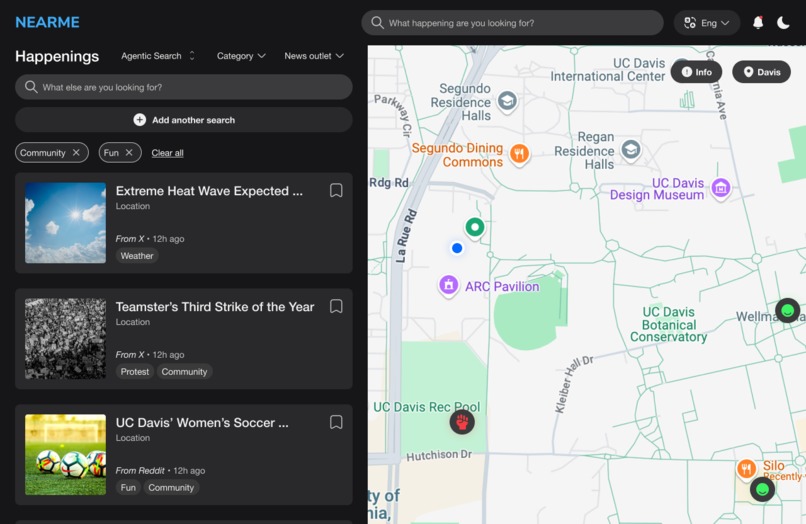
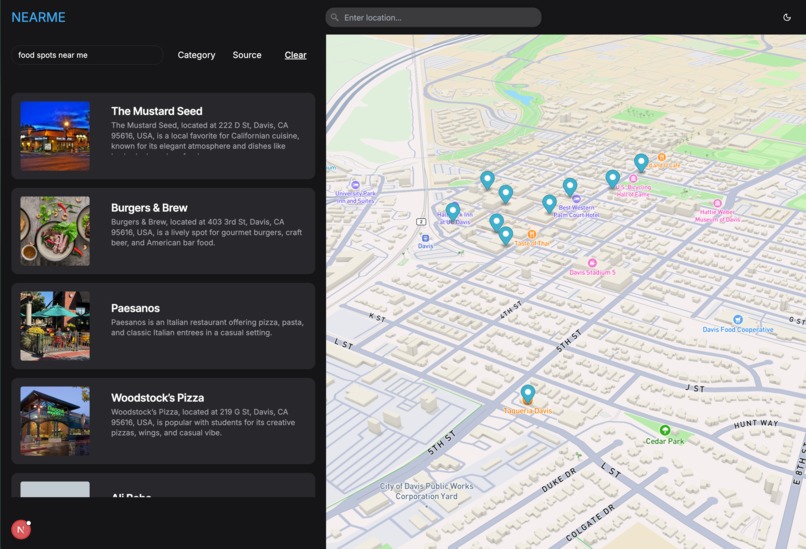
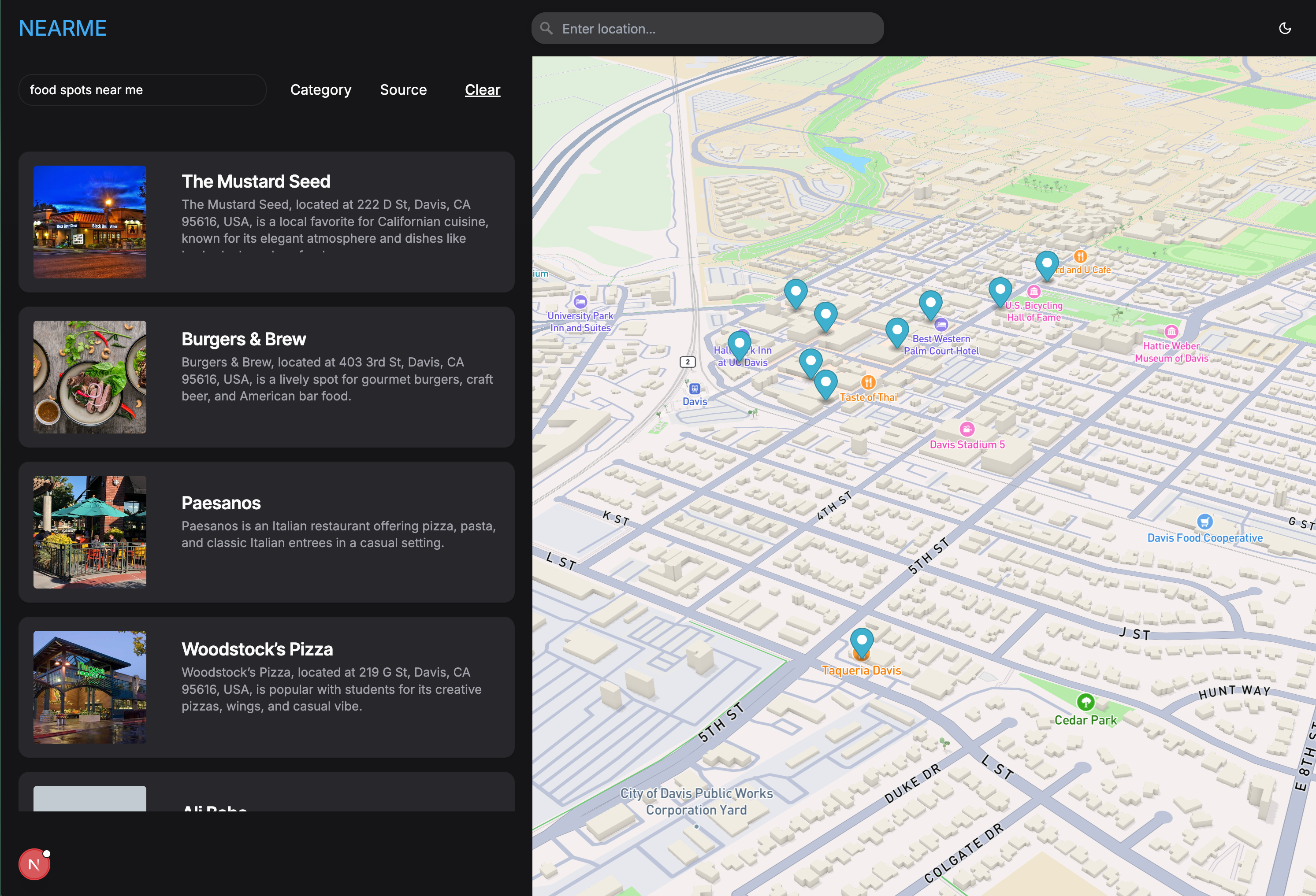
We used Figma to create our prototypes, and focused on the core experience of browsing through the event listings and locating happenings on the map interface. For our map, we integrated Mapbox and used Next.js, Tailwind, and TypeScript for the user interface. The main components we worked on were the event cards and the filters, which were designed to keep the experience clean and efficient.
Challenges we ran into
On the design side, we had to make sure that our designs weren't only aesthetically appealing, but technically feasible. Regarding the software side, we faced difficulties with data scraping since many websites have protections in place to prevent scrapers. This forced us to use third party services for data collection, which slowed down the process and we were limited to the amount of data we could access. Once we obtained the data, we had challenges with geocoding -- finding precise latitude and longitude coordinates -- and it became proportionately time consuming as the data size increased.
Accomplishments that we're proud of
We're really proud of how relevant and accurate our app is at matching events to user searches. The geolocation process, even when fed data from third-party scrapers, consistently produced precise results. Seeing the map reliably reflect happenings in the right place and context was one of the most satisfying parts of the project.
What we learned
Technically, we realized how difficult it was to integrate frontend with backend. Additionally, scrapping the web turned out to be an unpredictable and slow process, which added complications to building our product. This also highlighted the importance of speed optimization since delays can debilitate user experience. Beyond the technical side, another takeaway was how much mental fortitude was required to push through the hackathon. The experience was challenging, but still rewarding, and taught us about teamwork and compromise in a time-constrained environment.
What's next for NearMe
Looking ahead, we plan to integrate our user interface design for agentic AI search into our frontend. We also want to expand the number of data sources and make the process of creating new plugins easier -- ideally requiring no code. Additionally, we aim to add real time notifications for newly detected happenings, improve the site’s responsiveness for mobile users, and attach relevant images for third-party platforms when available.

Log in or sign up for Devpost to join the conversation.