-
-
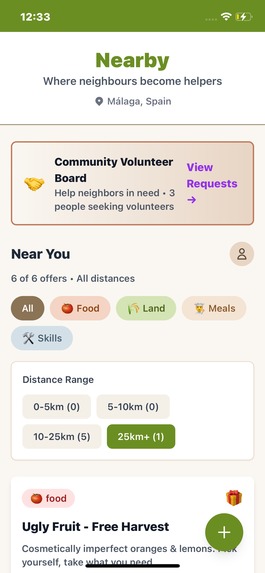
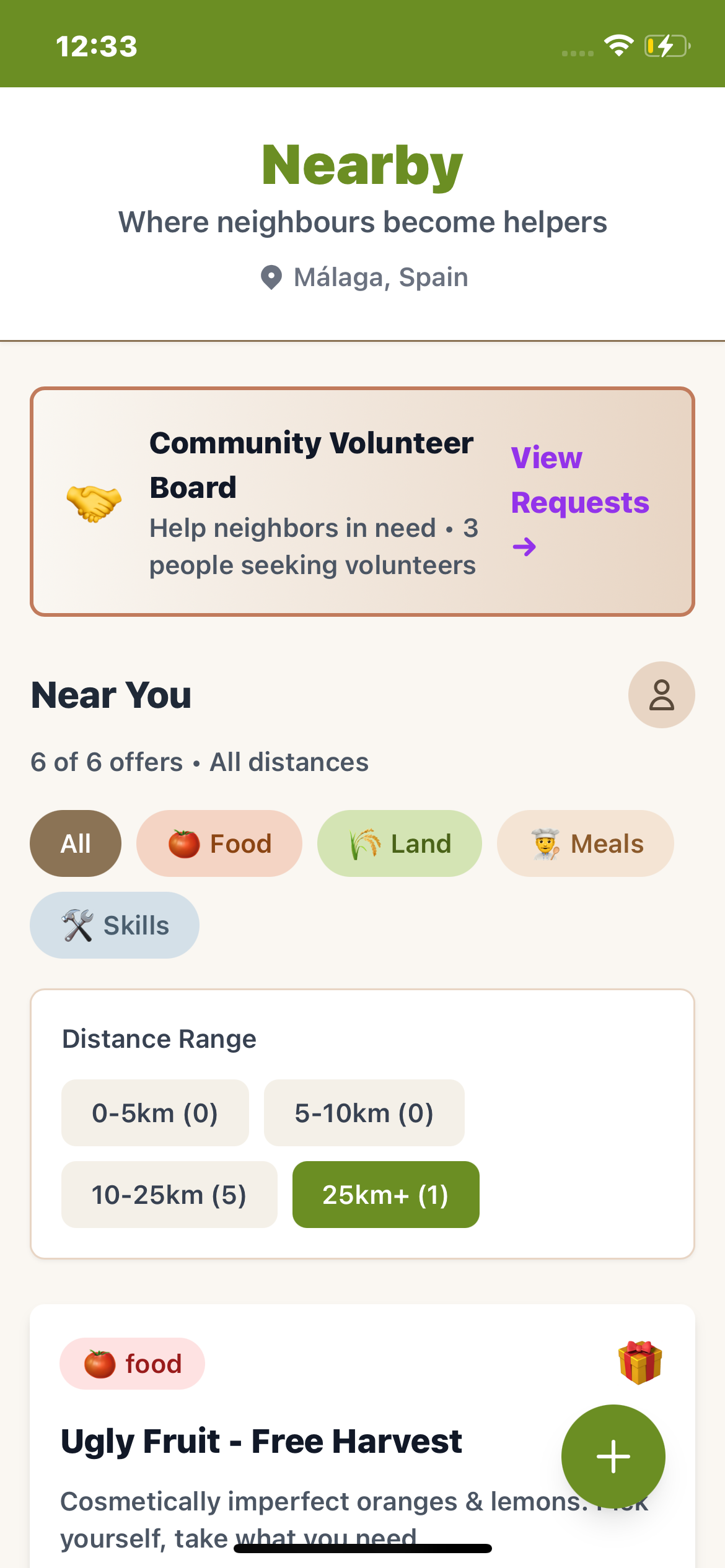
Homescreen
-
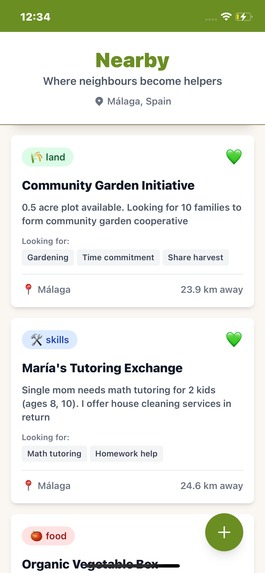
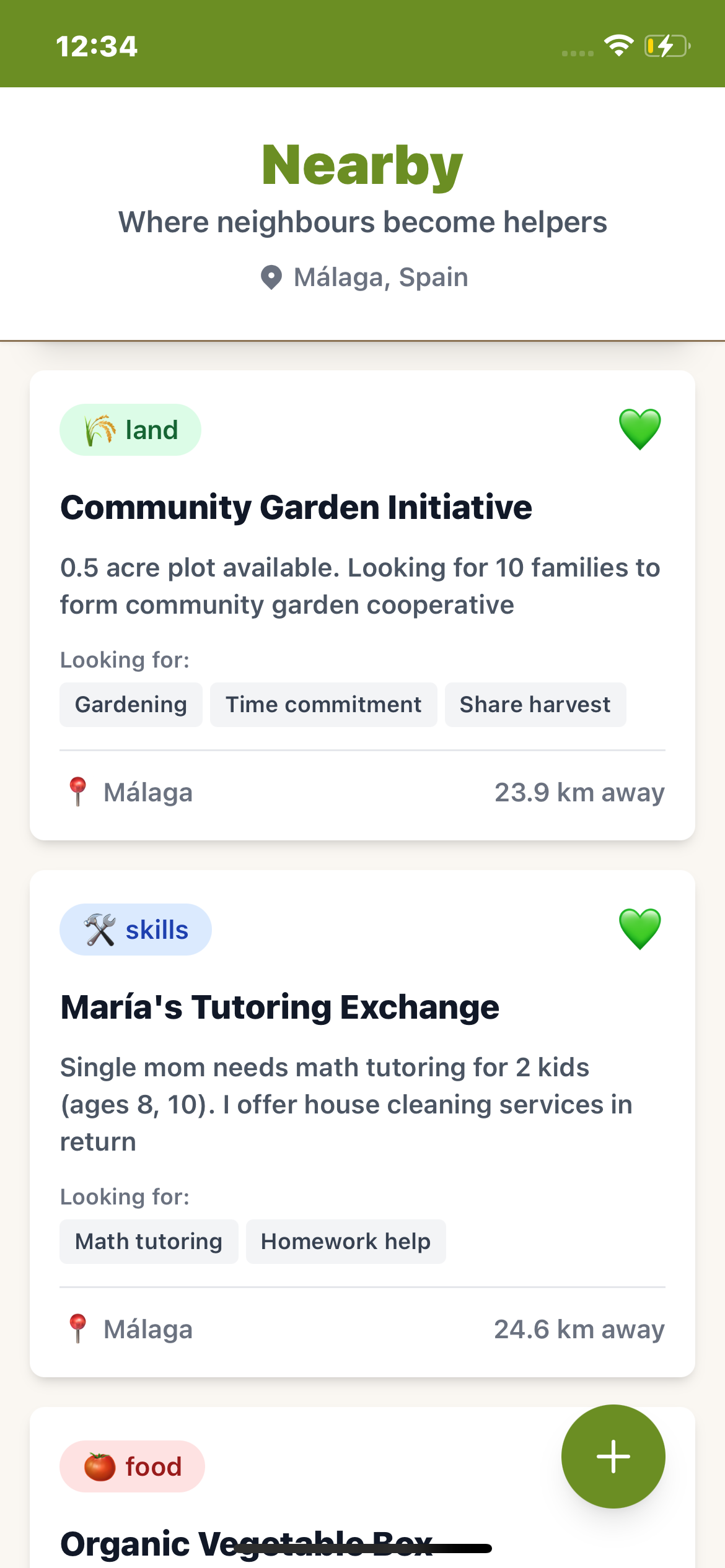
Offers
-
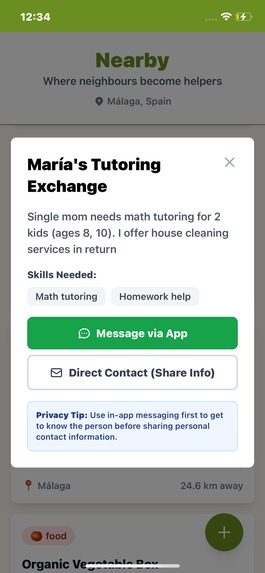
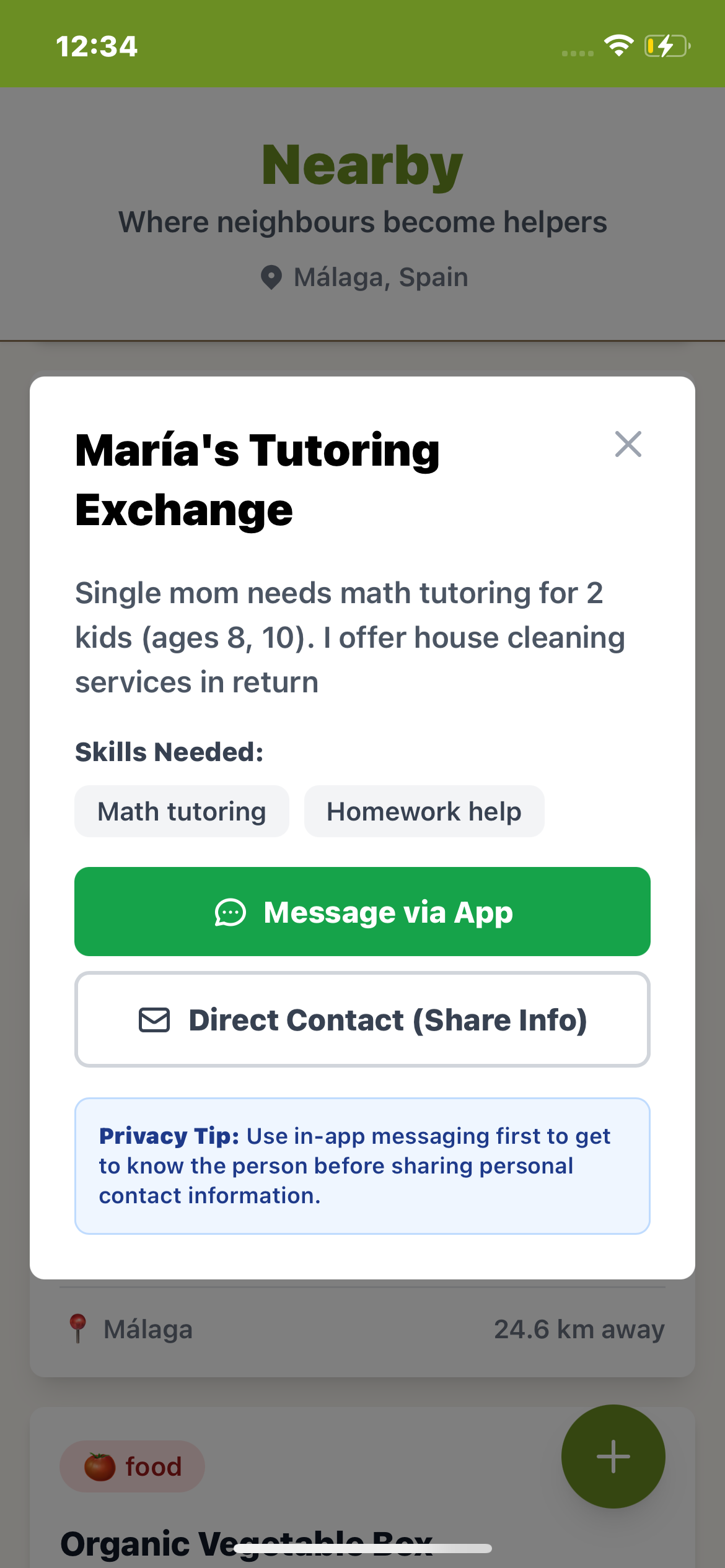
Offer with more details
-
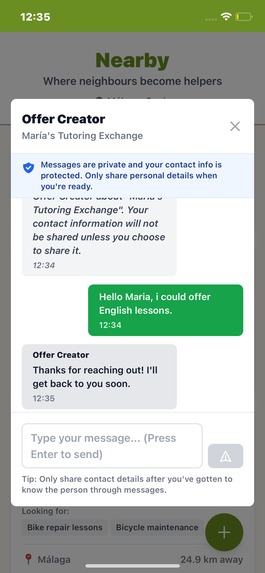
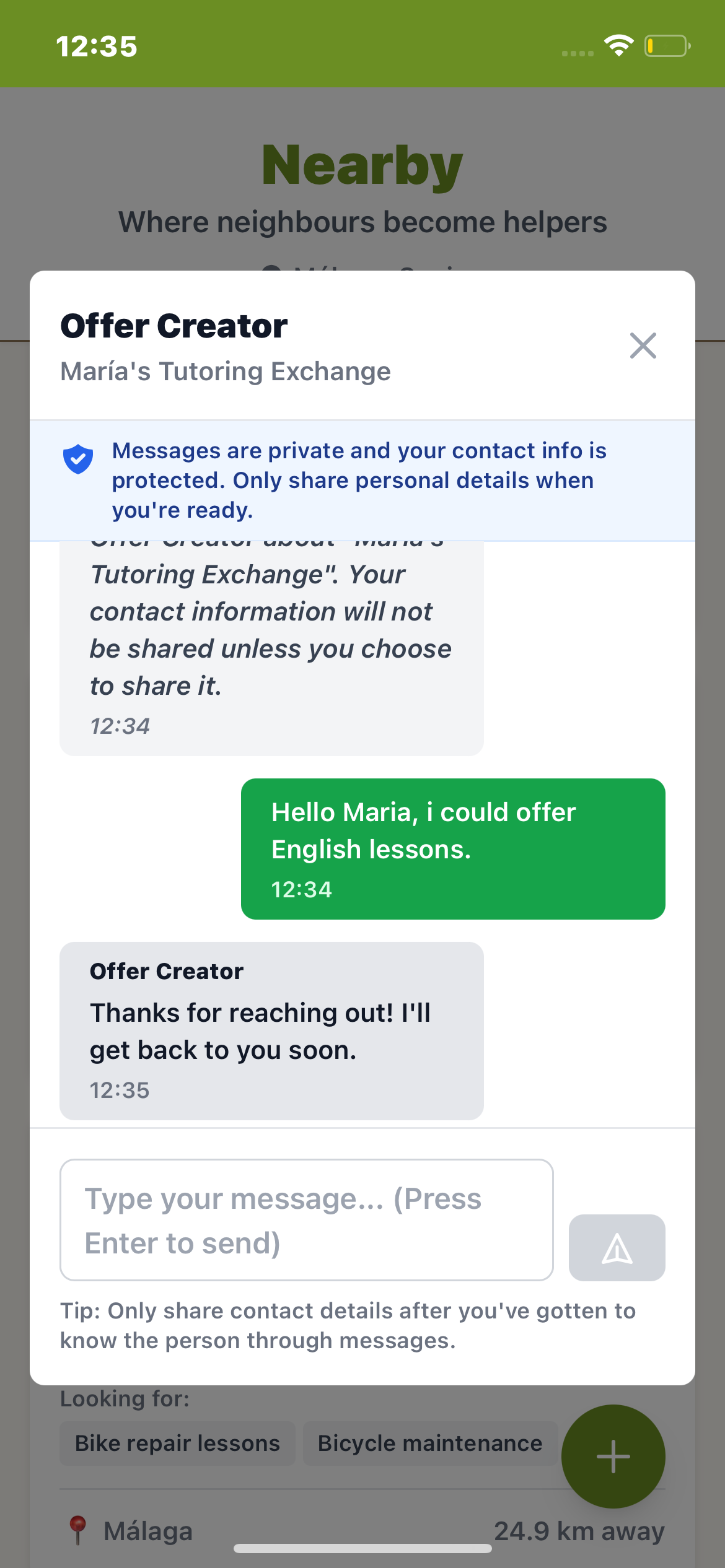
In app messaging for more privacy
-
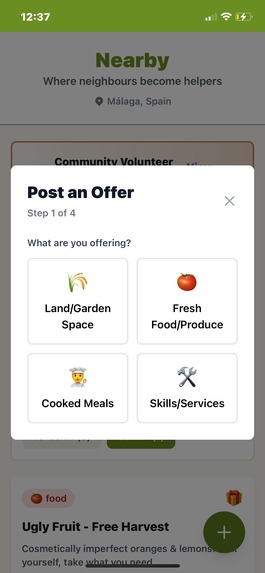
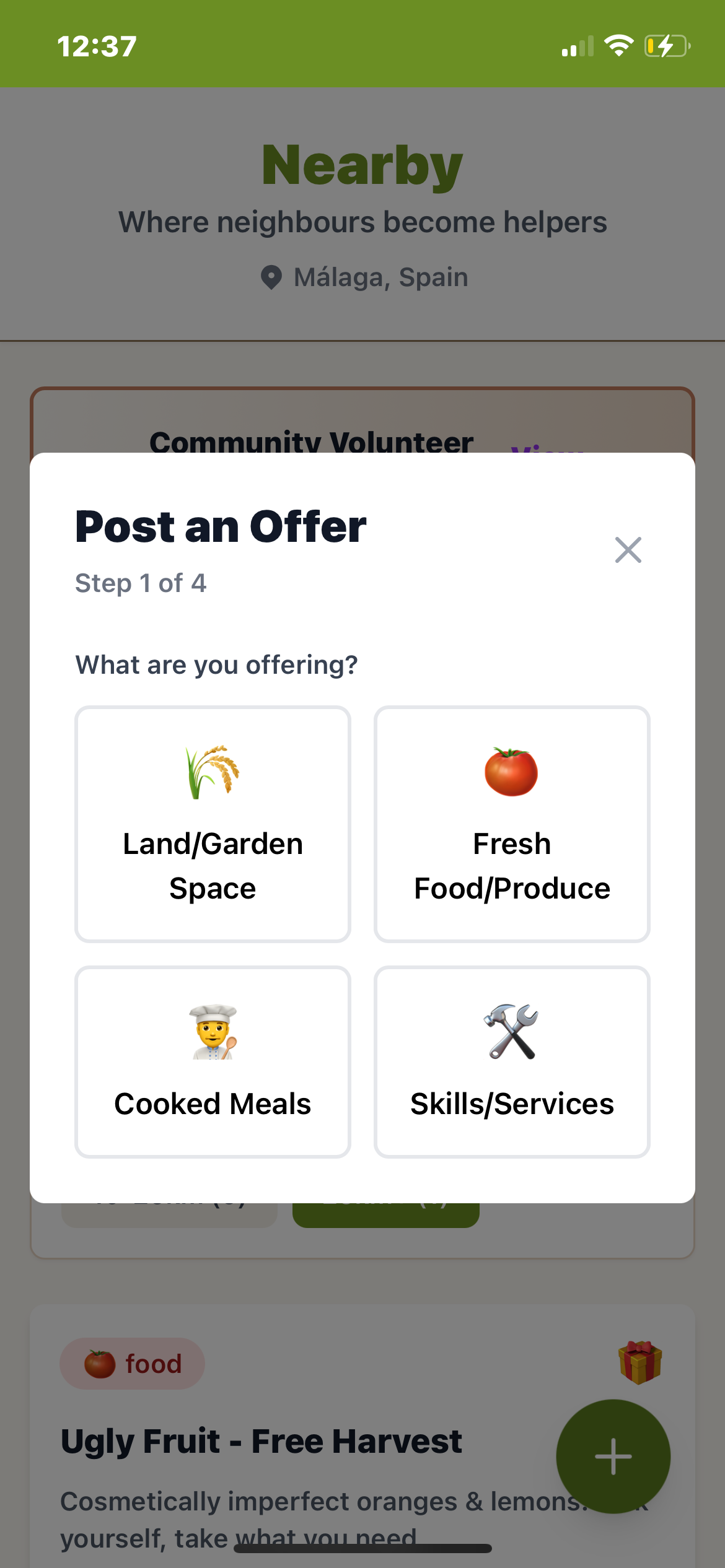
Post an offer
-
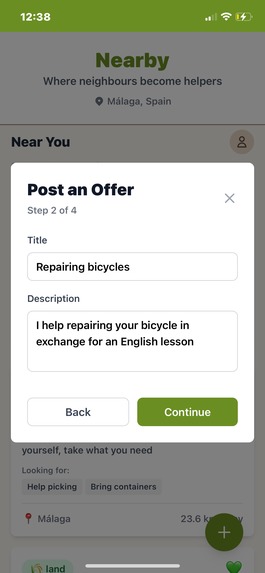
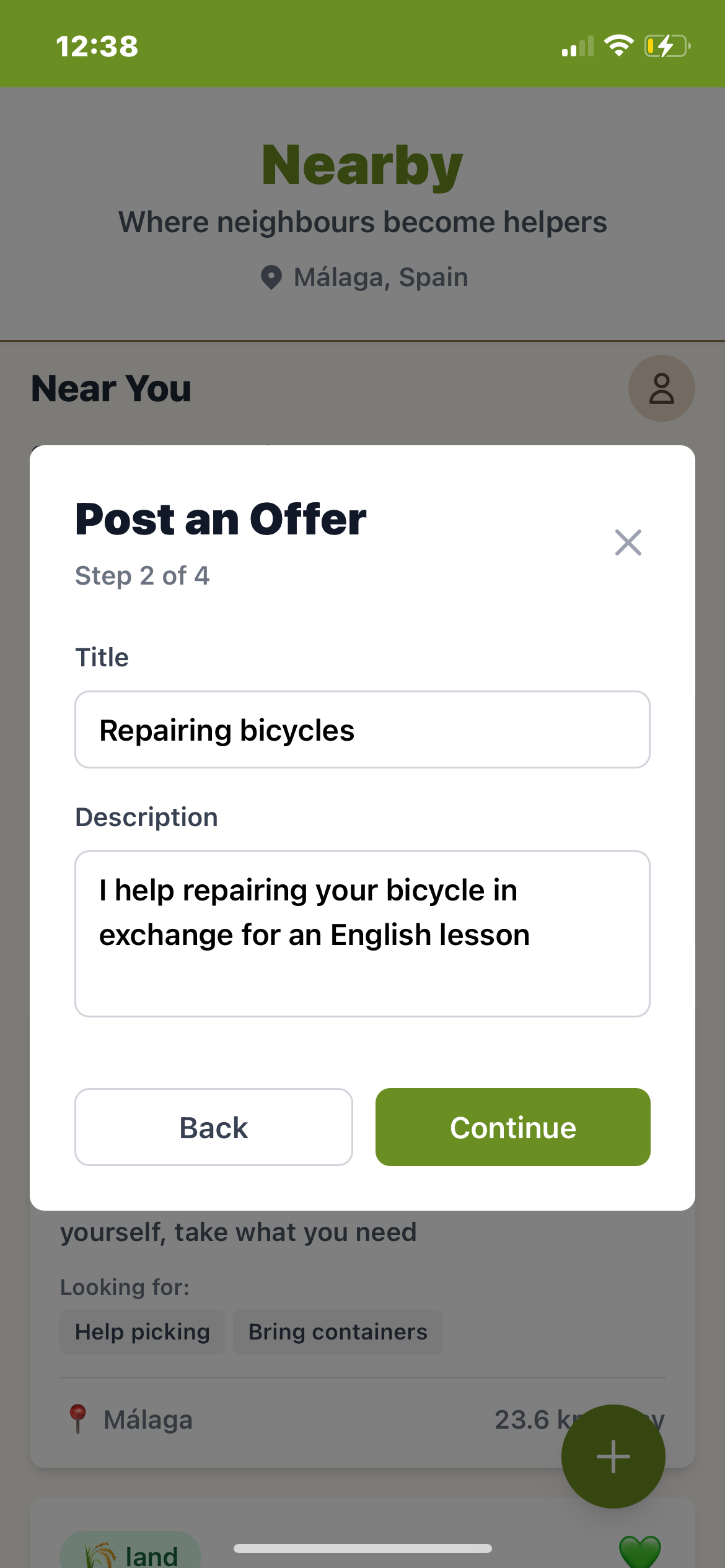
Offer description
-
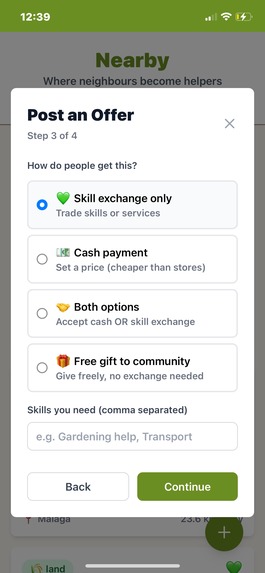
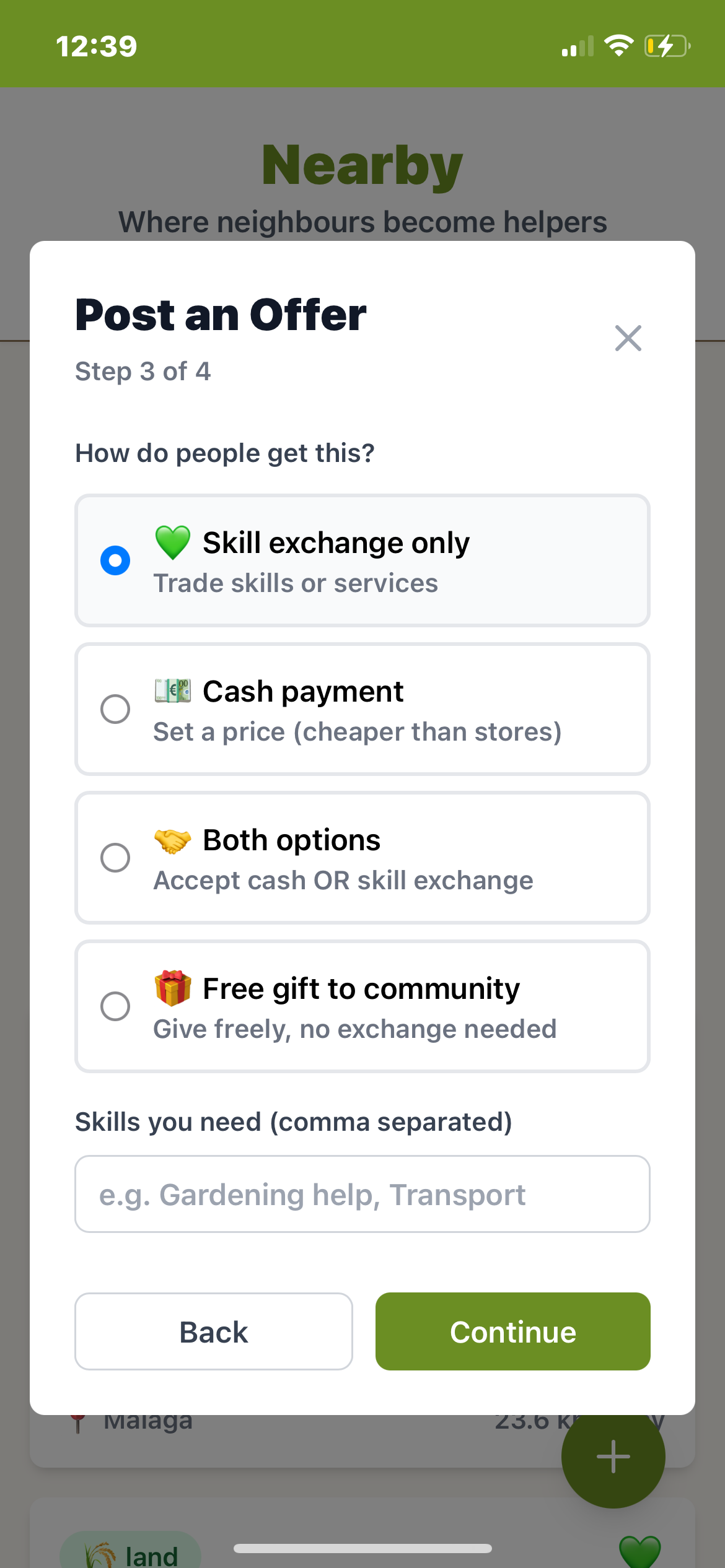
Exchange options
-
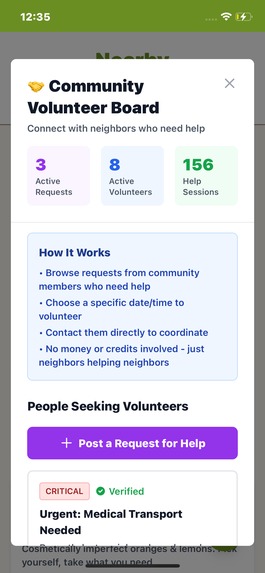
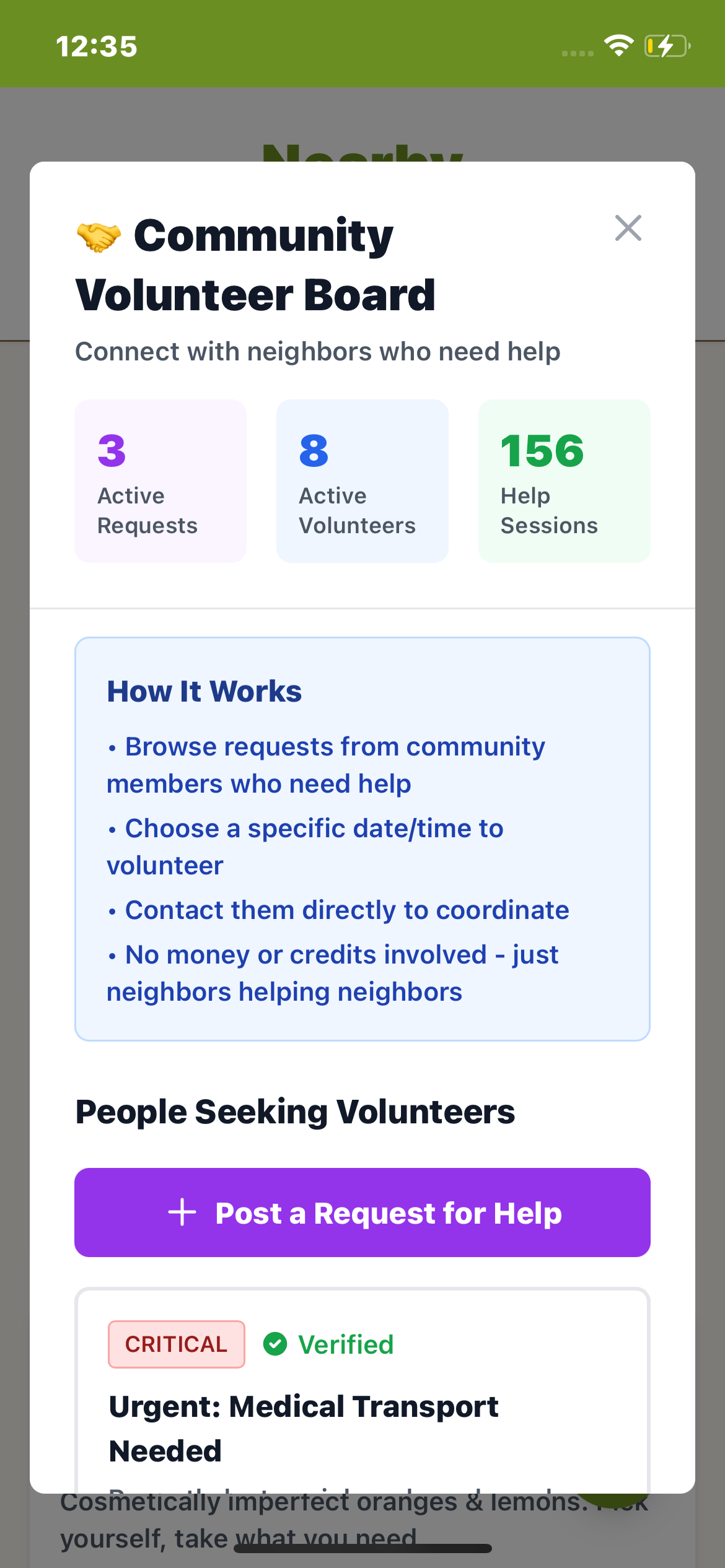
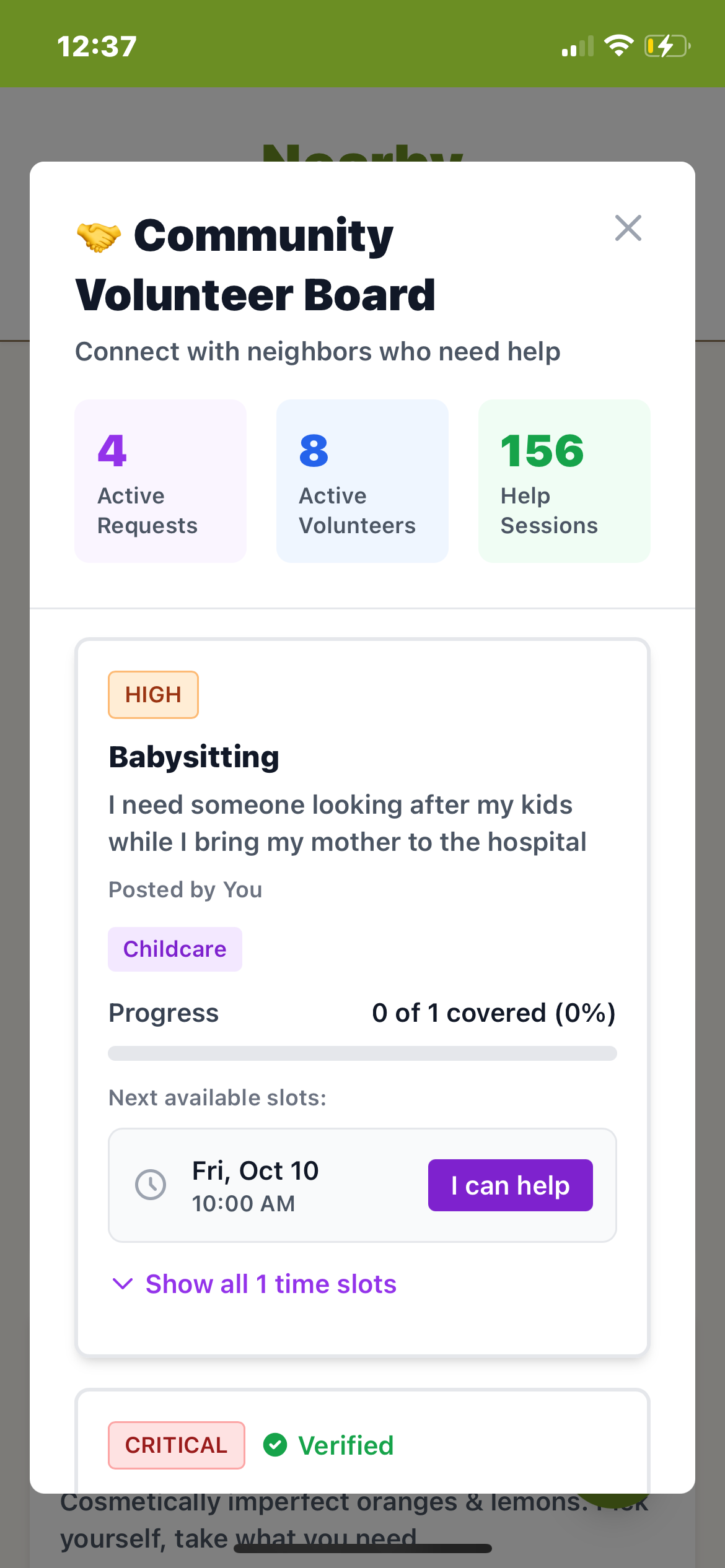
Community volunteer board
-
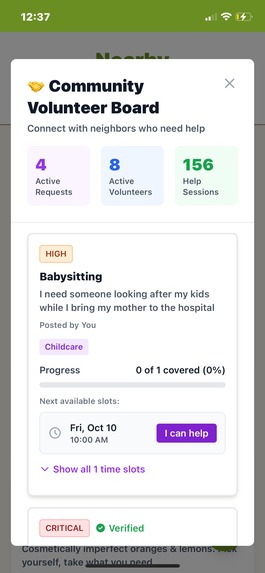
Help request after creation
-
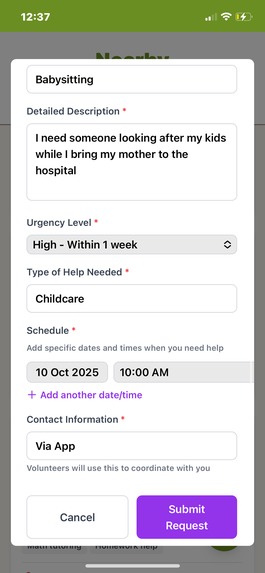
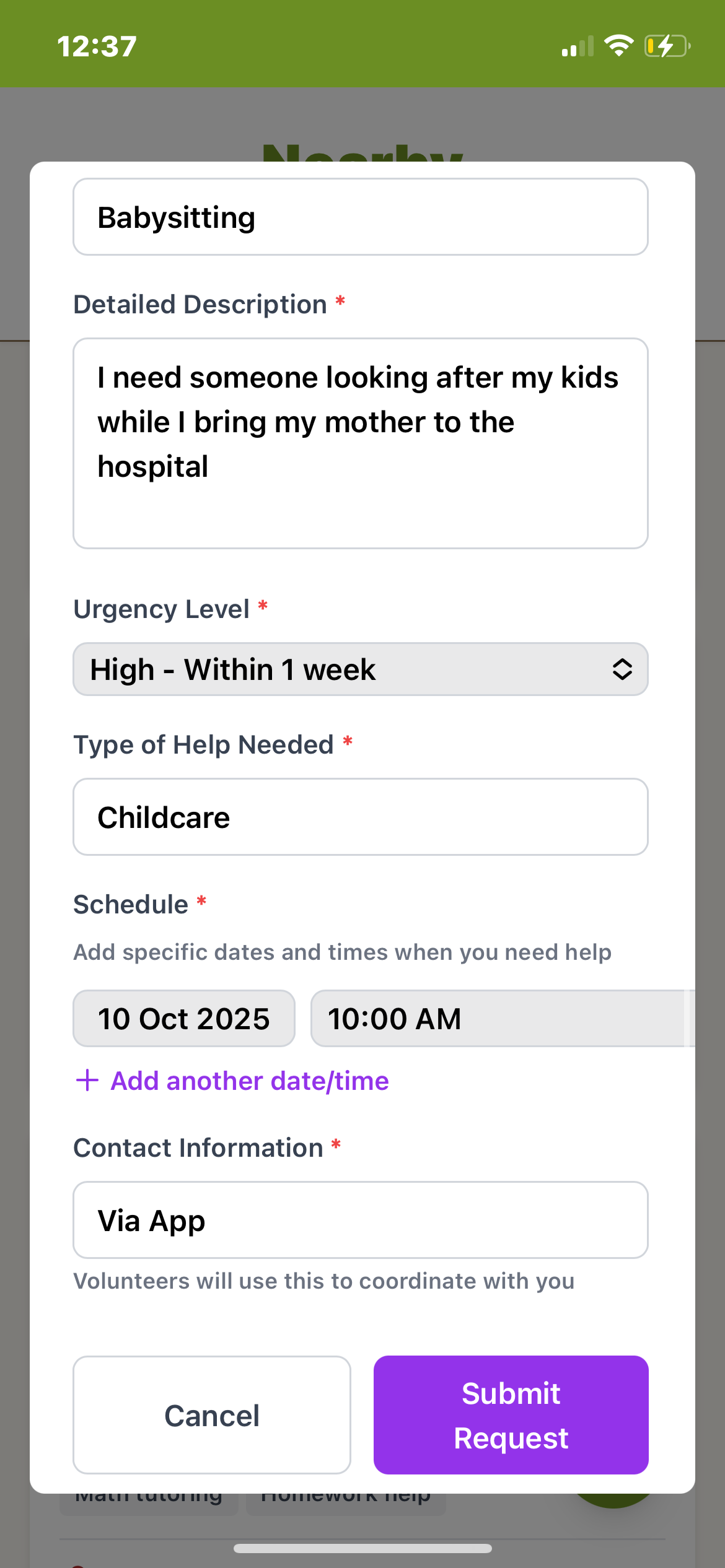
Creating a help request
-
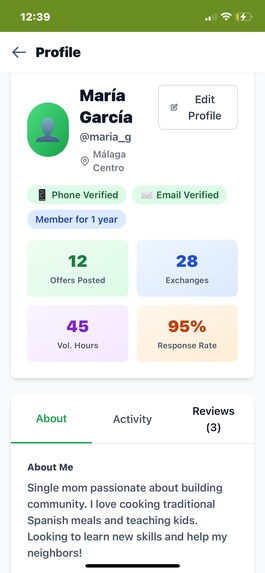
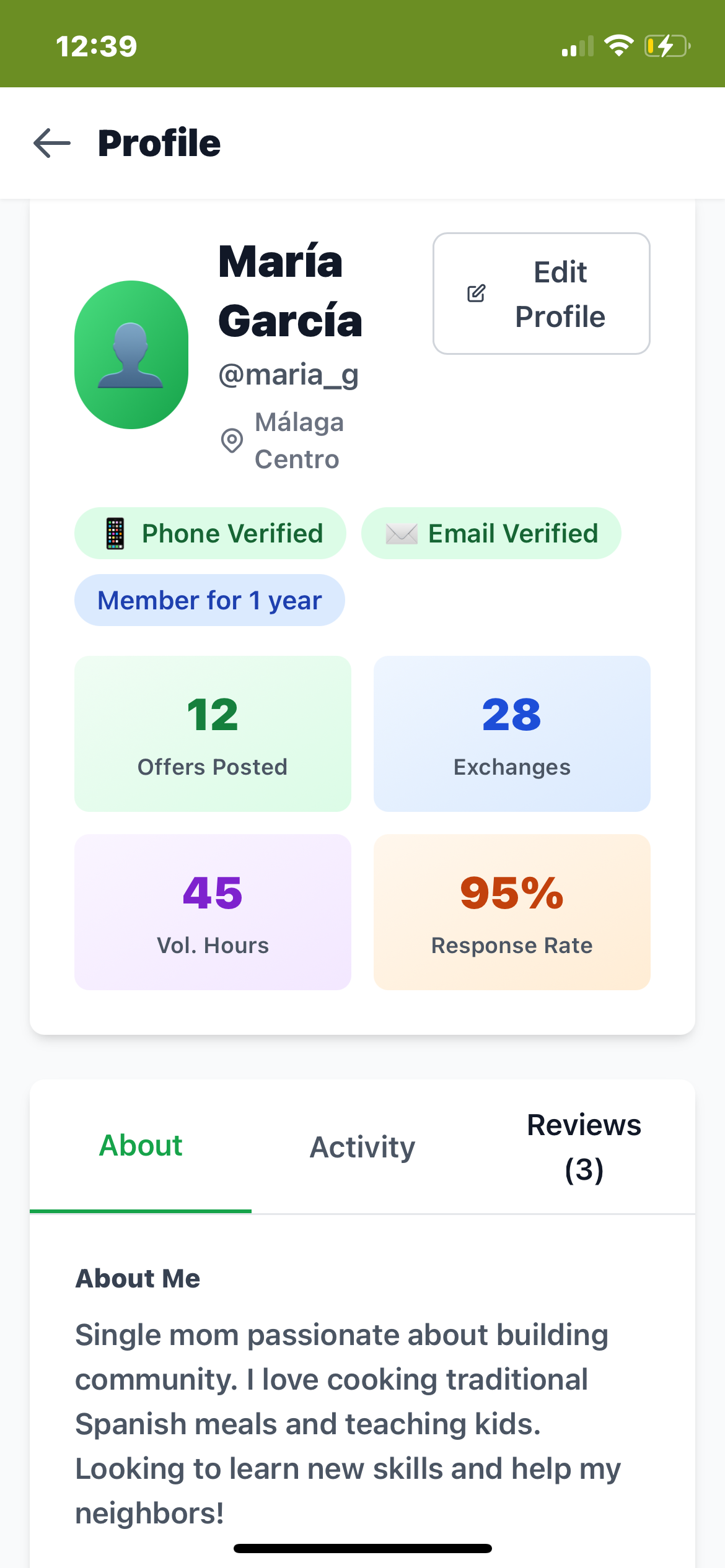
Edit Profile
-
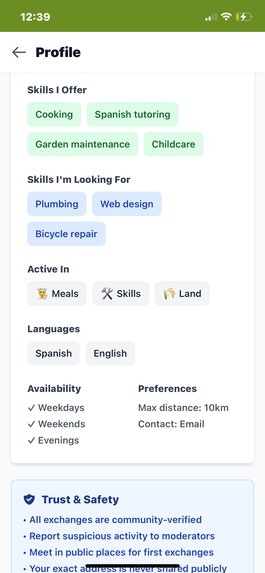
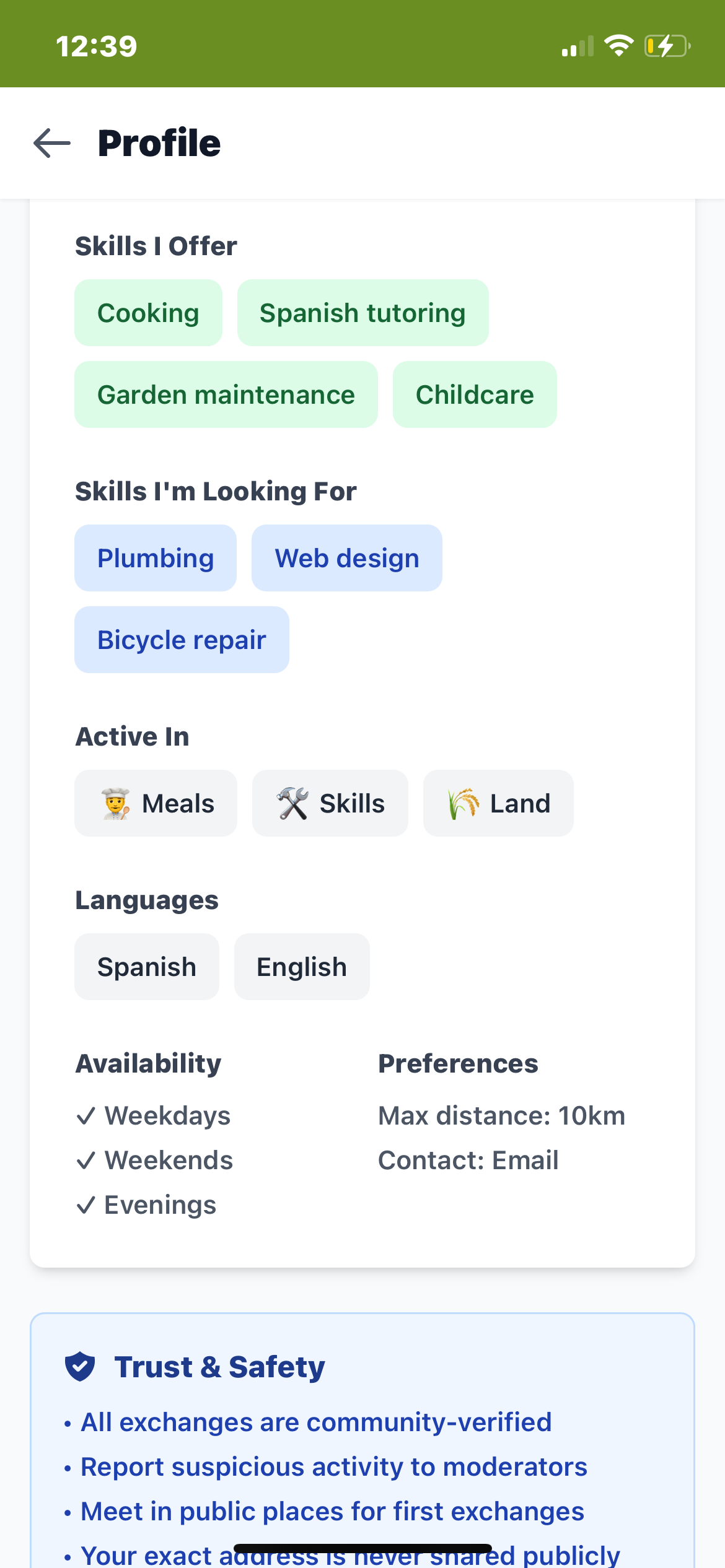
Profile second part
Inspiration
While researching UN SDG data, I discovered a troubling paradox: in many communities facing poverty and hunger, there's actually surplus food going to waste, unused garden space, and neighbors with valuable skills who would help if they knew who needed it. The problem isn't scarcity - it's coordination and trust at the hyperlocal level.
I saw this firsthand in my own neighborhood during economic downturns. People struggled while others had resources they couldn't use. Traditional aid systems are top-down and slow to respond. I wanted to build something that enables communities to help themselves immediately, without waiting for institutions.
What it does
Nearby is a hyperlocal platform where neighbors can share:
- Food: Fresh produce, prepared meals, bulk items - sold cheaply, traded for skills, or given freely
- Land: Unused garden space becomes community gardens where people grow food together
- Skills: Tutoring, repairs, language lessons, childcare - exchanged without money
- Crisis support: Emergency volunteer coordination for medical transport, childcare, food assistance
Everything is distance-filtered to build neighborhood-level trust. Privacy-first messaging lets people connect safely before sharing contact information.
How I built it
Tech Stack: React 19, TypeScript, Vite, Tailwind CSS, deployed on Netlify as a PWA
Architecture decisions:
- Mobile-first Progressive Web App for maximum accessibility
- No backend database initially - focusing on proof of concept and UX
- Distance calculation using Haversine formula for hyperlocal filtering
- In-memory state management to avoid browser storage limitations
Key features implemented:
- Multi-category offer system (food, meals, land, skills)
- Flexible payment options (cash, skill exchange, free gift)
- Volunteer board with schedule coordination
- In-app messaging for privacy protection
- User profiles with verification badges and reputation tracking
Challenges I faced
Balancing simplicity with functionality: Early versions were too complex. I learned that for community adoption, the core flows need to be dead simple. I streamlined to just 4 steps to post an offer.
Trust without blockchain: Many sharing economy apps rely on blockchain for trust. I realized neighborhood proximity itself builds trust - you're more accountable to someone you might see at the grocery store. This insight simplified the entire trust model.
Privacy for vulnerable users: People in poverty are often privacy-vulnerable. I implemented in-app messaging so users never need to share contact info until they're comfortable. This was technically straightforward but conceptually crucial.
The money problem: How do you serve people with zero cash while also allowing those who prefer paying? The hybrid payment model (cash OR skill exchange for every offer) solved this elegantly.
Mobile-first design: Building responsive layouts that work perfectly on phones required careful attention to touch targets, spacing, and information density. The volunteer board went through 3 iterations before it felt right on mobile.
What I learned
Progressive Web Apps are underutilized for social impact. The instant "add to home screen" capability removes the app store barrier that prevents many community-scale projects from reaching their audience.
Technology alone doesn't solve poverty or hunger - community relationships do. Tech's role is to make those relationships easier to form and maintain. This shifted my entire design philosophy toward features that build trust rather than features that look impressive.
People in difficult circumstances don't want charity interfaces that feel stigmatizing. Nearby looks the same whether you're offering excess tomatoes or seeking food assistance. Everyone is simultaneously a giver and receiver. This "universality of exchange" was the most important design principle.
The app scales horizontally across neighborhoods rather than vertically within one large network. Each neighborhood becomes its own ecosystem. This is actually more resilient than a single global network.
What's next for Nearby
Immediate priorities:
- Push notifications for urgent volunteer requests
- Enhanced verification system working with local community centers
- Multi-language support for refugee and immigrant communities
Long-term vision:
- Partner with local NGOs to verify users facing genuine crisis situations
- Integration with food banks to redistribute excess from the platform
- Expansion to include tool libraries, clothing exchanges, and housing support
- Research partnerships to measure actual impact on food security and poverty reduction
The goal isn't to build a tech company - it's to provide infrastructure that communities own and operate themselves. Success means Nearby becoming invisible, just part of how neighborhoods function.
Built With
- geolocation-api
- haversine-formula
- in-memory-state-management
- mobile-first-design
- netlify
- progressive-web-app-pwa
- react-19
- serverless-architecture
- tailwind-css
- typescript
- vite

Log in or sign up for Devpost to join the conversation.