-
-

Team picture
-
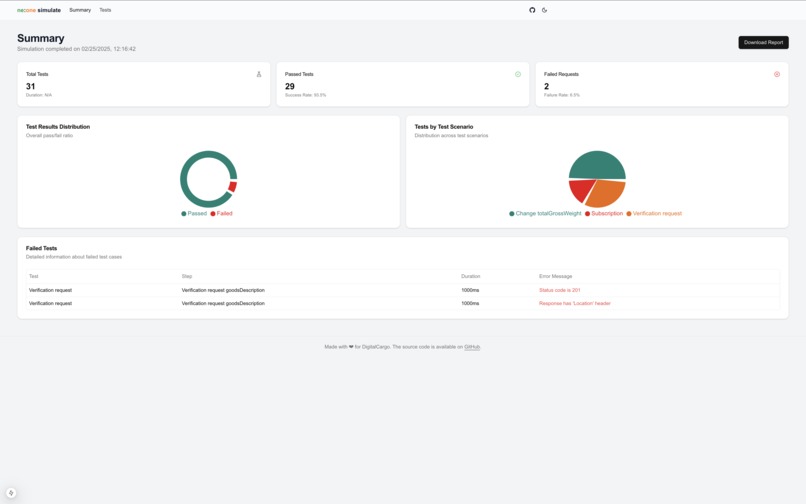
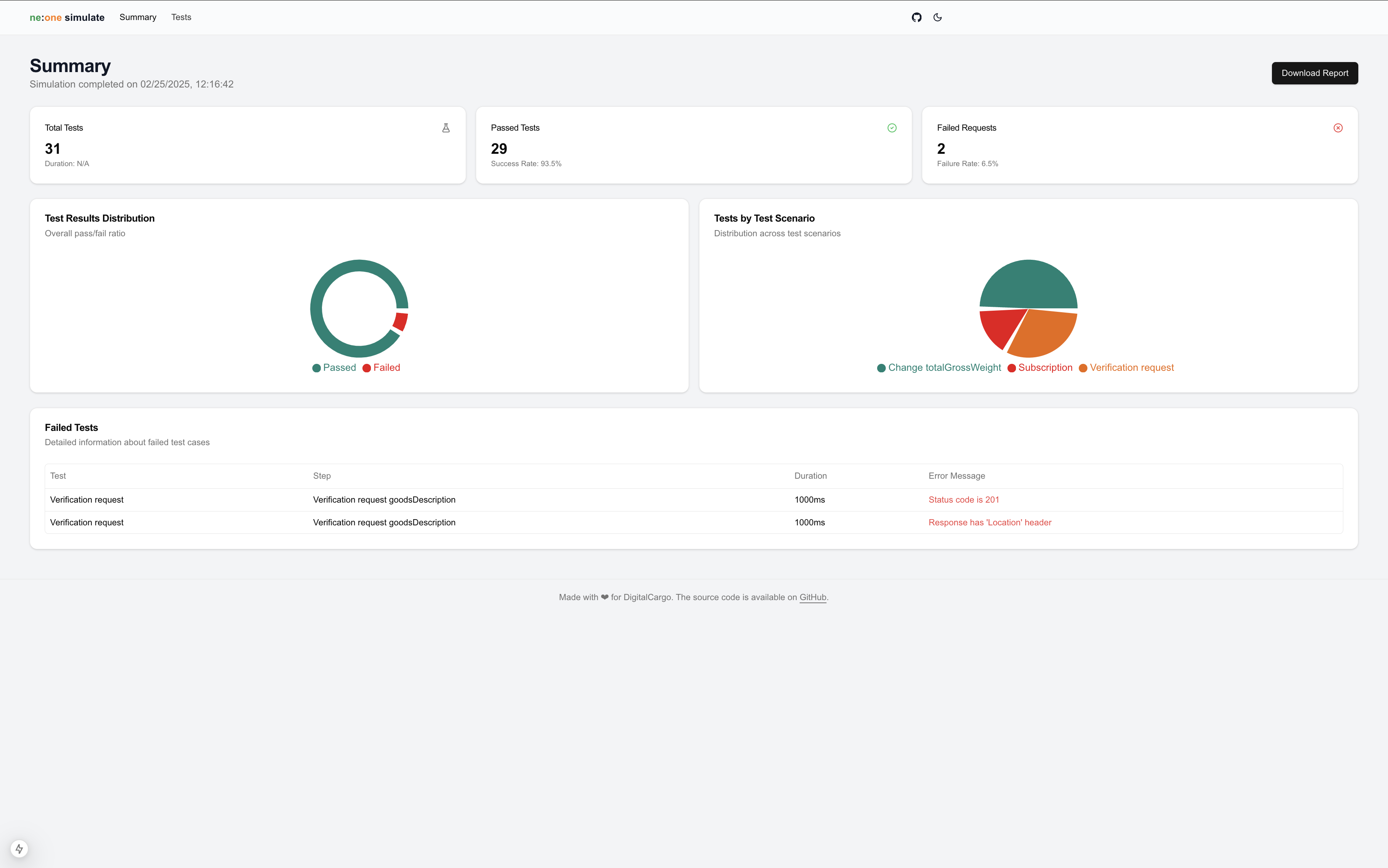
Simulation summary
-
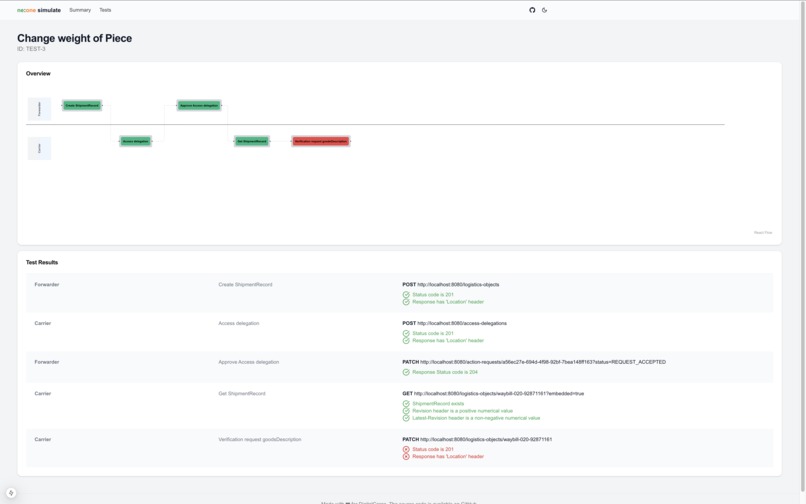
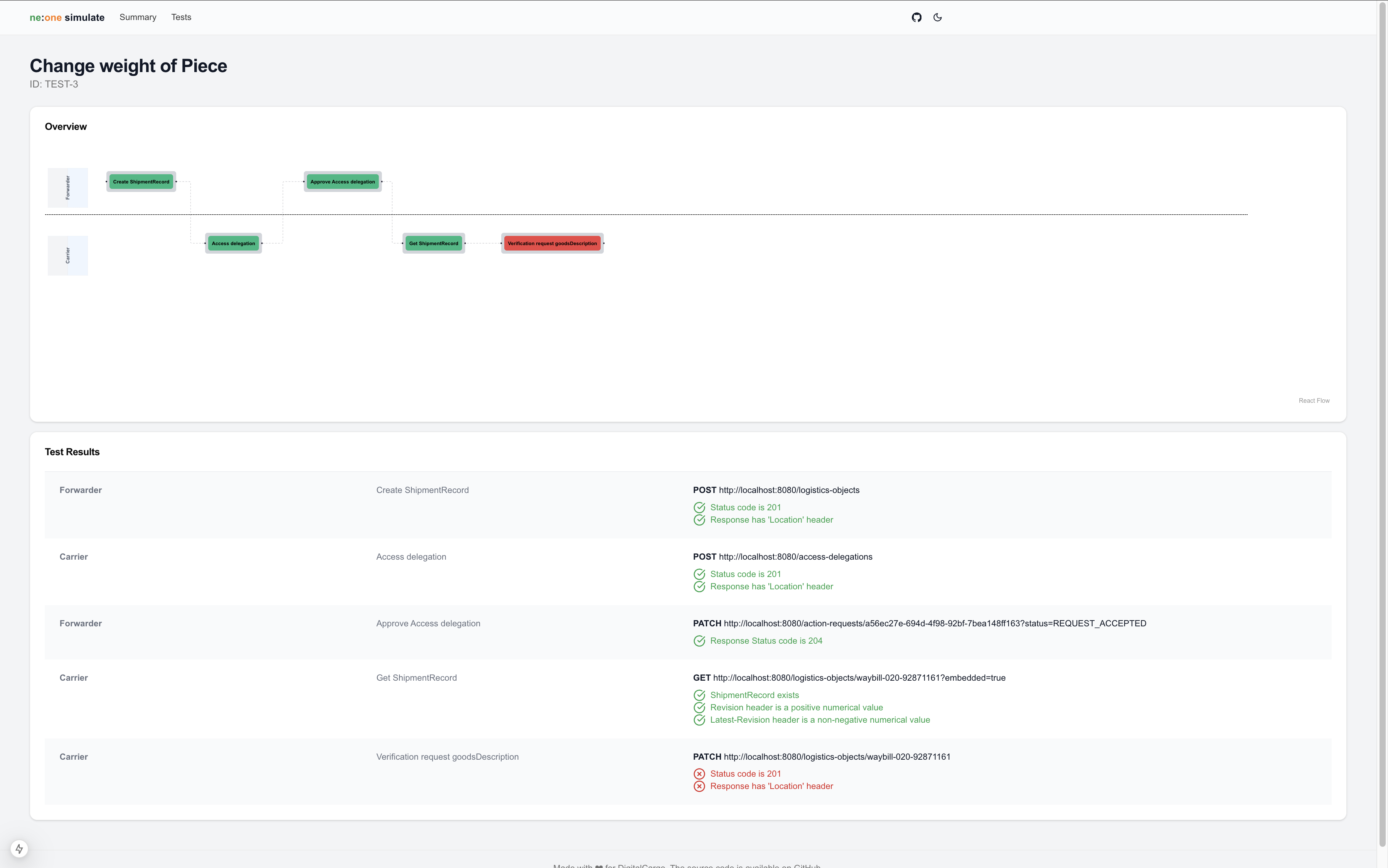
Test run details
-
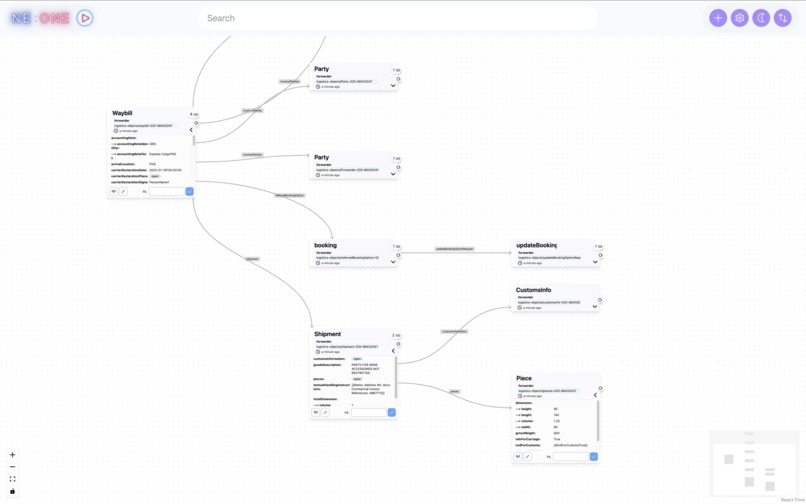
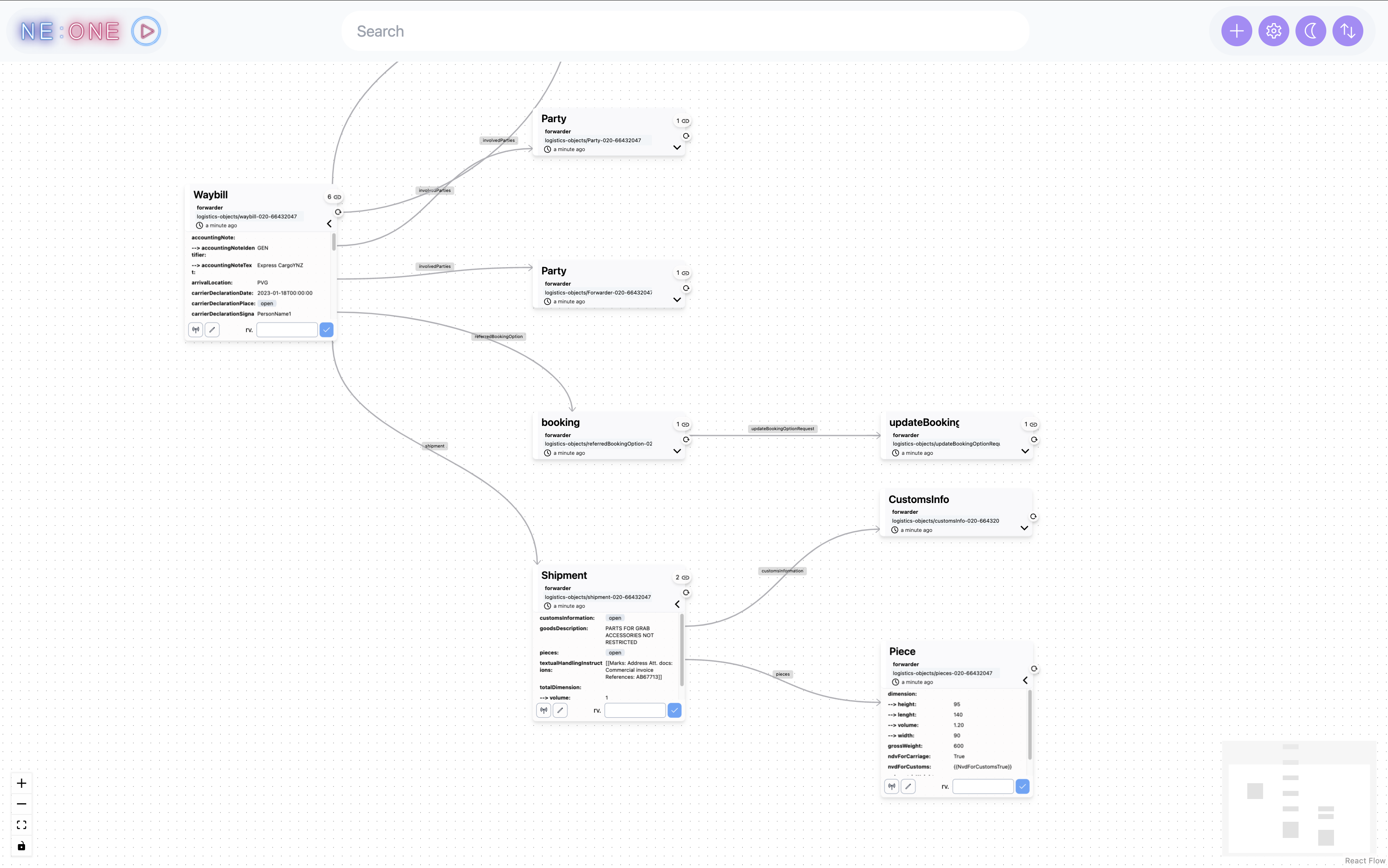
ShipmentRecord in NE:ONE Play
-
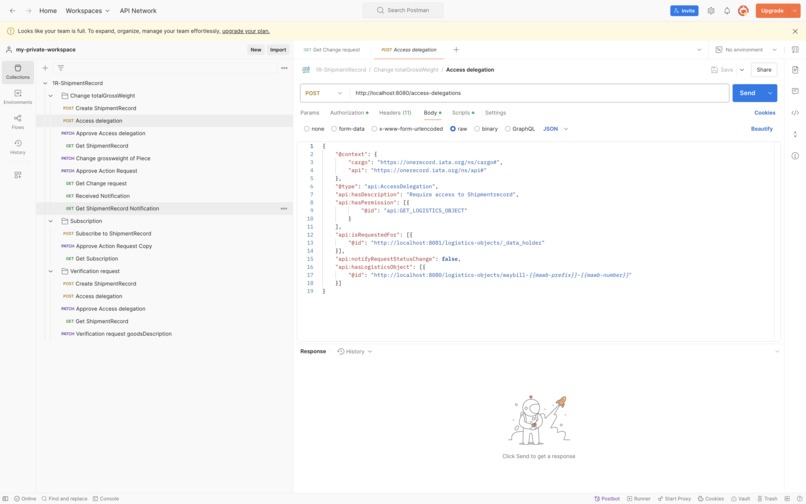
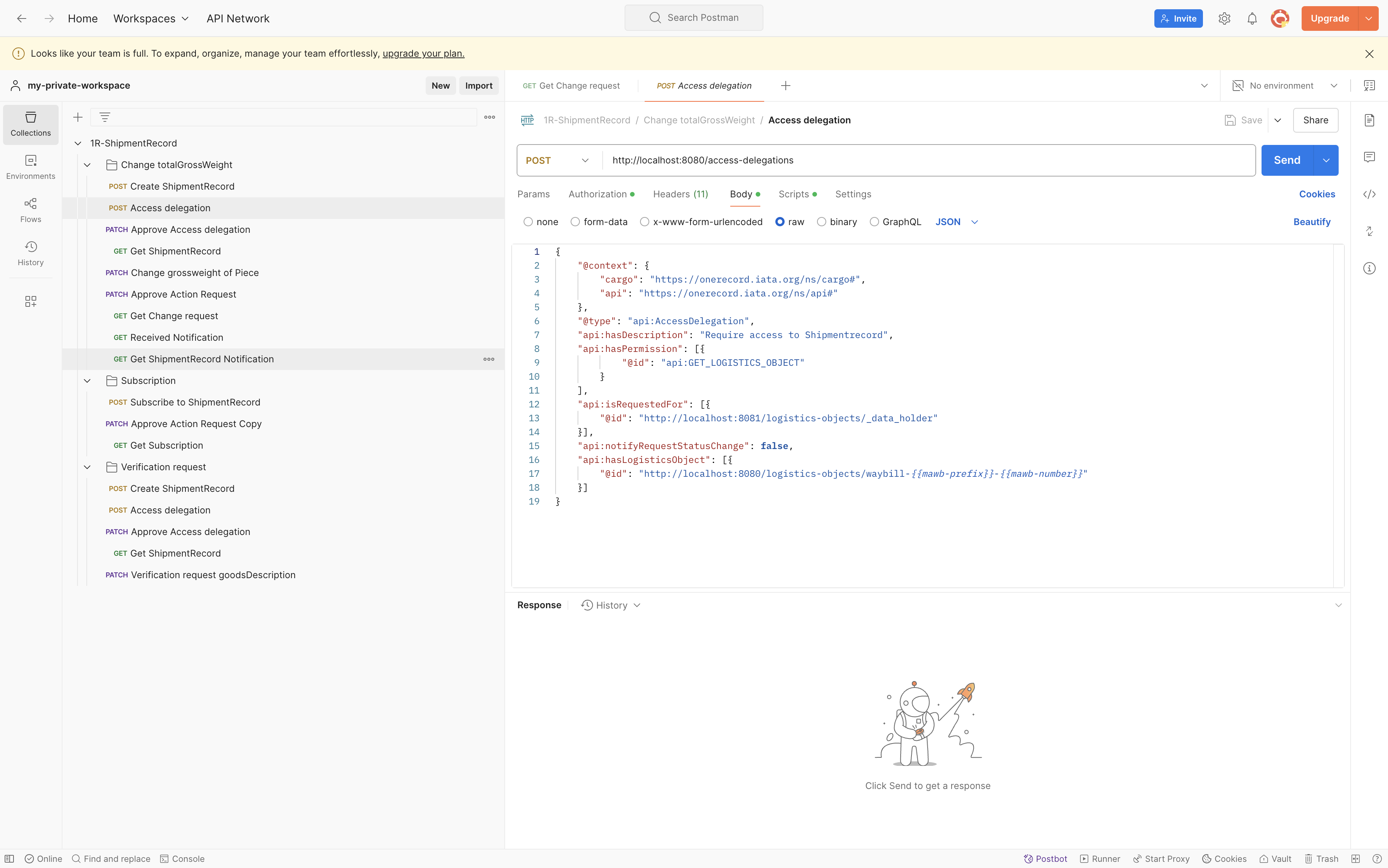
Postman Collection for ShipmentRecord use case

ne:one simulate - Testing Suite for ONE Record
Inspiration
ONE Record is a powerful framework designed to standardize data sharing across the air cargo industry; however, different interpretations of the standard can lead to inconsistencies and interoperability issues. As digital transformation accelerates in air cargo, we recognized that a lack of proper testing tools would create bottlenecks in adoption and implementation.
Our team members, representing both competing airlines and IT providers, have experienced firsthand the challenges of implementing standards without proper validation tools. During industry meetings and technical discussions, we consistently identified a gap: while the standard itself is well-documented, there was no easy way to verify if an implementation correctly adhered to it.
This gap inspired us to create a solution that would address both the OLF Challenge and Open ONE Record Challenge by providing a comprehensive testing suite that simplifies validation and enhances interoperability.
What it does
We present a comprehensive testing suite for ONE Record, featuring a Postman collection and an intuitive graphical tool for real-time testing and result evaluation. This ensures seamless data integration and great user experience. We demonstrate the capabilities with the Shipment Record to start.
The suite provides:
- API Validation: Automatically checks if API endpoints conform to the ONE Record specification
- Security Implementation: Tests authentication and authorization mechanisms
- Real-time Visualization: Displays data flows between systems with visual indicators highlighting potential issues
- Scenario-based Testing: Pre-configured real-world scenarios that exercise multiple aspects of the standard
How we built it
Our development process involved several key stages:
Requirements Gathering: We began by collecting pain points from various stakeholders in the air cargo industry, focusing on real challenges faced during ONE Record implementations.
Architecture Design: We designed a modular architecture that allows for easy extension as the standard evolves:
- Automatically checks of API responses
- Visualization layer for displaying results
- Scenario manager for organizing test cases
- Reporting module for documenting compliance levels
Technology Stack:
NextJS: For building the frontend application with server-side rendering capabilities.
React: Utilized for creating dynamic and responsive user interfaces.
shadcn/ui: A UI component library to streamline the development of consistent and accessible UI elements.
Postman / Newman: Used for API testing and automation, ensuring our endpoints conform to the ONE Record specification.
Nodejs/express: Powers the backend services, providing a scalable and efficient runtime environment for postman collections.
NE:ONE Server: The ONE Record server reference implementation developed within the Digital Testbed Air Cargo (DTAC) and hosted by the Open Logistics Foundation (OLF)
NE:ONE Play: A web UI to explore Shipment Records.
Collaborative Development: We used GitHub for version control and collaborative development, with team members focusing on different aspects of the solution based on their expertise.
Iterative Testing: We validated our solution against existing ONE Record implementations, refining our approach based on real-world feedback.
Challenges we ran into
We addressed both the OLF Challenge and the Open ONE Record Challenge, which presented several hurdles:
Ontology Complexity: The ONE Record ontology is extensive and evolving. Capturing all its nuances in our validation engine required careful mapping and continuous updates.
Edge Cases: Different implementations interpret certain aspects of the standard differently. Identifying and accommodating these variations without compromising validation quality was challenging.
Balance Between Strictness and Flexibility: Creating validation rules that were strict enough to ensure compliance but flexible enough to allow for innovation required careful calibration.
Visualization Complexity: Representing complex data relationships in an intuitive visual format that non-technical users could understand proved challenging.
Accomplishments that we're proud of
Cross-competitive Collaboration: Our team leveraged the diverse insights from competing airlines to develop a solution that serves the entire industry.
User-Centric Design: We've developed a tool that simplifies complex technical validation into intuitive visual feedback, making it accessible to both technical and business users.
Extensible Framework: Our architecture allows for easy extension as the ONE Record standard evolves, ensuring long-term utility.
Real-world Validation: We've successfully tested our solution against existing ONE Record implementations, confirming its practical value.
What we learned
Collaborative Development: We learned valuable lessons about coordinating development efforts across organizational boundaries.
User Experience Design: We improved our understanding of how to present complex technical information in user-friendly formats.
Technical Nuances: We discovered subtle aspects of the ONE Record standard that only become apparent during implementation testing.
What's next for NE:ONE Simulate - Testing Suite for ONE Record
Extended Coverage: Expand beyond Shipment Record to cover all aspects of the ONE Record standard.
Certification Program: Develop a formal certification process that verifies implementations against the standard.
Community Building: Create a community platform where users can share test scenarios and best practices.
Integration Testing: Add support for end-to-end supply chain testing across multiple systems.
Performance Benchmarking: Introduce performance testing capabilities to evaluate system efficiency.
Cloud Deployment: Offer a cloud-hosted version that reduces implementation barriers for smaller organizations.
Training Resources: Develop educational materials to help organizations understand and implement ONE Record effectively.
Built With
- ne:one
- nextjs
- react


Log in or sign up for Devpost to join the conversation.