-
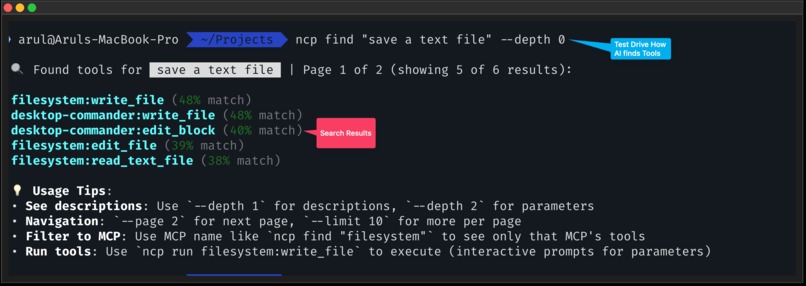
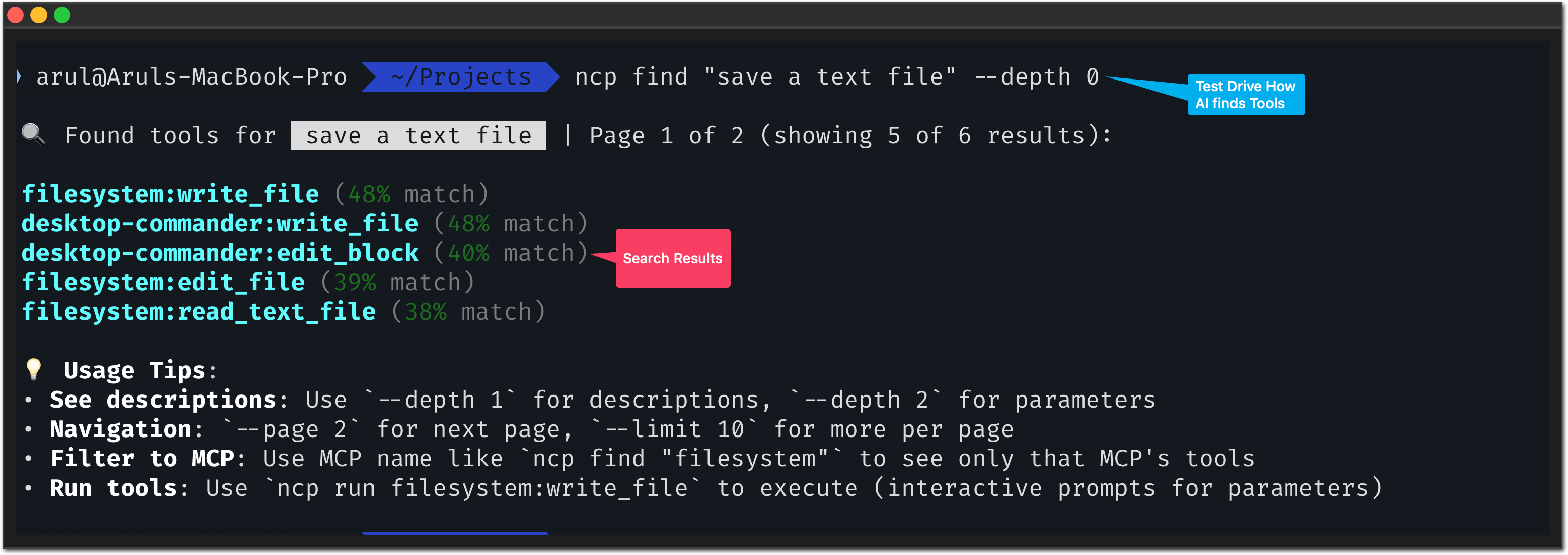
Test Drive to find How AI would find it's search results
-
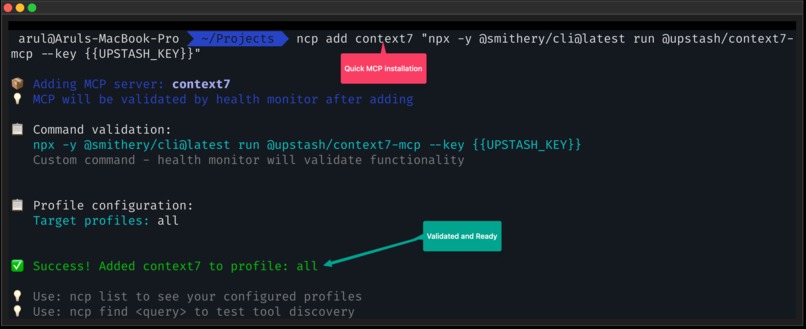
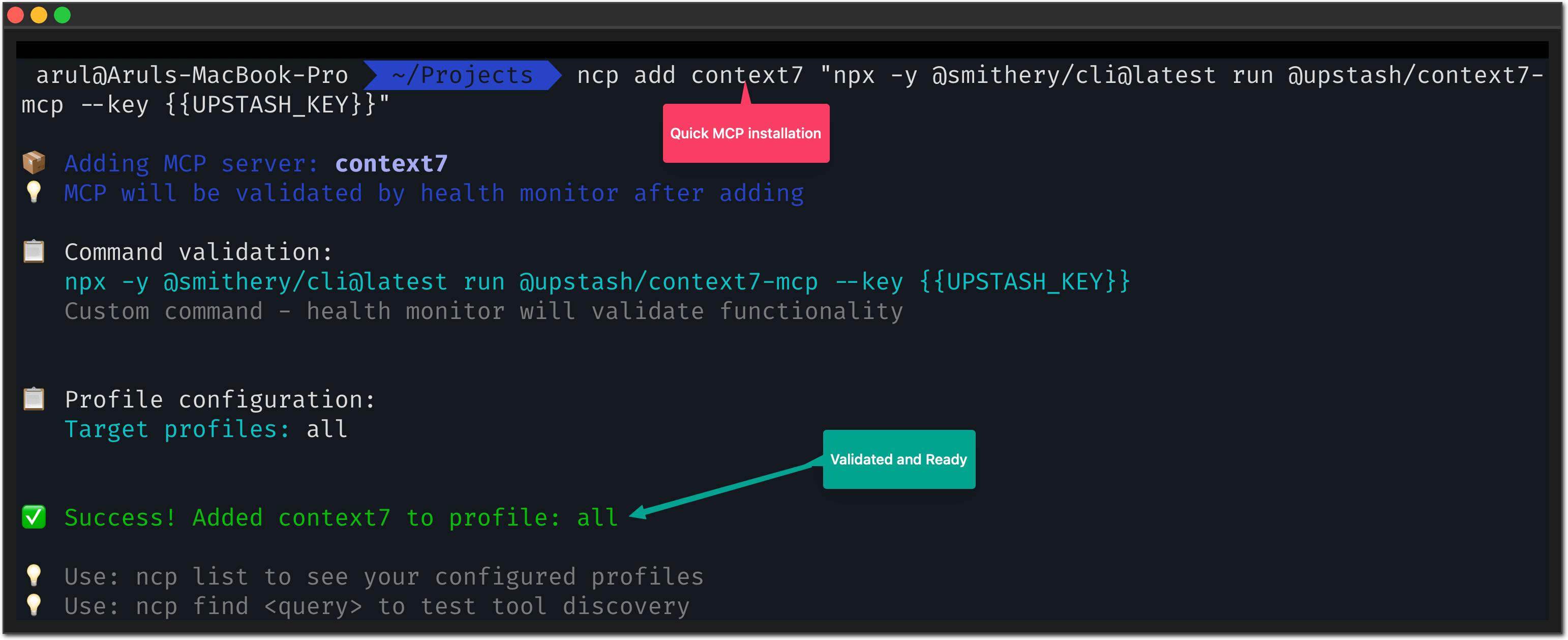
NCP add command lets you add an MCP
-
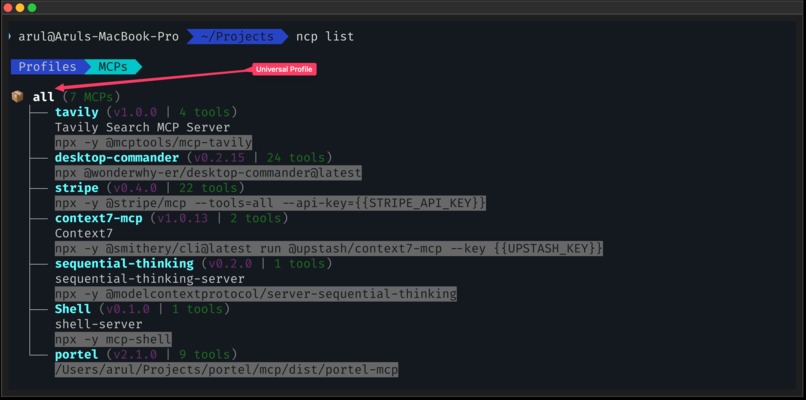
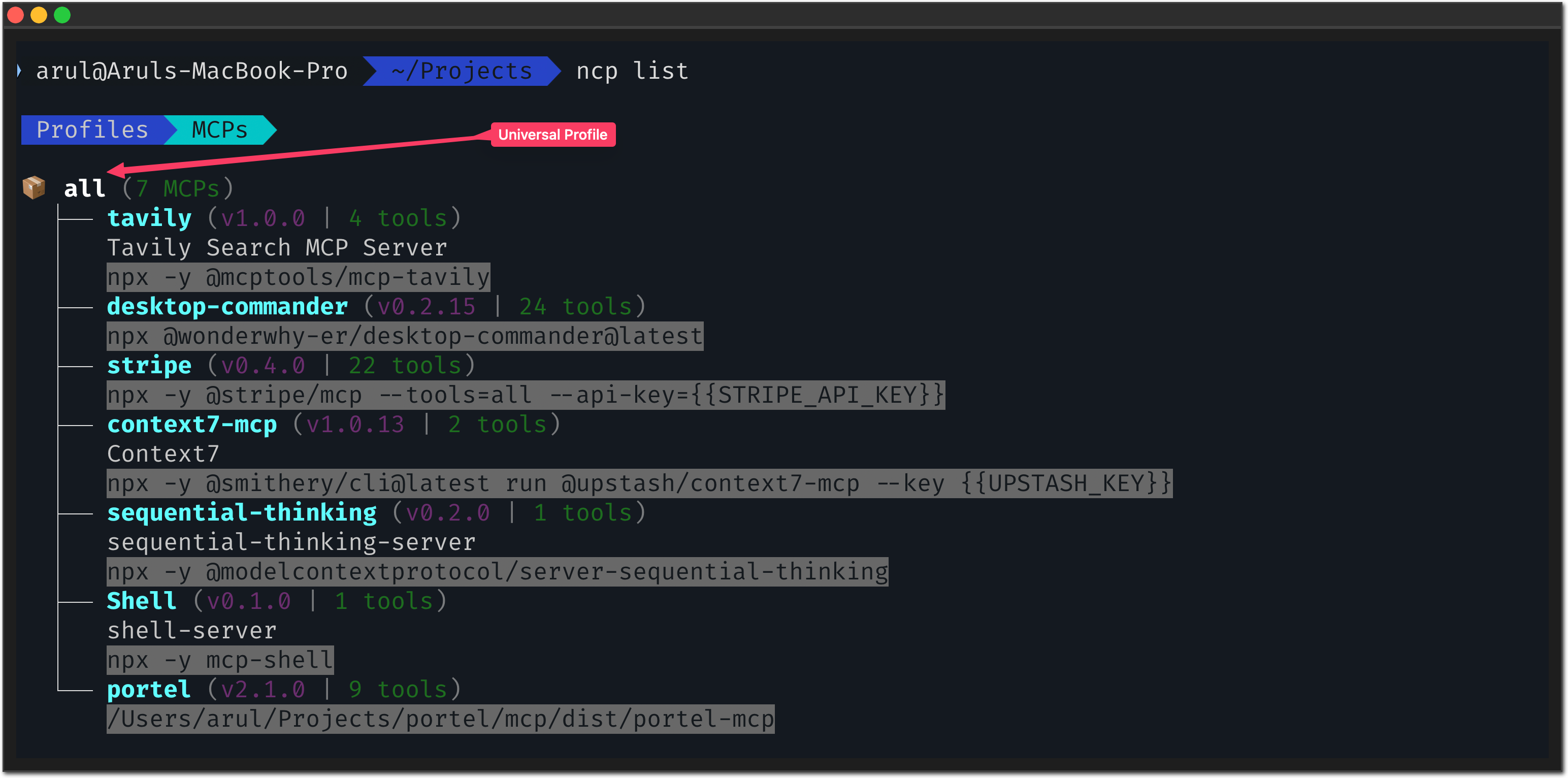
Using NCP list command to see what we installed
-
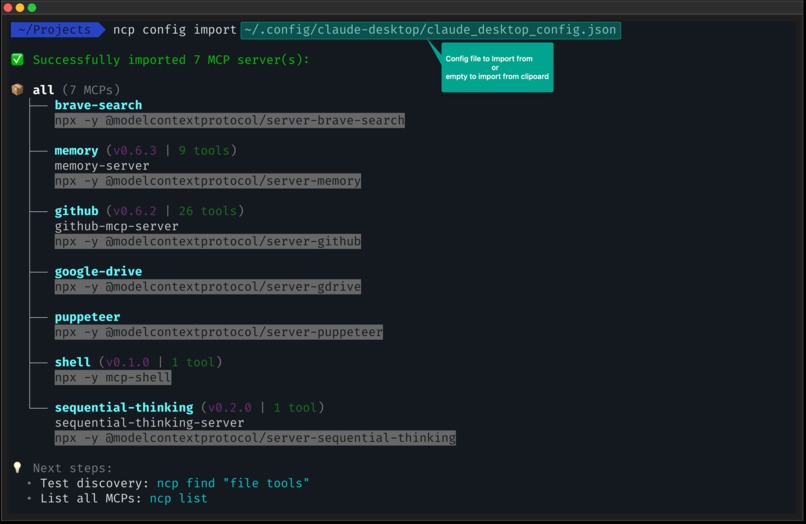
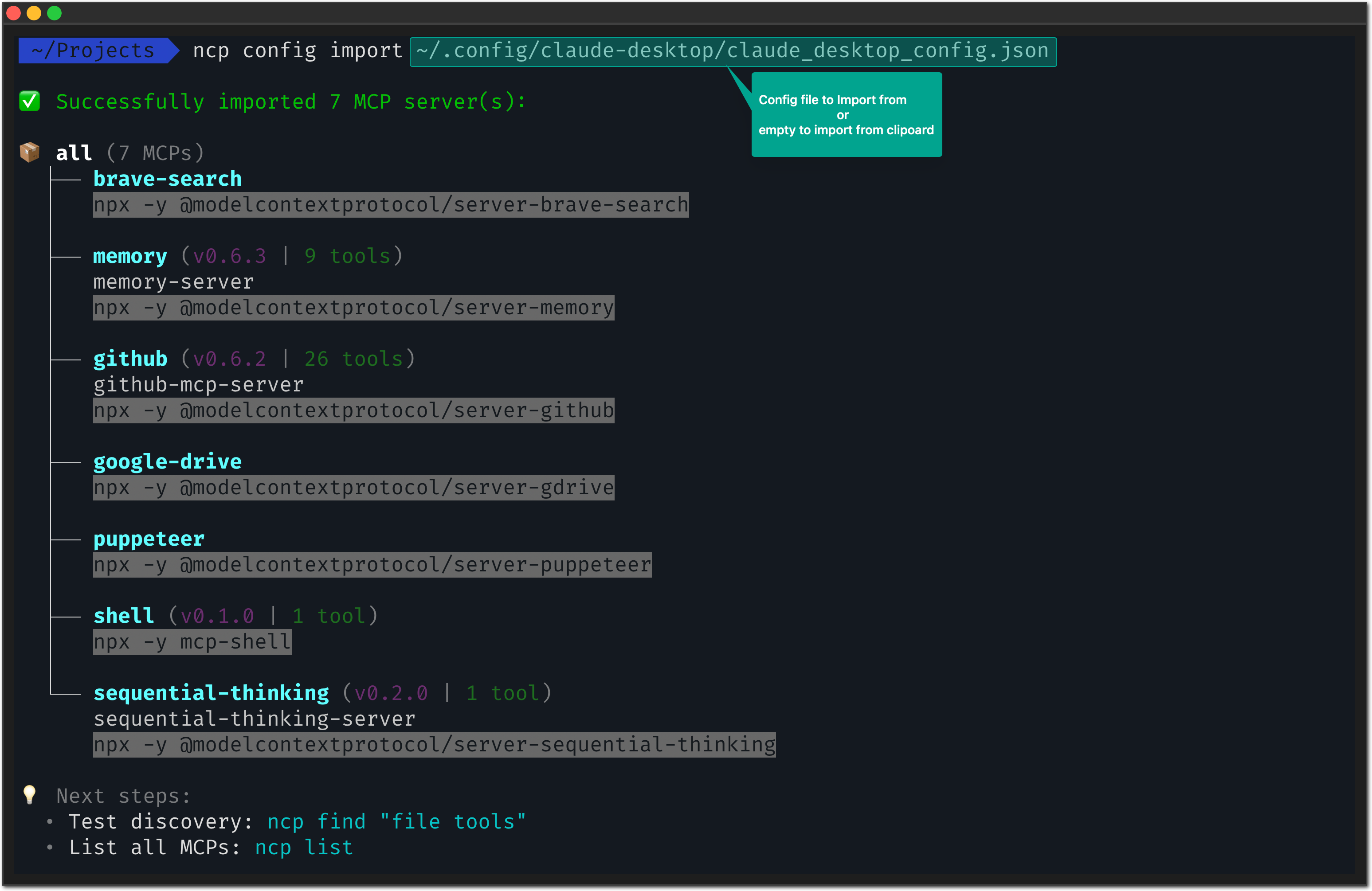
How to bulk import from json
-
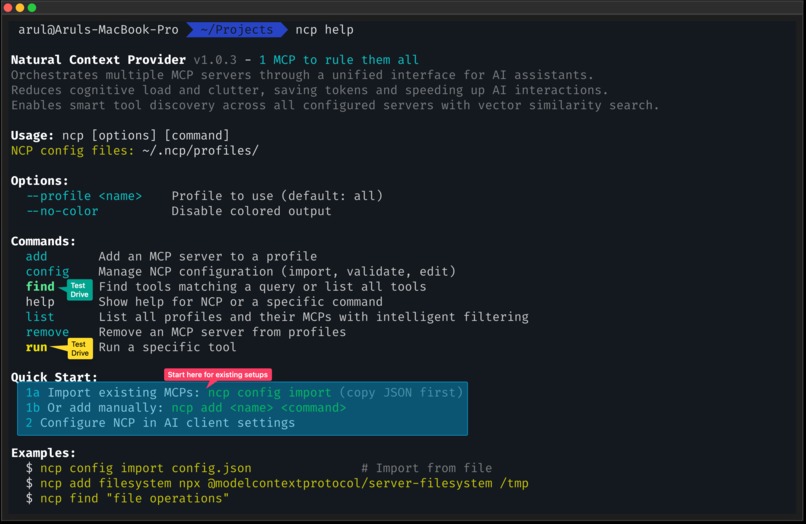
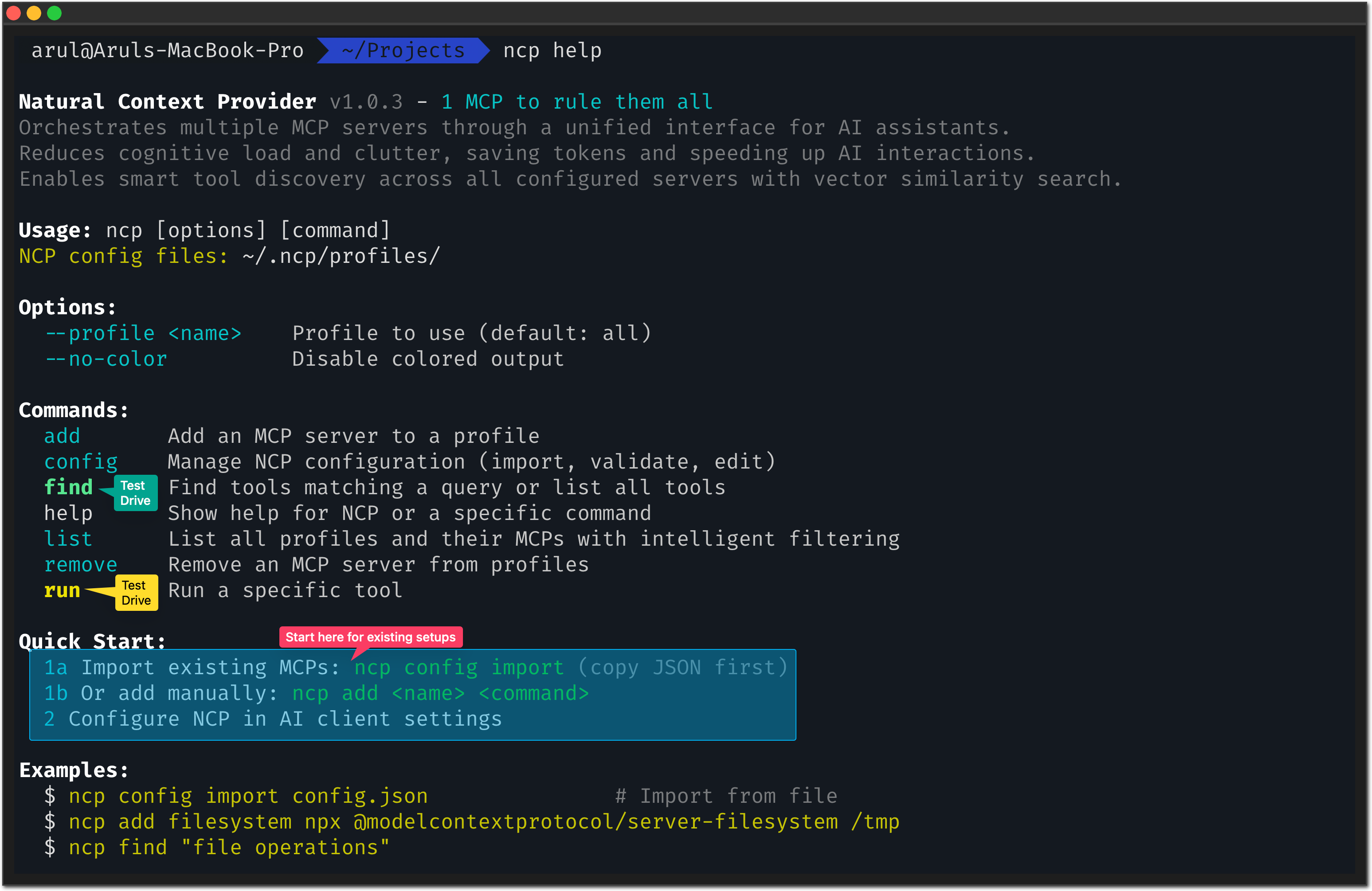
NCP Help command showing available commands
-
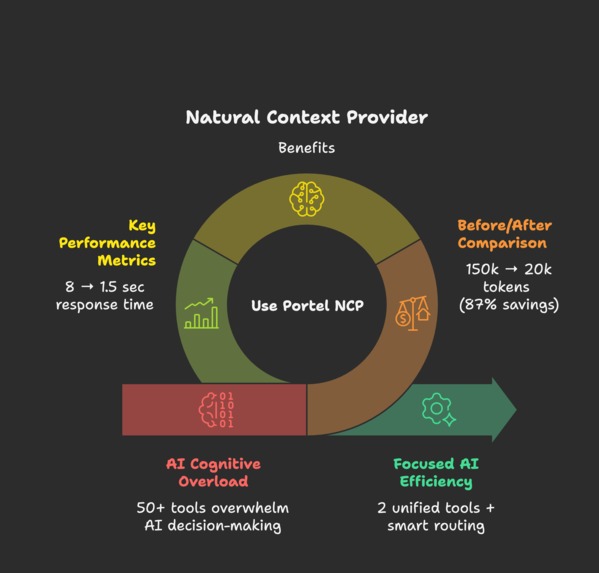
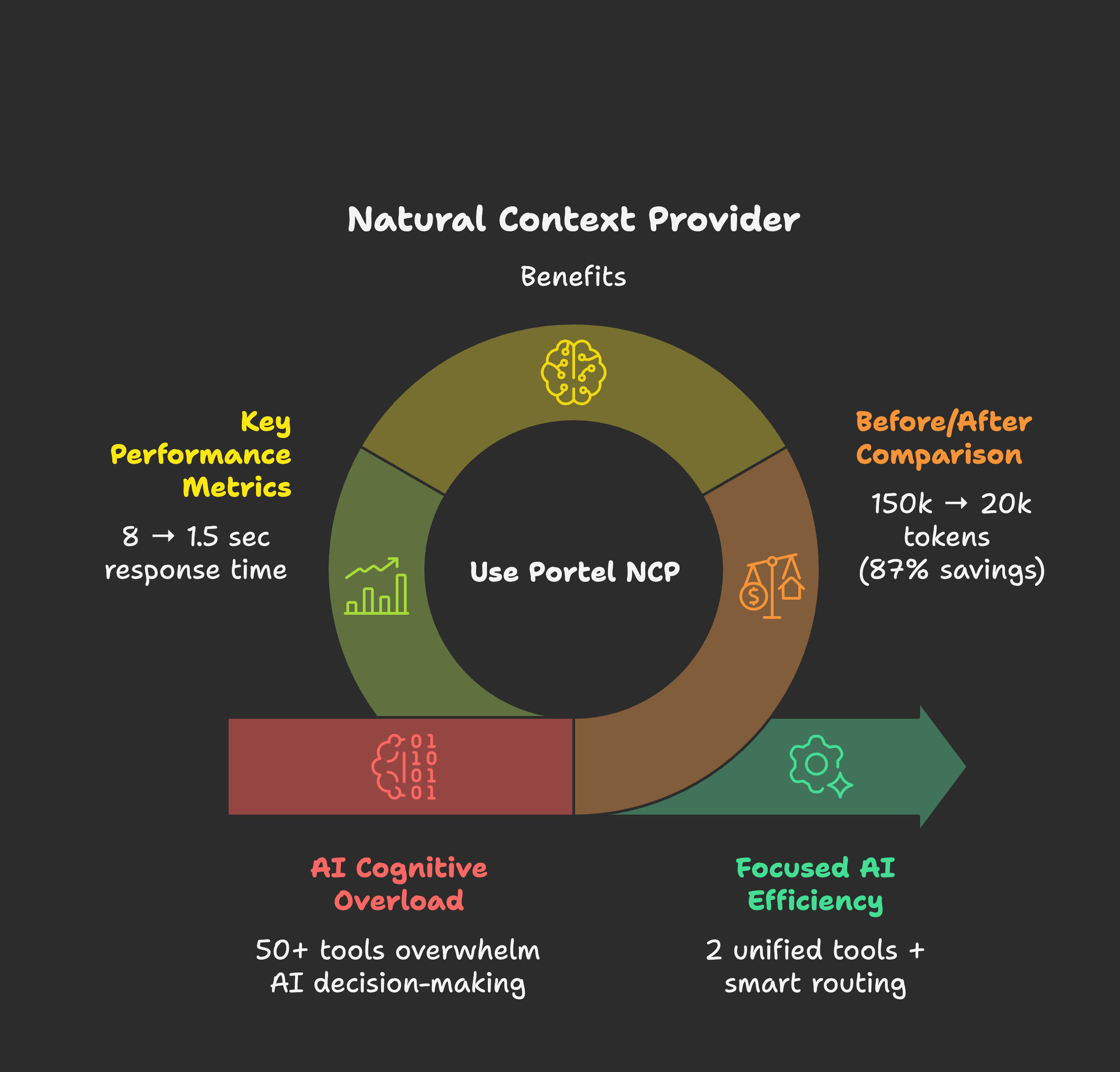
How NCP works
NCP: Natural Context Provider – Project Story
Inspiration
The journey began with a simple yet pressing challenge: AI assistants were paralyzed by complexity. Granting access to dozens of MCP (Model Context Protocol) servers meant spending tens of thousands of tokens merely understanding tool schemas. This token-driven bottleneck sparked a mission to restore AI productivity by cutting waste and surfacing exactly what an AI needs—nothing more, nothing less.
What It Does
NCP transforms N scattered AI tools into a single intelligent orchestrator.
- Presents just two commands—
findandrun—hiding all routing and protocol complexity. - Uses semantic vector search to match an AI’s intent against all connected MCPs.
- Achieves 47%–87% token savings in real-world sessions, reducing contexts from $$150{,}000^+$$ tokens to as few as 20 000.
How We Built It
- Prototype on Claude Desktop
- Leveraged Portel MCP as a coding bridge for rapid iteration.
- Leveraged Portel MCP as a coding bridge for rapid iteration.
- Transition to Claude Code & Sonnet 4.5
- Migrated core development to Sonnet 4.5 to harness advanced code generation and optimization.
- Migrated core development to Sonnet 4.5 to harness advanced code generation and optimization.
- Core Components
- Vector Search Engine: Semantic similarity matching across all MCPs
- Orchestration Layer: Concurrent MCP connections, error recovery, fallback logic
- Token Optimizer: Dynamically curates minimal context per request
- Proactive Context Provider: Anticipates AI needs using the Portal tool’s principles
- Vector Search Engine: Semantic similarity matching across all MCPs
Challenges We Ran Into
- N×M Overhead: Adding each MCP multiplied token context, leading to “tool paralysis.”
- Balancing Efficiency and Capability: Early prototypes cut tokens but lost functionality. Vector routing refined this balance.
- Semantic Search Precision: Ensuring vector matches were neither too broad nor too narrow required extensive tuning.
- Real-World Validation: Maintaining consistent token savings across diverse enterprise use cases demanded rigorous testing.
Accomplishments We’re Proud Of
- Dramatic Token Reductions: Sustained $$47\%–87\%$$ savings in production deployments.
- Streamlined AI Workflows: Users report AI assistants shifting from endless clarification to confident action.
- Open-Source Release: Project available at https://github.com/portel-dev/ncp, fostering community adoption.
- Validation of Proactive Context: Portal-inspired design proved effective for coding agents and beyond.
What We Learned
- Intelligent Abstraction Trumps Raw Access: Simplifying interfaces drives performance more than exposing every capability.
- Vector Search as Orchestrator: Semantic search can route service calls, not just retrieve documents.
- Token Economics Matter: Every token affects both cost and AI decision quality.
- Proactive AI Design: Anticipating context demands reduces round-trip overhead and accelerates execution.
- AI-Assisted Development Is Production-Ready: Leveraging Claude Desktop and Sonnet 4.5 accelerated our development far beyond traditional methods.
What’s Next for NCP
- Seamless .dxt Extension: A new version will install itself on Claude Cloud Desktop via the
.dxtextension format. - Automatic Updates: Built-in update mechanism ensures users always have the latest NCP features.
- Dynamic MCP Discovery: When a request fails to match existing MCPs, NCP will proactively suggest and install new MCPs via Claude’s UI prompt. Upon user approval, the MCP is added and immediately available, closing the loop on missing capabilities.
- Auto-Import of Local MCPs: NCP will detect and integrate existing MCPs defined in desktop extensions or config JSON into its managed registry.
- Expanded Platform Integrations: Support for additional AI environments beyond Claude is already underway.
The next chapter for NCP is about frictionless adoption and self-organizing orchestration, ensuring AI assistants remain focused, efficient, and always equipped with the right tools.


Log in or sign up for Devpost to join the conversation.