-
-
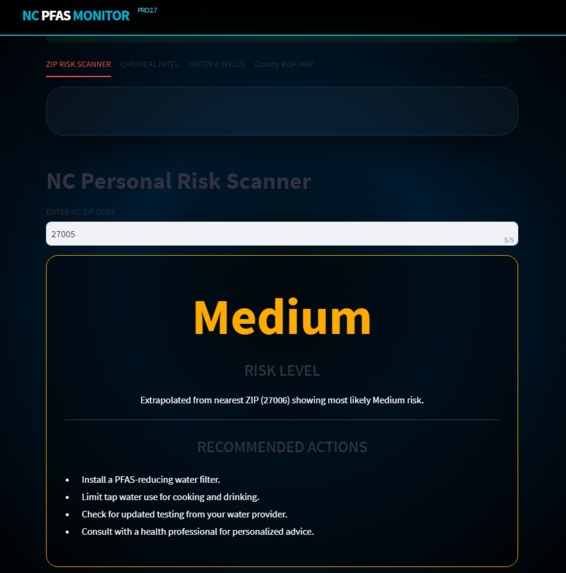
Main application
-
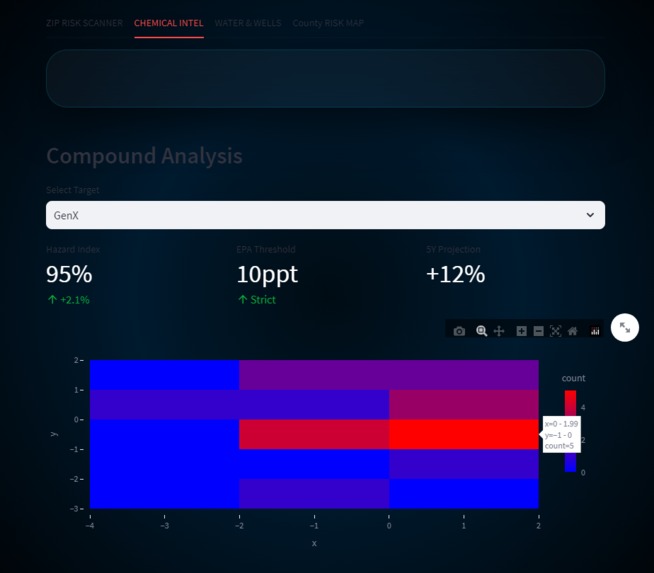
Secondary application
-
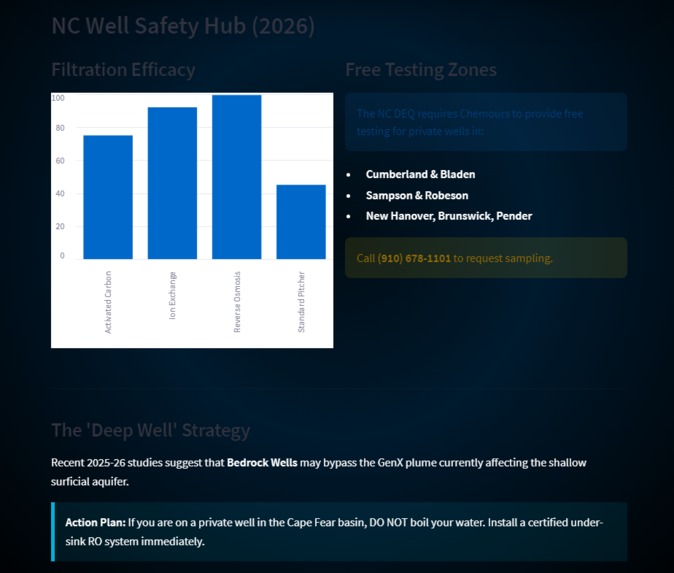
Data
-
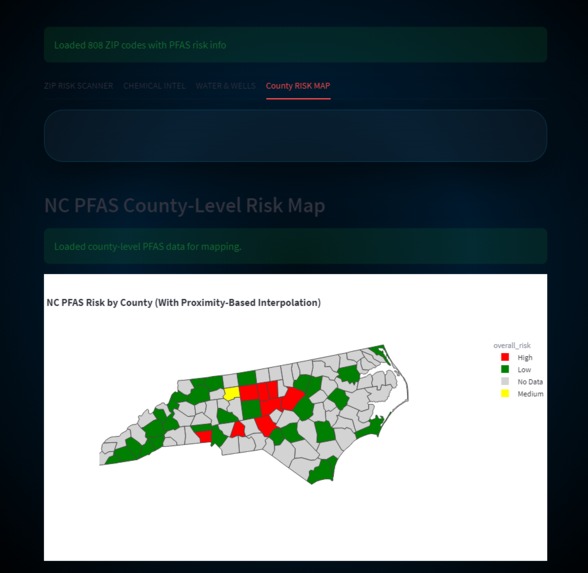
Interactive map
"Clean water is a background thing," says the EPA. "You can trust it, you can drink it, and then you can forget about it." The trouble begins when that trust silently shifts. As we researched PFAS contamination throughout North Carolina, we found the same story repeating itself: patchy reporting, technical speak, and general hand-waving written for policymakers, not the families turning on their faucets. The information was there, but deciphering it was clearly the point. That’s what drove us to create something better.
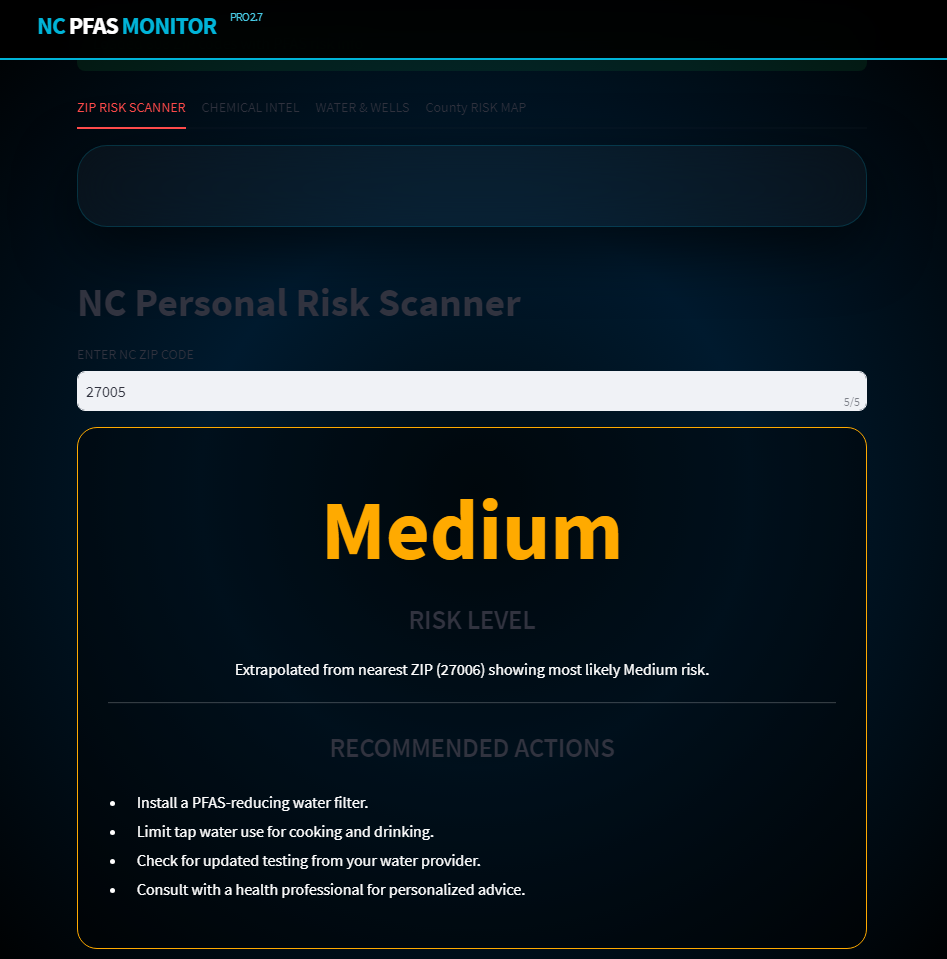
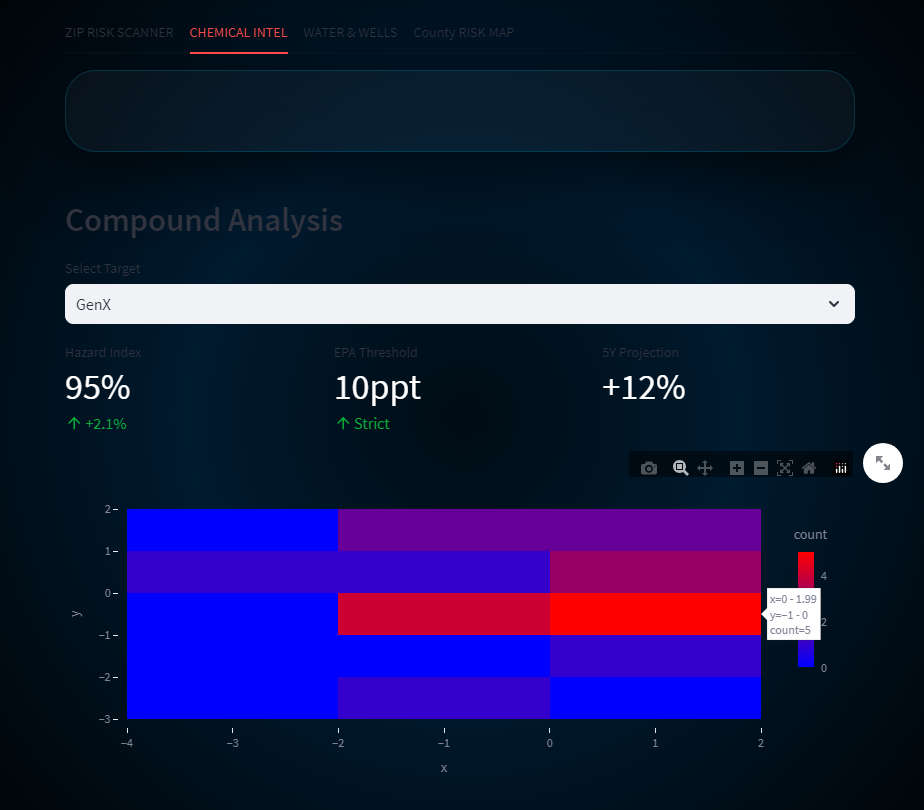
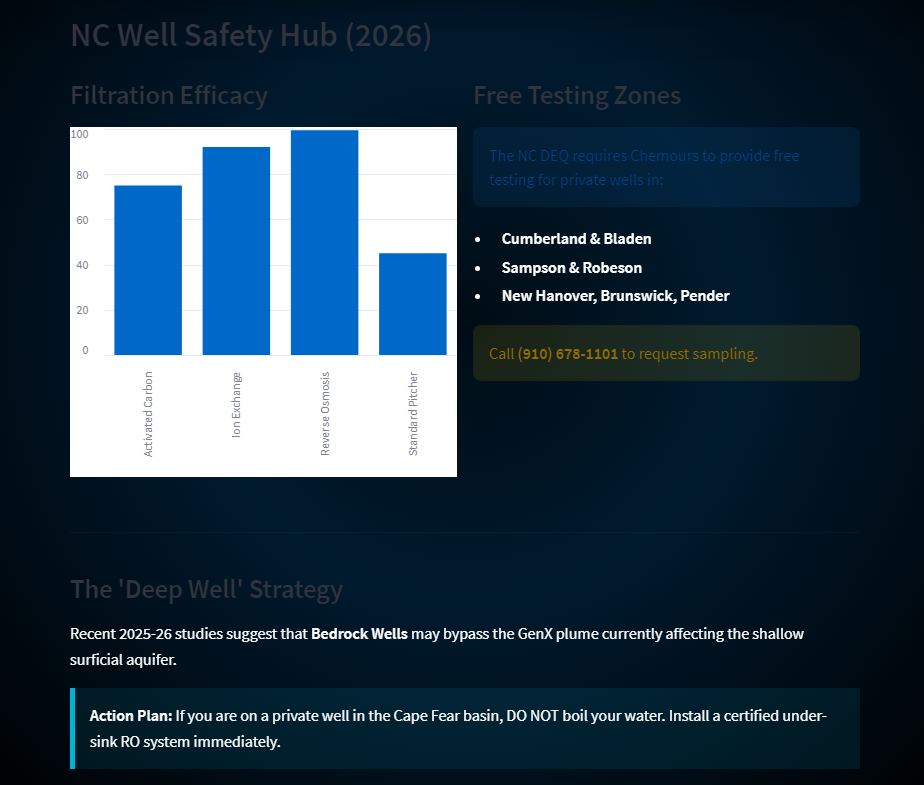
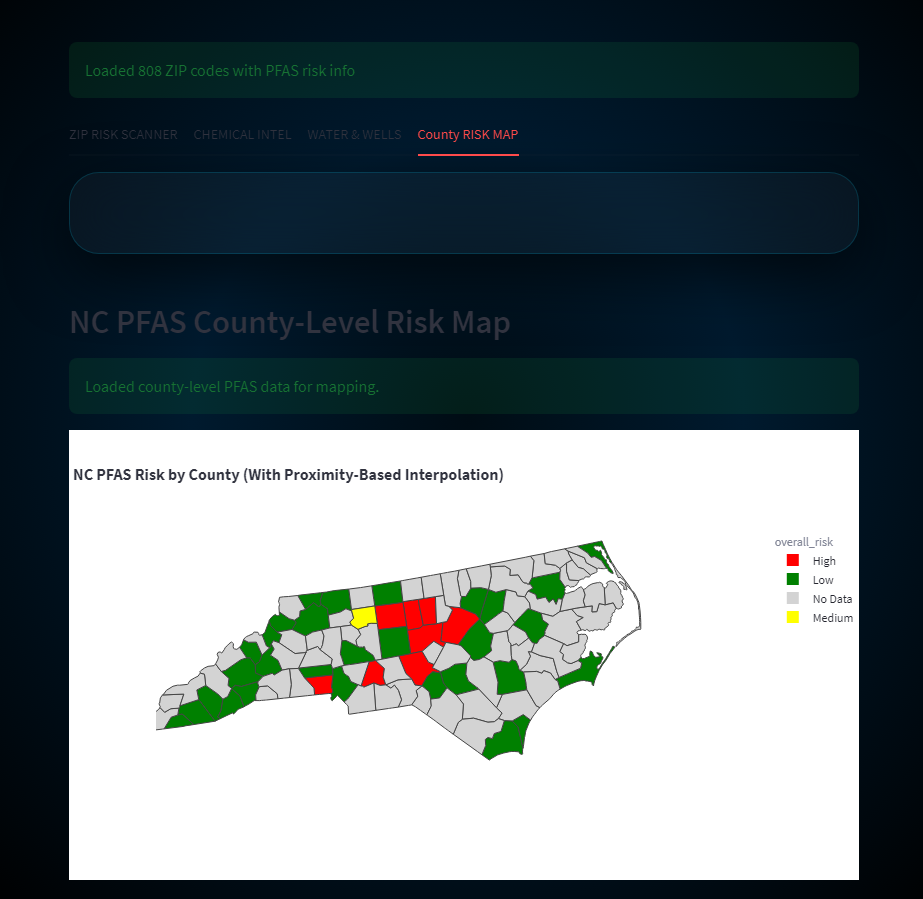
NC PFAS Intelligence is an interactive PFAS intelligence tool developed to take complex environmental information and turn it into straightforward, actionable knowledge. Simply enter a ZIP code in North Carolina, and the system will provide an estimate of PFAS risk level, explanations, and specific recommendations for what to do next. In addition to individual queries, the tool also offers county-level risk maps, summary pages for individual compounds such as GenX and PFOS, and information for private well owners.
Our construction involved compiling PFAS datasets from the publicly available PFAS database. Next, we interpolated them based on proximity to come up with a visualization of PFAS concentrations nationally, taking into consideration the fact that many parts of the country are not being tested for PFAS. We set up the pipeline with Python, Streamlit, Plotly, and geospatial libraries. We cleaned the raw data, assessed the risks we saw, and created real-time visualizations of those risks.
Every design decision we made—from our color scales to our language—was done with the intent to communicate the level of risk as clearly as possible without overstating the level of certainty we had for the risk.
While our greatest challenge was not technical in nature, it was ethical in nature. There are many inconsistencies and omissions within the PFAS literature, and when extrapolations are very much needed by those who might be impacted, it must be done with great transparency while still representing the best available science with appropriate caution.
NC PFAS Intelligence is an end-to-end product that makes it easy for a non-technical user to understand the dangers within one minute. Our study has confirmed that effective scientific practices are equal parts communicationande precision. We intend to add live testing updates, create new regional expansions, and involve partnerships with local organizations to ensure that this information gets out to the group of people who are most impacted by these substances.

Log in or sign up for Devpost to join the conversation.