-
-
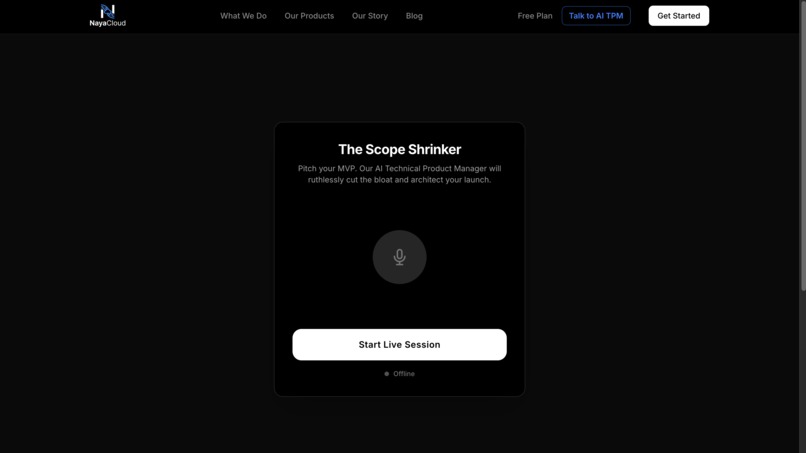
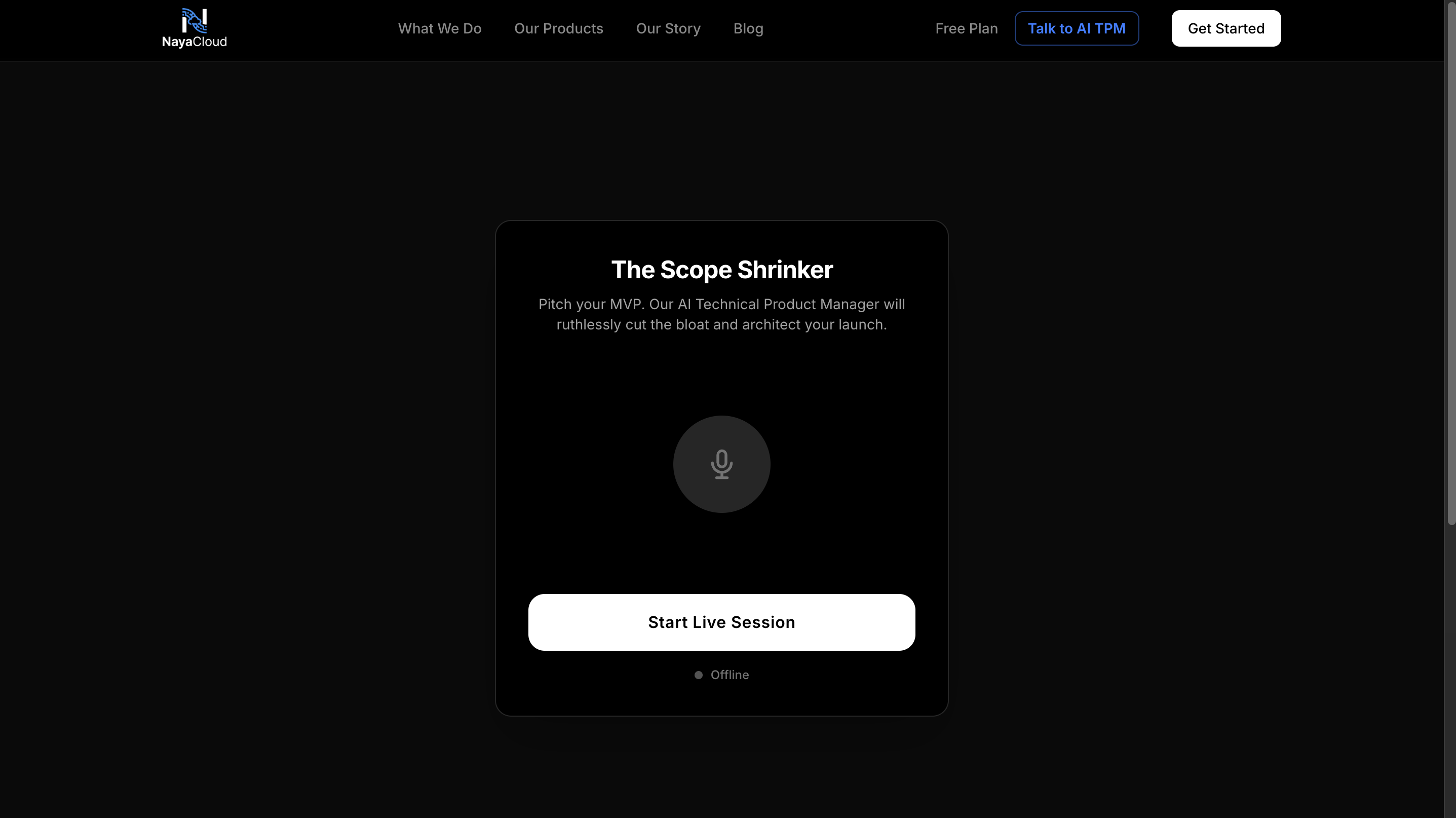
main-UI
-
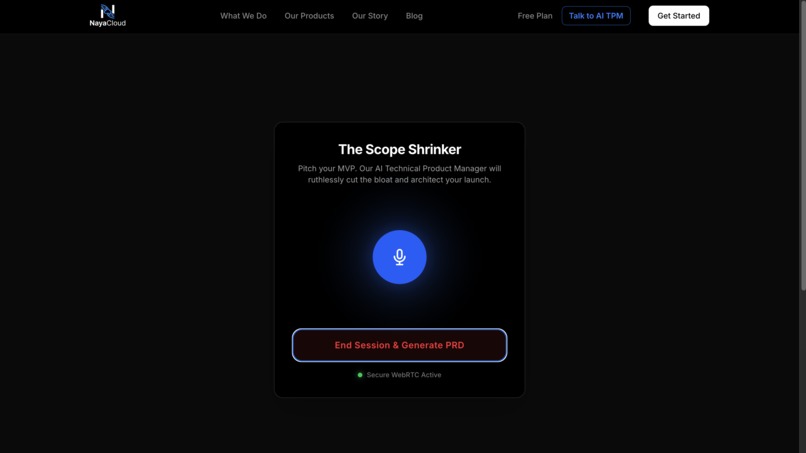
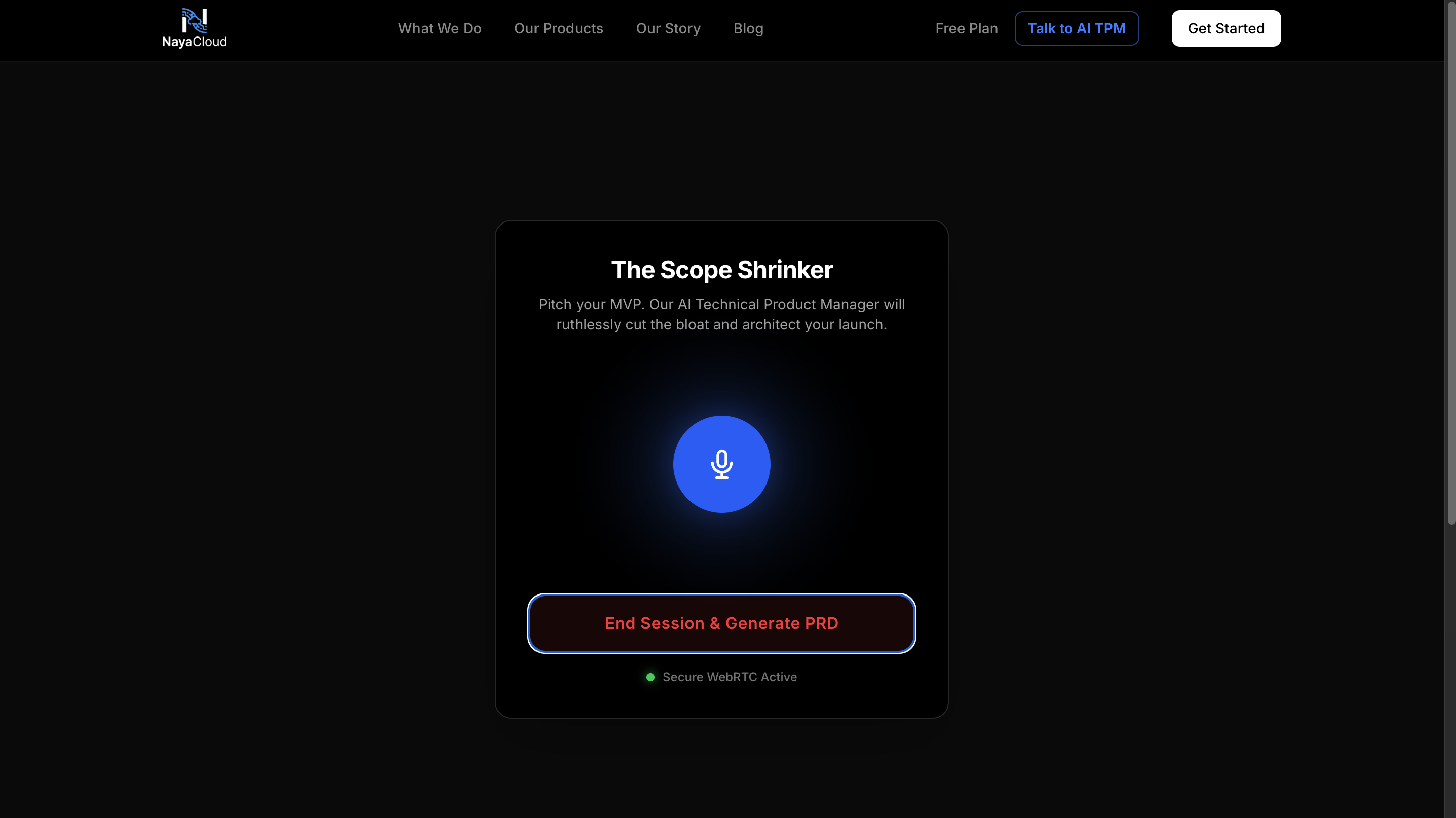
live-UI
-
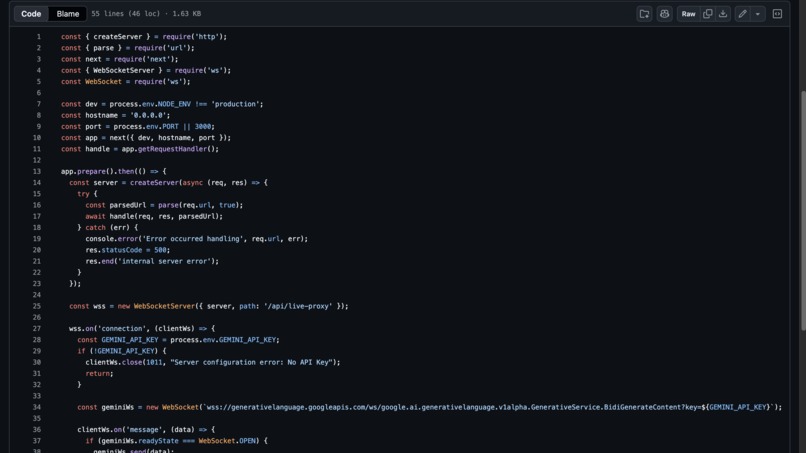
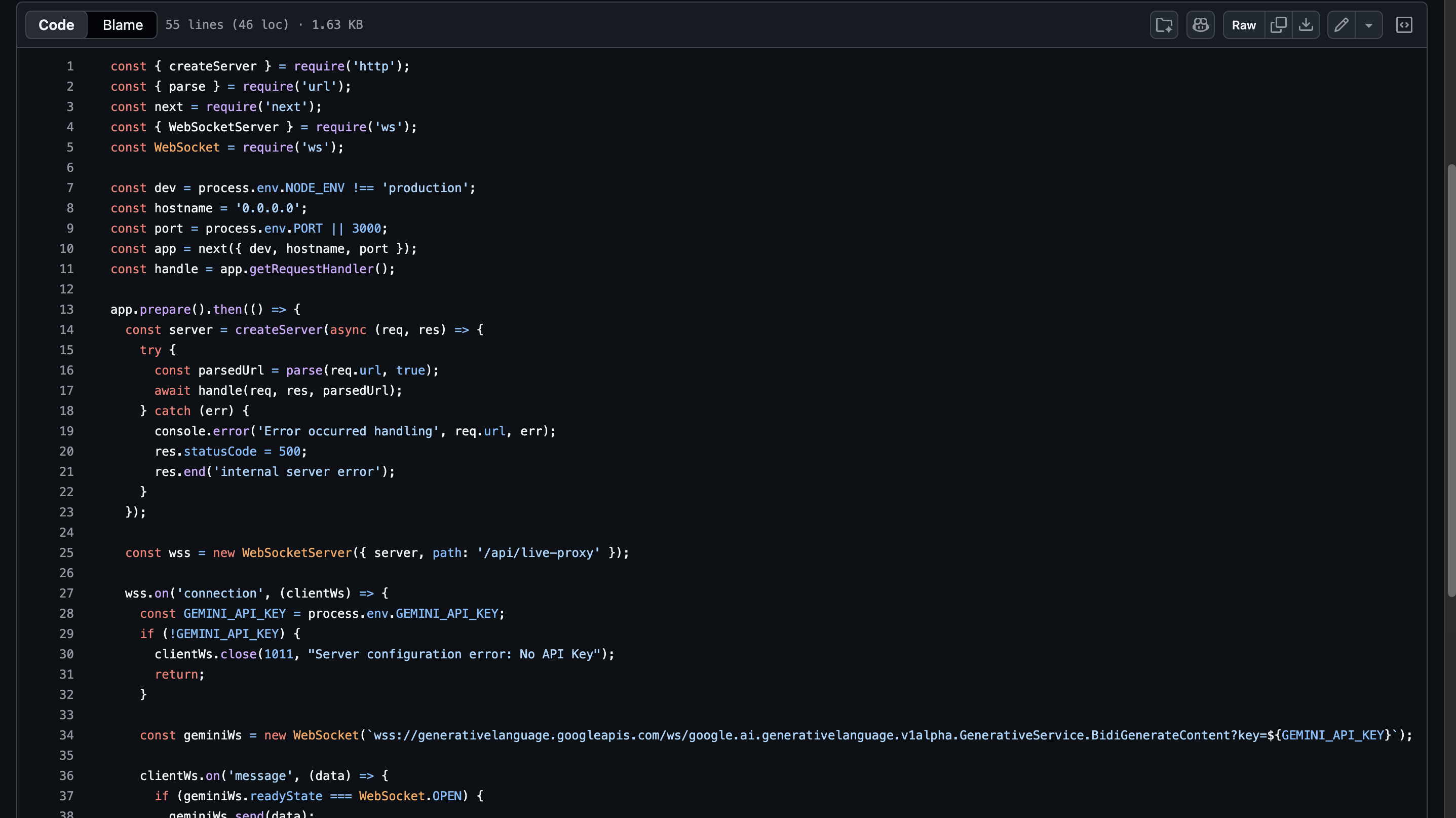
code snap-server
-
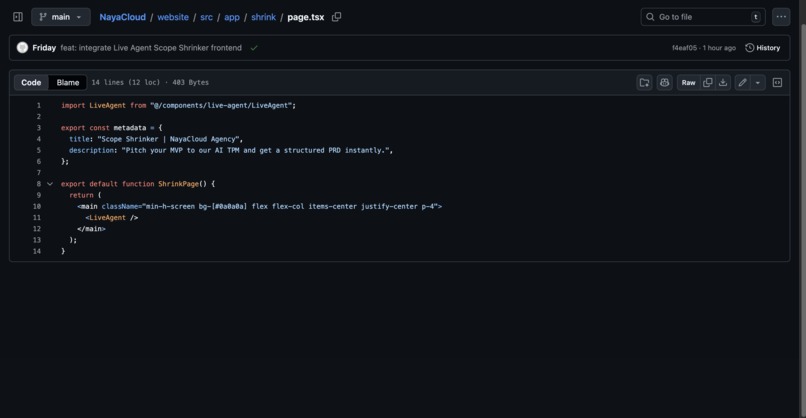
code-snap-ui
-
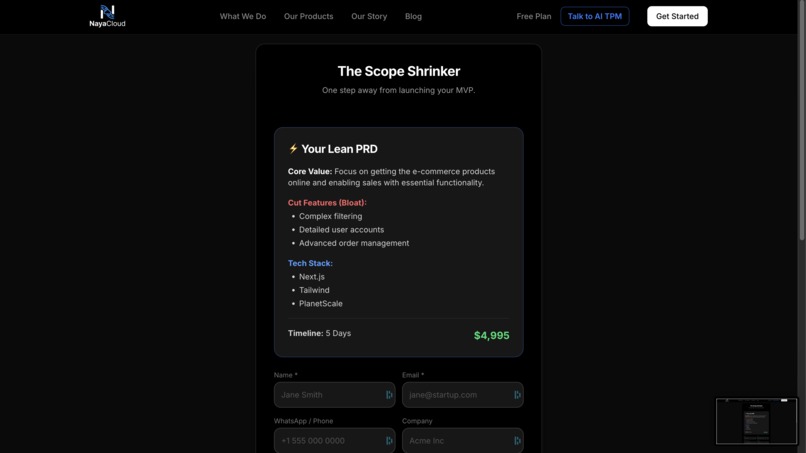
PRD
Inspiration
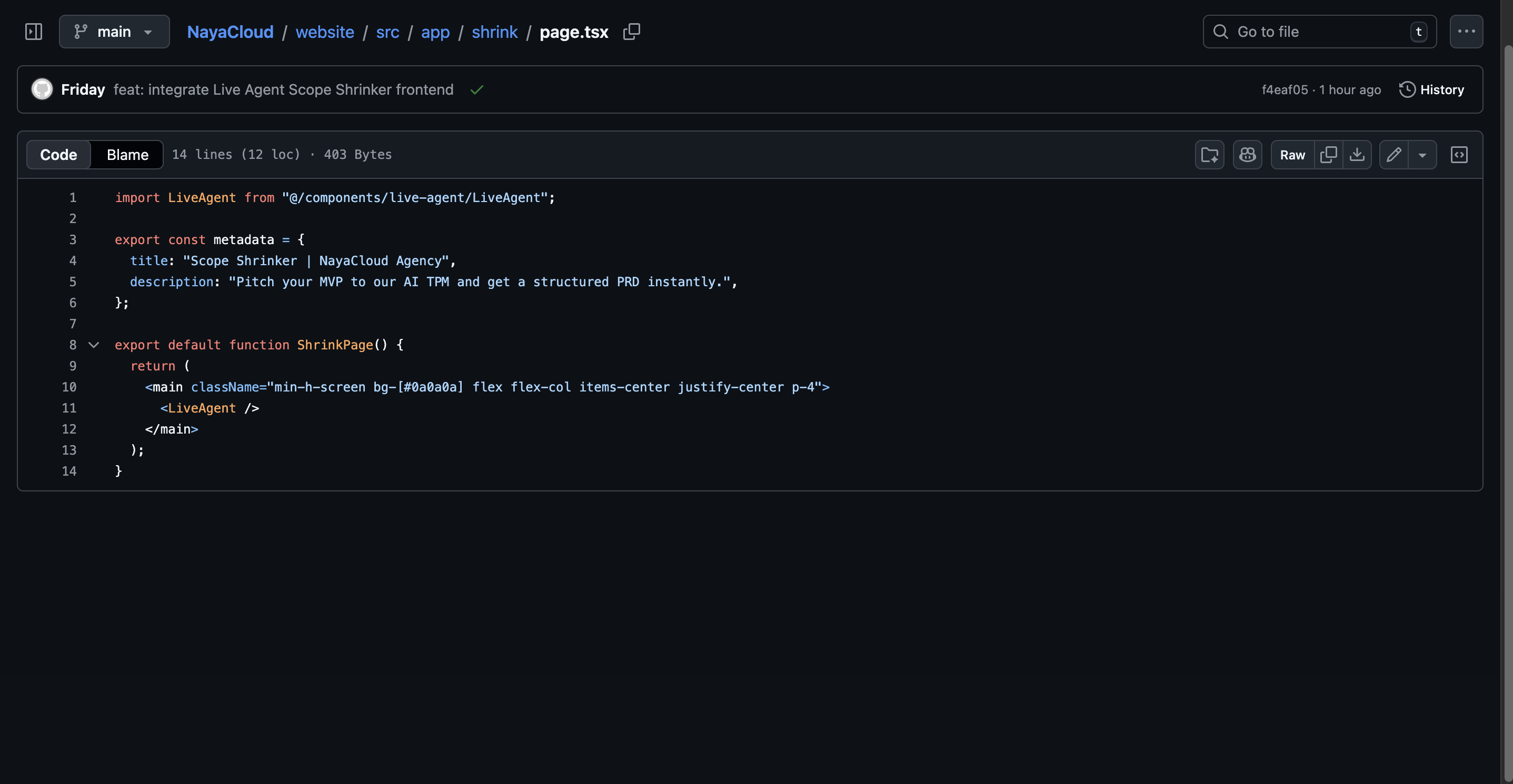
As an AI development agency (NayaCloud, which i run), we noticed a fatal pattern: 90% of non-technical founders over-scope their MVPs. They write 20-page requirement documents for complex ML features before they even have their first user. This leads to bloated budgets, 6-month dev cycles, and high failure rates. We realized founders hate typing out technical specs but love talking about their vision. We wanted to build a "ruthless" Technical Product Manager (TPM) that could interview founders in real-time, cut the bloat, and instantly architect a lean, 5-day MVP.
What it does
The Live Scope Shrinker is an interactive, voice-native AI agent. Instead of filling out a form, founders click a button and start pitching their startup via live audio.
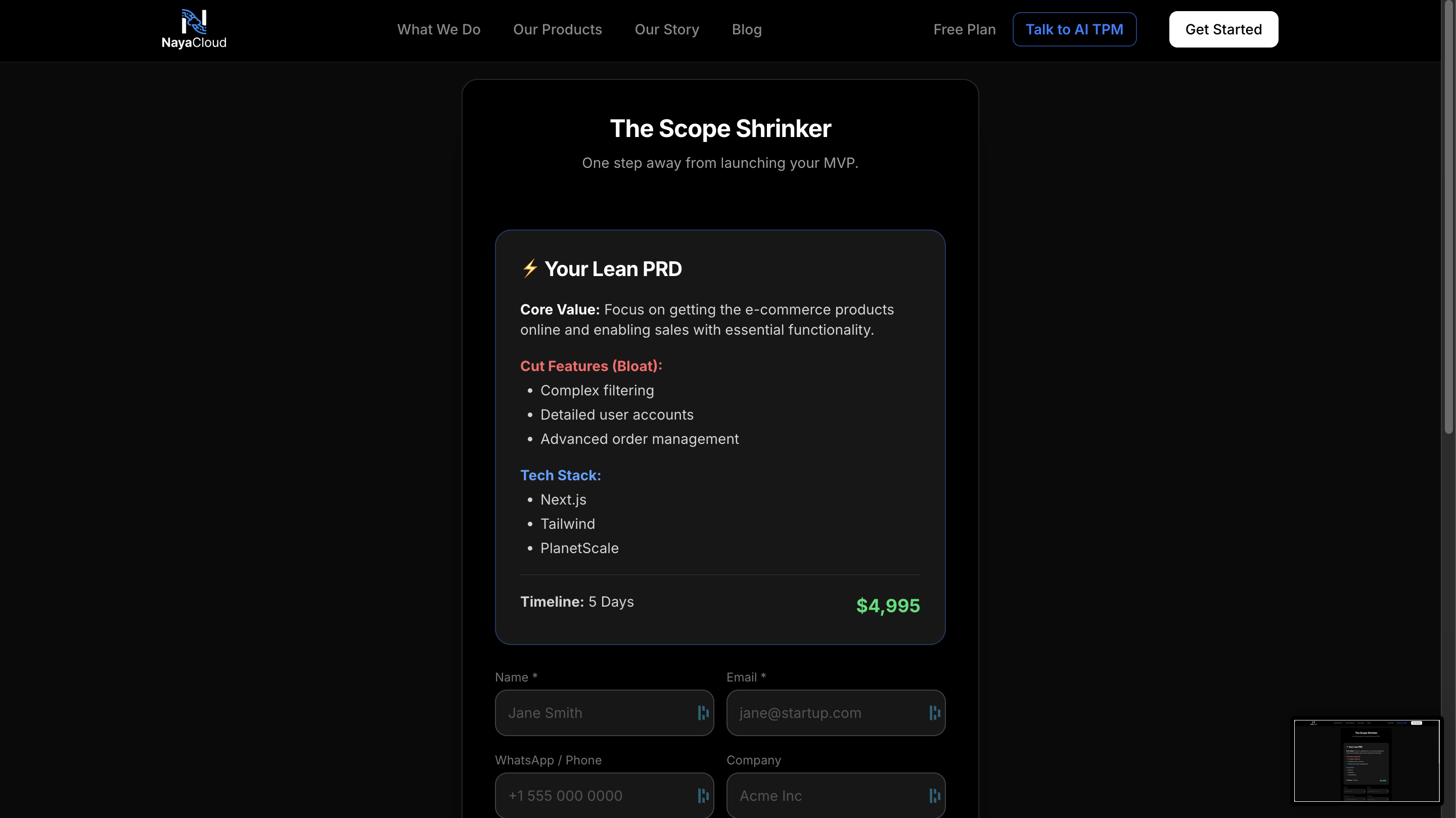
The AI acts as an elite, high-ticket TPM. If a founder says, "We need a custom recommendation algorithm," the AI will immediately interrupt them: "You don't need custom ML for an MVP. We are using a simple tag-matching algorithm. Next." Once the core value is agreed upon, the agent ends the call and instantly generates a structured JSON Product Requirements Document (PRD) with a checkout link to build the MVP for a fixed price.
How we built it
The brain of the operation is the Gemini Multimodal Live API ( gemini-2.5-flash-native-audio-latest ), utilizing the BidiGenerateContent WebSocket endpoint for ultra-low latency, full-duplex voice interaction.
The frontend is built with Next.js 16 (App Router), React WebRTC, and Framer Motion for the dynamic audio visualizer. We capture raw microphone input via the browser's AudioContext , encode it to PCM16 Base64 chunks, and stream it in real-time to our backend.
Challenges we ran into
Our biggest hurdle was infrastructure architecture. The Next.js App Router relies heavily on Serverless Functions (like Vercel), which aggressively drop persistent WebSocket connections after 10-60 seconds. Furthermore, passing our AIza... Google AI Studio key down to the React client to establish a direct WebRTC connection was a massive security vulnerability.
To solve this, we engineered a custom, unified Node.js server that runs both the Next.js frontend and a secure WebSocket Proxy side-by-side. We containerized this architecture and deployed it to Google Cloud Run, which natively supports long-lived WebSockets. The client streams audio to our server, and our server securely injects the API key before proxying the stream to Gemini.
Accomplishments that we're proud of
We successfully deployed a production-grade, ultra-low latency conversational agent without leaking our API keys to the frontend. We managed to seamlessly blend bleeding-edge generative media (Gemini Native Audio) with a strict, structured output (JSON PRD schema), turning a cool voice demo into a highly lucrative B2B lead-generation tool.
What we learned
We learned the critical difference between building AI toys and AI infrastructure. Handling raw PCM audio buffers, managing AudioContext states, and routing bidirectional WebSockets through secure proxies gave us a deep appreciation for the complexities of real-time multimodal streaming.
What's next for NayaCloud Live Scope Shrinker
Currently, the Scope Shrinker operates as the top-of-funnel lead magnet on our agency website. Our next step is to integrate it with Stripe and our internal DevOps platform (Nebula Hosts). In V2, after the AI scopes your MVP, it will instantly provision the Google Cloud infrastructure, deploy the codebase, and hand you the keys to your new product, all within 5 minutes of ending the voice call.
Built With
- docker
- framer-motion
- gemini-2.5-flash-native-audio
- gemini-multimodal-live-api
- google-cloud-run
- next.js
- node.js
- react
- typescript
- webrtc
- websockets

Log in or sign up for Devpost to join the conversation.