-
-
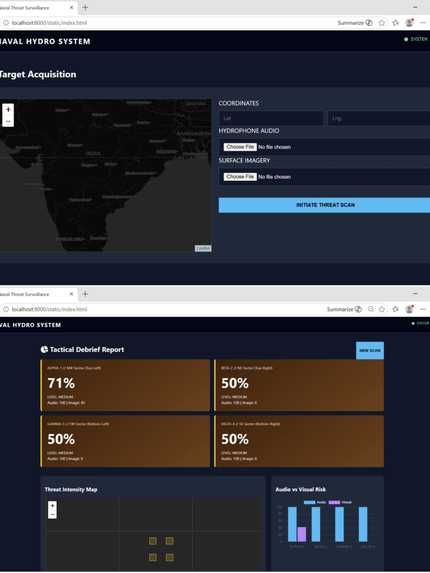
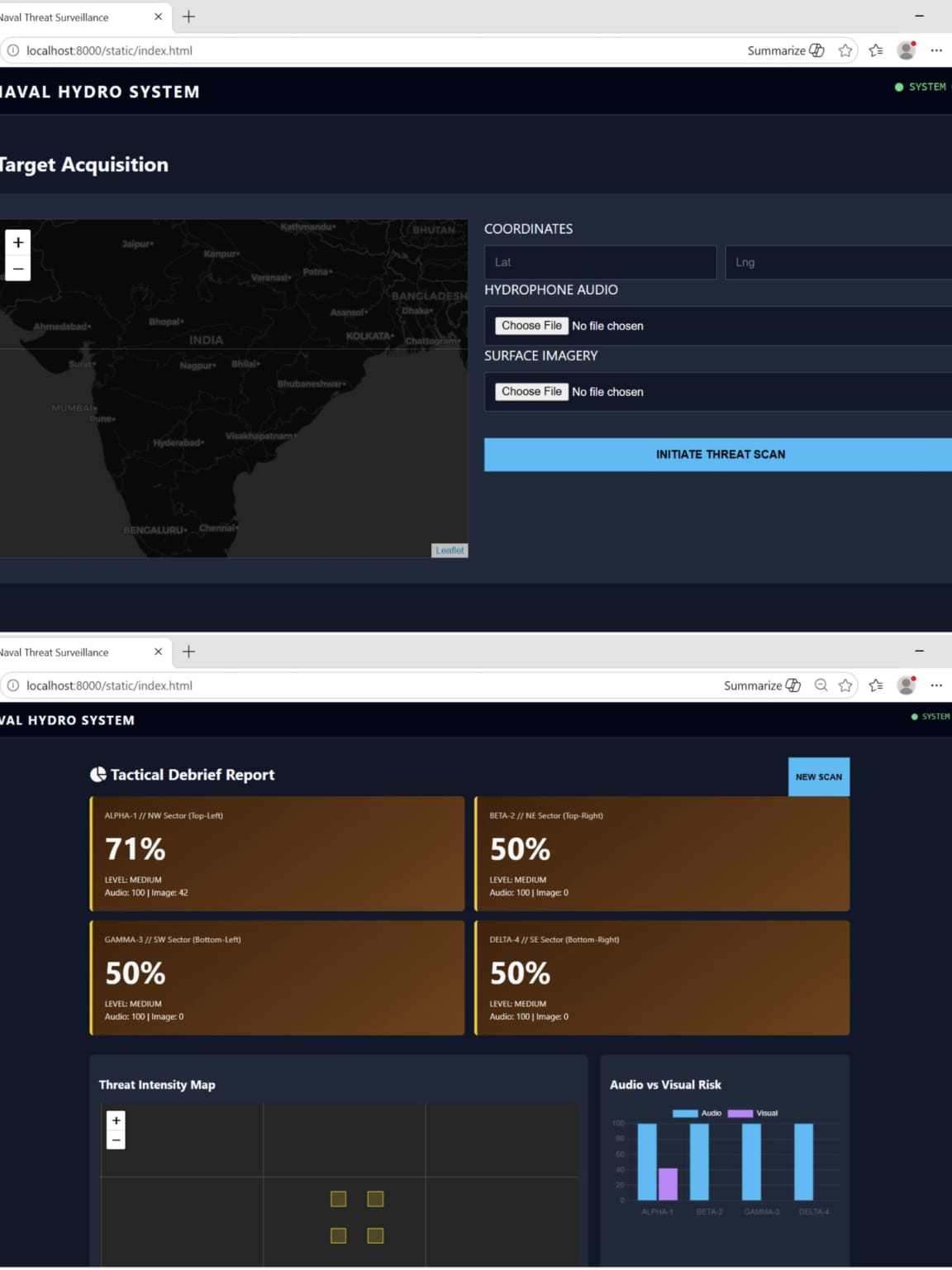
**"Navy Hydroacoustic Surveillance System – Advanced underwater acoustic monitoring for enhanced maritime security."**
Inspiration
Maritime security is essential for protecting national waters and naval assets. Traditional monitoring methods can be limited in detecting underwater activities in real time. Our team was inspired to develop a hydroacoustic surveillance system that uses underwater sound signals to monitor and identify potential threats, improving naval awareness and security.
What it does
The Navy Hydroacoustic Surveillance System captures and analyzes underwater acoustic signals to detect and monitor marine activities. The system helps identify unusual underwater movements, supports surveillance operations, and provides real-time information that can assist naval personnel in making informed decisions.
How we built it
We designed the project using modern web technologies and a structured software architecture. The system includes modules for acoustic data collection, signal processing, monitoring, and visualization. A user-friendly dashboard displays the detected information, allowing operators to observe underwater activities efficiently.
Challenges we ran into
- Understanding the fundamentals of hydroacoustic surveillance.
- Simulating underwater acoustic data for testing.
- Integrating different system components into a single platform.
- Designing a simple and effective user interface for monitoring.
Accomplishments that we're proud of
- Successfully developed a working prototype for underwater surveillance.
- Created an organized dashboard for monitoring acoustic events.
- Improved our teamwork, research, and technical implementation skills.
- Built a project that addresses a real-world maritime security challenge.
What we learned
Through this project, we learned about underwater acoustic communication, maritime surveillance systems, signal monitoring concepts, system integration, and collaborative software development. We also gained valuable experience in solving practical engineering problems.
What's next for NAVY HYDROACOUSTIC SURVEILLANCE SYSTEM
In the future, we plan to enhance the system with better signal processing techniques, support for multiple sensor networks, real-time alert mechanisms, improved visualization tools, and deployment in larger maritime monitoring environments to increase its effectiveness and reliability.
Built With
- ai-powered-analysis
- css-frameworks:-fastapi
- data-visualization
- git
- github
- google-cloud-(if-applicable)-apis:-rest-apis
- google-cloud-apis:-rest-apis
- html
- if-used)-cloud-services:-github
- javascript
- json-processing
- languages:-python
- openai-api-(if-ai-features-are-included)-other-technologies:-machine-learning
- openai-api-other-technologies:-machine-learning
- postman-databases:-mongodb-(or-postgresql
- postman-databases:-mongodb-cloud-services:-github
- railway
- react.js
- render/railway-(if-deployed)
- responsive
- tailwind-css-platforms-&-tools:-vs-code
- vercel
- web


Log in or sign up for Devpost to join the conversation.