-
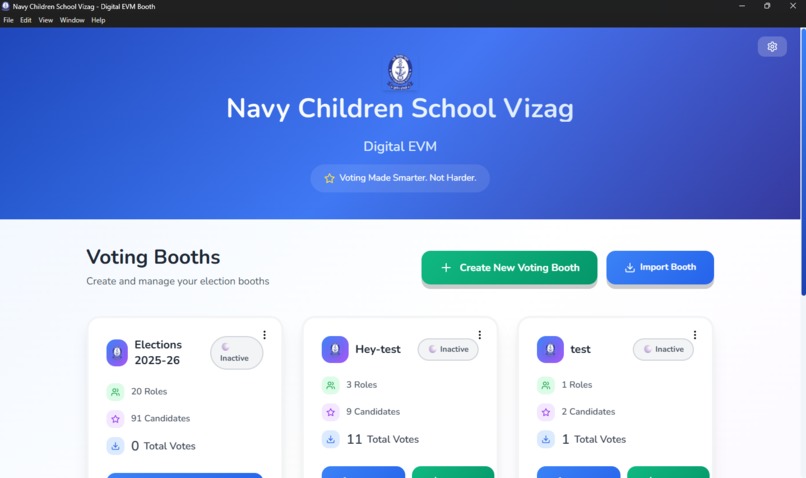
ADMIN PANEL
-
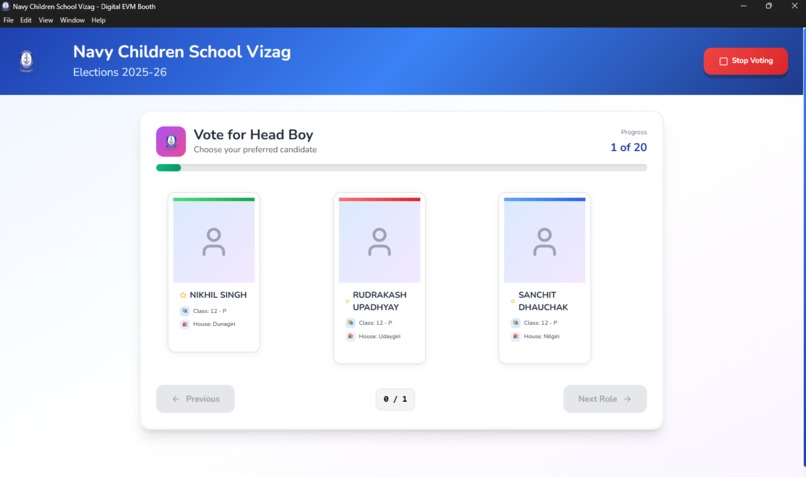
VOTING INTERFACE
-
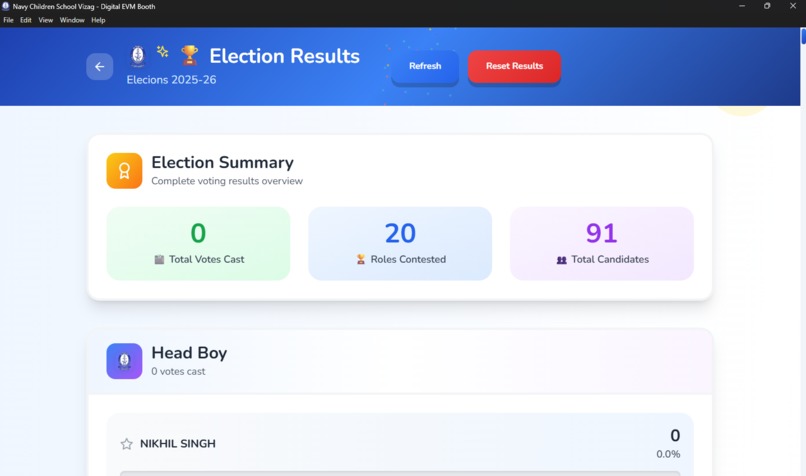
VOTING RESULTS
-
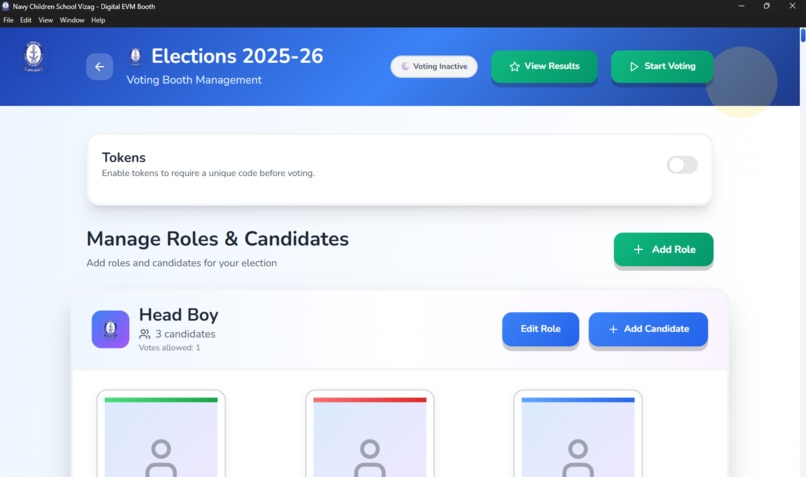
BOOTH SETUP PAGE


Inspiration
Every year, our school elections took a lot of time — from printing ballots to manual counting and verification. It was slow, confusing, and sometimes even unfair. We wanted to create something faster, smarter, and more secure — like the real Electronic Voting Machines (EVMs) used in India. That’s how the idea of Navy Children School Digital Electronic Voting Machine was born.
What it does
It’s a digital voting system built to replace the manual school election process. -Students can cast votes digitally, role by role (e.g., Head Boy, Head Girl, etc.) -The system ensures vote privacy, prevents cheating, and displays instant results -It works offline, saving all votes locally with a backup in a Notepad file -The interface feels clean and modern — inspired by Duolingo’s simplicity and official EVM functionality
How we built it
We started with just an idea and a lot of curiosity. None of us had made something like this before, so we did a lil bit of vibe coding — lots of trial and error, YouTube tutorials, and late-night debugging 😅. We took help from our seniors and teachers to understand how real EVMs work and how data can be stored safely. Slowly, we built the base: A simple UI inspired by Duolingo’s clean look. Admin mode for creating roles and candidates. Voting mode where students could vote easily and securely. Local file storage (.txt) to save votes and results without any internet. It wasn’t perfect at first — some buttons broke, results glitched — but after a few all-nighters, it finally worked like magic during the actual school elections.
Challenges we ran into
-Designing a secure but simple voting logic. -Preventing double voting and ensuring every click was counted once. -Keeping everything offline yet reliable. -Managing UI layout within limited tools and school computers. -Convincing people that it was as trustworthy as paper voting.
Accomplishments that we're proud of
-Successfully implemented the EVM in real school elections. -Teachers and students loved how realistic and fast it felt. -Created a fully working offline voting system with instant result generation. -Learned teamwork, testing, and problem-solving under deadlines.
What we learned
We learned how technology can make processes transparent and fair. Some key takeaways: -Basics of data security and vote encryption -Simple math for counting and calculating vote percentages Vote Percentage= Total Votes/Votes Received×100 -UI/UX design principles to make tech easy for everyone -Importance of testing real-world systems before launch
What's next for Navy Children School Digital Electronic Voting Machine
-Add multi-school support with a cloud backup system -Include real-time analytics dashboards for admins -Improve the security layer with encryption -Make a mobile version so students can vote securely from devices -Maybe even publish it as an open-source project for other schools!


Log in or sign up for Devpost to join the conversation.