-
-
HomePage Credibility Information 1
-
HomePage Credibility Information 3
-
Homepage
-
HomePage Credibility Information 2
-
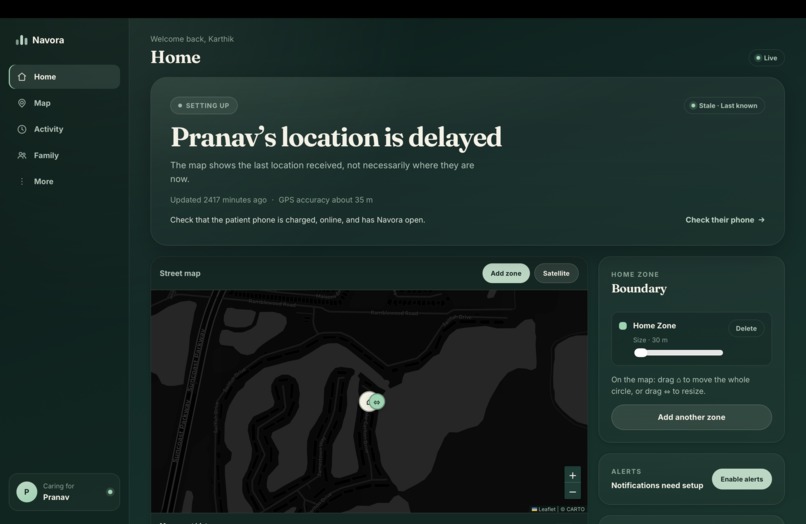
Caregiver dashboard
-
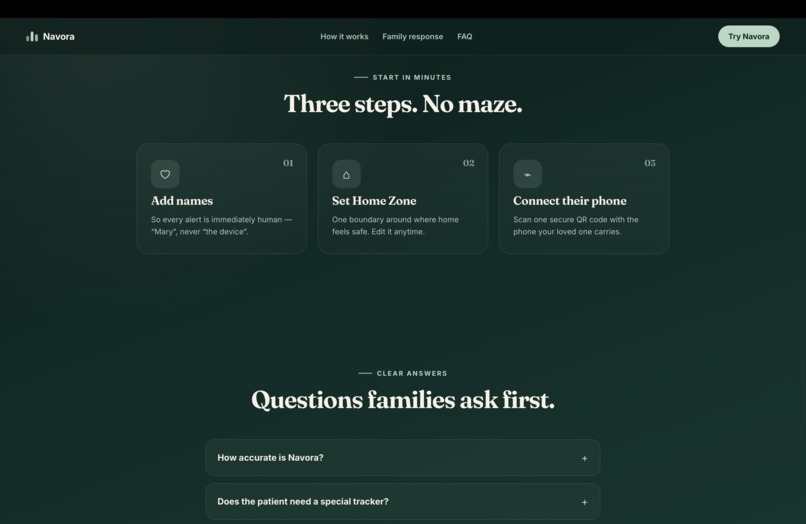
FAQ
-
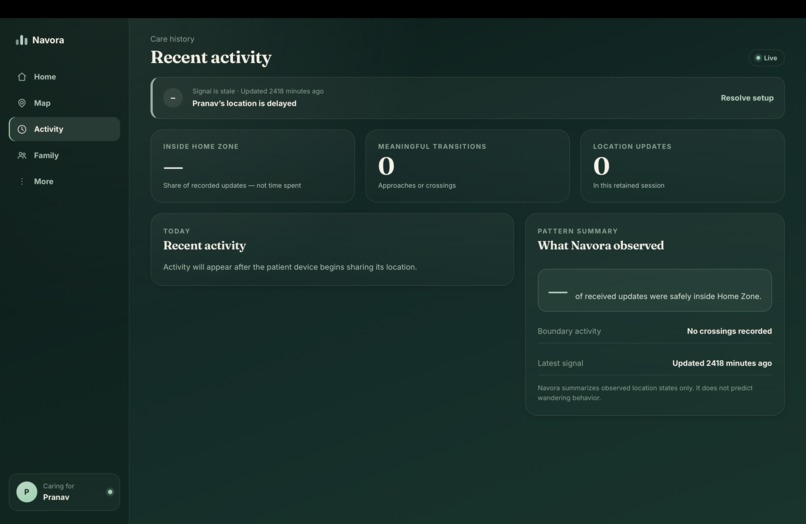
CareCircle
-
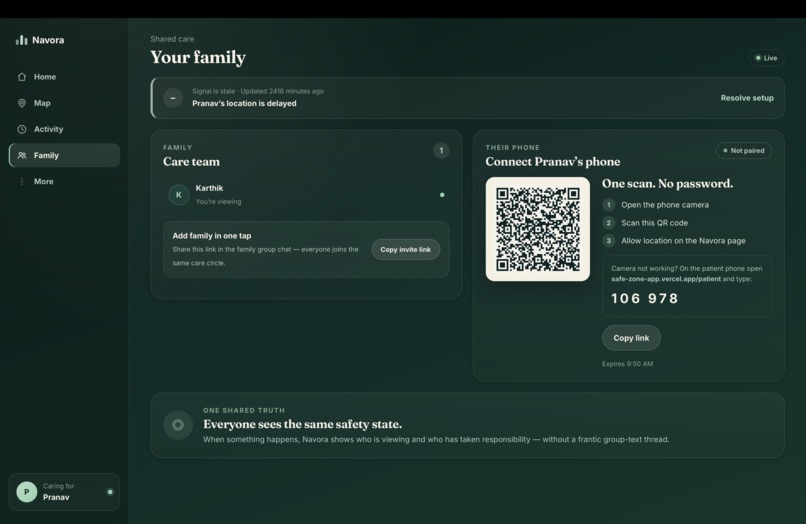
CareCircle PairingCode
Inspiration
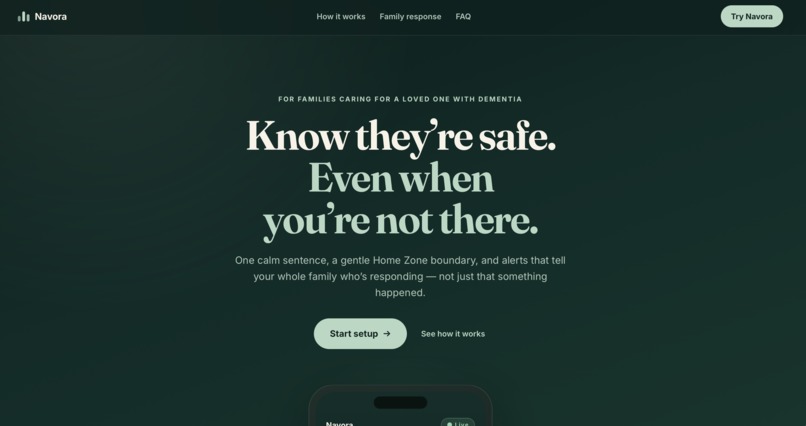
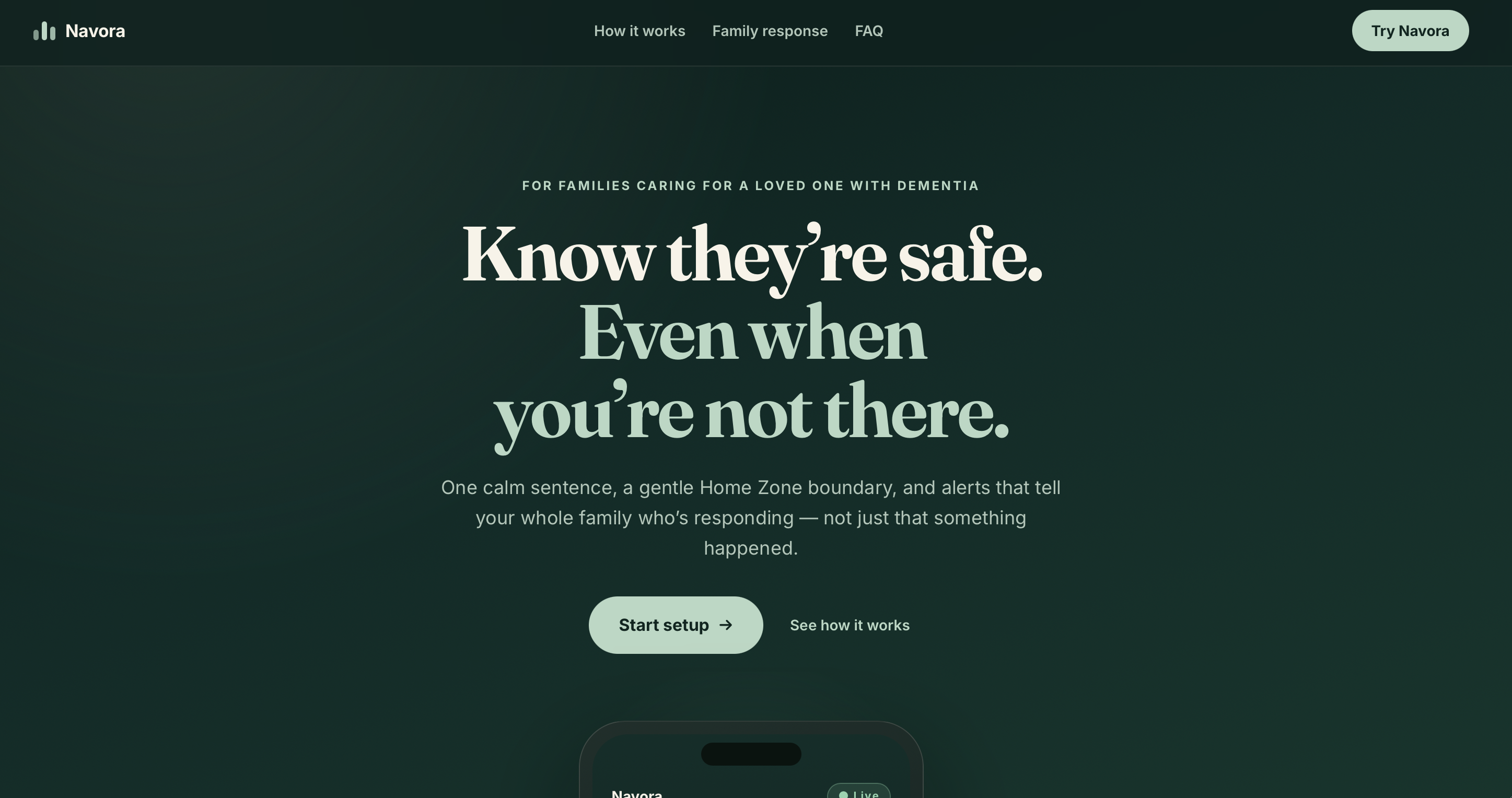
Millions of families caring for someone with dementia live with a quiet, constant fear: What if they walk out and no one knows who should go?
Existing tools miss the real problem. AirTags help you find something later. Life360 is continuous tracking for a different audience. Group texts turn a crisis into chaos—duplicate calls, no shared ownership, and rising panic.
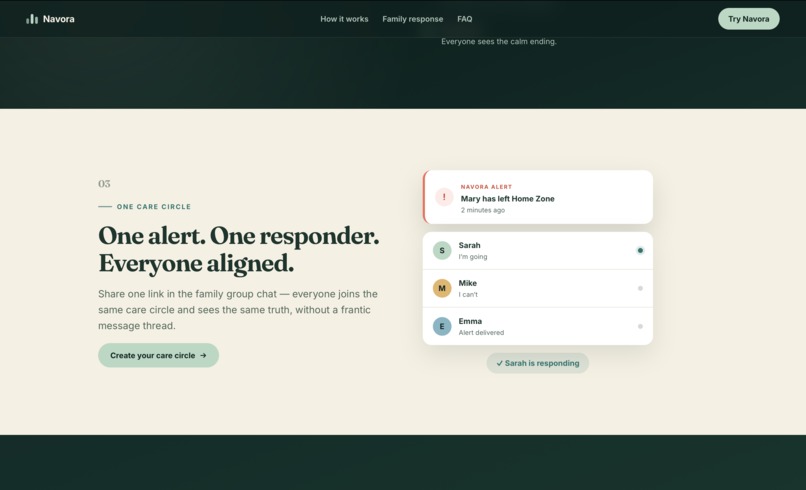
We built Navora for the moment that matters: when a loved one may have left home, the family needs one clear status and one person who owns the response. Not more surveillance. Coordination with dignity.
What it does
Navora turns phones a family already owns into a shared safety circle:
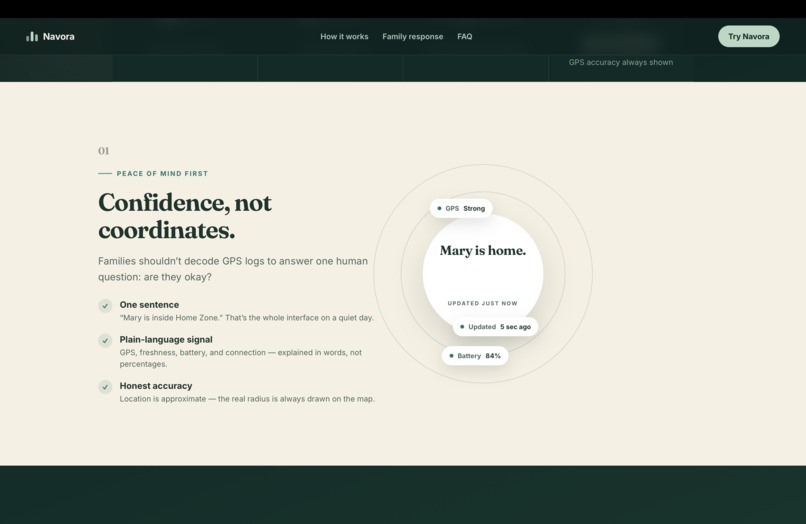
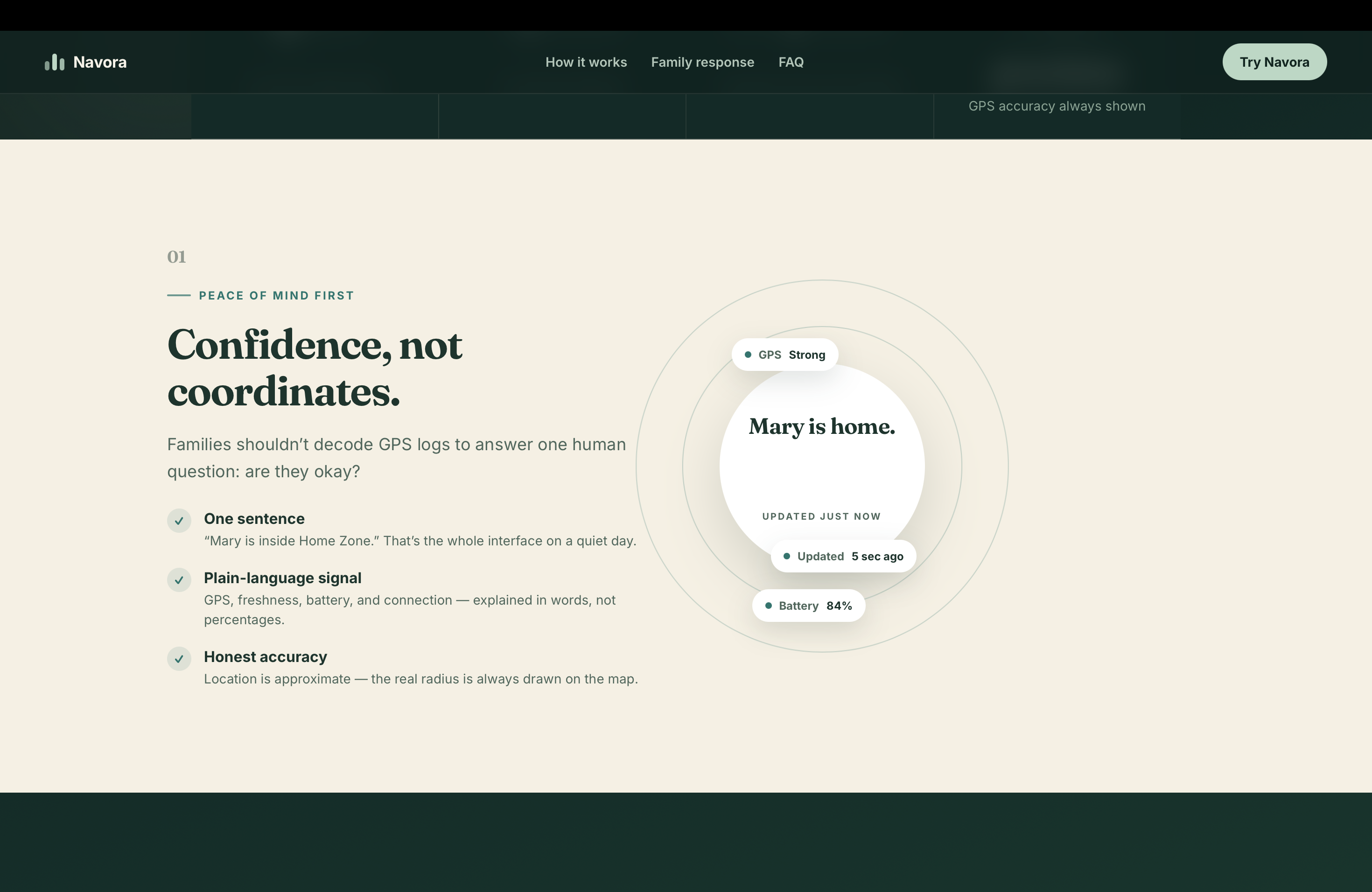
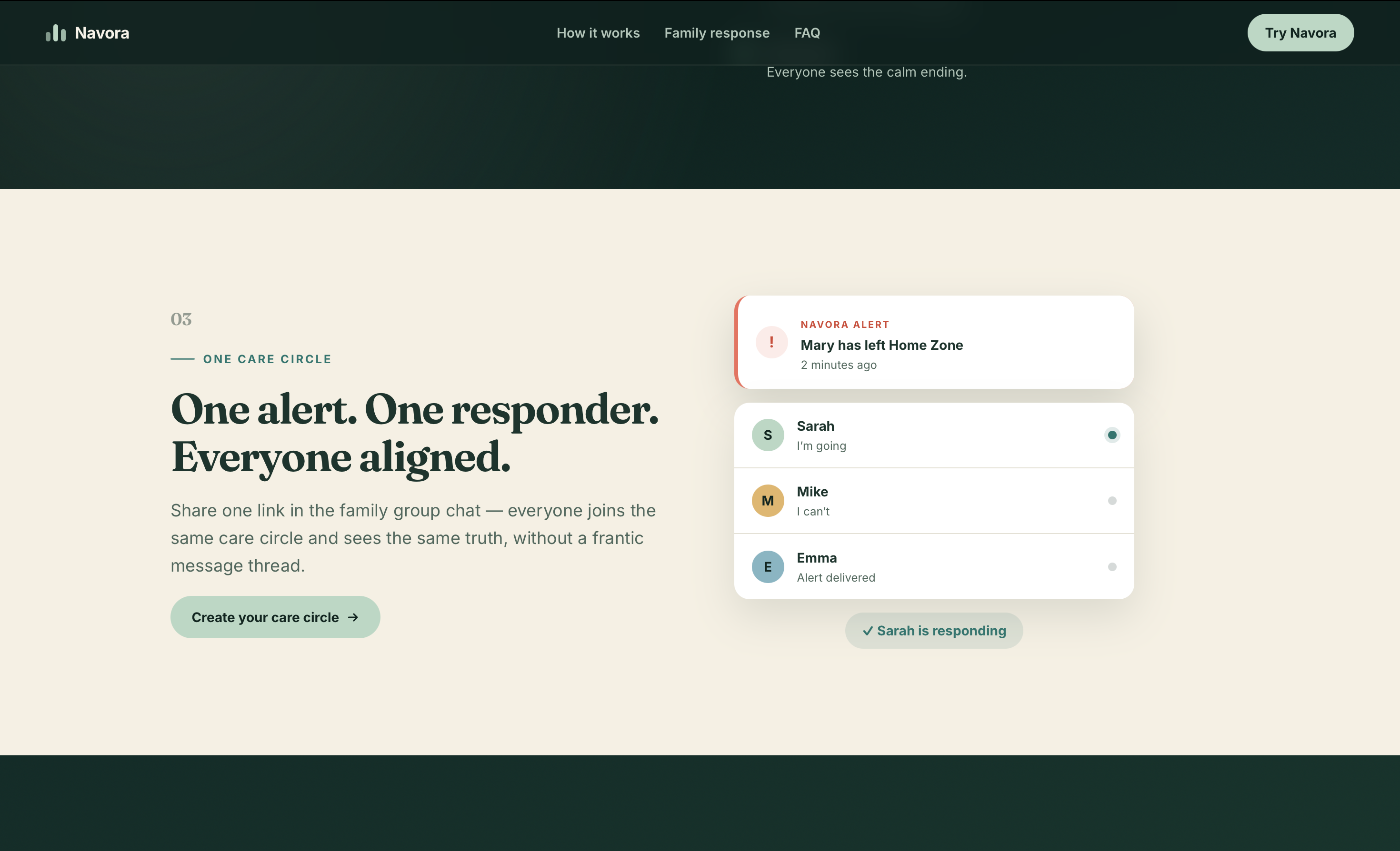
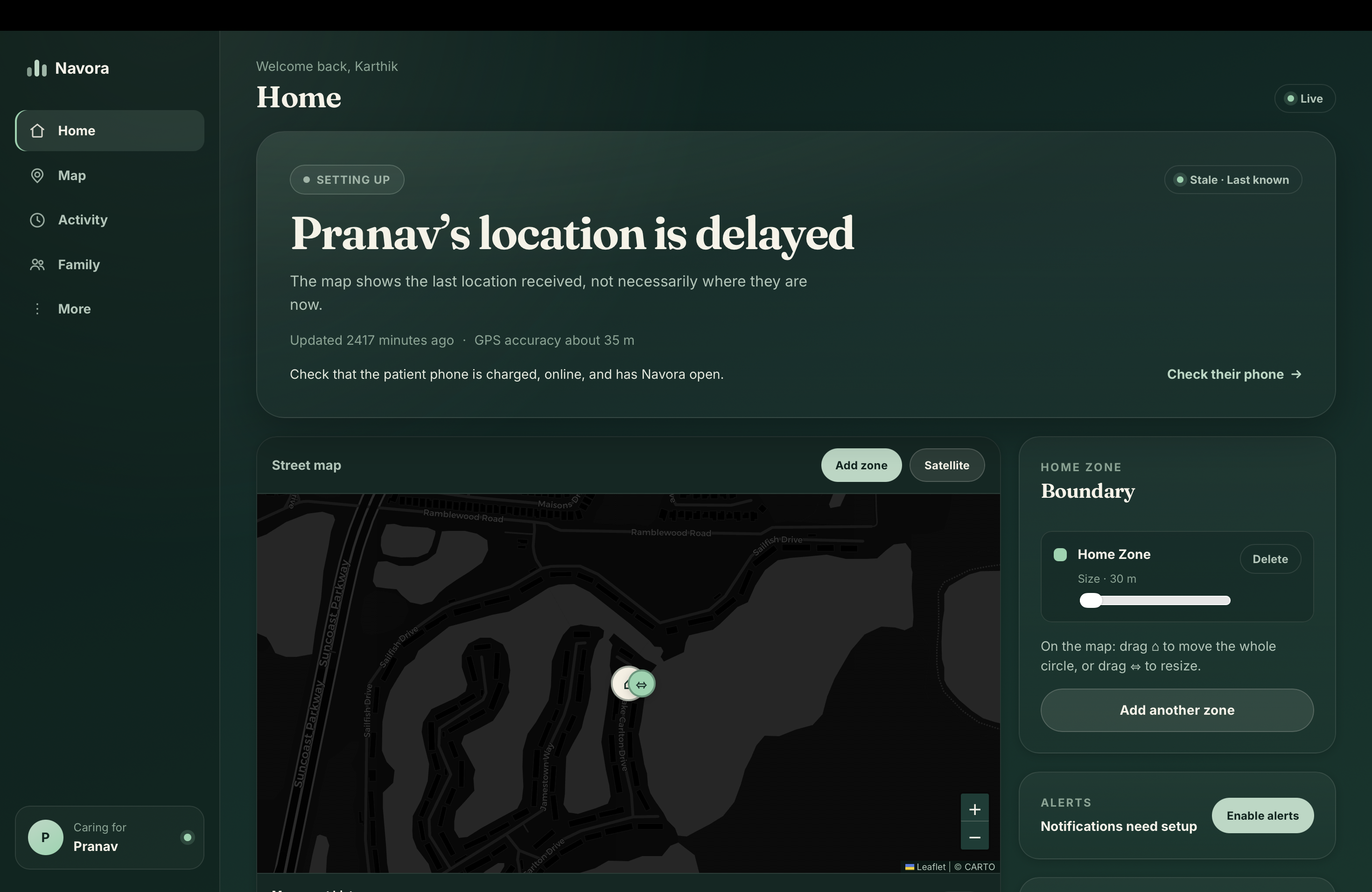
- Caregivers see one human status (“Mary is home” → “Mary may have left home”) and act with I’m going / I can’t / Take over
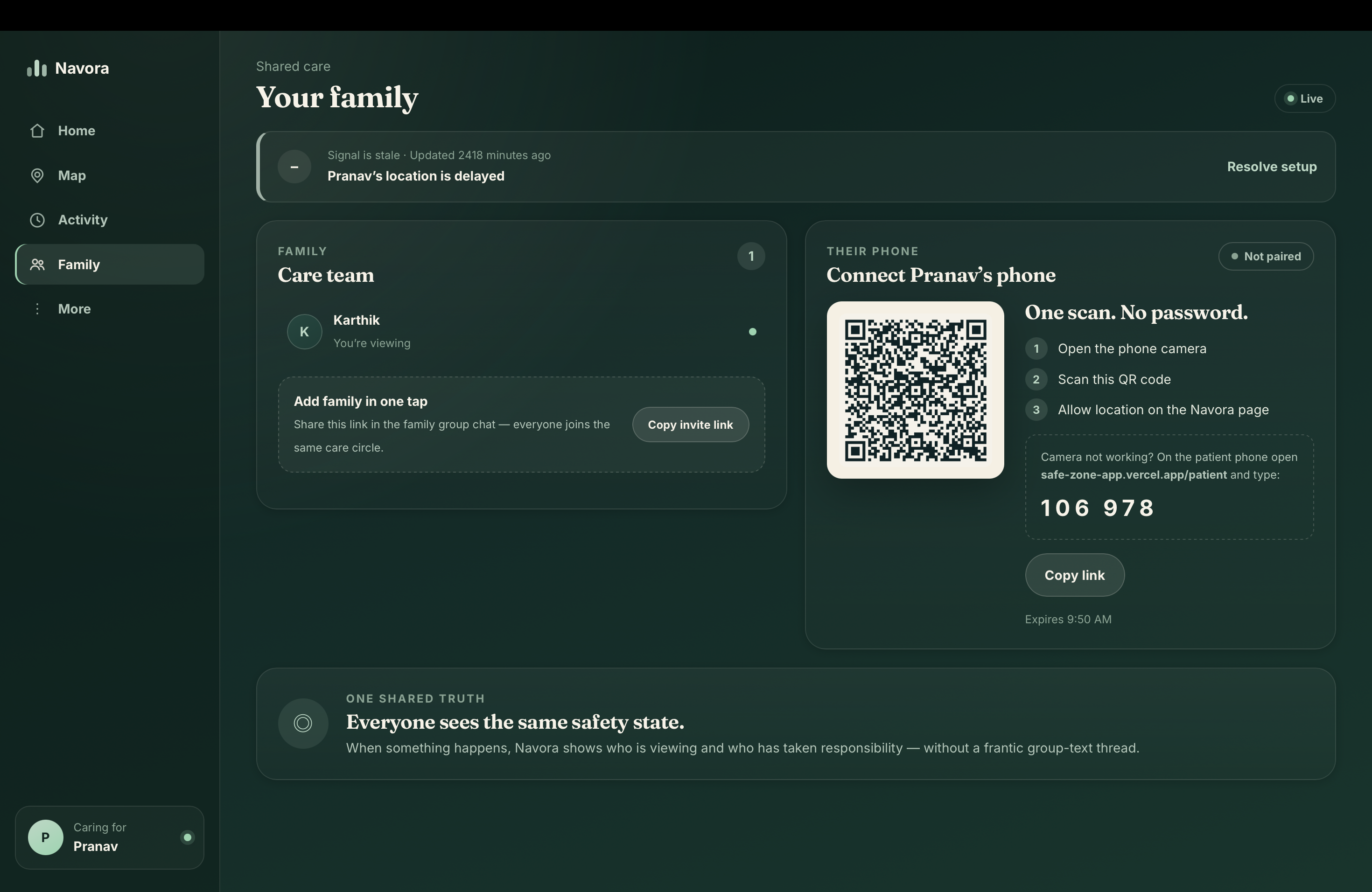
- Patient phone (set up by the caregiver) shares location while open and paired
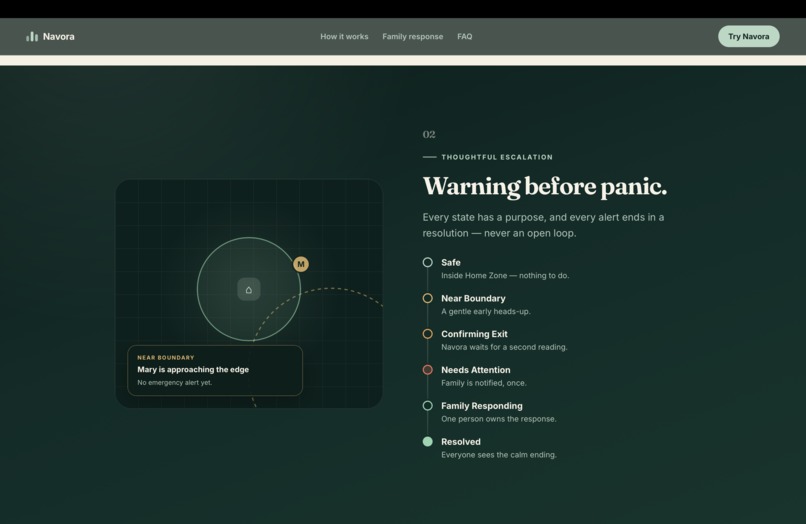
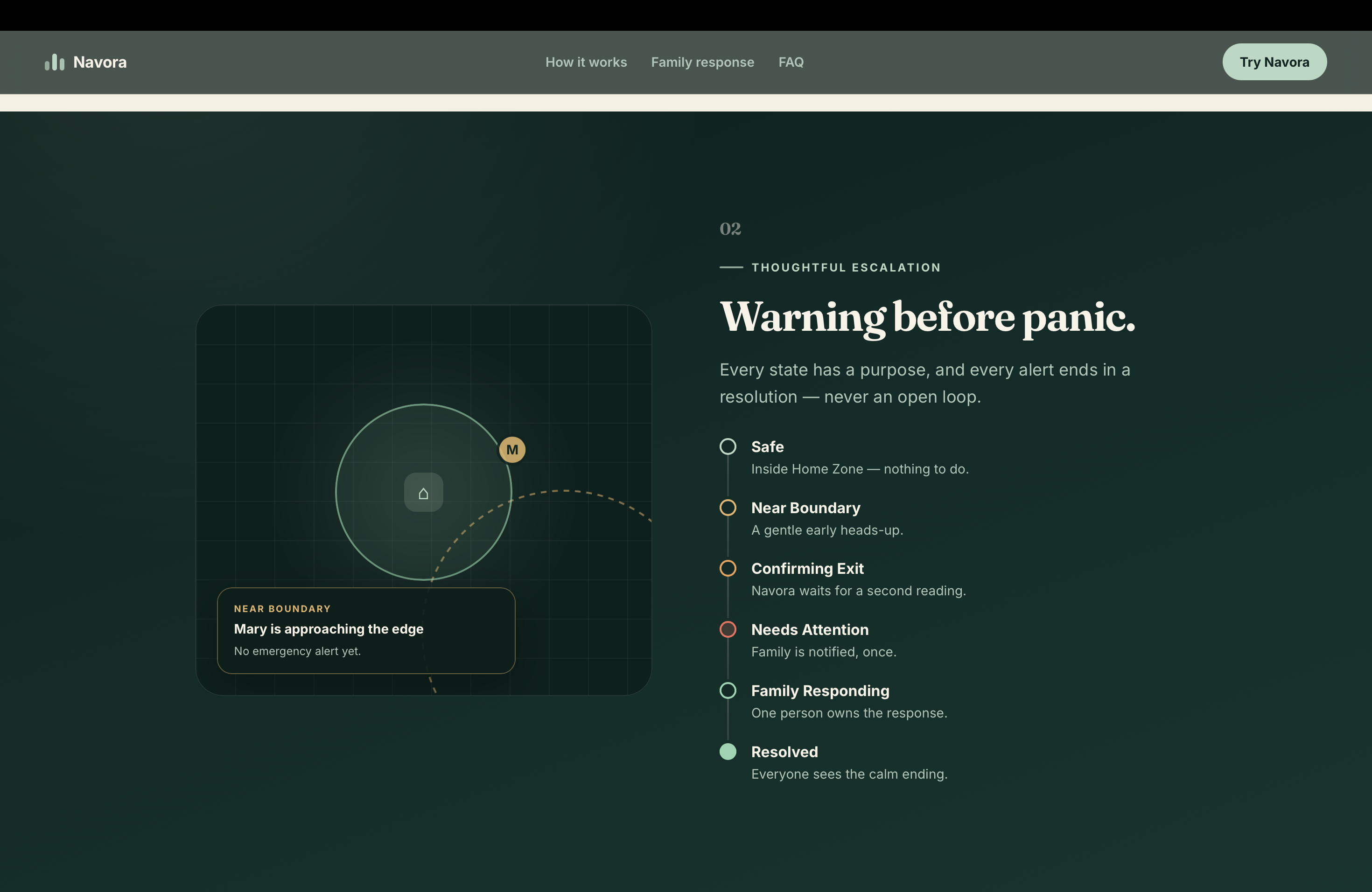
- Home Zone boundary evaluates crossings server-side (safe → near edge → confirming → needs attention)
- Realtime dashboard restores last known location after refresh
- Push / in-app alerts notify the care circle on confirmed exits and ownership changes
- Care circle invite lets family join via one shared link
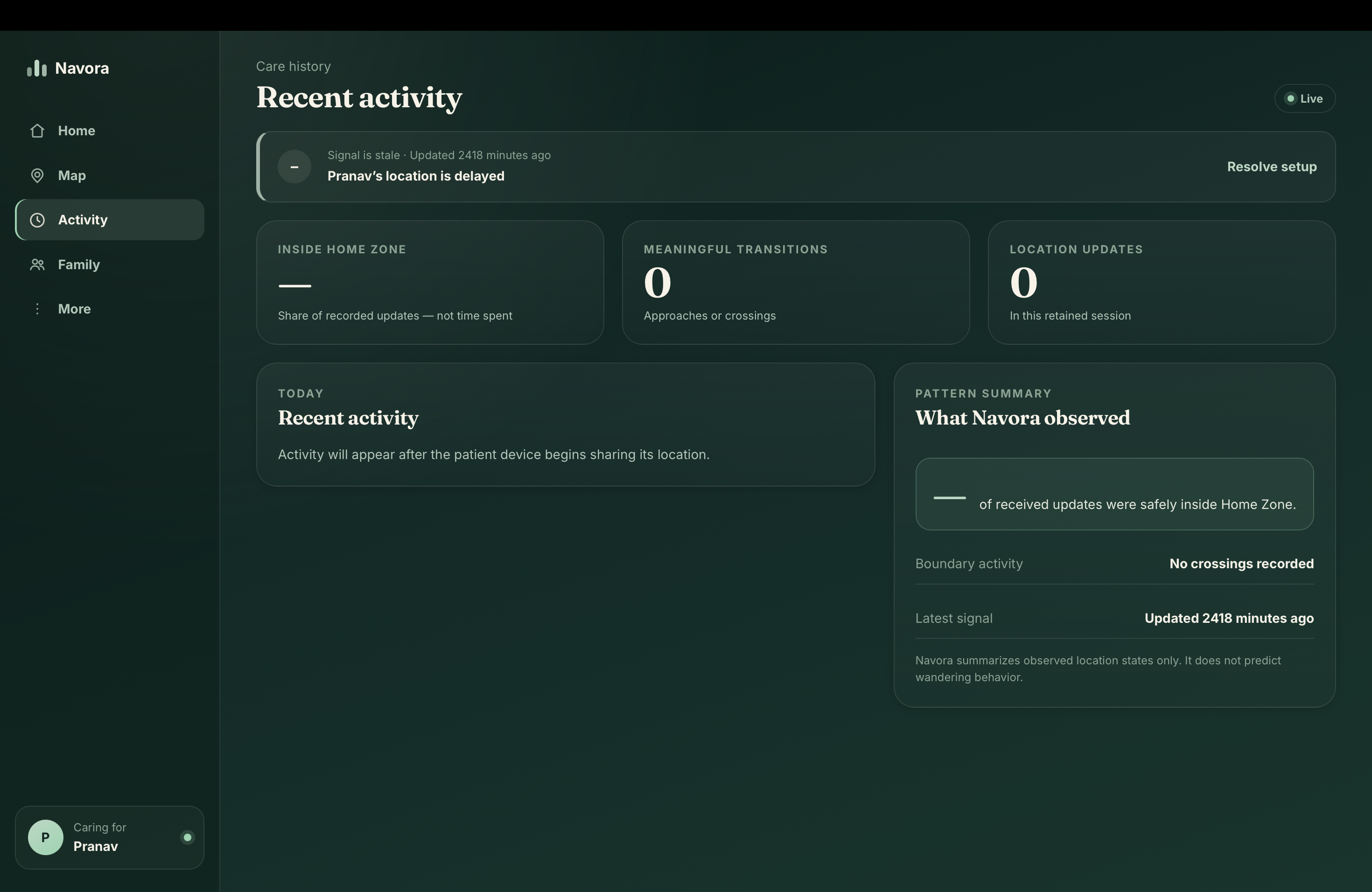
- Honest UX: GPS accuracy radius, stale/offline states, and no claim that Navora dispatches emergency services
Promise: When they may have left home, everyone knows—and one person owns the response.
How we built it
- Frontend: React + Vite PWA, Leaflet maps, service worker + Web Push
- Backend: Supabase (Auth, Postgres + RLS, Realtime) and Edge Functions for pairing, location ingest, care responses, and push
- Deploy: Vercel (
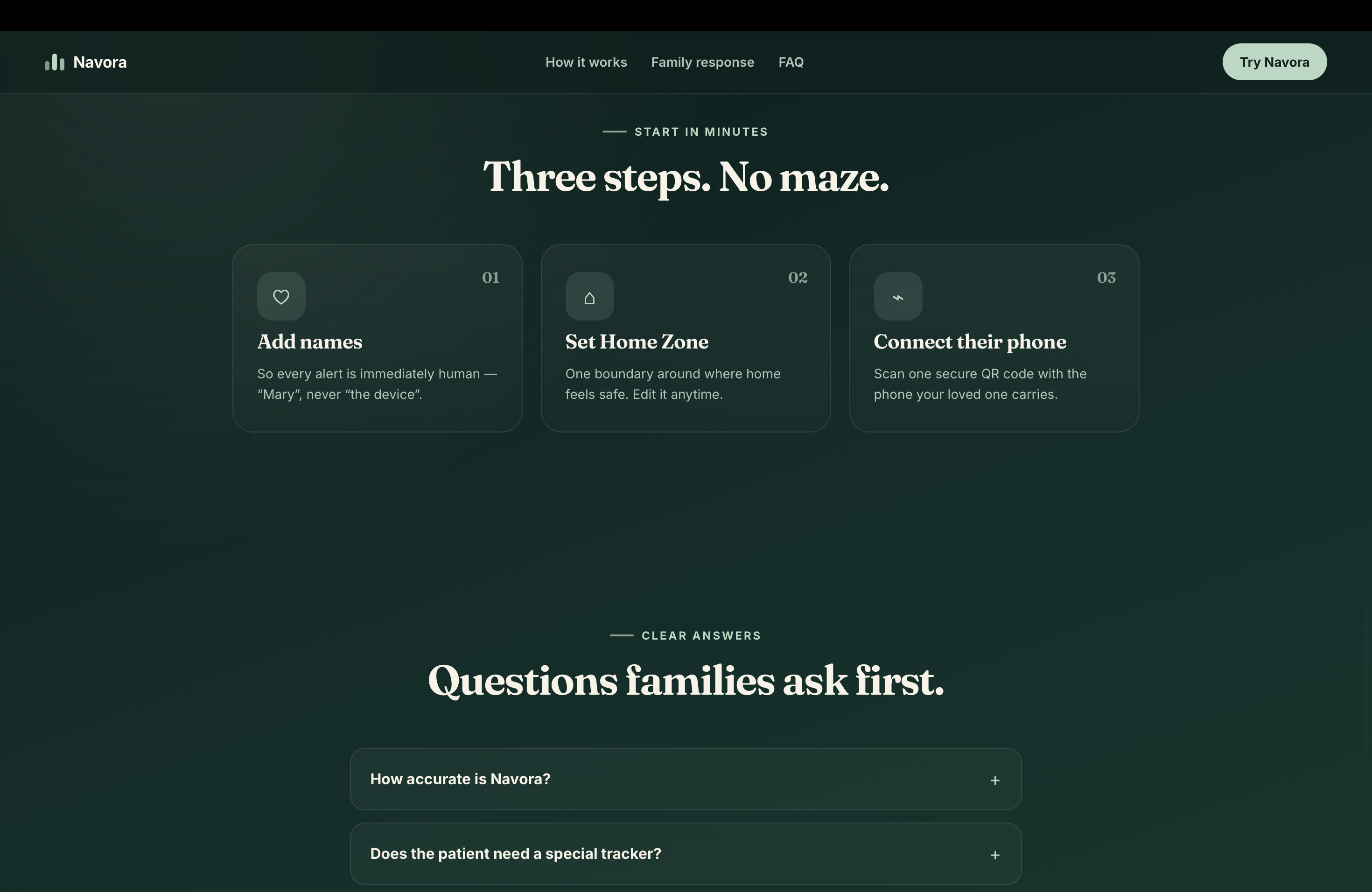
safe-zone-app.vercel.app) with SPA routing - Flow: Caregiver onboarding (names → Home Zone → QR pair) → dashboard → family response loop → resolved when they return
- Design principles: one emotional job, caregiver-led setup (patient never “learns” the app), trust over false precision
Challenges we ran into
- PWA location limits: Browsers cannot reliably track GPS after the app is closed or suspended—especially on iOS. We stayed honest: live updates while the patient page is open; native patient companion is next for background GPS.
- False “safe” states: Early builds could look fine without a zone, pairing, or fresh signal. We tightened geofence language, stale/offline states, and recovery guidance.
- Family coordination, not just a map: Tracking alone isn’t enough. Building I’m going / I can’t / Take over with realtime sync made Navora a decision tool, not another pin on a map.
- Hackathon vs. real product: We cut “presentation mode” theater in favor of real onboarding and a practical care loop judges can believe.
Accomplishments that we're proud of
- A clear product wedge: home-boundary alert + shared family ownership
- Server-side geofencing as the source of truth (not the browser guessing)
- Care response loop that replaces frantic group texts with one owner
- Durable accounts and households on Supabase so names, zones, and history survive refresh and devices
- Trust-first UX: approximate location, accuracy radius, stale signals, explicit “we don’t dispatch help”
- A caregiver-configured patient phone model that protects dignity—no complex setup for the person being cared for
What we learned
- In dementia care, clarity under stress beats feature count. One status sentence and one primary action beat five dashboard tabs.
- Honesty builds trust. Overclaiming background tracking would win a demo and lose a family.
- The painful job isn’t “see the map”—it’s who is handling this?
- Setup must be caregiver-owned; anything that asks a patient with dementia to configure tech will fail in the real world.
- Shipping reliability (Auth, RLS, Realtime, Edge Functions) mattered as much as UI polish for a credible safety product.
What's next for Navora
- Native patient companion (iOS/Android) for true background location—same backend, same caregiver PWA
- Harder activation integrity—can’t look “protected” without Home Zone + connected phone
- Simpler Home UI—one screen for status, map, and alert actions (Home / Family / More)
- Richer care-circle invites and quiet-day reassurance (“All quiet this week”)
- Family plan so households can pay for shared peace of mind—not surveillance theater
Navora’s north star stays the same: calm when it’s quiet, clear when it isn’t.
Built With
- java
- react
- swiftui
- typescript


Log in or sign up for Devpost to join the conversation.