-
-
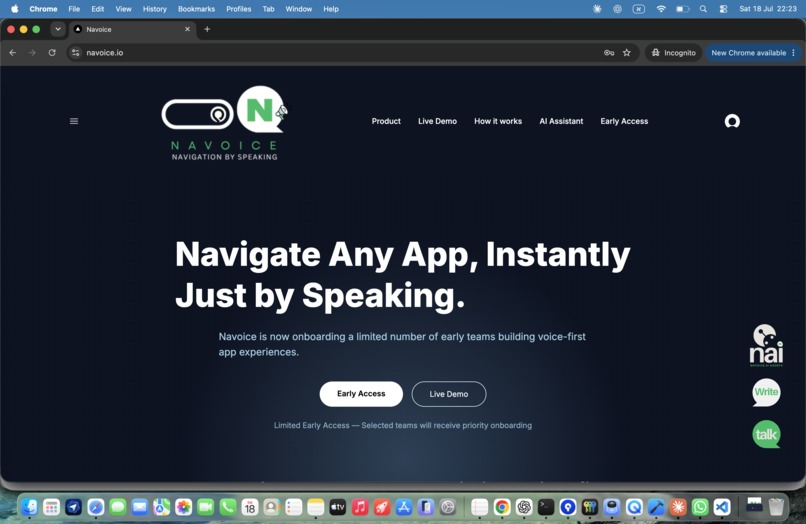
Home Page
-
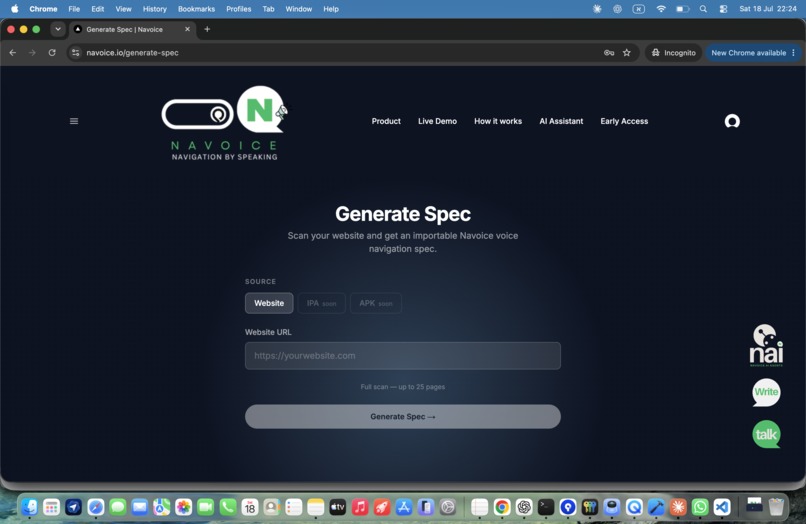
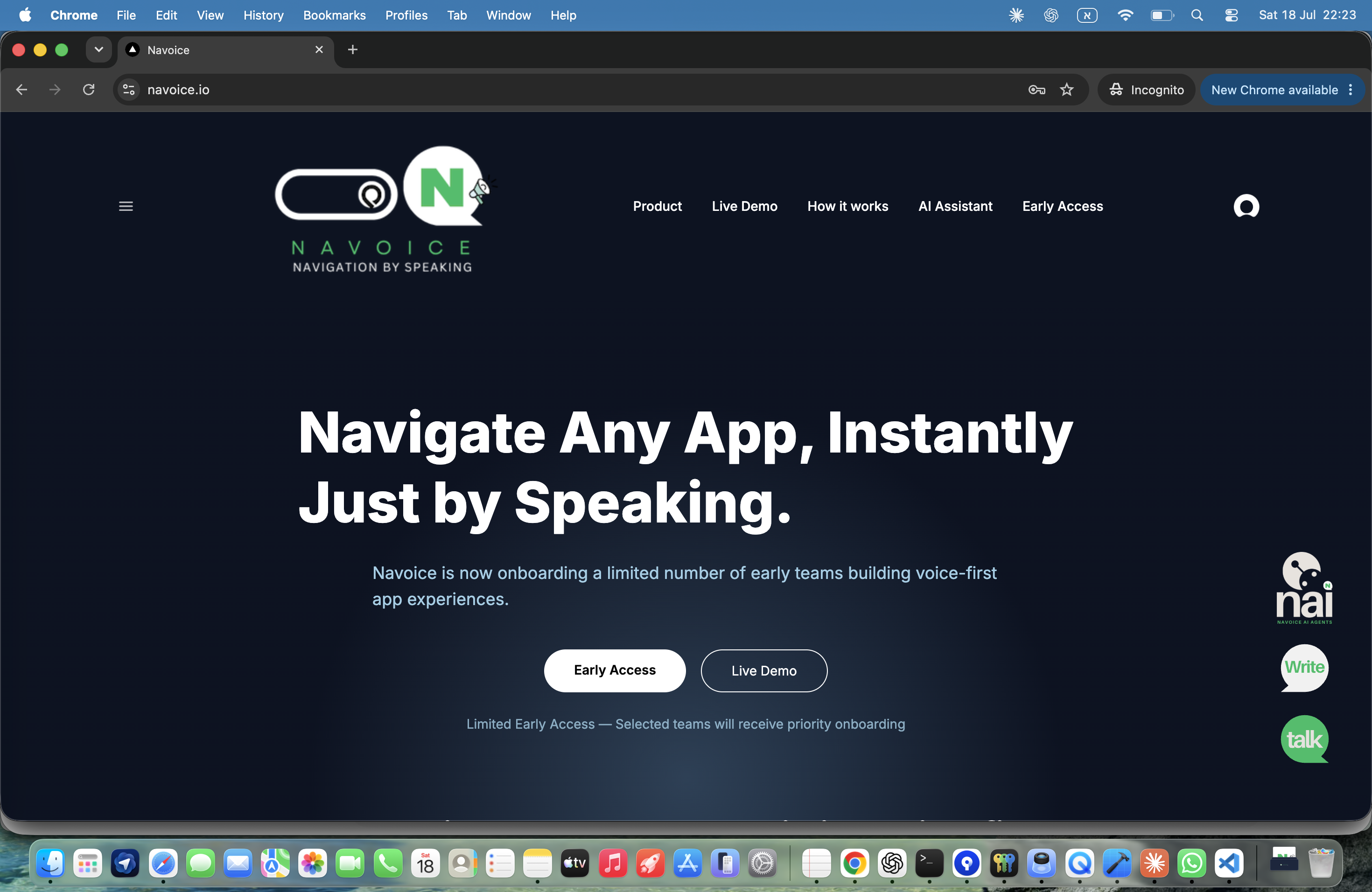
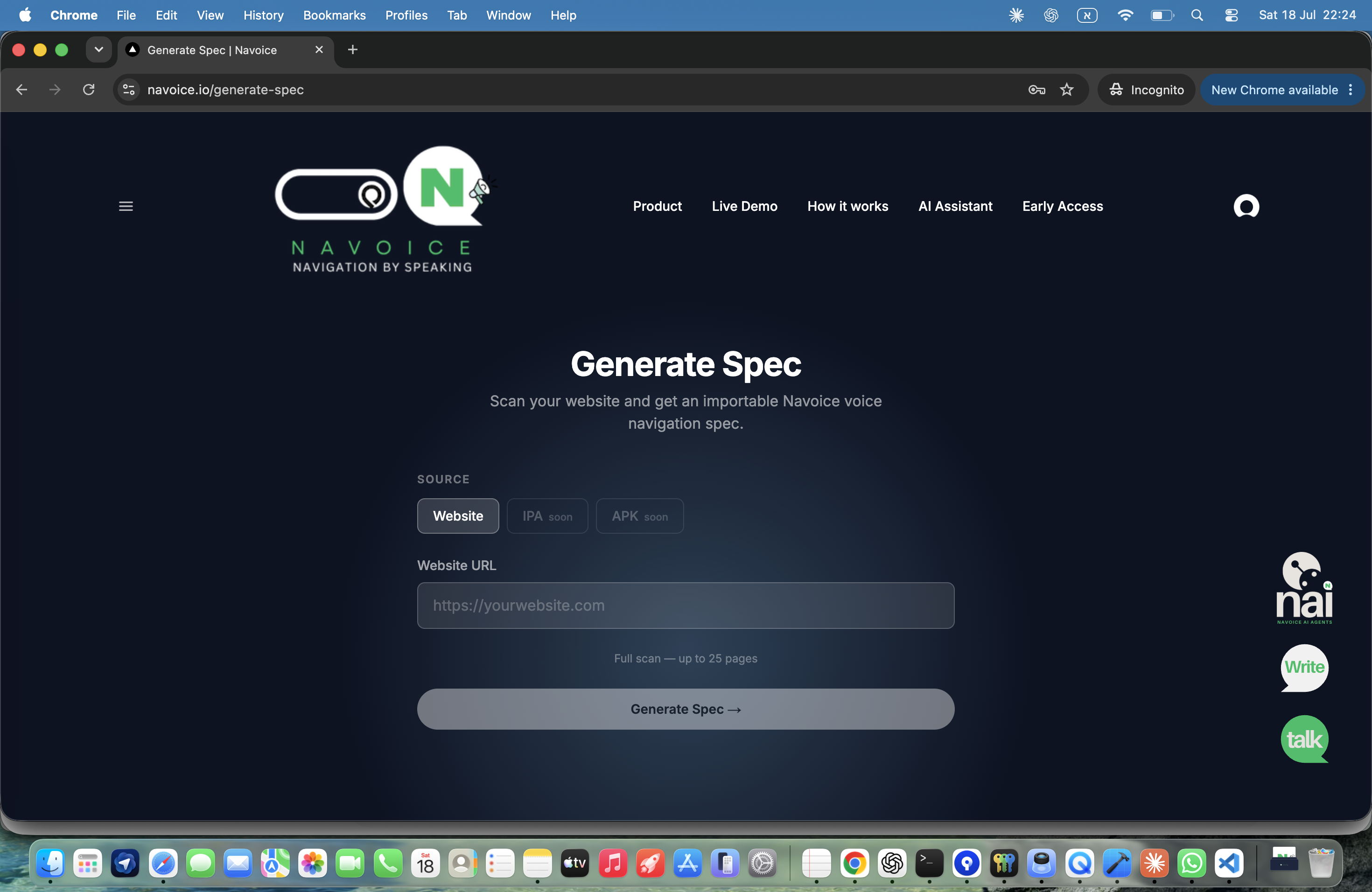
Generate Voice Navigation from Any Website or App
-
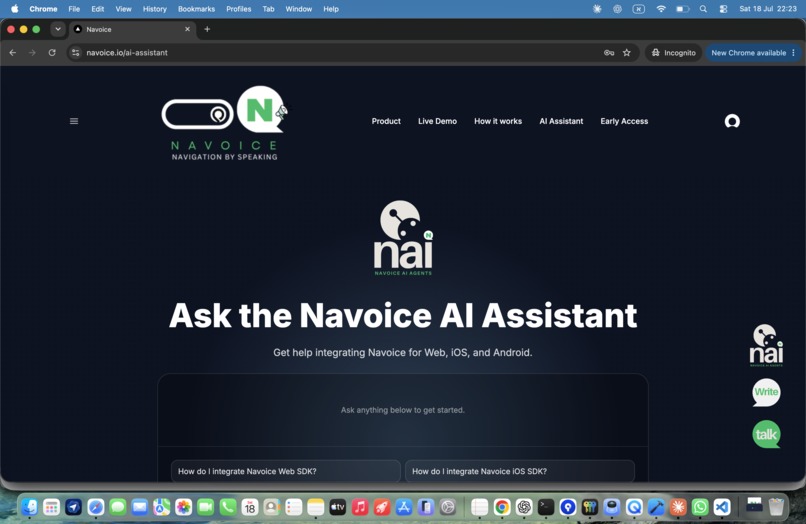
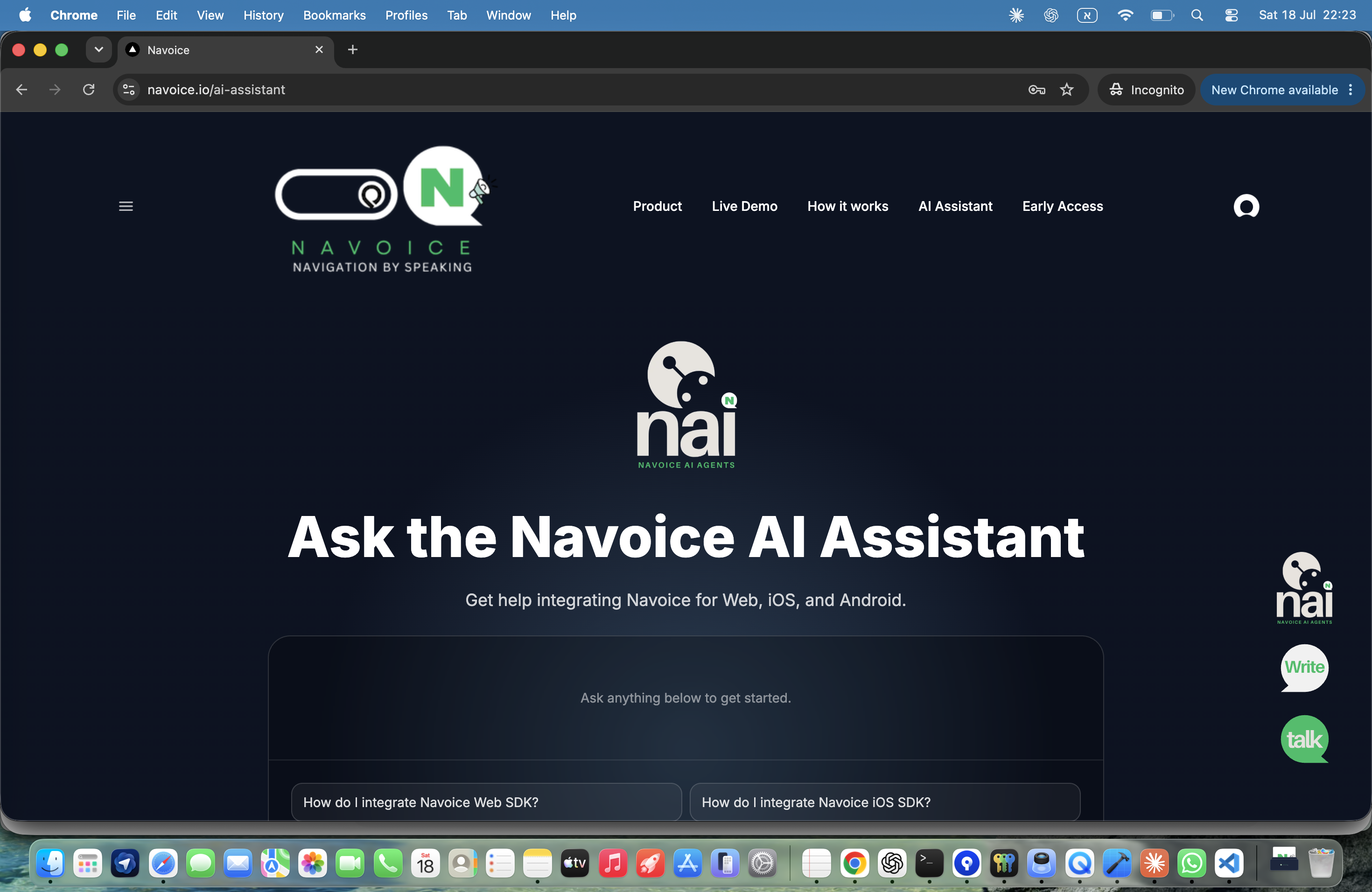
AI-Powered SDK Integration Assistant
-
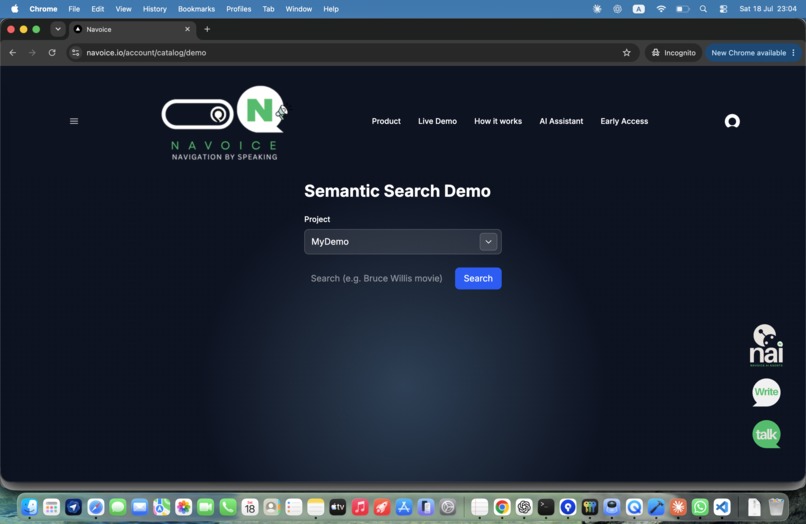
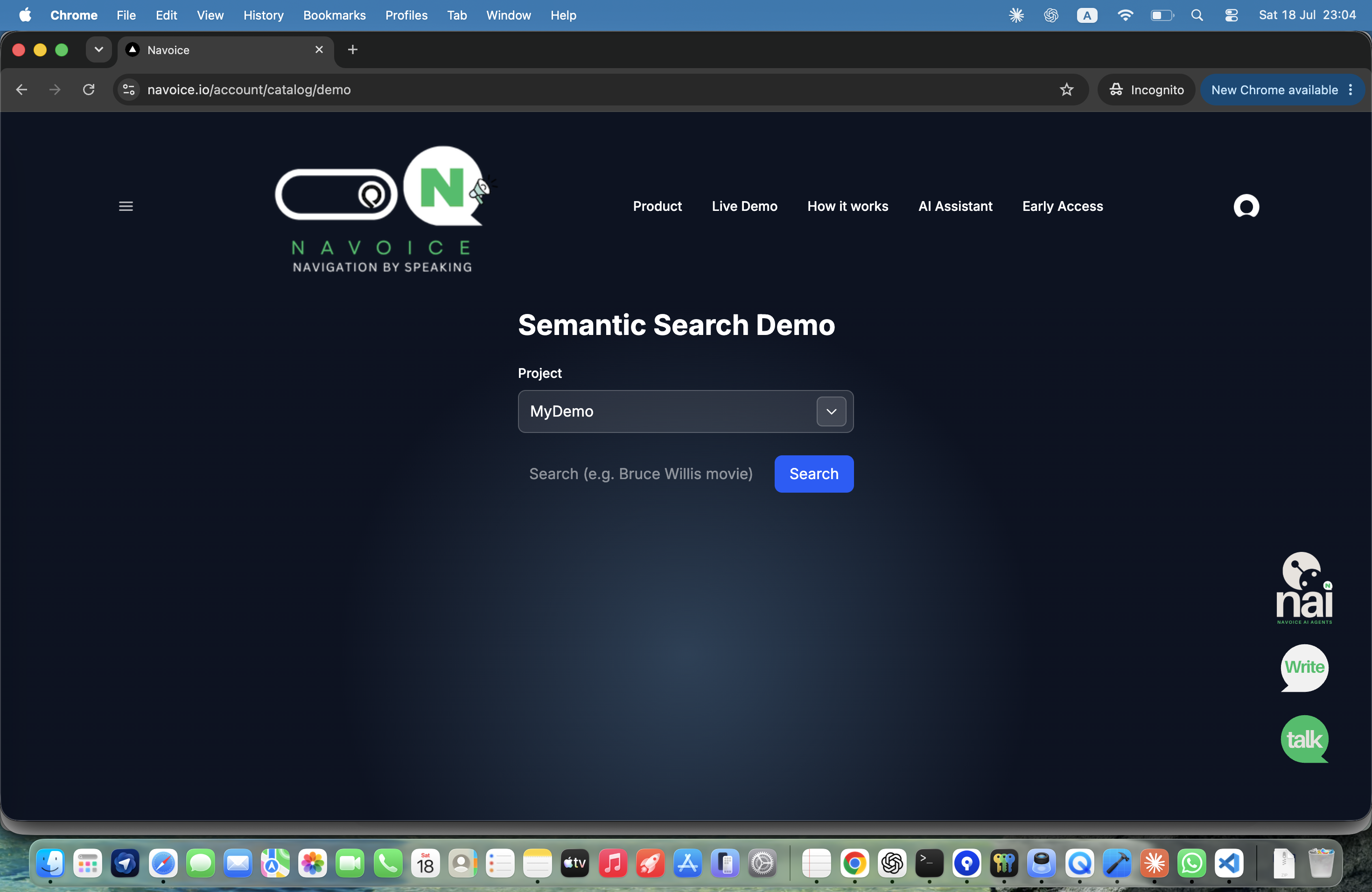
Semantic Navigation Generation
-
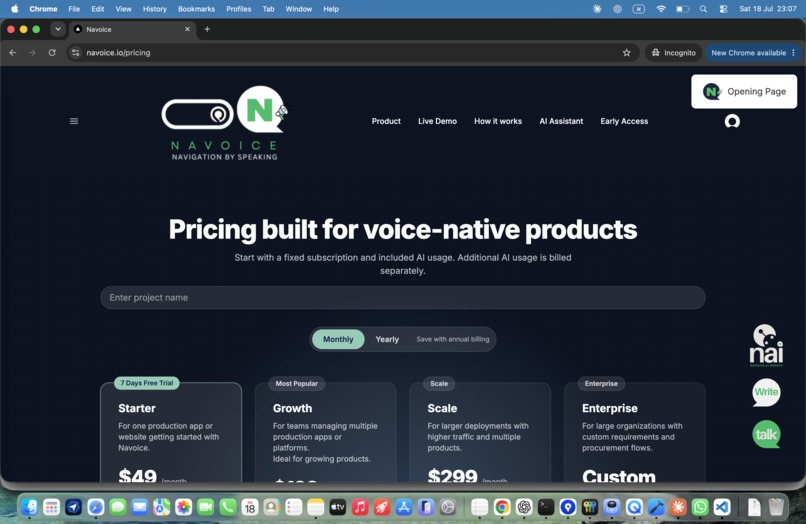
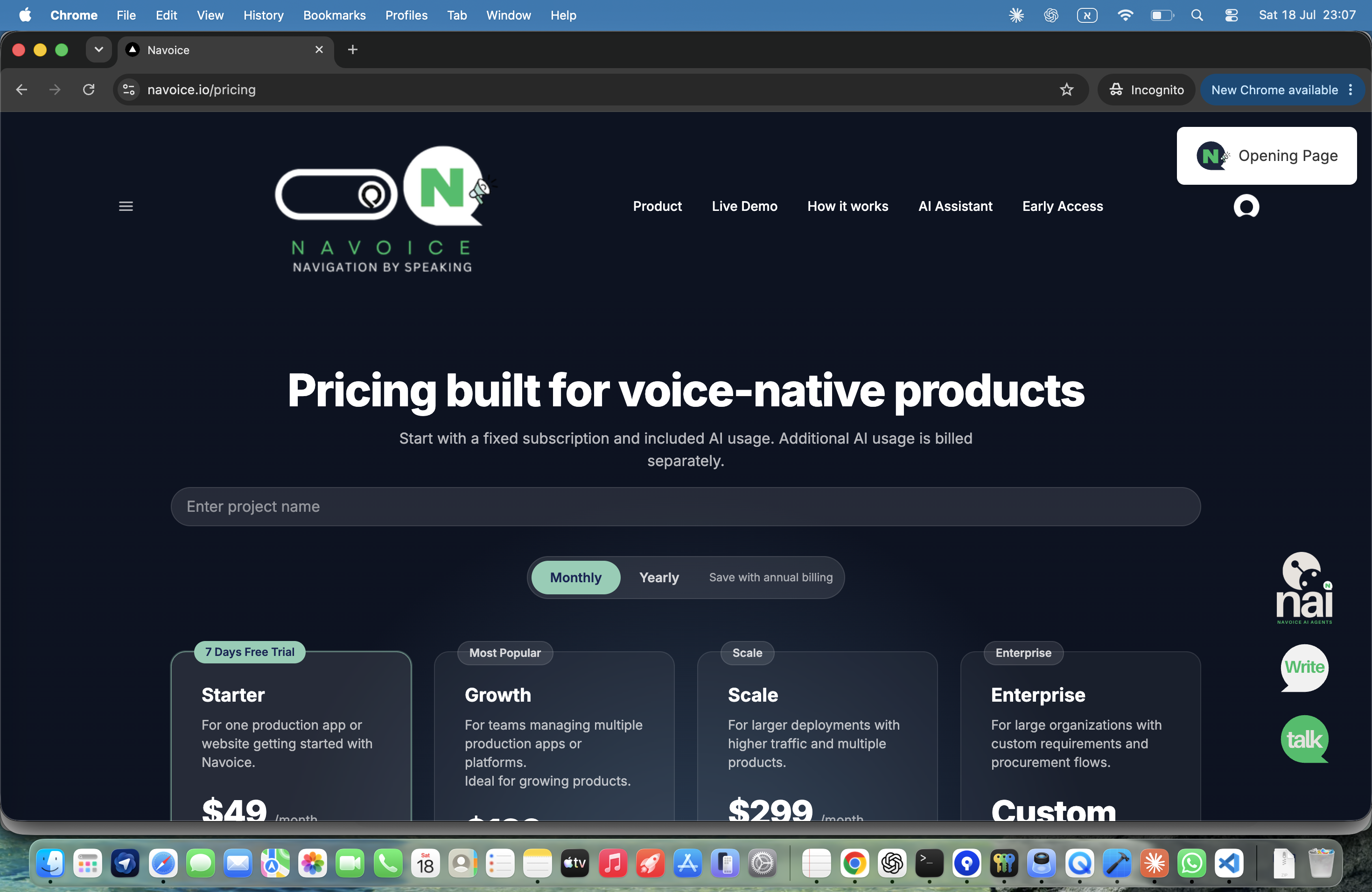
Voice Navigation – Navigate directly to the Pricing page
-
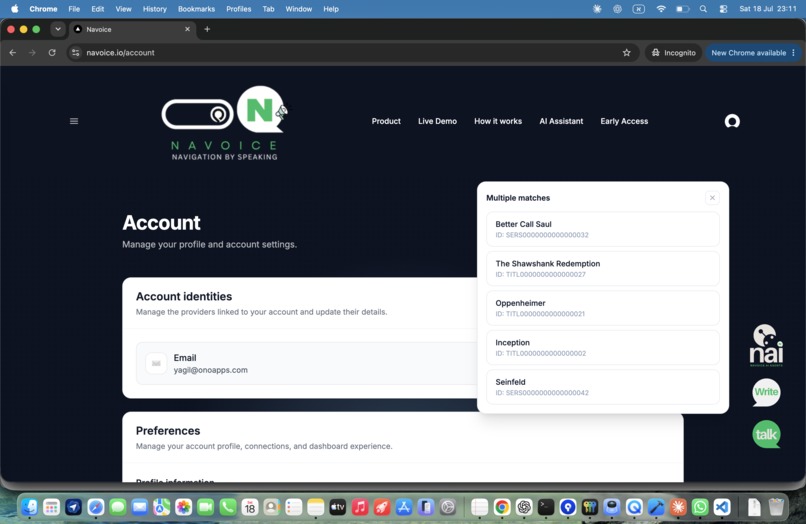
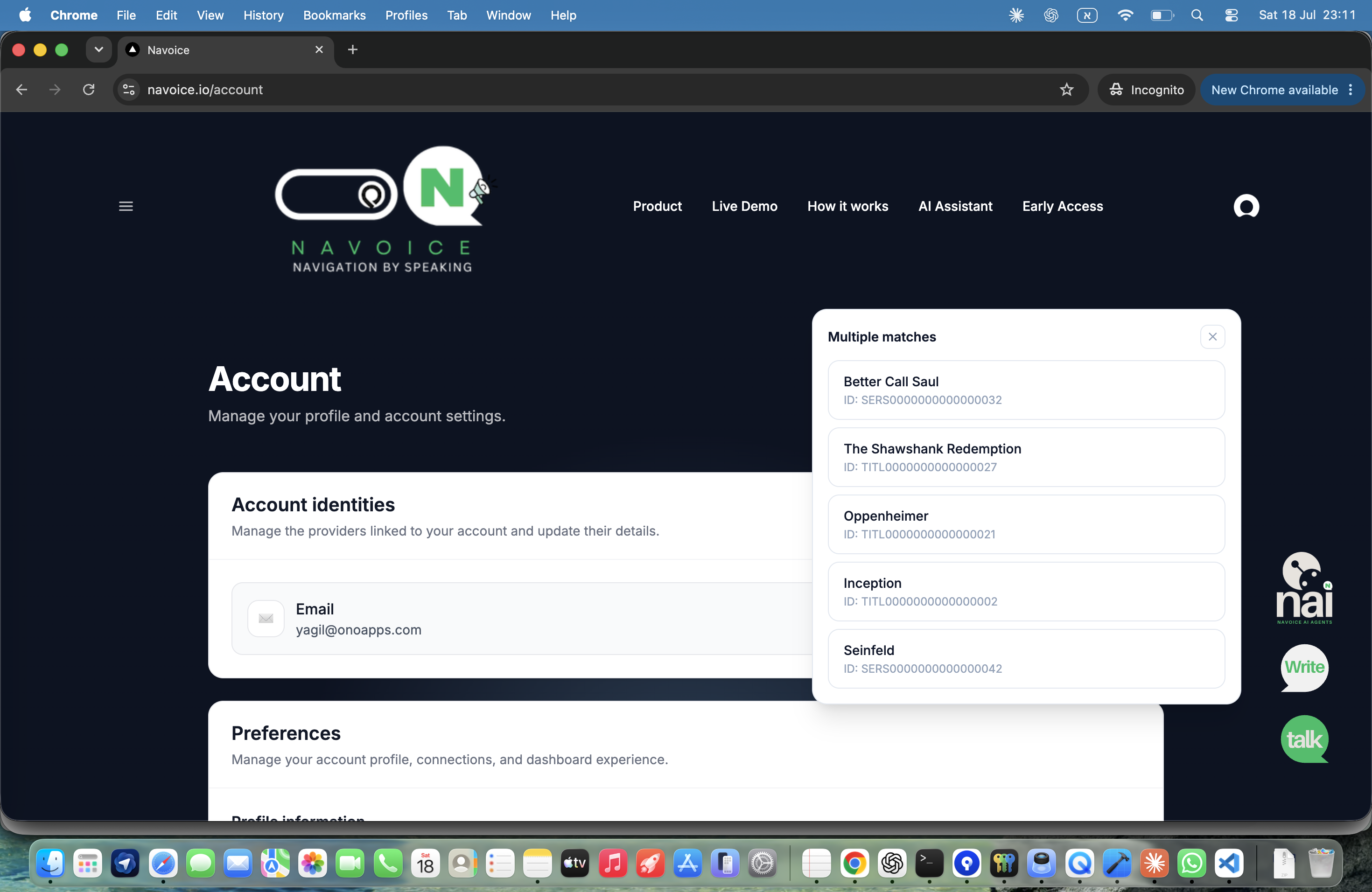
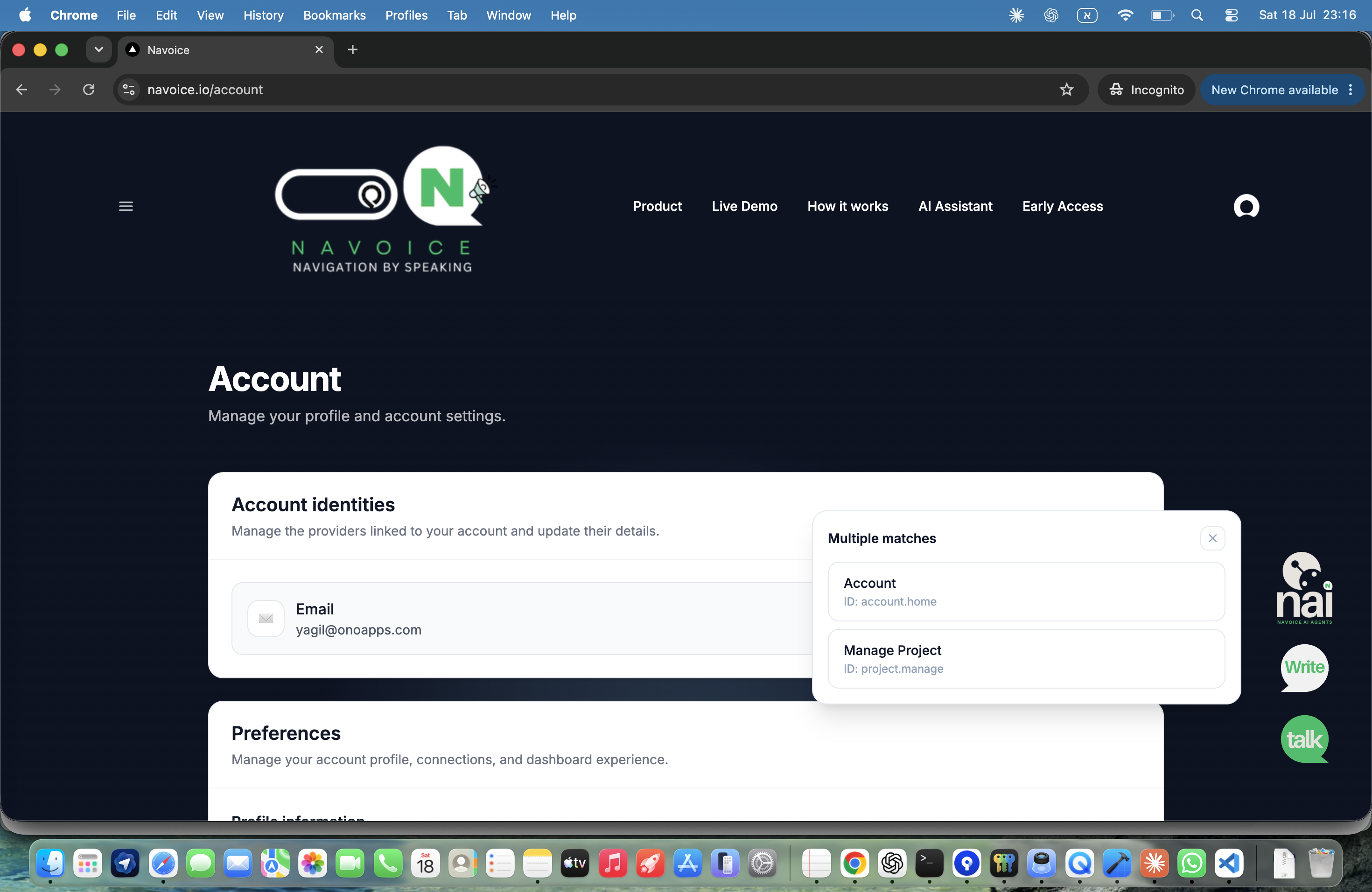
Natural language navigation with multiple destination disambiguation
-
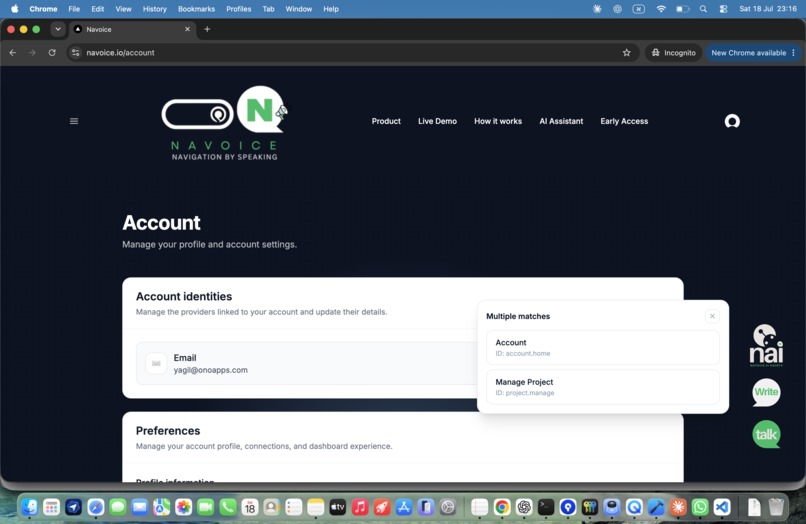
GPT-5.6-assisted destination disambiguation for ambiguous navigation requests
Inspiration
Voice interfaces are still difficult and expensive to add to existing applications. Most solutions require rebuilding the UI or placing an LLM in every user interaction.
I build a platform that allows any website or a native application to become voice-enabled while using AI only when it truly adds value.
What it does
Navoice is an AI-powered voice navigation platform.
It combines deterministic routing, semantic search, vector similarity and GPT-5.6 reasoning to understand natural language and map user requests to application actions. User can say: I want to see pricing and Navoice will navigate to pricing page. user can also search catalogs with semantic search with voice. My clients can also scan any website or native application and suggest to the user navigation specification.
When user intent is ambiguous, GPT-5.6 generates an intelligent clarification instead of making an incorrect decision.
How I built it
The platform is built with Node.js, Supabase, pgvector and the OpenAI Responses API.
It uses:
- GPT-5.6 for semantic reasoning
- text-embedding-3-small for semantic search
- pgvector for vector similarity search
- Feature flags and fail-open architecture for safe production deployment
During Build Week I implemented a new GPT-5.6 semantic tie-disambiguation layer that activates only when embeddings cannot confidently distinguish between two candidate actions.
Challenges we ran into
The biggest challenge was improving semantic accuracy without increasing latency or cost for every request.
I designed the reasoning layer to execute only for genuine semantic ambiguity while keeping the API fully backward compatible.
Accomplishments that we're proud of
- Successfully deployed GPT-5.6 to production.
- Improved semantic accuracy without changing the public API.
- Preserved deterministic behavior for clear requests.
- Added production-safe fail-open behavior and feature flags.
- Built a scalable architecture that minimizes AI cost.
What we learned
I learned that LLMs are most valuable when used selectively.
Embeddings solve most requests efficiently, while GPT-5.6 provides the reasoning needed only for difficult edge cases.
What's next for Navoice
My next goal is to expand GPT-5.6 reasoning across the entire voice navigation pipeline, improve multilingual understanding, and make it possible for businesses to enable voice navigation on any application with minimal integration effort.
Built With
- ai
- gpt-5.6
- javascript
- node.js
- openai
- pgvector
- postgresql
- render
- rest
- search
- semantic
- supabase
- text-embedding-3-small
- vector


Log in or sign up for Devpost to join the conversation.