-
-
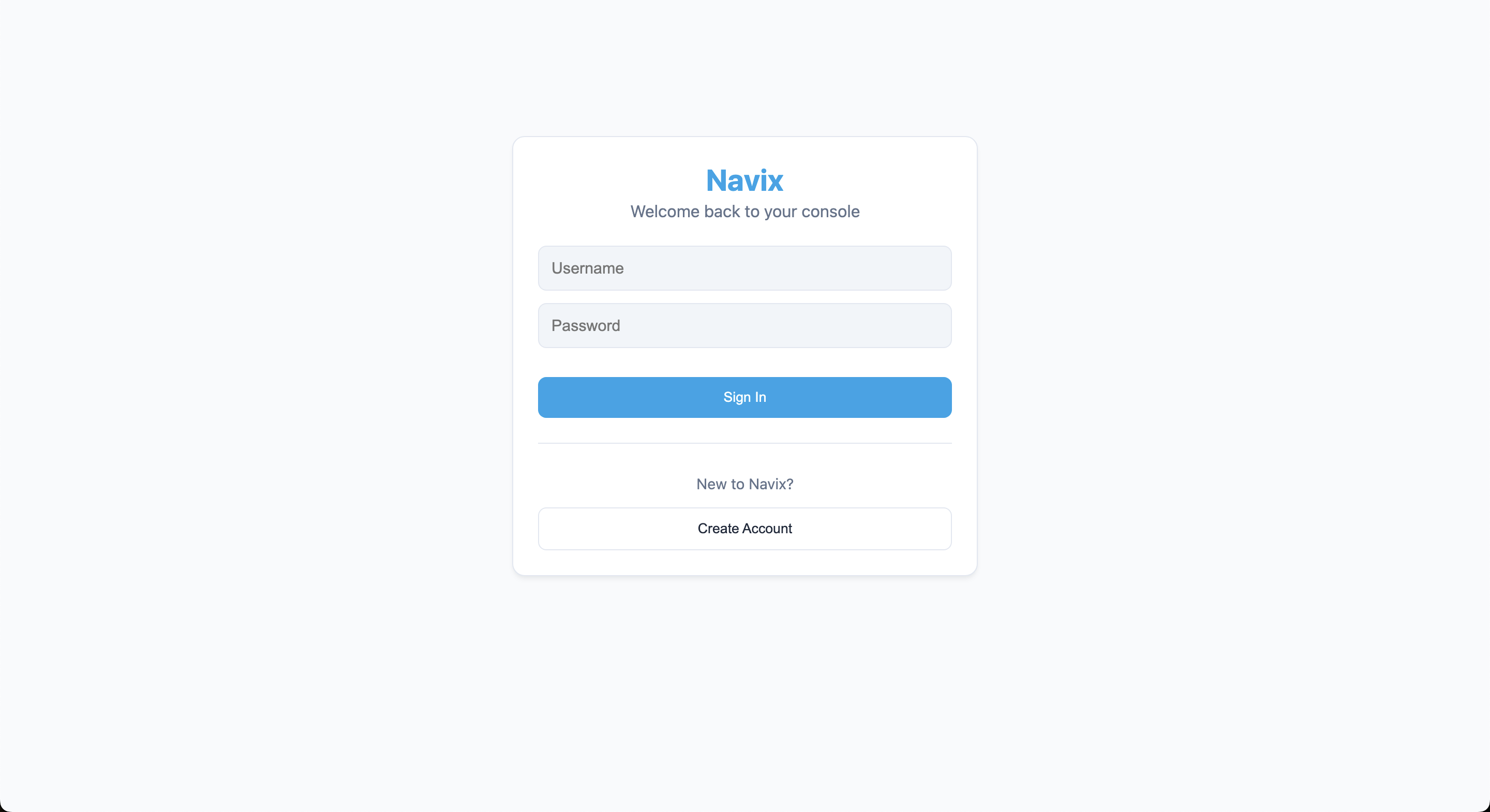
Login Page
-
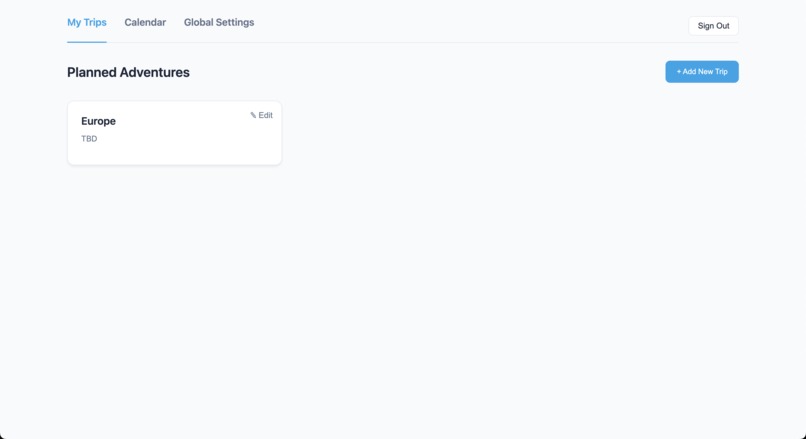
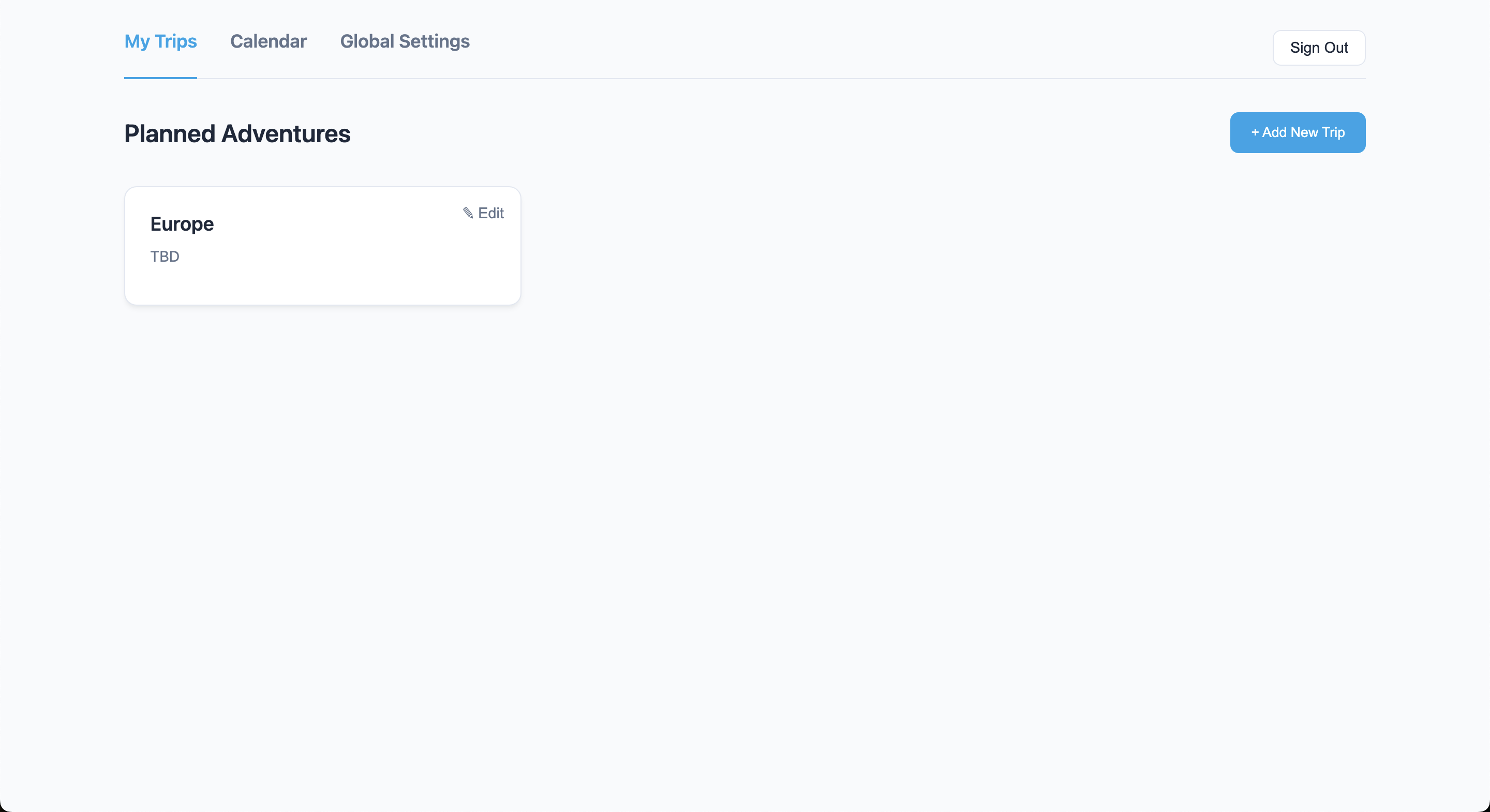
Trip Dashboard View
-
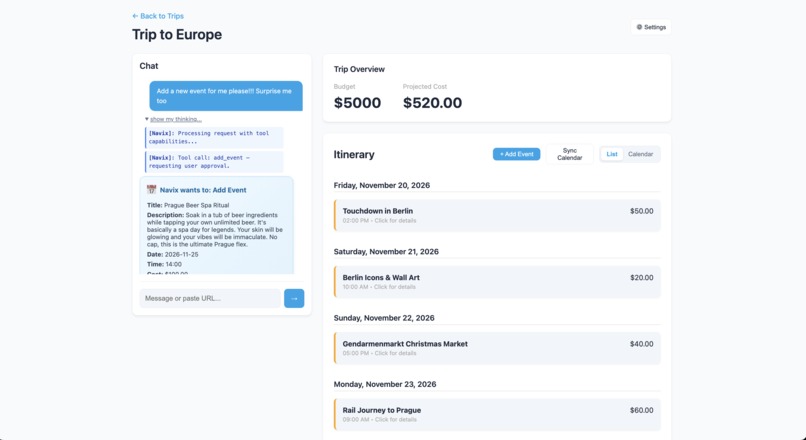
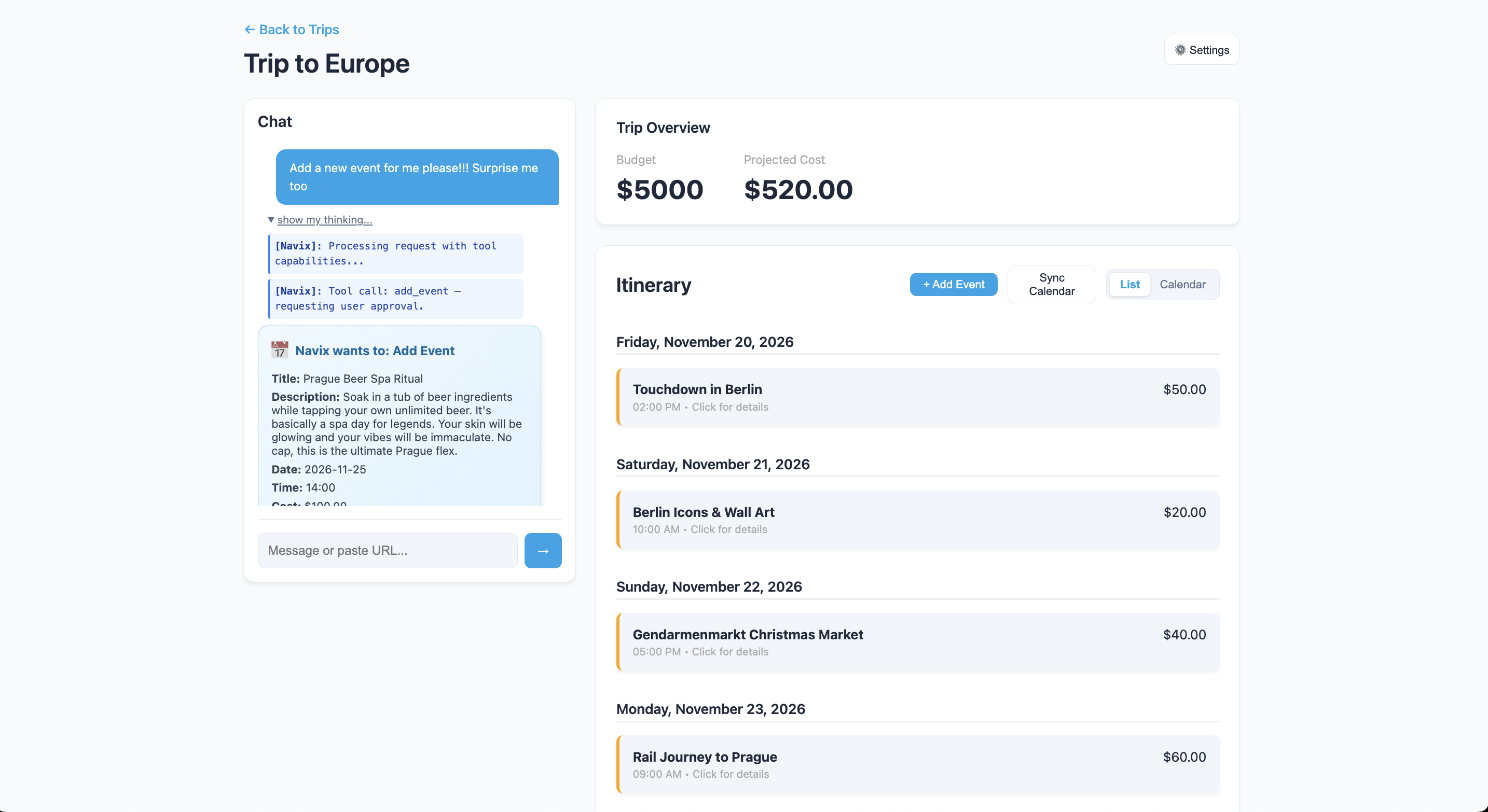
Specific Trip View
-
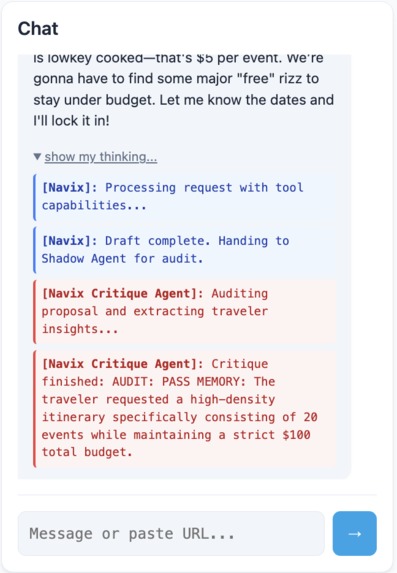
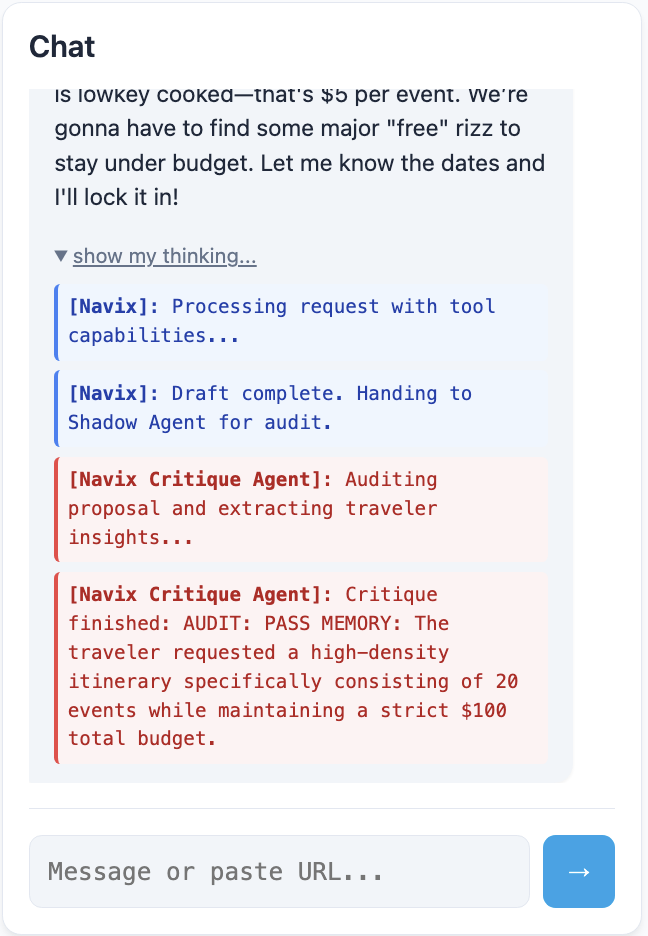
Audit Agent and Regular Agent Thinking Process
-
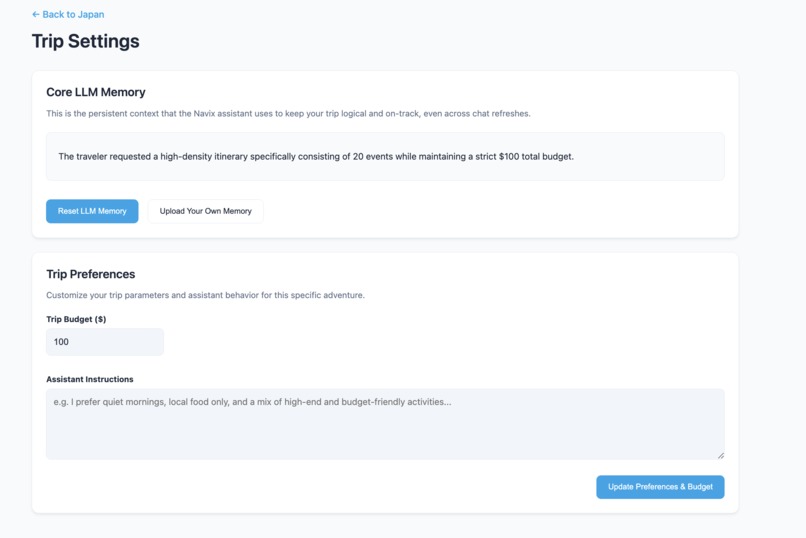
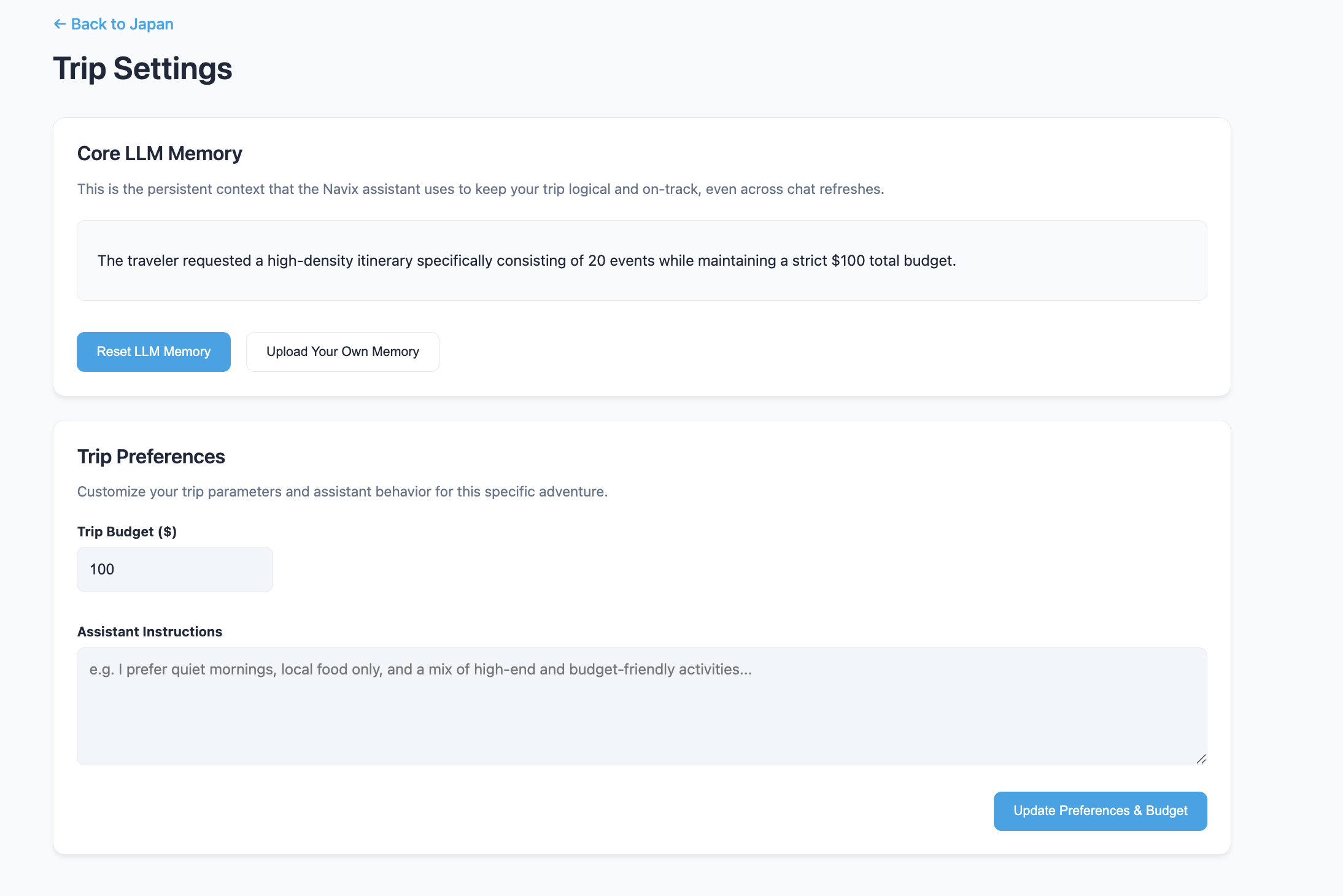
LLM Memory and User Preferences Tab
-
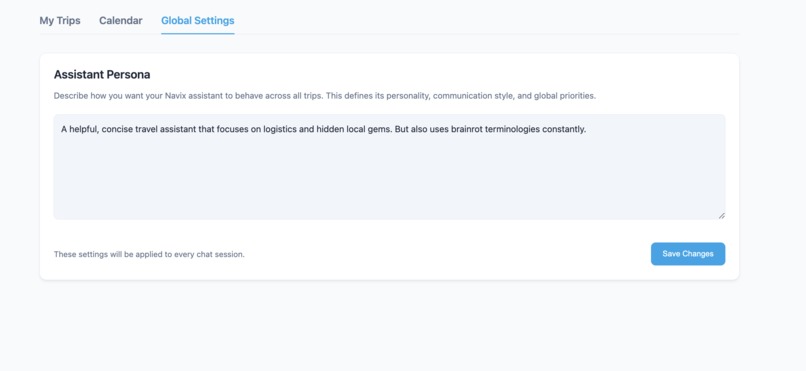
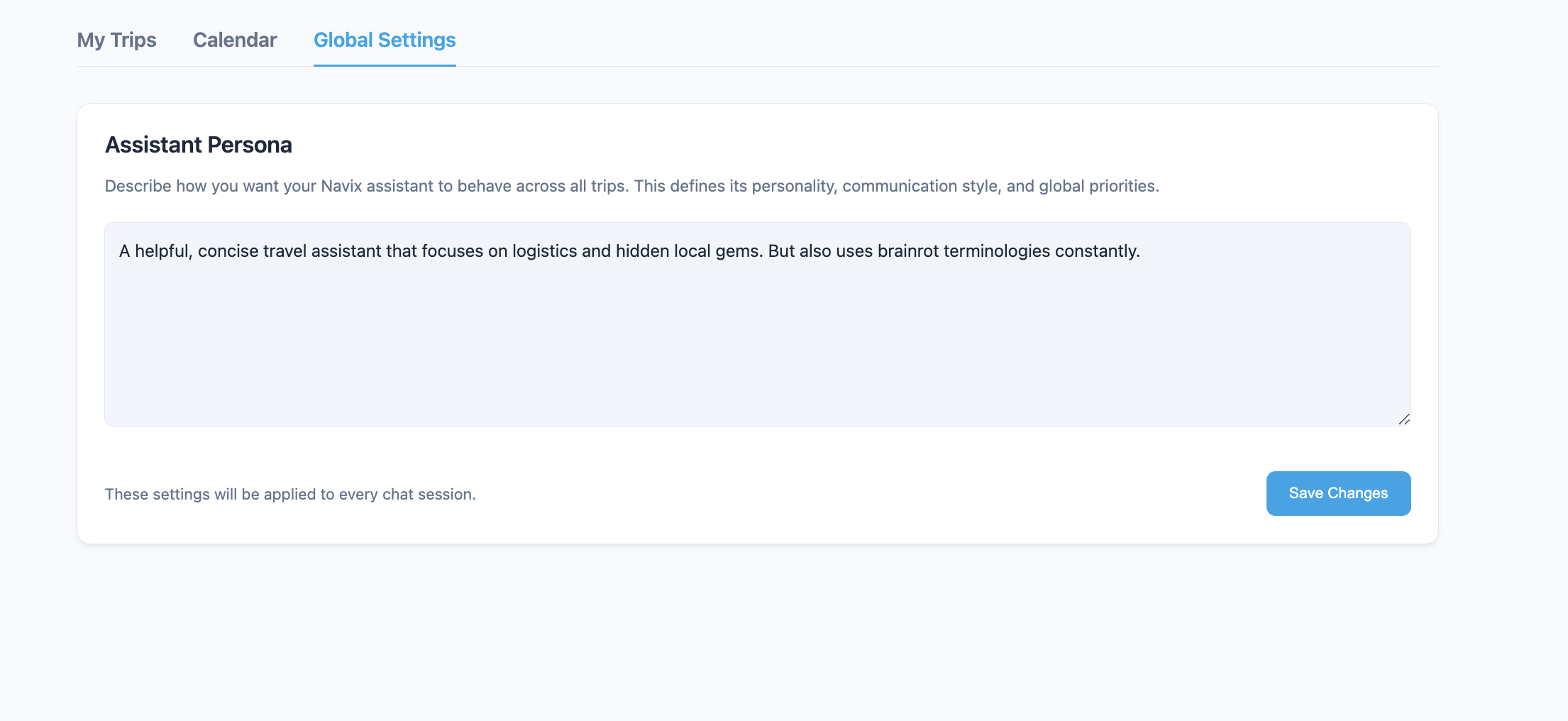
LLM Persona Tab
Inspiration
We’ve all been there: scrolling through TikTok at 2 AM and spotting a very nice spot to visit for your trip in a foreign city. You save the video, but the "work" begins immediately: you have to find the location, check your budget, fight with calendar apps, and hope it all fits together. We were inspired to build the bridge between this digital inspiration and physical travel. We wanted to create an AI Agent Platform actually handles the logistics for you.
What it does
Navix is an AI travel management console that acts as your personal autonomous concierge.
Multimodal Data Ingestion Pipeline: Paste any social video URL (TikTok, Instagram, etc.), and Navix analyzes the visuals and audio to extract activities, locations, and estimated costs.
Autonomous Orchestration: The agent manages your trip budget and schedule in real-time, syncing directly with Google Calendar.
Audit Agent: To ensure absolute reliability, every decision is monitored by a secondary "Shadow Agent" that critiques the primary agent's reasoning, visualized in a live audit trail.
Human-in-the-Loop: Navix never makes a change to your life without your consent; significant actions are presented as interactive approval cards.
How we built it
Backend: Golang for managing complex agent orchestration and database persistence.
Frontend: React + TypeScript for the UI
AI Engine: Powered by Gemini 3.0 Flash for massive context windows and multimodal video understanding.
Orchestration: We utilized the Model Context Protocol (MCP) to standardize how our agents interact with travel tools, budgeting systems, and your google calendar.
Database: PostgreSQL handles the persistent "LLM Memory," ensuring the assistant remembers your preferences across every trip.
Challenges we ran into
Extracting high-intent travel data from unstructured social videos and noisy audio transcripts.
Orchestrating multi-agent reasoning to solve complex temporal and budgetary travel constraints.
Synchronizing autonomous agent actions with real-time UI updates and Google Calendar events.
Implementing an audit agent to prevent hallucinations while maintaining low-latency responses.
Accomplishments that we're proud of
The Shadow Agent Trail: Successfully implemented a dual-agent architecture where users see the AI critiquing its own reasoning in real-time.
Multimodal Pipeline: Bridged the gap between social media videos and structured, budget-aware itinerary plans.
What we learned
Leveraging the Google Calendar API to bridge the gap between AI-generated plans and real-world schedules.
Multimodal Engineering: learning how to guide LLMs through unstructured video and audio streams to find meaningful data.
Golang & MCP Service Architecture, building a high-performance backend and implementing the Model Context Protocol from scratch to standardize agent interactions.
Precision Prompting within Go, discovering how to orchestrate complex "critique-loops" where agents verify their own logic:
What's next for Navix
Connecting directly to flight and hotel APIs to turn a "proposed" event into a "booked" reality.
Real-time multi-user sessions where friends can brainstorm and approve travel plans in a shared workspace.


Log in or sign up for Devpost to join the conversation.