-
NAVIS
Inspiration
Millions of visually impaired individuals rely on tools like white canes or guide dogs to navigate the world. However, guide dogs are expensive and limited in availability, and traditional tools cannot always detect complex obstacles or dynamic environments.
We wanted to explore how robotics and sensing technologies could provide an accessible and scalable alternative. Our goal was to design a robotic assistant capable of detecting obstacles and helping visually impaired users move more safely and independently.
NAVIS was inspired by the idea that technology should empower independence and accessibility for everyone.
What it does
NAVIS is a robotic navigation assistant designed to help visually impaired individuals detect obstacles in their path.
Using sensors and onboard processing, the robot scans the environment and identifies obstacles ahead. When an obstacle is detected, the system alerts the user in real time, allowing them to safely adjust their movement.
The system focuses on improving situational awareness, helping users avoid collisions and navigate more confidently in everyday environments.
How we built it
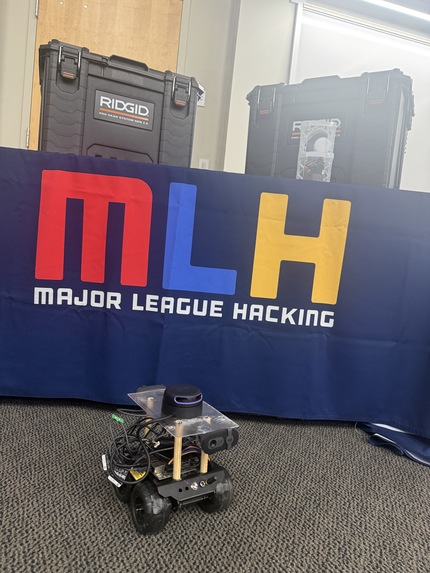
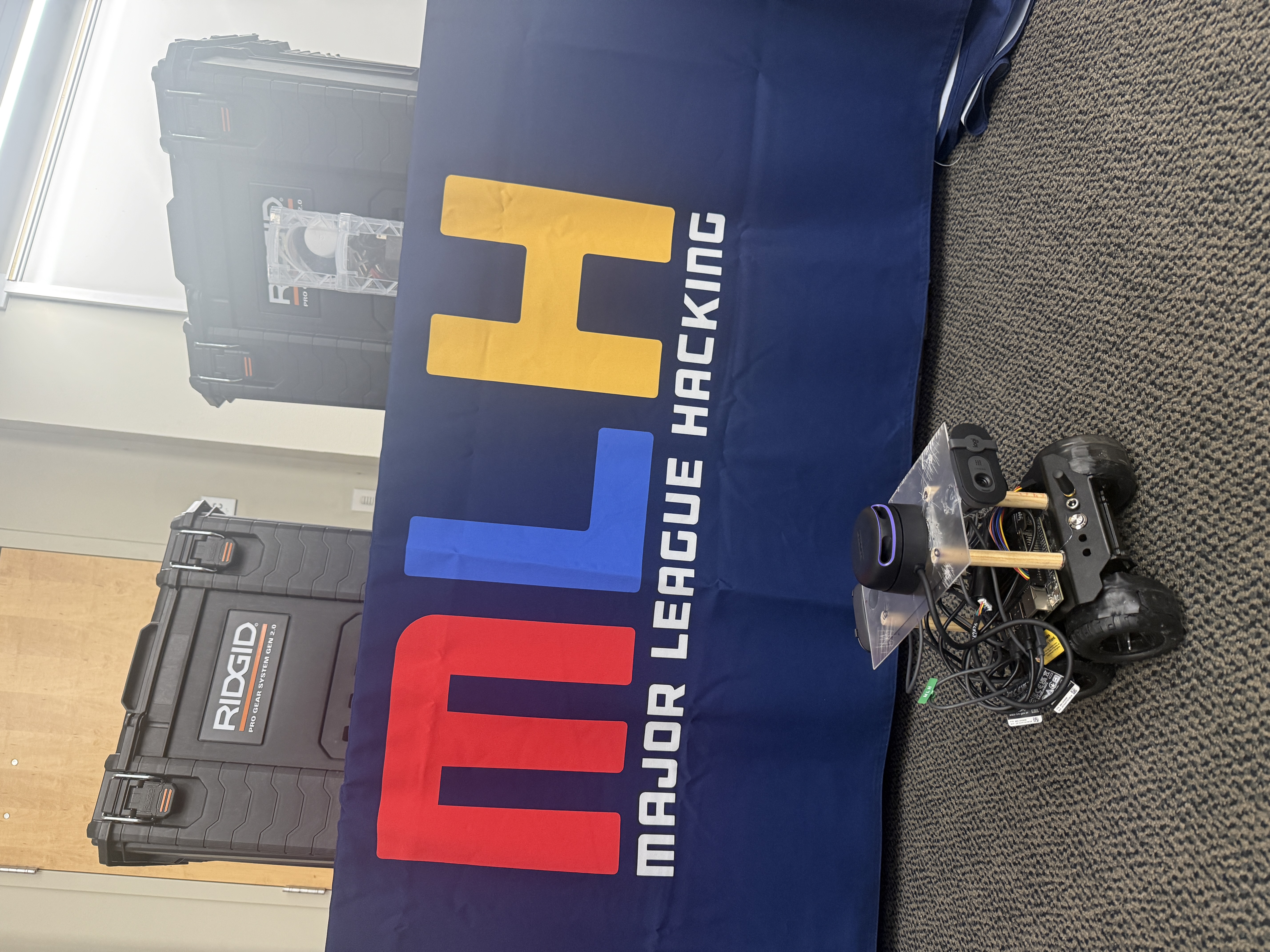
NAVIS was built using a robotics platform equipped with environmental sensors and cameras.
The system processes sensor data to detect obstacles in front of the robot. A simple decision layer determines when an object is within a dangerous distance and triggers an alert for the user.
We integrated:
- Sensor-based obstacle detection
- Real-time processing
- A robotic platform capable of moving and scanning its surroundings
The system was designed to prioritize reliability and simplicity, allowing it to run in real time.
Challenges we ran into
One of the main challenges was balancing functionality with the limited time available during the hackathon.
Integrating multiple sensors while maintaining real-time performance required simplifying some parts of the system. We also had to carefully define the scope of the project to focus on the most impactful feature: obstacle detection and user alerts.
Another challenge was designing a system that could clearly communicate information to the user in a simple and intuitive way.
Accomplishments that we're proud of
We are proud that we were able to design and implement a working prototype of an assistive robotic system within the short timeframe of the hackathon.
Our project demonstrates how robotics can be applied to accessibility problems and shows the potential for assistive technology that is scalable and affordable.
Most importantly, we created a proof of concept that highlights how technology can help improve independence for visually impaired individuals.
What we learned
Throughout the project we learned a great deal about rapid prototyping in robotics and the importance of defining a focused scope in time-limited projects.
We also learned how combining sensors, robotics, and real-time processing can create meaningful assistive technologies.
Finally, this experience reinforced the importance of designing technology with accessibility and real-world users in mind.
What's next for NAVIS
Future work for NAVIS would focus on expanding its capabilities to better support real-world navigation.
Possible improvements include:
- Advanced environment perception using computer vision
- Navigation assistance for indoor and outdoor environments
- Improved user feedback through audio or haptic signals
- Integration with mapping and route guidance systems
Built With
- jetson-nano
- machine-learning
- python
- robotics
- ros
- vercel


Log in or sign up for Devpost to join the conversation.