-
-

NAVIGUIDE for Berry-Mappemonde
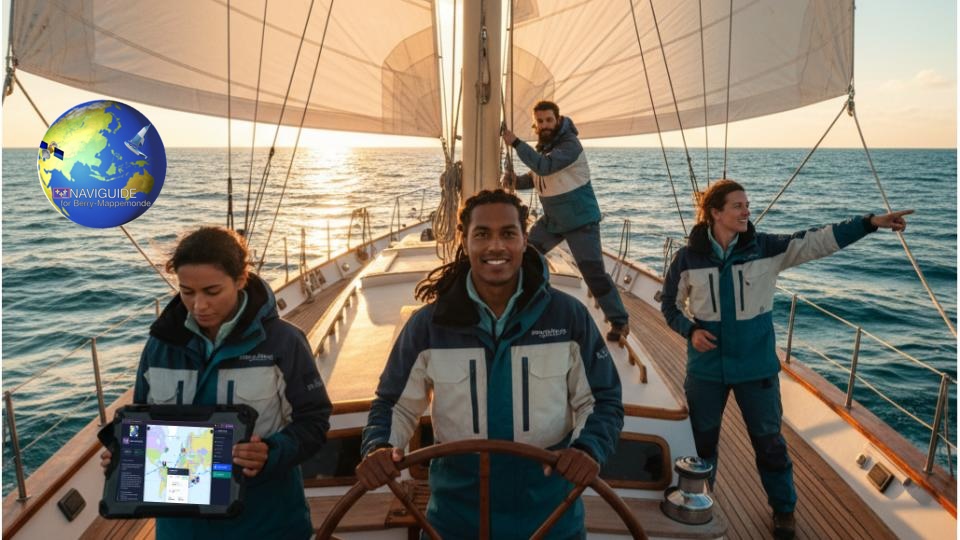
NAVIGUIDE Strategic Co-pilot — Project Story
Inspiration
Long-distance sailors face a real problem: planning safe routes across oceans with fragmented tools. Charts and pilot books help, but no system combined bathymetry, shipping traffic, piracy zones, cyclones, and medical access into a single AI-assisted briefing.
The Berry-Mappemonde expedition—a circumnavigation of French overseas territories—illustrates the scale: 18 waypoints, 40,000+ nautical miles, and risks that vary by season and region. We wanted an AI co-pilot that could explain why a route is recommended and which areas deserve extra attention.
What it does
NAVIGUIDE Strategic Co-pilot is an AI-powered maritime decision support system for pleasure craft expeditions. It:
- Computes maritime routes between waypoints (searoute algorithm)
- Scores anti-shipping exposure using AIS traffic density (World Bank) or predefined shipping lanes
- Validates bathymetry along the route (GEBCO 2024 or precomputed hazard zones)
- Assesses risks across four dimensions: weather windows, piracy (IMB/MDAT), medical access, and cyclone exposure
- Generates an executive briefing via Amazon Nova 2 Lite—explaining why the route is recommended, which zones to avoid, and the most critical areas for the skipper
The frontend (MapLibre + React) displays the route, risk overlays, and the Nova-generated briefing in a sidebar. Users can import custom GeoJSON routes or use the preconfigured Berry-Mappemonde itinerary.
How we built it
We built on NAVIGUIDE, an existing SADP (Système d'Aide à la Décision pour la Plaisance) at naviguide.fr.
Architecture:
- Agent 1 (Route Intelligence): LangGraph subgraph—searoute, anti-shipping scoring, coastal buffer validation, bathymetric zones
- Agent 3 (Risk Assessment): LangGraph subgraph—weather, piracy, medical, cyclones
- Orchestrator: Coordinates both agents and merges outputs into a unified expedition plan
- Nova 2 Lite: Receives structured context (route, scores, zones, risks) and generates the executive briefing via Bedrock
Data: Static zones (shipping lanes, shallow hazards, piracy, cyclones, weather, medical) + optional real data (GEBCO netCDF, AIS World Bank rasters). Prompts are enriched with zone names and scores so Nova can explain route choices.
# Nova 2 Lite integration (Bedrock)
llm = ChatBedrock(
    model_id="amazon.nova-2-lite-v1:0",
    region_name="us-east-1"
)
briefing = llm.invoke([HumanMessage(content=prompt)]).content
Challenges we ran into
- Model migration: Switching from Claude to Nova 2 Lite required verifying
langchain-awscompatibility and the correct Bedrock model ID:
amazon.nova-2-lite-v1:0
Context size: The full Berry-Mappemonde route produces a lot of data. We condensed it into structured summaries (segments below threshold, critical zones) to fit Nova's context window.
Data volume: GEBCO (~7 GB) and AIS (~1 GB) are large. We built a fallback on precomputed zones so the system works even before full datasets are downloaded.
Latency: To keep the demo responsive, we cache the expedition plan for 24 hours and use an offline-first approach.
Accomplishments that we're proud of
- Multi-agent architecture that cleanly separates route intelligence from risk assessment
- Real geospatial data integration—GEBCO bathymetry and World Bank AIS density—for production-grade route analysis
- Nova 2 Lite integration that turns complex geospatial context into clear, actionable briefings
- Offline-first design so the system works reliably even with limited connectivity
- Existing deployment at naviguide.fr—NAVIGUIDE is already used by the sailing community
What we learned
- Geospatial data is heavy but reusable: Once GEBCO and AIS are downloaded, they support fast queries along any route.
- Multi-agent design fits maritime planning: Separating route intelligence from risk assessment makes the system modular and extensible.
- Nova 2 Lite excels at agentic workflows: Extended thinking and reasoning help it handle complex, multi-step route analysis.
- Structured prompts matter: Passing zone names and scores (not raw coordinates) lets Nova produce focused, relevant briefings.
What's next for NAVIGUIDE for Berry-Mappemonde
- Voice interface (Nova 2 Sonic): Hands-free "Berry-Box" for skippers on deck—ask Nova for area analysis by voice
- Real-time AIS integration: Replace static density with live traffic for dynamic route adjustments
- PMTiles / vector tiles: Lighter bathymetry and hazard overlays for faster map rendering
- Mobile app: Offline-capable companion for the expedition
- Community contributions: Open hazard reports and passage notes from the cruising community
Built With
- amazon
- nova

Log in or sign up for Devpost to join the conversation.