-
-

Logo
-
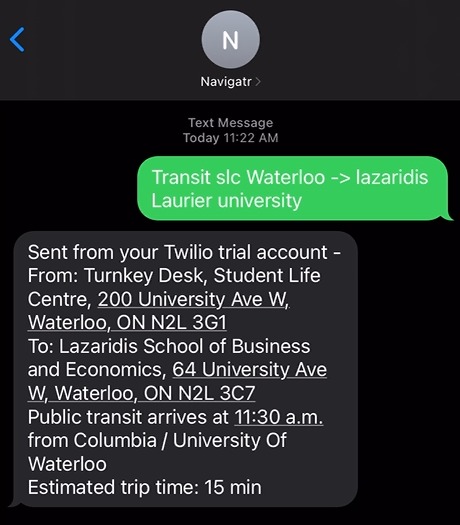
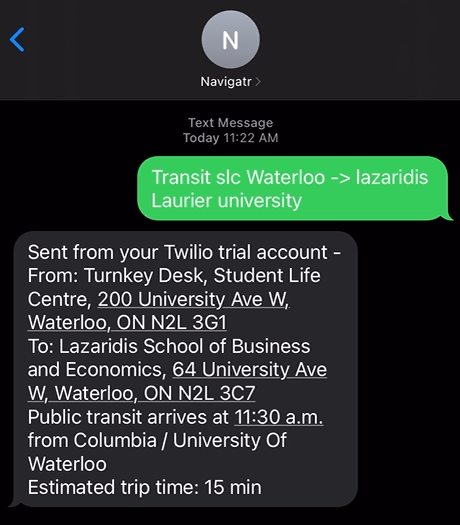
Navigatr provides quick responded to transit inquiries
-
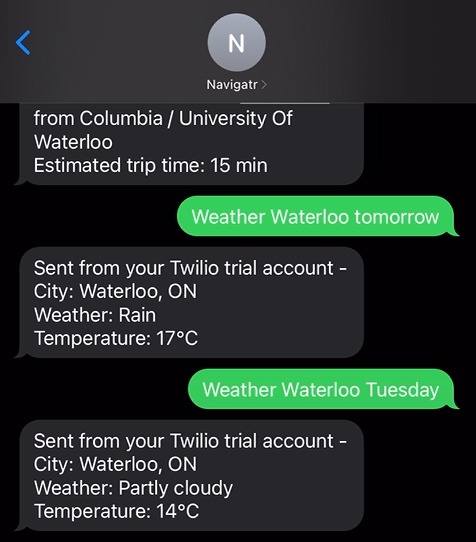
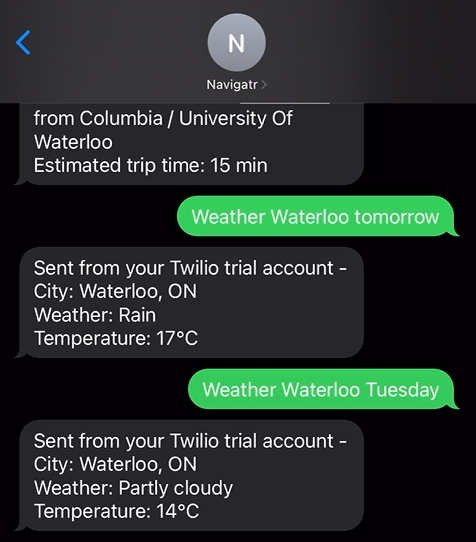
Navigatr provides responses to weather inquries

Inspiration
With all team members living in urban cities, it was easy to use up all of our mobile data while on the go. From looking up restaurants nearby and playing pokemon go, it was easy to chew threw the limited data we had. We would constantly be looking for a nearby Tim Hortons, just to leech their wifi and look for a bus route to get home safely. Therefore, we drew our inspiration from living out the reality that our phones simply are not as useful with mobile data, and we know that many people around the globe depend on mobile data for both safety and convenience with their devices. With NAVIGATR, users will not have to rely on their mobile data to find travel information, weather, and more.
What it does
NAVIGATR uses machine learning and scrapes real-time data to respond to any inquiry you might have when data isn't available to you. We have kept in mind that the main issues that people may have when on the go and running out of mobile data are travel times, bus routes, destination information, and weather information. So, NAVIGATR is able to pull all this information together to allow users to use their phone to the fullest even if they do not have access to mobile data; additionally, we are able to allow users to have peace of mind when on the go - they will always have the information they need to get home safely.
How we built it
We built NAVIGATR using a variety of different technical tools; more specifically, we started by using Twilio. Twilio catches the SMS messages that are sent, and invokes a webhook to reply back to the message. Next, we use Beautifulsoup to scrape and provide data from Google seaches to answer queries; additionally, our machine learning model, GPT-3, can respond to general inquiries. Lastly, this is all tied together using Python, which facilitates communication between tools and catches user input errors.
Challenges we ran into
Mainly, the TTC API was outdated by twelve years; therefore, we had to shift our focus to webscraping. Webscraping is more reliable than the TTC API, and we were able to create our application knowing all information is accurate. Furthermore, the client is allowed to input any starting point and destination they wish, and our application is now not limited to just the Toronto area.
Accomplishments that we're proud of
We believe that we were able to address a very relevant issue in modern day society, which is safety in urban environments and mobile-data paywalls. With the explosion of technology in the last two decades, there is no reason why innovation can not be used to streamline information in this way. Moreover, we wanted to try and create an application that has geniune use for people around the globe; additionally, this goal lead us to innovate with the idea in mind of improving the daily lives of a variety of people.
What we learned
We learned how to handle webscraping off Google, as well as creating webhooks and utilizing machine learning models to bring our ideas to life.
What's next for NAVIGATR
Next, we would like to implement a wider variety of tools that align with our mission of providing users with simple answers to questions that they may have. Continuing on the theme of safety, we would like to add features which provide a user with information about high density areas vs. low density areas, weather warnings, as well as secure travel route vs. low risk travel routes. We believe that all of these features would greatly increase the impact NAVIGATR would have in a user's everyday life.

Log in or sign up for Devpost to join the conversation.