-
-
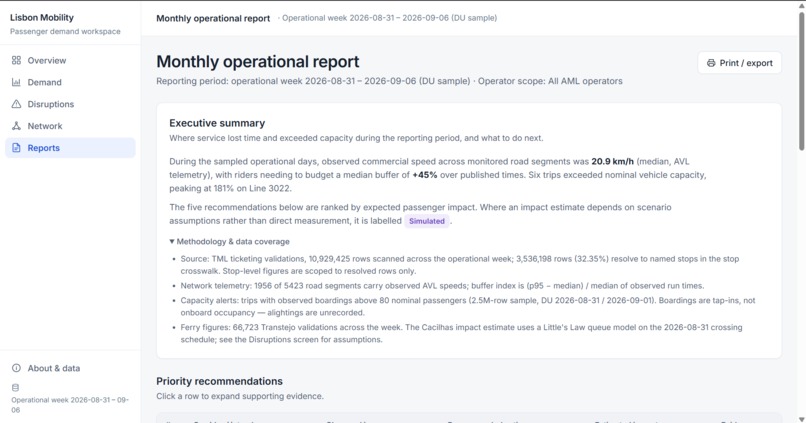
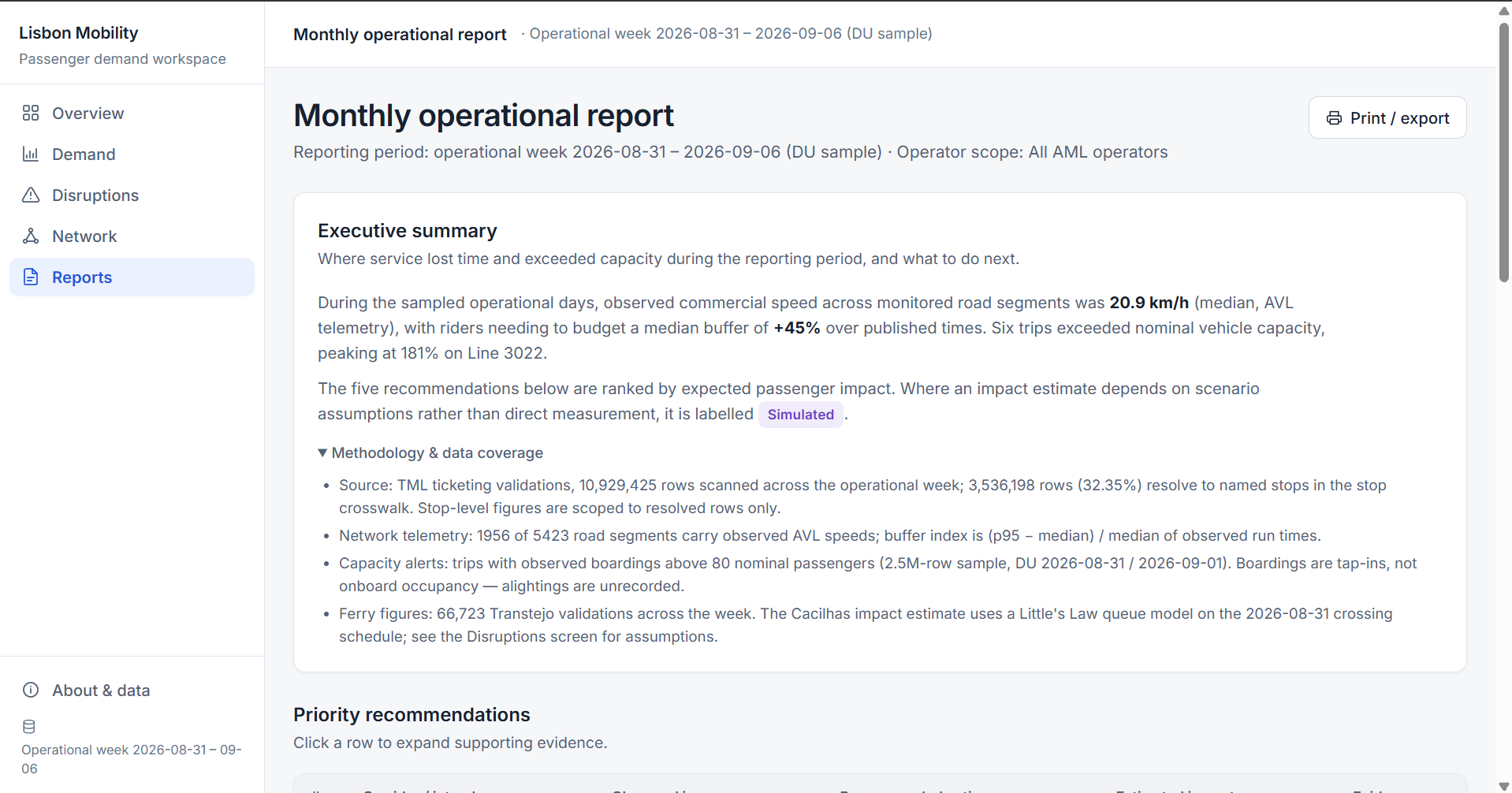
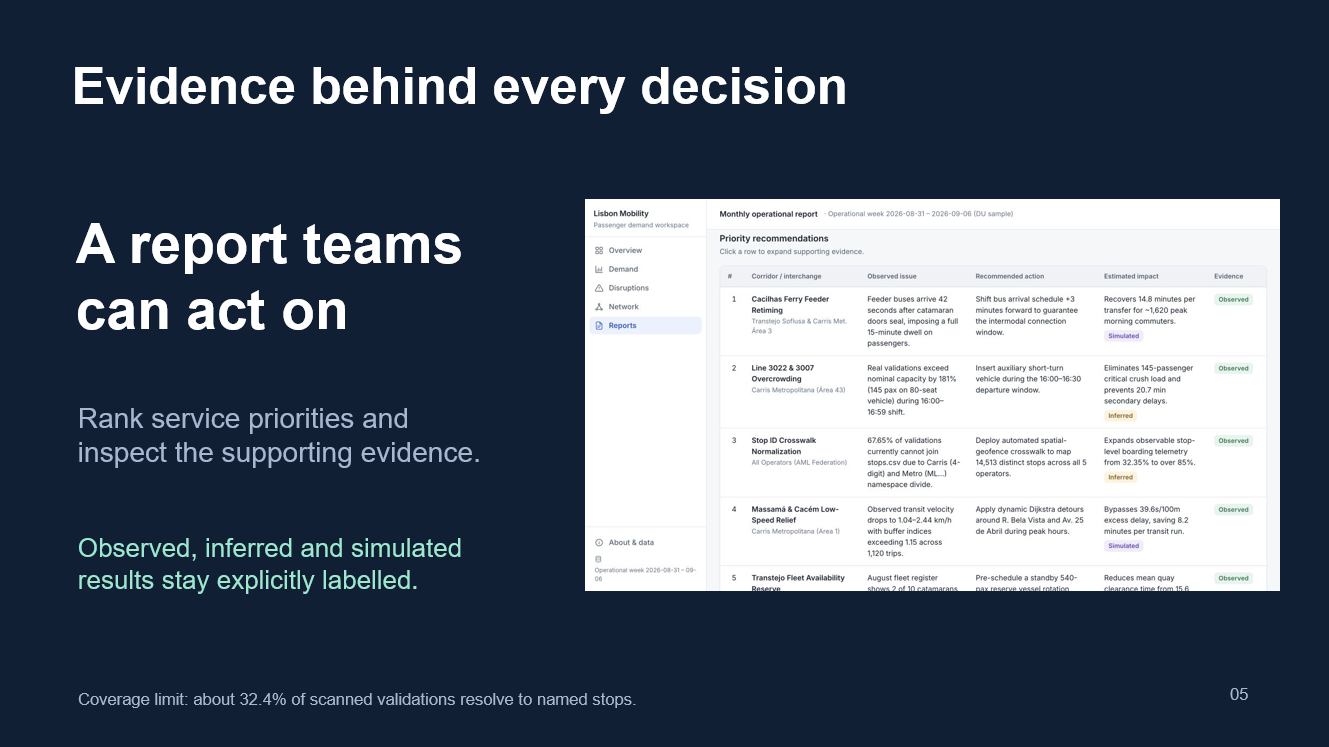
Operational report
-
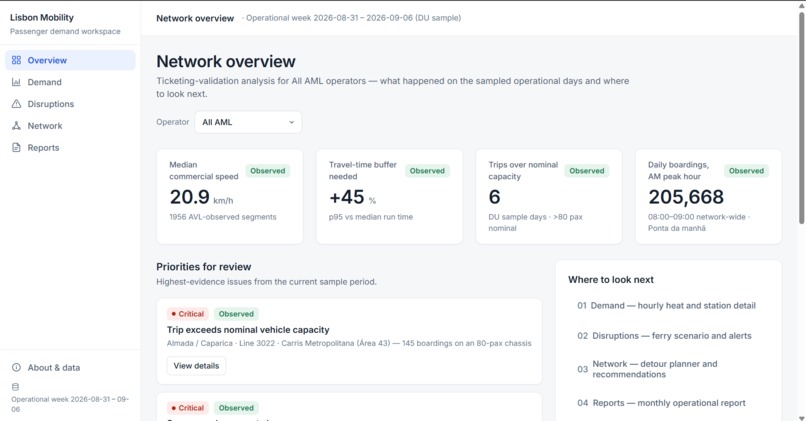
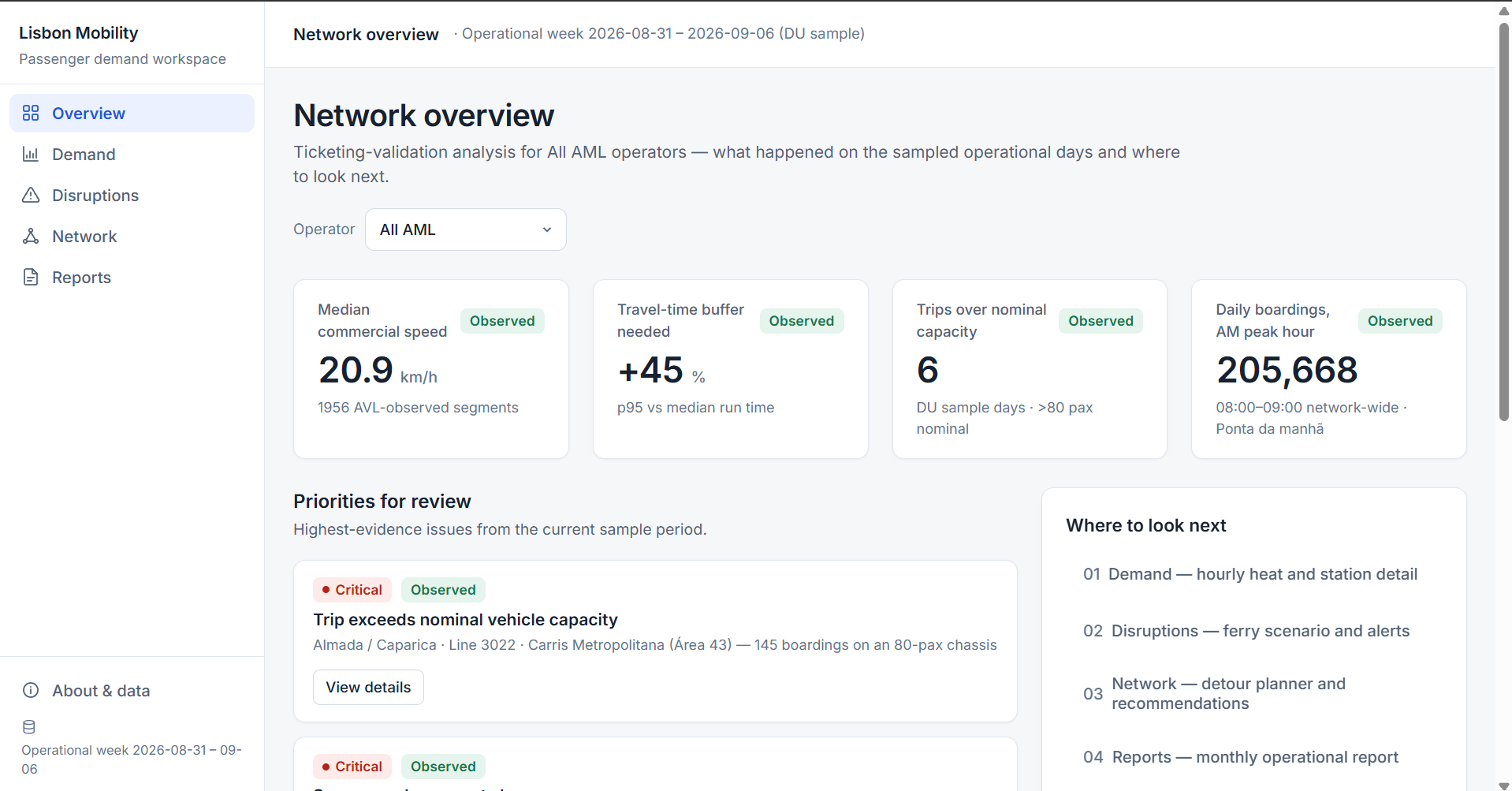
Overview
-
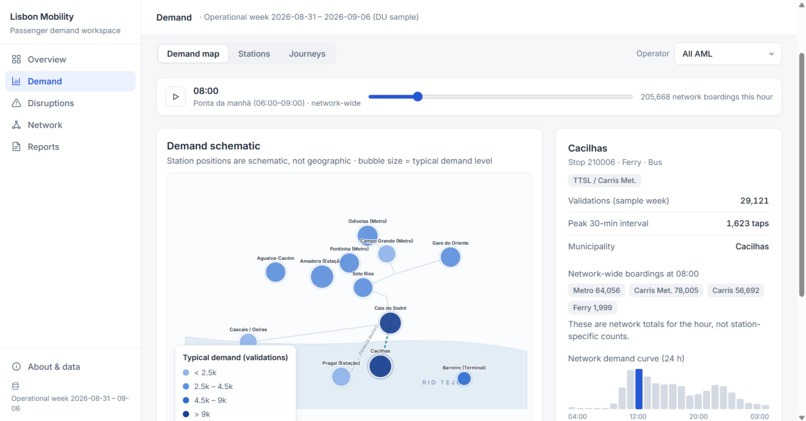
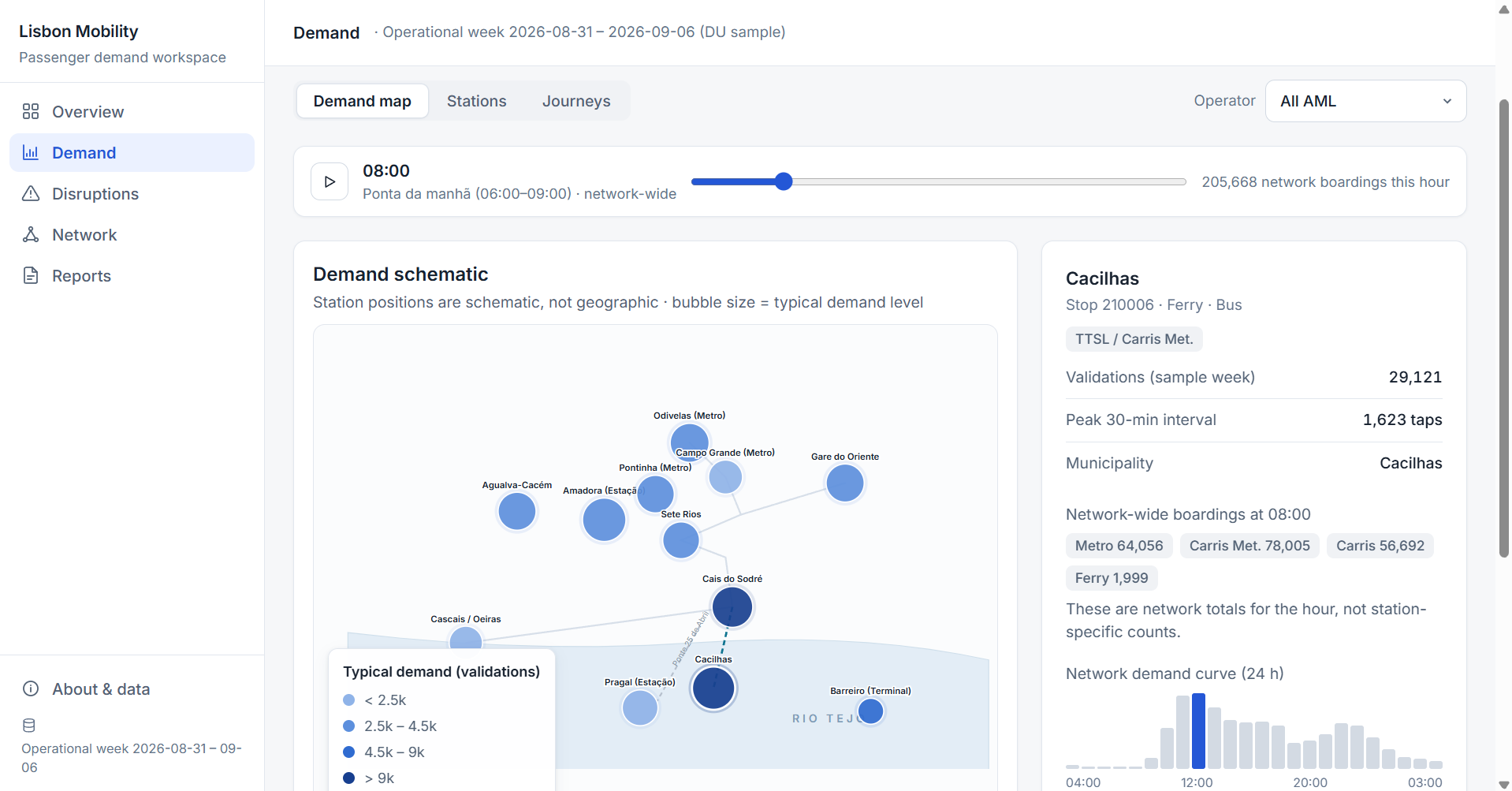
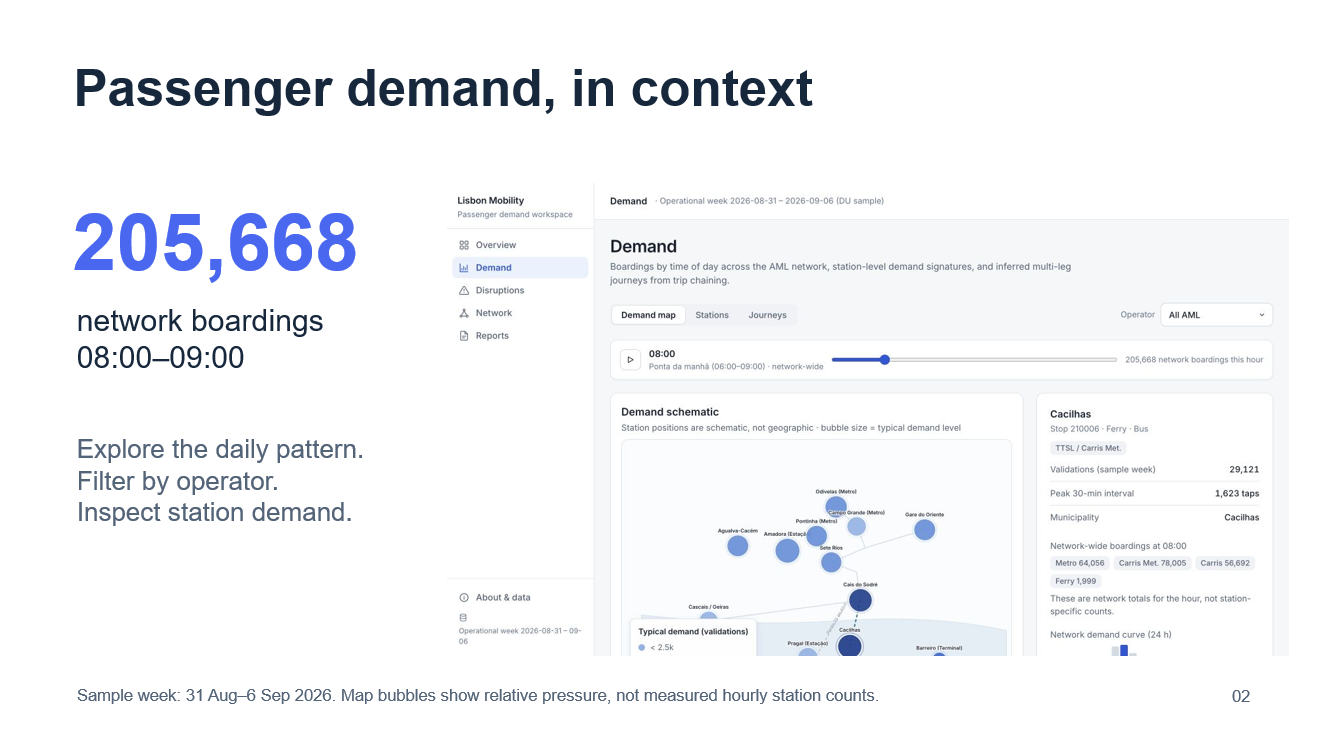
Demand map
-
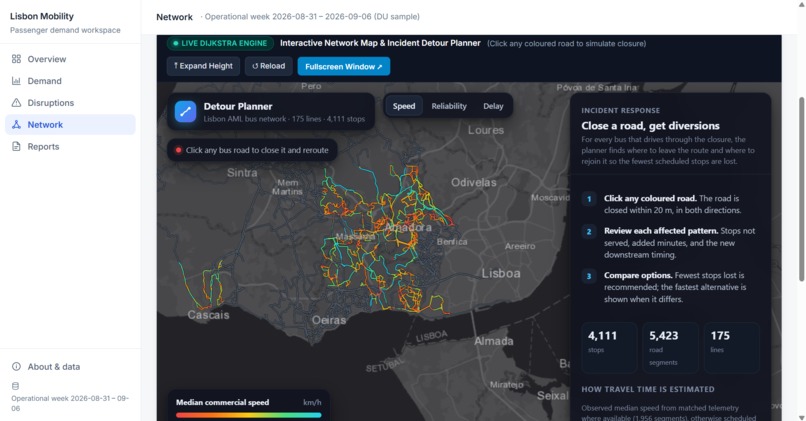
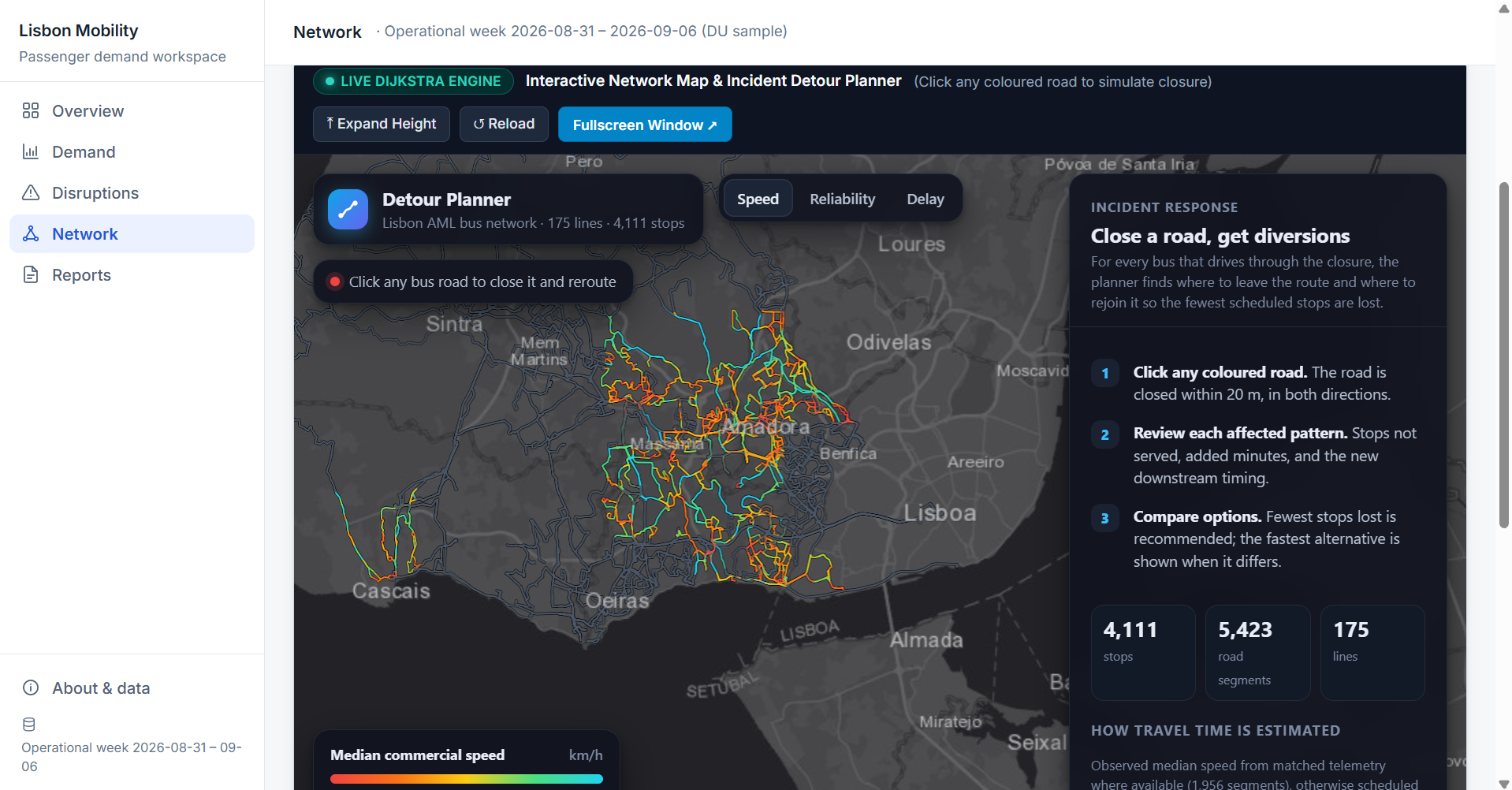
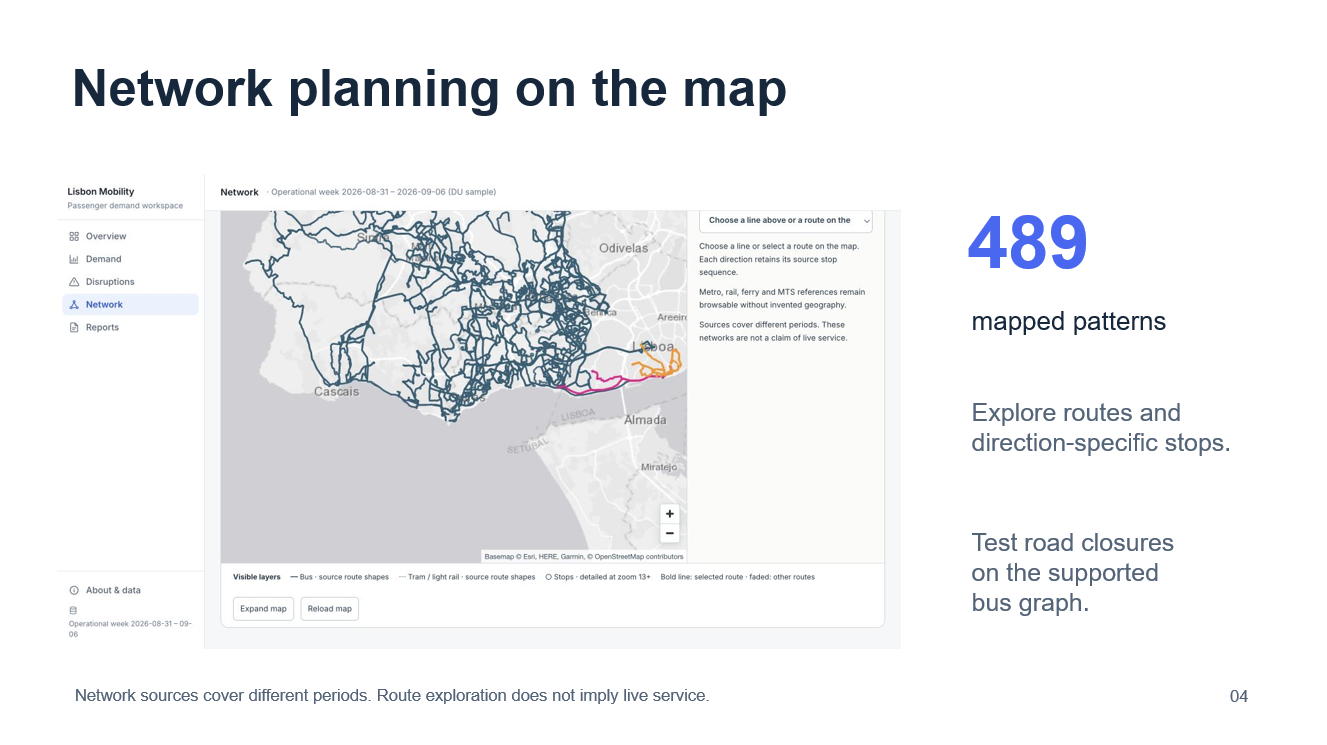
Interactive bus lines
-
PDF slides 1
-
PDF slides 3
-
PDF slides 2
-
PDF slides 4
-
PDF slides 5
Inspiration
Connecting Lisbon's fragmented multi-modal transit networks to eliminate blind spots during peak congestion.
What it does
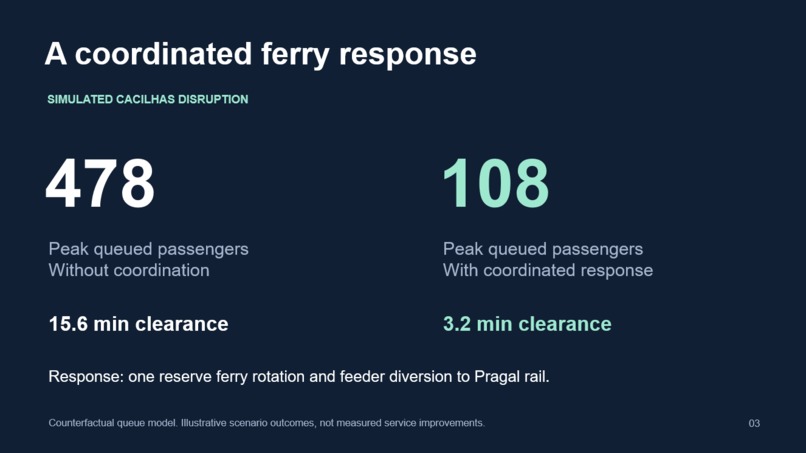
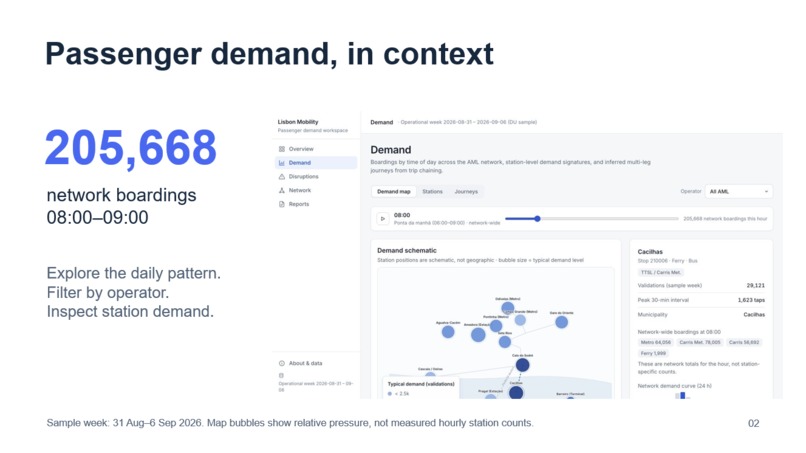
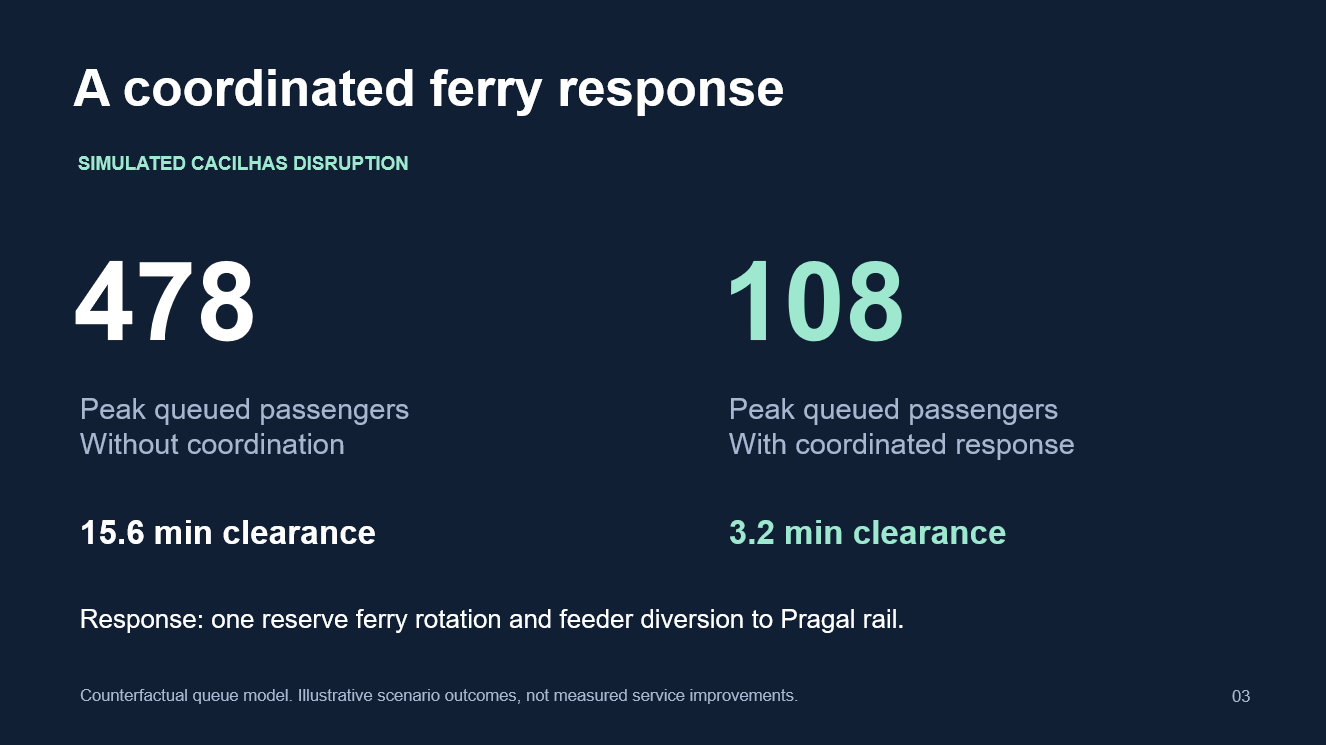
Provides a real-time digital twin for Lisbon's transport network, mapping demand heat, choke points, and ferry flows to optimize resource allocation.
How we built it
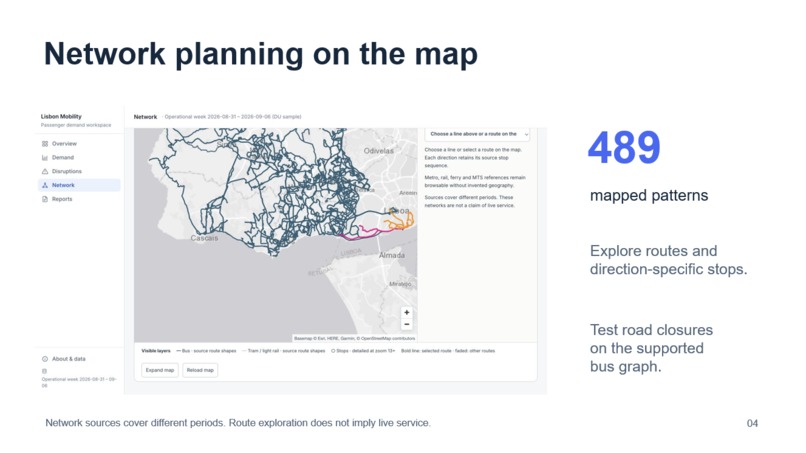
By ingesting GTFS and ferry feeds into a twin engine that processes demand patterns and powers an interactive carrier map.
Challenges we ran into
Synchronizing multi-modal feeds and aligning real-time user travel habit data with municipal data structures.
Accomplishments that we're proud of
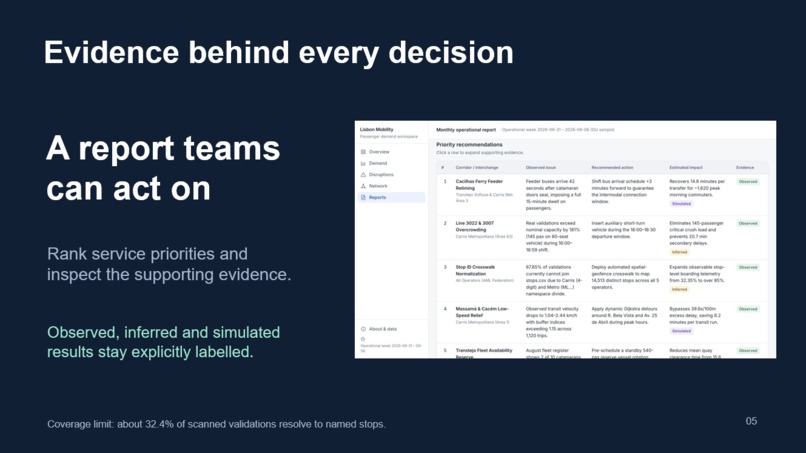
Successfully running on real data to generate monthly improvement reports and live choke-point dashboards.
What we learned
The critical importance of low-latency data pipelines for public-sector transit planning and municipal resource management.
What's next for Navegador
Piloting the platform on key Lisbon corridors like Cais do Sodré to measure direct passenger throughput and wait-time reductions.

Log in or sign up for Devpost to join the conversation.