-
-
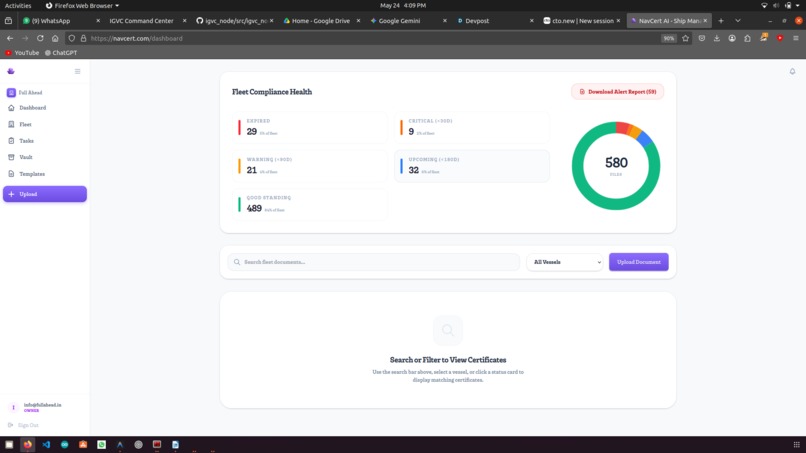
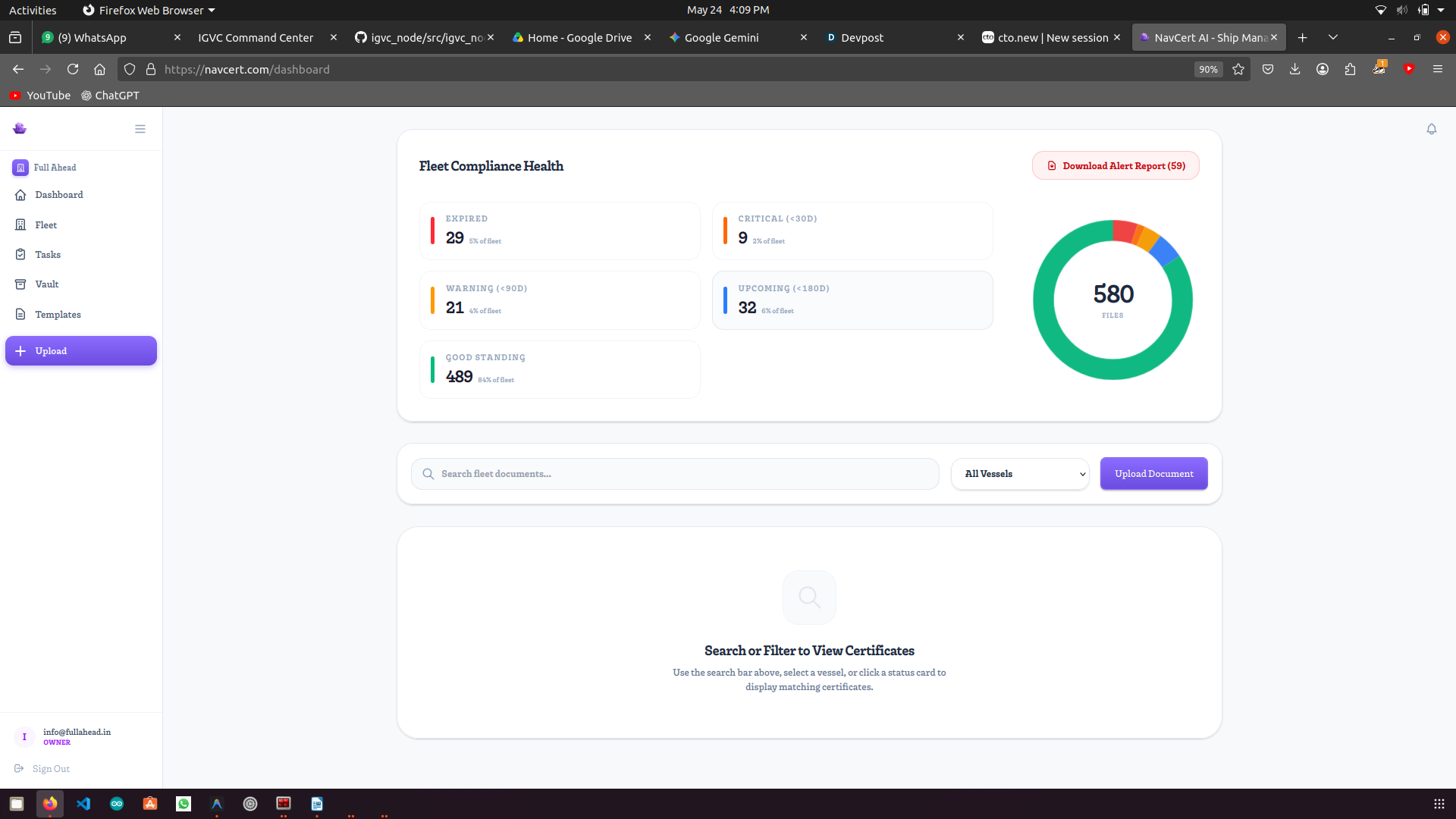
Dashboard, a single source of truth for all information, present instantly at once
-
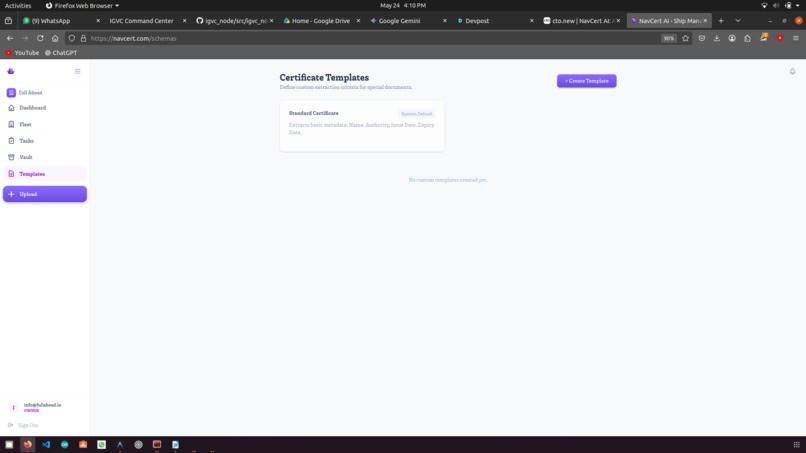
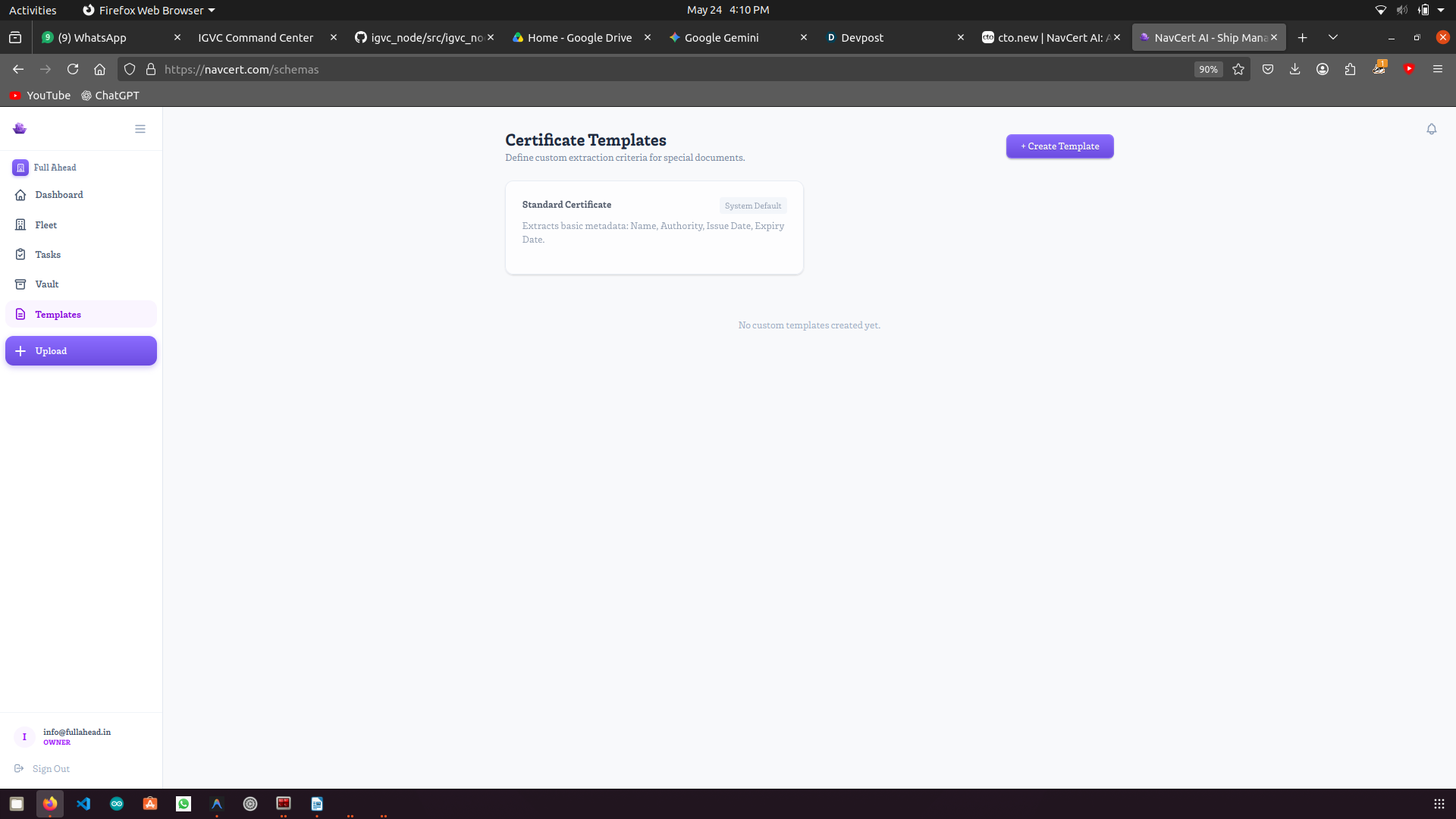
Custom template creation, Create your own custom AI templates for extraction
-
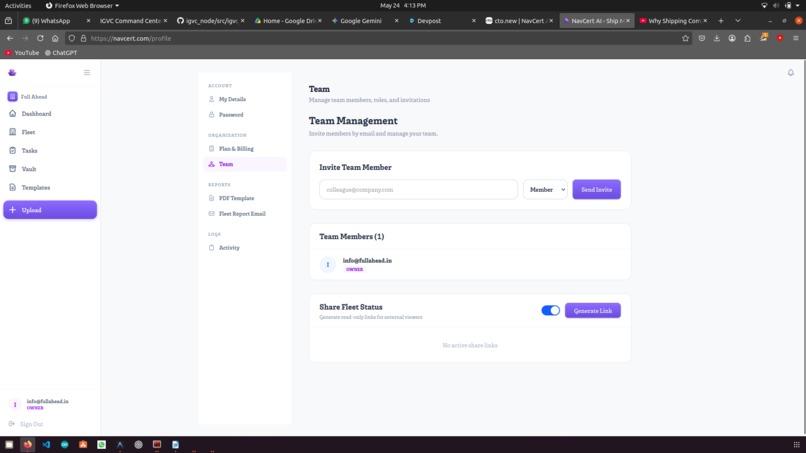
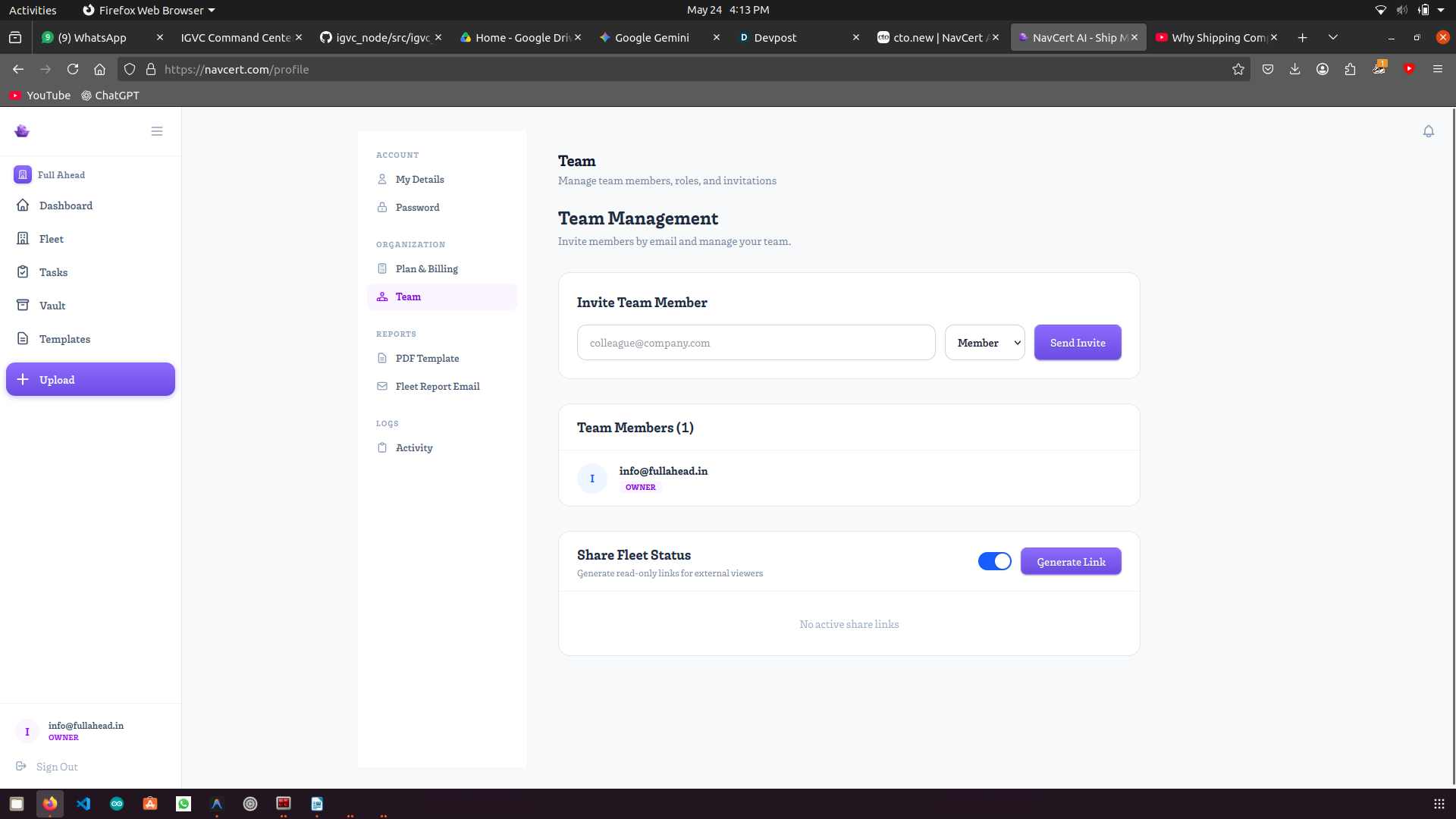
Add members to your organization
-
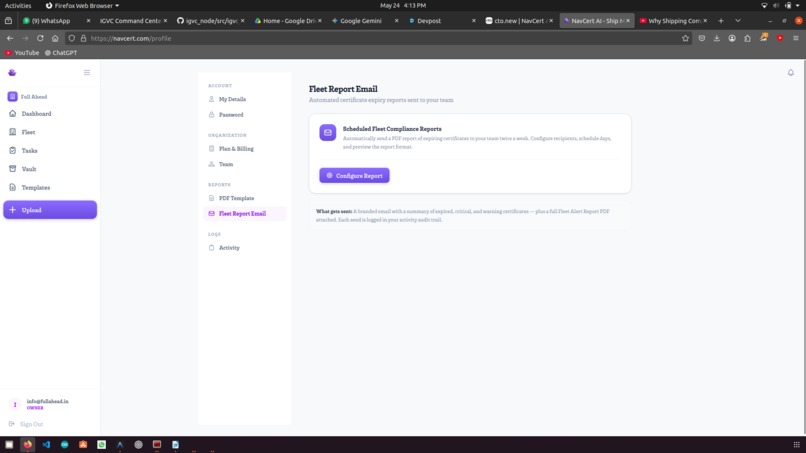
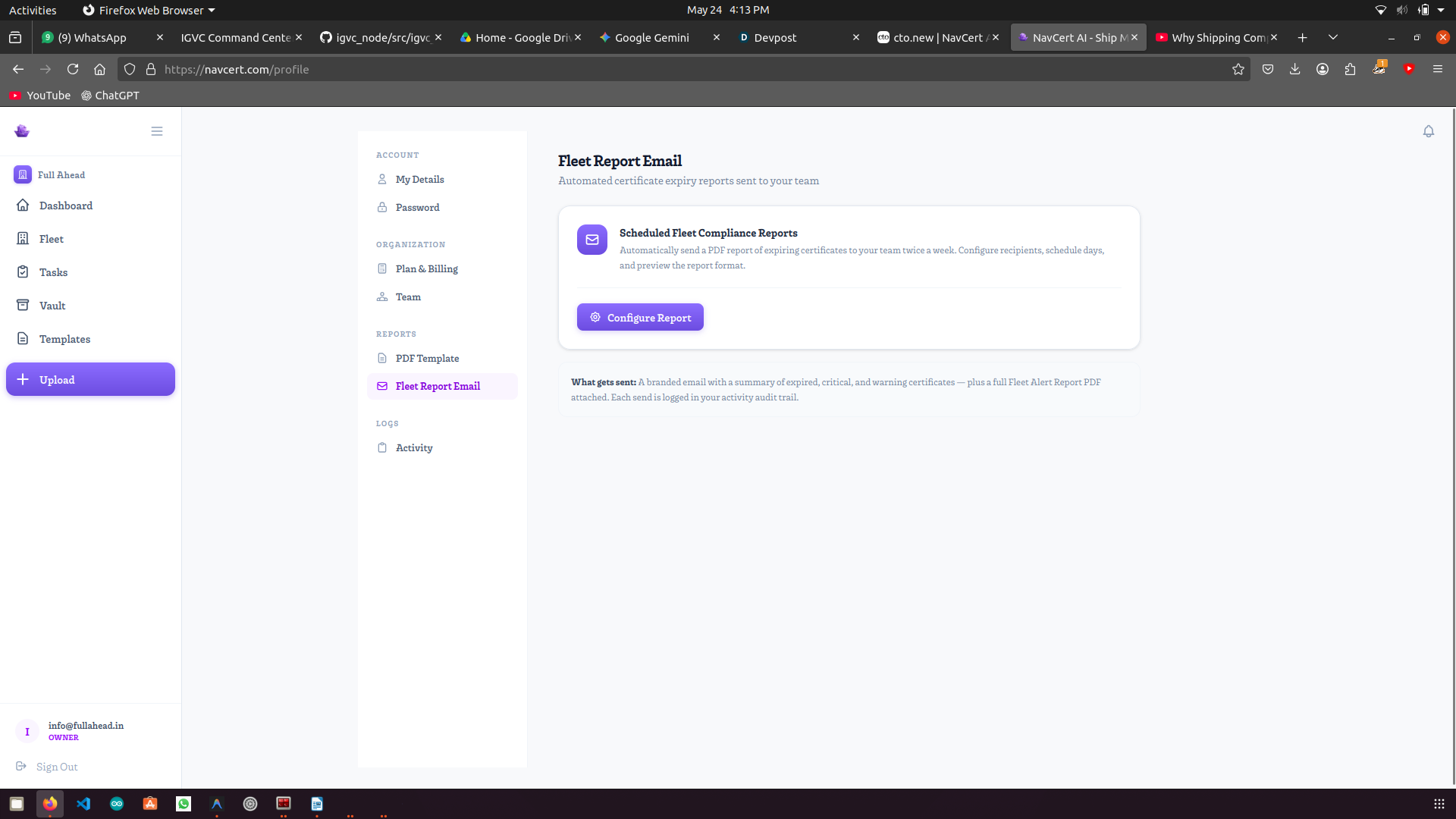
Create a custom email report for your team, sent automatically based on the selected days
-
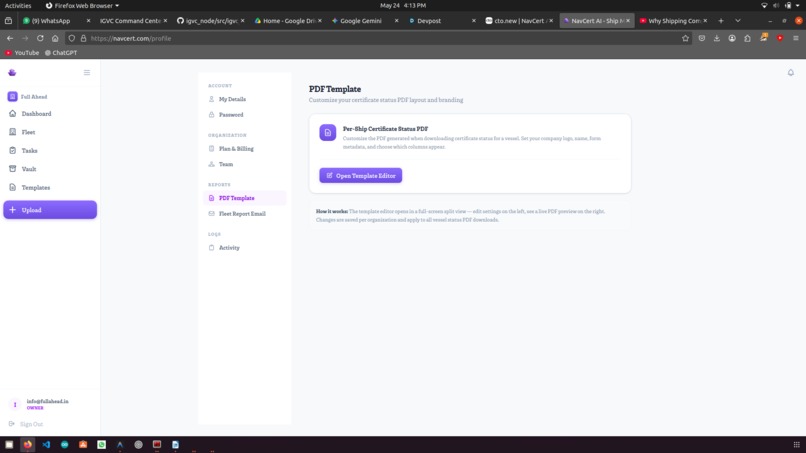
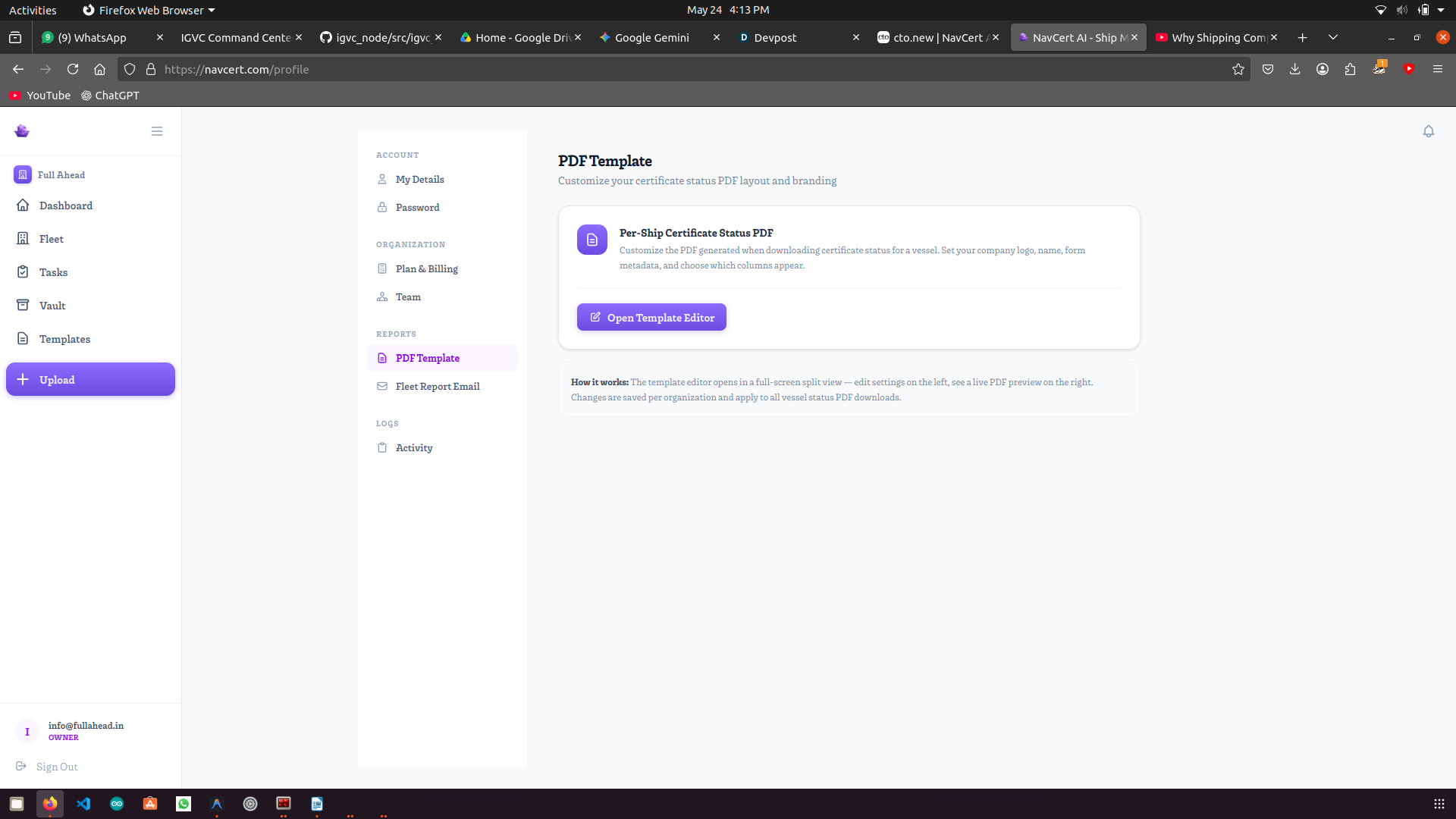
Create a custom summary pdf for your team or for the master of the vessel
-
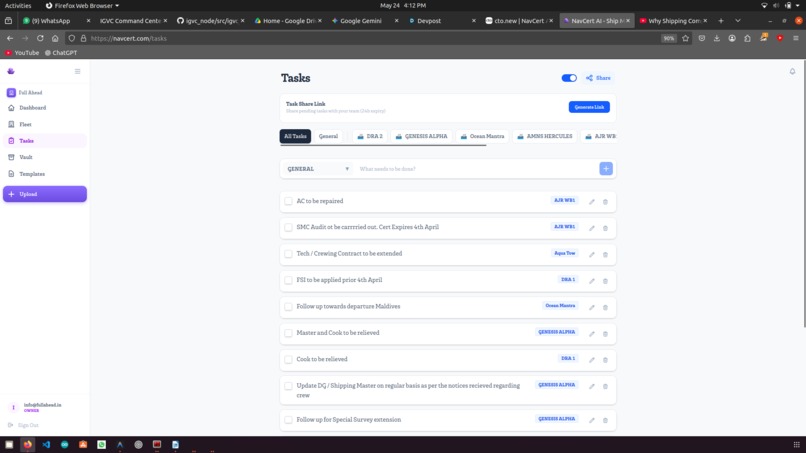
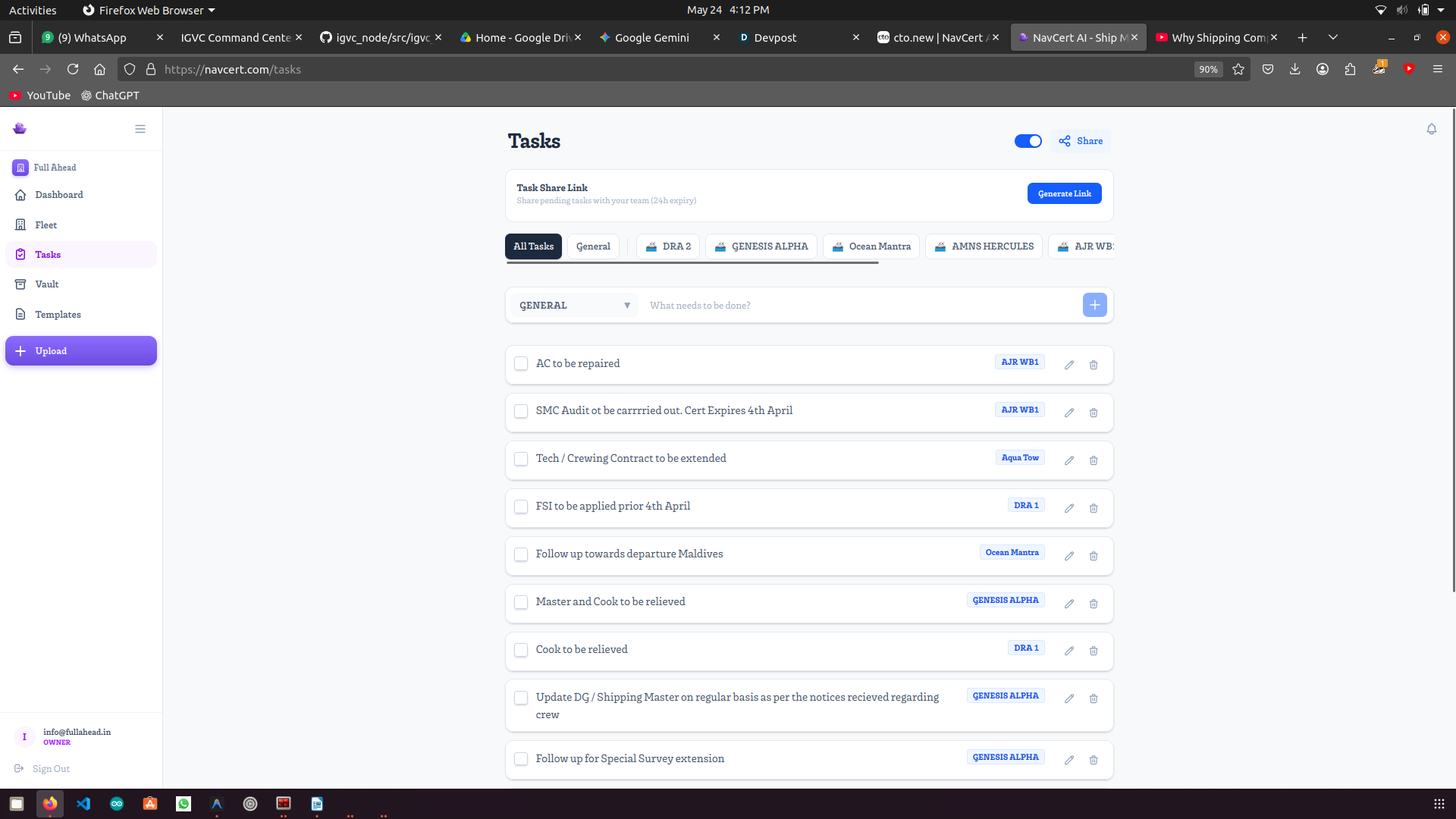
Add any task to vessels
-
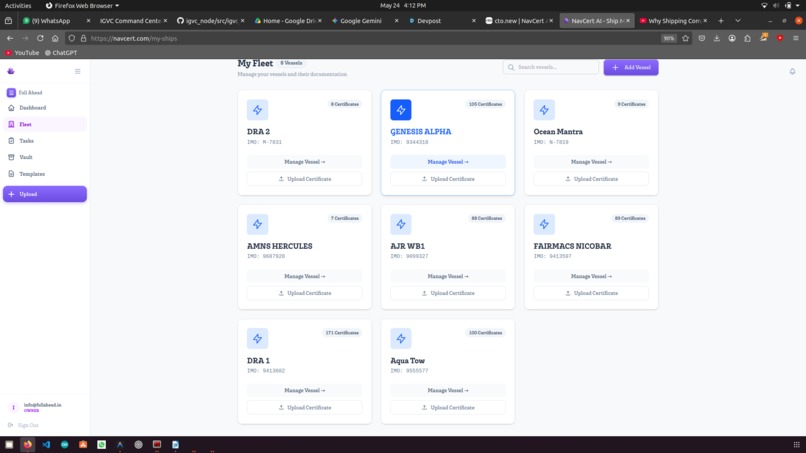
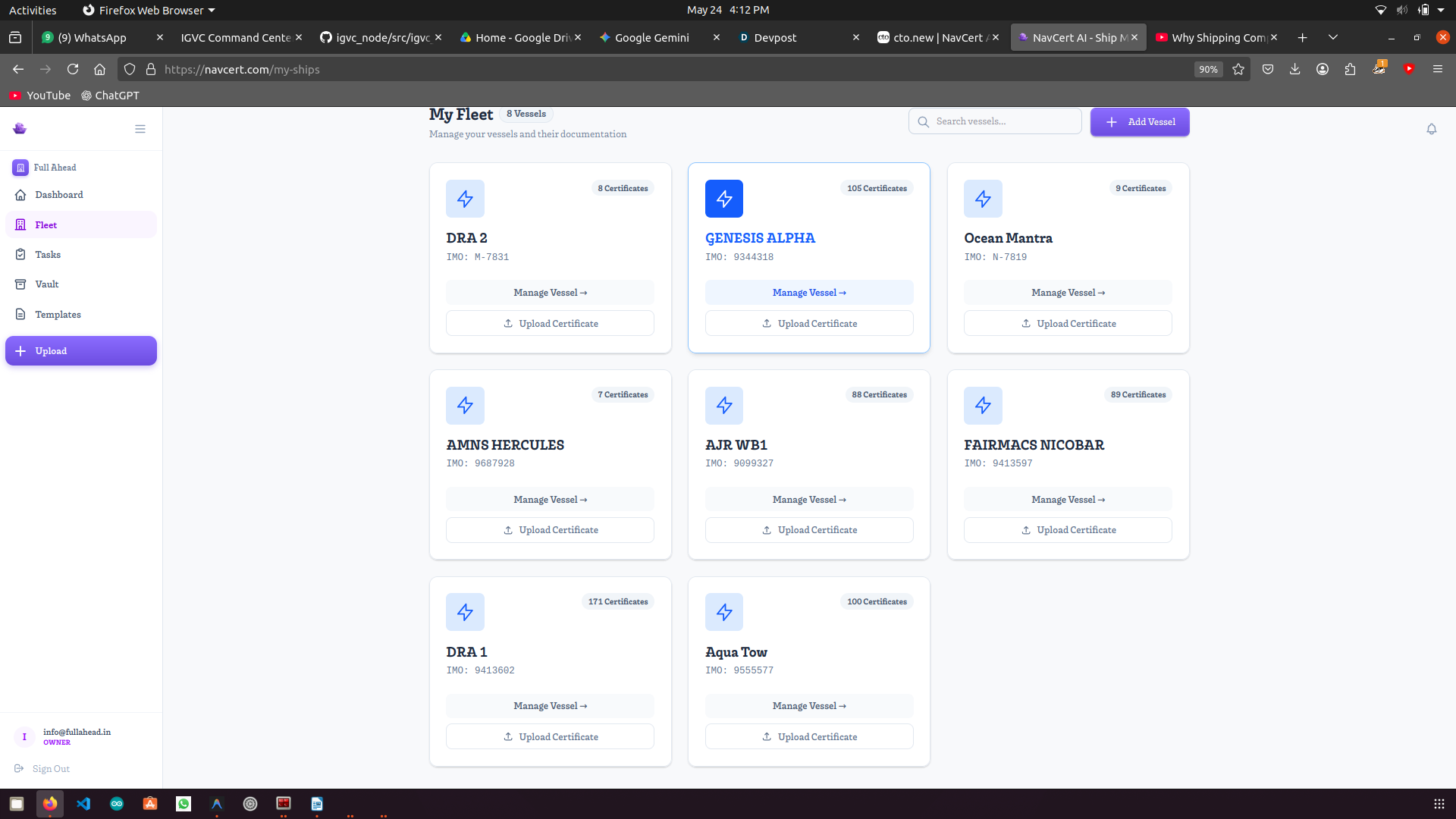
Create and manage your vessels, upload certificates, download status PDFs for the master of the ship
-
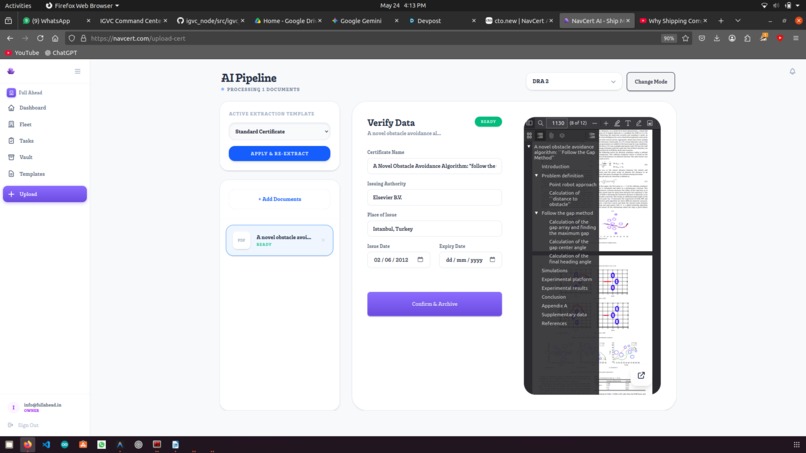
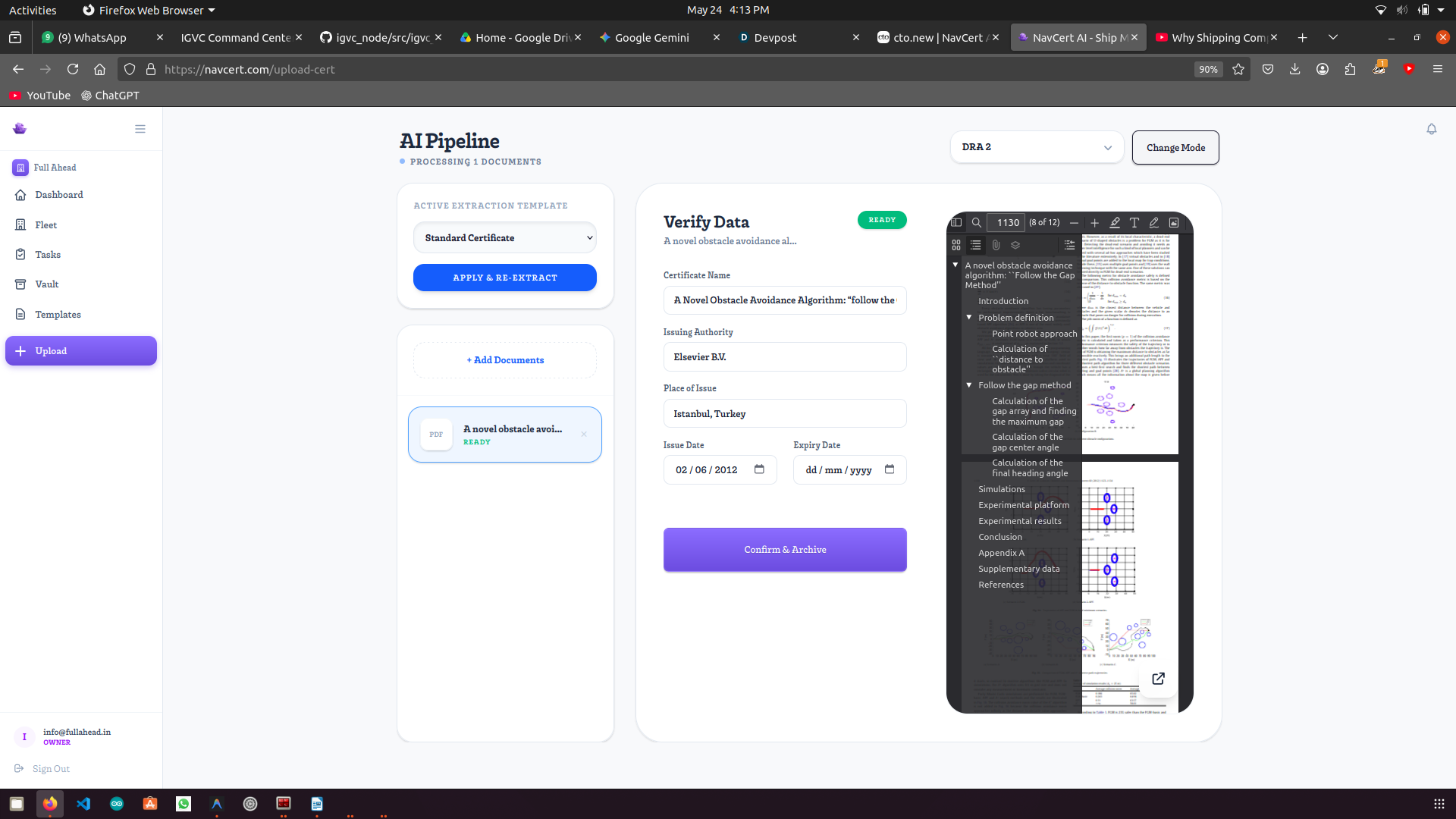
Extract any certificate using AI based on your custom template
Inspiration
Every vessel sailing international waters carries dozens of critical compliance certificates, class surveys, safety records, insurance documents, and ISM codes. Today, most shipping companies still manage this chaos using a fragmented mess of spreadsheets, messy email chains, and physical filing cabinets. I witnessed this first hand at my father's company, he was managing certificates from device to device, not even using any cloud services. Certificates expire without warning, audits turn into high-stress fire drills, and a single missed date can lead to port detentions, massive fines, or a grounded vessel. We saw operators panicking under text messages from the boss asking, "Where is the damn certificate?" and realizing that "hope" is not a compliance strategy. We wanted to build an intelligent, ultra-clean automated pipeline that turns chaotic paperwork into instant, organized structural data.
What it does
NavCert AI is an intelligent document processing and compliance management engine designed specifically for the maritime industry. It serves as a unified digital vault that completely automates fleet paperwork.
AI Certificate Scanner: Users can upload any certificate in any format—a scanned PDF, a quick photo, or a digital document. The AI pipeline analyzes and extracts critical structural metadata (such as Certificate Name, Issuing Authority, Place of Issue, and Expiry Dates) instantly with zero manual entry.

Modular Compliance Dashboard: Organizes the entire fleet's health at a glance, categorizing documents dynamically into Expired, Critical (less than 30 days), Warning (less than 90 days), and Good Standing.

One-Page Fleet Management: Allows operators to jump into specific vessels (like DRA 2, Genesis Alpha, or Ocean Mantra), view active timelines, or download complete compliance zip packages.

Instant Sharing & Verification: When a port state inspector requests documentation, operators don't search or panic, they can instantly verify and send clean, structured data right from the platform.
How we built it
We designed NavCert AI with an ultra-clean, minimalist SaaS aesthetic inspired by platforms like Stripe and Linear, optimizing it for extreme speed:
Frontend: Built with React and Vite, using Tailwind CSS to construct a highly professional, high-density dashboard that stays intuitive under heavy data loads.

Animations: Powered by GSAP to handle fluid, purposeful micro-interactions, seamlessly moving documents from upload, through the active "Analyzing" pipeline states, and into the archive.

Backend Infrastructure: Built on top of Supabase for relational data modeling, fast document state tracking, and real-time fleet synchronization.

Edge Processing: Deployed via Cloudflare Workers to ensure that document parsing requests and data verification happen close to the user with minimal latency.
Challenges we ran into
Extracting Noisy Text: Maritime certificates come from dozens of global authorities, each using completely different layouts, stamps, and fonts. Building an extraction pipeline that reliably catches the differences between an International Load Line Certificate and a machinery insurance document required fine-tuning our prompt parsing logic.

Data Density vs. Visual Clarity: Fleet managers need to see a lot of data at once (IMO numbers, multi-certificate statuses, alerts). Keeping the grid and list views ultra-clean without stripping away essential context took multiple design iterations on our layout components.

State Syncing during Uploads: Managing UI transitions while a multi-page PDF is actively being read, verified, and saved to the database required careful handling of asynchronous states so the dashboard UI never stutters.
Accomplishments that we're proud of
The AI Pipeline Workflow: Creating a seamless, drag-and-drop experience where a user can watch the AI actively pick up fine details and map out structured fields in real time.

Elite SaaS Aesthetic: Moving away from ugly, outdated legacy maritime software and replacing it with a gorgeous, premium dark/light interface built for the modern web.

End-to-End Organization: Building a reliable relational architecture where hundreds of documents can be handled under a single, unified page per vessel.
What we learned
Purposeful Motion Matters: Using GSAP loaders and transition states isn't just about looking fancy, in an AI application, it provides crucial visual feedback that tells the user exactly what the system is computing.

Legacy Industries are Starving for Good UX: The maritime sector handles billions of dollars in cargo, yet operators are stuck using software from the early 2000s. Applying modern engineering workflows to this space yields massive operational value.
What's next for NavCert AI
Local LLM Processing: Moving document extraction entirely to local, specialized models to ensure maximum data privacy and reduced API overhead for enterprise fleets.

Proactive Expiry Triggers: Implementing automated email and WhatsApp webhook alerts that notify technical superintendents months before a document hits a critical warning state.

Deep Sanctions & Survey Cross-Referencing: Expanding the compliance engine to cross-check extracted data directly against live global port state restrictions and international maritime databases.
Built With
- custom-vector-embedding
- encrpytion
- firebase
- gemini
- google-cloud
- nextjs
- react
- tailwind
- vite

Log in or sign up for Devpost to join the conversation.