-
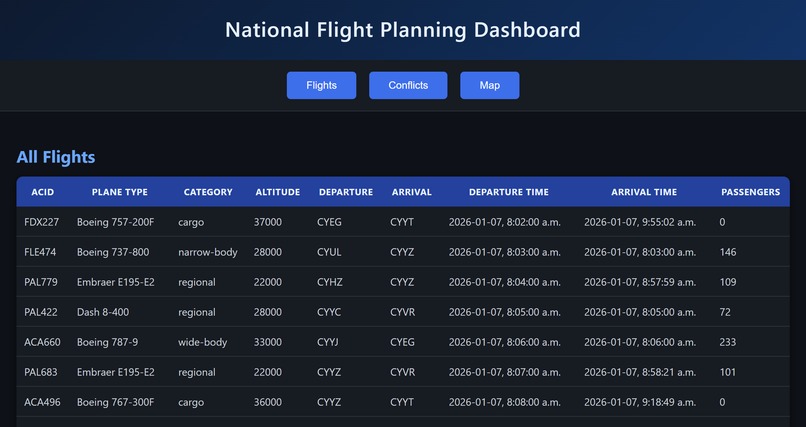
Flights page
-
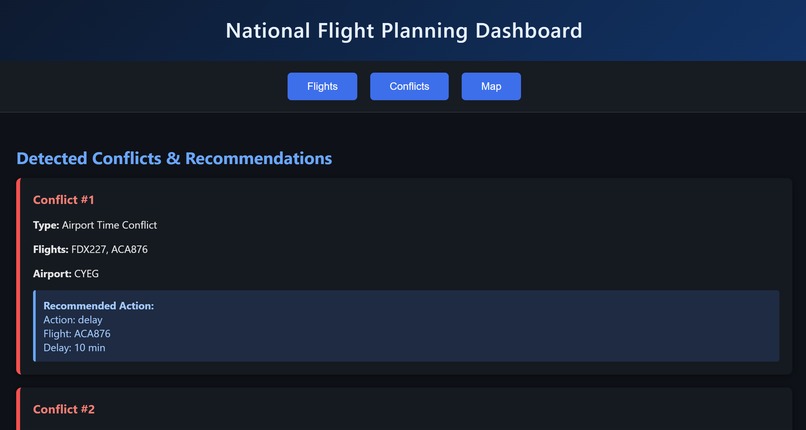
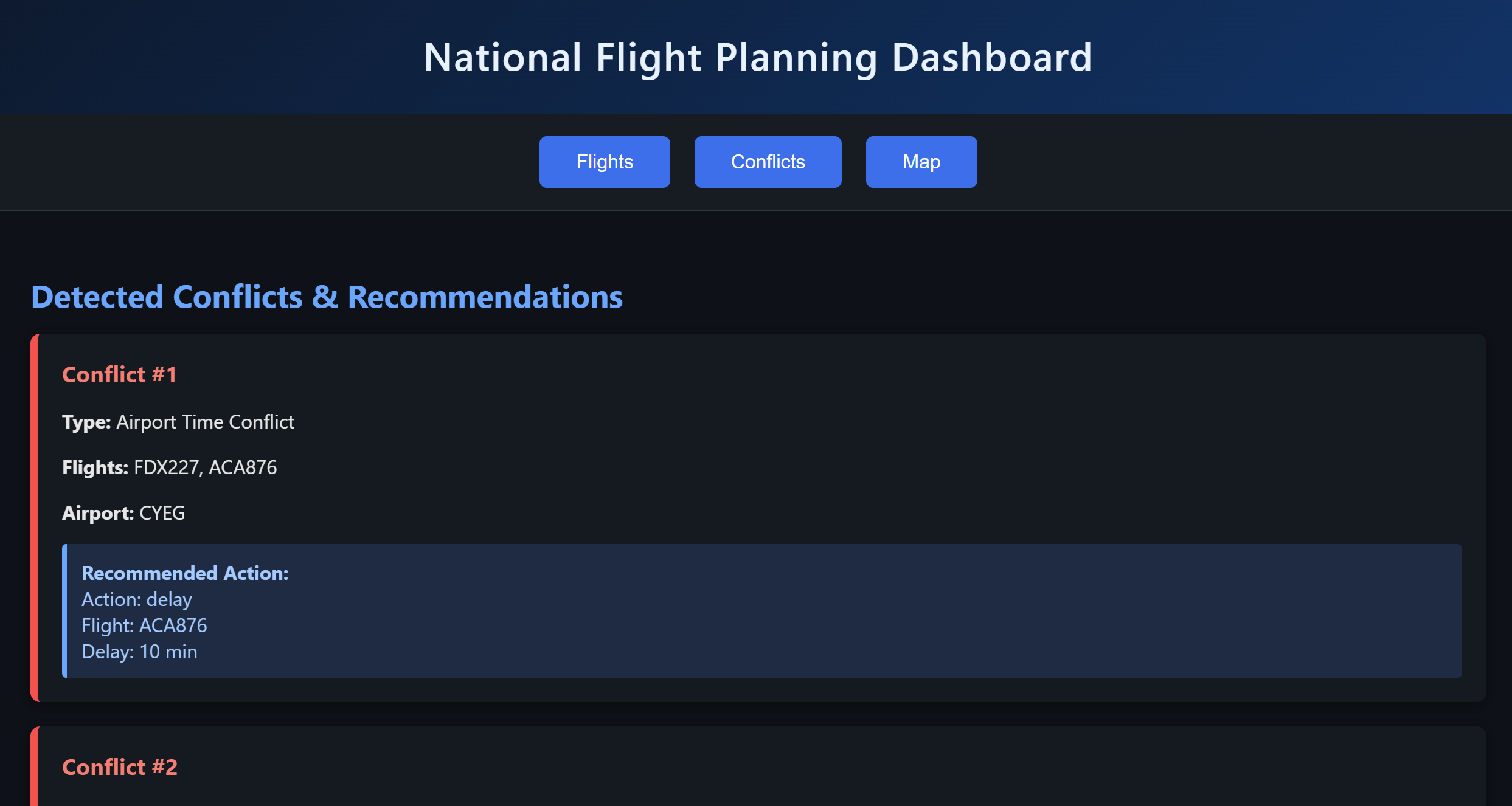
Conflicts page
-
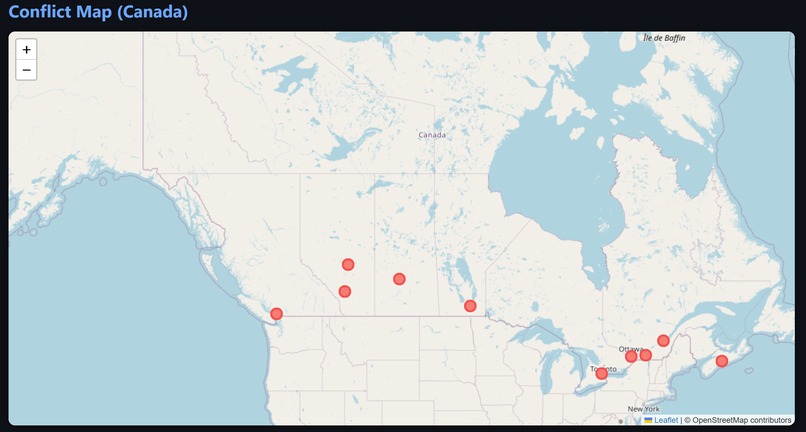
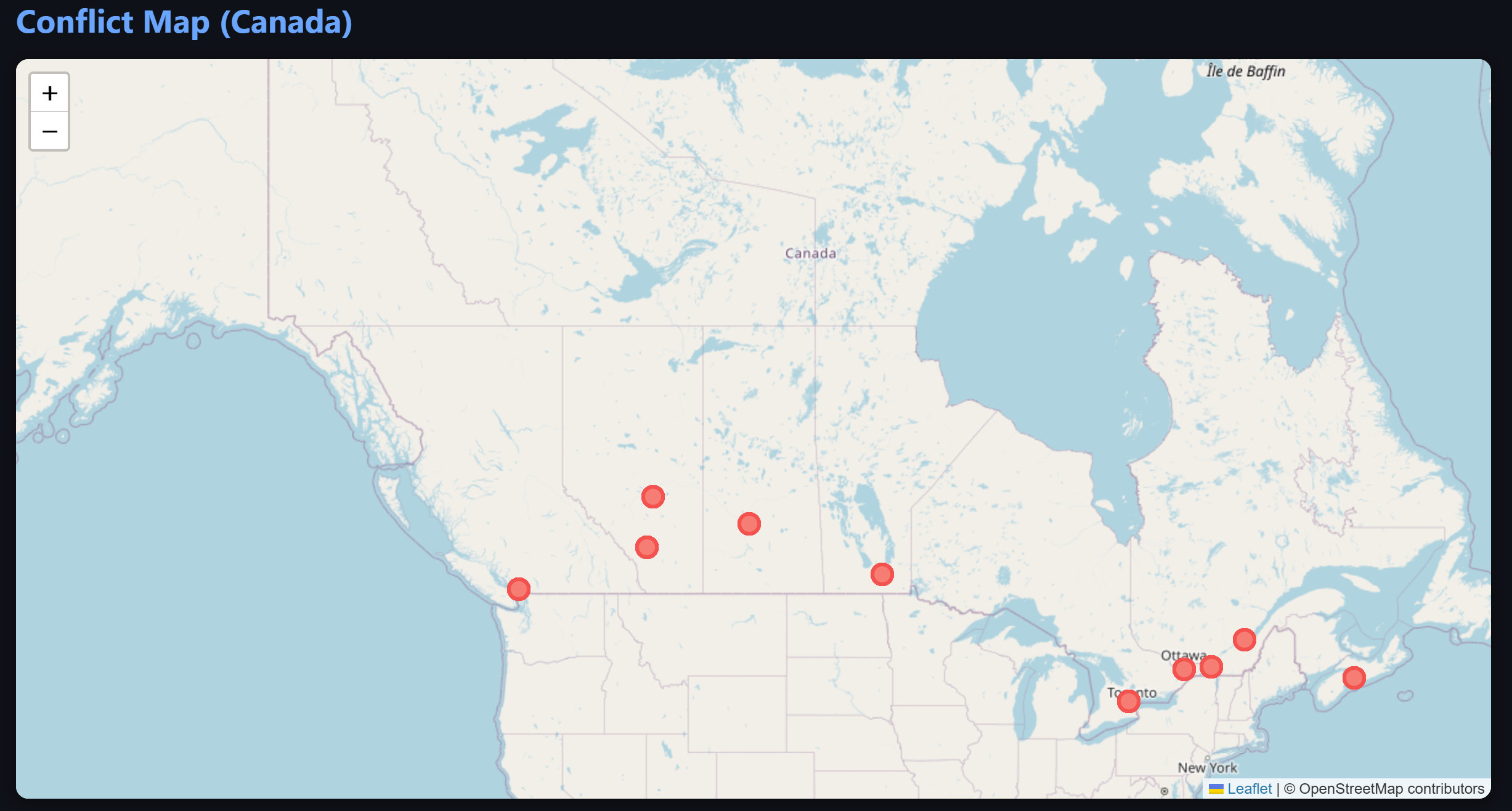
Interactive map
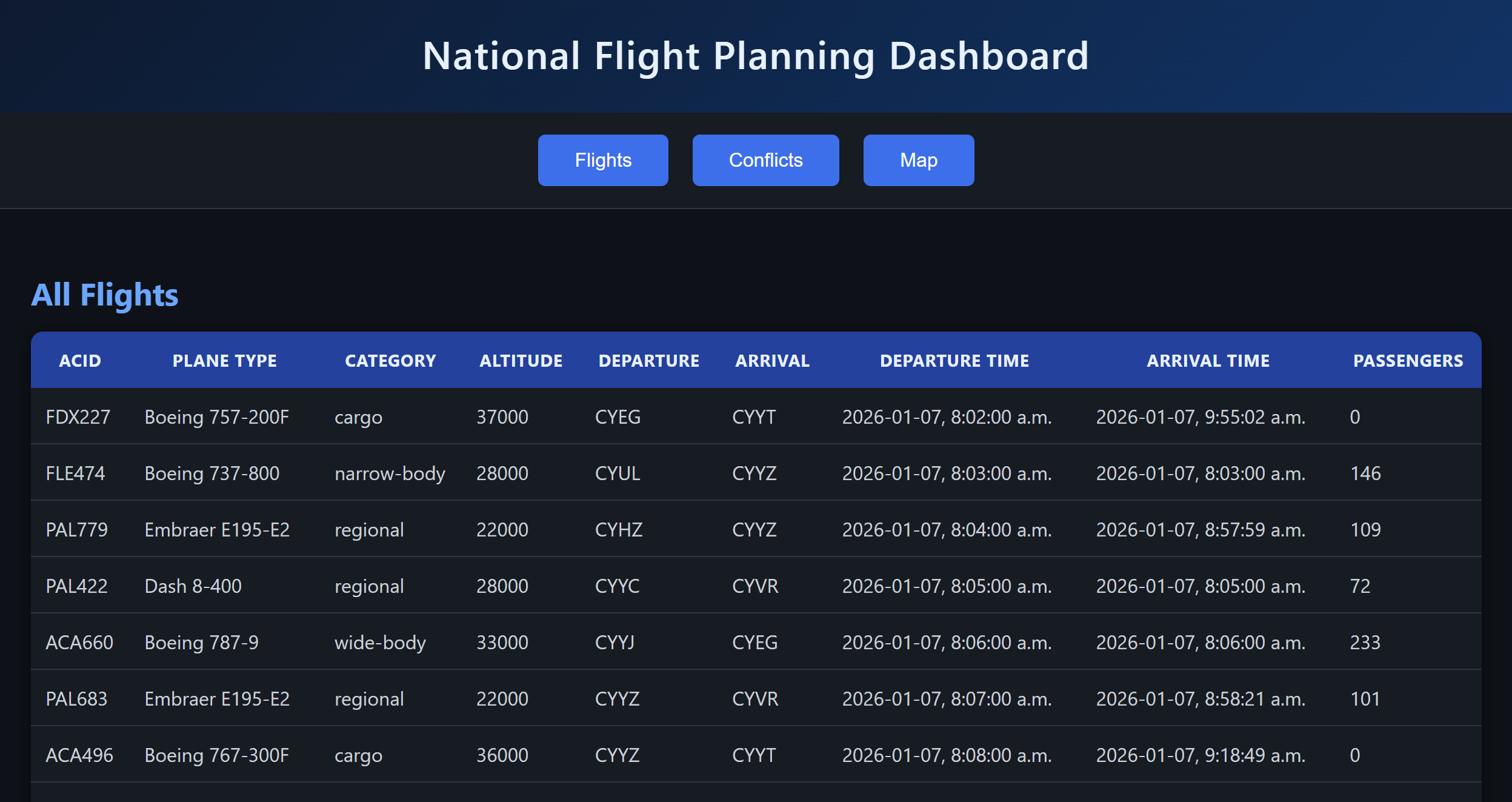
Inspiration
It was inspired by real flight‑planning tools used in aviation and the need to detect conflicts automatically. The dashboard design draws from modern air‑traffic monitoring systems, and the AI component was motivated by the growing use of large language models to support operational decision‑making.
What it does
It functions as a complete flight‑planning decision‑support system. In simple terms, it takes a list of planned flights and automatically analyzes them to find operational issues, then provides both rule‑based and AI‑generated solutions.
How we built it
The system was built by first creating a FastAPI backend that loads flight data, classifies each aircraft, calculates estimated arrival times, and detects operational conflicts. A separate AI module was then developed to analyze the same flights using custom detection logic and an OpenRouter LLM to generate expert recommendations. Meanwhile, a standalone HTML/JavaScript dashboard was built to fetch backend data, display flights and conflicts, and visualize them on an interactive map. Finally, all components were merged into one cohesive project by organizing the backend into modules and adding a unified API endpoint that returns both rule‑based and AI‑generated insights to the UI.
Challenges we ran into
Training the AI to give solutions
Accomplishments that we're proud of
Successfully training the ai and creating a functional website showcasing all the conflicts
What we learned
How to work under pressure and time constraint
What's next for NAV canada challenge
Figure out how to showcase the ai solutions into the website
Built With
- css
- fastapi
- html
- javascript
- openrouter
- python

Log in or sign up for Devpost to join the conversation.