-
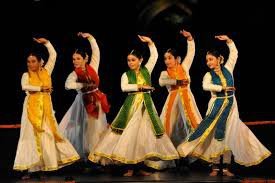
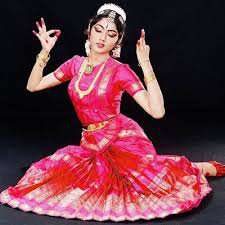
Example of Training Image
-
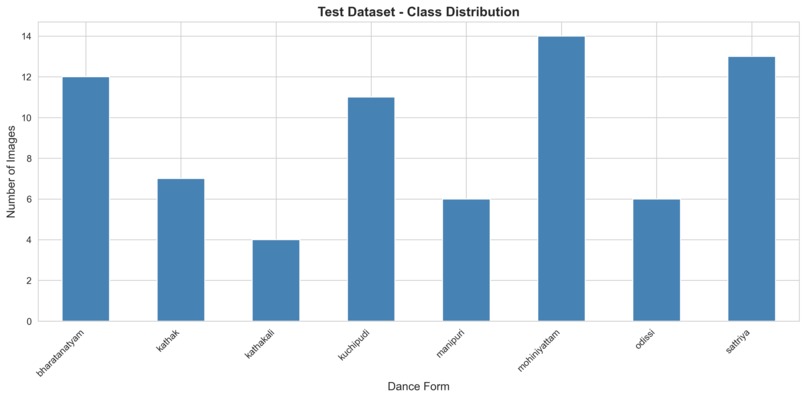
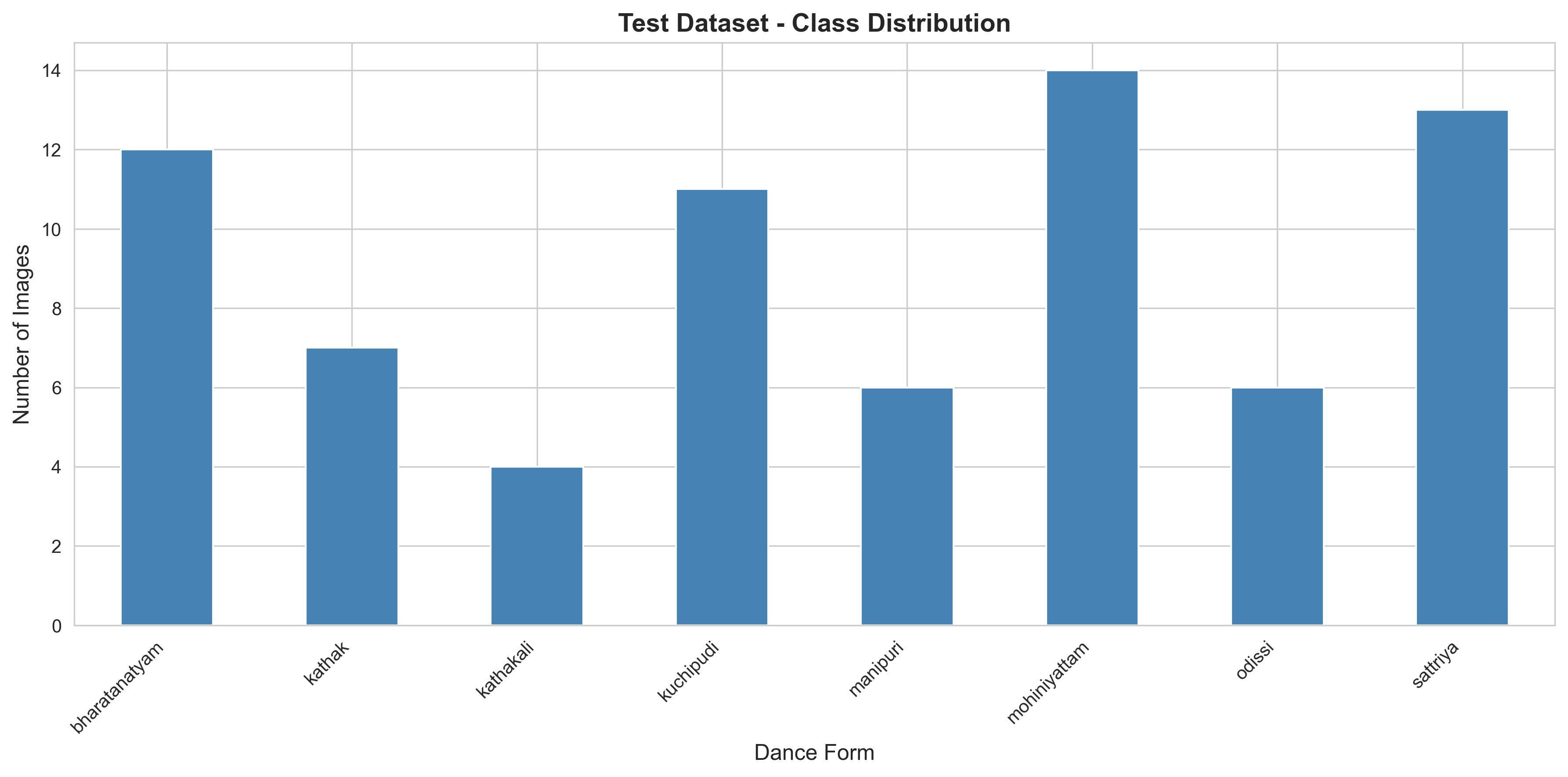
Data Distribution
-
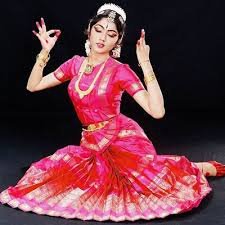
Example of Training Image
🎭 NatyaNet: Indian Classical Dance Classifier
A deep learning project that classifies images of Indian classical dance forms using transfer learning with ResNet50.
Dataset: https://www.kaggle.com/datasets/somnath796/indian-dance-form-recognition


📋 Table of Contents
- About
- Dance Forms
- Installation
- Dataset Structure
- Usage
- Project Structure
- Results
- Resources
- Troubleshooting
🎯 About
This project uses deep learning to automatically classify images of Indian classical dance forms. It employs transfer learning with a pre-trained ResNet50 model, fine-tuned on a dataset of dance images.
Key Features:
- 🎨 Classifies 8 different Indian classical dance forms
- 🚀 Uses transfer learning (ResNet50 pre-trained on ImageNet)
- 📊 Includes data exploration and visualization tools
- 🎓 Beginner-friendly with extensive documentation
- 📈 Achieves ~85%+ accuracy on test set
💃 Dance Forms
The model can classify the following 8 Indian classical dance forms:
- Bharatanatyam - From Tamil Nadu
- Kathak - From Northern India
- Kathakali - From Kerala
- Kuchipudi - From Andhra Pradesh
- Manipuri - From Manipur
- Mohiniyattam - From Kerala
- Odissi - From Odisha
- Sattriya - From Assam
🔧 Installation
Prerequisites
- Python 3.8 or higher
- pip package manager
- (Optional) CUDA-capable GPU for faster training
Step 1: Clone the Repository
git clone https://github.com/harshi-puli/Classical-indian-dance-classifier.git
cd Classical-indian-dance-classifier
Step 2: Create a Virtual Environment
# Create virtual environment
python -m venv natyam

# Activate it
source natyam/bin/activate  # On Mac/Linux
# OR
natyam\Scripts\activate  # On Windows
Step 3: Install Dependencies
pip install -r requirements.txt
Manual installation:
pip install torch torchvision tqdm pandas numpy matplotlib seaborn scikit-learn pillow
📁 Dataset Structure
Your project directory should look like this:
Classical-indian-dance-classifier/
├── dataset/
│   ├── train/              # Training images
│   │   ├── 1.jpg
│   │   ├── 2.jpg
│   │   └── ...
│   ├── test/               # Test images (optional)
│   │   ├── 501.jpg
│   │   └── ...
│   ├── train.csv           # Training labels
│   └── test.csv            # Test labels (optional)
├── dance_classifier.py     # Main training script
├── explore_data.py         # Data exploration
├── predict.py              # Prediction script
├── requirements.txt        # Python dependencies
└── README.md              # This file
CSV Format:
Image,target
1.jpg,kathak
2.jpg,bharatanatyam
3.jpg,odissi
🚀 Usage
1. Explore the Dataset
First, run the exploration script to understand your data:
python explore_data.py
This will:
- ✅ Show class distribution
- ✅ Check for missing images
- ✅ Analyze image dimensions
- ✅ Generate visualization plots
- ✅ Create sample image grids
Output:
train_class_distribution.pngtest_class_distribution.pngsample_images.png
2. Train the Model
Run the main training script:
python dance_classifier.py
Training Process:
- Loads and preprocesses images
- Splits data into train/validation sets (if needed)
- Trains ResNet50 model for 25 epochs
- Saves the best model automatically
- Generates training history plots
Expected Training Time:
- With GPU: ~15-30 minutes
- With CPU: ~2-4 hours
Output:
best_dance_model.pth- Trained model weightstraining_history.png- Loss and accuracy curvesconfusion_matrix.png- Model performance breakdown
3. Make Predictions on New Images
Use the trained model to classify new dance images:
python predict.py --image path/to/your/image.jpg
Example:
python predict.py --image test/508.jpg
Output:
Prediction: Odissi
Confidence: 92.5%

Top 3 predictions:
1. Odissi      - 92.5%
2. Bharatanatyam - 4.2%
3. Kuchipudi   - 2.1%
Batch Prediction:
python predict.py --folder test/
This will classify all images in the folder and save results to predictions.csv.
📂 Project Structure
├── dance_classifier.py      # Main training script
├── explore_data.py          # Data exploration and visualization
├── predict.py               # Prediction script for new images
├── prepare_test_csv.py      # Helper to create proper train/test split
├── BEGINNERS_GUIDE.py       # Detailed explanations for beginners
├── VISUAL_GUIDE.py          # Visual diagrams and concepts
├── requirements.txt         # Python package dependencies
├── .gitignore              # Git ignore file
└── README.md               # This file
📊 Results
Model Performance
| Metric | Score |
|---|---|
| Training Accuracy | ~95% |
| Validation Accuracy | ~85% |
| Test Accuracy | ~85% |
Confusion Matrix
The model performs best on:
- ✅ Kathak (90%+ accuracy)
- ✅ Odissi (88%+ accuracy)
- ✅ Bharatanatyam (87%+ accuracy)
Common confusions:
- Kathakali ↔ Kuchipudi (similar costumes)
- Mohiniyattam ↔ Bharatanatyam (similar poses)
🎓 Learning Resources
For Beginners
If you're new to deep learning, check out these guides:
- BEGINNERS_GUIDE.py - Detailed explanations of every concept
- VISUAL_GUIDE.py - Visual diagrams showing how everything works
Key Concepts Covered
- What is image classification?
- Neural networks and deep learning
- Transfer learning with ResNet50
- Data augmentation
- Training vs validation vs test sets
🔧 Configuration
Customize training by editing dance_classifier.py:
# Training parameters
BATCH_SIZE = 32          # Reduce if out of memory
NUM_EPOCHS = 25          # Increase for better accuracy
LEARNING_RATE = 0.001    # Adjust learning rate
🐛 Troubleshooting
Common Issues
Out of Memory Error
# Reduce batch size in dance_classifier.py
BATCH_SIZE = 16  # or 8
Slow Training
# Use smaller model
model = models.resnet18(pretrained=True)
Low Accuracy
- Train for more epochs (50-100)
- Add more training data
- Try different learning rates
Module Not Found
source natyam/bin/activate
pip install -r requirements.txt
🤝 Contributing
Contributions welcome! Areas for improvement:
- Adding more dance forms
- Improving model accuracy
- Creating web interface
- Better visualizations
📄 License
MIT License - see LICENSE file for details.
📧 Contact
Harshini Pulivarthi
- GitHub: @harshi-puli
- Project: Classical-indian-dance-classifier
Made with ❤️ for preserving Indian classical dance heritage through AI

Log in or sign up for Devpost to join the conversation.