-
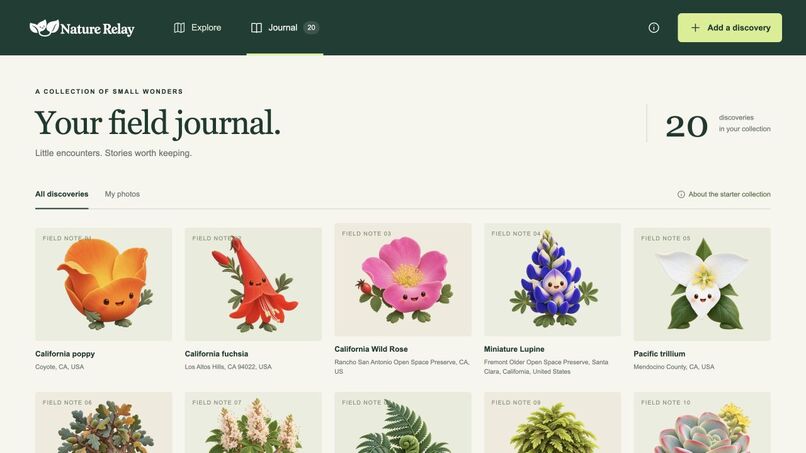
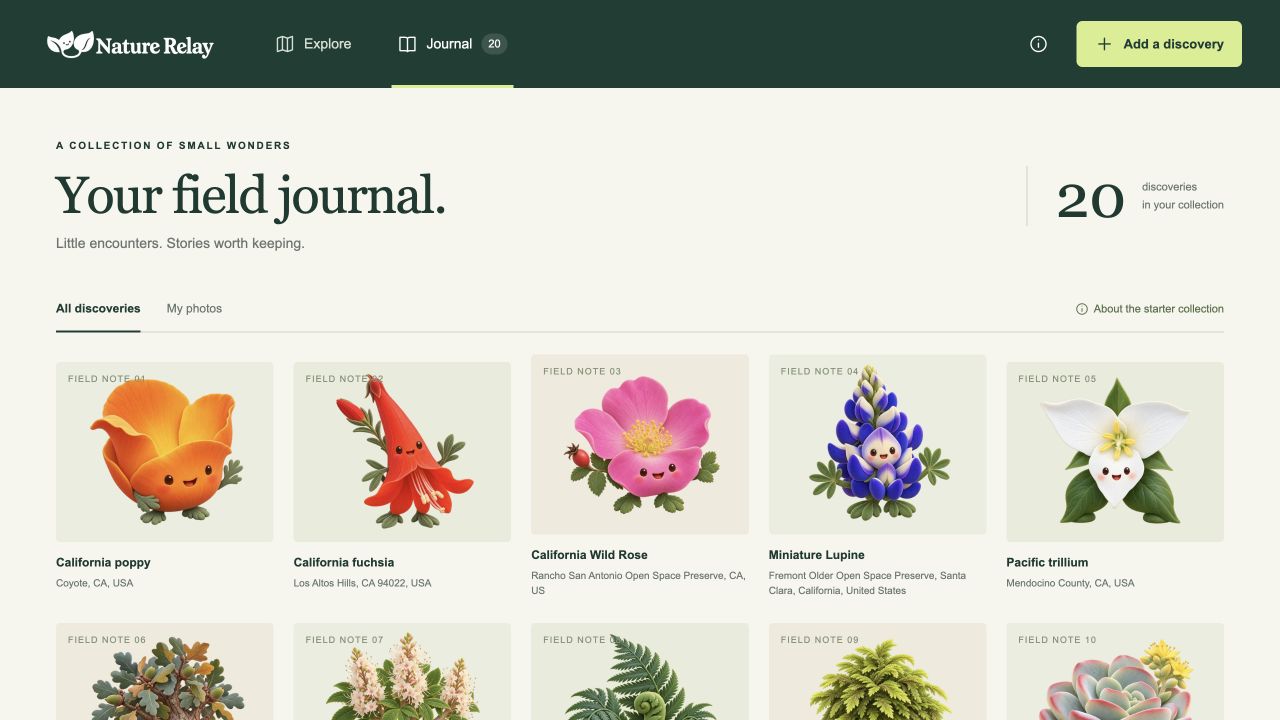
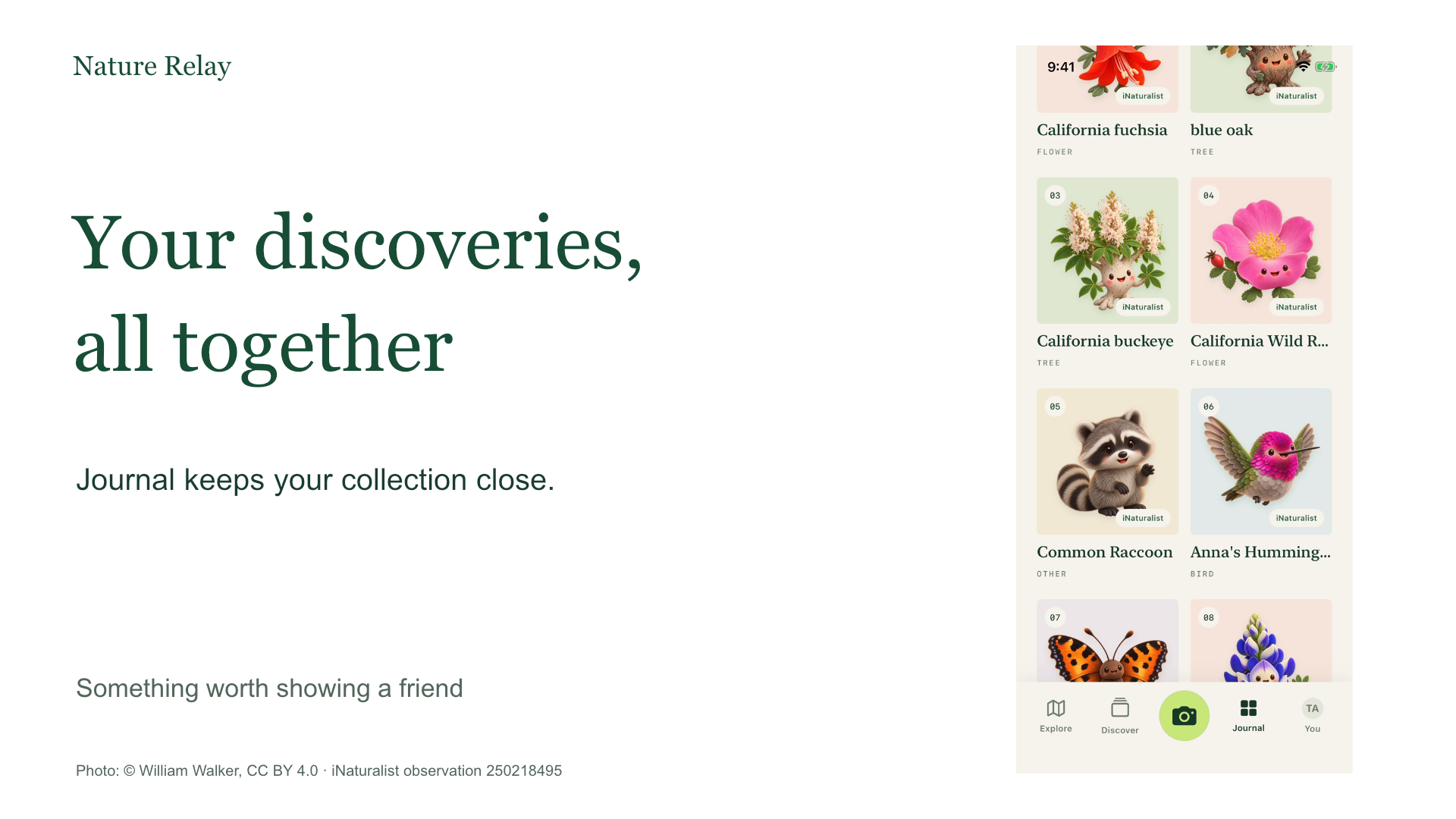
Web app: a starter Journal with 20 example companions. Your own photos stay in this browser.
-
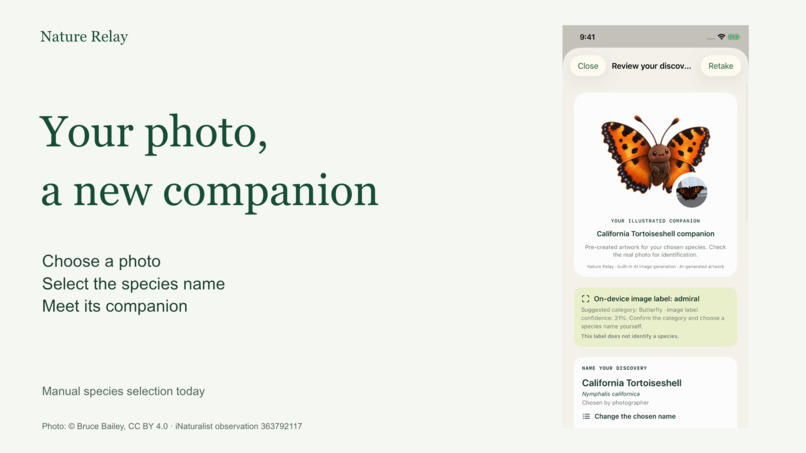
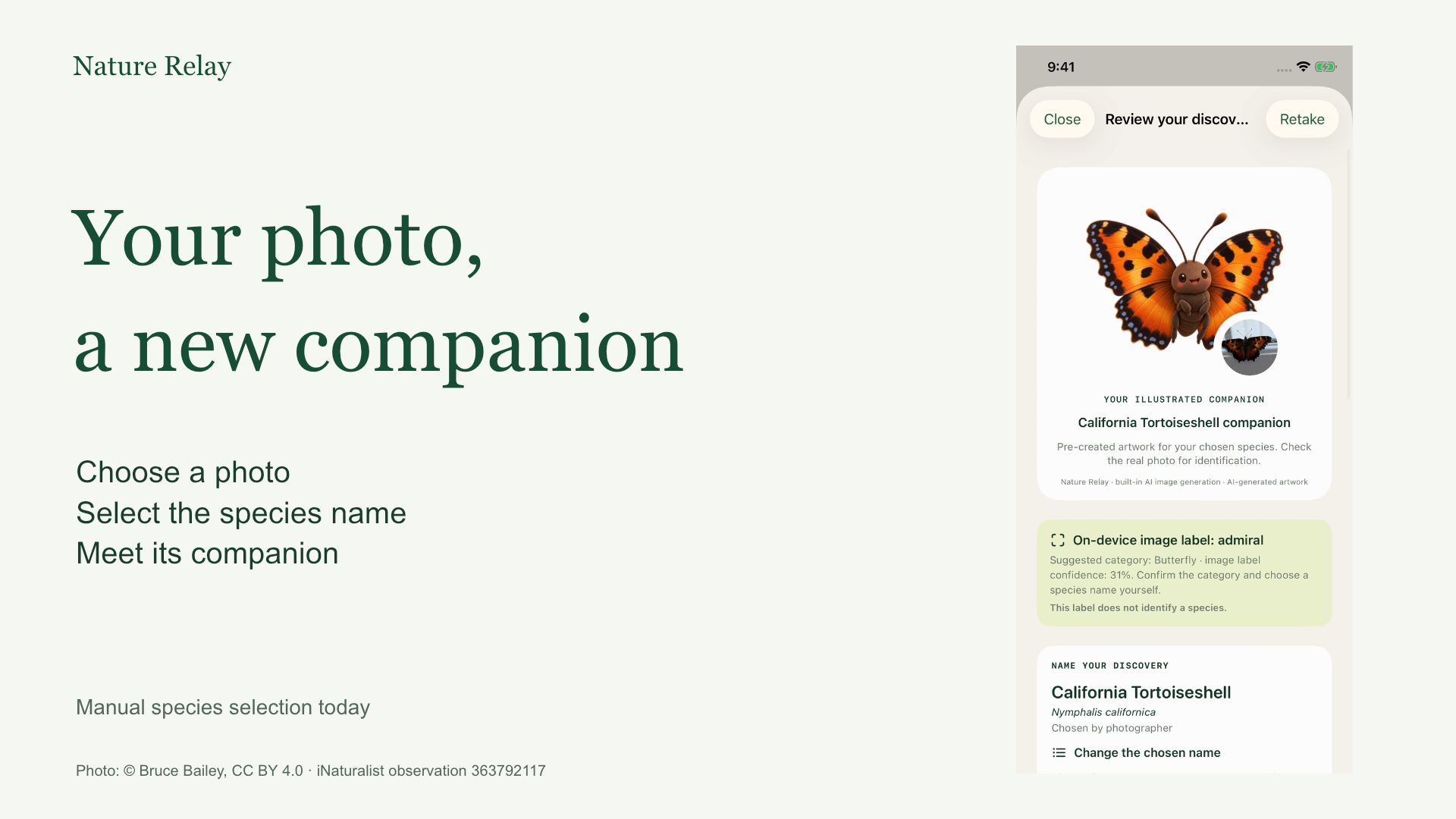
Add a photo and choose the species manually to display its prepared AI companion.
-
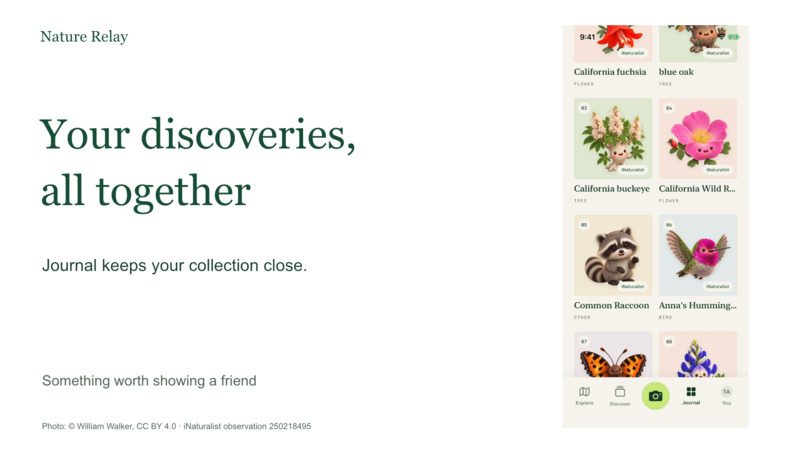
The iPhone Journal keeps collected companions together with their original photographs.
-
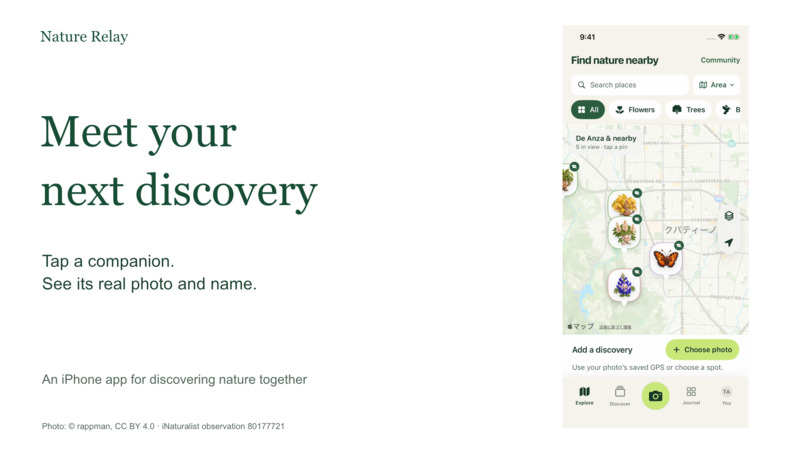
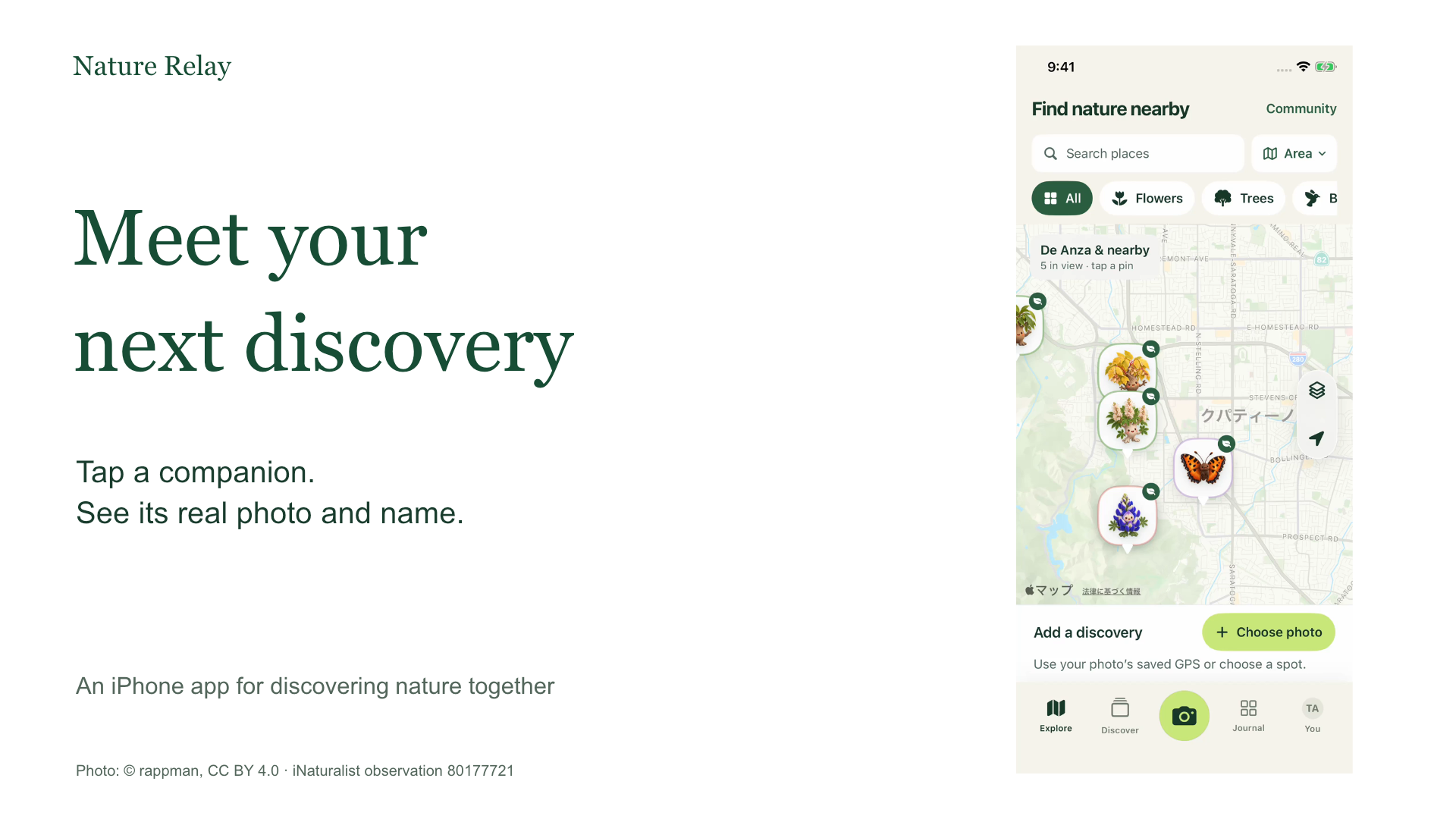
Explore the map and tap a character to see its real photo, species name and source.
-
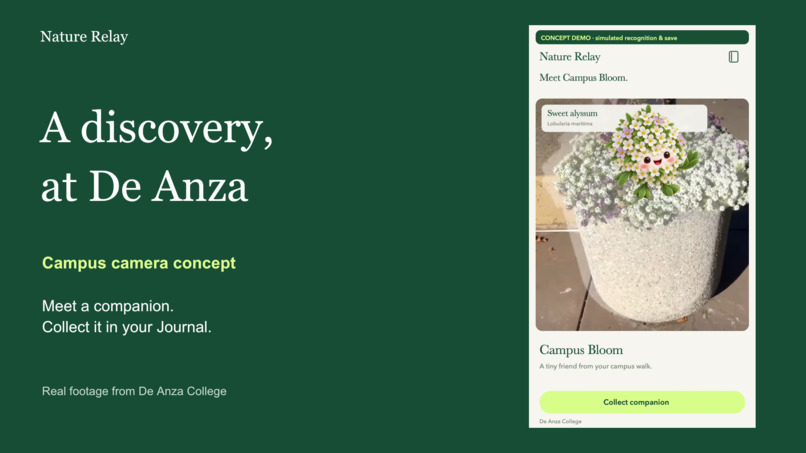
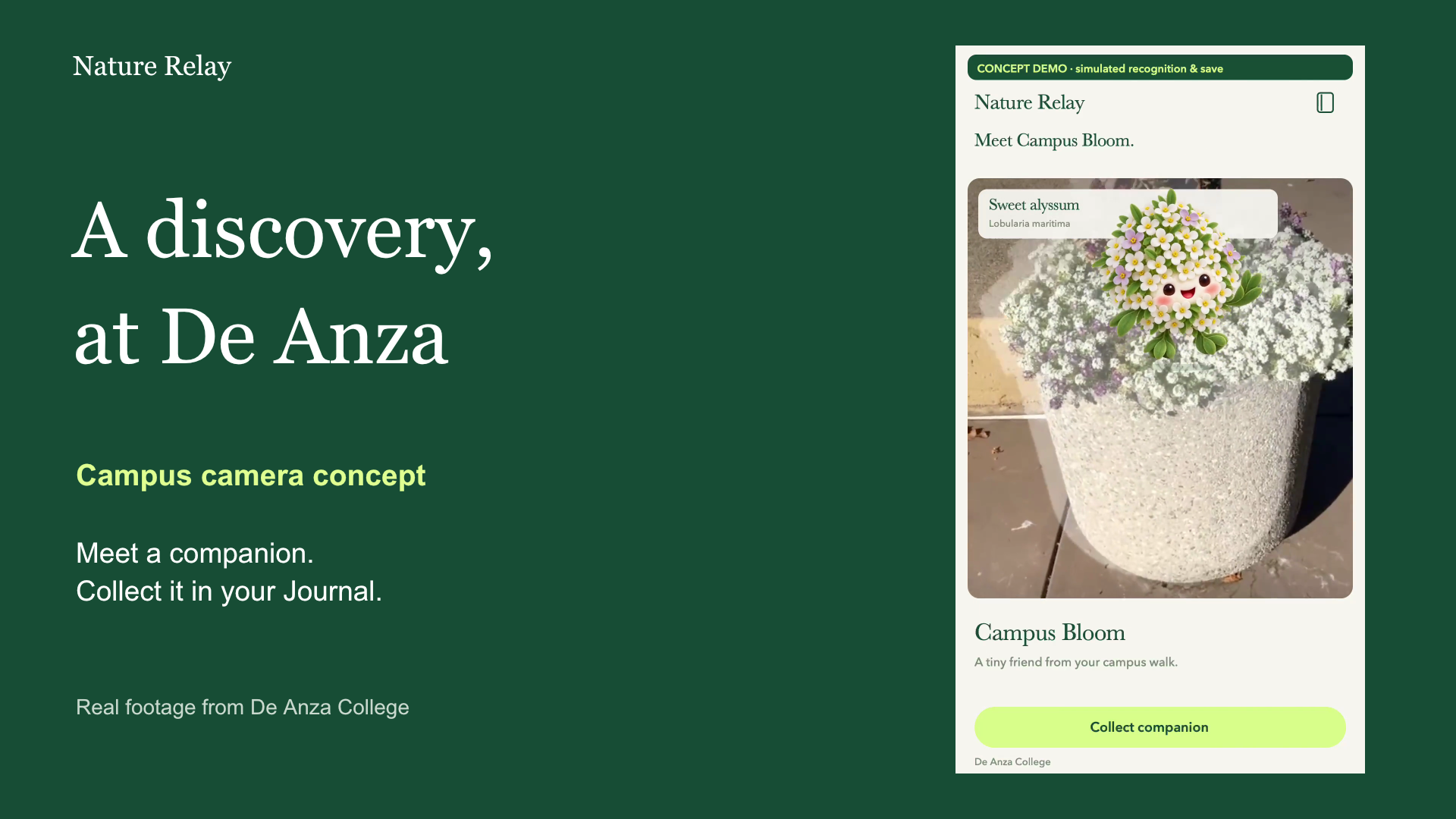
De Anza camera CONCEPT: simulated recognition, character overlay, Collect and Journal result.
-
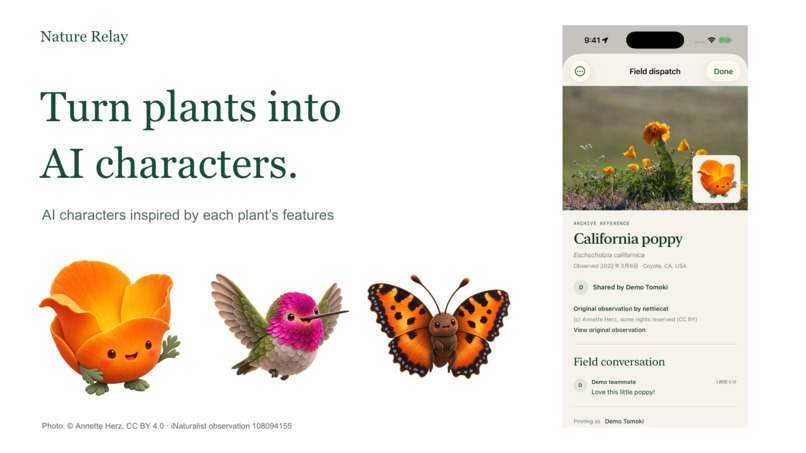
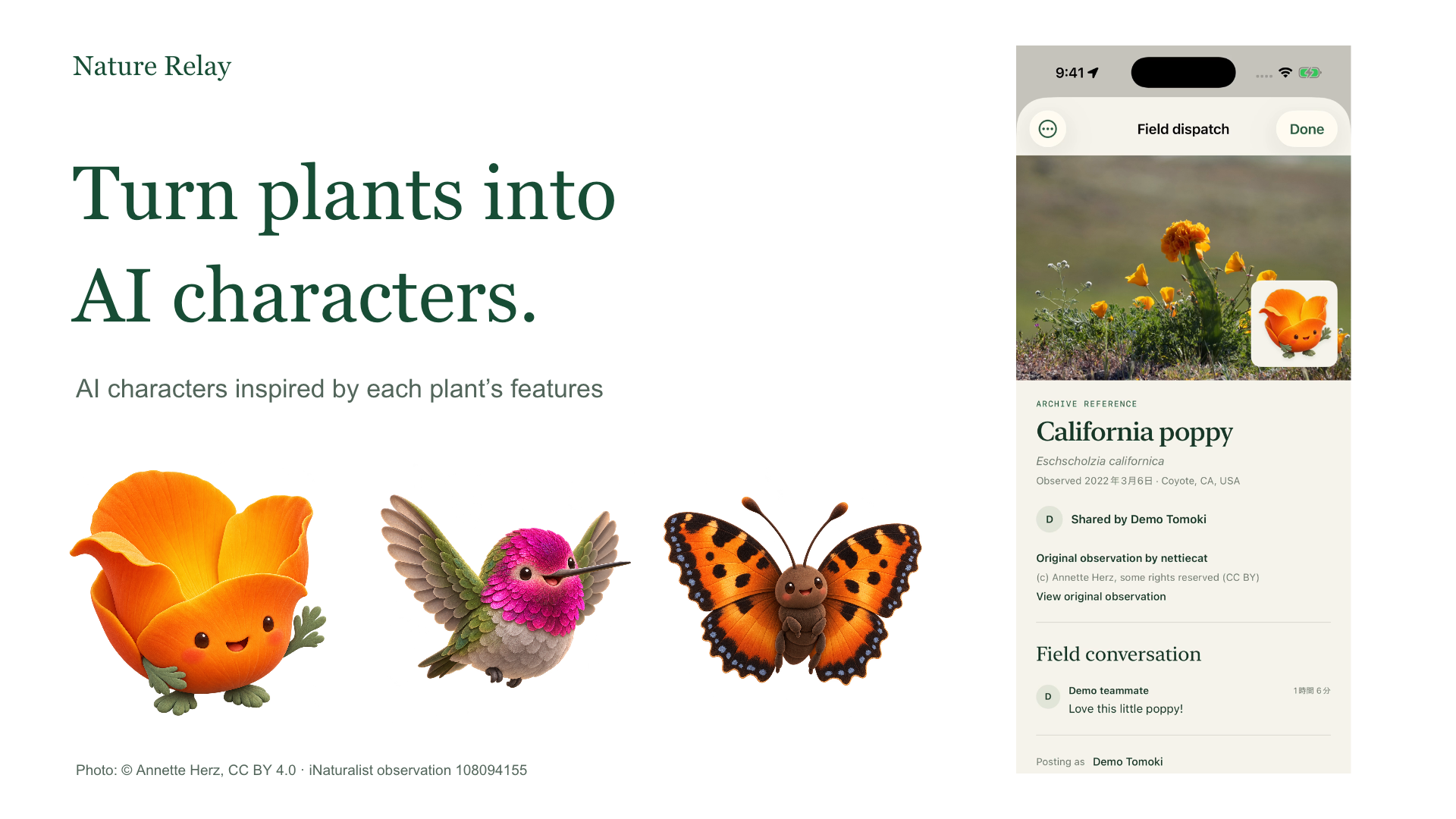
AI-created character art preserves species features. Artwork is prepared in advance.
Try Nature Relay
Inspiration
How much nature do you notice on your own campus? We wanted a flower or bird to become a reason to stop, look closer, and say hello. Nature Relay connects nature and modern life through a familiar habit: collecting and sharing something you love. Our goal is to make curiosity about nearby nature feel approachable, especially for students who are new to a campus or city.
What it does
Nature Relay is an iPhone app and a working browser app. Explore illustrated companions on a map, tap one to see its real source photograph and species name, and collect it in a private Journal. Add your own photo, choose the species, and see its matching companion beside your discovery. The iPhone app can suggest broad categories and use photo date/location metadata when available; species selection remains manual. The browser app also supports sharing public species links. Optional native community posts, comments, and follows use a moderated backend. Browser and iPhone Journals are separate local collections.
How we built it
The native app uses SwiftUI, MapKit, Photos, Core Location, AVFoundation, Vision, and a pretrained MobileNet Core ML model. We made species-specific character artwork with an AI image tool during development and bundled it for fast, offline display. The browser version uses JavaScript, HTML/CSS, Leaflet, browser storage, and OpenStreetMap tiles, hosted on GitHub Pages. Cloudflare Workers, TypeScript, and D1 support the optional native community API. A licensed California observation archive supplies real photographs, dates, approximate areas, and credits for exploration.
Challenges we ran into
We had to connect a playful character to a real organism without implying that a cute illustration proves identification. We kept original photos and attribution visible, separated historical archive records from personal discoveries, and made species selection explicit. We also worked on readable character maps, consistent artwork across screens, persistent photo collections, and clear boundaries between working features and our camera concept.
Accomplishments that we are proud of
We built an interactive iPhone and web experience with a map-to-photo-to-Journal flow, distinct companions tied to species, and photo import. The public web app can be tried without an account or paid API key. Its starter Journal is labeled as examples. We preserved individual source-photo licenses and built privacy-conscious local photo storage. We also filmed a camera concept at De Anza to communicate the experience we want to build next.
What we learned
A small emotional connection can make an unfamiliar species worth a second look. We learned to design around that first moment of curiosity, then keep the real photo, name, and discovery context close by. We also learned that honest feature boundaries and visible photo provenance are part of a convincing demo.
What's next for Nature Relay
Next, we want to validate the experience with students, connect a reliable species-identification service, and explore camera character overlays. We would like friends to complete small campus collections together and use discoveries as conversation starters during orientation, walks, and visits to a new place. Shared collection progress and cross-device Journal synchronization are future work.
AI tools and reused resources
We used AI coding assistance (Codex/ChatGPT) and an AI image-generation tool during development. Companion illustrations were generated in advance and are selected by species; this release does not generate new characters at runtime or automatically confirm exact species. The De Anza sweet-alyssum camera clip is labeled CONCEPT DEMO: recognition, character overlay, collection, and Journal result are simulated. Apple MobileNet is a pre-existing pretrained model. The archive contains 100 historical California observations with 68 CC BY 4.0 and 32 CC0 photographs; individual credits, observation links, and licenses are retained. Leaflet, OpenStreetMap, credited Twemoji fallback artwork, Apple frameworks, and Cloudflare tooling are pre-existing third-party resources. See the repository README and asset manifests for details.

Log in or sign up for Devpost to join the conversation.