Project Inspiration:
The inspiration for creating this website stemmed from a deep appreciation for nature and the desire to make botanical knowledge accessible to everyone. Often, people come across beautiful or intriguing plants and wonder about their names, characteristics, and care instructions. This curiosity led to the idea of a platform where users can easily identify and learn about plants by simply uploading an image. The goal was to bridge the gap between people and nature, fostering a greater understanding and appreciation of the plant world.
What I Learned:
Throughout the development of this project, I gained invaluable insights into various fields. I delved deeper into plant biology to ensure accurate information was provided. I also enhanced my skills in web development, image recognition, and machine learning. Understanding user experience (UX) design principles was crucial to make the tool intuitive and user-friendly. Moreover, I learned the importance of integrating databases and APIs to fetch and display relevant plant information seamlessly.
How I Built the Project:
Conceptualization: I started by outlining the core features of the website, focusing on plant identification and information dissemination.
Technology Stack:
Frontend: Used HTML, CSS, and JavaScript for a responsive and engaging user interface.
Backend: Implemented with Python, Node.js and Express.js to handle image uploads and processing.
Image Recognition: I integrated the PlantNet API into the project for plant identification purposes. This API provided robust functionality for accurately identifying plant species based on uploaded images, enhancing the platform's capability to deliver detailed and reliable information about various plants.
API Integration: Integrated the PlantNet API into the project for plant identification purposes and Gemini API to get more plant information.
Features
🐾 Plant Identification:
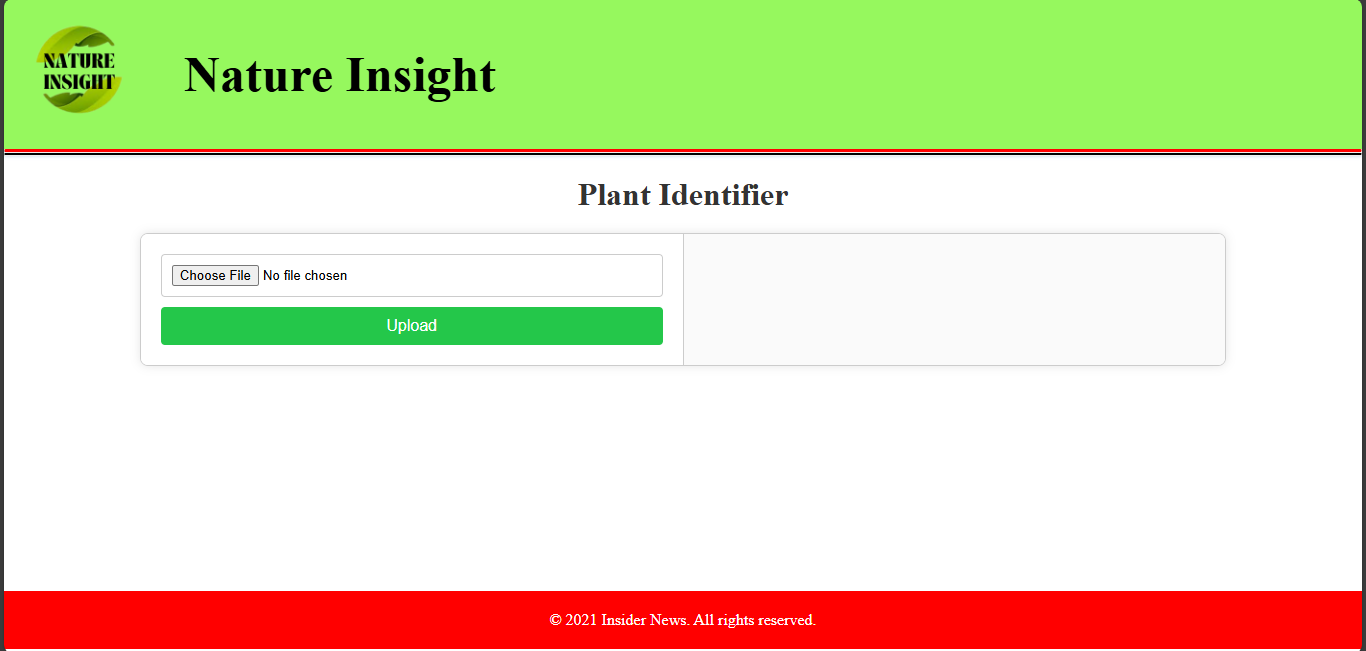
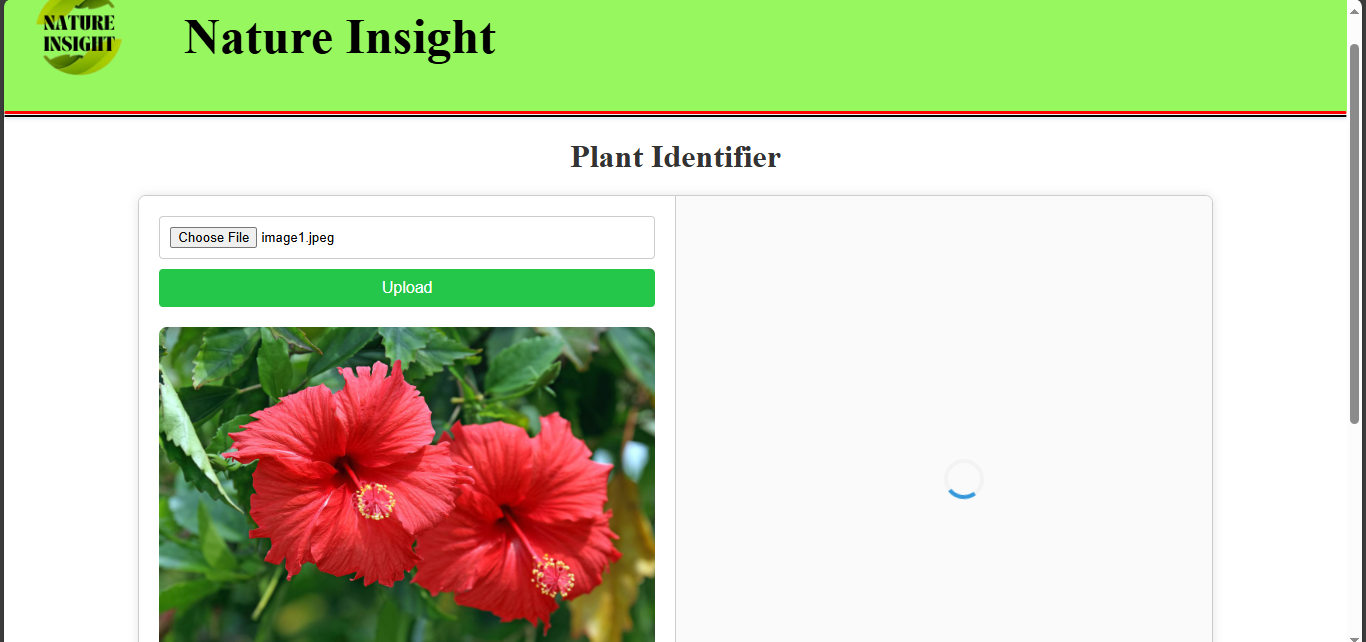
Users can easily upload images of plants they encounter.
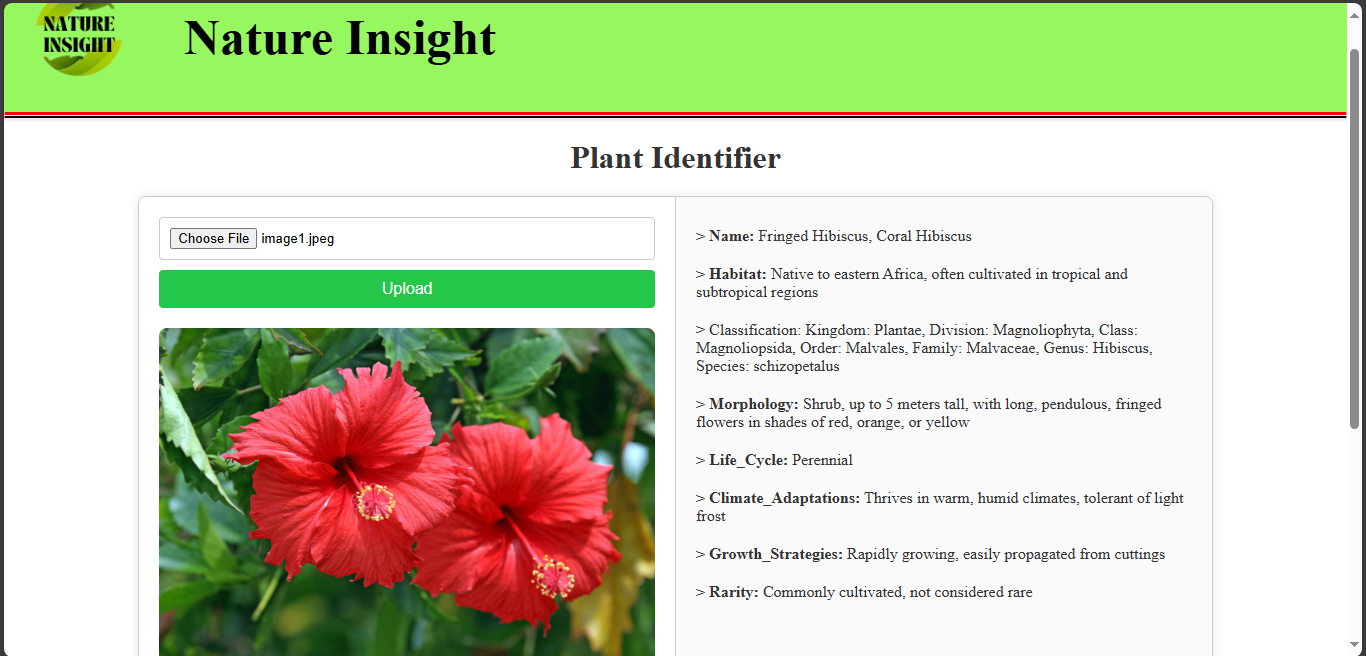
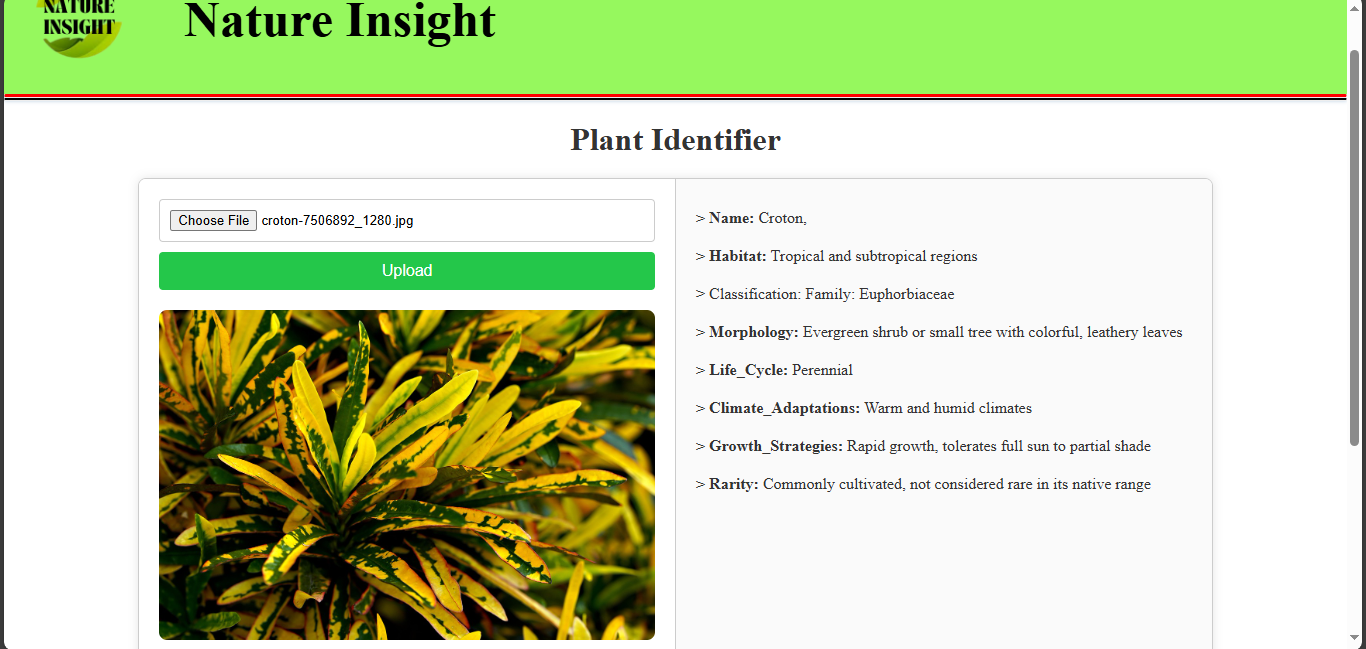
The platform uses the advanced PlantNet API to analyze the uploaded images and accurately identify the plant species.
The identification process is quick and user-friendly, providing results within seconds.
🌱 Detailed Plant Information:
Once a plant is identified, the platform provides comprehensive information about the species.
Information includes Scientific Name, Common Names, Native Habitat, Classification, Morphology, Life Cycle, Climate Adaptations, Growth Strategies and Rarity status.
Users can learn about the plant’s ecological role, uses, and conservation status.
📚 Educational Resources:
The platform includes a section dedicated to educational content, such as articles and guides on plant care.
Users can learn about different plant species and their roles in the ecosystem.
🌐 Community Building:
- Share your findings and collaborate on conservation projects.
Challenges Faced:
Seamlessly integrating the PlantNet API and Gemini API with the backend and ensuring smooth communication between the frontend and backend components posed technical challenges.
Despite these challenges, the project was immensely rewarding. This website not only serves as an educational tool but also as a bridge connecting people with the fascinating world of plants.

Log in or sign up for Devpost to join the conversation.