-
-
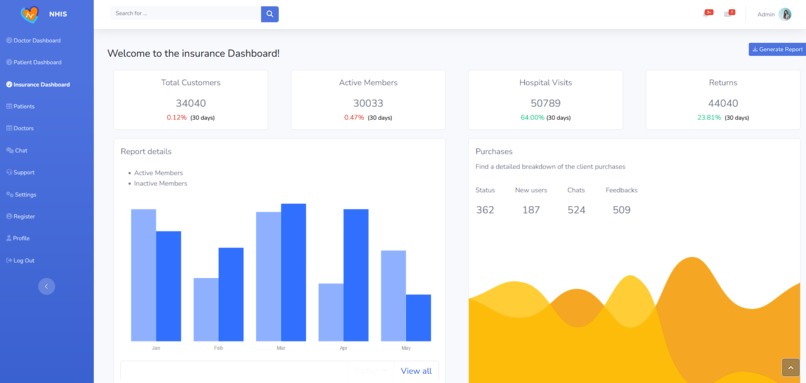
insurance dashboard
-
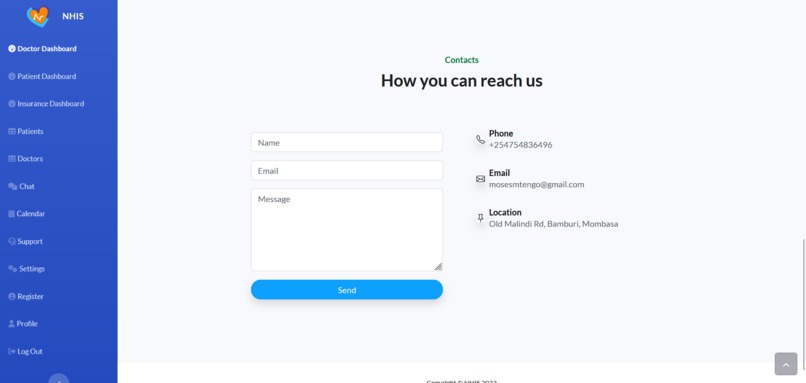
support page
-
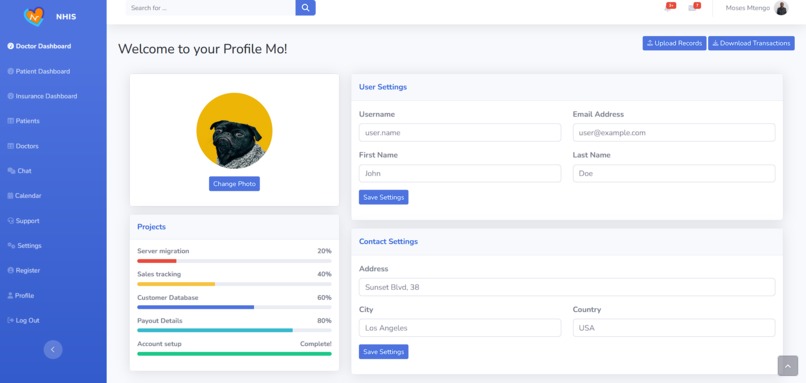
profile page
-
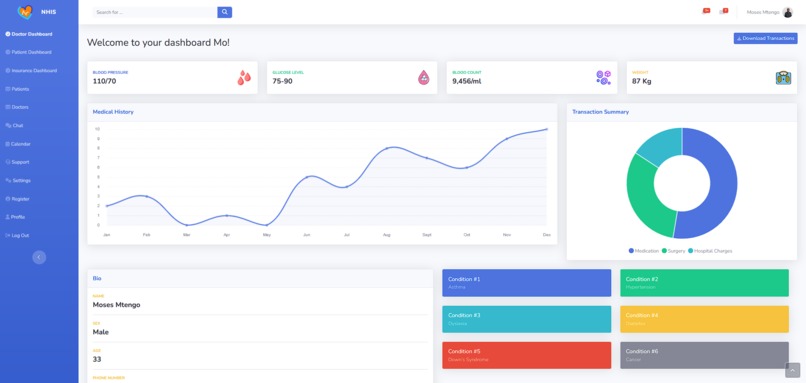
patient dashboard
-
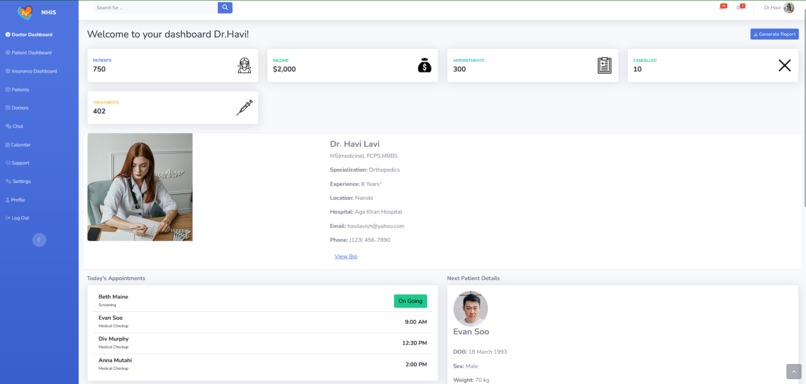
doctor dashboard
-
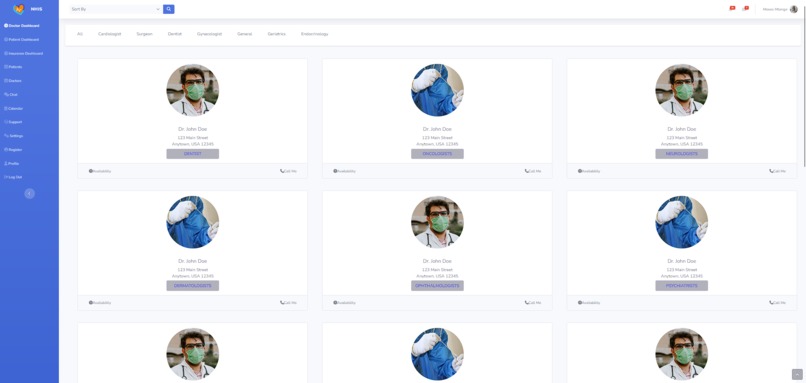
doctor list page
-
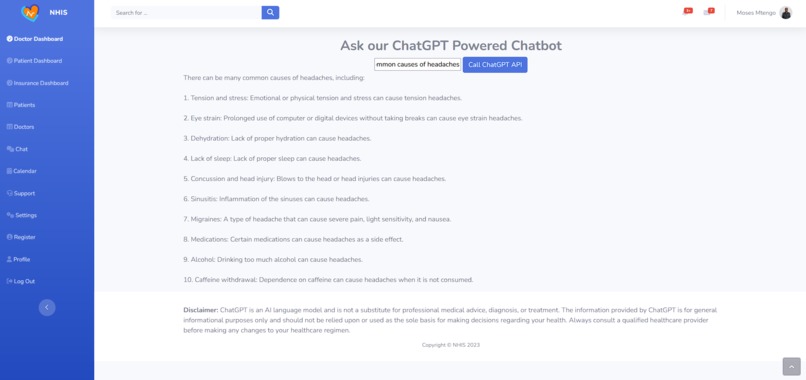
chat page
-
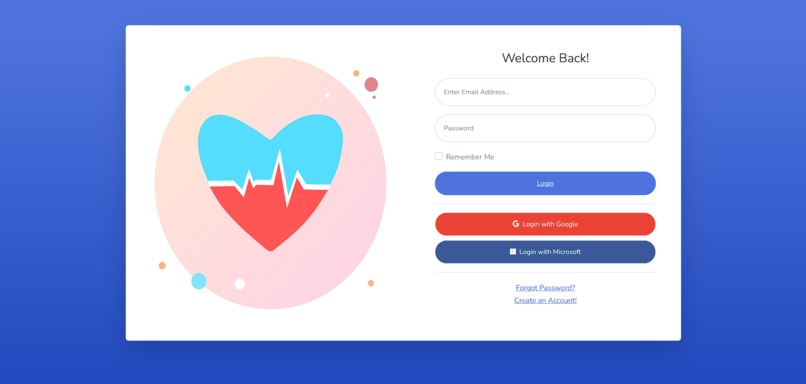
login page
-
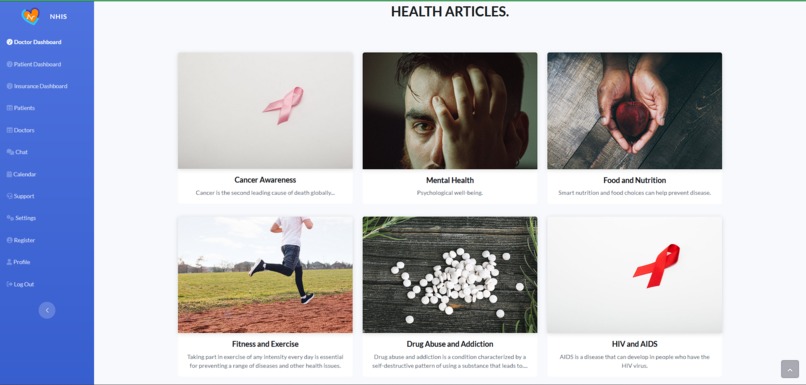
support page
-
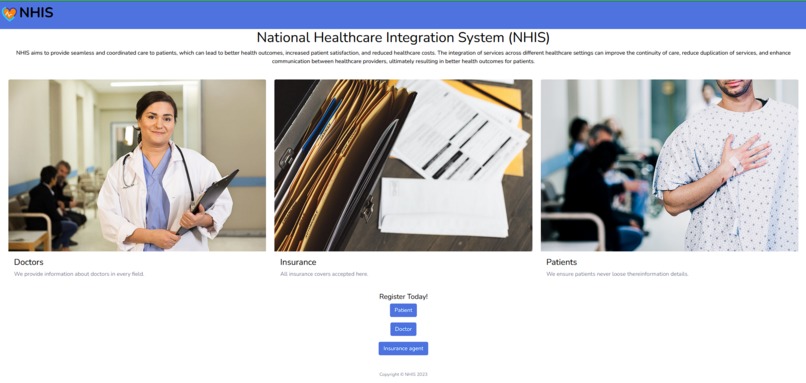
landing page
-
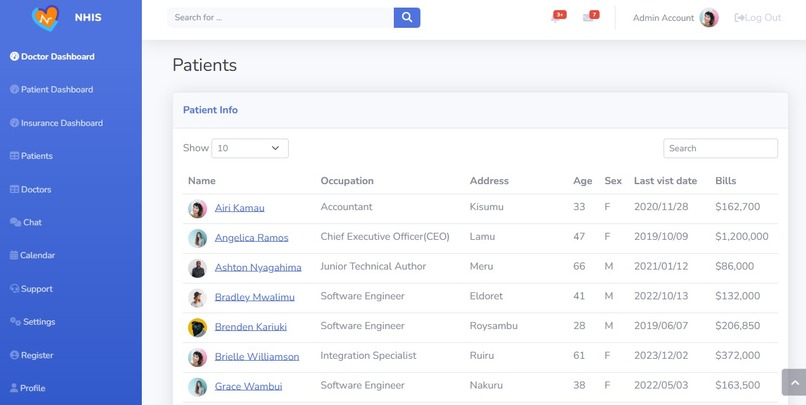
patient list page


Inspiration
The National Healthcare Integration System is a proposed solution to the fragmented and disjointed healthcare system that currently exists in our country. The current system is inefficient, with a lack of information sharing between healthcare facilities leading to duplicated efforts, increased costs, and potential health risks for patients.
What it does
The goal of this project is to create a centralized and integrated healthcare management system that can be used by all hospitals across the country. The system will bring together critical patient information, such as health records, medical history, lab results, and prescribed medications, and make it accessible to authorized healthcare providers in real-time. This will eliminate the need for paper records which are prone to damage and losses, consume a lot of space, expensive to purchase & difficult to share and ensure that medical professionals have access to complete and up-to-date information, regardless of where a patient has received treatment in the past.
The system will also streamline the processes involved in patient care, from appointment scheduling to billing, resulting in increased efficiency and cost savings for healthcare providers. Additionally, the system will provide valuable insights into patient health and healthcare utilization, allowing for informed decision making and continuous improvement of healthcare services.
We also aim to link the system with the National Health Insurance Fund(NHIF) and other Health Insurance Firms to eliminate the need for lengthy visit’s to the respective offices and lengthy paperwork for clearance when in need of treatment.
How we built it
The National Health Integrated System has been designed as a web application with 5 users in mind; patients, doctors, hospitals, health insurance providers and the ministry of health.
Upon successful sign up and login, the users are directed to their dashboard from which they can view vital information regarding their health for patients and service metrics for the other users. They can also be able to view upcoming appointments, upload health records, generate reports and download a transaction summary.
The patients can also be able to search for, contact and book an appointment with a doctor from the doctor directory while doctors can be able to view, contact and upload health records for patients they are caring for, from the patient directory.
Challenges we ran into
One of the main challenges we encountered was in gaining verifiable health data/statistics around the adoption of health records across the country and the number of patients affected by loss or damage of health records.
Another challenge we faced was while linking the front-end with the back-end through the APIs that we had deployed to Azure, when we queried data using the APIs locally everything worked fine, but after pushing we kept on getting a 502 Bad Gateway for some time before eventually solving the issue.
Accomplishments that we're proud of
We are proud of turning this idea that we had into reality, the journey from conception of the idea to now having a working prototype wasn't easy so we are happy about that, also building a project of this magnitude within a limited time-frame, which normally has an entire team of engineers working on it in the established software companies is something we are proud of.
What we learned
We learnt that cloud resources don't come cheap and if you aren't going to immediately make use of the resources, you should either de-provision them or adjust your compute settings to minimize the consumption of your cloud credits.
We also learnt that physical health records/paperwork have a lot of disadvantages and in some cases they even prevent the users from accessing key government services e.g. people who have lost the immunization card face a lot of struggles when applying for birth certificates.
What's next for National Health Integrated System (NHIS)
When the project is approved, it can be perfected and through the Ministry of Health in Kenya we can roll it out in some of the major government hospitals. The government is working on the automation of health records and the roll out of the Universal Health Coverage scheme by 2030 and we are ready to partner with them to help them achieve that goal.
On the technical side, we look forward to utilizing the data that we'll have collected to build and train ML models that will be able to consume the data and be able to predict the occurrence of disease outbreaks.


Log in or sign up for Devpost to join the conversation.