-
-
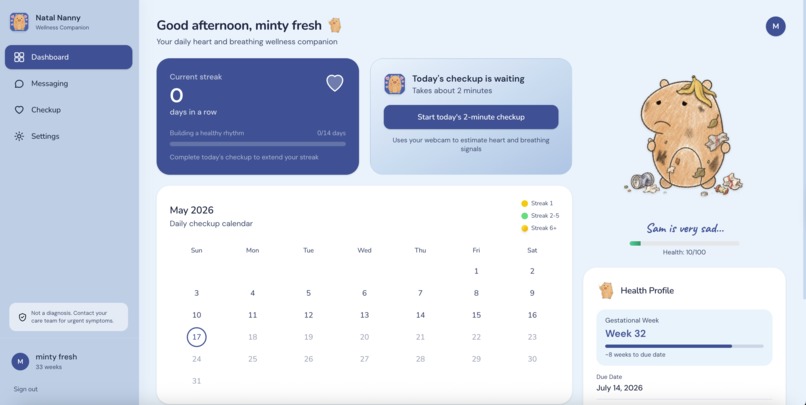
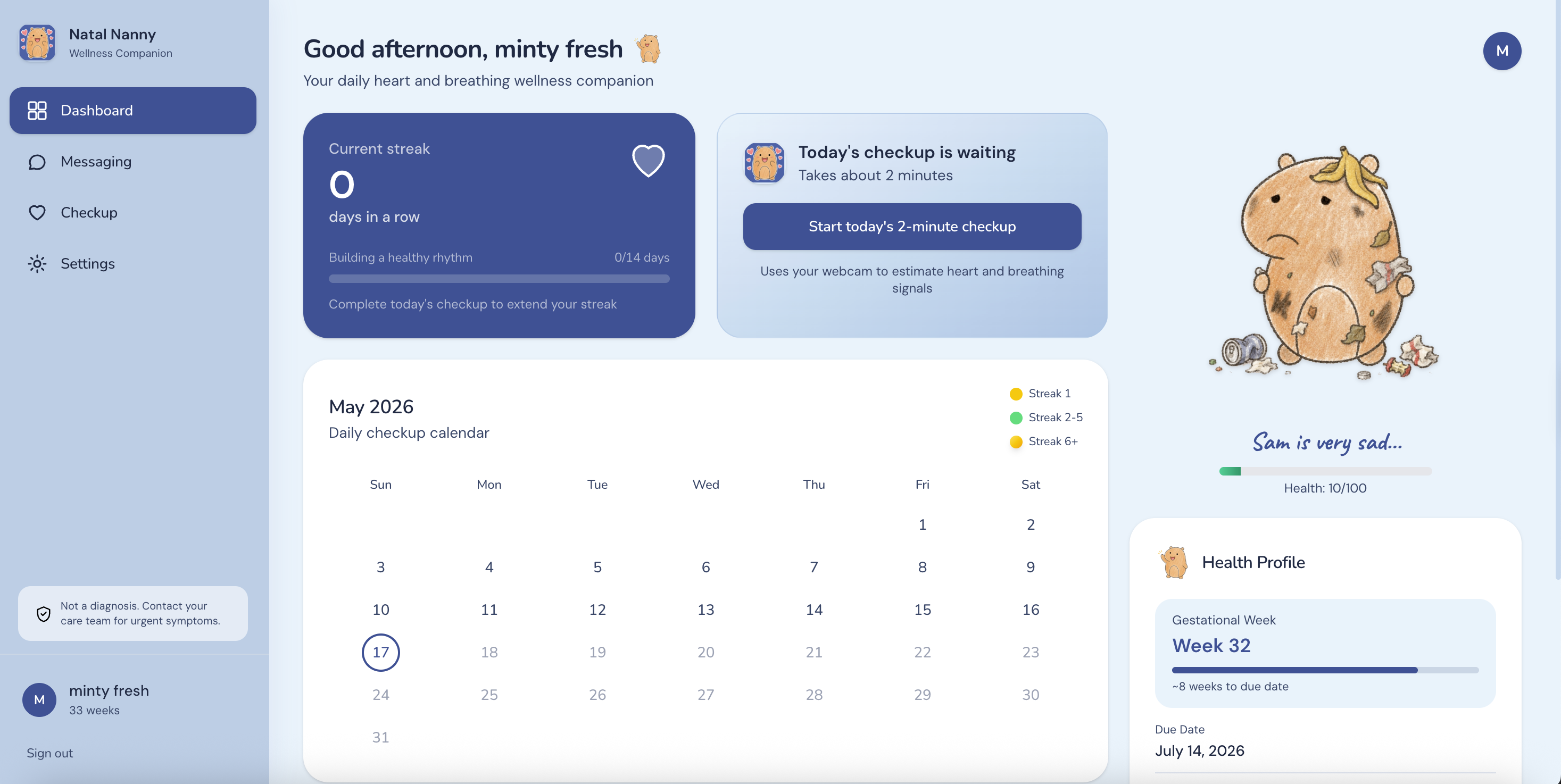
dashboard
-
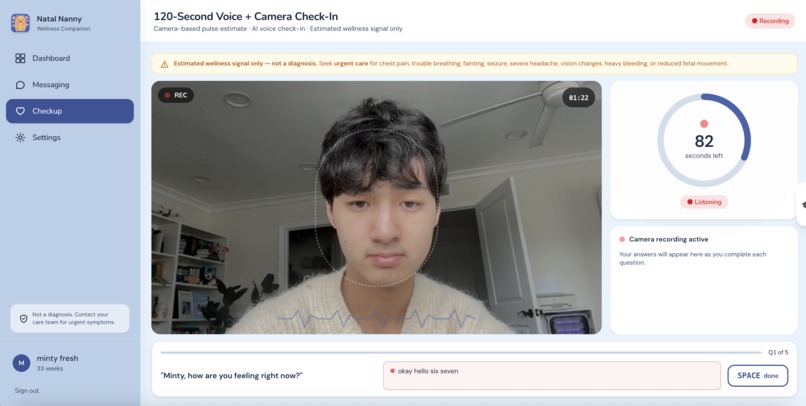
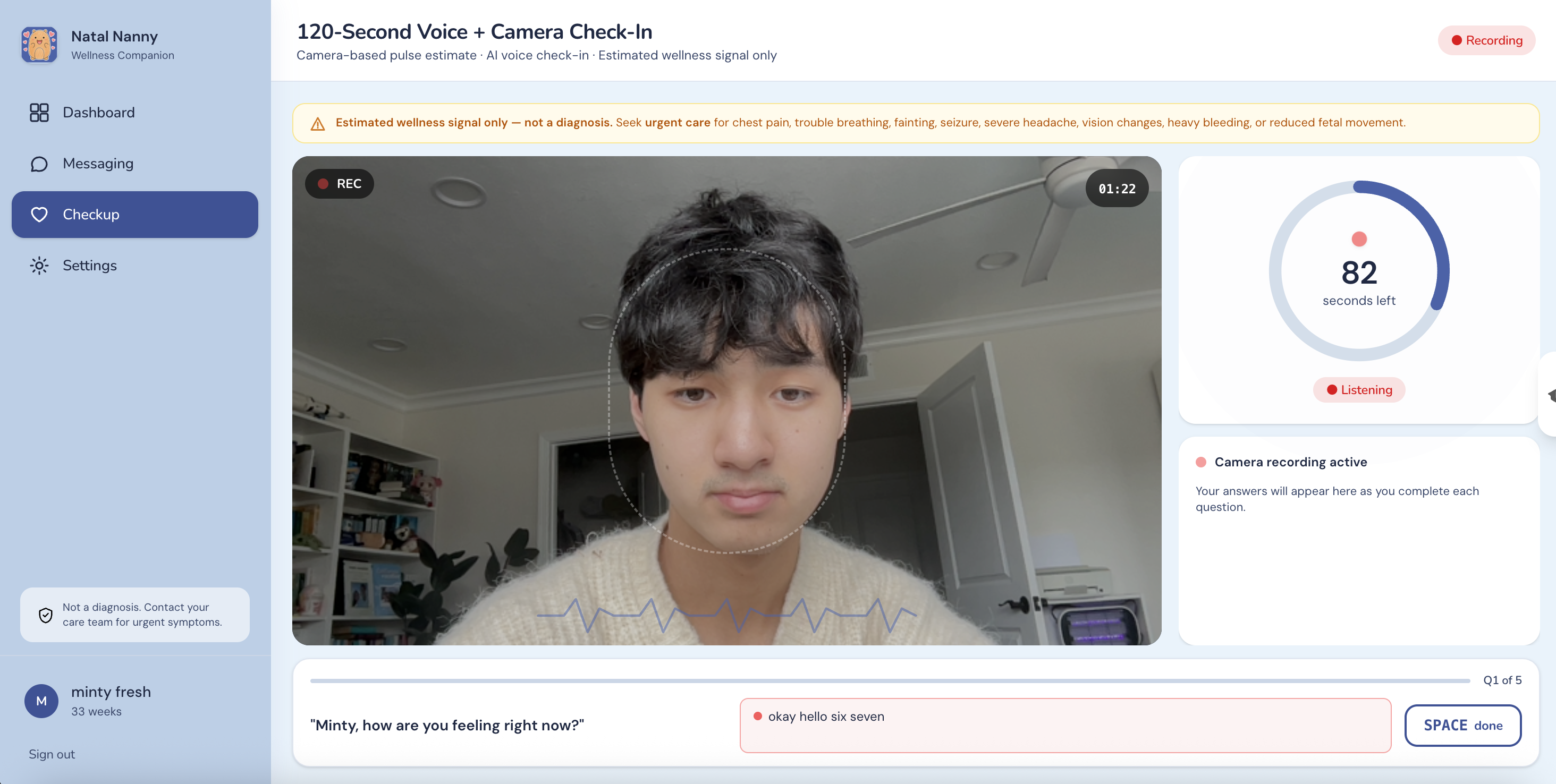
check in
-
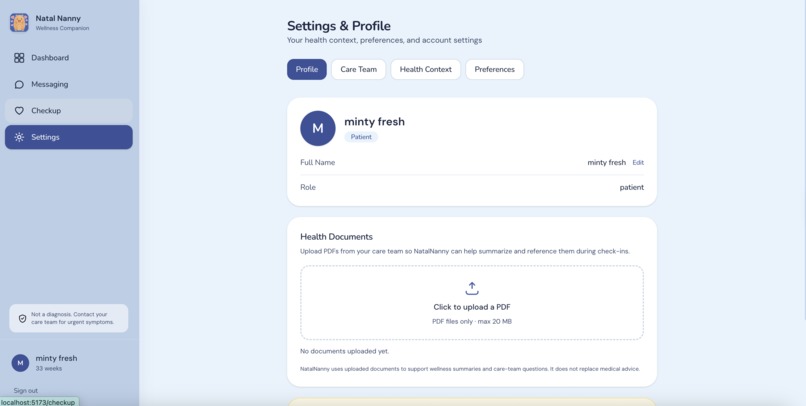
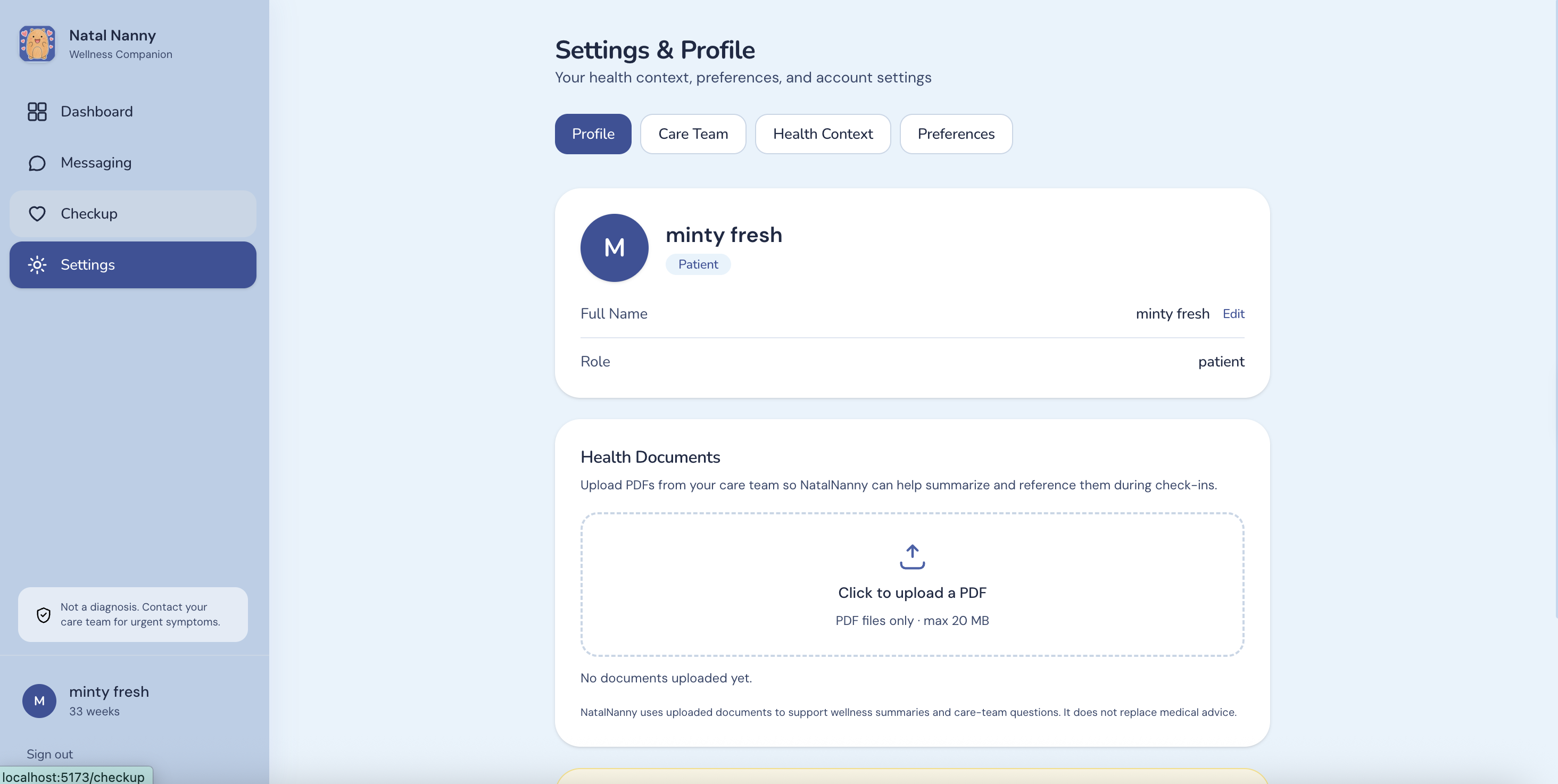
settings
-
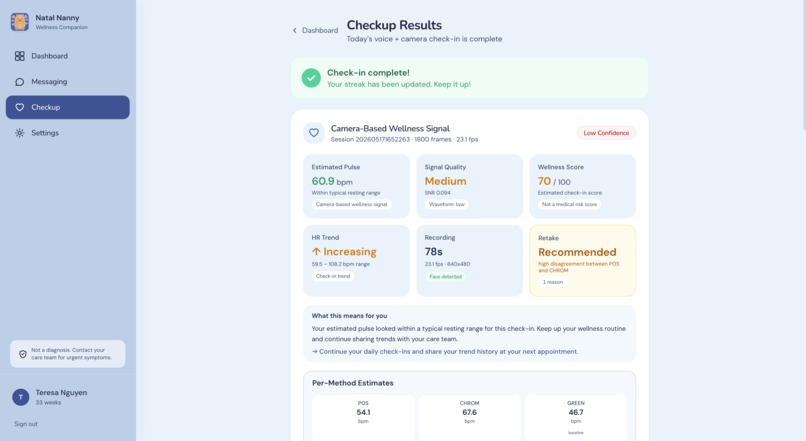
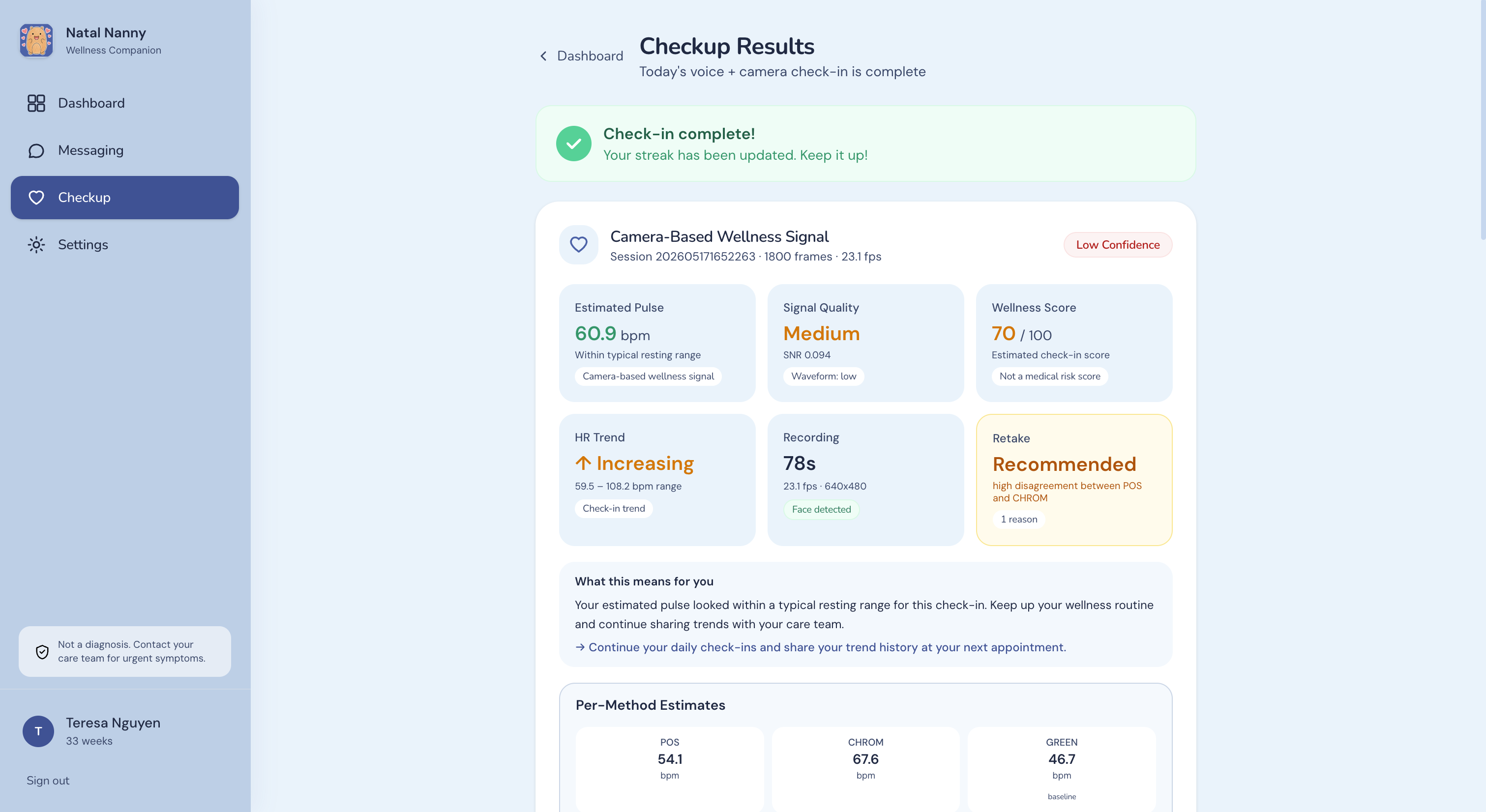
view statistics from your check in
-
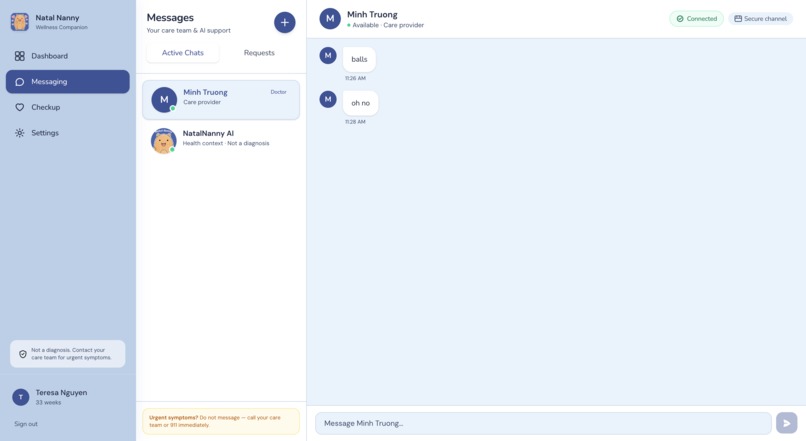
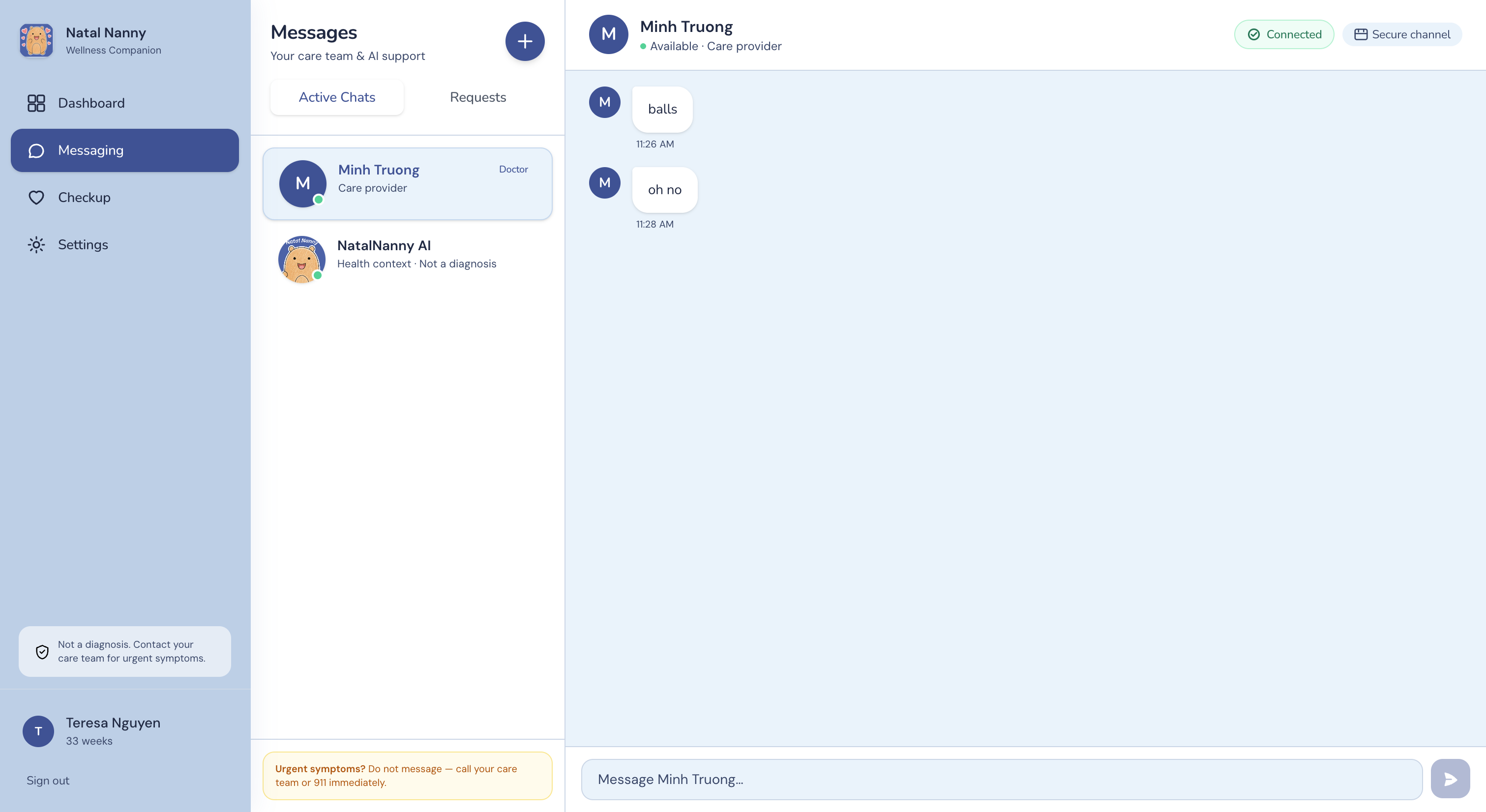
messaging
-
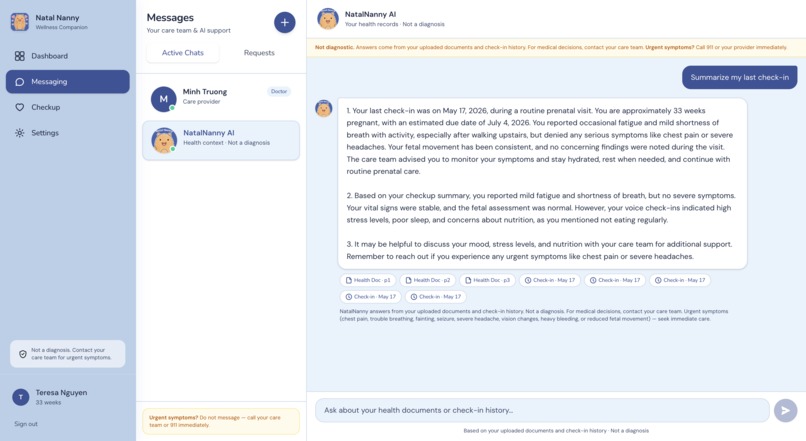
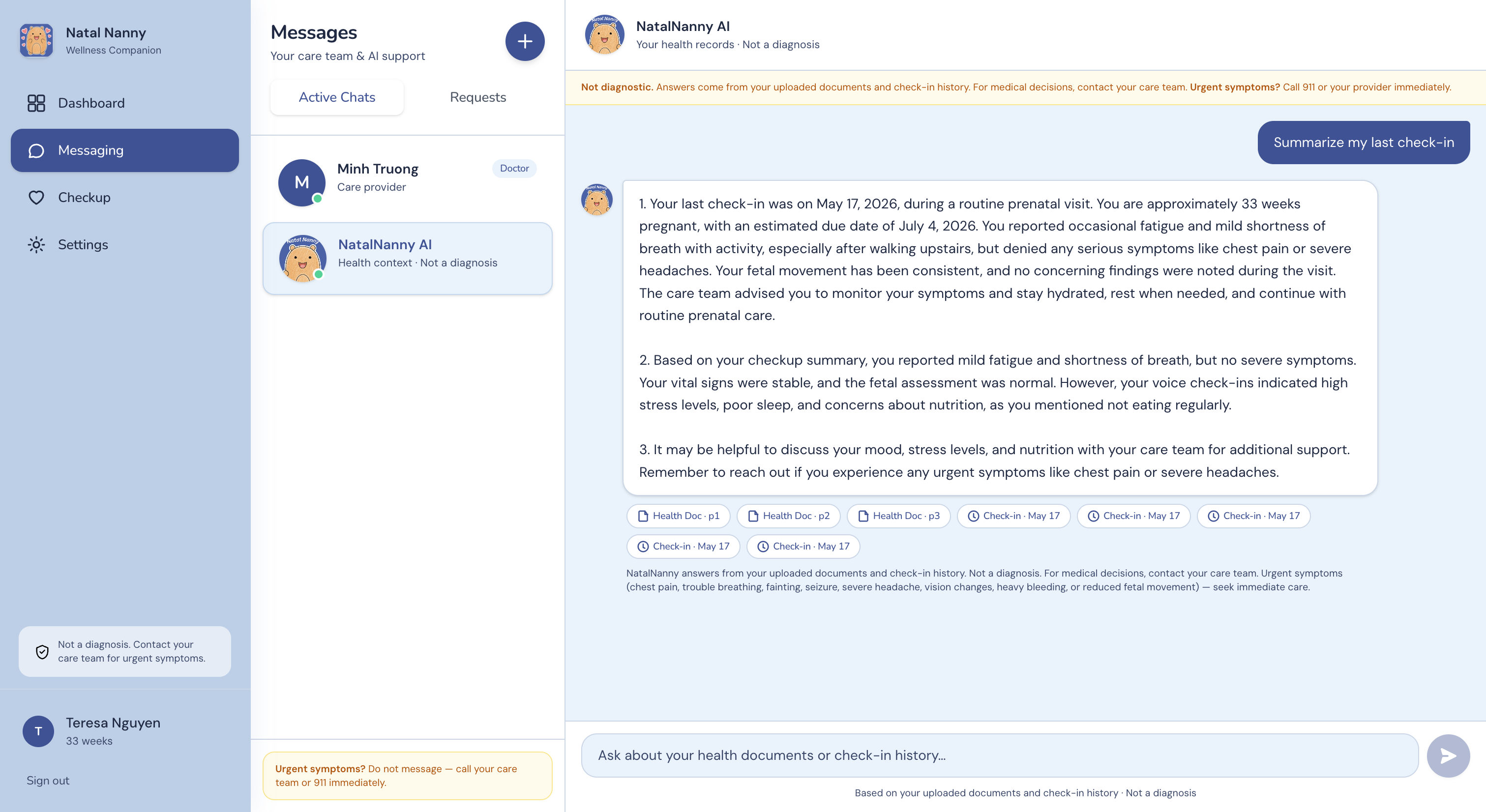
have Sam summarize your last check in with tips on staying healthy!
-
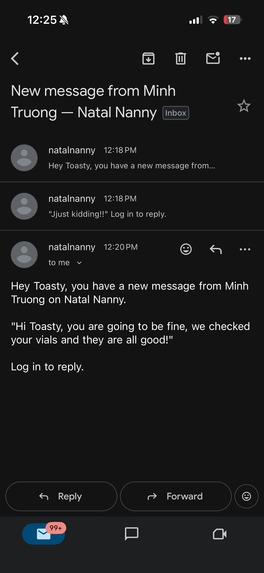
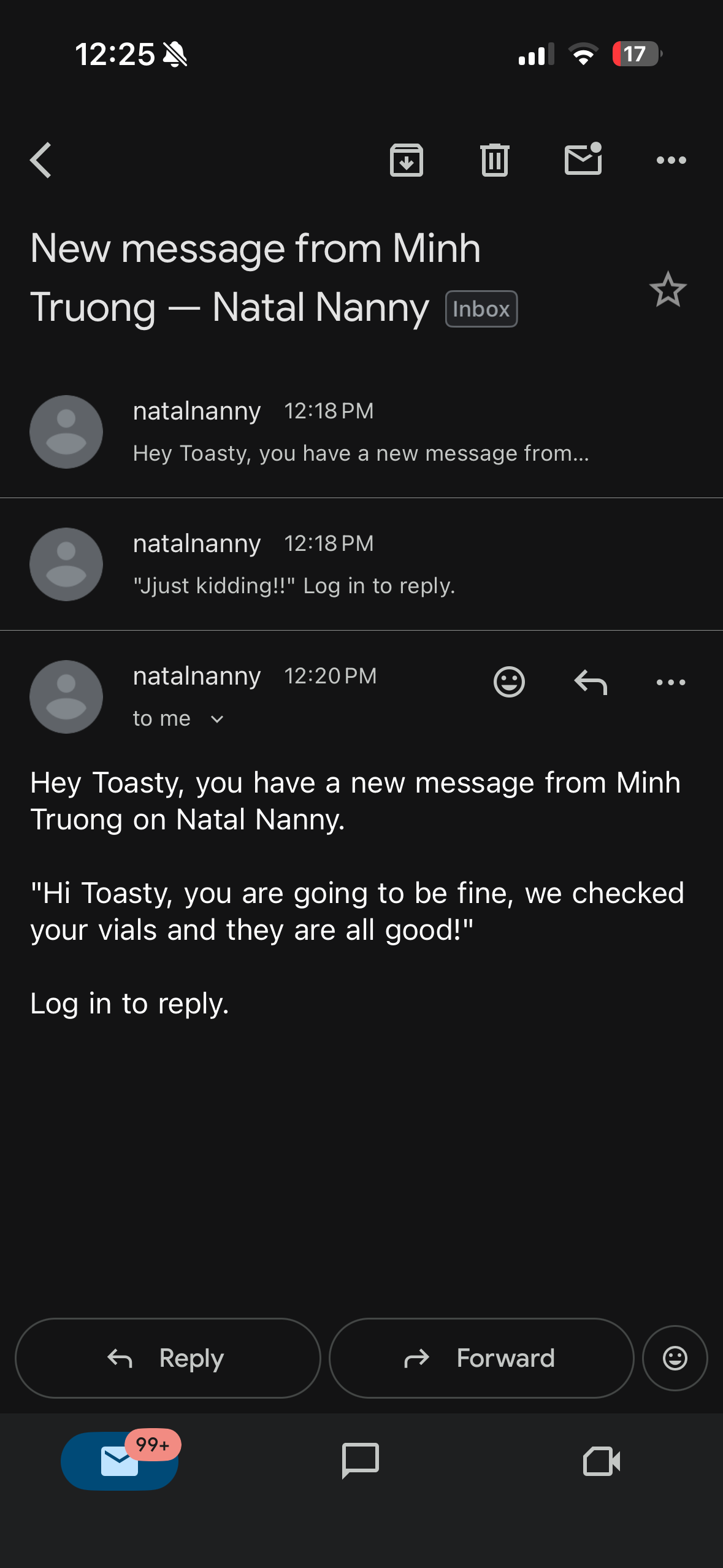
get notifications through email!
-
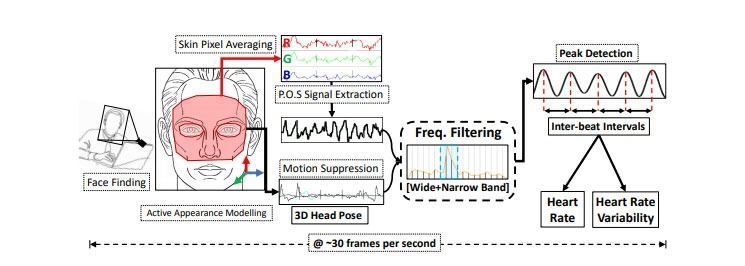
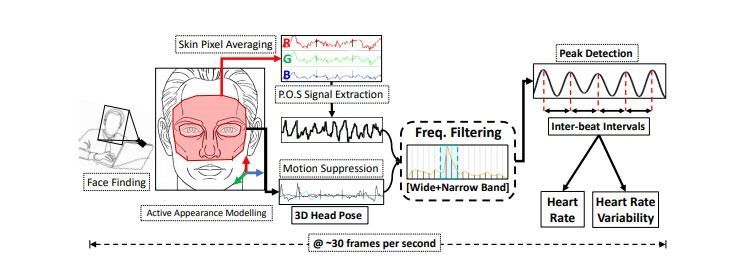
rppg from: https://noldus.com/blog/what-is-rppg
People think they're proactive.
They aren't. Especially when life gets busy for new mothers, their own health takes a back seat, leading to countless preventable deaths due to cardiovascular disease.
We're the proactive layer for those who can't afford to be. Introducing NatalNanny, a telehealth biometric-powered check-up system that reaches out to you first and monitors your cardiovascular health over time, with a Capybara friend for you to take care of daily.
What it does
Rather than just hoping patients will remember to do their check-ins, we have 3 incentives: a capybara avatar named Sam that gets happy or sad depending on whether or not you check in regularly, a daily check in streak system, as well as proactive reachouts to remind you to check in.
Within the check-ins themselves, we put the patient on a video check-up with an agent, who asks about your current health, how their personal goals are doing, as well as updating their records with their responses for future check-up personalization.
We also run rPPG analysis during the video call, tracking the greenshift in the video feed to infer blood pressure, respiratory rate, stress levels, etc. for more informed health suggestions.
All of this data is passed onto the doctor, and we also give a lifestyle suggestion, such as eating more iron-rich foods or doing more aerobic exercise.
Security
The application is heavily guarded and based on the interaction between doctor and patient only. The doctor is the only person with access to health records, with an RLS-protected database and org-level scoping among clinics. Patients and doctors must also approve account connections so no bad actors can access information.
More Detailed Functionality
- NatalNanny checks in first, so new mothers do not have to be perfectly proactive when life gets overwhelming.
- Sam the capybara keeps users coming back, reacting to daily check-ins and making health tracking feel less clinical and more caring.
- Daily streaks reward consistency, turning postpartum cardiovascular monitoring into a small, manageable habit.
- Proactive reminders help prevent silent drop-off, nudging users before their own health gets pushed to the bottom of the list.
- Video-based check-ins let patients talk through how they are doing, including symptoms, recovery, personal goals, and anything that has changed since the last check-in.
- The AI agent personalizes future check-ins by remembering past responses, goals, concerns, and uploaded health context.
- rPPG analysis runs during the video call, using webcam signal changes to estimate cardiovascular wellness indicators like heart rate, signal quality, trends, and potential warning signs.
- Vitals are tracked over time, helping surface patterns instead of relying on one-off snapshots.
- Patients receive clear wellness suggestions, such as hydration, iron-rich foods, rest, aerobic activity, or reaching out to their care team when something looks concerning.
- Health documents can be uploaded and indexed, so the AI can answer and personalize check-ins using relevant patient records.
- RAG-powered context keeps responses grounded, connecting uploaded documents, check-in history, and patient goals instead of giving generic advice.
- Patients can message their care team directly, turning concerns from check-ins into follow-up conversations.
- Doctor-patient connections are approval-based, so patients control who can access their health information.
- Security is built around care relationships, with RLS-protected data, clinic-level scoping, and access limited to approved doctors and patients.
- Sync and storage status are visible, so check-ins, documents, and health records do not disappear silently.
- NatalNanny supports both patient and clinician workflows, making it useful for daily self-monitoring and for doctors who need a quick, longitudinal view of patient health.
- Demo mode makes the product easy to present, while keeping real health data access limited.
Citations (for research!) https://github.com/ubicomplab/rPPG-Toolbox https://pmc.ncbi.nlm.nih.gov/articles/PMC9267568/ https://www.nature.com/articles/s41746-025-02192-y https://www.ncbi.nlm.nih.gov/books/NBK537261/
Built With
- fastapi
- openai
- postgresql
- react

Log in or sign up for Devpost to join the conversation.