-
-
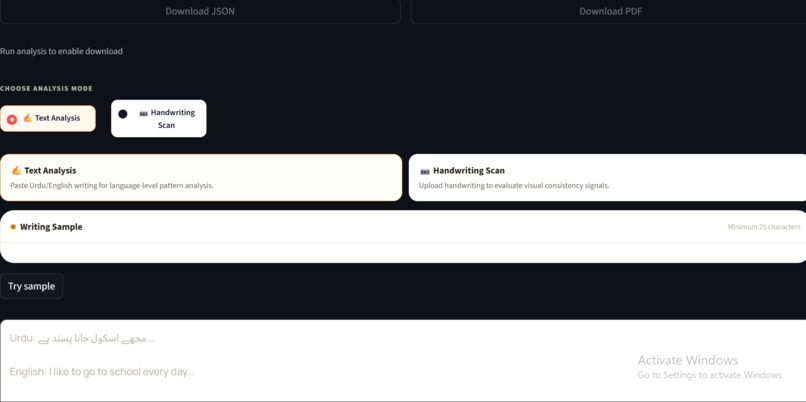
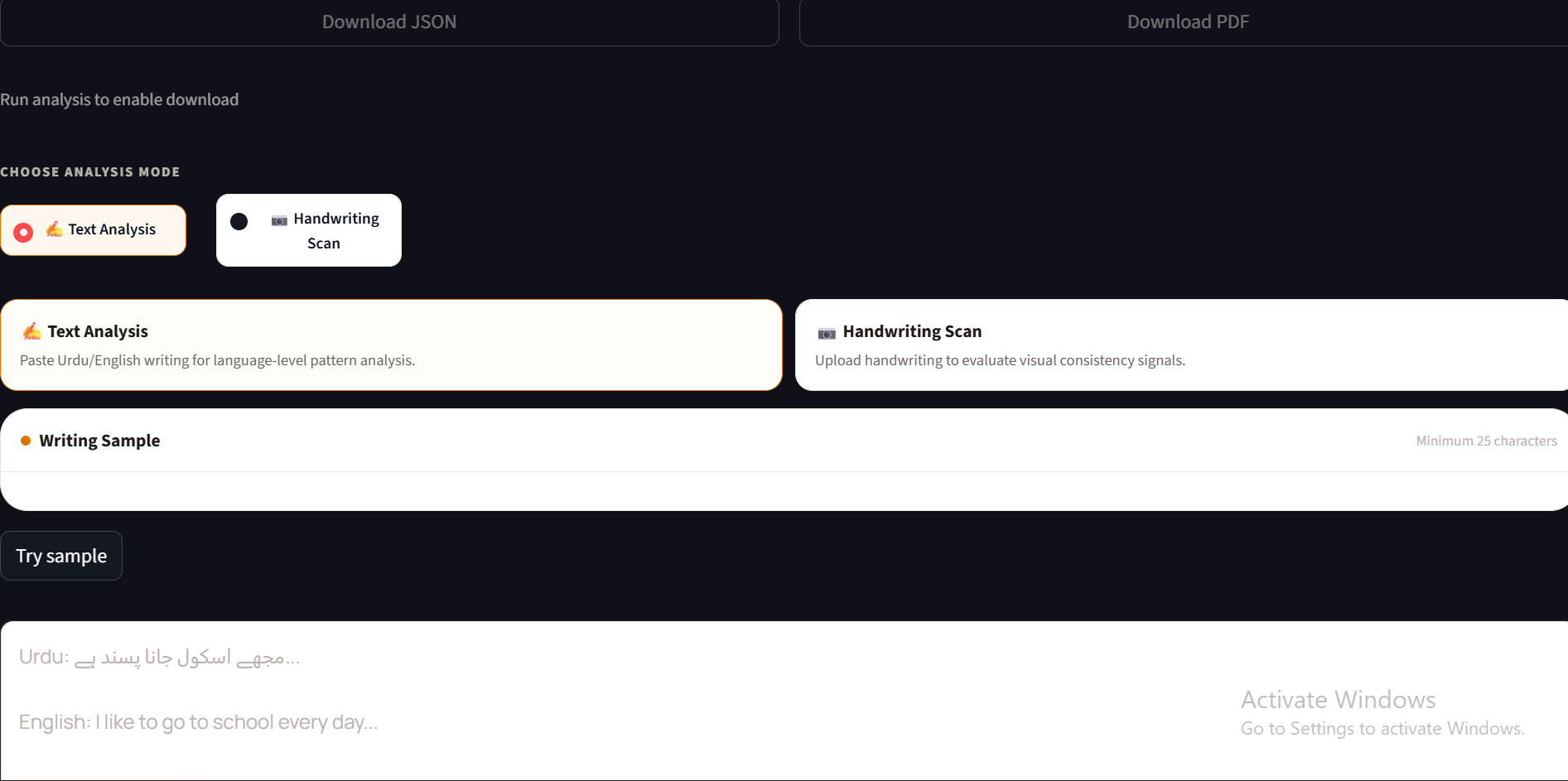
interface with handwriting photo upload option
-
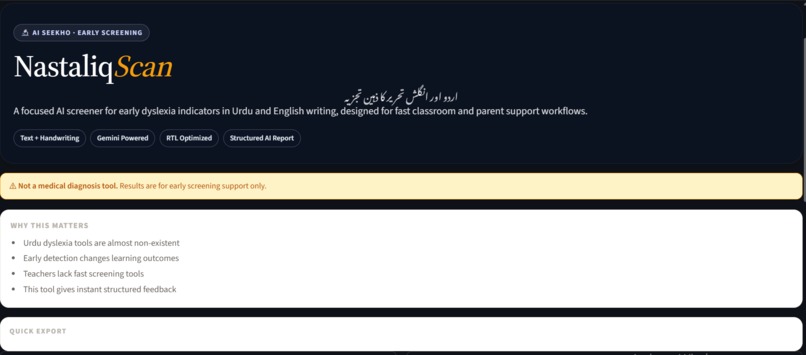
Main interface with text input mode
-
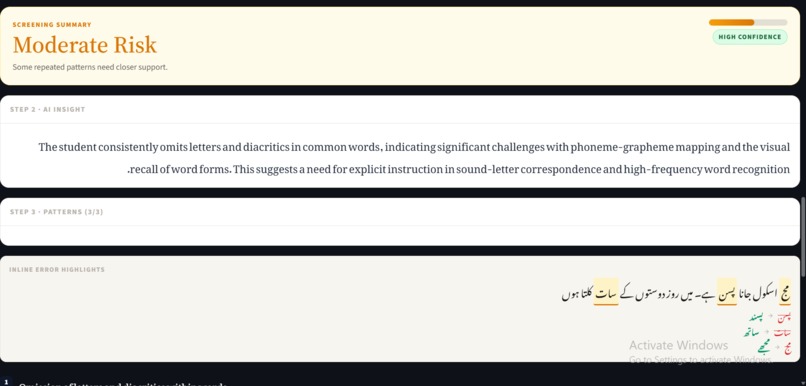
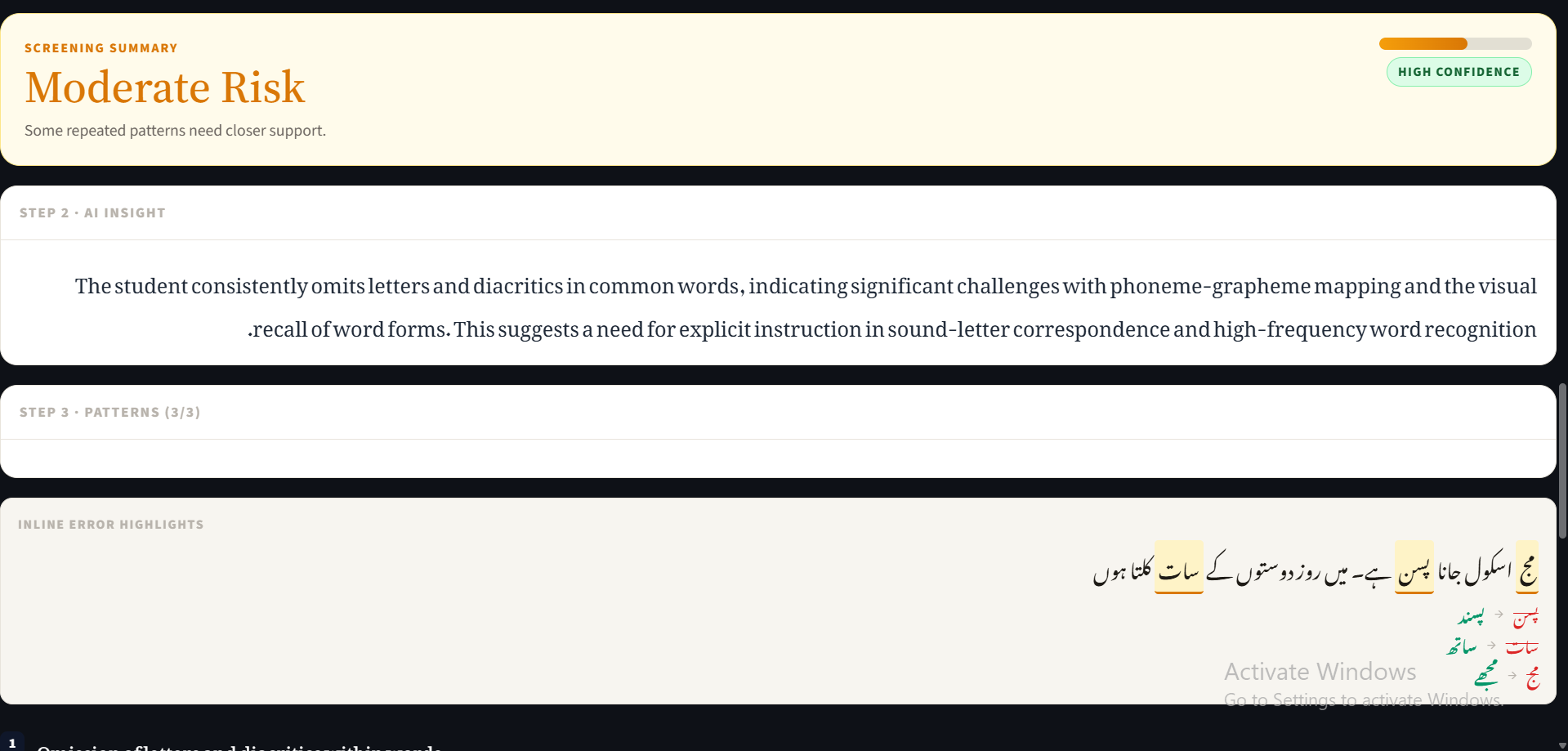
Risk assessment results with error highlighting
-
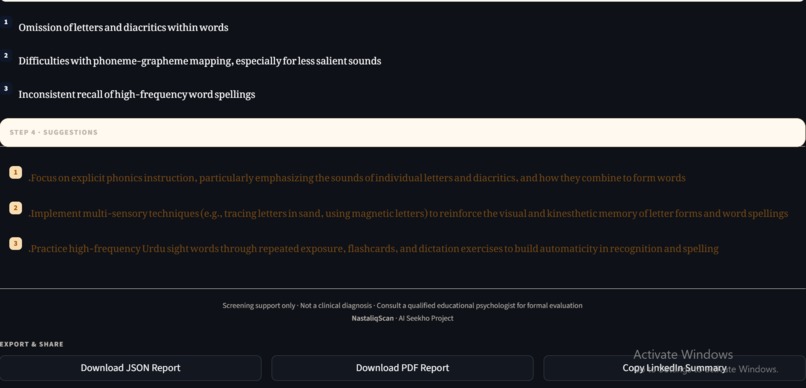
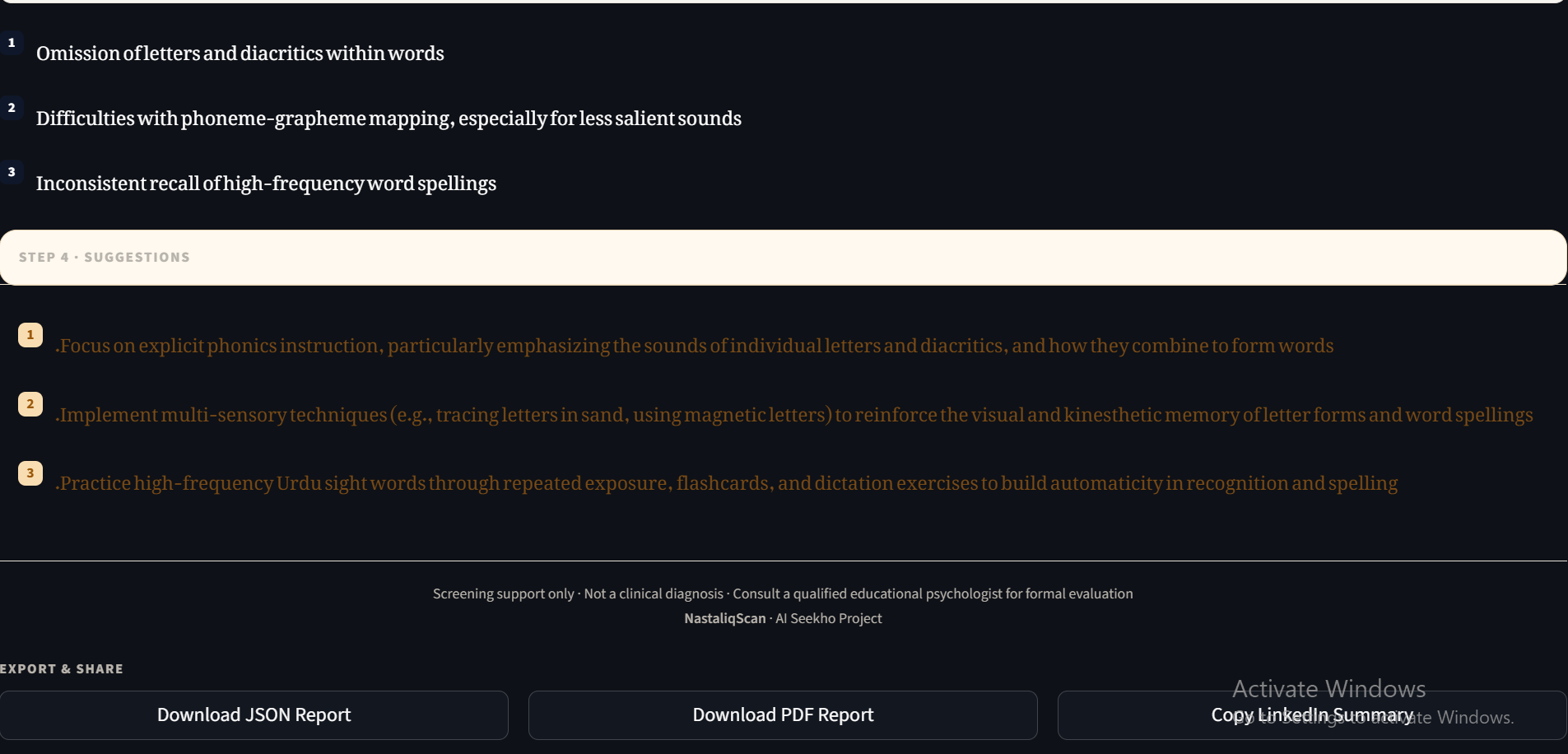
PDF report generation
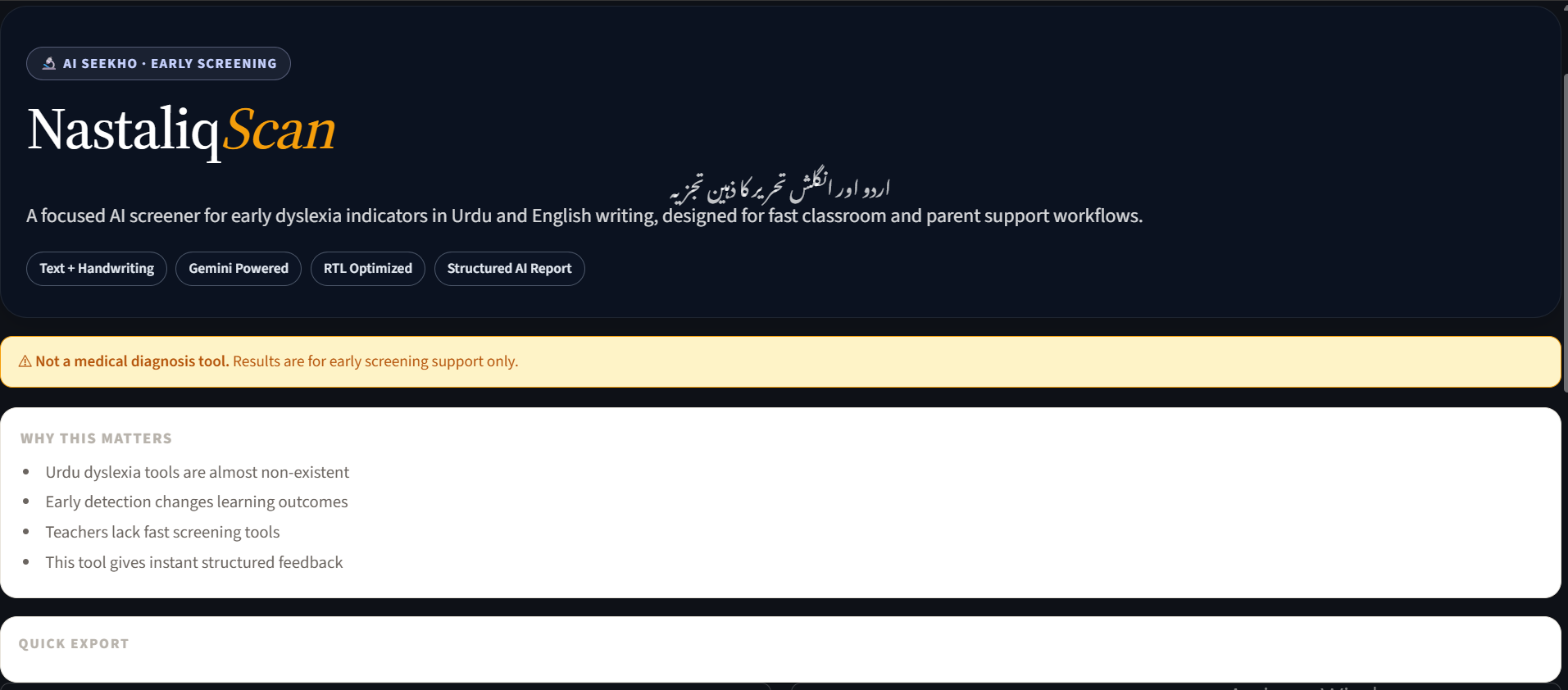
Inspiration Dyslexia affects roughly 5–10% of Pakistani children, yet early screening remains a massive luxury. Most families face expensive professional assessments, a total lack of localized diagnostic tools for the Urdu language, and virtually no digital platforms that properly support right-to-left (RTL) writing. We built NastaliqScan to bridge this gap, creating an affordable, accessible, AI-driven screening tool specifically.
What it does NastaliqScan serves as an intelligent, real-time screening aid for parents, educators, and health professionals. It features: Multimodal Analysis: Users can type text or upload clear photos of handwritten documents. AI Diagnostic Screening: The tool instantly scans for dyslexic indicators like phonetic errors, spelling anomalies, and letter reversals. Risk Level & Reporting: It categorizes results into Low, Medium, or High risk levels. RTL Urdu Highlighting: It renders color-coded inline error highlights directly onto right-to-left Urdu script. PDF Generation: Users can instantly download comprehensive, professional assessment reports containing actionable educational recommendations.
How we built it We engineered a modern, efficient, and scalable tech stack: Frontend UI: Built with Streamlit for a lightweight, mobile-responsive user interface. AI Core Engine: Powered by Google Gemini 2.5 Flash to achieve fast, accurate multimodal text and handwriting analysis. Document Engine: Programmed with ReportLab in Python to compile dynamic analysis results into downloadable PDFs. Deployment: Packaged using Docker containers and deployed seamlessly to Google Cloud Run to ensure reliable, on-demand scalability.
Challenges we ran into RTL Text Rendering: Dealing with Right-to-Left formatting in Urdu text while applying real-time, inline color annotations proved technically complex. OCR in Nastaliq Script: Standard OCR models struggle with cursive Urdu (Nastaliq). Tuning the prompt engineering and utilizing Gemini's multimodal capabilities was critical to accurately catching structural handwriting slips. Balancing Accuracy and Speed: Delivering instant analysis for handwriting images without experiencing timeout lag required careful optimization of the Gemini 2.5 Flash API calls.
Accomplishments that we're proud of Localized Impact: Successfully built one of the very few digital screening tools explicitly supporting Urdu script. High Accessibility: Kept the platform lightweight and mobile-friendly so families with basic smartphones can easily test their children. Robust PDF Pipeline: Created a professional, clean report generation system that parents can easily print and take to educational psychologists.
What we learned Multimodal Flexibility: We discovered how powerful Gemini 2.5 Flash is at handling visual handwriting assets and complex language translations simultaneously. Designing for Accessibility: We learned how critical it is to build applications with clear, non-intimidating design languages when dealing with sensitive health/educational screening. Cloud Run Efficiency: Gained deep hands-on experience setting up continuous container deployments using Google Cloud SDK.
What's next for NastaliqScan Audio Assessment Integration: Introducing voice note features to screen for speech-based dyslexic indicators. Regional Language Expansion: Adding future support for other Pakistani regional languages like Punjabi, Sindhi, and Pashto. School Dashboard Upgrades: Developing a bulk-upload system for teachers to screen entire classrooms simultaneously at the start of the academic year.

Log in or sign up for Devpost to join the conversation.