-
-
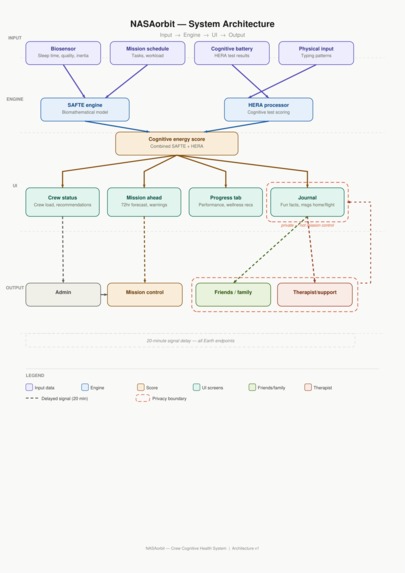
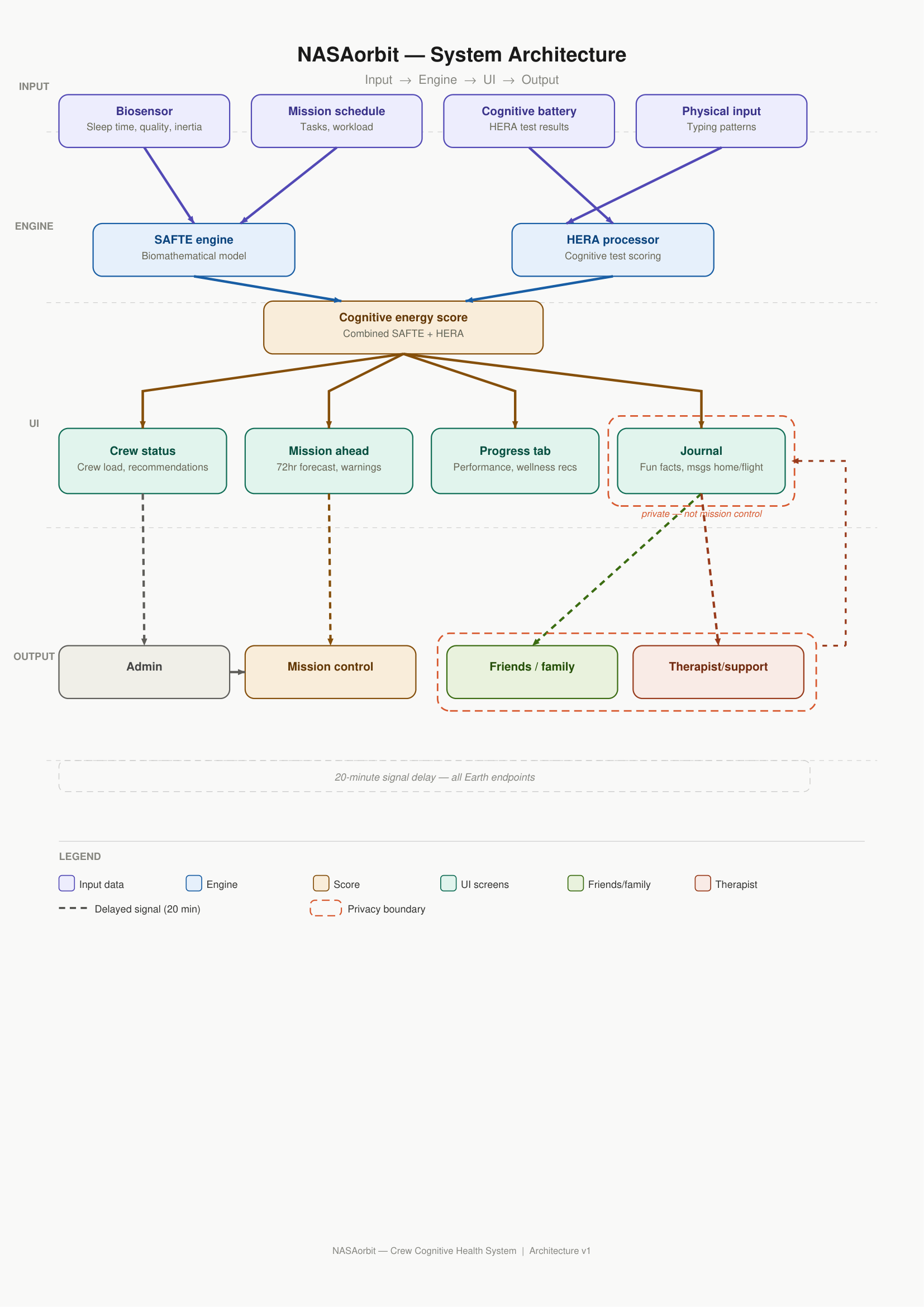
Architecture for NASAorbit
-
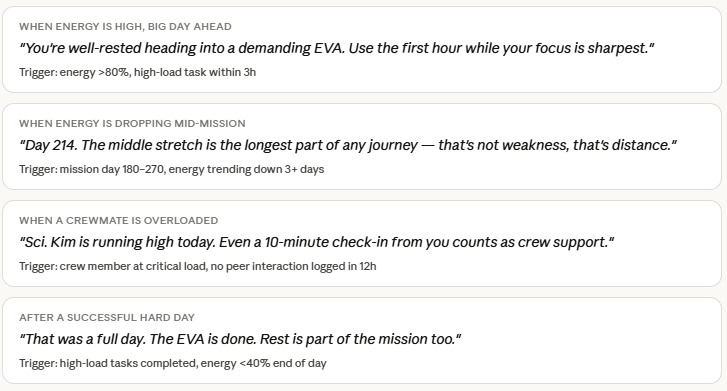
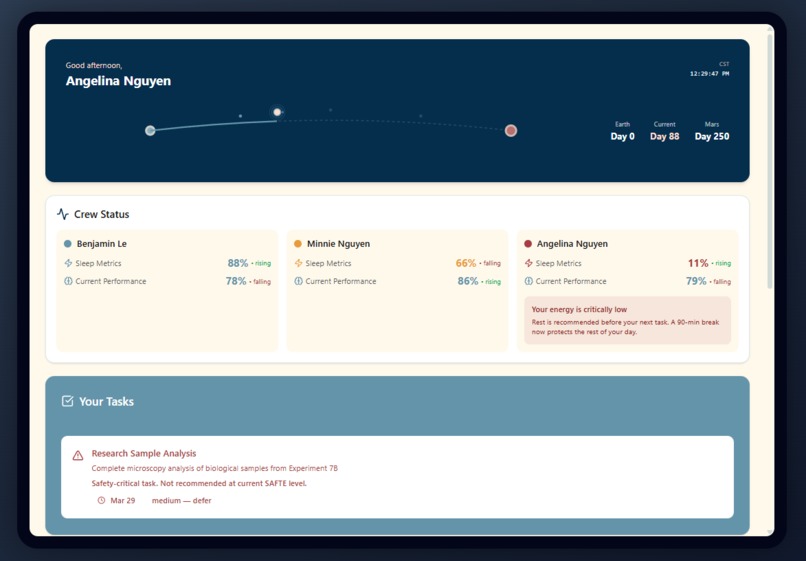
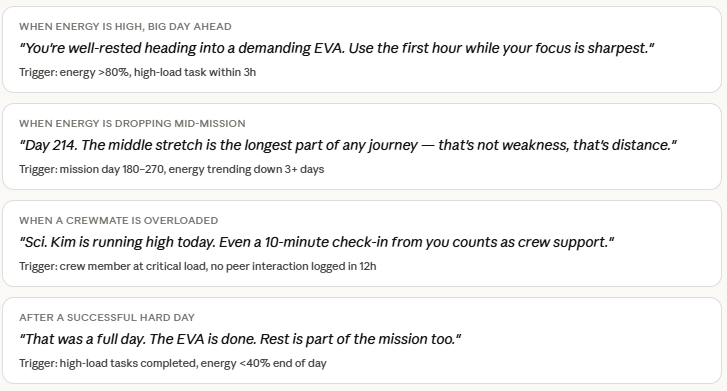
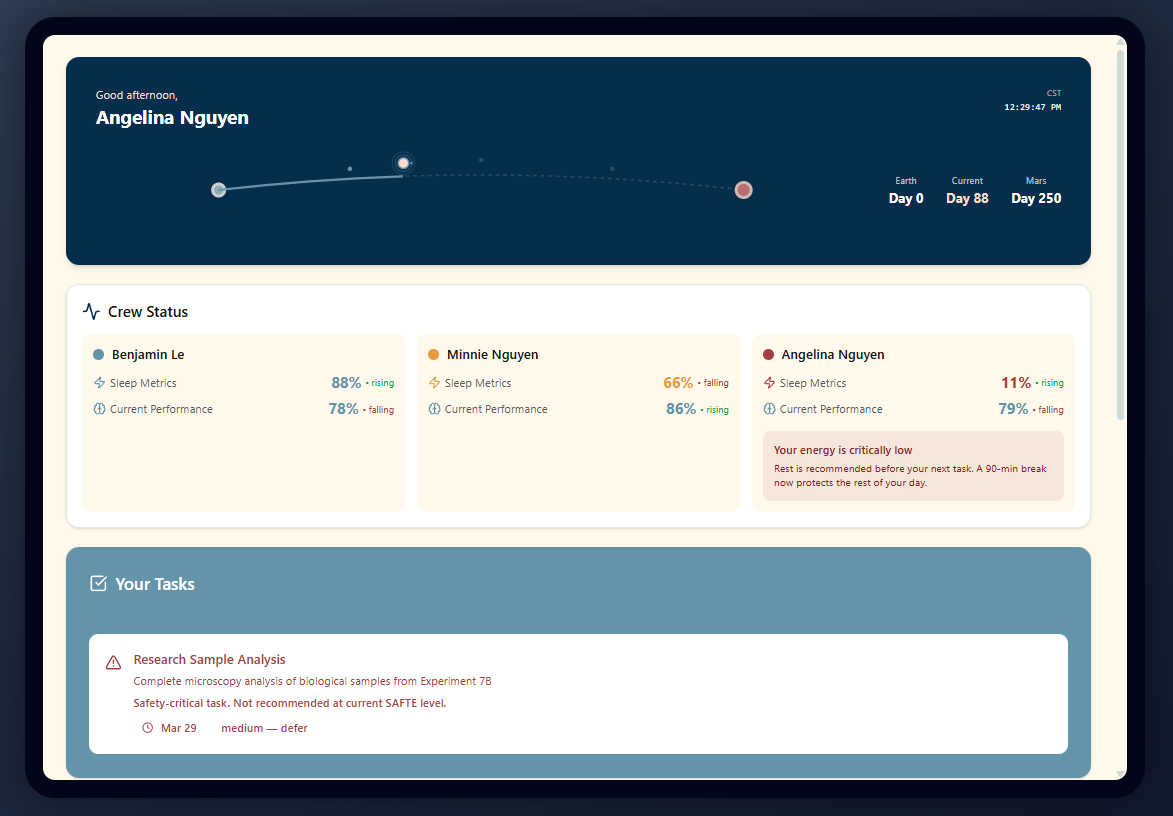
warning messages based on SAFTE score and tasks completed for future implementation
-
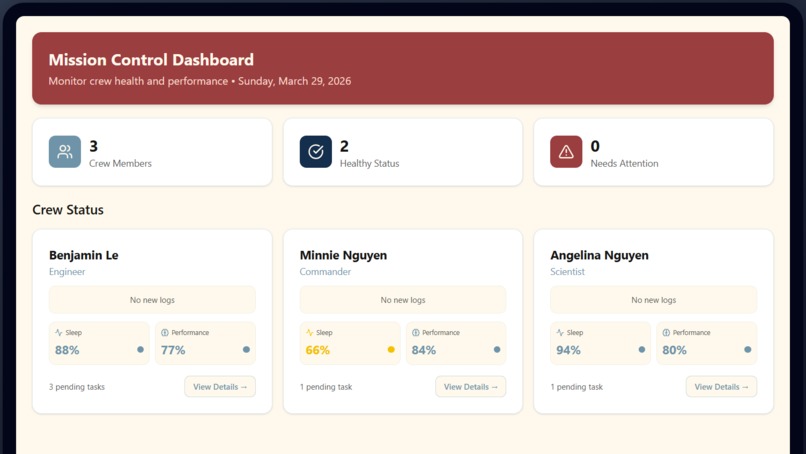
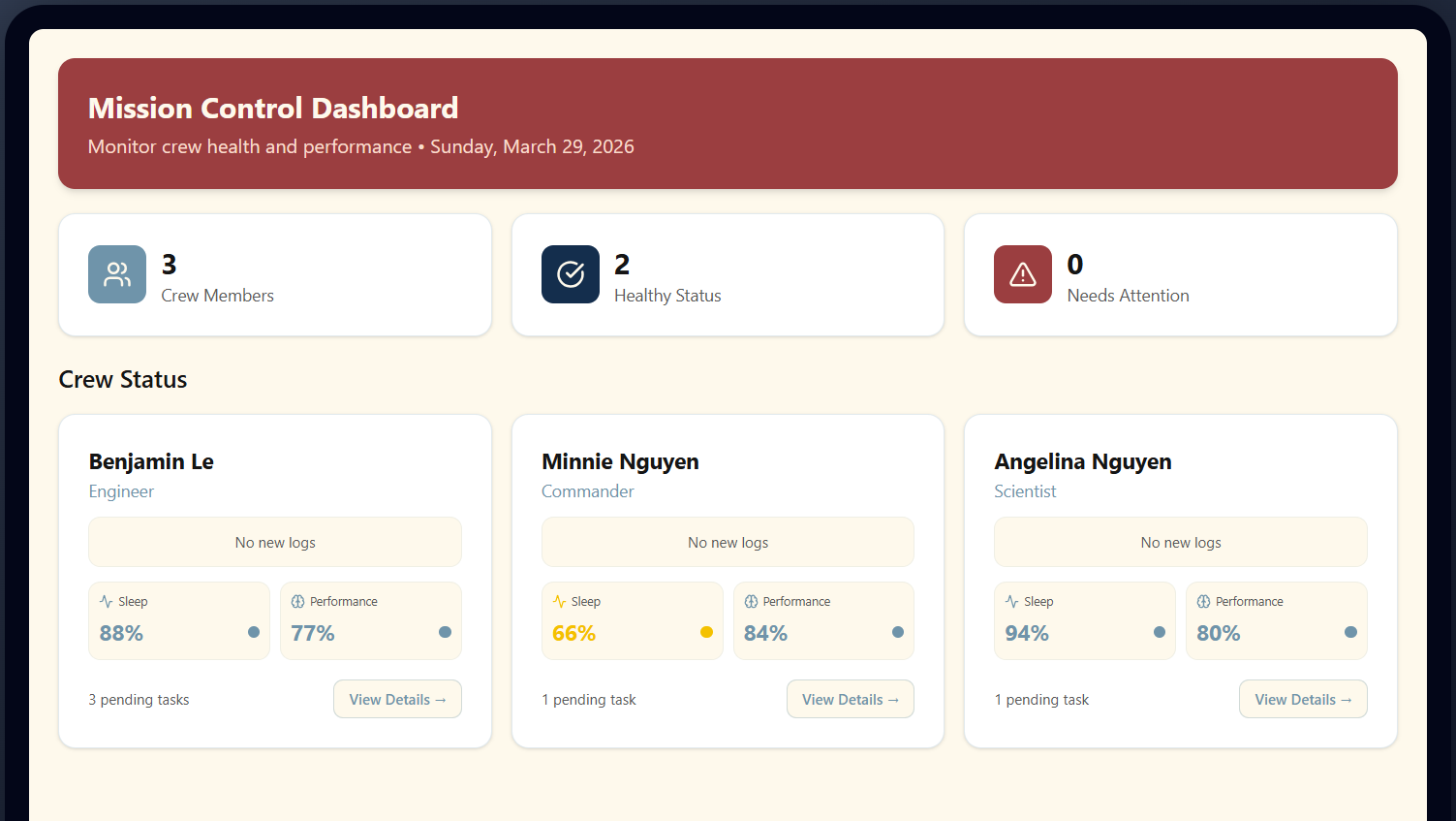
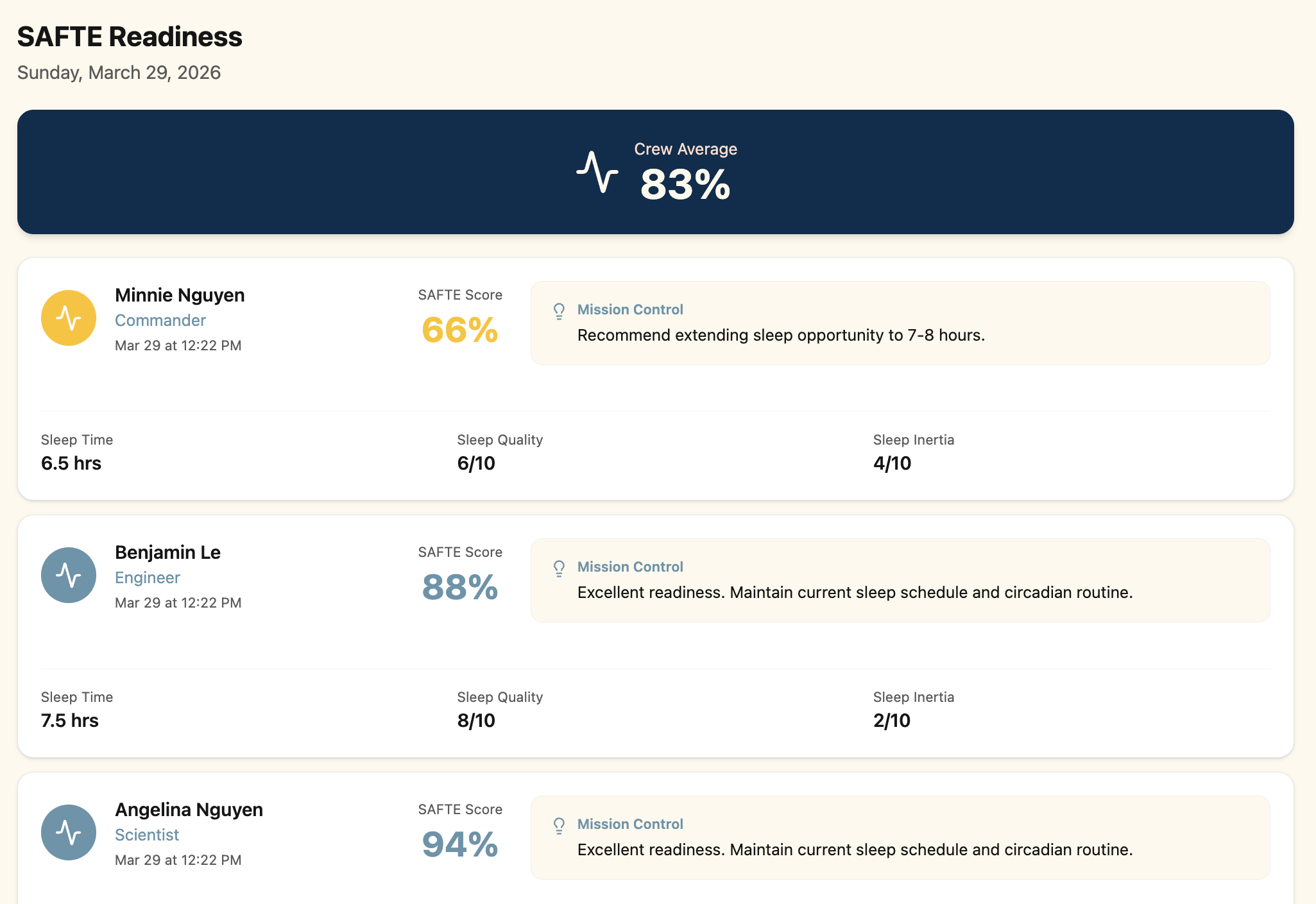
Admin view of crew member dashboard with estimated sleep and performance levels.
-
-
-
-
-
Inspiration
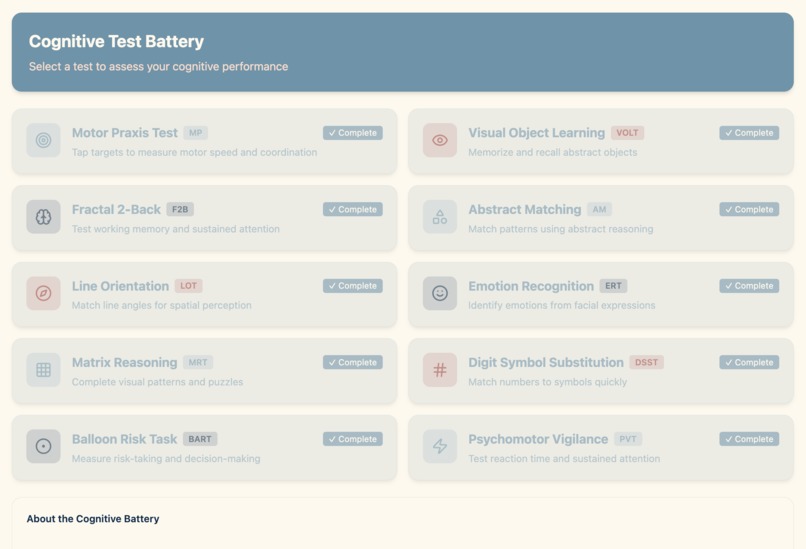
Our project was inspired by the mental and cognitive strain astronauts face during long‑duration missions. NASA’s HERA cognitive battery research shows that these tests can reliably detect subtle shifts in attention, memory, and reaction time long before astronauts notice them. Using assessments based on this research, along with the NASA-military grade SAFTE model, we set out to build a system that identifies those changes early and actively supports improving them.
What it does
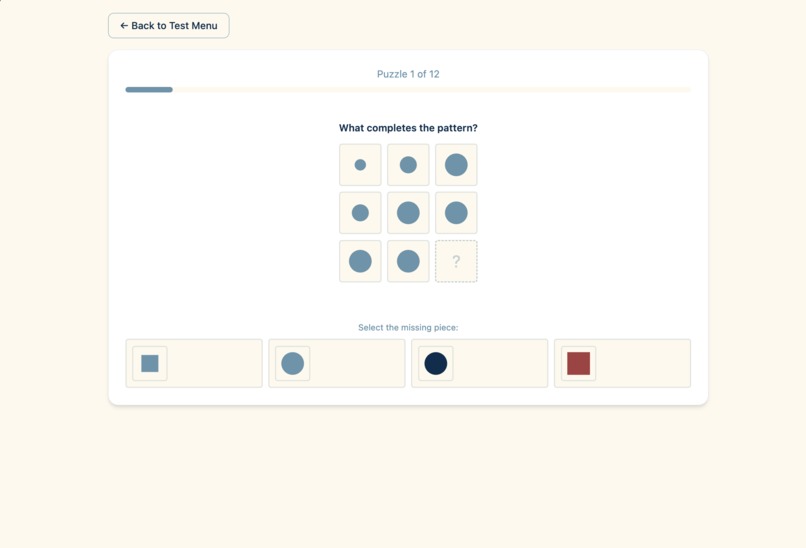
The app continuously monitors cognitive performance using NASA‑based tests, compares each result to the astronaut’s personal baseline, and flags early signs of decline. From there, it adapts tasks, prompts timely interventions, and helps maintain performance and safety in real time–reducing reliance on Earth‑based support, which is limited by communication delays.
How we built it
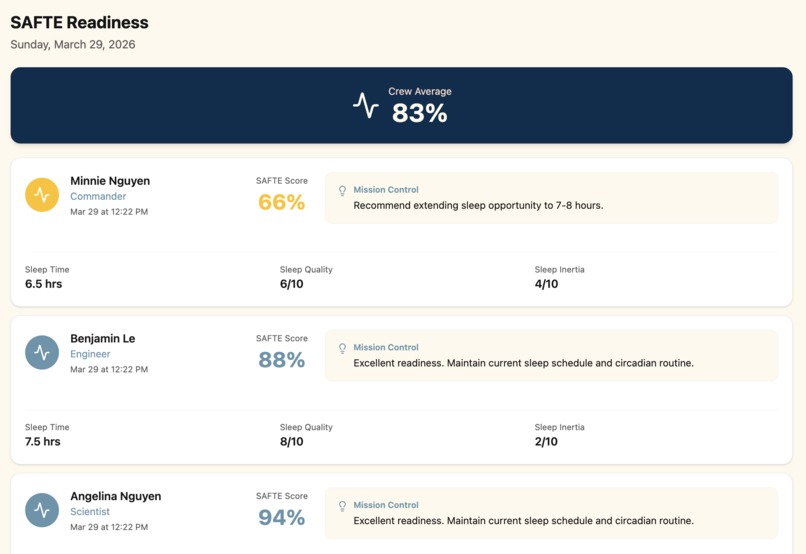
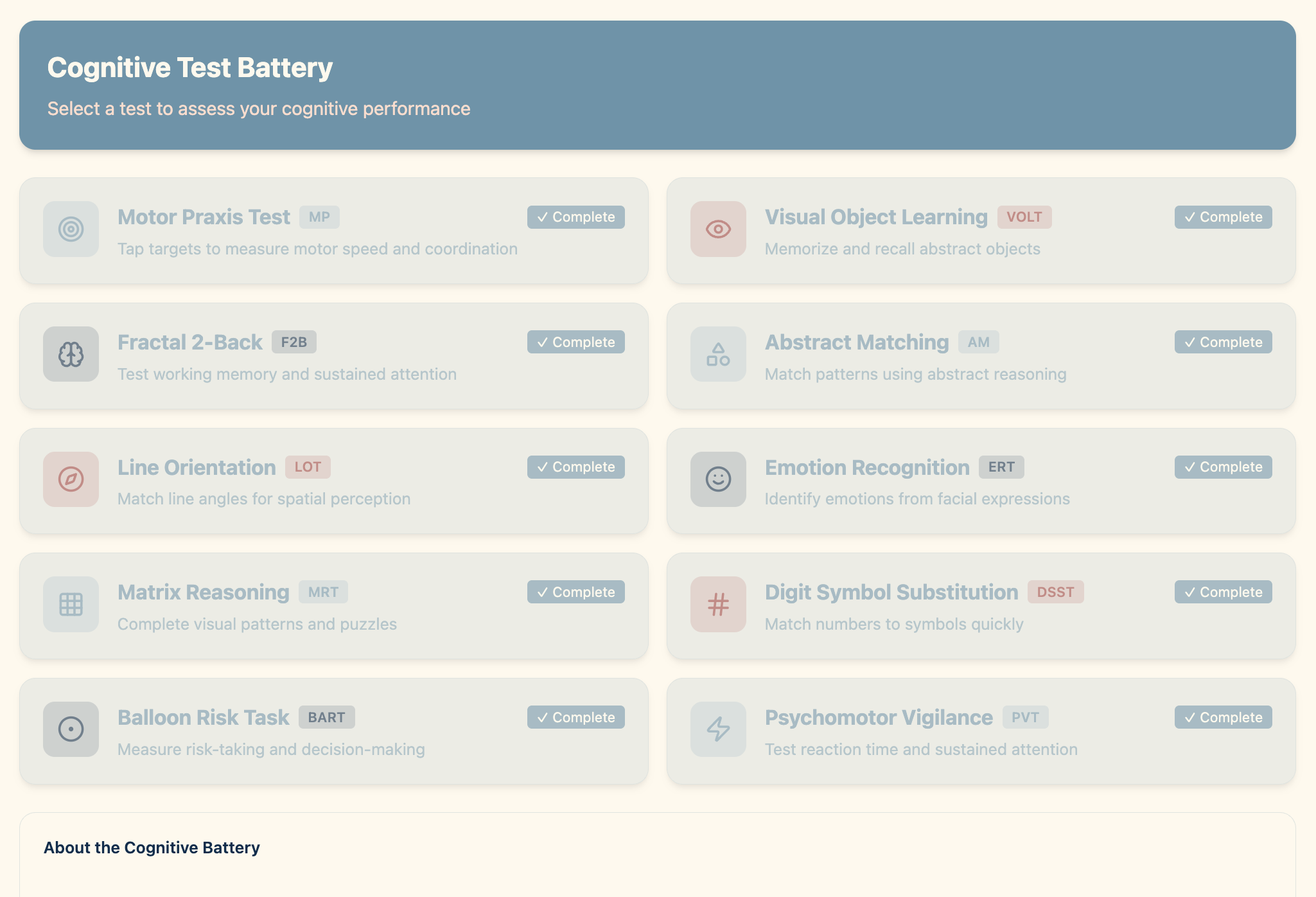
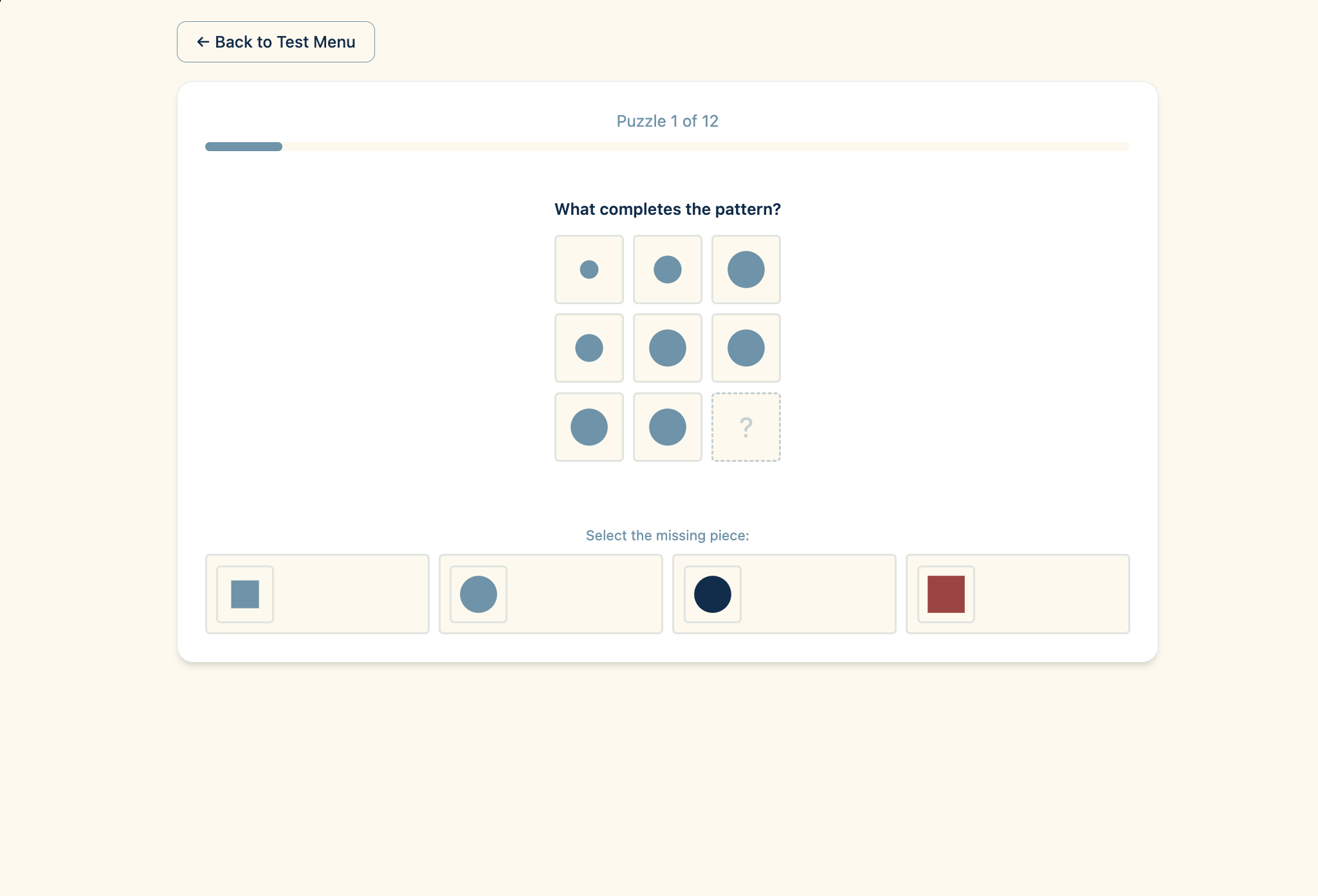
We mapped out our data pipeline in FigJam, outlining how information would be processed, compared against baselines, tracked over time, and used to trigger adaptive responses. From there, we used Figma to design the interface, user flows, and interactive test screens modeled after NASA’s Cognition battery. To emulate the biomonitors astronauts wear that would report sleep time, quality, and inertia of the user, sliders were used to represent the quantities so SAFTE could be calculated dynamically (rather than hard coded). Throughout the writing and interface design, we deliberately avoided clinical language. The goal was to ensure the system communicates with the crew, not at them–reducing cognitive burden at exactly the moments when their mental resources are most limited.
Challenges we ran into
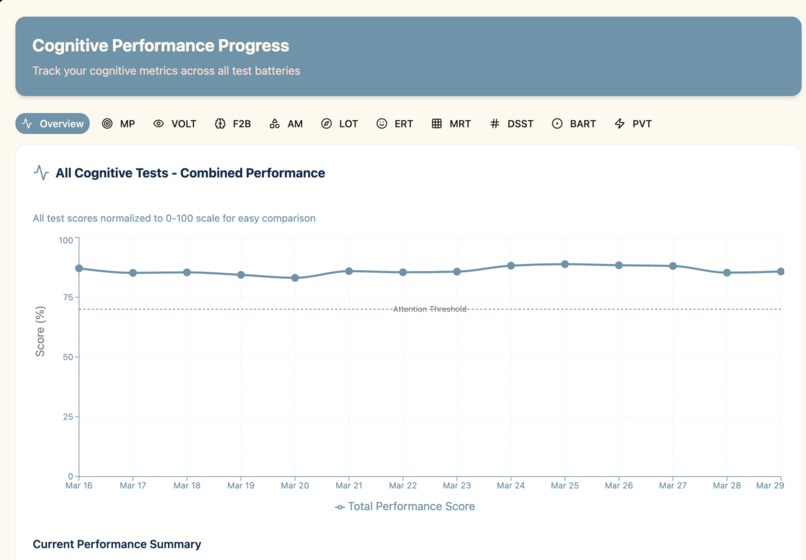
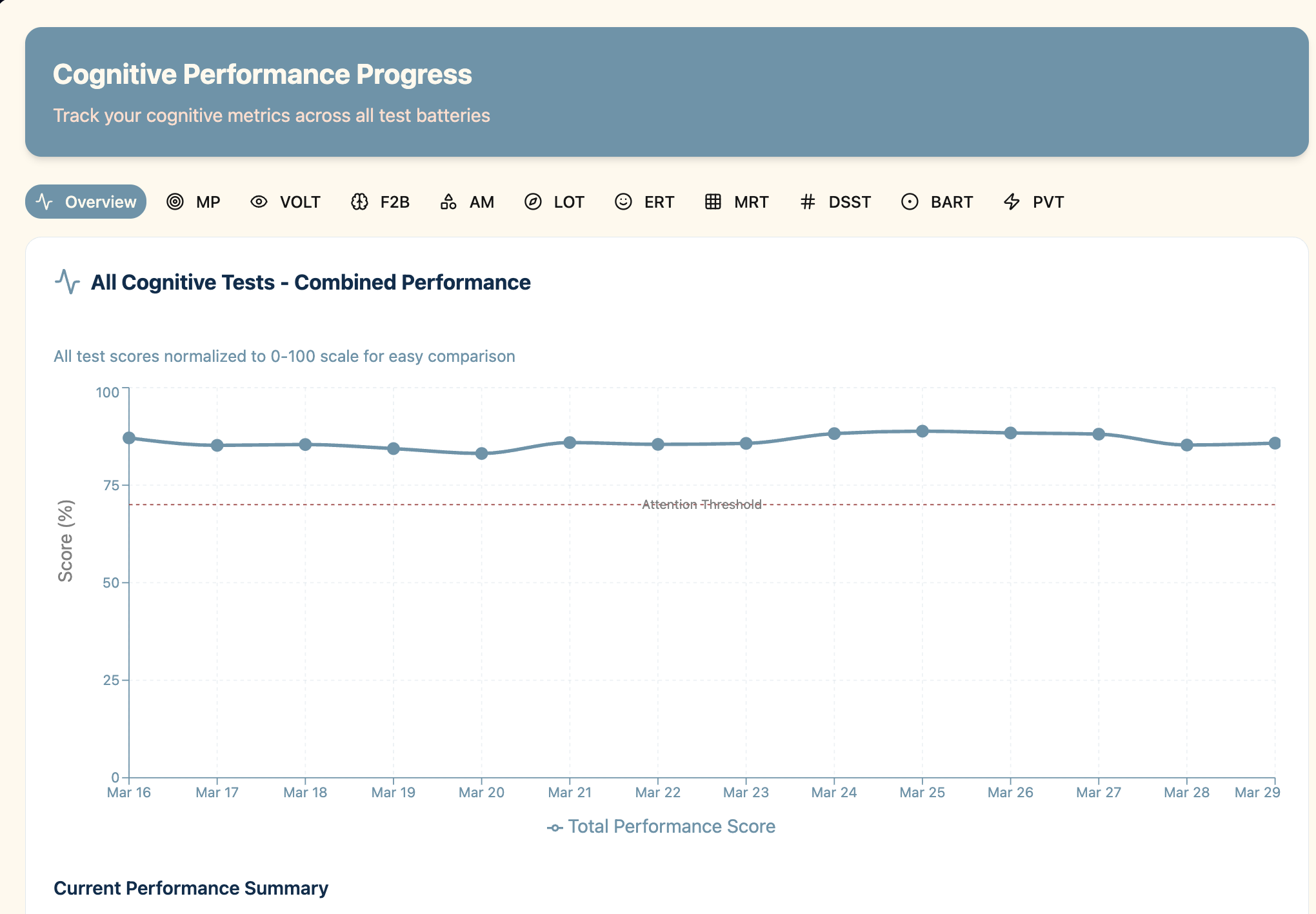
The main difficulty was simplifying the user interface even though the graphs and data could get very complex, given that we had 12 different tests running and more than 20 graphs interpreting the data from these tests. The data is complex, but the interface had to stay simple and low-effort.
Accomplishments that we're proud of
The variety of input methods and cognitive testing was fun to trouble shoot and create, and we believe the data interpreting this was also well done!
What we learned
We mostly learned a lot about using research in practical design, and the importance of trends and change over individual data points.
What's next for NASAorbit
We intend for NASAorbit to take a more active role in supporting an astronaut’s mental health, rather than acting as a passive monitor. In the future, we want the system to proactively respond to an astronaut’s SAFTE and cognitive‑energy scores–offering timely suggestions to rest, reset, or check in on teammates when their data indicates they may need it. In real missions, these SAFTE variables would come directly from the astronaut’s biosensors, not from the manual inputs we used in our demo. That integration would allow NASAorbit to provide continuous, real‑time insight and guidance throughout the mission.


Log in or sign up for Devpost to join the conversation.