-
-
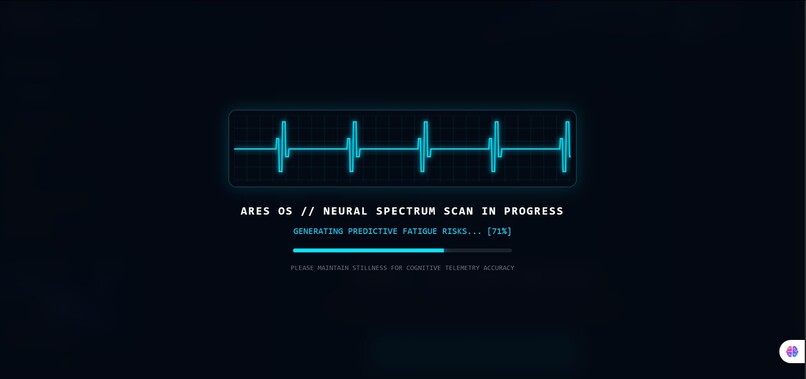
EEG test interface
-
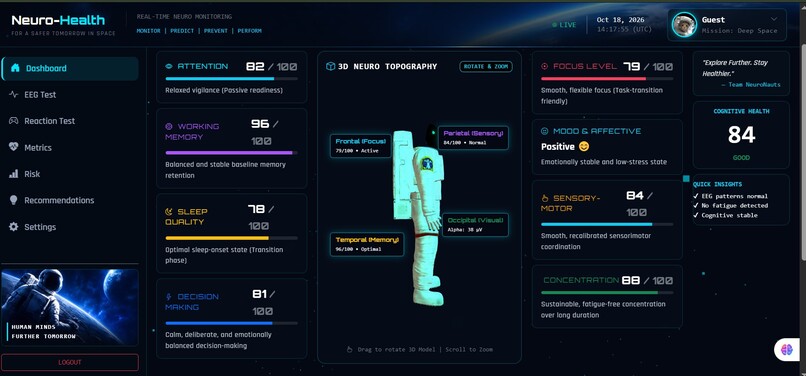
Dashboard
-
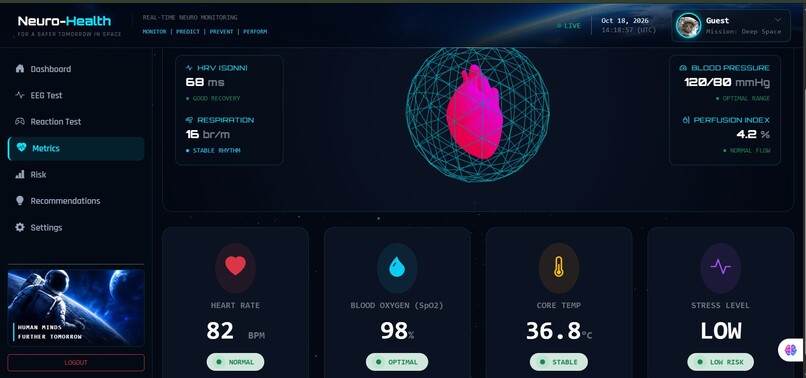
Risk Factors
-
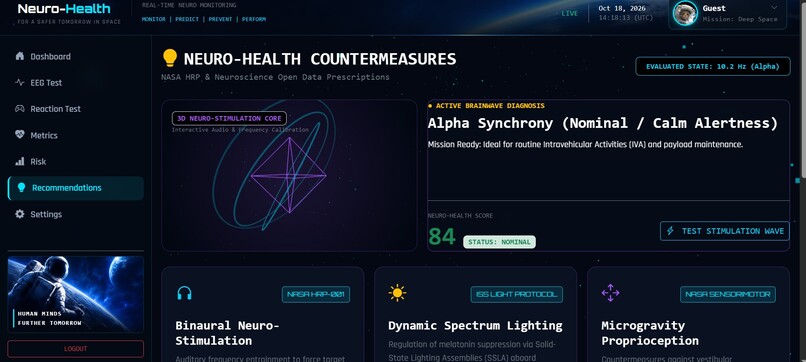
Recomendations
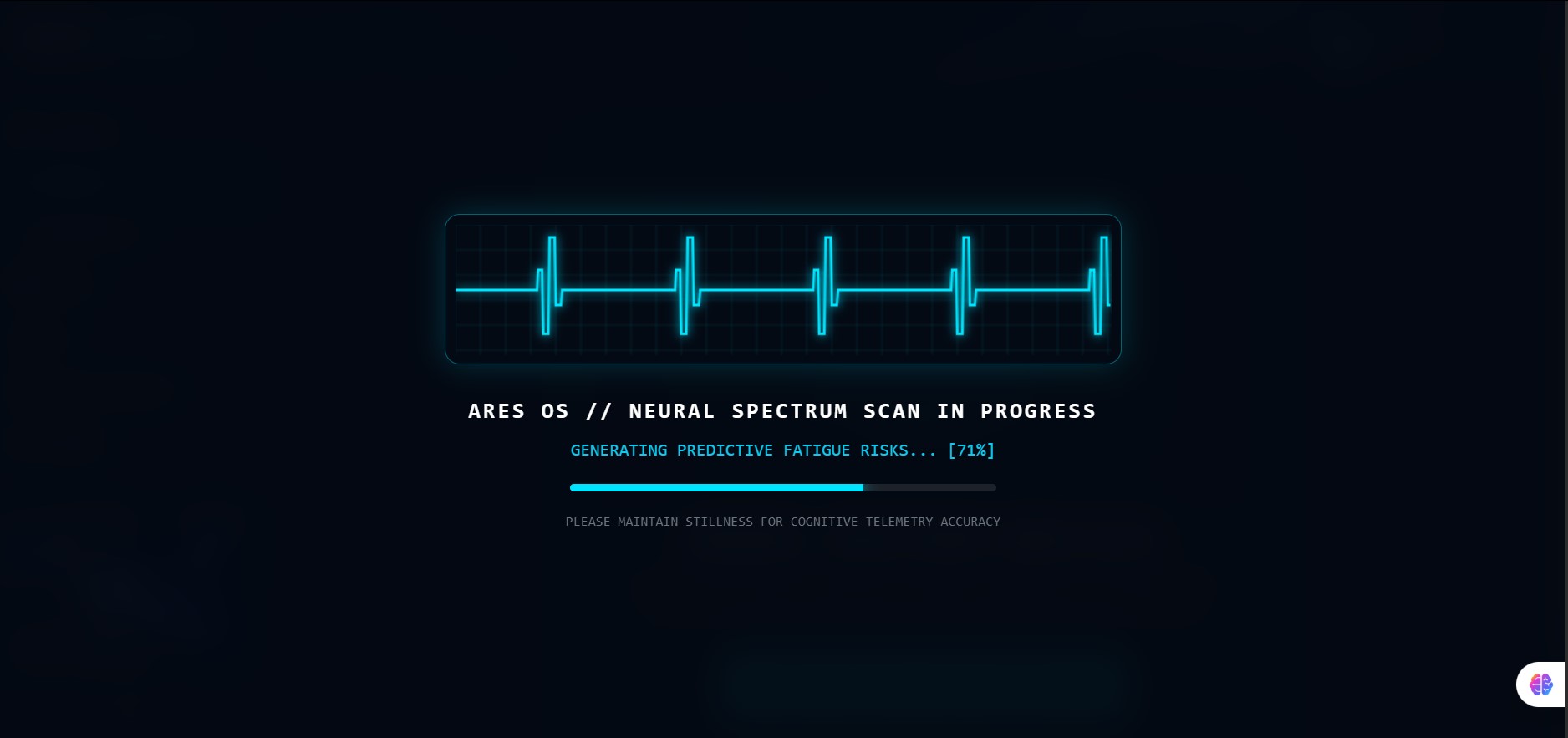
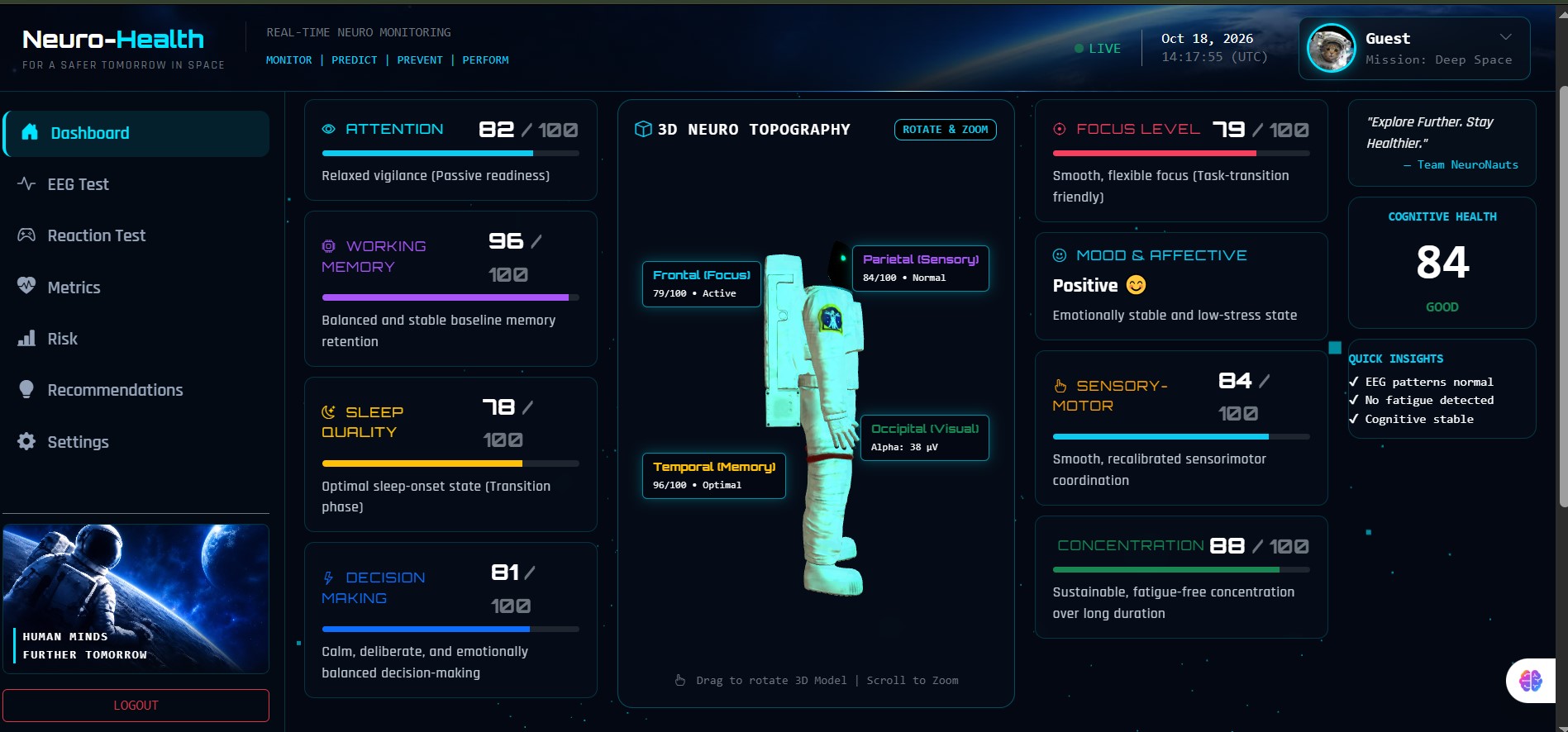
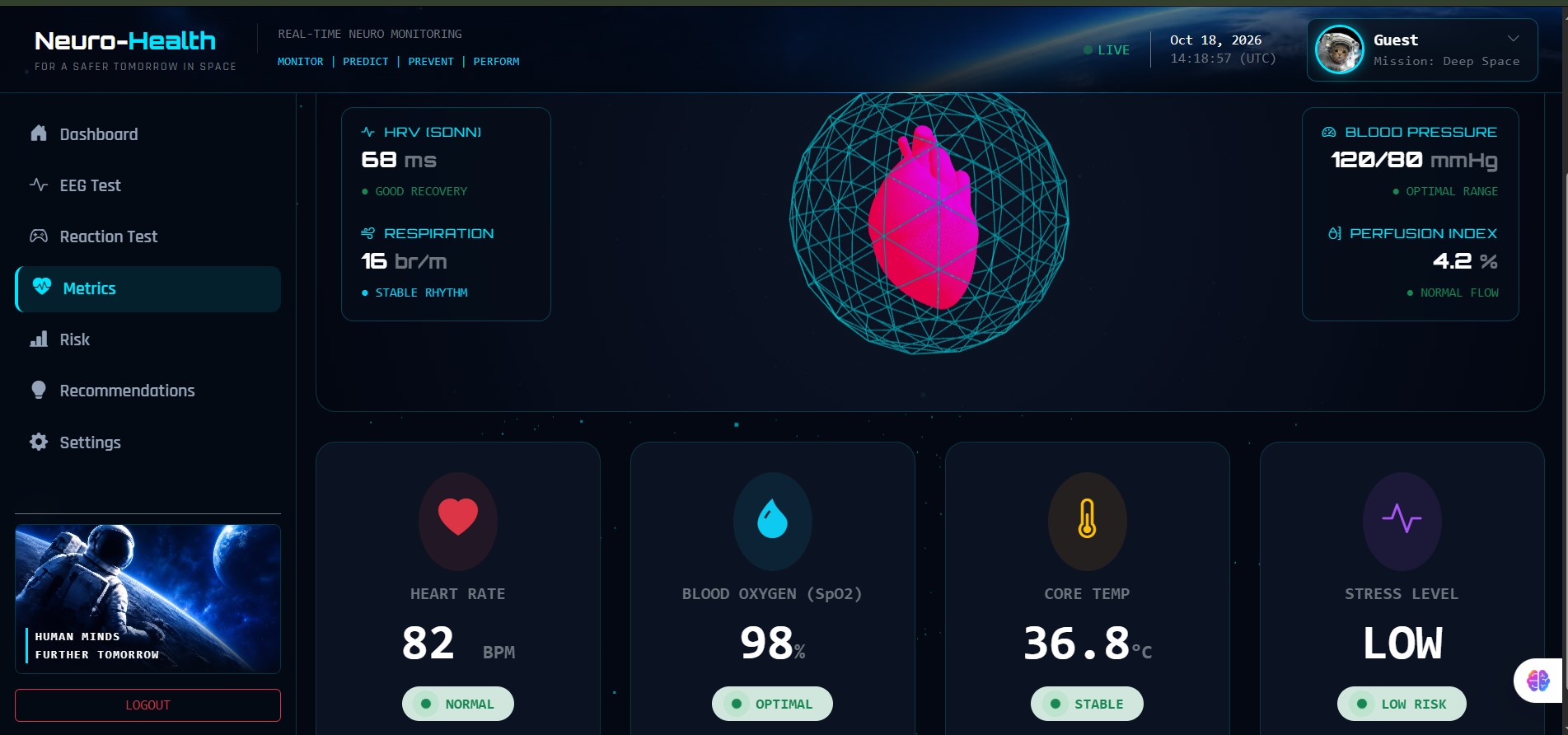
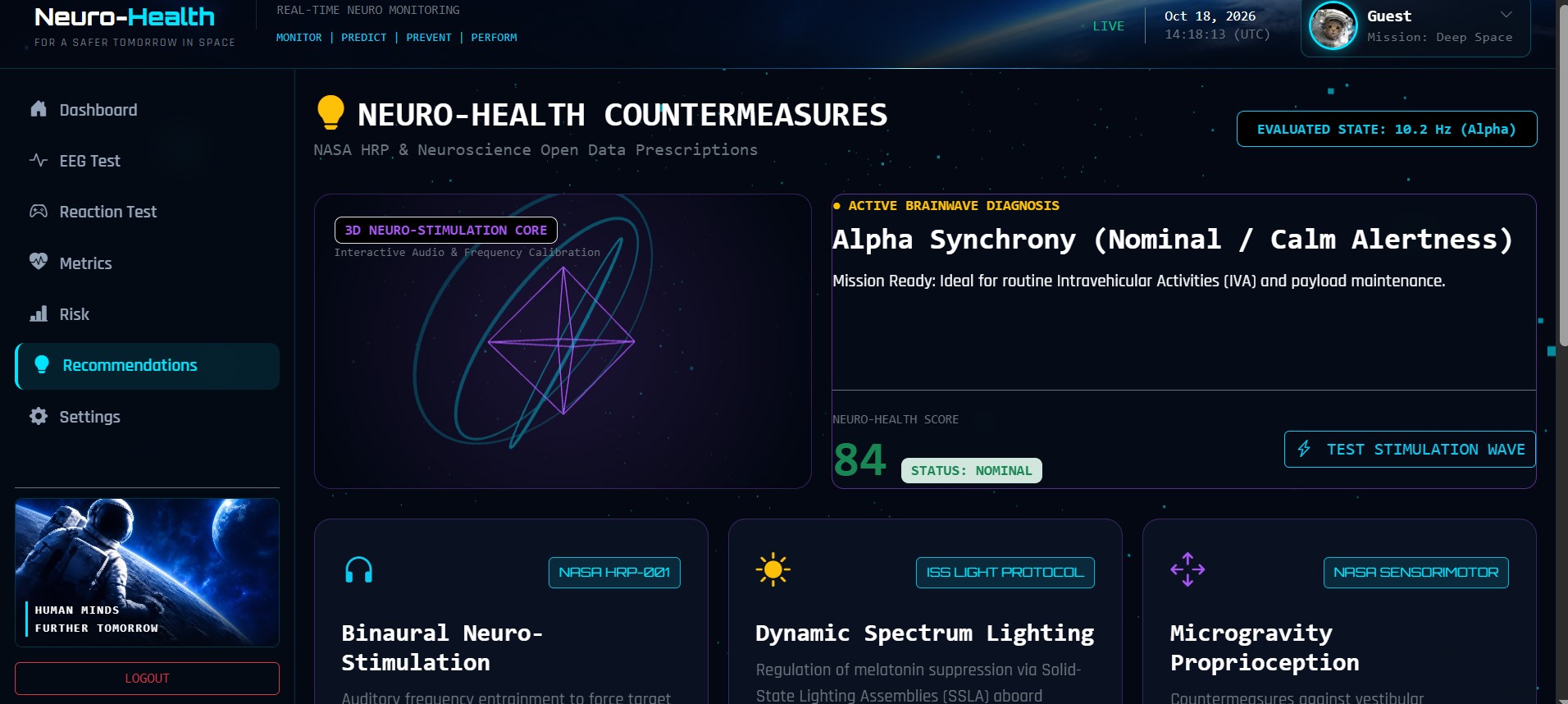
🧠 Neuro-Health — Project Story
💡 Inspiration
Deep-space exploration subjects astronauts to extreme isolation, microgravity, and severe circadian disruption. A single second of cognitive fatigue or micro-sleep during an Extravehicular Activity (EVA) or orbital docking can jeopardize an entire mission. We were inspired to build Neuro-Health to bridge the gap between space neuroscience and real-time biometric protection, ensuring astronauts stay cognitively prime when every second counts.
🛠️ How We Built It
We engineered Neuro-Health as a standalone, multi-layered neuro-monitoring architecture:
- Biometric Authentication: Real-time face detection and recognition using OpenCV ONNX models with cosine similarity scoring:
$$\text{Similarity} = \frac{\mathbf{A} \cdot \mathbf{B}}{\Vert{}\mathbf{A}\Vert{} \Vert{}\mathbf{B}\Vert{}}$$
- Cognitive & EEG Analytics: Real-time processing and frequency decomposition of neural signals ranging from Delta ($\delta: 0.5-4\text{ Hz}$) to Gamma ($\gamma: 30-100\text{ Hz}$) to compute real-time stress and fatigue indices.
- EVA Readiness & Reflex Diagnostics: Automated reaction speed benchmarks ($\Delta t$) calculated against baseline metrics to evaluate mission readiness:
$$\text{Deviation (\%)} = \left( \frac{t_{\text{current}} - t_{\text{baseline}}}{t_{\text{baseline}}} \right) \times 100$$
- Futuristic HUD UI: Interactive 3D glassmorphism interface powered by particle systems for mission control visualization.
🛑 Challenges We Faced
- Isolated Desktop Bundling: Packaging a complex backend engine with ONNX deep-learning models, static assets, and dynamic path resolution (
sys._MEIPASS) into a single executable without relying on external web browsers. - Biometric Matching Reliability: Eliminating false positives from single-frame lighting anomalies by implementing a multi-frame verification threshold ($N_{\text{hits}} \ge k$).
- Offline & Guest Accessibility: Designing a fail-safe fallback system (Guest Mode & Maintenance Mode) to allow instant diagnostic access during offline conditions.
🎓 What We Learned
- Space Neuroscience Integration: How microgravity impacts neural pathways, cognitive workload, and sensorimotor coordination during long-duration spaceflight.
- Embedded Desktop Architecture: Techniques for running background production WSGI threads alongside native desktop GUI shells.
- Biometric Optimization: Structuring lightweight computer vision pipelines optimized for real-time edge processing.
nasa_space_app_challenge_2026
Built With
- dockerfile
- html
- javascript
- procfile
- python
- tex

Log in or sign up for Devpost to join the conversation.