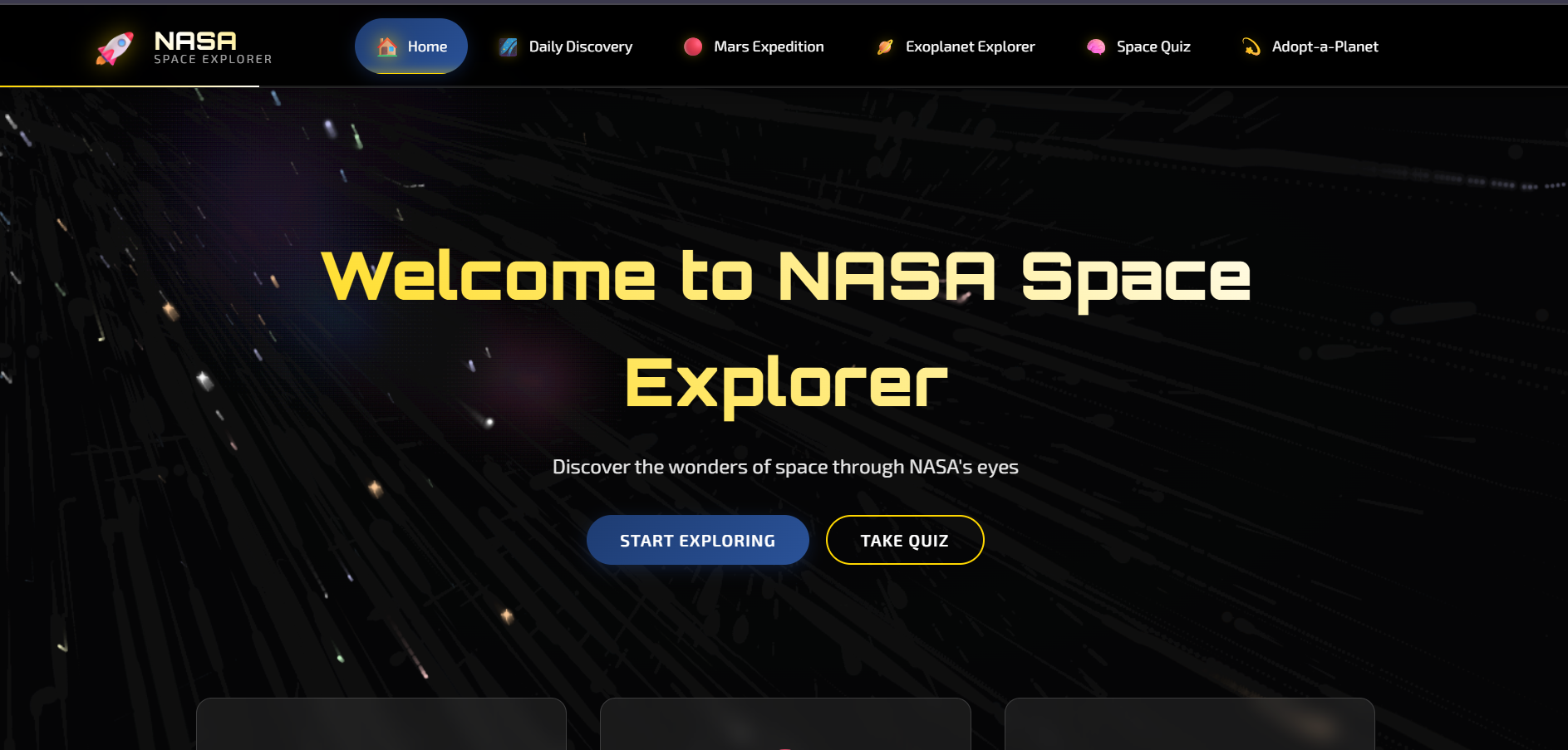
Space has always inspired humanity to dream bigger. We wanted to create something that combines science, education, and creativity using real data from NASA. Instead of building a typical weather app or to-do list, we aimed to bring the universe closer to everyone in an interactive way
NASA Space Explorer is a web-based platform that lets users:
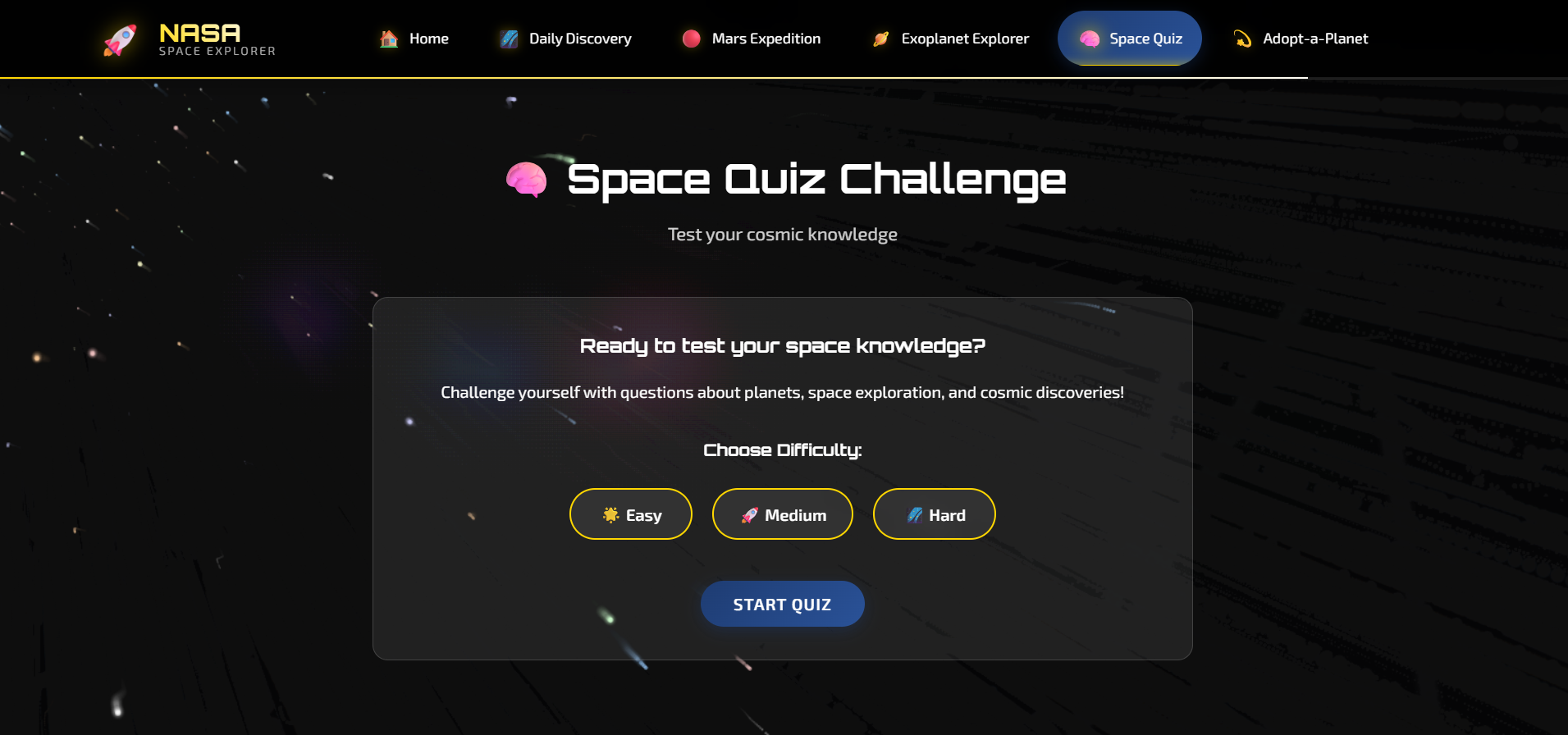
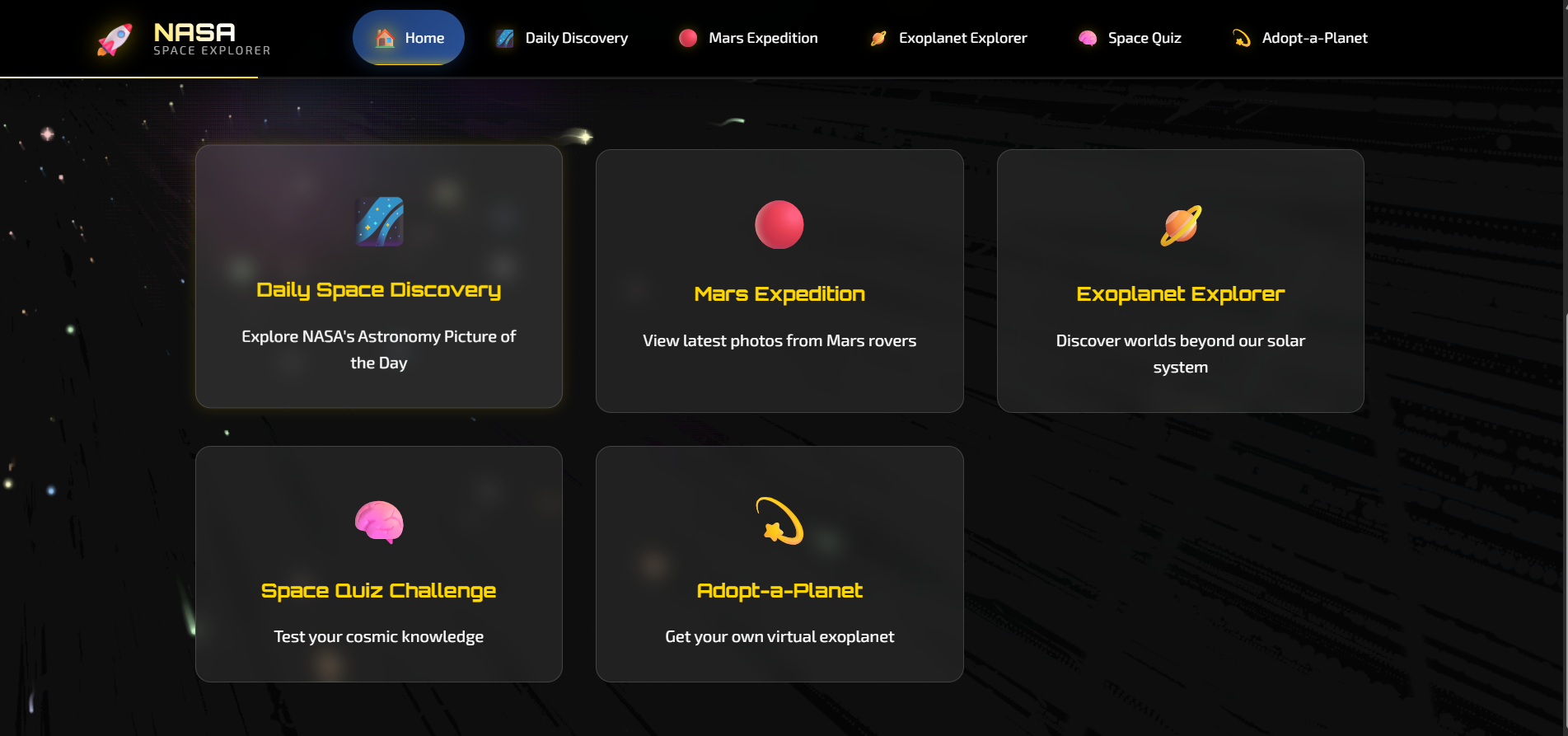
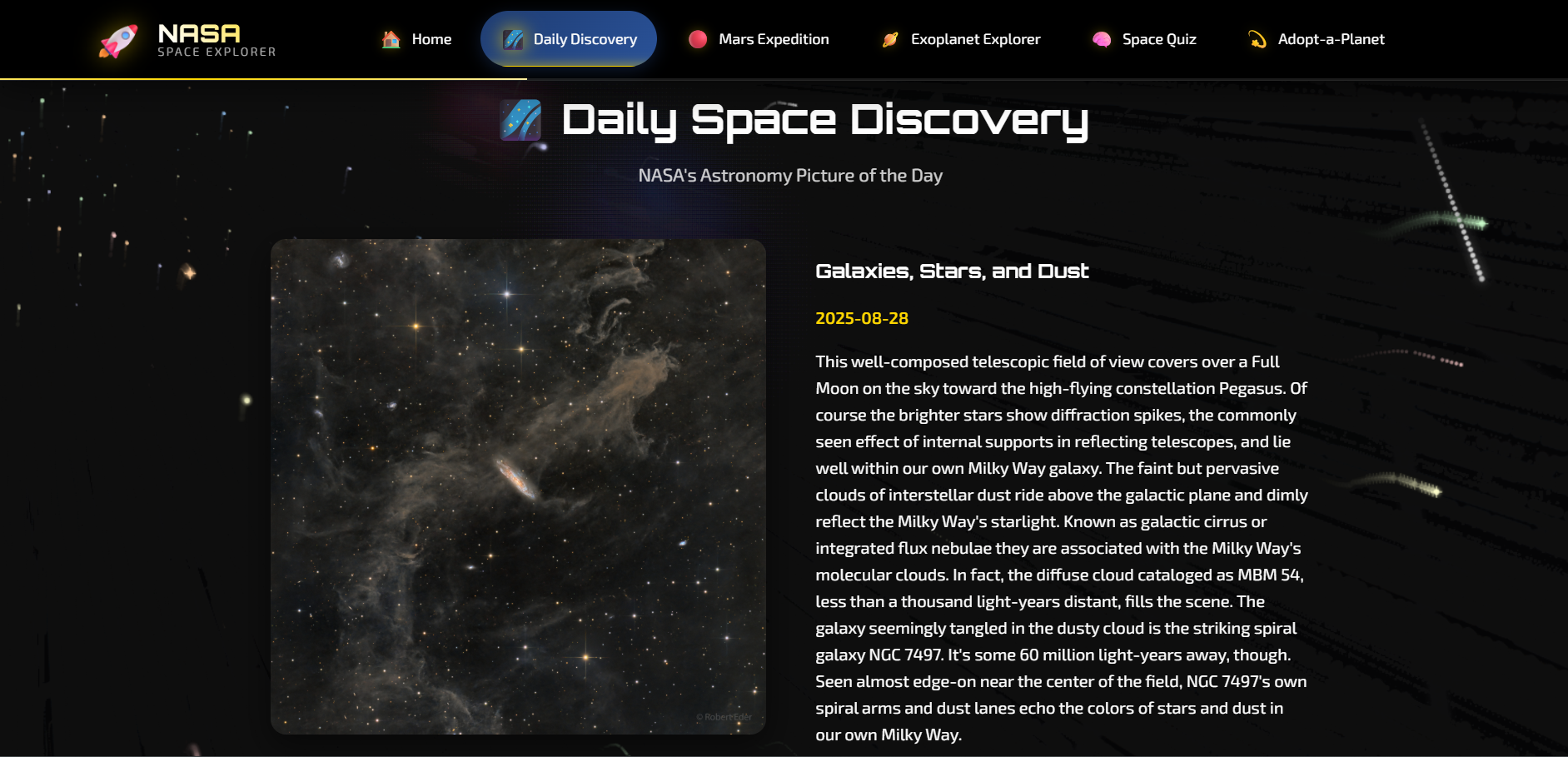
1.🌌 Discover NASA’s Astronomy Picture of the Day with descriptions. 2.🚀 Explore Mars Rover photos taken by Curiosity, Opportunity, and Perseverance. 3.🪐 “Adopt a Planet” using real Exoplanet data (randomly assigned with fun facts). 4.🌠 Learn space trivia and facts interactively. It’s both educational and entertaining, designed for students, enthusiasts, and anyone curious about space.
How we built it
1.Frontend: HTML, CSS, JavaScript (no frameworks). 2.APIs Used: NASA Astronomy Picture of the Day API, Mars Rover Photos API, Exoplanet Archive API.
Features: 1.Fetch and display daily space content dynamically. 2.Custom UI with starfield animations for immersion. 3.Local storage to let users “save” their favorite discoveries.
Challenges we ran into
1.Handling multiple APIs and combining data smoothly. 2.Designing a UI that balances scientific accuracy with fun interactivity. 3.Managing CORS issues and API rate limits with vanilla JavaScript. 4.Ensuring responsiveness so it looks good on mobile and desktop.
Accomplishments that we're proud of
1.Built a complete interactive experience with just vanilla HTML/CSS/JS. 2.Made space exploration feel fun and accessible. 3.Successfully integrated multiple NASA APIs in a single project. 4.Positive feedback from peers who found it educational and exciting.
What we learned
1.How to work with multiple external APIs. 2.The importance of good UI/UX in making data engaging. 3.Team collaboration and dividing tasks effectively. 4.How to debug and handle real-world API issues (limits, formatting, etc.).
What's next for NASA Space Explorer
1.Add 3D visualizations of planets and stars using WebGL/Three.js. 2.Implement AR mode where users can project planets in their room. 3.Expand educational features (quizzes, timelines, missions). 4.Allow teachers to use it as a classroom tool for interactive learning.
Built With
- css
- html
- javascript
- nasaopendata
- openweathermap

Log in or sign up for Devpost to join the conversation.