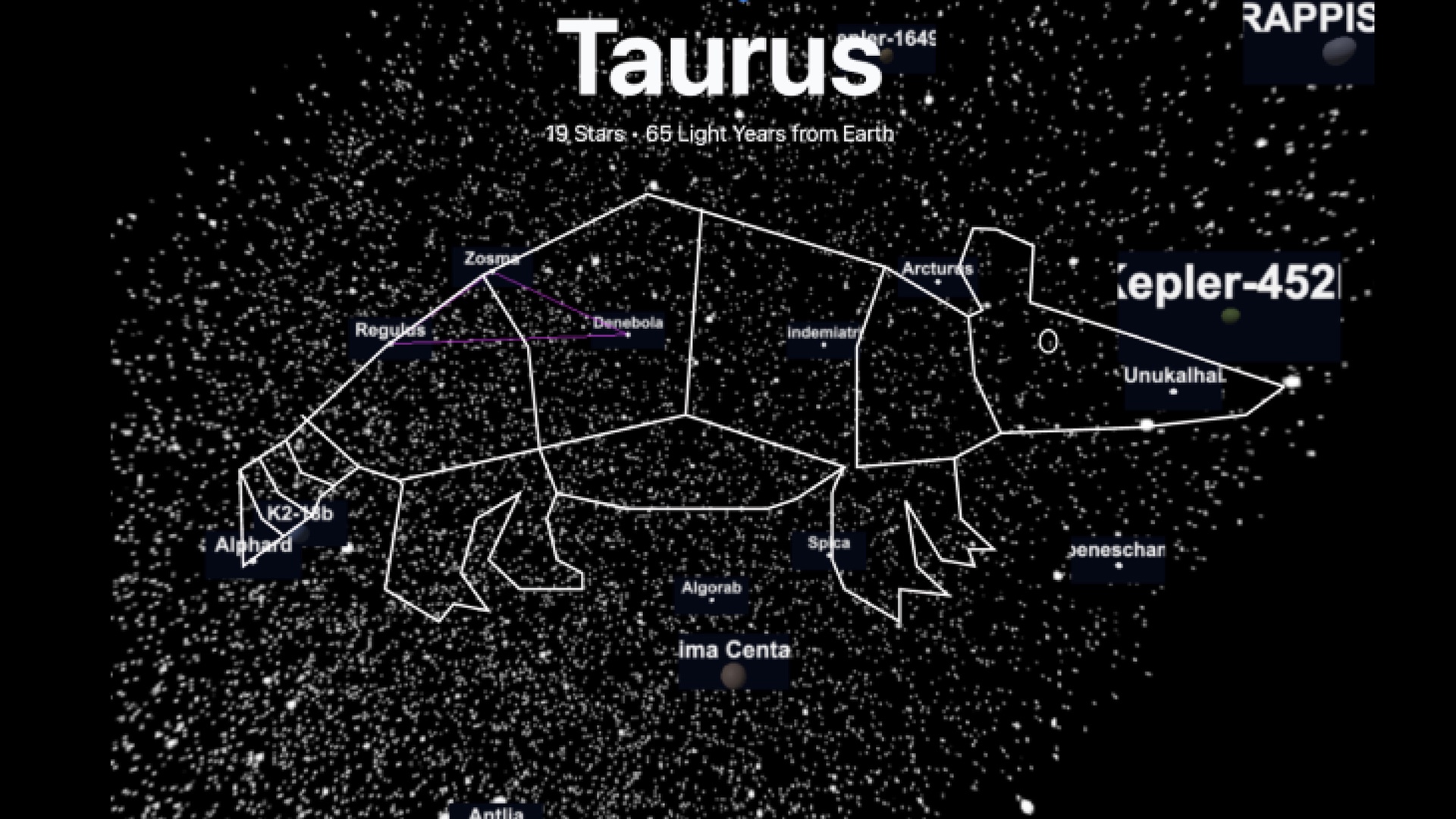
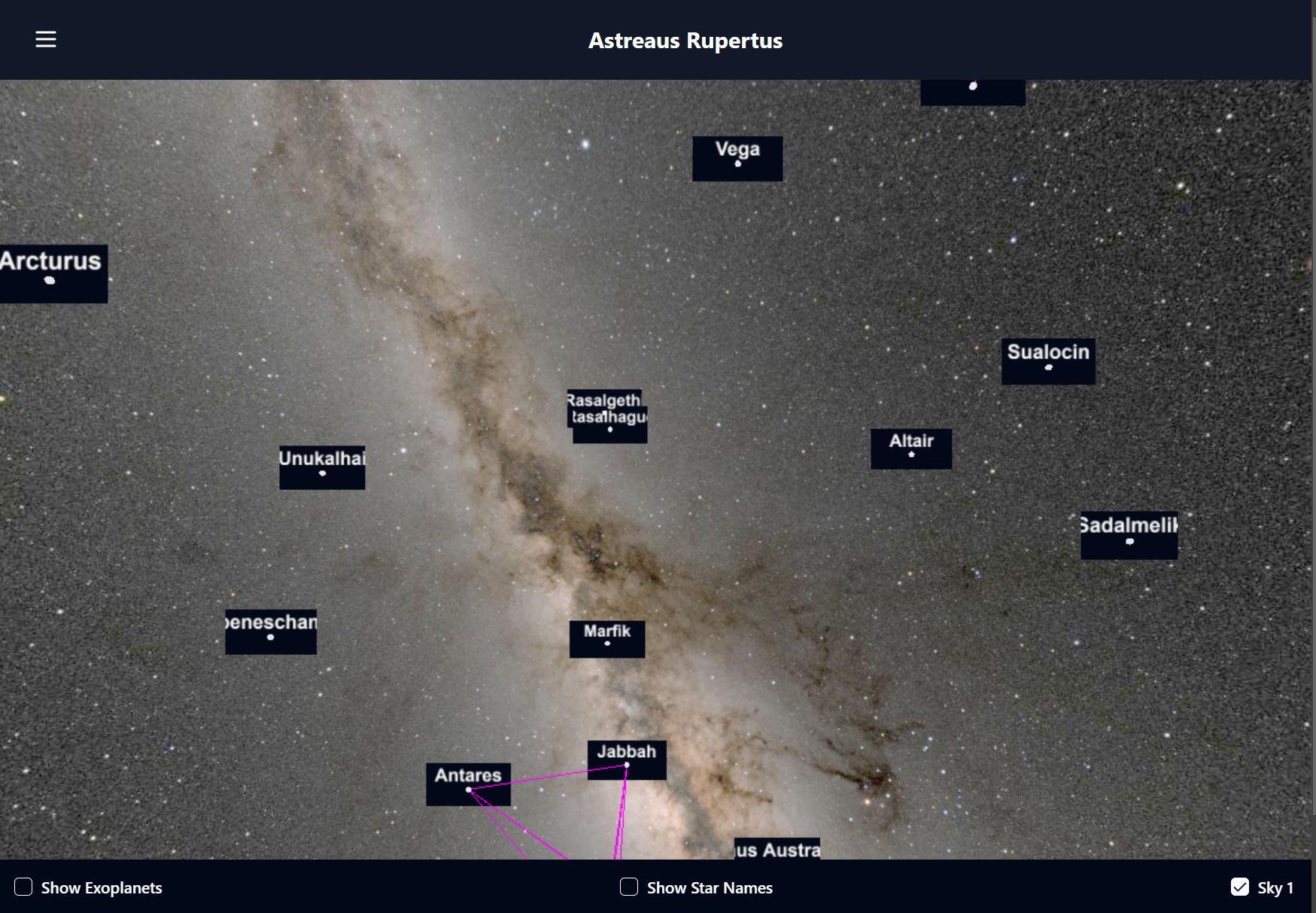
Exploring the Exosky with Rupert Our team, Astreaus Rupertus, developed a web application for the NASA Space Apps Challenge Exosky, where users can explore the night sky from the perspective of various exoplanets. The app allows kids, students, and anyone to visualize star charts as they would appear from a section of over 5500 known exoplanets, offering an interactive and educational experience. Users can select an exoplanet, explore its unique night sky, and draw their own constellations. Inspired by the mascot Rupert the Space Armadillo, our project weaves together storytelling and space exploration, allowing students to connect with the vast universe. The app provides various levels of complexity depending on the user’s age or interest, making it a versatile educational tool. The key features include: Exoplanet selection with customized star charts. Interactive star maps, allowing users to create constellations and explore star data. Customization options for advanced users, including grid overlays and star detail information. Our app offers an immersive way for students to engage with astronomy, sparking curiosity and imagination about the universe and the possibilities beyond our world.
Our project is a web application that allows users, particularly students, to explore what the night sky would look like from the perspective of different exoplanets. Using data from over 5500 exoplanets and vast star catalogs, the app generates a star chart that is unique to each exoplanet’s perspective. Users can interact with the star chart, draw their own constellations, and learn about stars' brightness and names. It provides an educational, interactive experience designed to spark curiosity and creativity about space exploration and the universe.
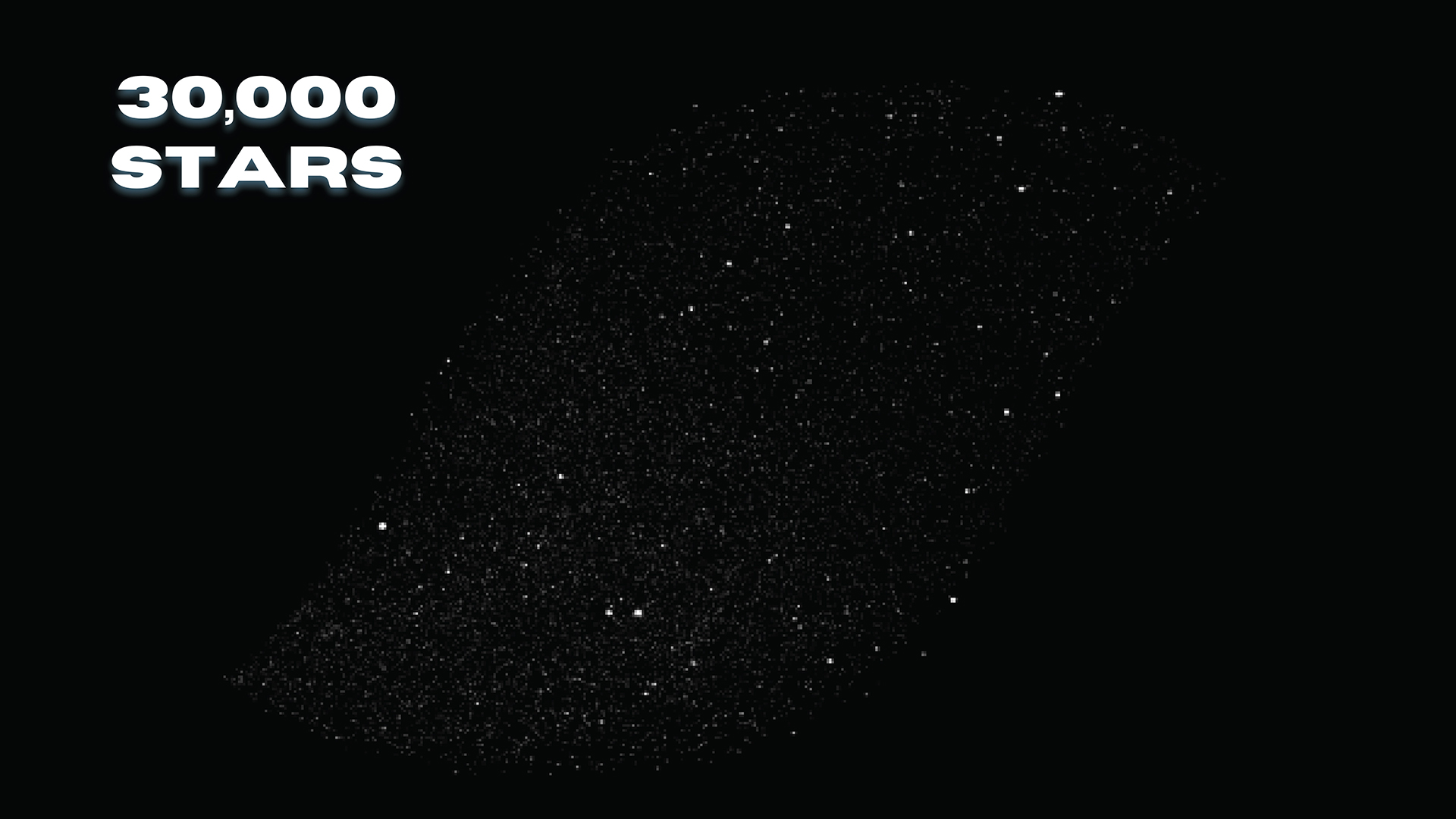
The app leverages real space data from the Gaia mission and combines it with exoplanet data to calculate how stars would appear in the sky from each exoplanet’s surface. After selecting an exoplanet, the app filters and visualizes relevant stars through a 3D star map, which users can interact with in real time. Advanced users can toggle different overlays such as grid lines, and even customize the pole orientation of the exoplanet to see the sky from different angles.
The app also includes storytelling elements, with Rupert the Space Armadillo acting as a guide. Through Rupert’s journey, users are encouraged to create their constellations, name them, and share their discoveries.
Gaia Space Data: Used for accessing detailed star catalogs and exoplanet data. Canva: For creating presentations and visuals to communicate the project effectively. Unity: Used for visualizing the star data and filtering the stars based on exoplanet perspectives in a 3D environment. GPT Engineer: Built the React app that calls Unity and handles the visualization of star data. Also used for web hosting. Python: Utilized to download and process space data from Gaia, unzipping files and preparing them for use in Unity and React. ChatGPT: Assisted with data organization, debugging, and generating assets and ideas for the app's user interface and narrative. GitHub Copilot: Helped with generating images and code snippets for image processing. Giphy: Used to create engaging GIFs for dynamic elements in the app. Suno: Generated the audio elements for the storytelling portions. Audacity: Used to edit audio files to ensure clarity and professionalism. Whyp Pro: For hosting the generated audio files used within the app.

Log in or sign up for Devpost to join the conversation.