-
-
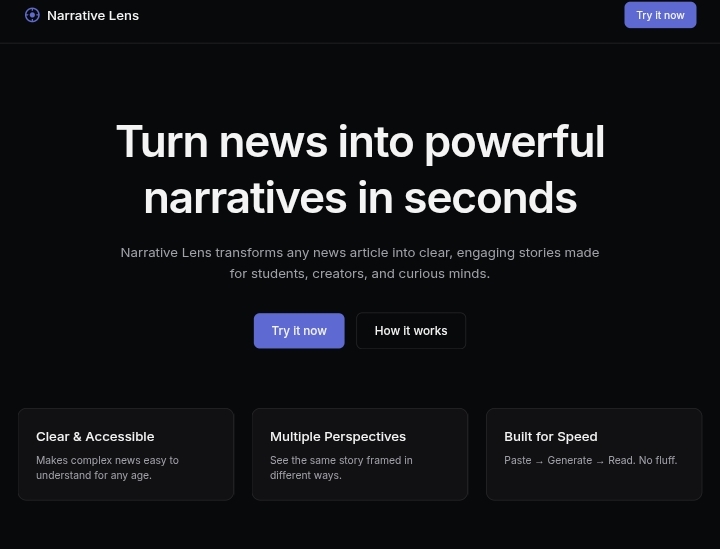
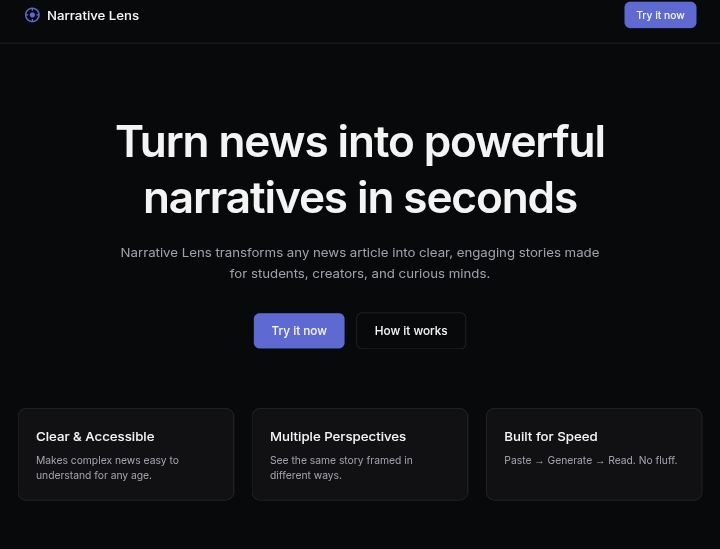
Hero section
-
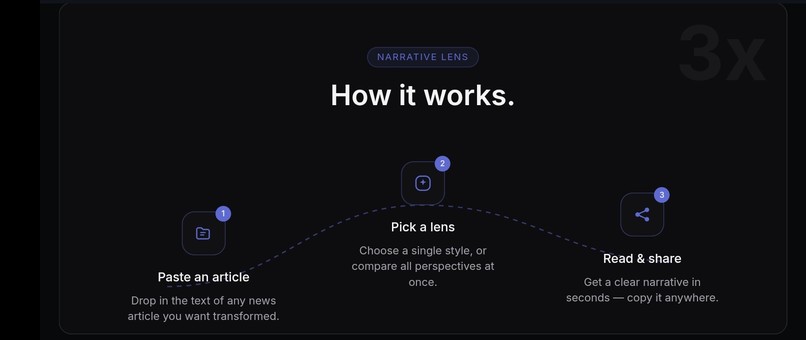
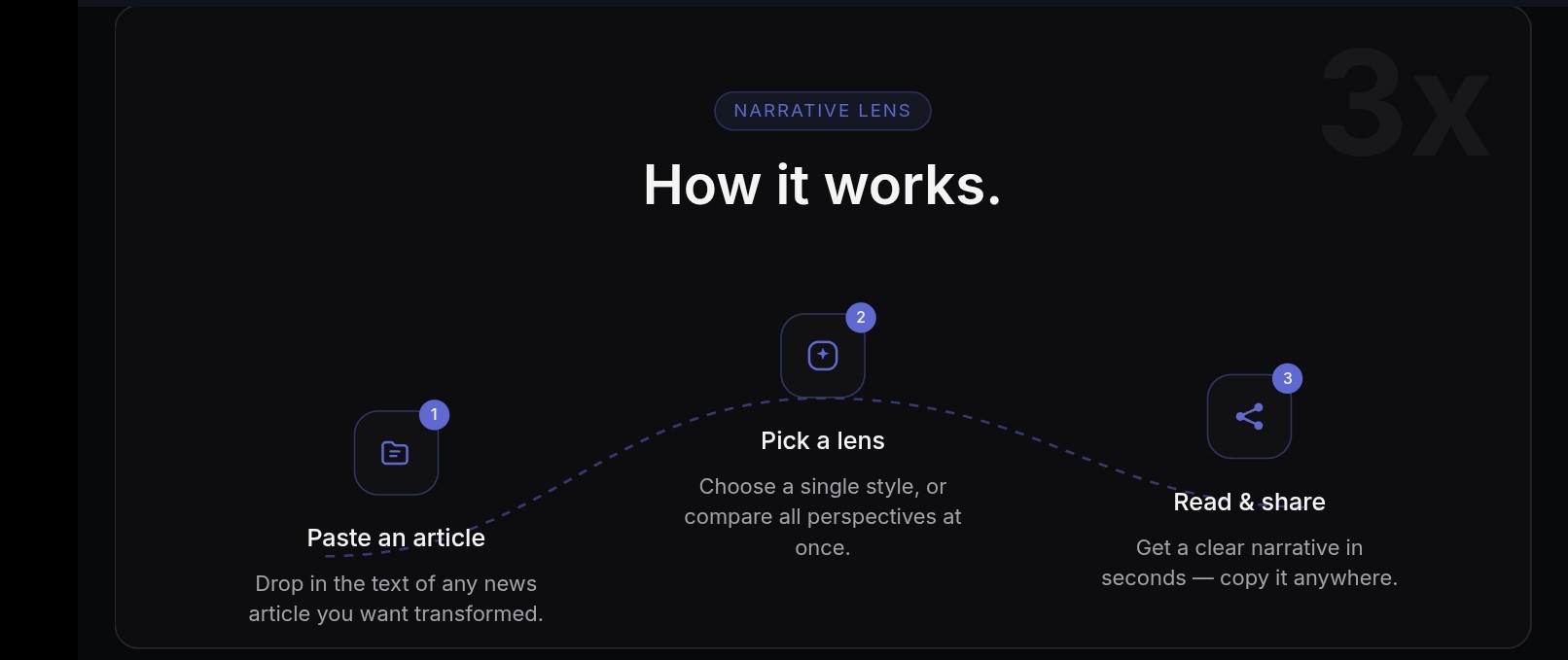
How it works landing page
-
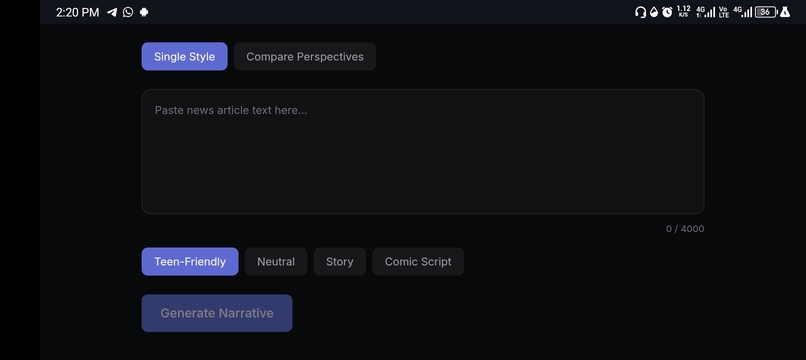
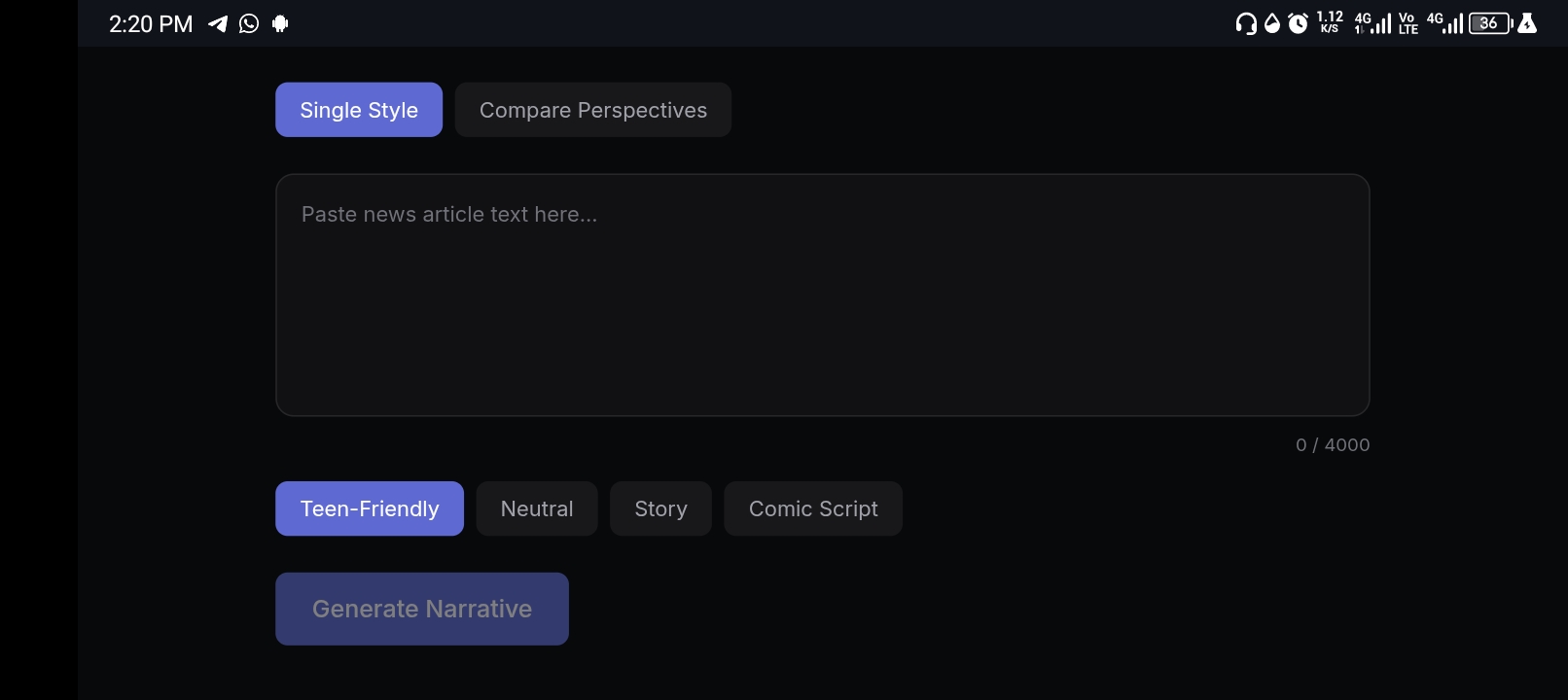
article space
-
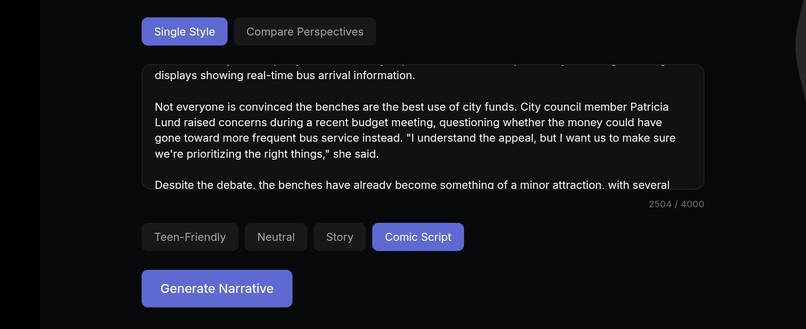
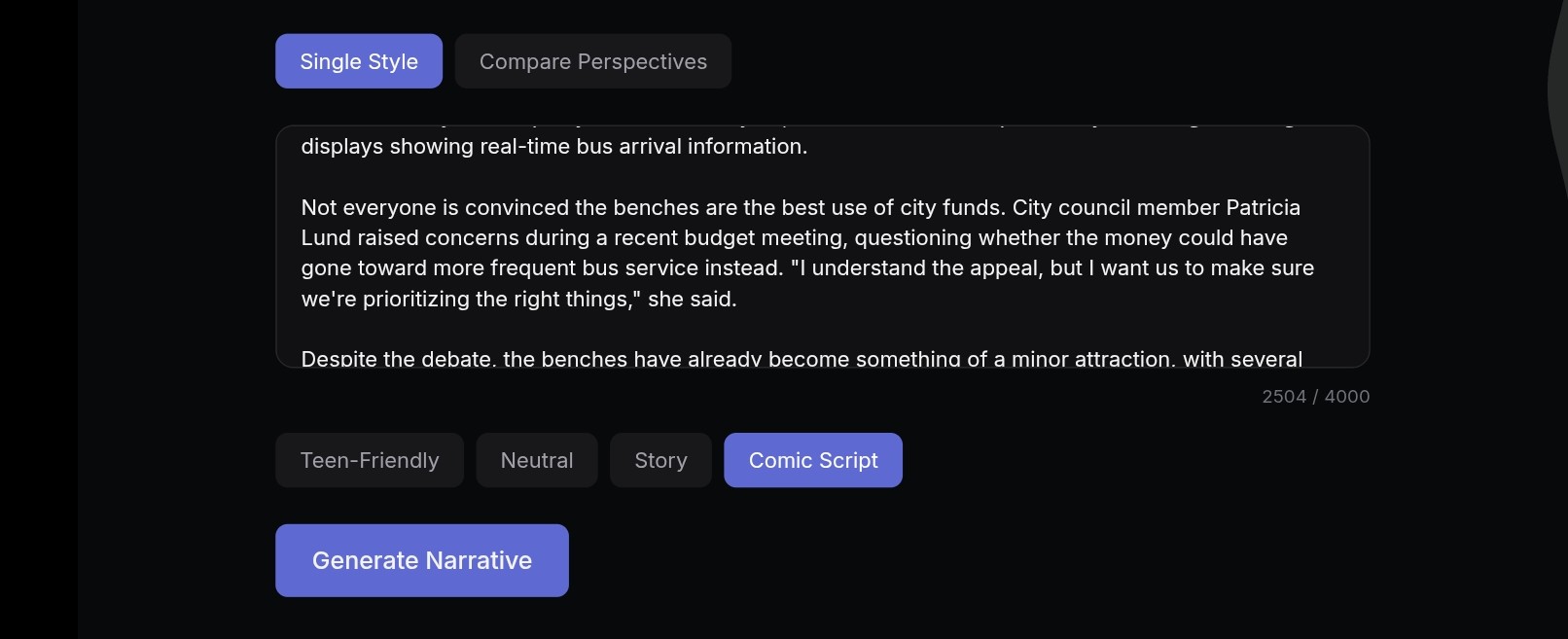
real user test
-
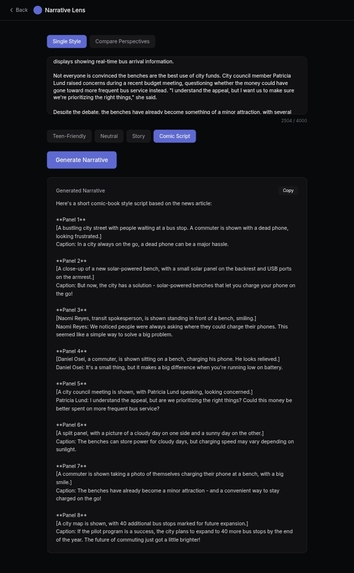
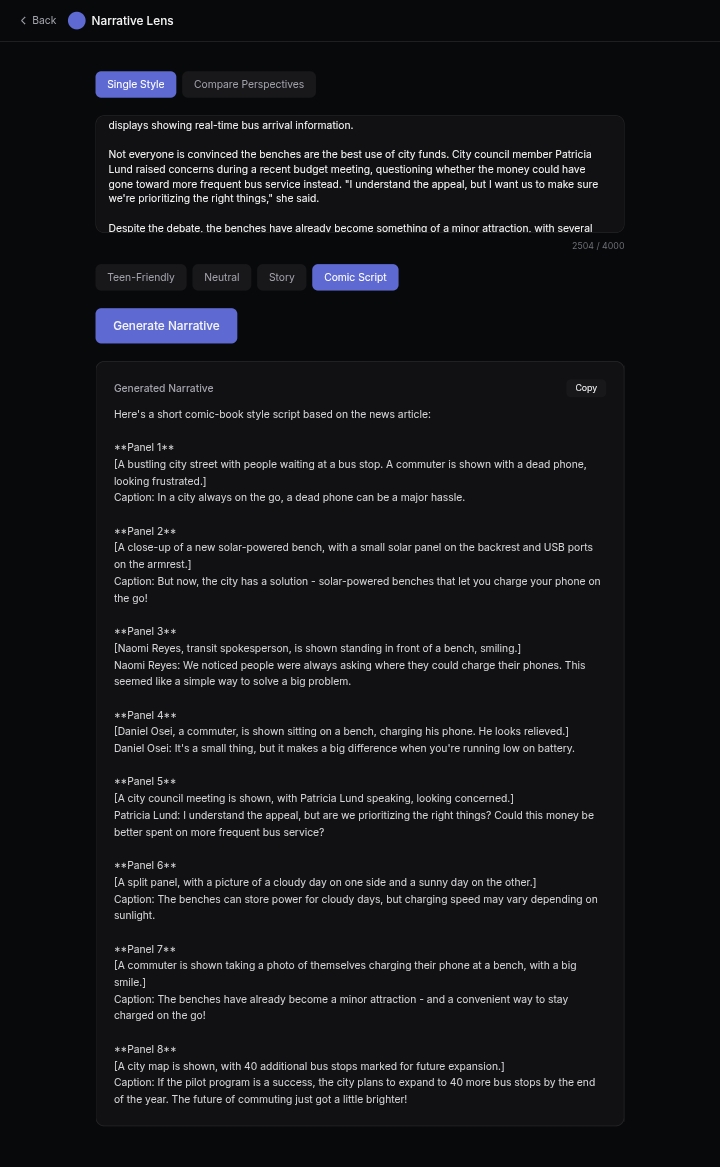
test result success
-
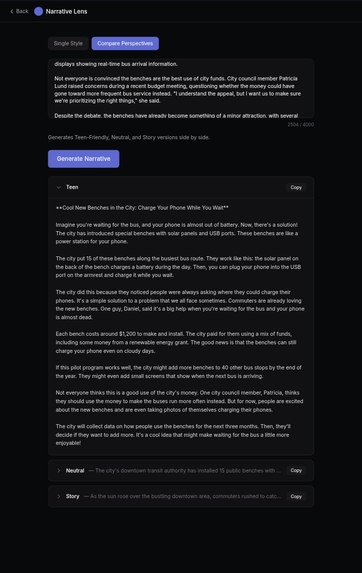
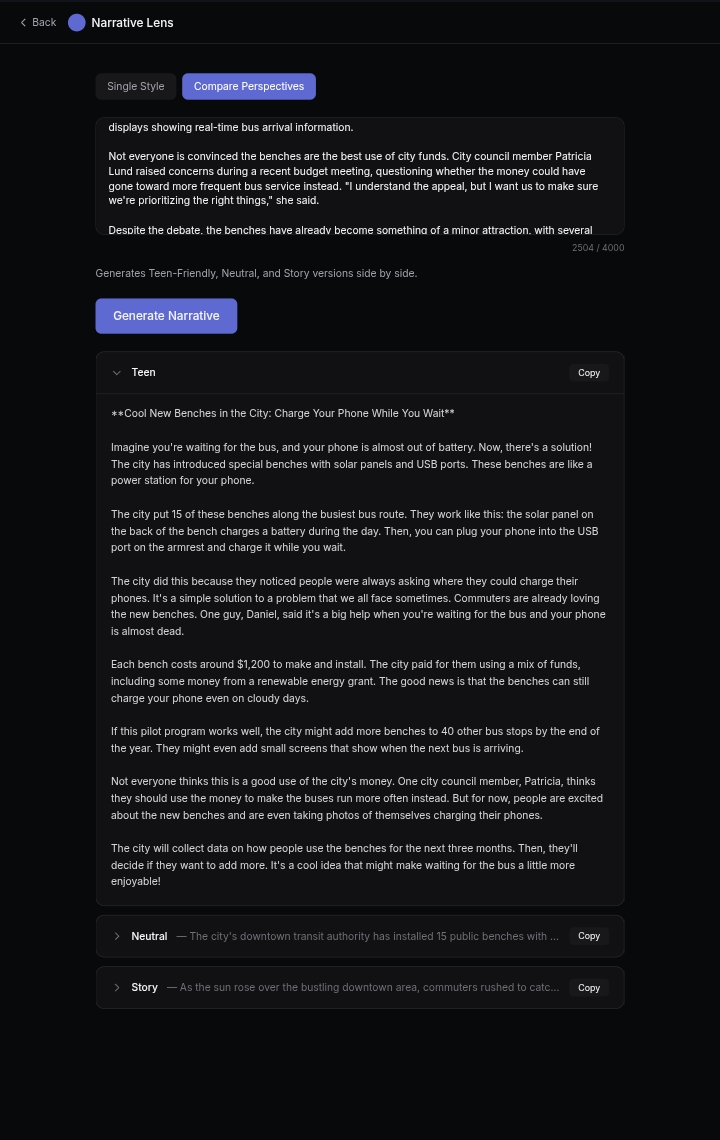
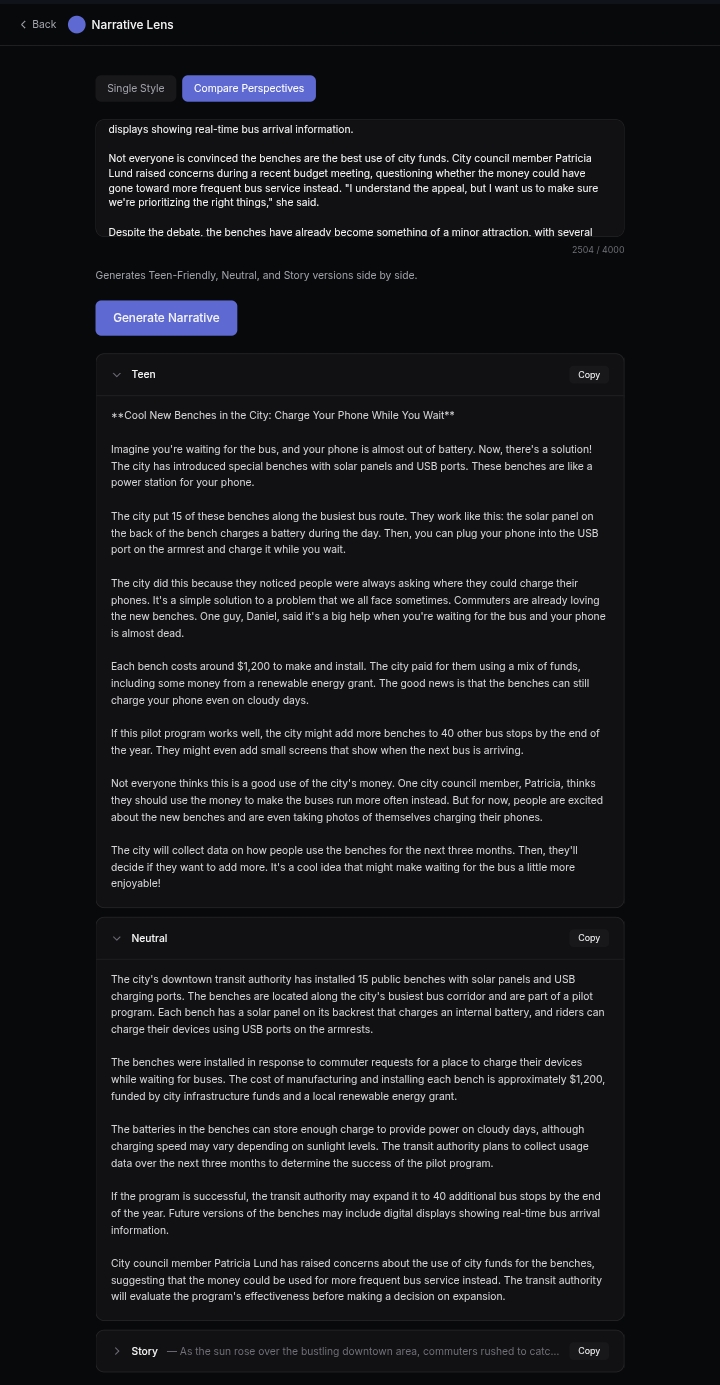
compare perspectives news article test
-
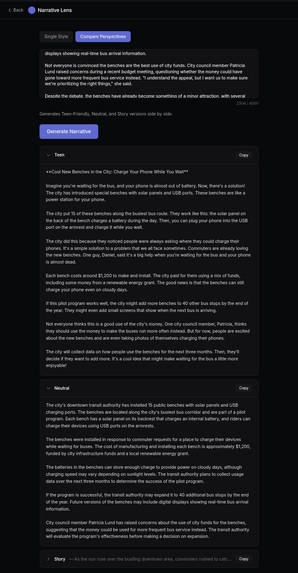
more results from compare perspectives
Inspiration
News is written for a general audience that doesn't really exist, dense language, one-sided framing, and no accessibility for younger readers or anyone who just wants the facts without the noise. I wanted to build something that keeps the facts intact but lets the reader choose how the story reaches them.
What it does
Narrative Lens takes a news article and rewrites it through different lenses:
- Teen-Friendly clear, simple language for younger or newer readers
- Neutral stripped of emotional language, facts only
- Story the same facts told as an engaging narrative
- Comic Script a panel-by-panel comic-style rewrite
It also has a Compare Perspectives mode that generates the Teen, Neutral, and Story versions all at once, so you can see how the same event reads differently depending on the framing- side by side, in a clean collapsible layout. It's not a chatbot and it's not a summarizer, it's a narrative transformation engine.
How we built it
Built with Next.js (App Router) and TypeScript, styled with Tailwind CSS using a custom dark theme inspired by Linear's minimal UI language and Notion's block-based content layout. The rewriting itself is powered by Llama 3.3 70B through Groq's API , the Compare Perspectives mode fires all three requests in parallel so the wait time stays close to a single generation. The app is deployed on Render.
Challenges we ran into
Balancing scope against a tight timeline the original idea included URL scraping and real bias detection, both of which are much harder problems than they first appear (fragile scraping against paywalls, and genuine bias detection being closer to a research problem than a prompt). I cut both to focus on making the core narrative transformation feature and the Compare Perspectives view solid and polished instead of shipping several half-finished features.
Accomplishments that we're proud of
Getting a fully working, deployed AI-powered tool live end-to-end, real API integration, input validation, error handling, and a design system built from scratch rather than a template within a single hackathon weekend.
What we learned
How much of building a good AI product is actually about scope discipline cutting ambitious features early to protect the ones that matter most to the core idea, and how much a clear visual identity changes how "finished" a project feels even with a small feature set.
What's next for Narrative lens
URL input (paste a link instead of raw text)
- More narrative styles
- Saving/sharing generated narratives via a shareable link
- Actual bias/framing analysis rather than a labeled style
Built With
- groq
- llama
- node.js
- react
- render
- tailwindcss
- typescript


Log in or sign up for Devpost to join the conversation.