Inspiration
We wanted to make molecular science more interactive and accessible by bringing real protein structures into mixed reality. Instead of studying molecules on a flat screen, users can explore them naturally with their hands.
What it does
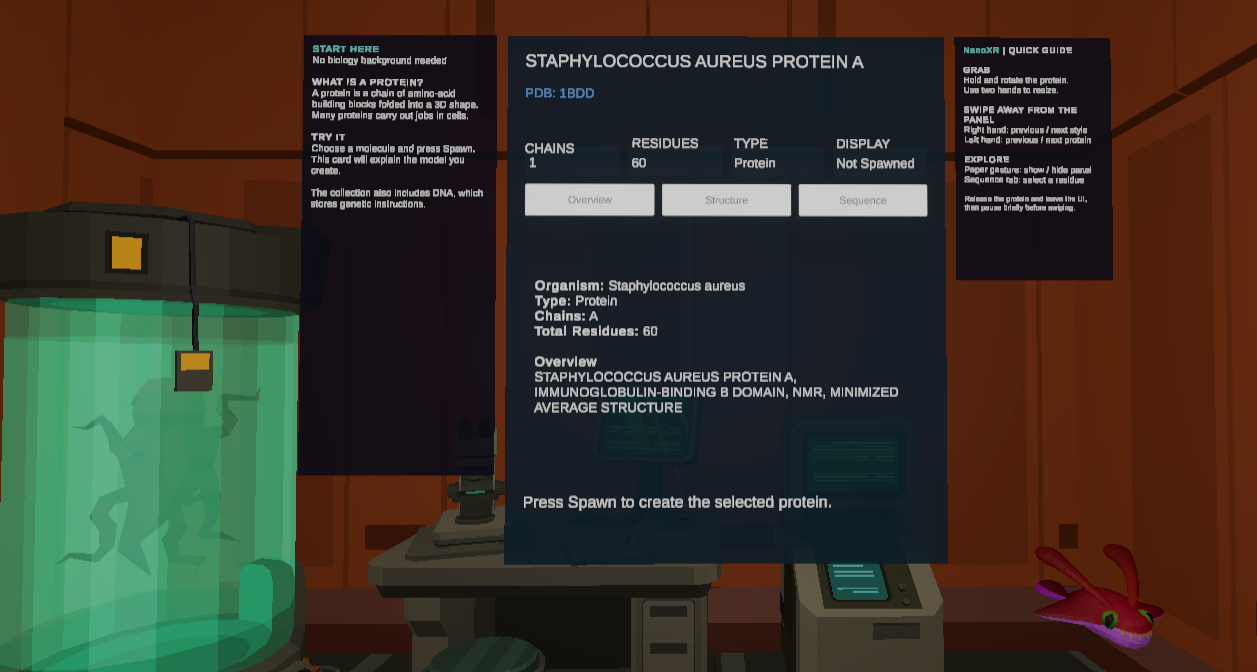
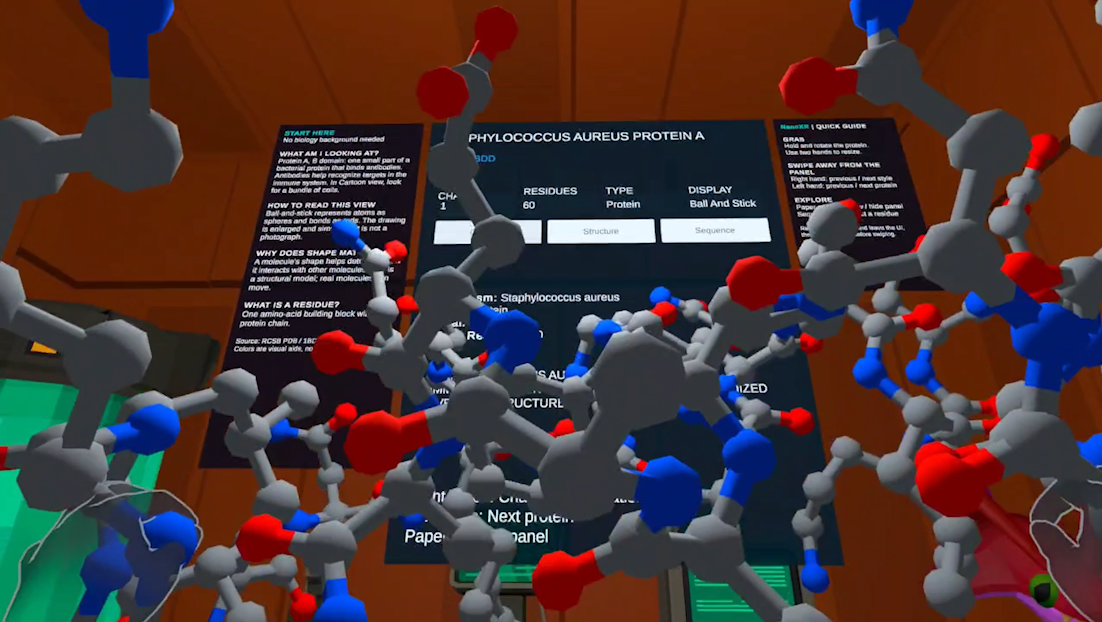
NanoXR lets users grab, rotate, resize, and explore 3D protein structures using hand tracking on Meta Quest. Users can switch between molecular visualization modes, examine protein chains, and explore amino acid sequences through an interactive interface.
How we built it
We developed NanoXR using Unity, C#, Meta XR, and XR Hands. Protein structures were obtained from the Protein Data Bank (PDB), processed with UCSF ChimeraX, and optimized using Blender for standalone VR performance.
Challenges we faced
Our biggest challenges were optimizing complex molecular models for Meta Quest, improving gesture recognition, and maintaining smooth performance while preserving molecular details.
What we learned
We gained experience in mixed reality development, hand tracking, 3D model optimization, and transforming scientific data into immersive educational experiences.
What's next
We plan to introduce interactive amino acid selection, molecular binding-site visualization, custom molecule generation, and more advanced educational features.
