-
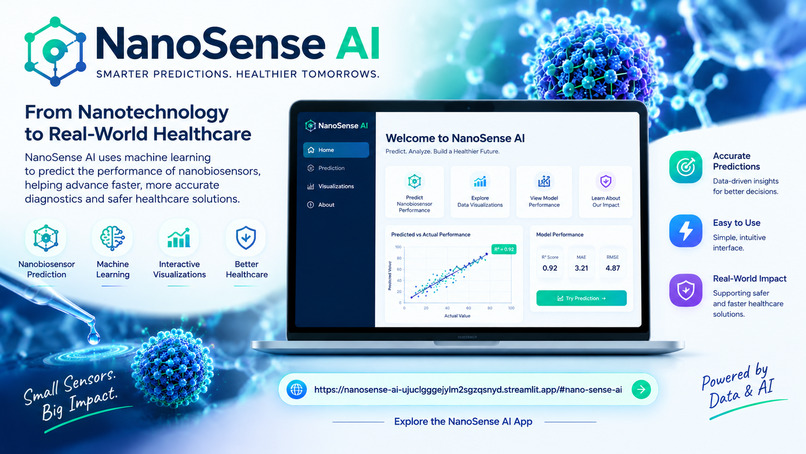
NanoSense AI — Where Chemistry Meets Intelligent Innovation
-
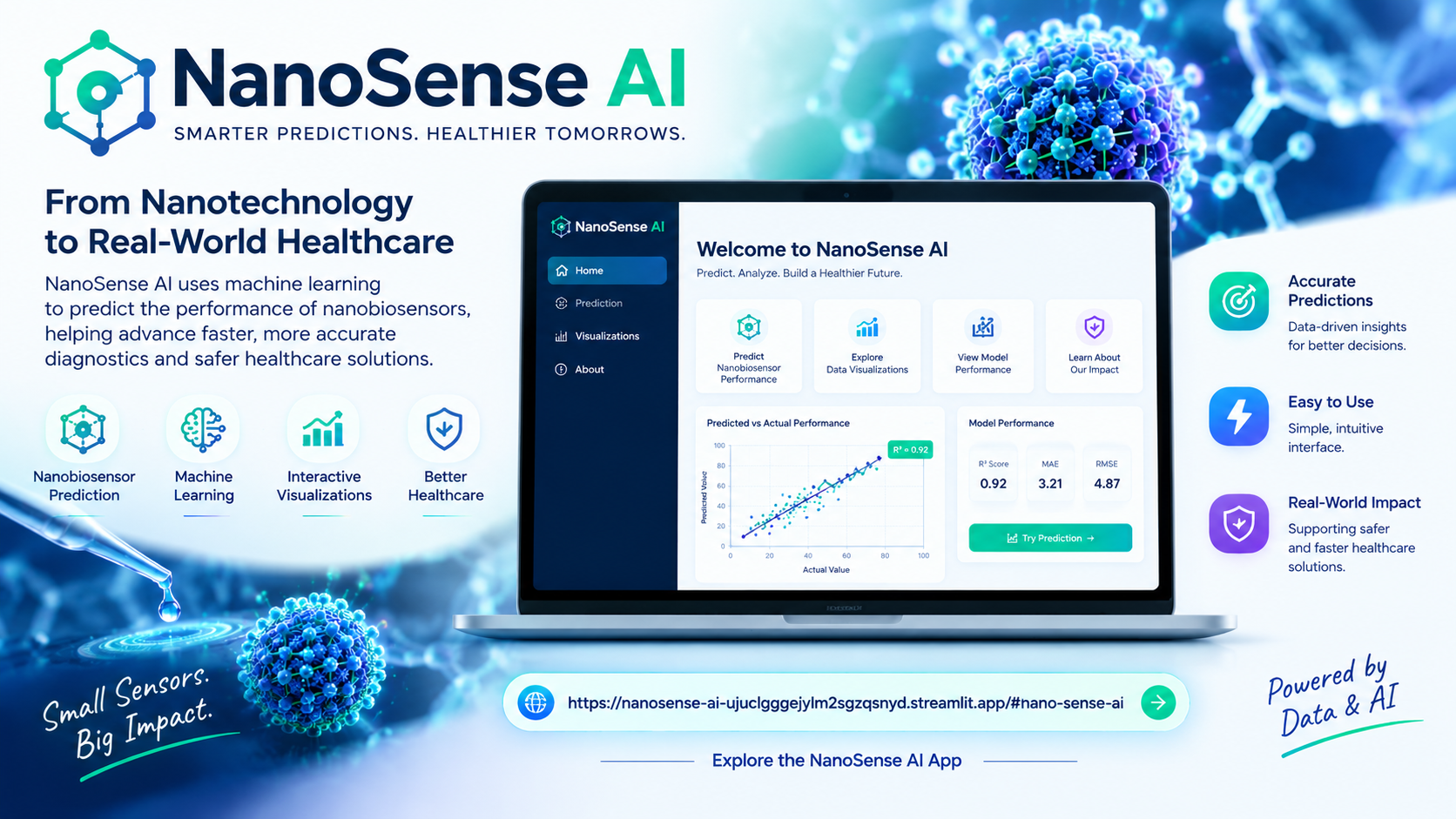
https://nanosense-ai-ujuclgggejylm2sgzqsnyd.streamlit.app/#nano-sense-ai
-
Inspiration: Chemistry Meets Healthcare
As a BS Chemistry student interested in nanotechnology and healthcare research, I wanted to explore how machine learning could support biosensor development.
What It Does, Exploring Biosensor Responses
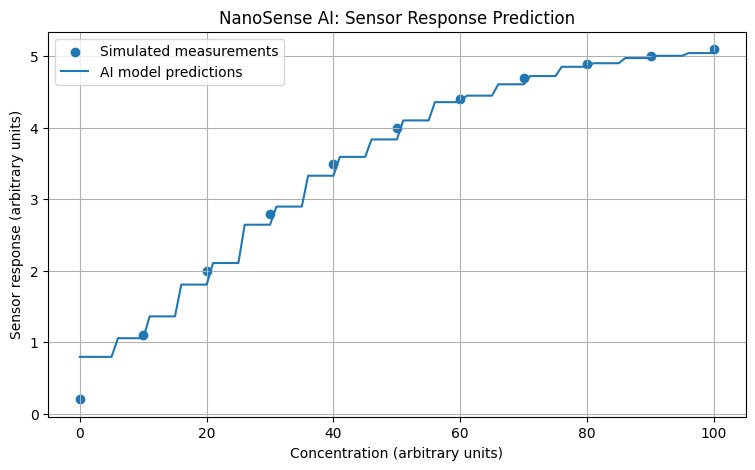
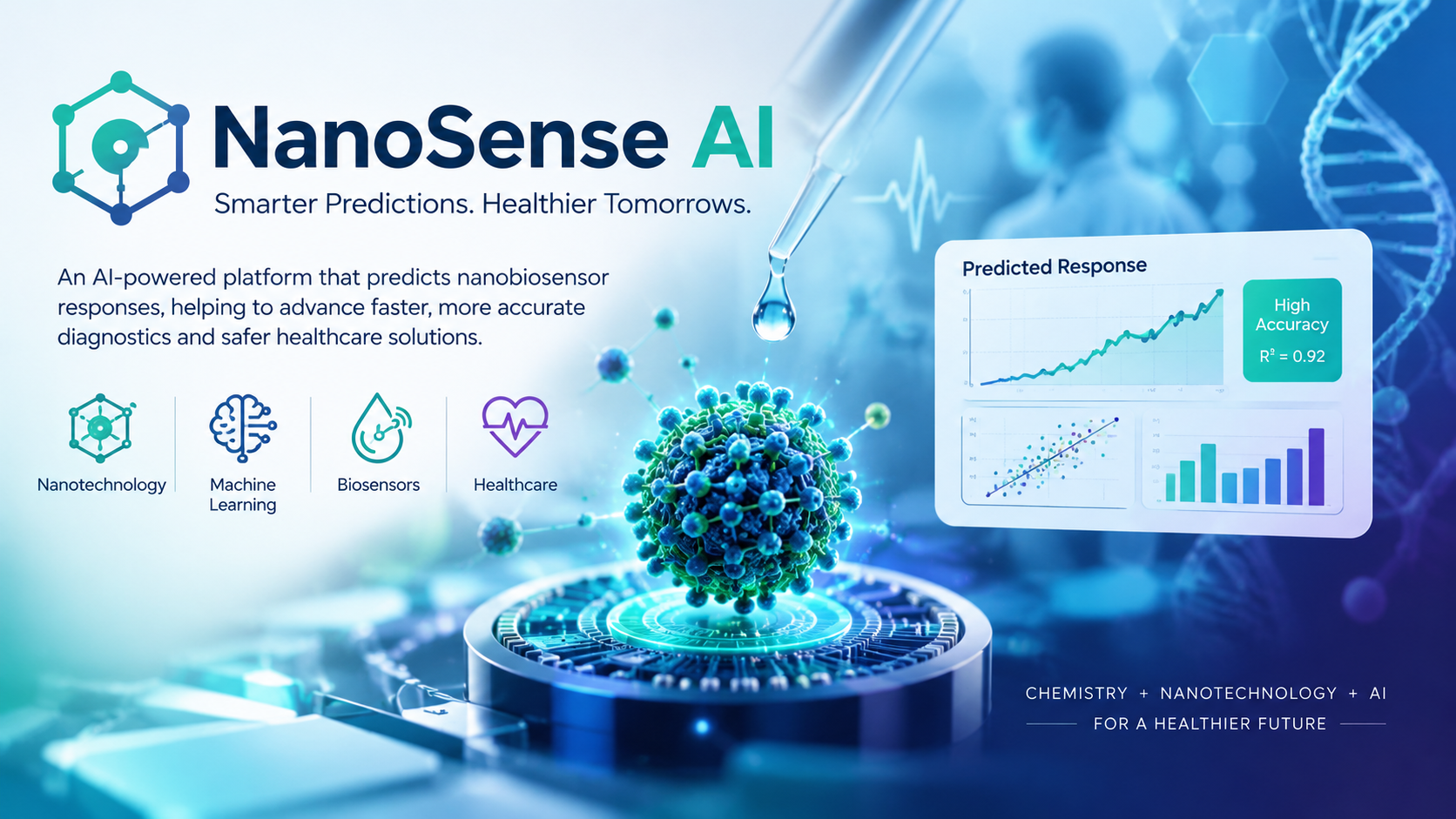
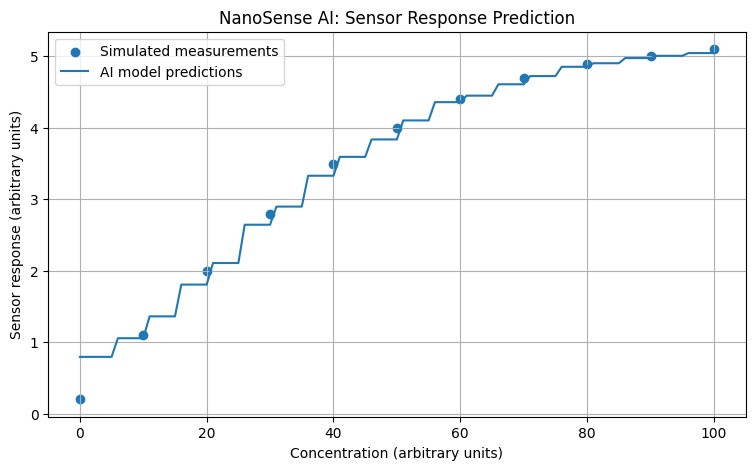
NanoSense predicts nanobiosensor responses using synthetic data and a Random Forest model, presenting results through interactive predictions and visualizations.
Turning an Idea into a Prototype
I developed the project concept, worked with Python in Google Colab, built an interactive interface using Streamlit, and used GitHub to manage the project. I also worked on training and evaluating the model.
Challenges;Learning Through Practice
As a beginner in programming, One of my biggest challenges was entering the world of programming and machine learning as a chemistry student. I had to learn how to structure Python code, organize data, train a model, visualize results, and connect these components into a functional web application.
Accomplishments
Iturned my interest in chemistry and nanotechnology into a working healthcare-focused prototype.
What I Learned ;The Importance of Validation
Through NanoSense AI, I learned the fundamentals of Python, data handling, visualization, machine learning, model evaluation, and web application development.
What's Next Towards Research
My next goal is to develop NanoSense AI from an educational simulation into a more scientifically grounded research prototype.
Built With
- biosensors
- github
- google-colab
- machine-learning
- matplotlib
- nanotechnology
- numpy
- pandas
- python
- random-forest-regression
- scikit-learn
- streamlit
- synthetic

Log in or sign up for Devpost to join the conversation.