Namma Rescue
Inspiration
Natural disasters such as floods and cyclones often disrupt communication when people need it the most. During these situations, affected citizens struggle to locate relief camps, request emergency assistance, or find verified information, while volunteers and NGOs face difficulty coordinating rescue efforts.
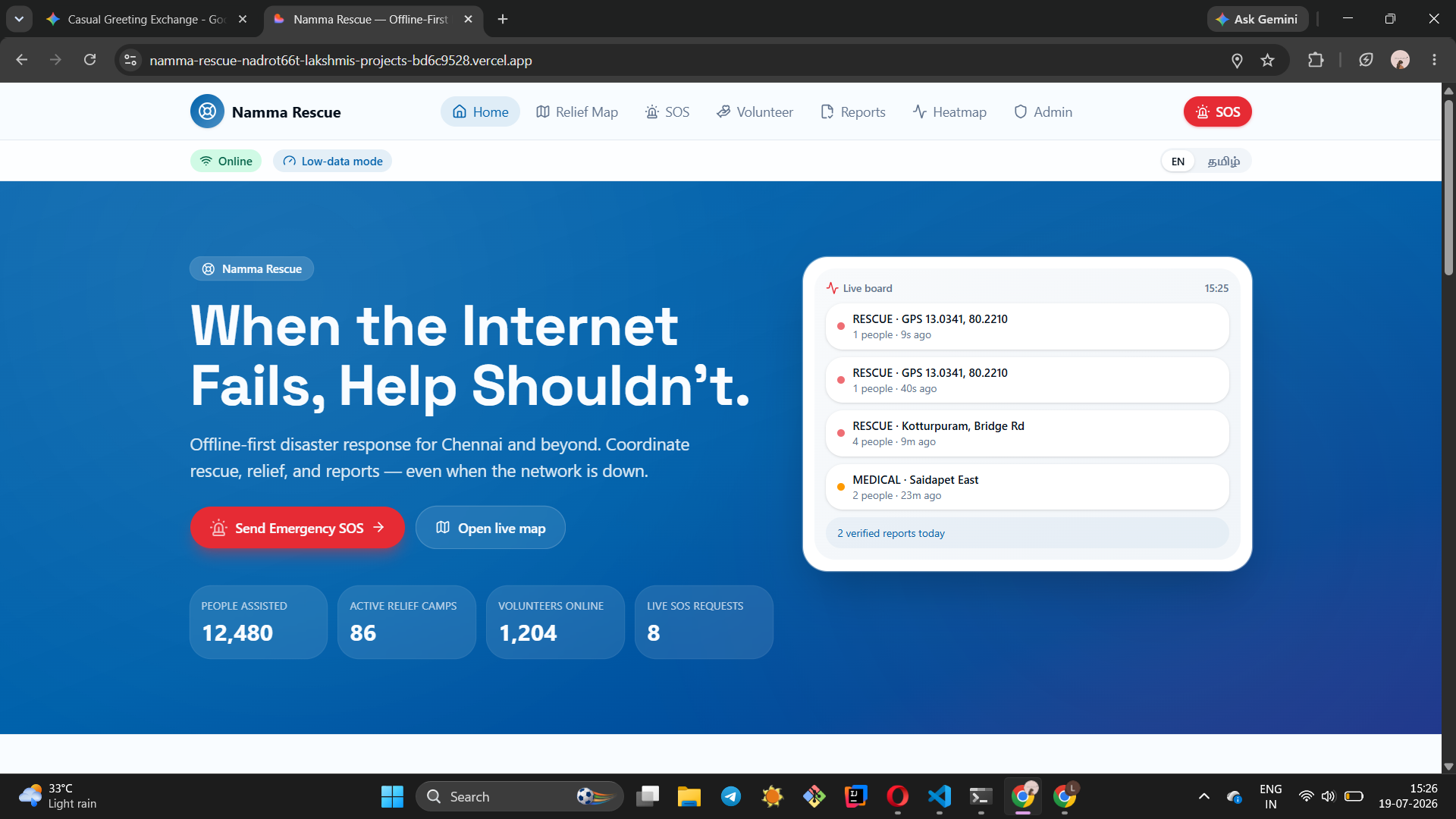
I wanted to build a platform that brings all essential emergency services together in one place while remaining useful even when network connectivity becomes unreliable. This idea led to the development of Namma Rescue, an emergency coordination platform designed to improve disaster response.
What it does
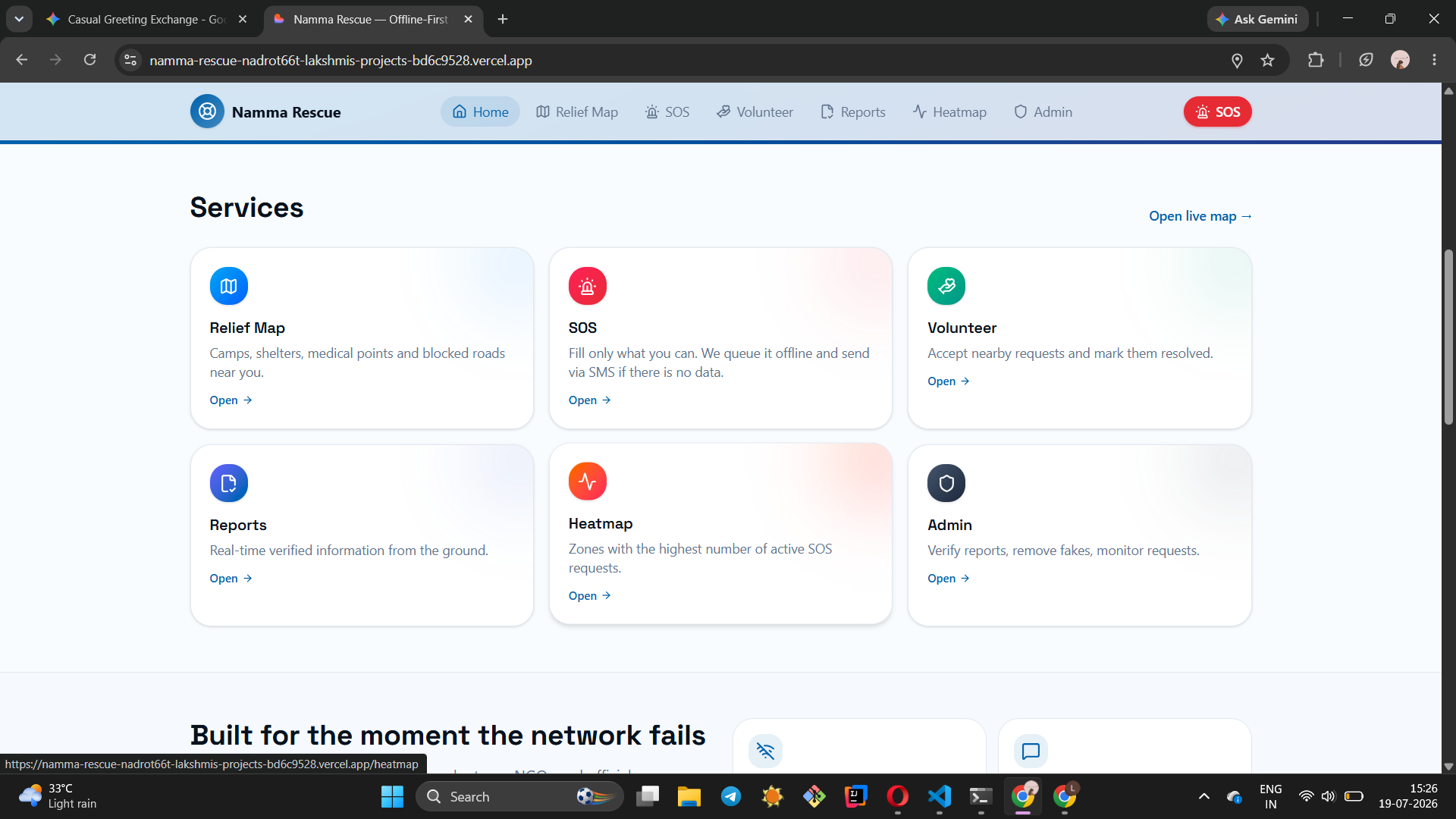
Namma Rescue provides a centralized platform for emergency coordination during disasters.
The platform includes:
- Interactive relief map displaying shelters, medical camps, food distribution centers, and blocked roads.
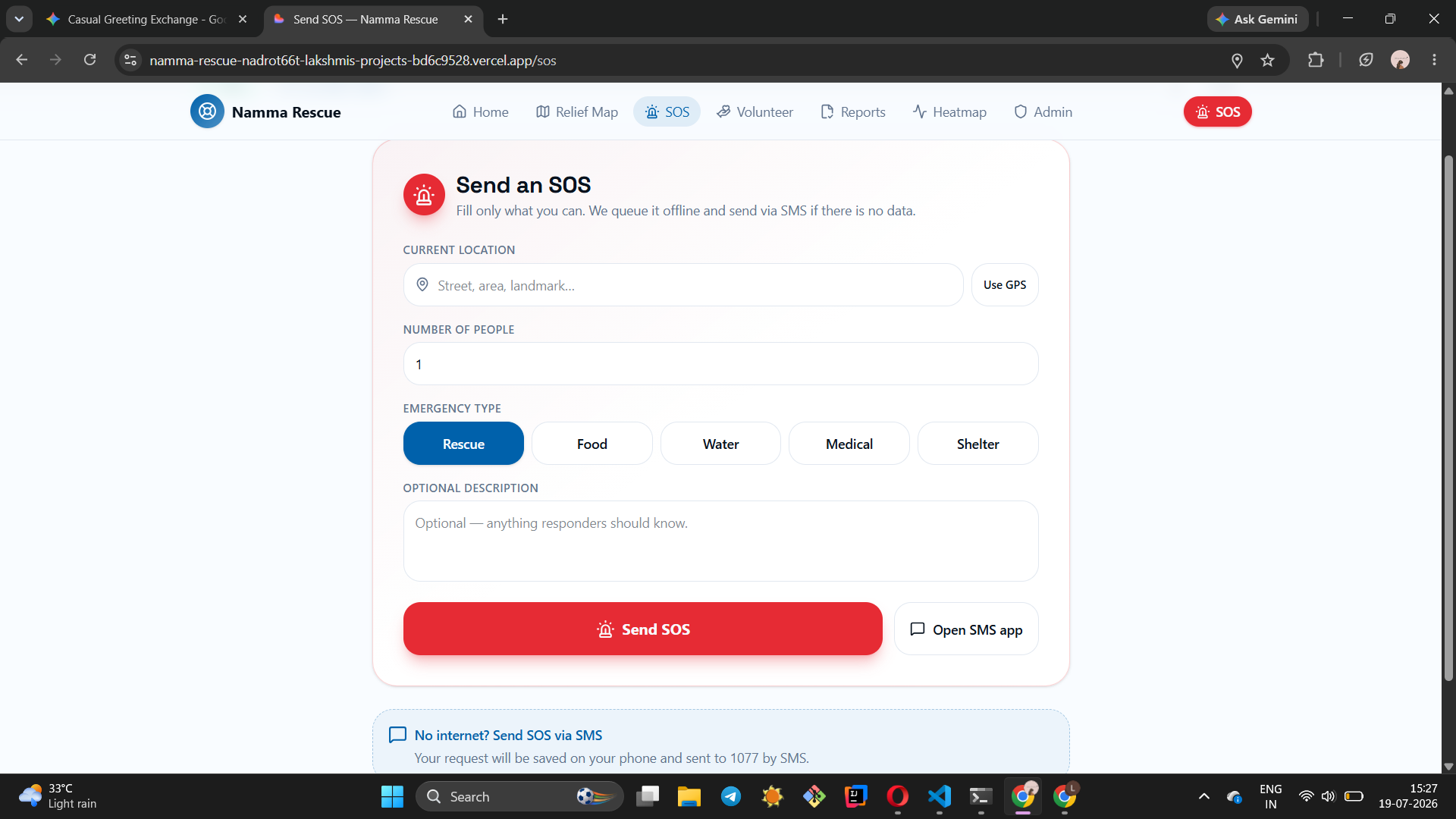
- Emergency SOS request system with location support.
- Volunteer coordination portal for accepting and managing rescue requests.
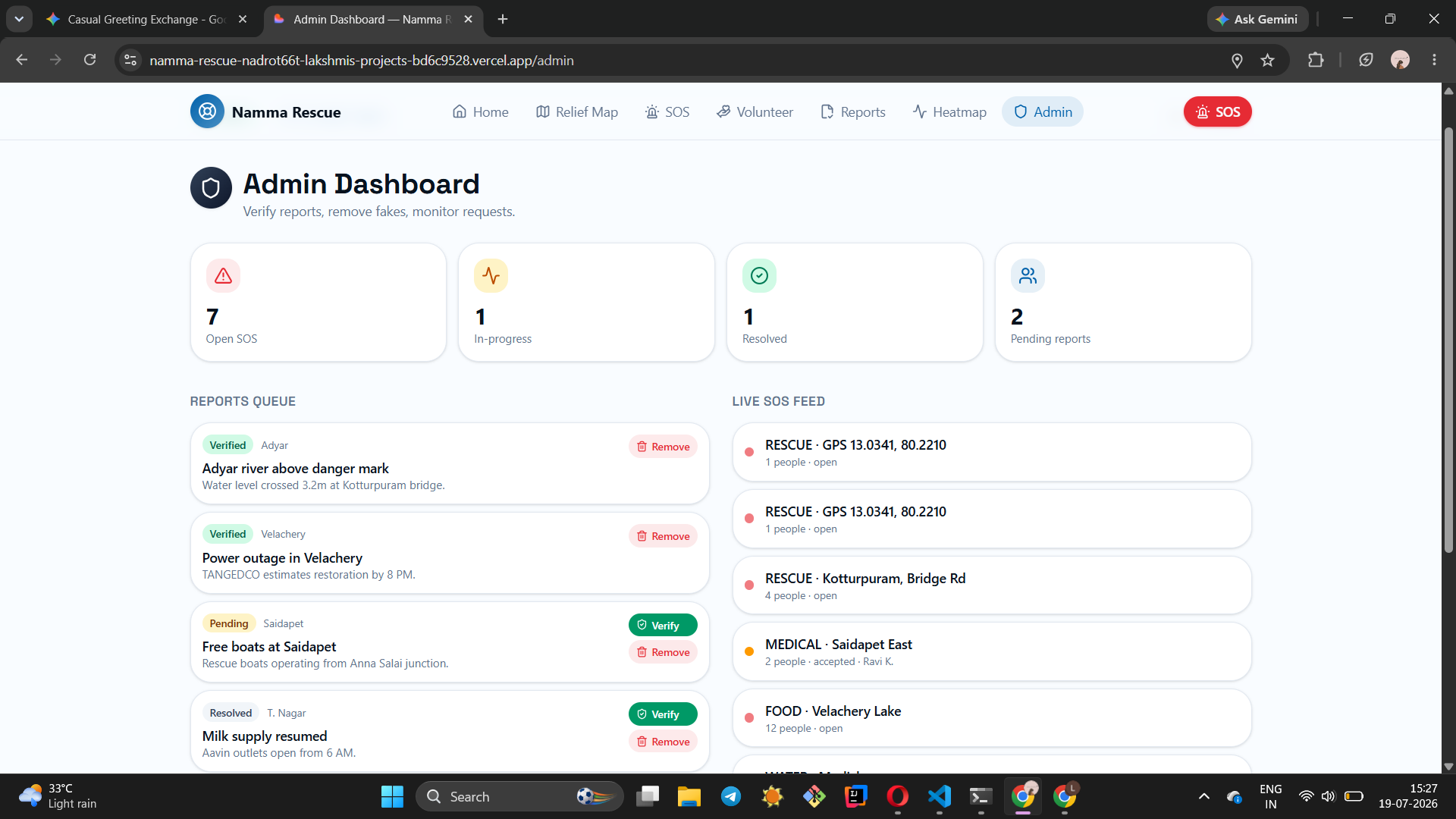
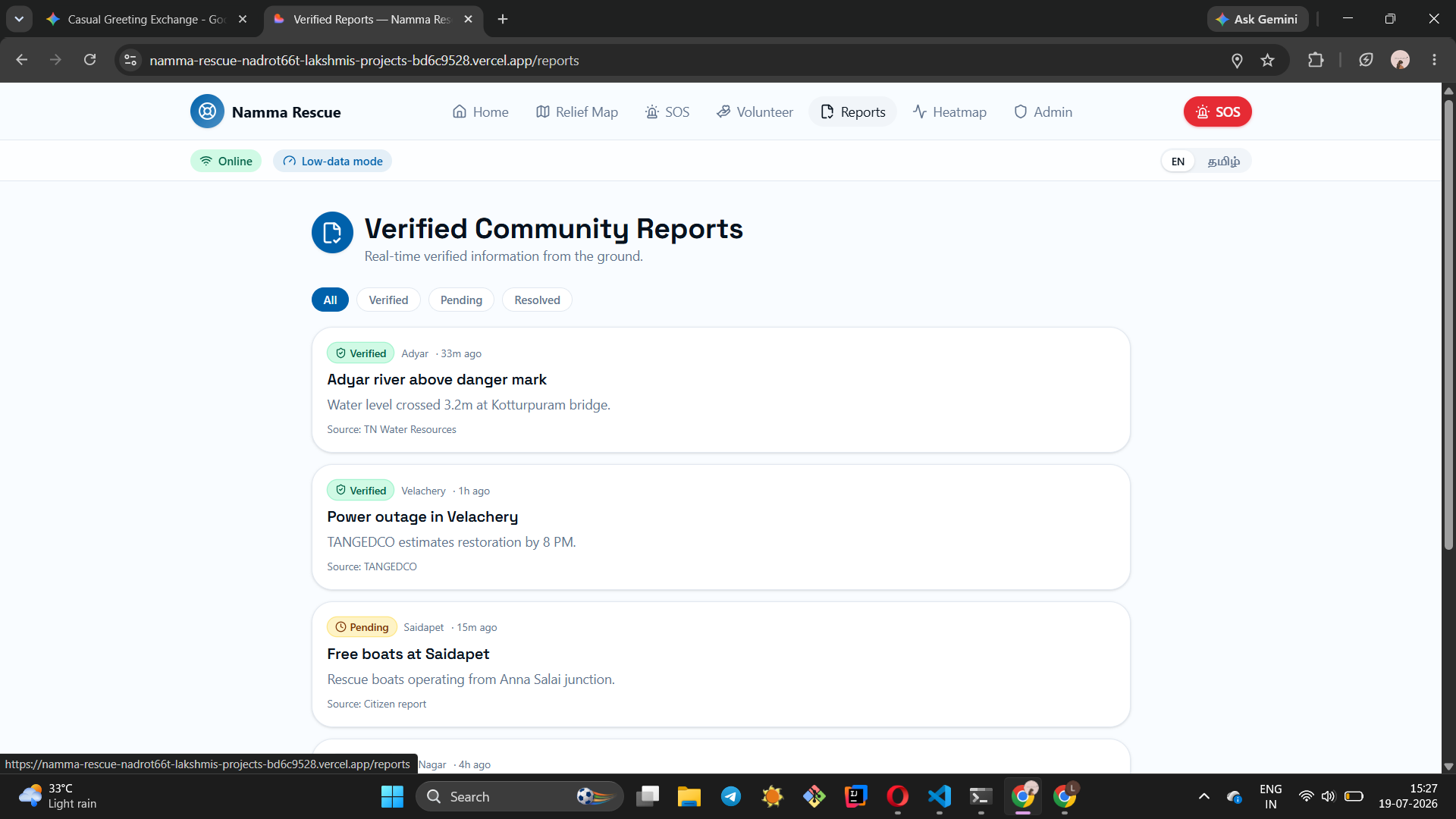
- Verified community reports to reduce misinformation.
- Administrative dashboard for monitoring reports.
- Emergency heatmap for identifying high-priority areas.
- Low-data mode for unstable network conditions.
- SMS fallback for emergency communication when internet connectivity becomes unavailable.
- English and Tamil language support for accessibility.
How I built it
The application was built using React and TypeScript with Vite as the development environment.
Frontend development was completed using Tailwind CSS for responsive and accessible user interfaces. React Router was used for navigation between pages, while Leaflet was integrated to display interactive disaster maps.
The project follows a modular component-based architecture to simplify future enhancements and maintenance.
Challenges I ran into
One of the biggest challenges was implementing reliable support for low-connectivity environments.
Building a fully offline-first web application within the hackathon timeline proved challenging because Progressive Web App (PWA) support requires service workers, caching strategies, and offline synchronization mechanisms.
To ensure a stable MVP, we implemented a lightweight low-data mode and SMS fallback for emergency requests while designing the architecture to support full offline capabilities in future versions.
Another challenge was organizing multiple emergency services into a simple interface that remains easy to navigate during stressful situations.
Accomplishments that I am proud of
- Designed a clean and responsive emergency coordination platform.
- Built a complete multi-page React application within the hackathon timeline.
- Integrated emergency reporting, volunteer coordination, and relief mapping into a single platform.
- Implemented low-data support and SMS fallback for emergency communication.
- Created a scalable architecture that can be extended with full offline capabilities.
What I learned
This project provided practical experience in building scalable React applications using TypeScript and component-based architecture.
We also gained a better understanding of user-centered design for emergency situations, responsive interface development, and designing applications that remain usable under unreliable network conditions.
Most importantly, we learned the importance of prioritizing a stable and usable MVP over attempting to implement too many features within limited time.
What's next for Namma Rescue
Future development will focus on making Namma Rescue a fully offline-first emergency platform.
Planned improvements include:
- Progressive Web App (PWA) support
- Offline map caching
- Queued SOS requests with automatic synchronization
- Firebase backend integration
- Real-time volunteer tracking
- Push notifications
- Authentication and role-based access
- AI-assisted prioritization of emergency requests
Built With
- css
- css3
- git
- github
- html5
- javascript
- leaflet.js
- npm
- react
- router
- tailwind
- typescript
- vite

Log in or sign up for Devpost to join the conversation.