-
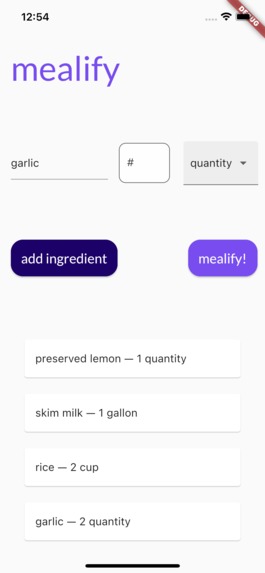
Welcome to mealify! Make cooking at home as easy as eating out!
-
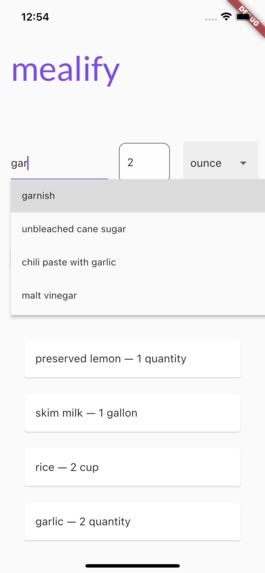
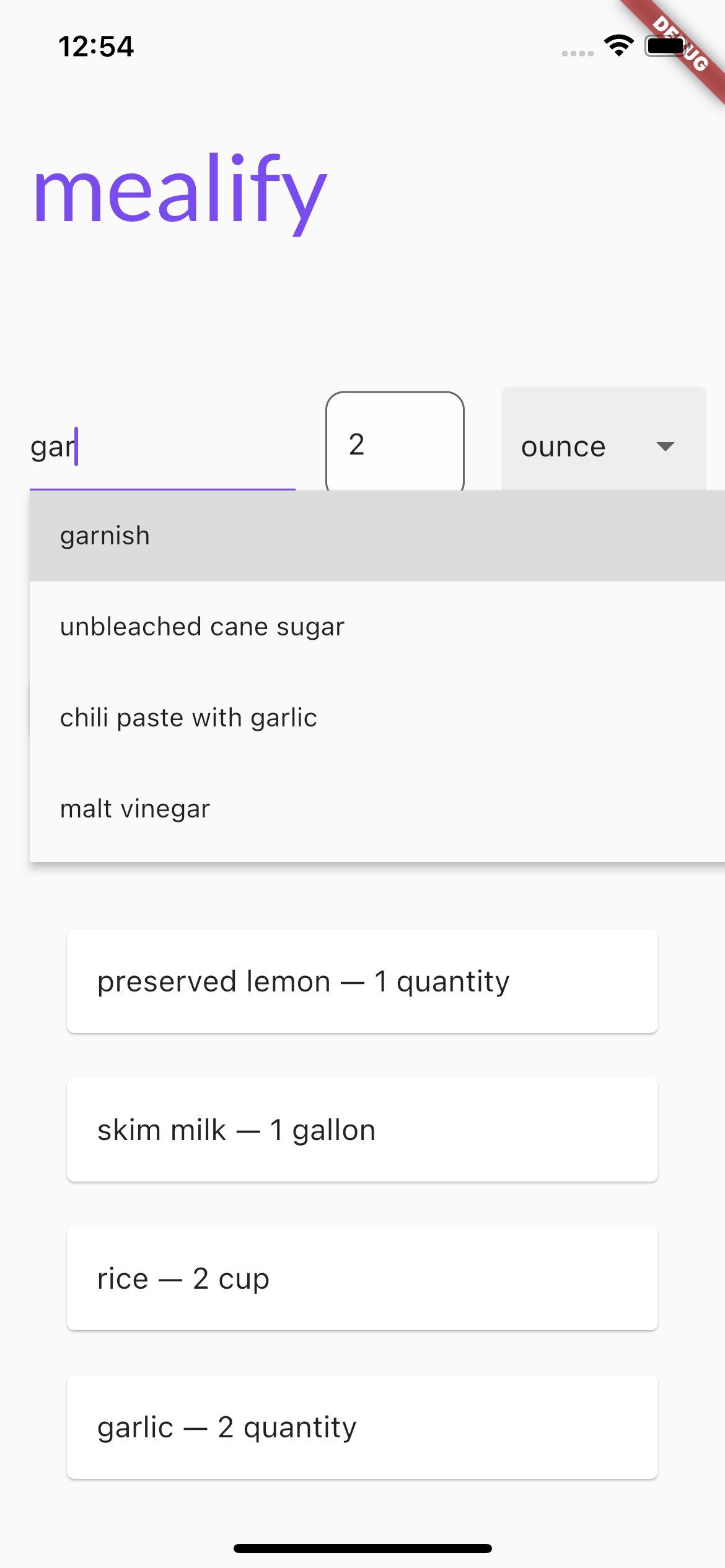
Pick your ingredient, the quantity, and unit
-
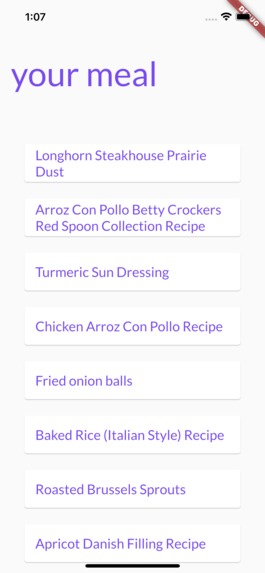
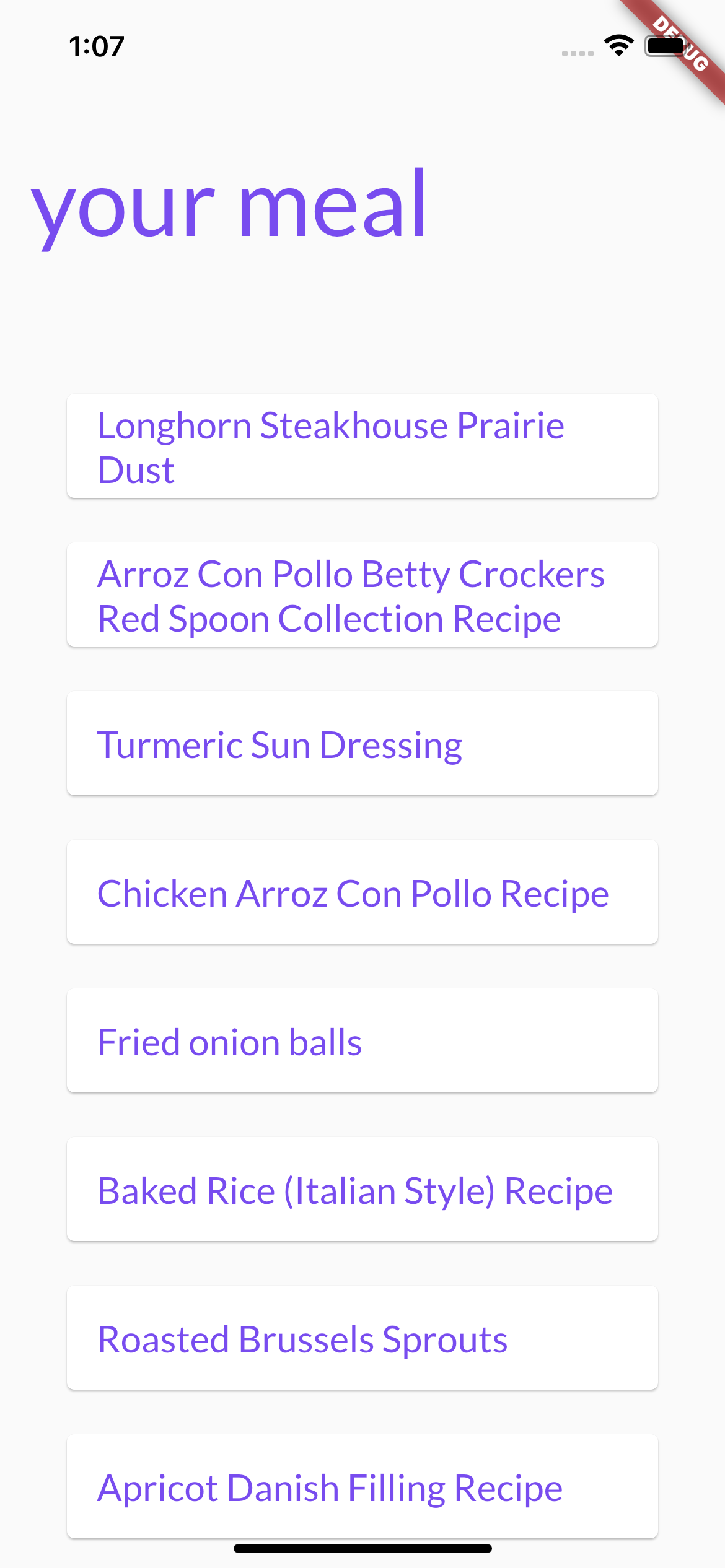
The resulting list of meals you can make with your ingredients ordered in ascending number of additional ingredients required.
Inspiration
During our brainstorming, we were thinking about what we have in common as students and what we do often. We are all students and want to cook at home to save money, but we often find ourselves in a situation where we have tons of ingredients that we cannot properly combine. With that in mind, we came up with an idea to build an app that helps you find the recipes that you can cook at home. We are all excited about the project as it is something that a lot of people can utilize on a daily basis.
What it does
Imagine you find yourself in a situation where you have some leftover chicken, pasta, milk, and spices. You can open Mealify, input your ingredients, and get a list of recipes that you can cook with that inventory.
How we built it
For that idea, we decided to build a mobile app to ease the use of daily users - although you can also use it in the browser. Since our project is a full stack application, we enhanced our knowledge of all the stages of development. We started from finding the appropriate data, parsing it to the format we need and creating an appropriate SQL database. We then created our own backend API that is responsible for all the requests that our application uses - autocomplete of an ingredient for a user and actual finding of the ‘closest’ recipe. By using the custom created endpoints, we made the client part communicate with it by making appropriate requests and fetching responses. We then created the frontend part that lets a user naturally communicate with Mealify - using dynamic lists, different input types, and scrolling. The application is easy to use and does not rely on the user's proper inputs - we implemented the autocomplete option, and gave the option for units to not worry about proper spelling from a user.
Challenges we ran into
We also recognized that it is possible that someone’s favorite meal is not in our database. In that case, we made a way to add a recipe to the database from a url. We used an ingredient parser to scan for all the ingredients needed for that recipe from the url. We then used Cohere to parse through the text on the url and find the exact quantity and units of the ingredient. One challenge we faced was finding an API that could return recipes based on our ingredients and input parameters. So we decided to build our own API to solve that issue. Moreover, working on finding the ‘closest’ recipe algorithm was not trivial either. For that, we built a linear regression to find what would be the recipe that has the lowest cost for a user to buy additional ingredients. After the algorithm is performed, a user is presented with a number of recipes sorted in the order of ‘price’ - whether a user can already cook it or there's a small number of ingredients that needs to be purchased.
Accomplishments that we're proud of
We're proud of how we were able to build a full-stack app and NLP model in such a short time.
What we learned
We learned how to use Flutter, CockRoachDB, co:here, and building our API to deploy a full-stack mobile app and NLP model.
What's next for Mealify
We can add additional functionality to let users add their own recipes! Eventually, we wouldn't rely as much our database and the users themselves can serve as the database by adding recipes.


Log in or sign up for Devpost to join the conversation.