-
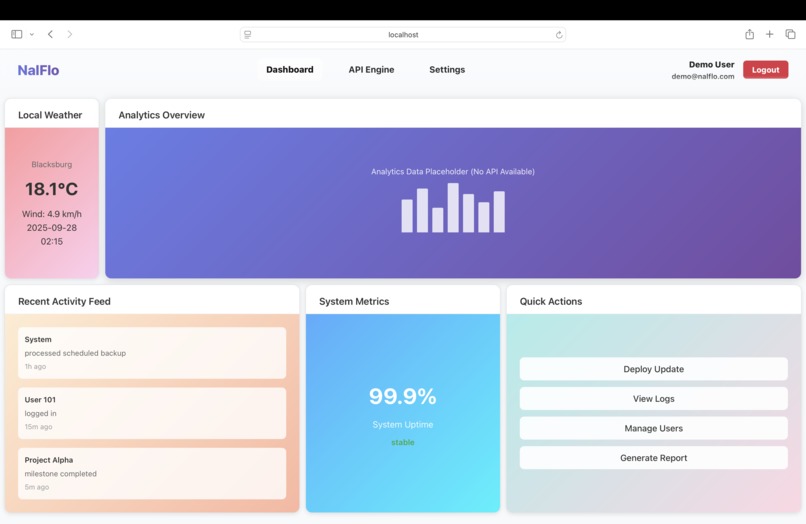
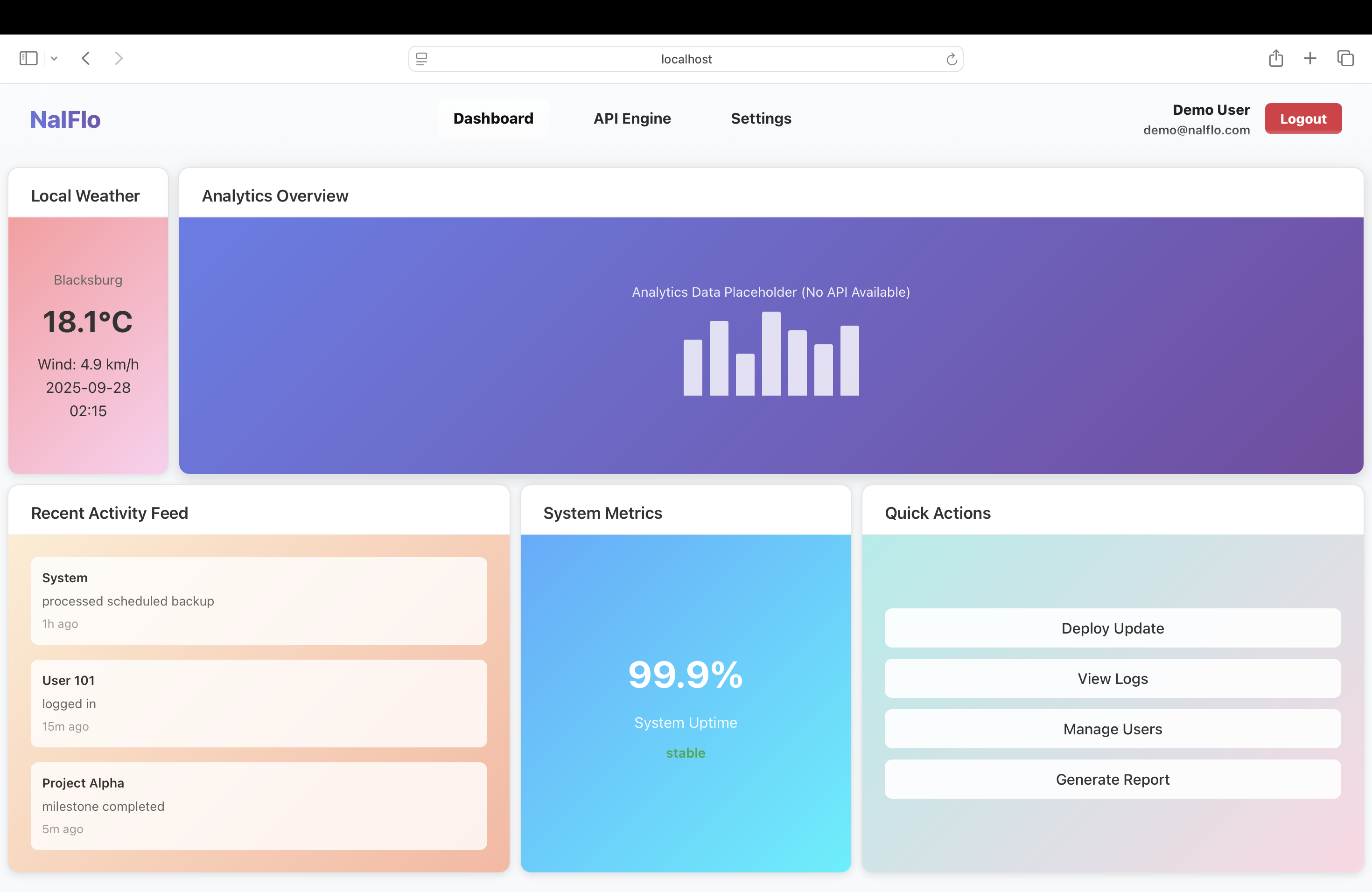
A demo dashboard generated by AI
Inspiration
This idea came from my time working at my uncle’s stone warehouse. Before issuing a pick ticket to ship slabs, employees had to go through multiple manual steps: checking outstanding credit balances, finding the correct stone location in the database, and dealing with inconsistent product naming (e.g., Calcutta Mia vs calcutta mia). These steps slowed down operations and required tedious oversight. I realized that AI could automate this process with just a simple input — “Generate today’s pick tickets” — and handle all the background work seamlessly. That’s where NalFlo was born.
What it does
NalFlo is an AI-powered dashboard that organizes business operations into a single unified view. It:
- Dynamically prioritizes dashboard tiles based on importance (using the Gemini API).
- Integrates with APIs to pull live data into one place.
- Provides metrics, activity feeds, and quick actions like report generation.
- Refreshes automatically every 15 minutes or instantly with a Force Refresh button. Currently, the demo uses a weather API for live data, but the framework supports expansion into real enterprise tools like inventory systems, financial checks, and email automation.
How we built it
- Frontend: React + CSS for a clean, grid-based UI.
- Backend: Flask for API management and refresh logic.
- AI: Gemini API to decide which tiles are most important and how they should be arranged and Cursor to write the application. Persistence: JSON for state management (with a future migration path to relational databases).
Challenges we ran into
- Integrating multiple APIs within hackathon time constraints — we prioritized weather for the demo but wanted more live data sources.
- Designing the framework for an AI chatbot assistant proved harder than expected. We envisioned micro-actions like auto-sending emails when prompted (if an email API is connected), but couldn’t implement it fully within the deadline.
- Handling data normalization (like different naming conventions for the same item) reminded us how important robust backend design is for real-world use.
Accomplishments that we're proud of
- Building a modern, working dashboard in less than 24 hours.
- Connecting Flask, React, and Gemini AI into one functional system.
- Creating a design that solves a real-world warehouse operations problem
What we learned
- The value of AI in background automation — it doesn’t just make dashboards smarter, it can cut out entire manual workflows.
- How to balance enterprise-scale vision with hackathon constraints: even one working API integration (weather) is enough to show the bigger idea.
- The importance of chatbots as action interfaces — we realized they can make dashboards proactive rather than just visual.
What's next for NalFlo
- Integrate with real business systems: inventory management, credit checks, CRM tools.
- Expand the AI chatbot to handle micro-actions like sending emails, generating reports, or triggering API calls on request.
- Implement role-based access control (RBAC) for enterprise-level security.
- Replace JSON with a production database for scalability.
- Deploy NalFlo to the cloud and create a mobile companion app for teams on the go.


Log in or sign up for Devpost to join the conversation.