-
-
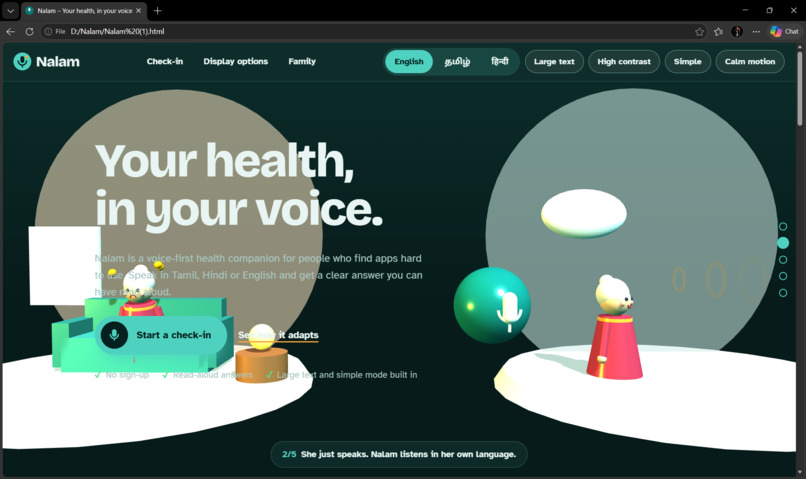
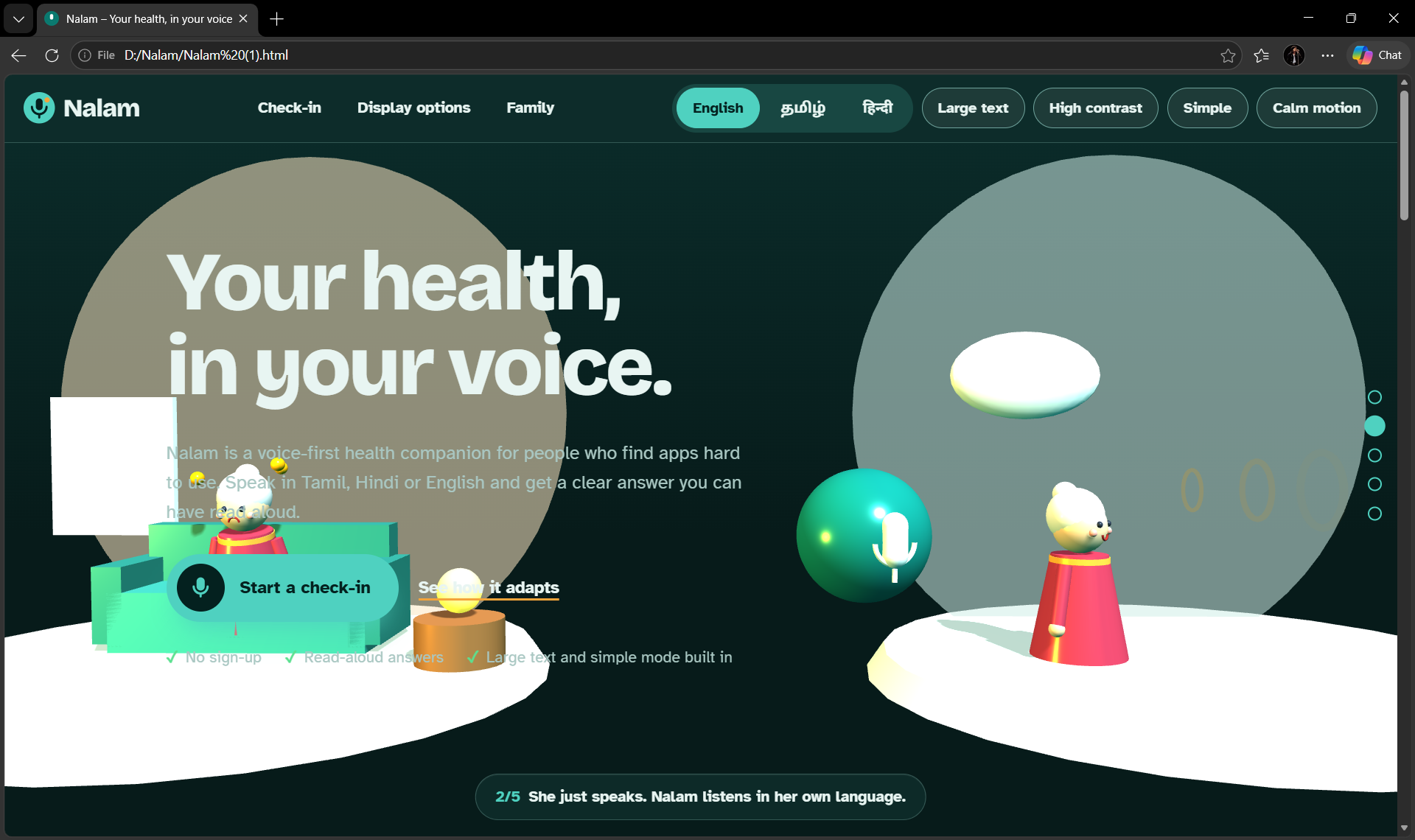
home page
-
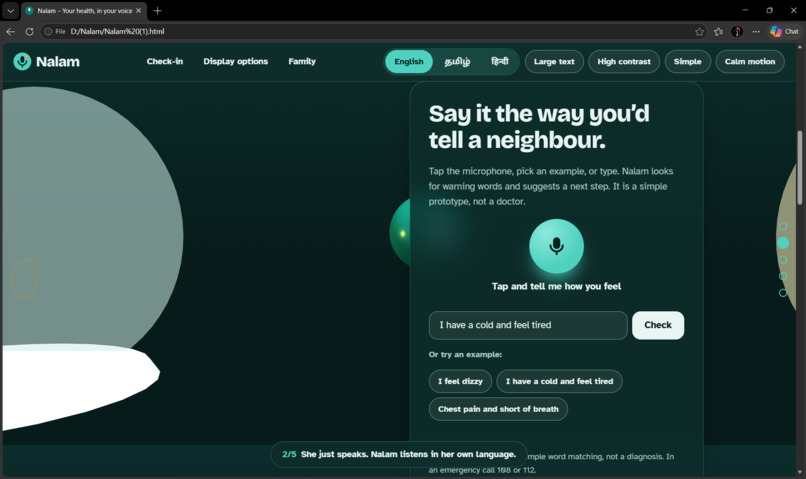
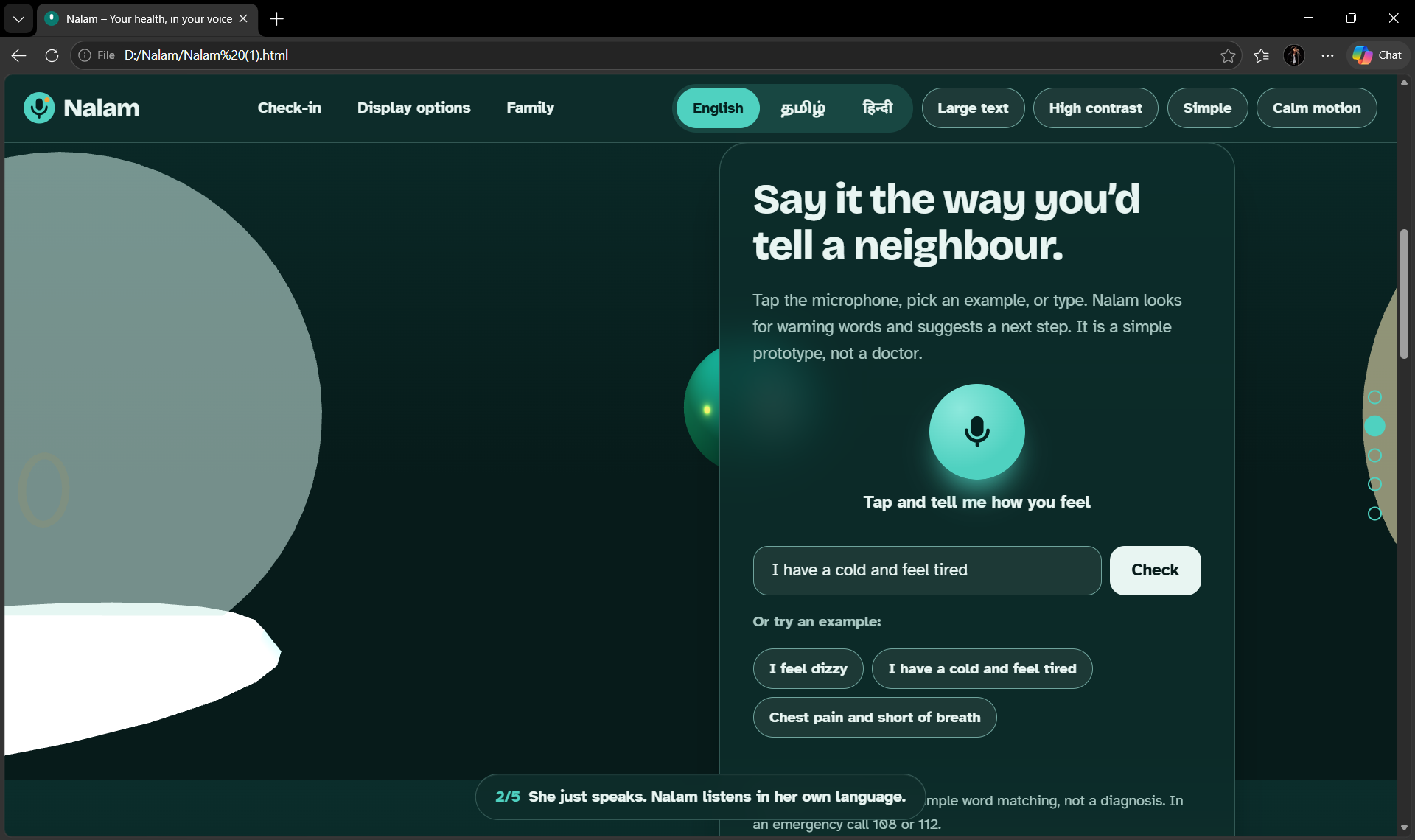
listening page
-
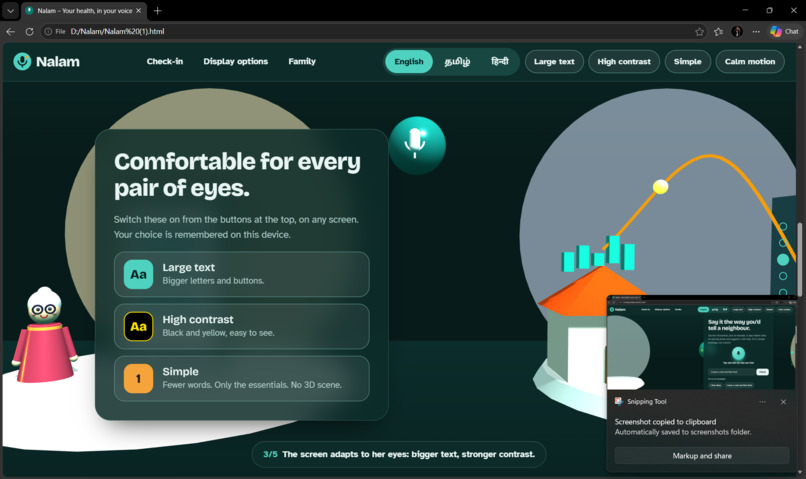
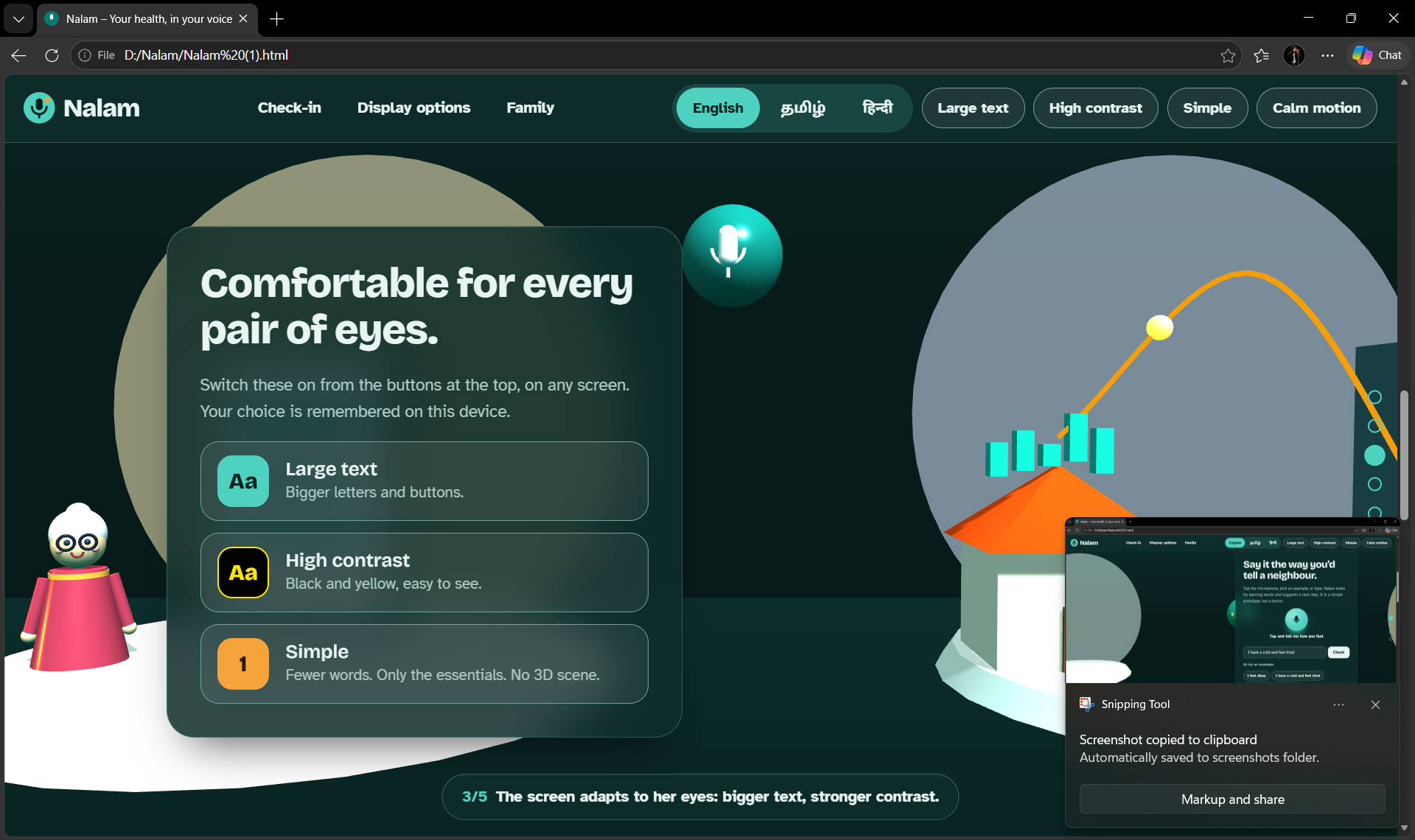
user modification page
-
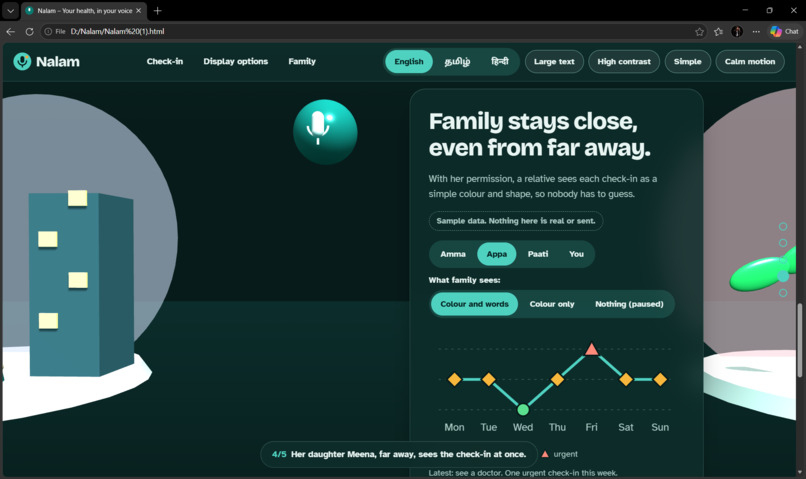
statics page
-
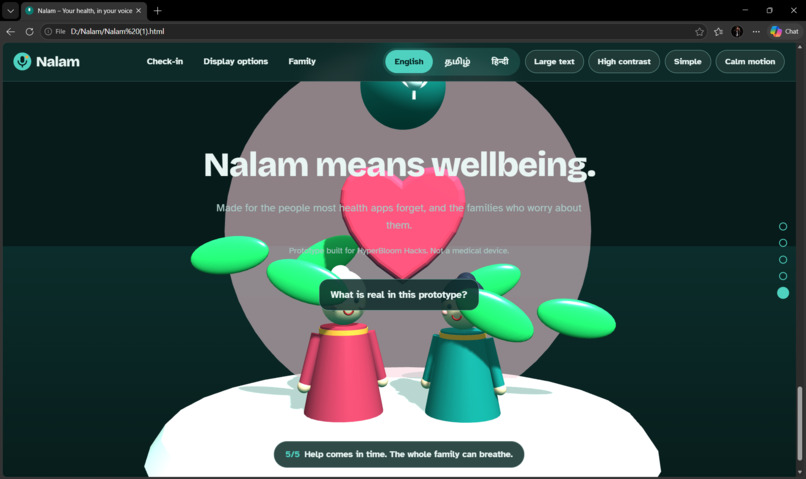
footer
Nalam. Voice-First Healthcare for Everyone
Inspiration
Many people find healthcare apps hard to use. This is especially true for adults, those with low vision or anyone who struggles with complex interfaces. Even a simple health check-in can become stressful when the app uses text, too many forms or confusing words.
We asked ourselves: What if checking in on your wellbeing felt as natural as having a conversation?
We built Nalam to answer that question. We wanted to create a tool that is easy to use, especially for people who prefer speaking over typing. We also wanted to help families stay aware of their loved ones’ health without stepping over privacy.
What is Nalam?
Nalam is a web-based prototype focused on health and wellbeing. It uses voice-based check-ins, supports languages lets users change the look of the interface and includes a family wellbeing dashboard.
Our goal is to make the experience calm, clear and easy to understand. We want people to feel comfortable not overwhelmed.
Key features include:
Voice- check-ins: Speak naturally about how you feel. A text option is available if voice input doesn’t work.
Adaptive accessibility: Choose between large-text/high-contrast and simplified modes to fit your needs.
Multilingual experience: The app works in English, Tamil and Hindi.
Wellbeing feedback:Get simple feedback and next steps. We make it clear that Nalam is not a service.
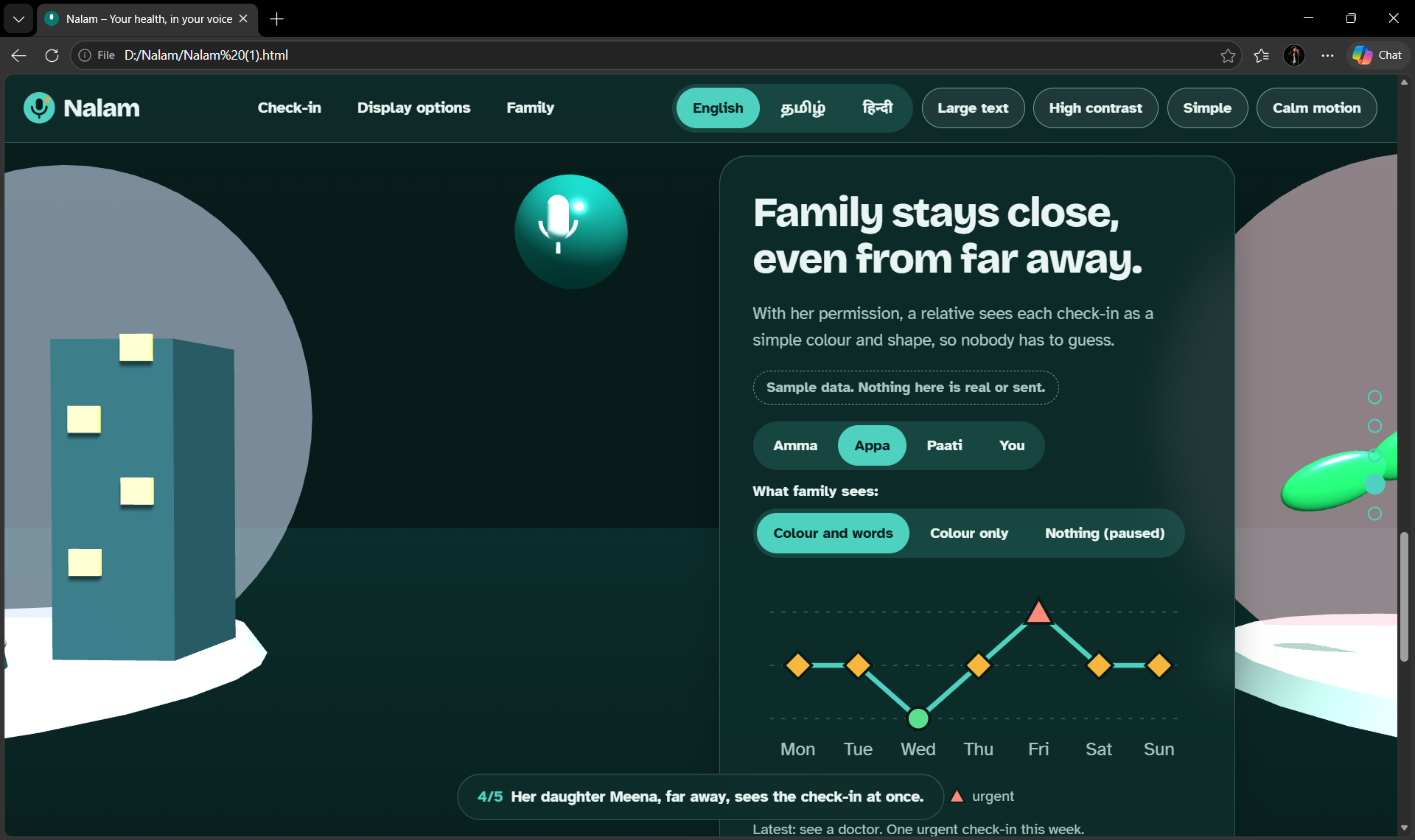
Family wellbeing dashboard: See trends in family check-ins through a demo interface.
Interactive visual experience: Use motion and a Three.js-powered visual layer to make the interface engaging and pleasant.
How we built it
We built Nalam as a web prototype using HTML, CSS and JavaScript. The design uses components, responsive layouts and accessibility controls. We added support and smooth user flows.
We used the browser’s built-in speech recognition to support voice input. We also built fallback options for when speech recognition fails. CSS variables keep the design consistent across views. The Three.js layer adds an experience that feels modern but not distracting.
The prototype includes a family dashboard with sample data and a rule-based symptom interaction. These are experiments, not a system and not a full family-sharing platform.
Challenges we faced
One challenge was balancing creative design with accessibility. Animations can make a site stand out. They must not interfere with usability. We had to make sure motion supports the experience not distracts from it.
We also had to think about what happens when voice recognition fails. We needed to make sure the interface works across languages and fits different visual needs. We had to design for users with abilities.
Another challenge was sharing health information responsibly. We know that simple keyword matching cannot diagnose symptoms. We made sure to be clear that Nalam is not a tool. Being honest about its limits is part of building trust.
What we learned
We learned that accessibility must be part of the design from the start. It affects how text looks, how navigation works, how content is structured, how errors are. How the whole product feels.
We also learned that a beautiful interface means nothing if it doesn’t help users achieve their goals. Every button, animation and visual choice must serve a purpose.
What's next?
We plan to test Nalam with users to improve usability. We want to strengthen keyboard navigation and screen-reader support. We will refine voice interactions in languages and improve the safety and accuracy of wellbeing guidance.
We also want to explore consent-based sharing. This means users can choose what to share and with whom keeping privacy in their hands.
Nalam is our vision, for a human-centered wellbeing experience. One where technology adapts to people, not the other way around.
Built With
- accessibility
- css3
- html5
- javascript
- multilingual
- responsive-web-design
- three.js
- ui/ux-design
- web-speech-api

Log in or sign up for Devpost to join the conversation.