-
-
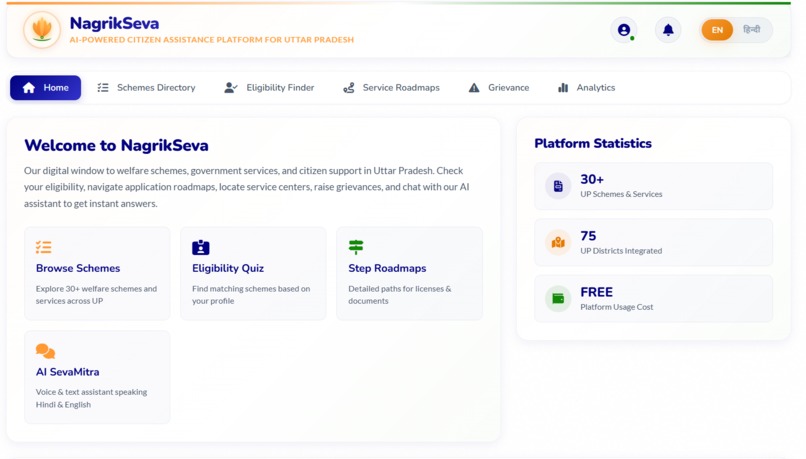
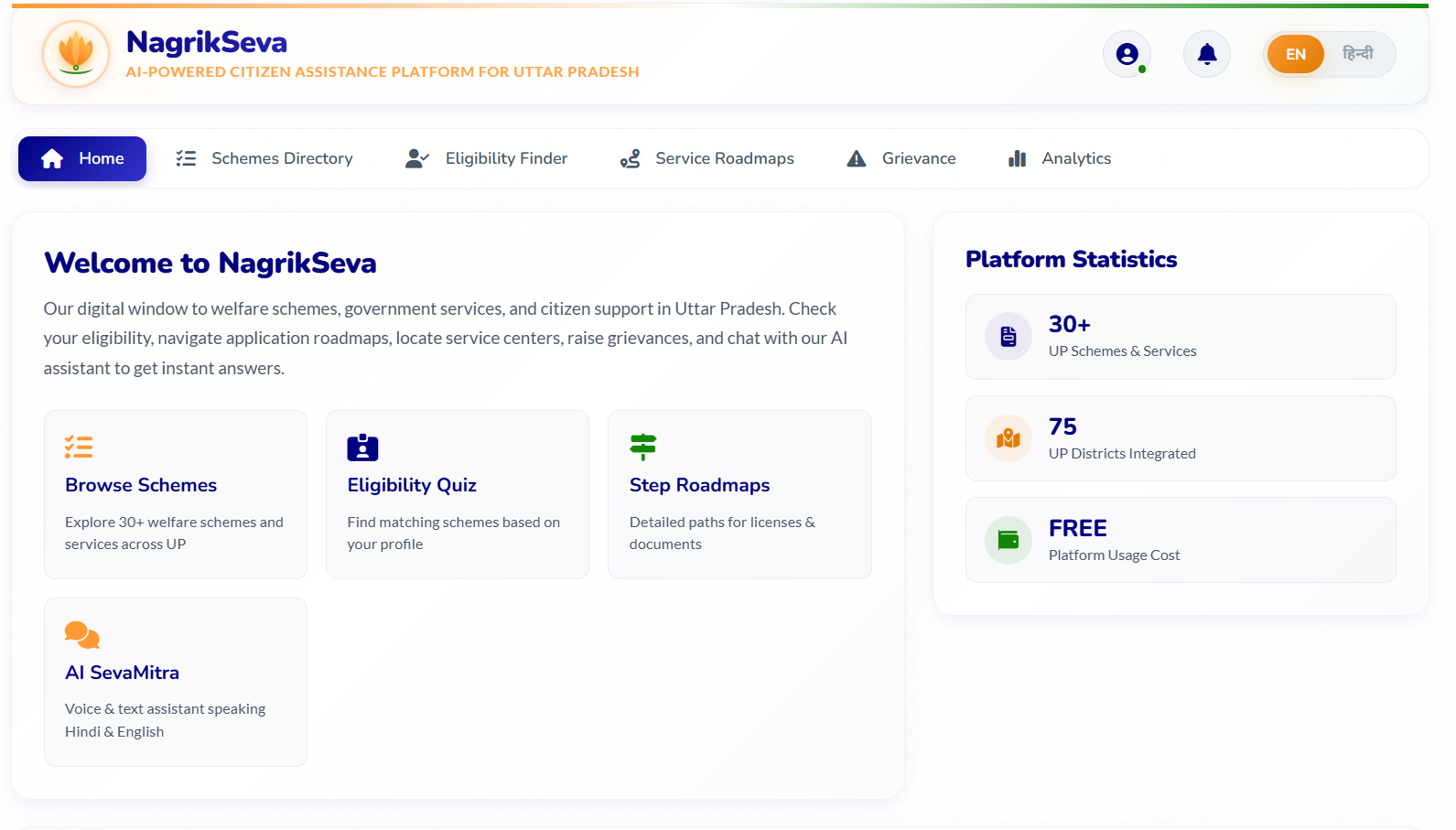
Home page
-
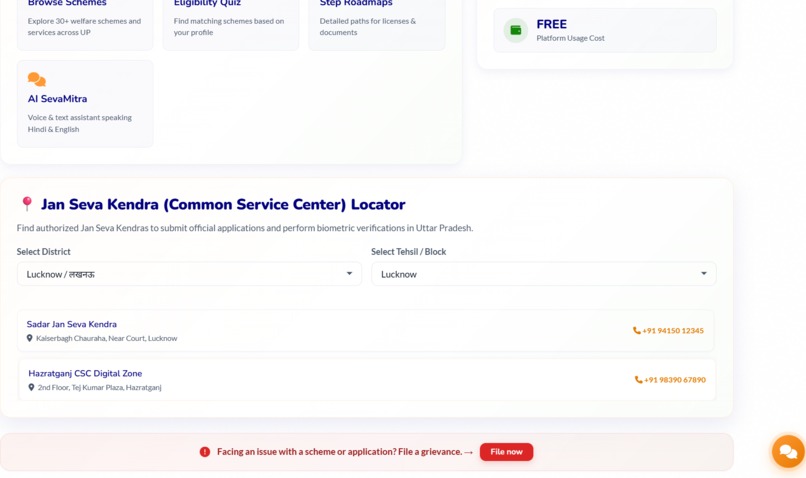
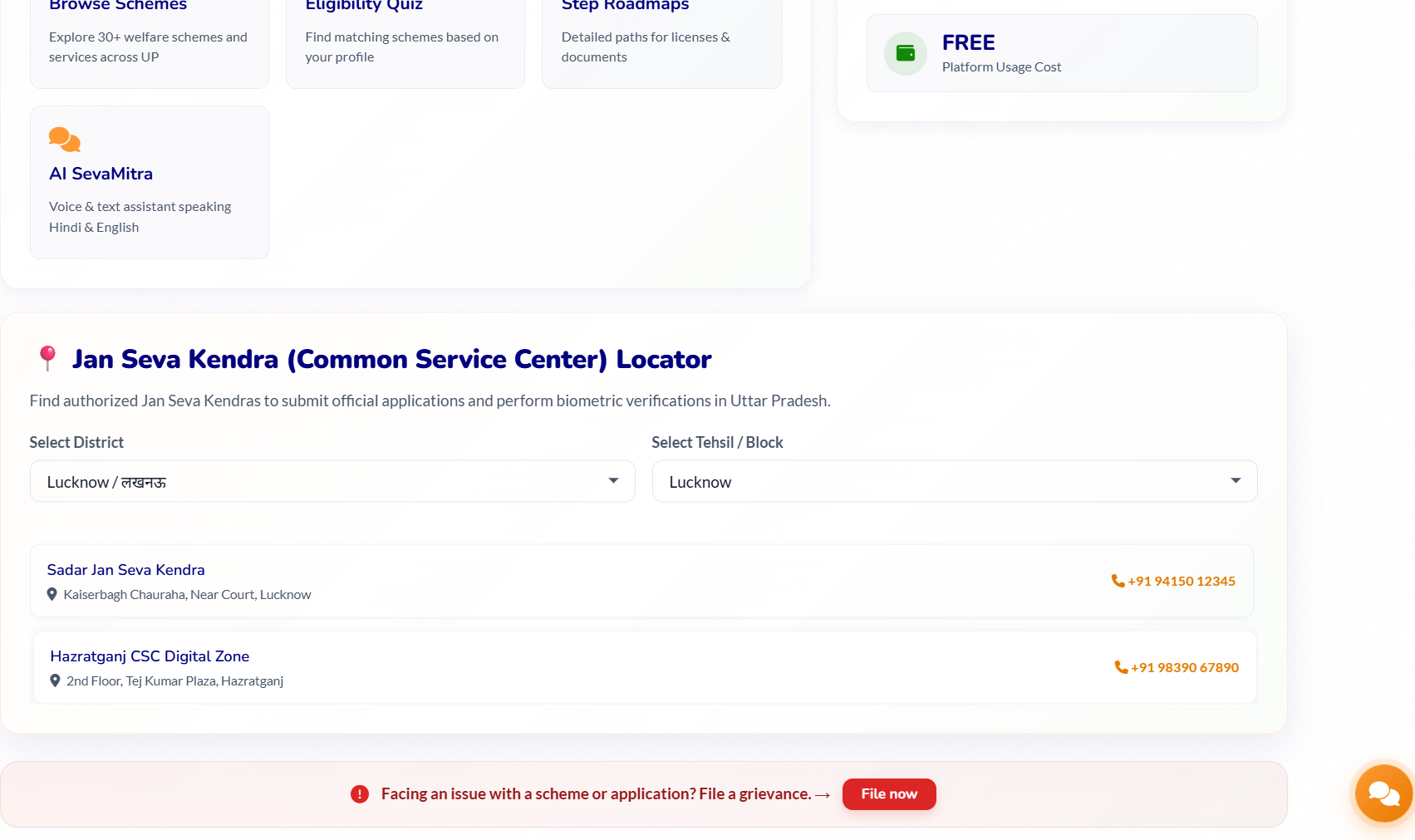
Jan Seva Kendras and File your complaints
-
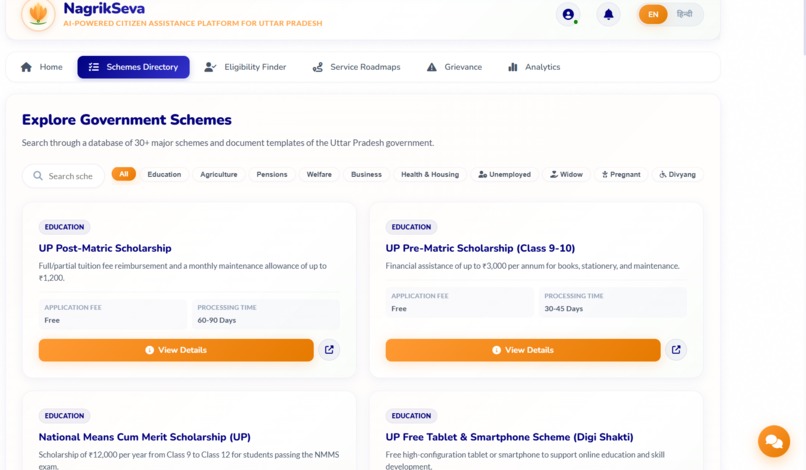
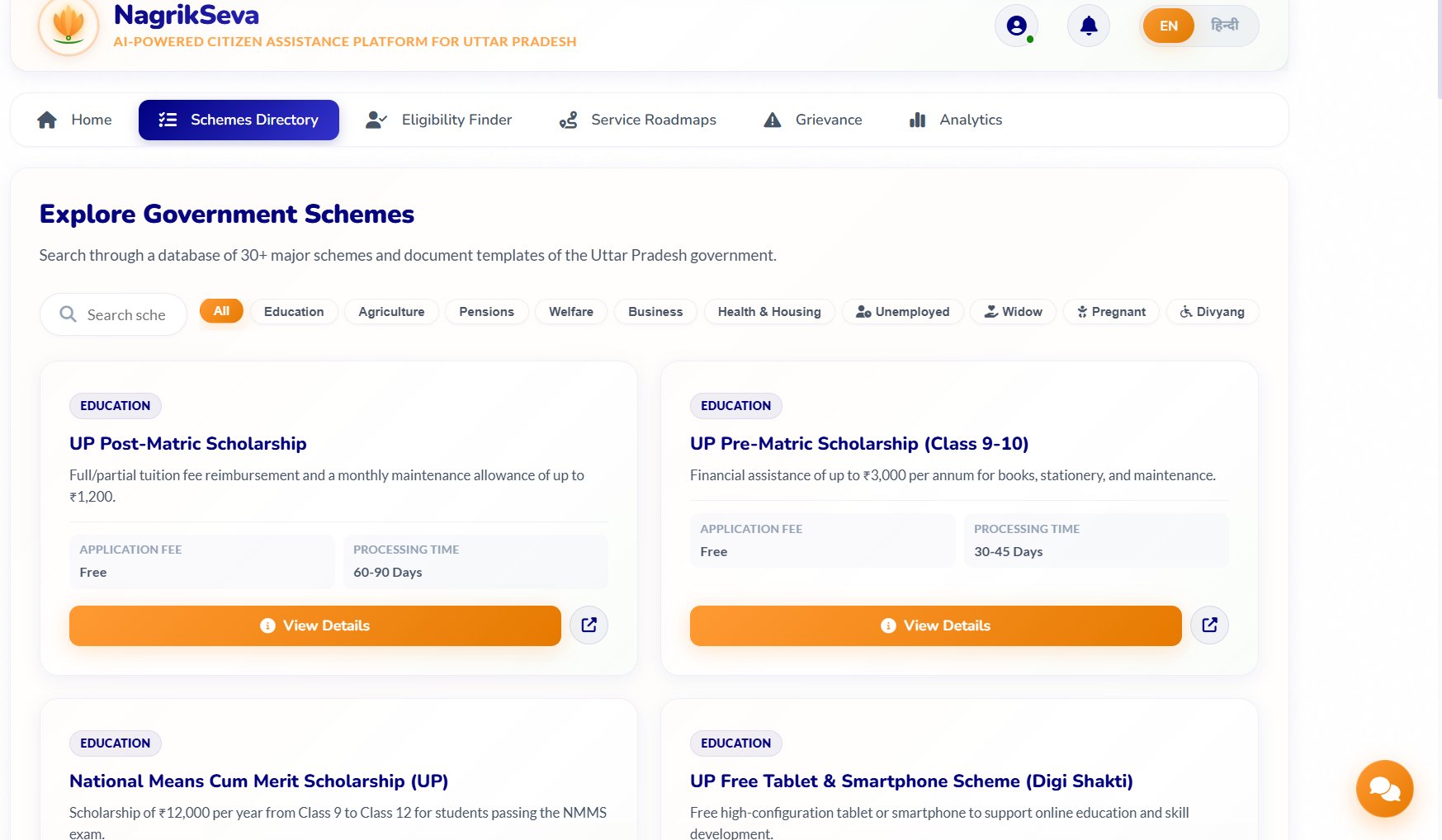
All schemes at one place
-
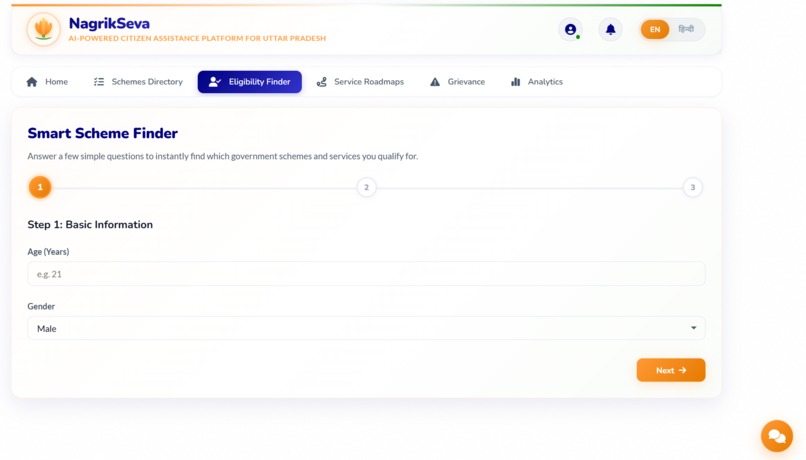
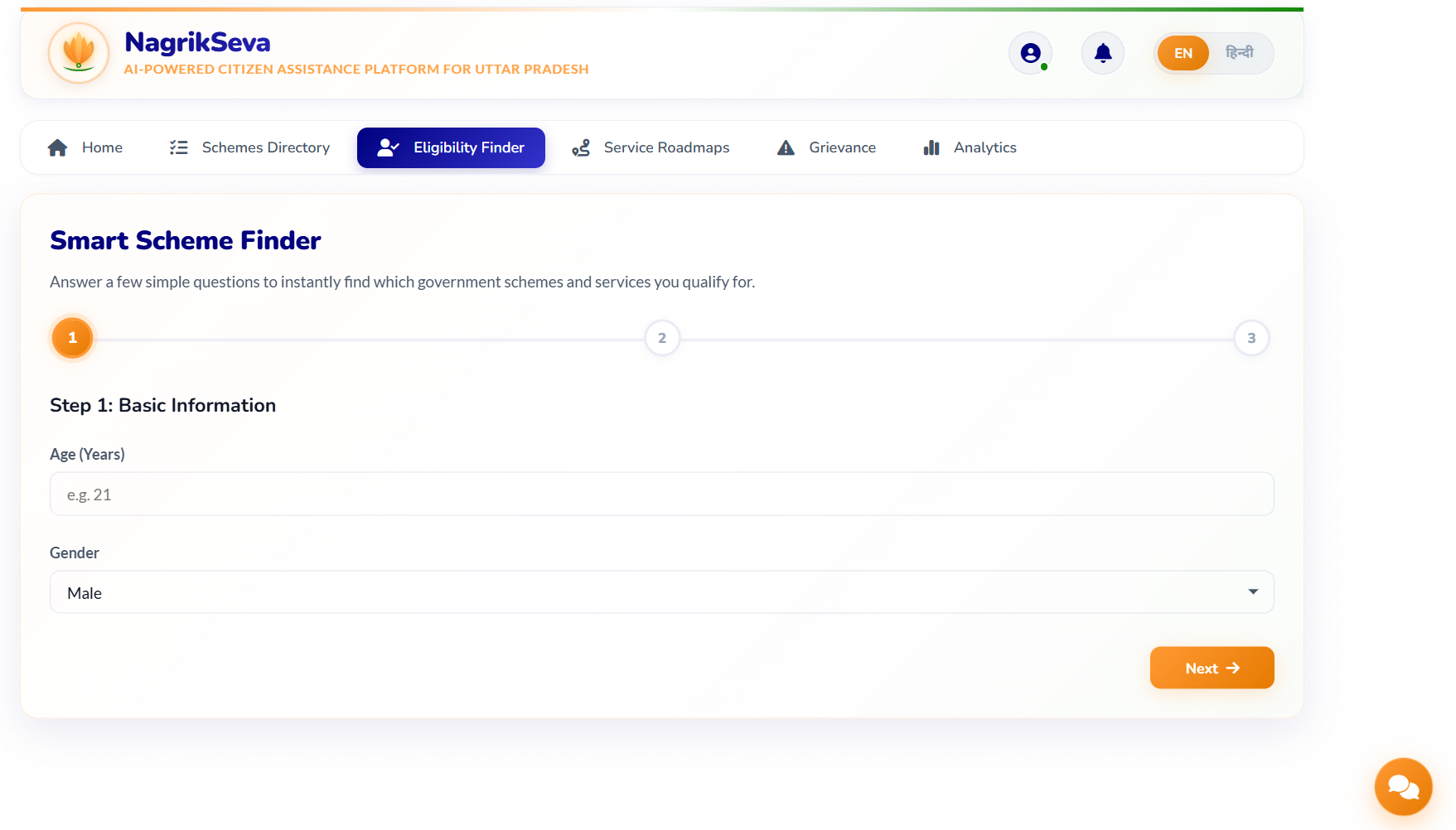
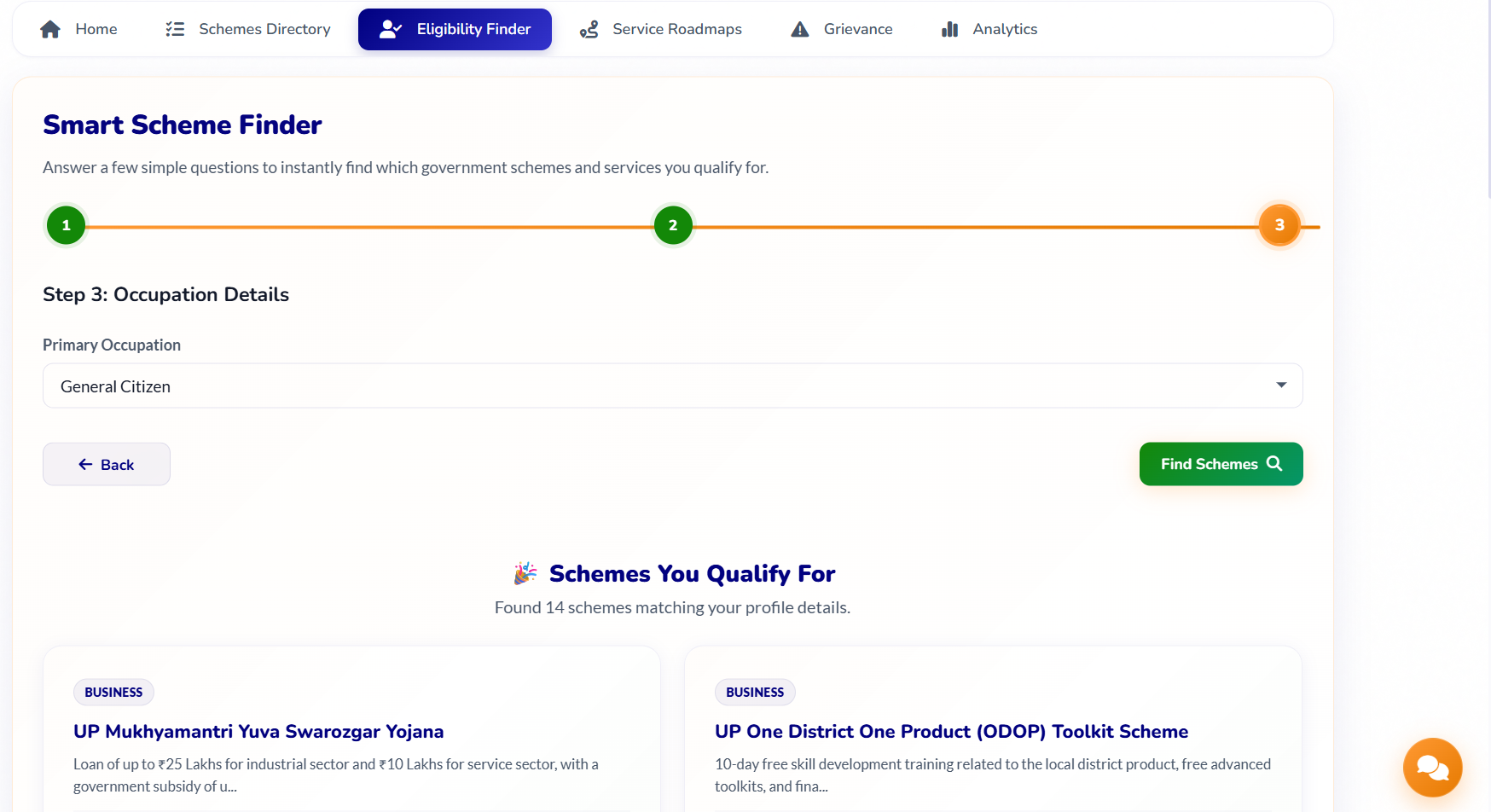
Smart Scheme Finder
-
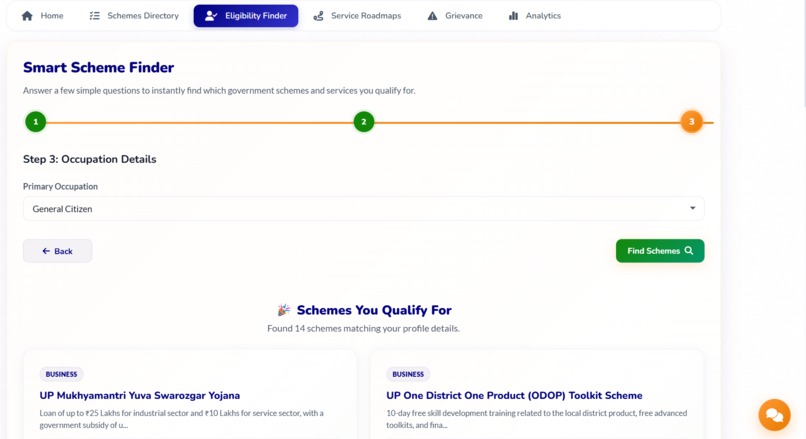
3 steps of Smart Scheme Finder
-
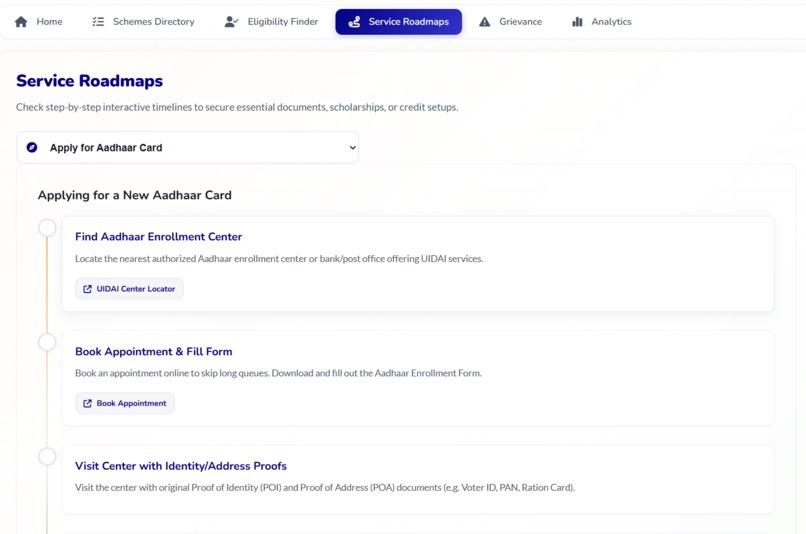
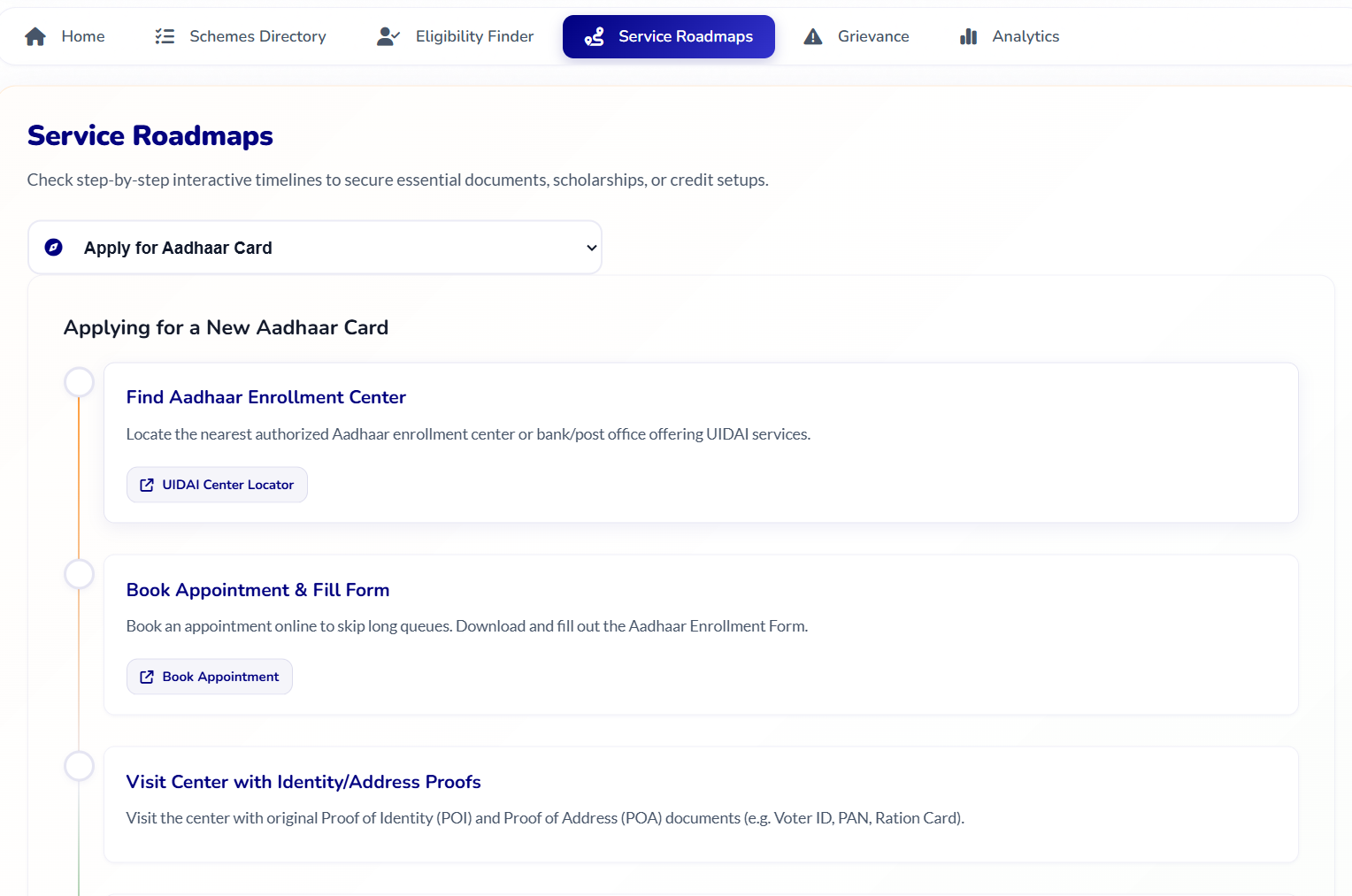
Service Roadmap
-
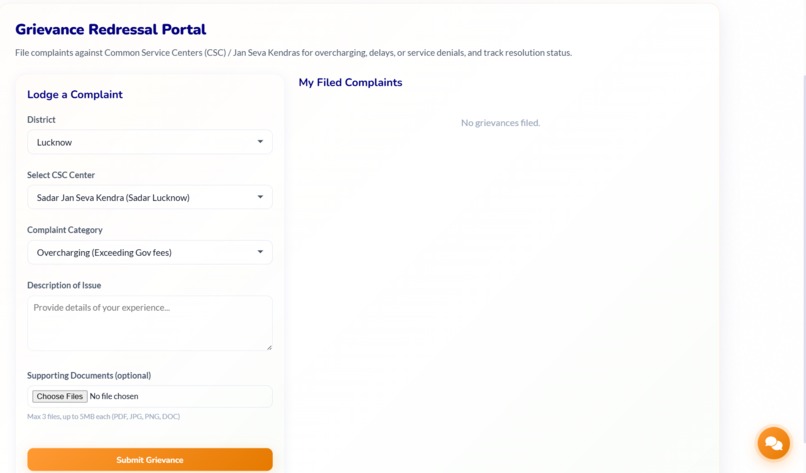
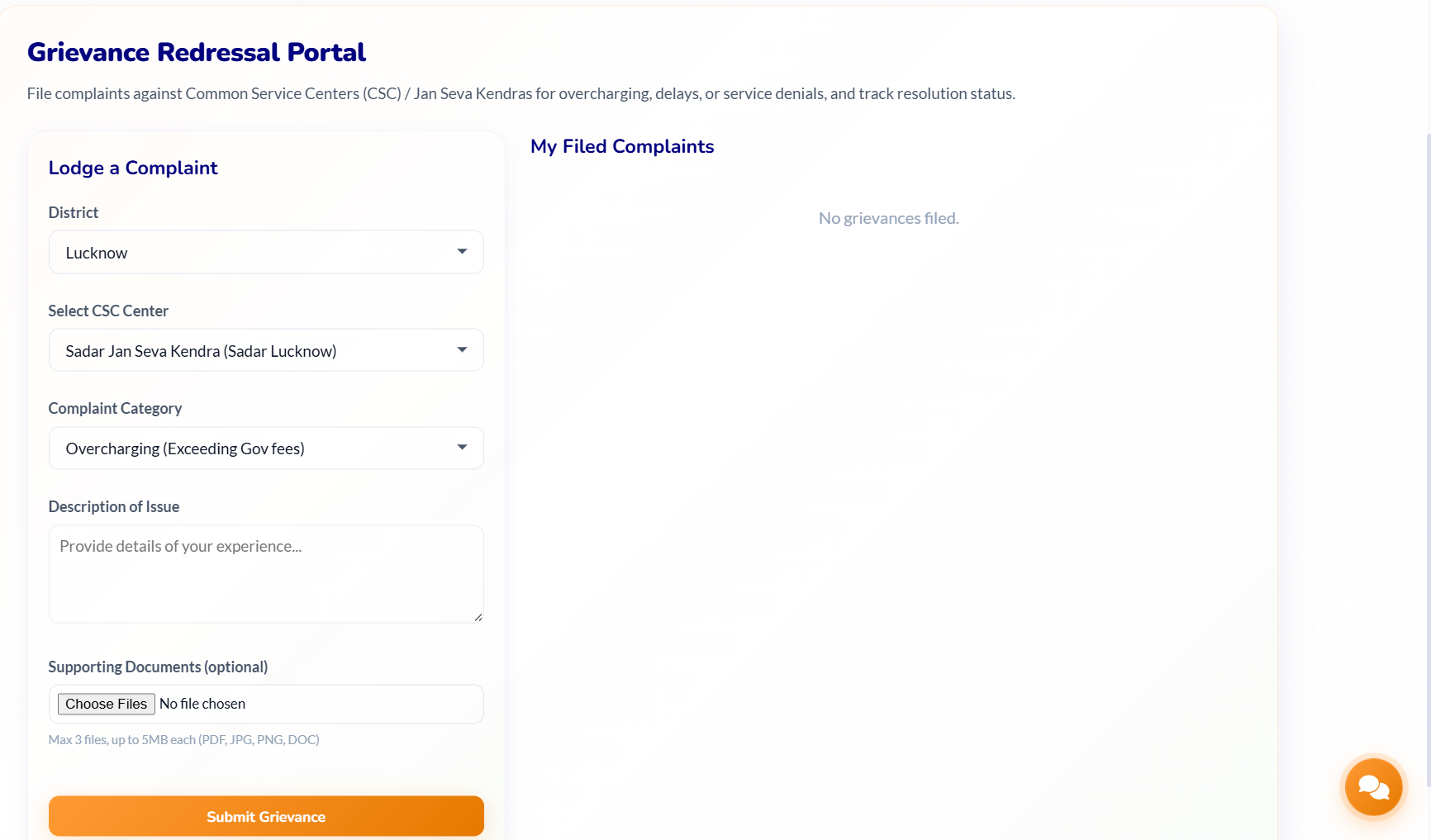
Grievance Redressal Portal
-
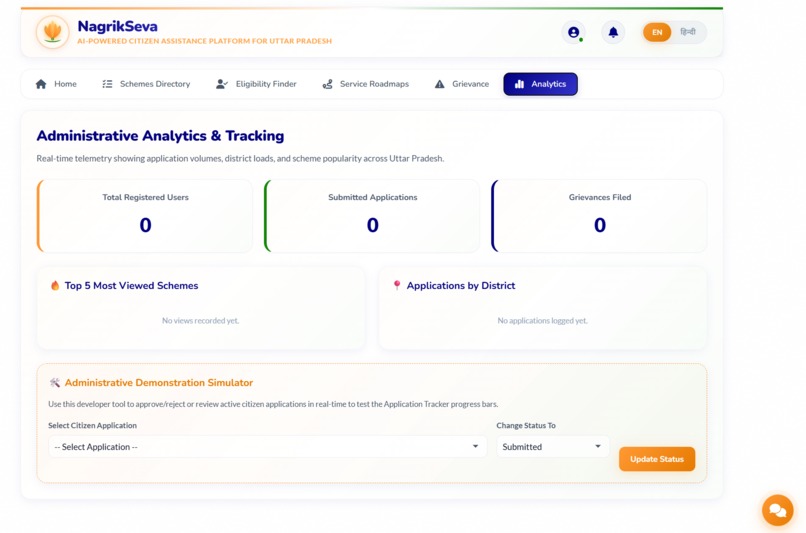
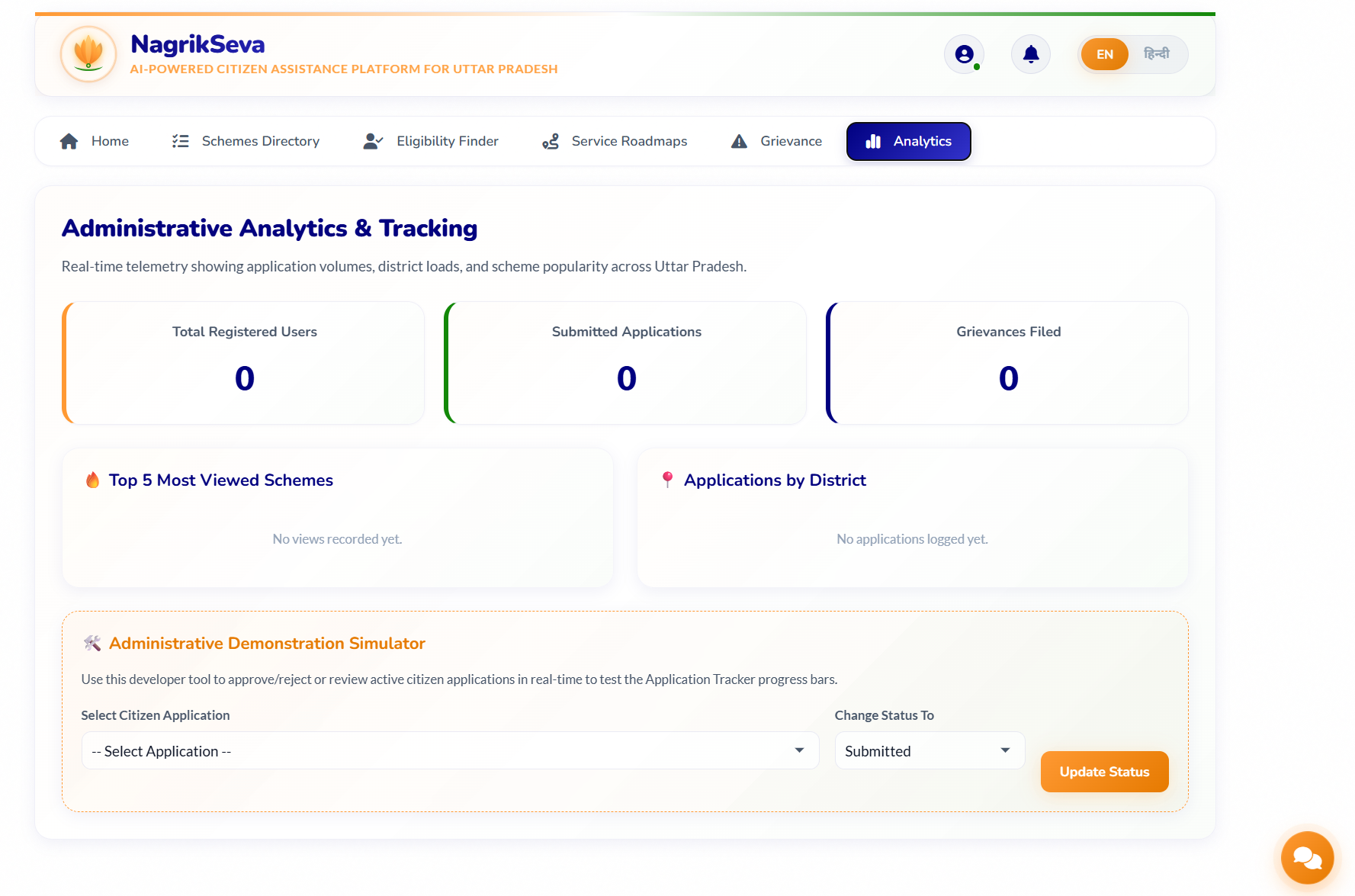
Administrative Analytics & Tracking
Inspiration
Most citizens in Uttar Pradesh — especially in smaller towns and rural areas — don't know which government welfare schemes they're eligible for. They miss application deadlines, get stuck navigating confusing document processes like PAN, Aadhar, and Voter ID, and struggle with portals that are almost entirely English-only. On top of that, there's no single, easy place to raise or track a grievance when something goes wrong at a service center. I wanted to build something that closes that gap — a single bilingual platform that meets citizens where they are, rather than expecting them to navigate a maze of disconnected government websites.
What it does
NagrikSeva is a bilingual (Hindi/English) citizen assistance platform for Uttar Pradesh that: Matches users to eligible schemes through a login-based eligibility finder that considers age, income, category, and occupation Guides users step-by-step through document processes for PAN, Aadhar, Voter ID, and other essentials Sends smart notifications for upcoming schemes and application deadlines Lets users file and track grievances against Jan Seva Kendras, with downloadable PDF complaints Locates nearby Jan Seva Kendras across UP districts with contact details Surfaces trends through an analytics dashboard showing the most-viewed and most-applied schemes Includes SevaMitra, an AI assistant available on every page, so users can get instant answers instead of hunting through static instructions
How we built it
The frontend is built with HTML, CSS, and JavaScript, and the backend runs on Node.js and Express, with MongoDB as the database. SevaMitra, the AI assistant, is powered by Google GeminiTo keep the build lightweight within the hackathon timeframe, I used JSON file-based storage instead of a full database, with all scheme and Jan Seva Kendra data manually compiled and structured. SevaMitra, the AI assistant, is powered by Google Gemini. I initially deployed the frontend on GitHub Pages, but since the project needed a live Express backend to power SevaMitra and other server-side features, I pivoted to Render, which supports full server-side hosting.
Challenges we ran into
Eligibility matching that actually works across widely varying user profiles (age, income, category, occupation) was harder than expected — the logic needed to be flexible enough to handle real-world edge cases, not just the "happy path." Making the platform genuinely bilingual, not just translated — ensuring the Hindi experience felt native rather than like an afterthought. Deployment issues: after moving from local development to Render, I ran into broken asset paths (CSS/JS not loading) and had to debug the differences between local and hosted environments. Recognizing scope gaps mid-build: I added the SevaMitra AI assistant after realizing users needed real-time guidance, not just static instructions — and added the grievance redressal module after realizing scheme discovery alone wasn't solving the full problem citizens face.
Accomplishments that we're proud of
Building a working, end-to-end platform — from eligibility logic to an integrated AI assistant to a live deployment — independently, within the hackathon timeframe. Every part of the stack, from the backend architecture to the UI to the AI integration, was designed and built solo. Migrating from an initial JSON file-based storage system to MongoDB, making the platform more scalable and production-ready — including handling data modeling for schemes, grievances, and user profiles.
What we learned
I learned how to structure a multi-module Express backend cleanly across very different feature domains — eligibility, grievances, notifications, and AI chat — while keeping the codebase manageable. I also learned to make pragmatic architecture tradeoffs under time constraints, like choosing JSON storage over a full database, and how to integrate an LLM (Google Gemini) into a live application in a way that's contextually useful rather than just a bolted-on chatbot. Debugging real deployment issues taught me a lot about the gap between "works on my machine" and "works in production."
What's next for NagrikSeva
Expanding Jan Seva Kendra data beyond UP to cover all Indian states Integrating directly with official government scheme APIs for real-time data Adding SMS-based notifications for users without smartphones or reliable internet access
Built With
- backend
- css3
- express.js
- gemini
- html
- javascript
- node.js
- render

Log in or sign up for Devpost to join the conversation.