-
-
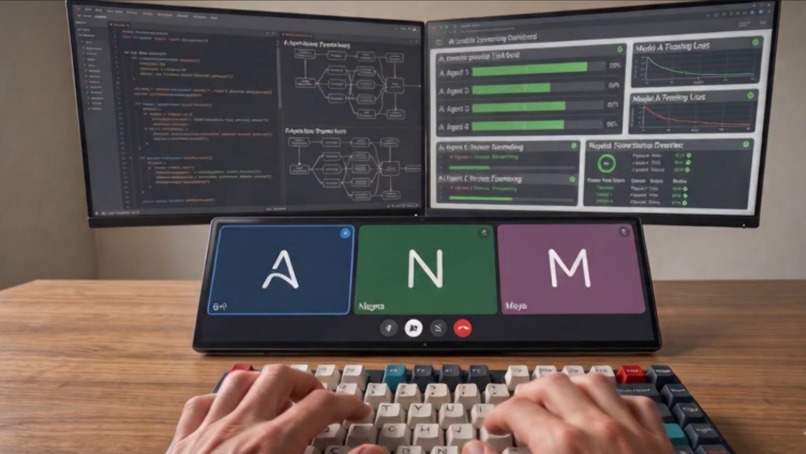
In the age of AI agents, multitasking will become crucial.
-

Sorry, I wasn’t listening.
-
Multitasking in meetings is usually discouraged—but what if you could stay appropriately focused?
-

This product makes that possible.
-

We’ll keep listening on your behalf and let you know when the floor is handed to you.
-
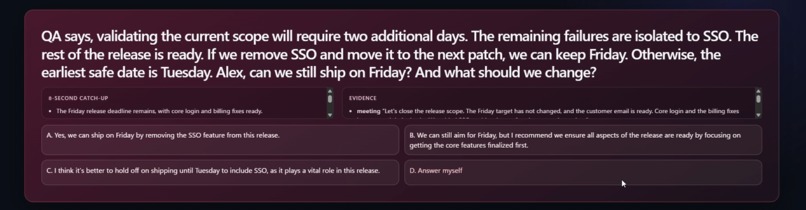
We’ll summarise questions, provide a quick catch-up for the meeting, suggest answers, and help you return to it.
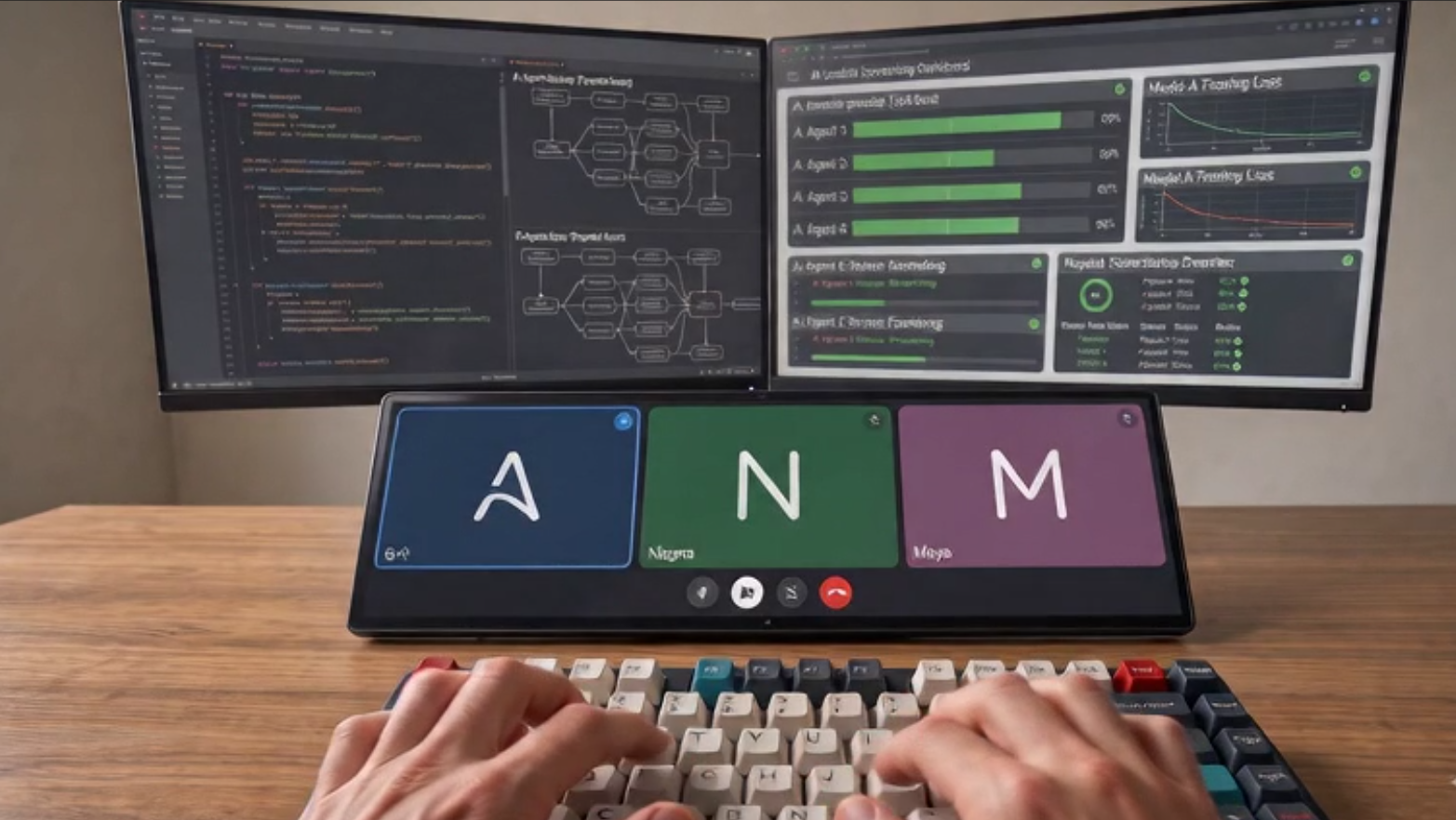

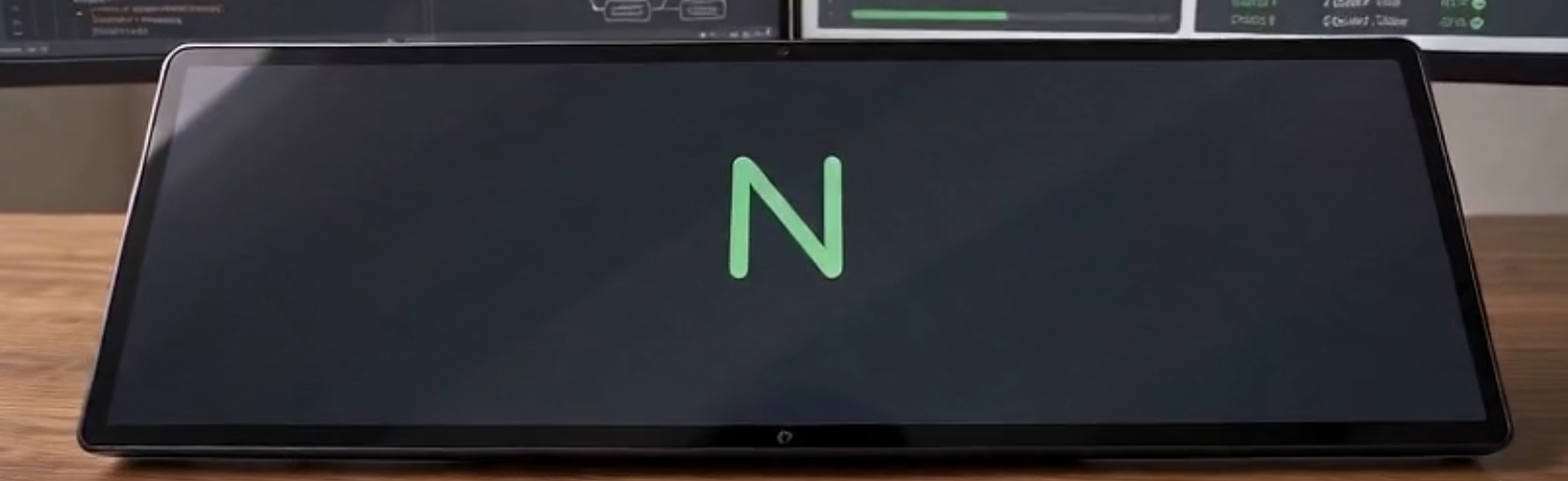

Inspiration
“Sorry, I wasn’t listening.”
Meetings often demand full attention precisely when we also need to keep other work moving. We wanted to challenge the assumption that multitasking must mean disengagement.
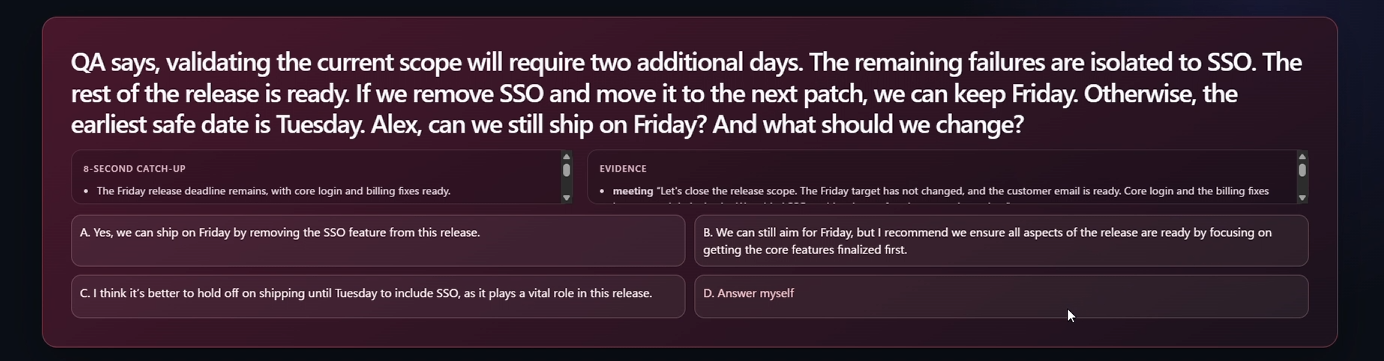
Nagara is built for the moment when a conversation turns to you: it listens to shared meeting audio, recognises when a question is directed at you, and prepares a grounded catch-up so you can respond with context instead of pretending you heard everything.
What it does
Nagara is a real-time meeting companion for browser-based calls.
While you share a Chrome tab’s audio, Nagara:
- Transcribes the conversation in real time
- Detects when a question is directed at the active participant
- Extracts the question, relevant evidence, constraints, and possible responses
- Lets the participant quickly choose a response direction and return to listening
Video is never sent to Nagara. The experience is designed around the shared tab’s audio only.
How we built it
We built Nagara as a full-stack web application with a browser-first interaction model.
The frontend is built with Next.js and TypeScript. It uses browser media APIs to capture shared-tab audio and presents a responsive, fullscreen-friendly interface designed for an unobtrusive “listening” state.
The backend is built with Python and a Clean Architecture structure. It manages realtime sessions, transcript processing, question detection, and structured catch-up generation.
We use OpenAI realtime and language models to transcribe speech, identify questions addressed to the user, and generate response options grounded in the conversation. Docker Compose runs the frontend, API, and PostgreSQL together for a reproducible local environment.
We also created a set of scripted meeting fixtures so that question-detection behaviour can be demonstrated and evaluated consistently.
Challenges we ran into
The hardest part was not transcription itself—it was making the product feel trustworthy in real time.
We had to handle browser-specific shared-tab audio behaviour, realtime connection lifecycle events, partial transcripts, and interruptions between consecutive questions. We also refined the generation flow so that a detected question appears quickly while evidence and answer options continue loading progressively.
Another challenge was avoiding misleading answers. Nagara needs to distinguish between a general discussion and a question actually addressed to the participant, then produce options that reflect the speaker’s requested owner, deadline, scope, and constraints.
Accomplishments that we're proud of
- Built an end-to-end shared-tab audio experience without sending meeting video
- Made question detection work across scripted meeting scenarios, including cases where no question should be extracted
- Created a progressive catch-up interface that surfaces the question, evidence, and response options as they become available
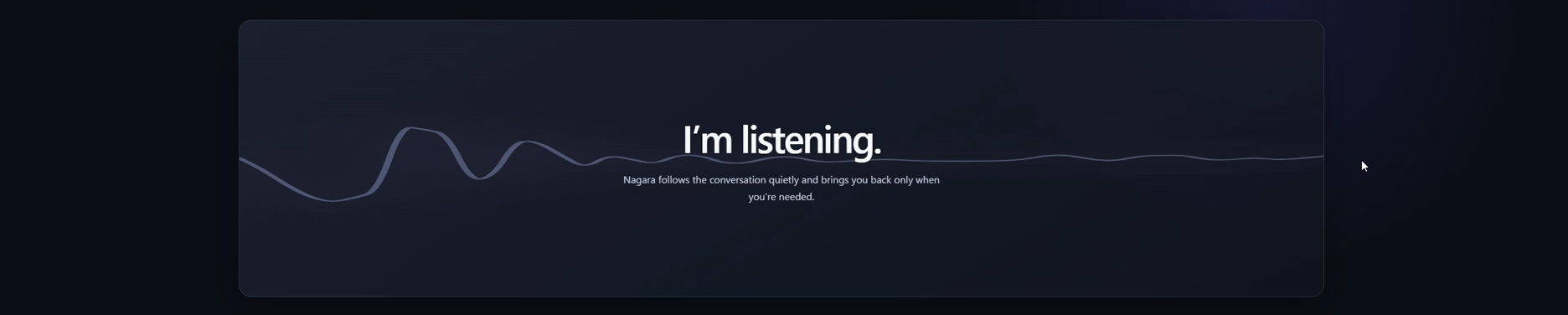
- Designed an unobtrusive fullscreen listening experience with a live audio waveform
- Packaged the full application with Docker Compose for local reproducibility
- Created reusable evaluation fixtures for reliable demos and regression testing
What we learned
We learned that real-time AI UX is mostly about timing, confidence, and recovery.
A useful assistant should not wait for a perfect final result before helping, but it also must not confidently interrupt at the wrong time. Progressive disclosure, stable UI states, retry behaviour, and evidence-grounded generation made as much difference as the underlying model.
We also learned that browser media permissions and realtime connections need product-level design, not just technical integration. Clear feedback and graceful recovery are essential when the user is in the middle of a live meeting.
What's next for Nagara, I’m listening.
Next, we want to improve speaker and addressee detection, support richer meeting context, and personalise response suggestions.
We are also exploring opt-in voice responses in the user’s own synthetic voice, with explicit consent and secure voice-data handling. Passkey or biometric confirmation could enable one-touch approval—while keeping the user in control of every response.
Built With
- api
- audio
- chrome
- compose
- css
- docker
- fastapi
- gpt
- next.js
- openai
- pnpm
- postgresql
- python
- react
- realtime
- support-richer-meeting-context
- typescript
- uv
- web
- webrtc


Log in or sign up for Devpost to join the conversation.