-
-
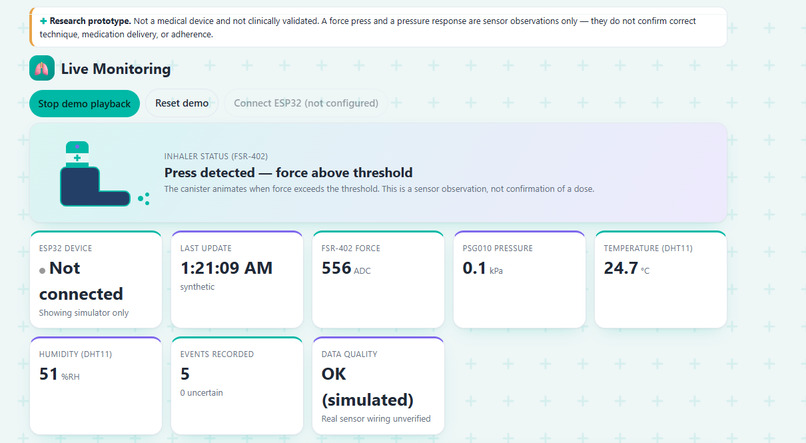
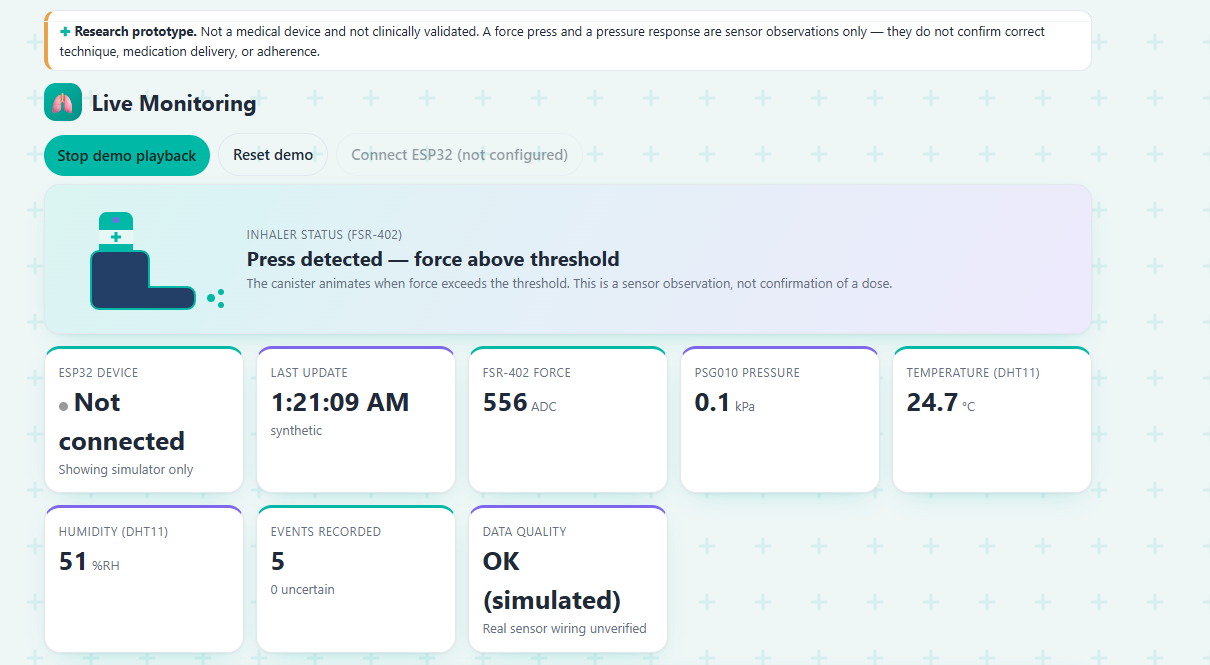
The website starts gathering all the parameters sent from the main hardware.
-
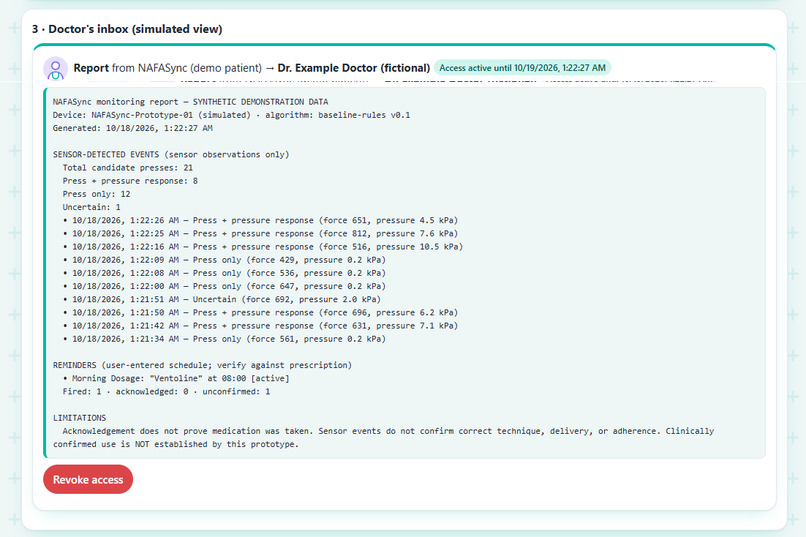
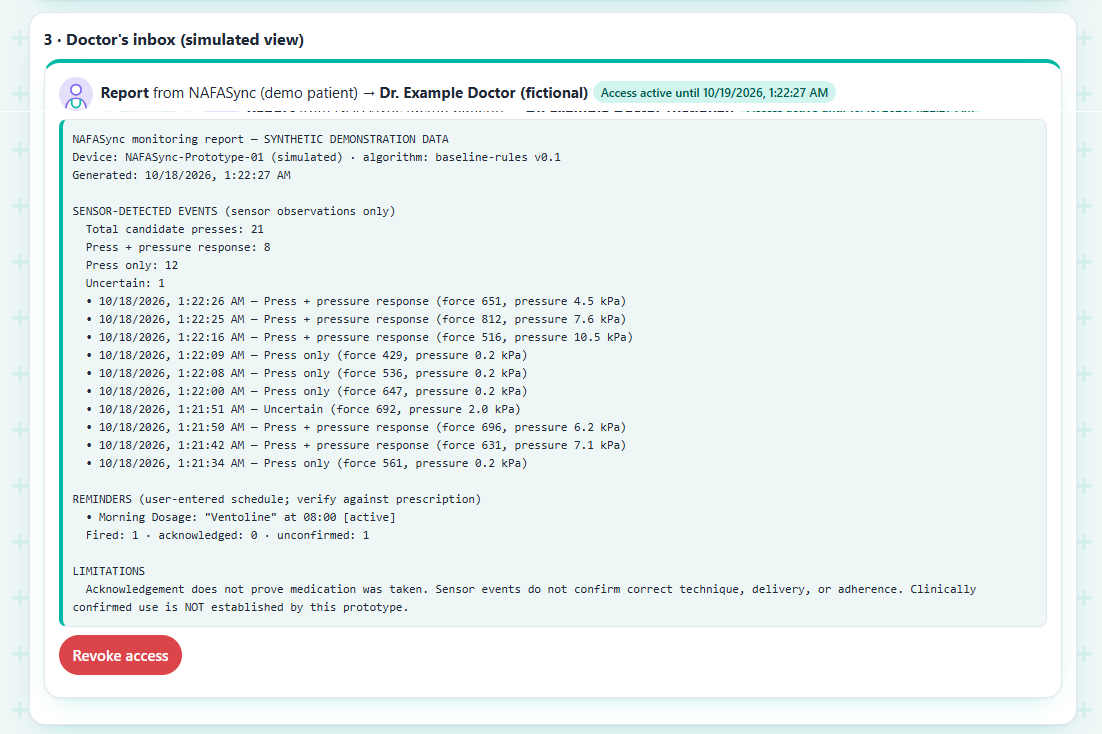
It maintains that frequent records are sent to the doctor especially in critical cases
-
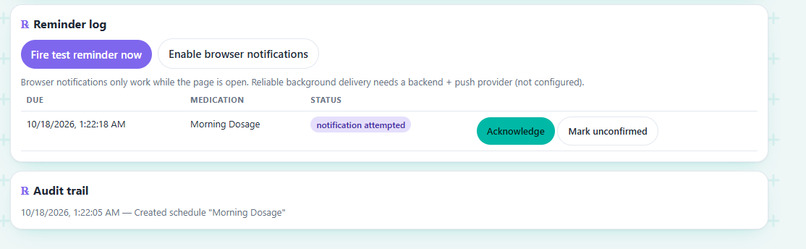
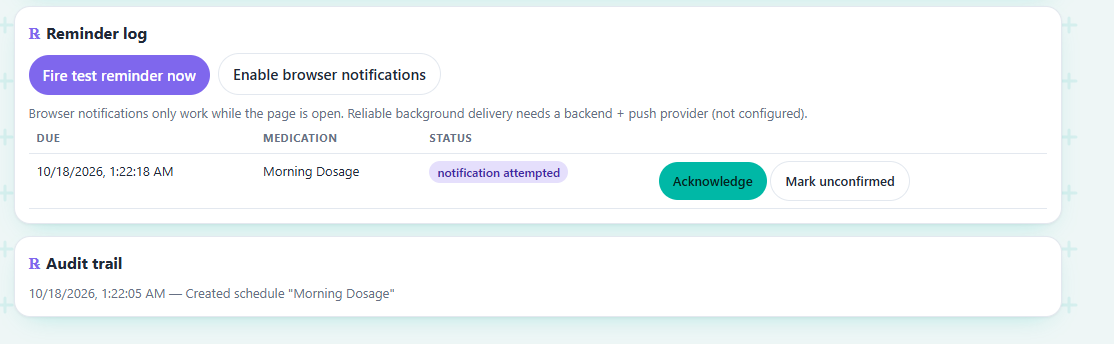
In case of any doctor reminders, the website starts sending alerts for the patient
-
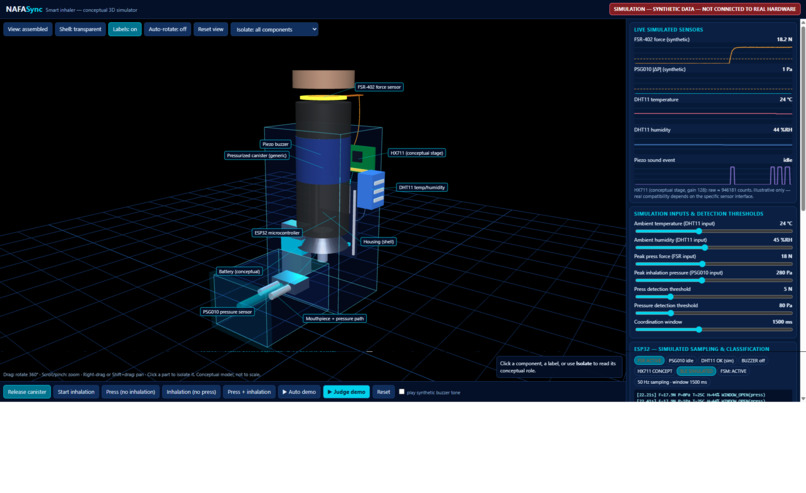
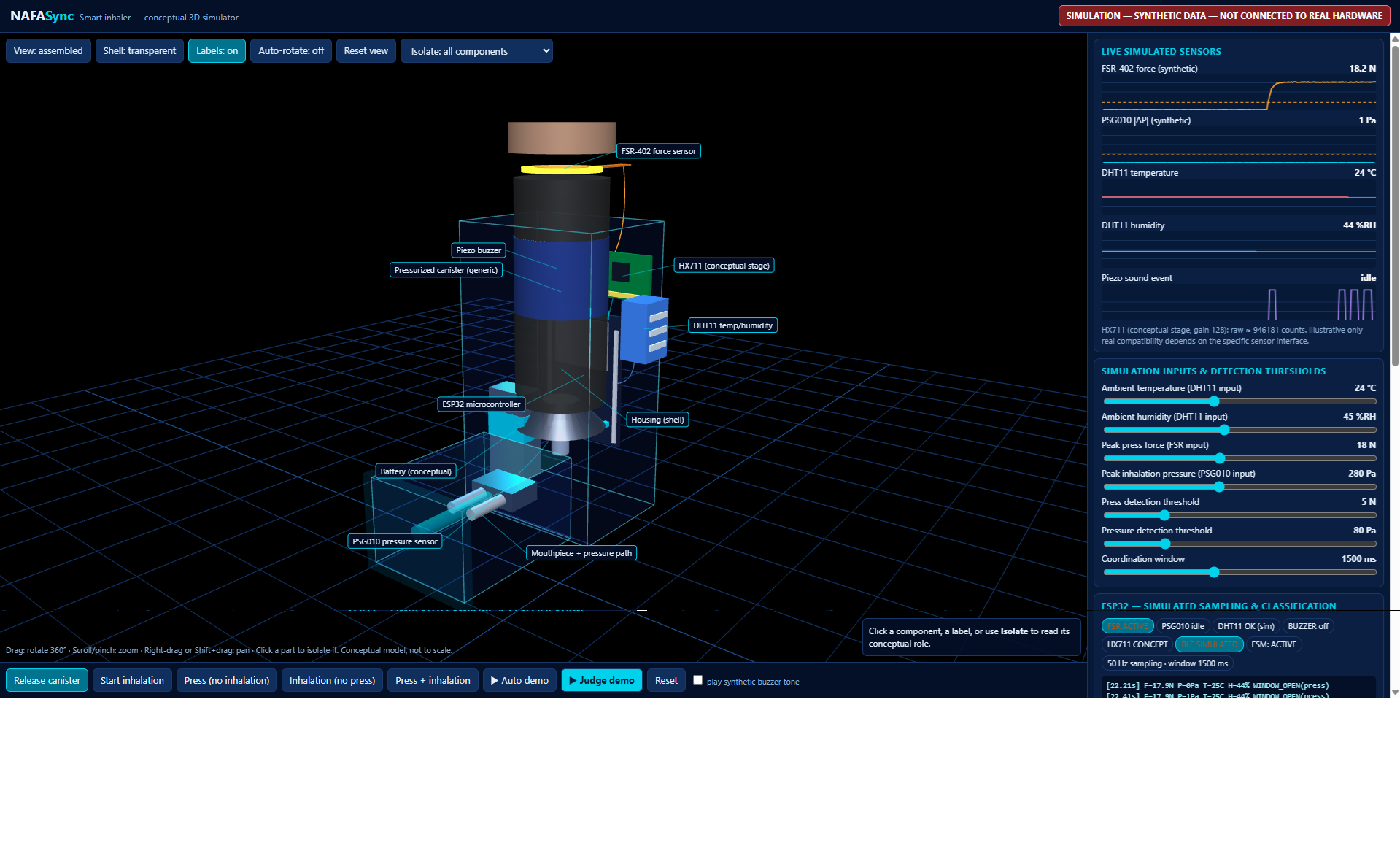
The Inhaler's results incase of pressing the canister only
-
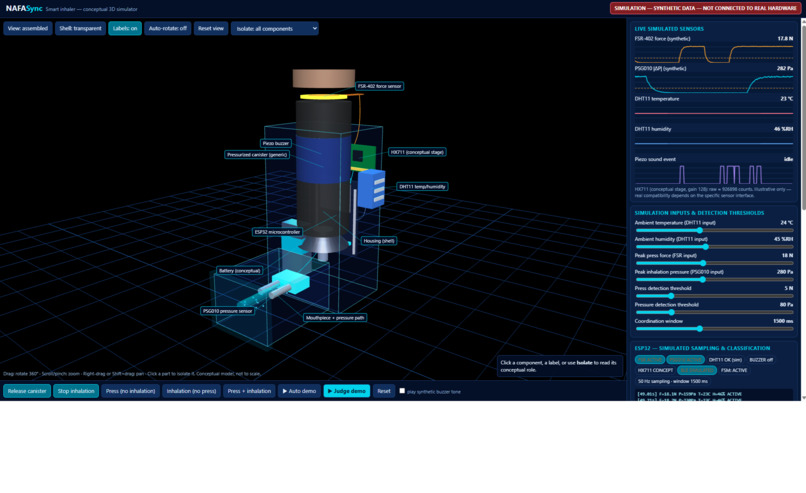
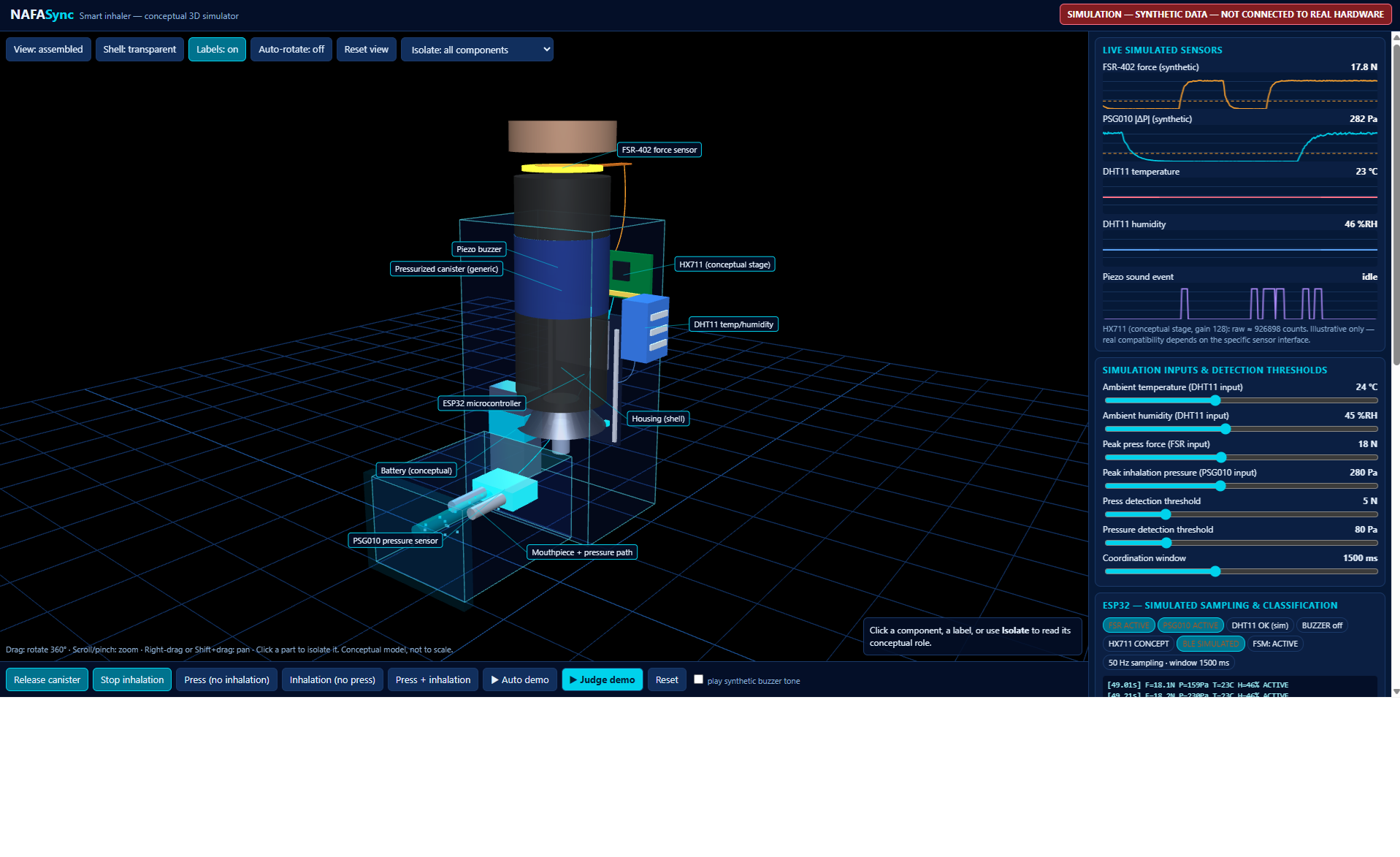
The Inhaler's results incase of inhalation with pressing the canister as measured by Piezo and Pressure Sensor
-
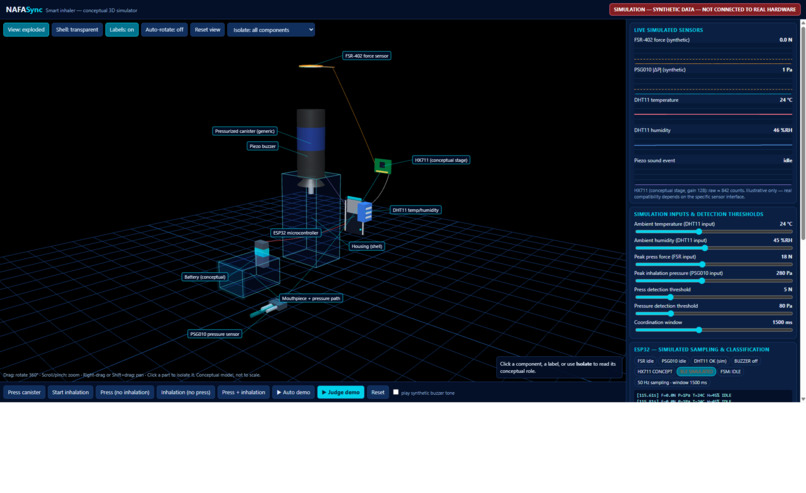
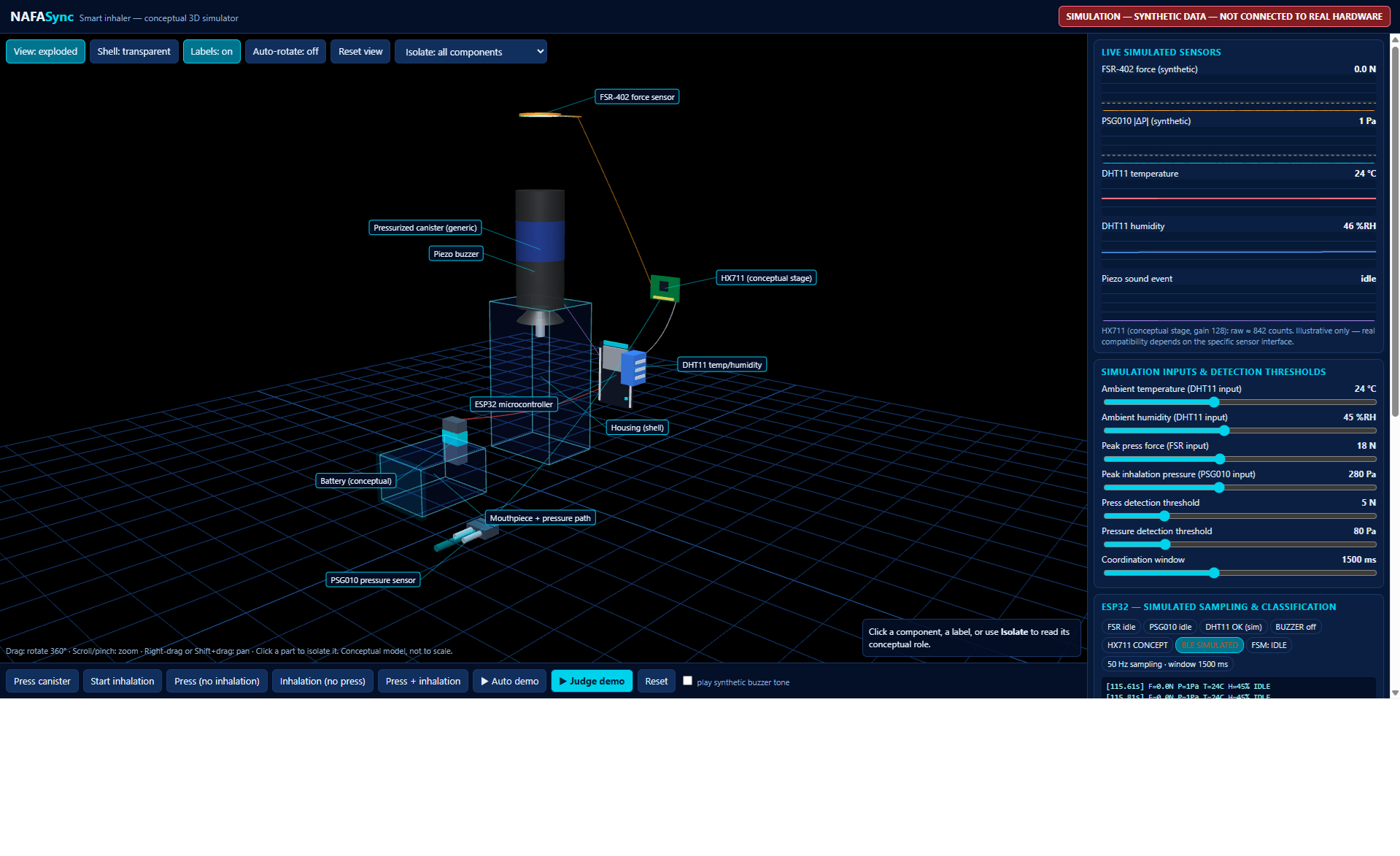
An overall view of all the components used in the inhal
Inspiration
NAFASync was inspired by a problem that is often overlooked in respiratory healthcare: incorrect inhaler technique and the difficulty of continuously monitoring a patient's condition. We realized that managing a respiratory condition should not depend only on the patient remembering their medication routine; it should also involve effective communication between patients, doctors, and their families. This motivated us to combine healthcare, electronics, and artificial intelligence to develop a system that supports inhaler-use monitoring while keeping everyone involved in the patient's care better connected.
What it does
NAFASync is an AI-assisted smart inhaler monitoring and patient-management system designed to improve communication and support continuous respiratory-health monitoring. Its hardware uses an FSR-402 force-sensitive resistor to detect canister presses and a pressure sensor to collect pressure-related readings, with an ESP32 serving as the main microcontroller. Beyond hardware monitoring, its AI-powered platform connects patients with their doctors and relatives, helping facilitate communication and access to relevant patient information. One of its main features is the automatic generation of frequent graphs that visualize the patient's recorded data and progress over time, allowing changes and patterns in their case to be followed more easily. The system aims to bring monitoring, data visualization, and communication together in one accessible platform.
How we built it
We developed NAFASync by combining electronic hardware, software development, and AI-based functionality. On the hardware side, we selected an ESP32 microcontroller, an FSR-402 force sensor, and a PSG010 differential pressure sensor to investigate inhaler-use events through different signals. We also incorporated environmental monitoring through a DHT11 sensor. On the software side, we developed a digital platform that organizes patient information, generates frequent graphs from recorded data, and supports communication between patients, doctors, and relatives using AI-assisted functionality. We also designed the system architecture and a 3D simulation to demonstrate how the different components work together. Our approach focused on making the system affordable, understandable, and capable of turning collected information into useful visual insights.
Challenges we ran into
One of our greatest challenges was integrating hardware and software into one connected system. Working with different sensors required us to consider electrical compatibility, calibration, signal noise, and the accuracy of collected readings. Another challenge was designing a meaningful relationship between the hardware data and the AI-powered platform, ensuring that information could be organized and presented in a way that would be useful to patients, doctors, and relatives. We also had to consider how to generate understandable graphs from frequently updated patient records without presenting uncertain sensor readings as confirmed medical information. These challenges taught us that developing healthcare technology requires both technical accuracy and careful consideration of the people who will use it.
Accomplishments that we're proud of
We are particularly proud of transforming NAFASync from an initial inhaler-monitoring concept into a broader healthcare platform. In addition to investigating force-and-pressure-based inhaler-event detection, we developed a platform that generates frequent visual graphs of patient data and uses AI-assisted functionality to connect patients, doctors, and relatives. We are also proud of bringing together electronics, programming, data visualization, and artificial intelligence in one project. Most importantly, we established a system that focuses not only on collecting information but also on making that information more accessible and understandable to the people involved in a patient's care.
What we learned
Throughout this project, we learned that healthcare innovation involves much more than developing a device or writing code. We gained experience with microcontrollers, electronic sensors, data processing, AI-assisted software development, and graphical data visualization. We also discovered how important communication and accessibility are in healthcare, particularly when patients need continuous support from healthcare professionals and family members. One of our most valuable lessons was understanding that collected data must be interpreted carefully: a sensor reading is not automatically a medical diagnosis, and AI-generated insights should support, rather than replace, professional medical judgment.
What's next for NAFASync
What is next is to make our own 3D-PRINTED inhaler and make the components built in it. In addition, we want to make special types of Canisters for Nafasync smart inhaler only and be able to connect many doctors to take surveys and see what they obviously say for the future of this device.
