-
-

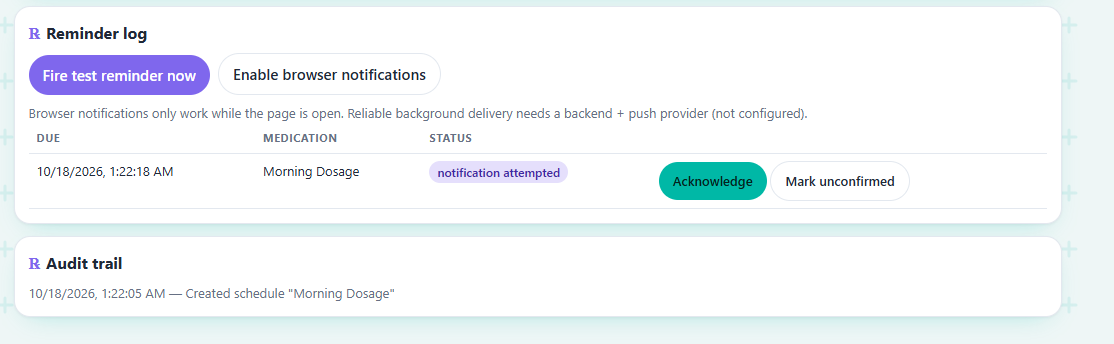
Reminders that the doctor give to the patient on teh Website for dosages
-
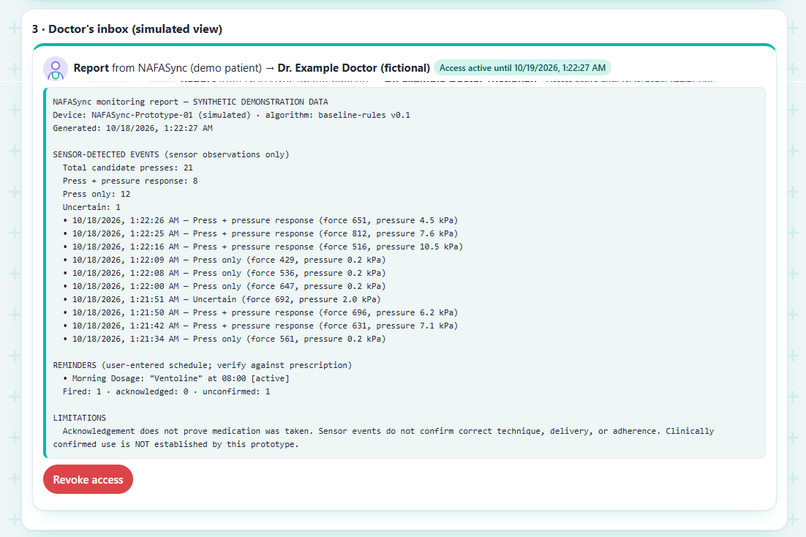
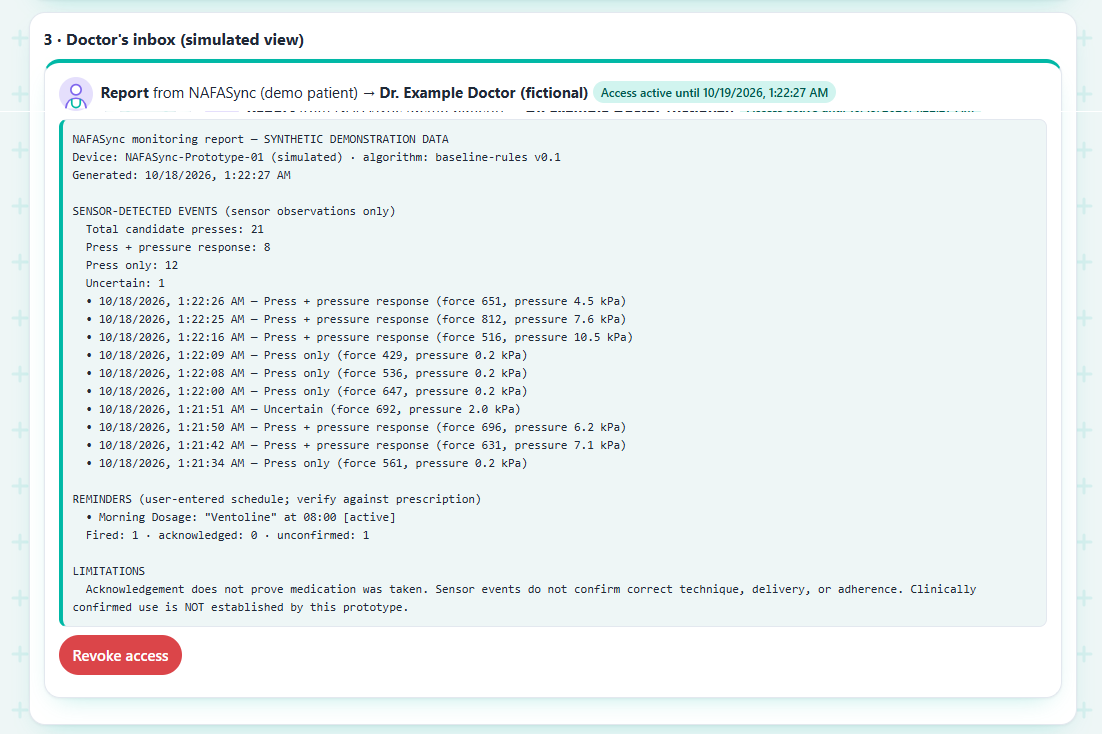
The results sent to the doctor from the inhaling process of the patient
-
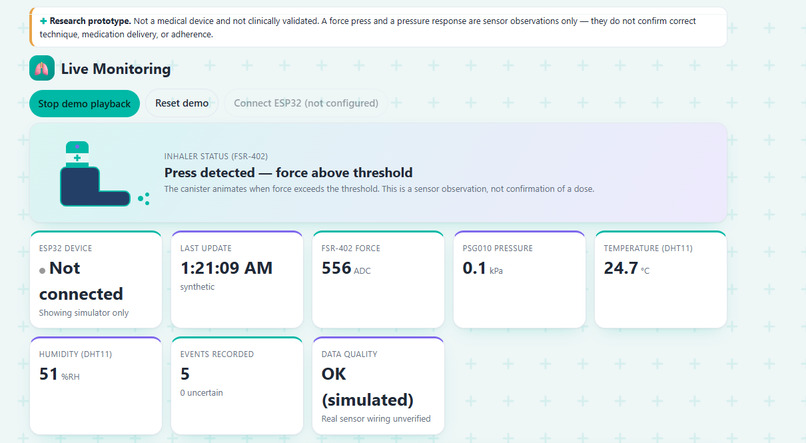
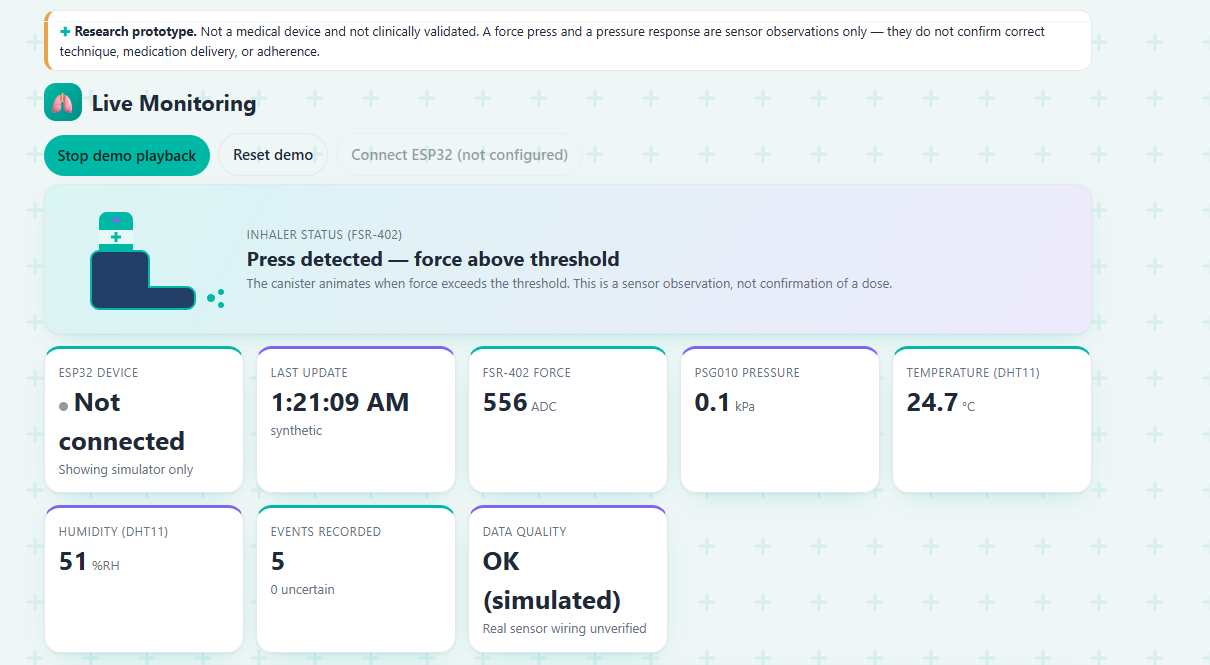
Landing page of the wesbiet that is connected to teh smart inhaler
-
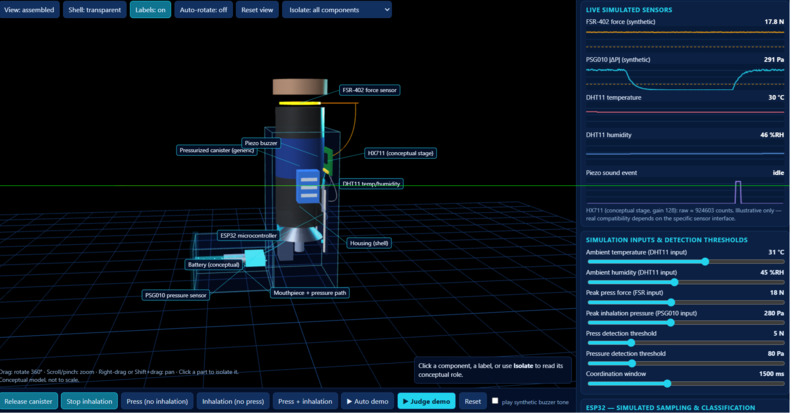
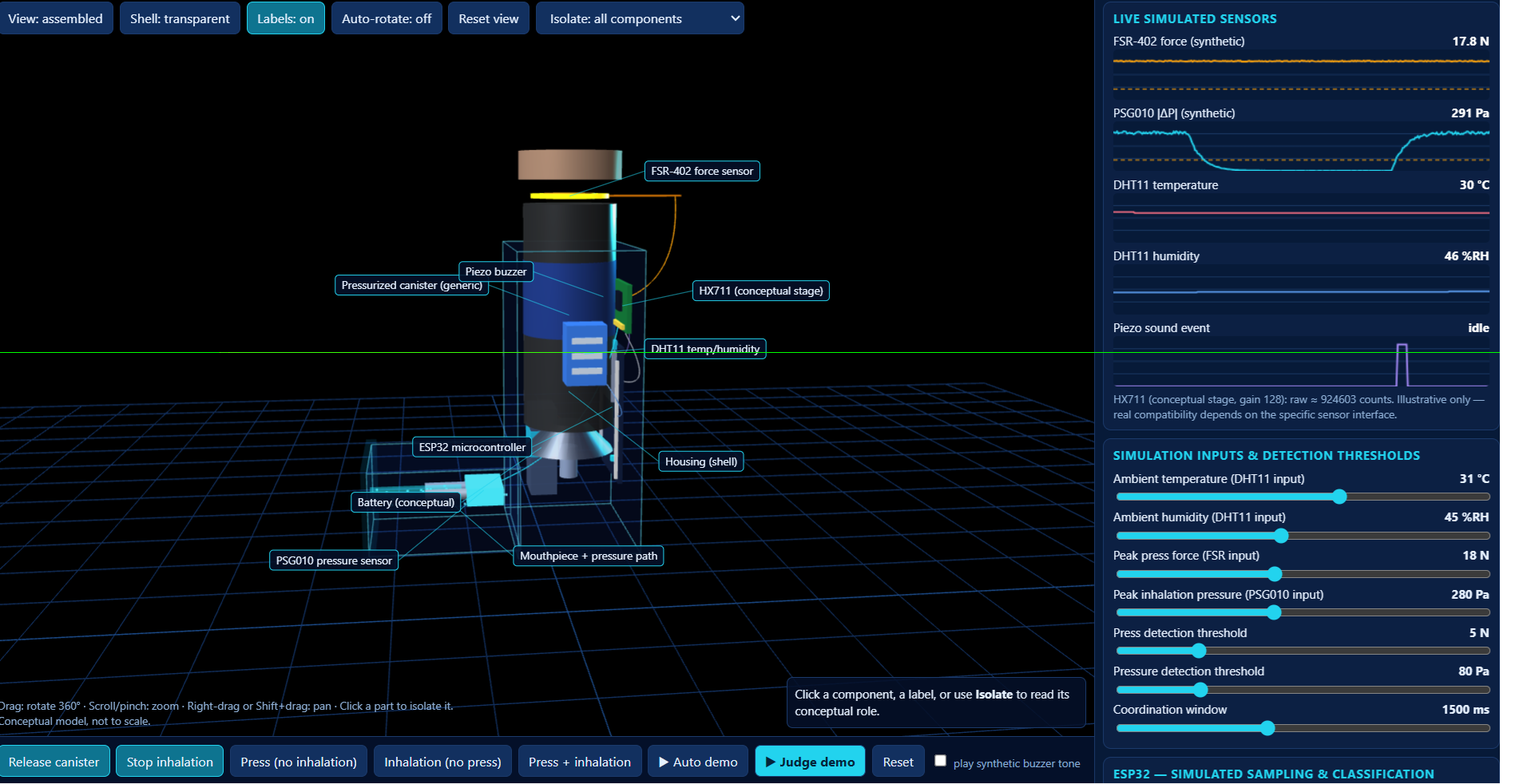
A simulation for the inahler with all of its sensors
Inspiration
NAFASync was inspired by the fact that incorrect inhaler technique remains a common challenge for people with respiratory diseases. We wanted to explore how technology could help monitor inhaler-use events, especially the coordination between pressing the canister and inhaling. Our idea was to combine electronics, programming, and healthcare to investigate whether multiple sensor signals could provide more useful information than detecting a press alone.
What it does
NAFASync is a low-cost multisensor research prototype that investigates inhaler-event detection using force and pressure signals. An FSR-402 detects force changes associated with pressing the canister, while a PSG010 pressure sensor is intended to measure pressure-related changes. An ESP32 processes the sensor readings, and a digital dashboard is intended to visualize the data. The project focuses on comparing force-only detection with combined force-and-pressure detection. It is a research prototype, not a clinically validated medical device.
How we built it
We designed NAFASync around an ESP32 microcontroller and selected sensors to collect different types of information about a possible inhaler-use event. We planned how the force and pressure readings could be processed together and represented through a digital interface. We also developed a conceptual 3D simulation to explain the system's structure and workflow. Throughout the design process, we considered sensor compatibility, calibration, data processing, and the importance of distinguishing demonstrated features from proposed ones.
Challenges we ran into
One of our main challenges was understanding how different sensors could work together reliably. The force and pressure sensors produce different signals, and interpreting their relationship requires careful calibration and testing. We also had to consider electrical compatibility, sensor placement, signal noise, and the possibility of false detections. Another important challenge was ensuring that our claims remained scientifically accurate: detecting a canister press or a pressure change does not automatically prove that a person inhaled correctly or received medication.
Accomplishments that we're proud of
We are proud of turning a healthcare-related problem into a focused engineering research question. We developed the NAFASync system concept, identified the purpose and limitations of its components, and designed an approach for comparing two event-detection methods. We also created visual materials and a 3D simulation to communicate the design clearly. Most importantly, we established a direction for evaluating our idea through measurable results rather than relying only on assumptions.
What we learned
Working on NAFASync taught us that successful engineering requires more than assembling hardware. We learned about sensor signals, microcontrollers, calibration, data processing, and the importance of controlled experiments. We also learned to distinguish between what a sensor measures and what we can reasonably conclude from that measurement. The project strengthened our problem-solving, research, and teamwork skills while showing us why validation and honest reporting are essential when developing technology related to healthcare.
What's next for NAFASync
Our next step is to calibrate the sensors and conduct controlled, non-clinical experiments comparing force-only detection with combined force-and-pressure detection. We plan to evaluate performance using metrics such as accuracy, precision, recall, and false-positive and false-negative rates. We also aim to improve the data-processing workflow and verify the connection between the hardware and dashboard. In the future, we hope to investigate methods for estimating the remaining contents of an inhaler canister and explore an interdigitated-electrode sensor for detecting selected airborne pollutants. These improvements will require further research and validation before they can be considered reliable features.

Log in or sign up for Devpost to join the conversation.