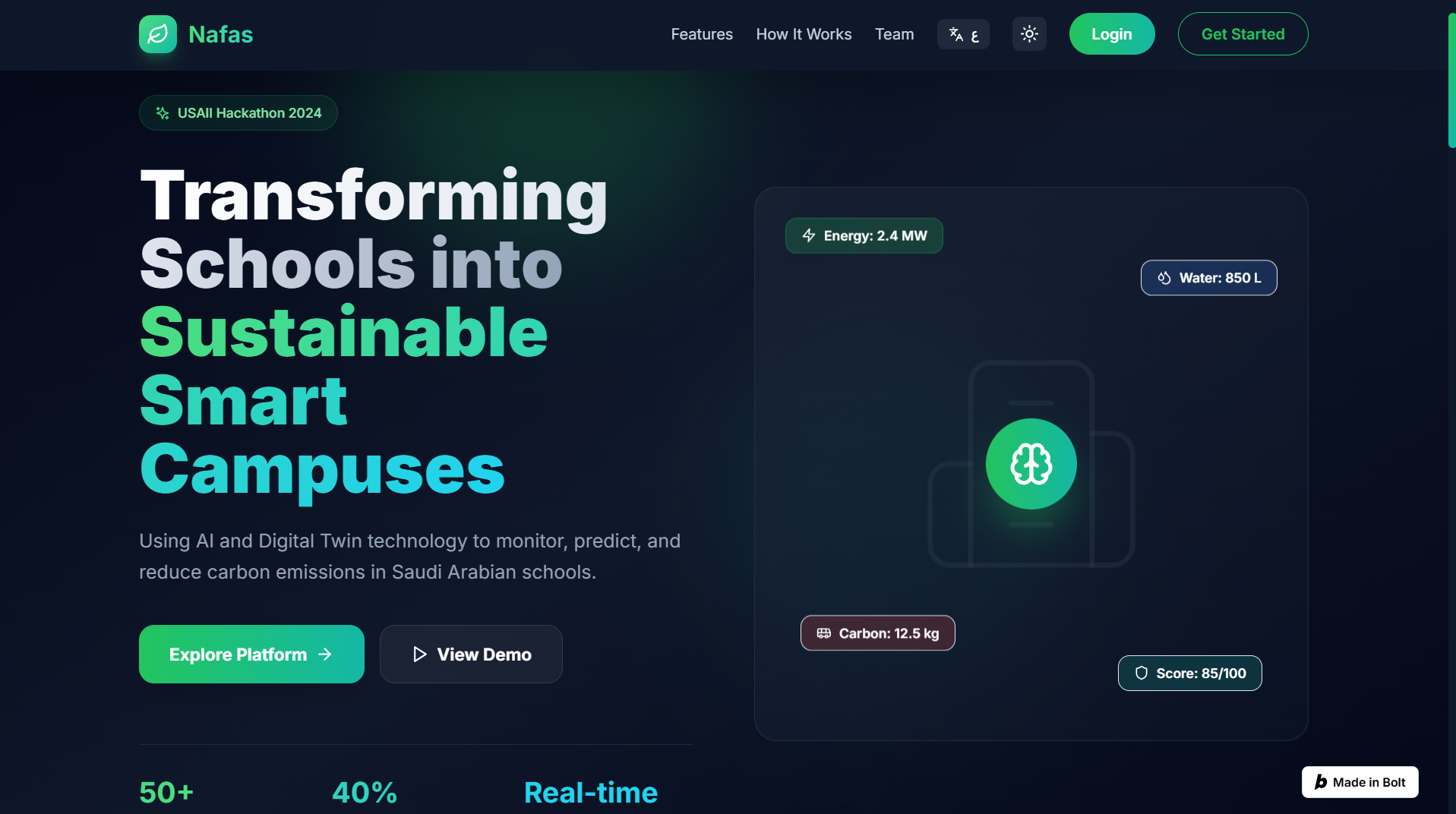
The idea for Nafas began with a simple observation we see every day. During hot summer months, air conditioners run continuously, water is sometimes wasted through unnoticed leaks, and long lines of vehicles wait outside schools with engines still running. These scenes seemed ordinary, but we realized they represented a hidden environmental impact that often goes unnoticed. We asked ourselves: What if we could transform this invisible impact into understandable data that helps people make better decisions? That question led to the creation of Nafas. Our goal was to make sustainability easy to understand and act upon, rather than something hidden behind complex reports and technical numbers. We designed an AI powered digital twin platform that analyzes energy, water, and transportation usage, then converts the results into interactive insights and actionable recommendations. One of our biggest challenges was the lack of accessible environmental data. To address this, we developed realistic synthetic datasets that simulate real world consumption patterns while preserving privacy and accessibility. Throughout this journey, we learned how artificial intelligence can turn raw data into meaningful insights and how technology can make sustainability more engaging for students and communities. We also learned the importance of keeping humans involved in decision making to ensure responsibility and accuracy. We believe Nafas is more than a technology project it is a step toward building a generation that understands its environmental impact and has the tools to create positive change. By transforming hidden data into visible impact, Nafas aims to contribute to a more sustainable future for everyone
Built With
- ai
- bolt
- cloude


Log in or sign up for Devpost to join the conversation.