-
-
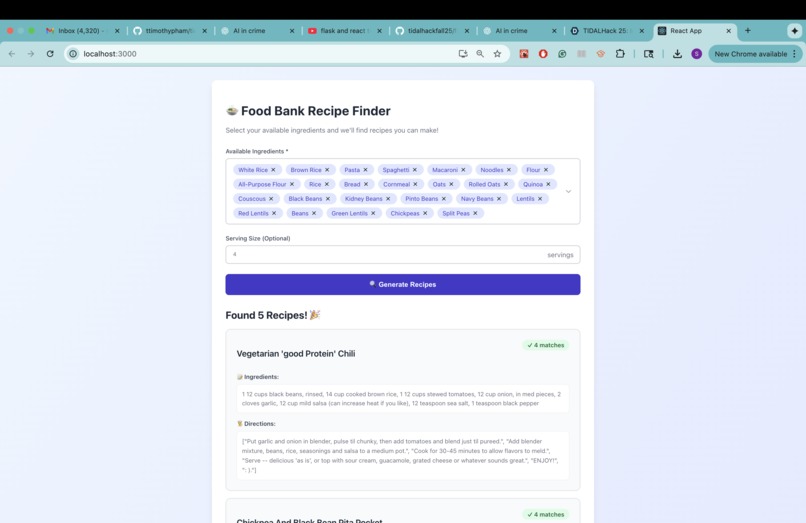
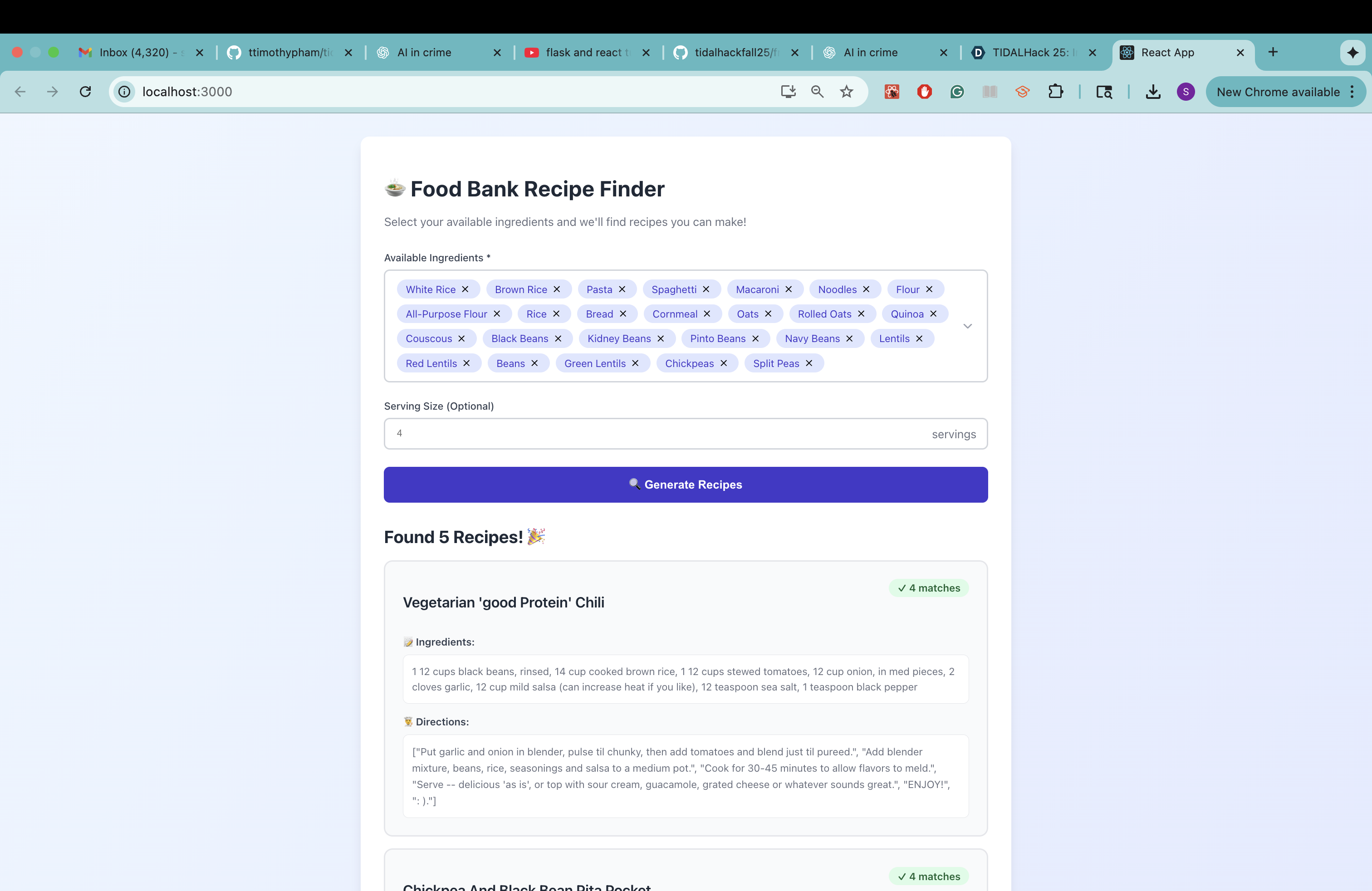
Our amazing UI with user inputs and insightful recipes and analysis
Inspiration
Some of us drew from our experience working in food banks and soup kitchens; donated food is unpredictable and sometimes a mass bulk can result in unintended food waste. We wanted to create a tool that transforms unpredictable donations into practical, nutritious meals using AI.
What it does
Choose from a database of ingredients (such as potatos, lentils, peas) until all ingredients have been chosen, and optionally input a serving amount for how many people you're serving. We use Google Gemini AI to score and explain recipes, suggest substitutions, and provide beginner tips; prioritizing easy, affordable, and allergen-safe meals.
How we built it
Frontend: React Backend: Flask (Python) Data Processing: Pandas on RecipeNLG (2M+ recipes) AI: Gemini 1.5 Flash for intelligent analysis Filtring: Removed perishables, allergens, and complex recipes
Challenges we ran into
Our main challenge was understanding how we wanted to implement our idea and more importantly getting that implementation to work. This was all of our first time trying to implement AI, so we had basically no experience jumping into trying to implement Gemini and sanitizing our data.
Other issues we had were: Cleaning millions of inconsistent recipe entries Matching ingredient variations (e.g., “rice” vs. “long-grain rice”) Parsing inconsistent AI JSON responses Managing CORS issues and balancing AI accuracy with response speed
Accomplishments that we're proud of
Processed 2M+ recipes into a clean 400-item dataset Built seamless React–Flask integration Achieved 100ms base searches and AI-enhanced recommendations Developed accessible design for low-resource users
What we learned
Large-scale data wrangling and NLP ingredient matching Inclusive design and real-world problem-solving for food insecurity
What's next for Soup For Thought
See if we can utilize with local soup kitchens in the College Station area to test, and to continue building and tweaking based on feedback received. Since this is an early prototype, we know there are some kinks that we may not be able to see from just a coding perspective -- there are things that soup kitchens specifically need we don't know about. For our application itself, we plan on:
Finishing our serving size predictor Adding multilingual and mobile support (PWA/React Native) Partnering with food banks for real inventory integration Providing nutritional data, print cards, and community recipe sharing Tracking impact to reduce food waste and improve health outcomes (!!)


Log in or sign up for Devpost to join the conversation.