Badger Live
Inspiration
Walking around UW–Madison, we realized how fragmented campus information can be. Events are spread across calendars, police reports live on separate websites, and temporary problems like icy sidewalks, blocked entrances, or broken streetlights often aren't communicated to the students who need that information most.
We wanted to create a single, interactive campus map that makes this information accessible while giving students a simple way to help each other.
What it does
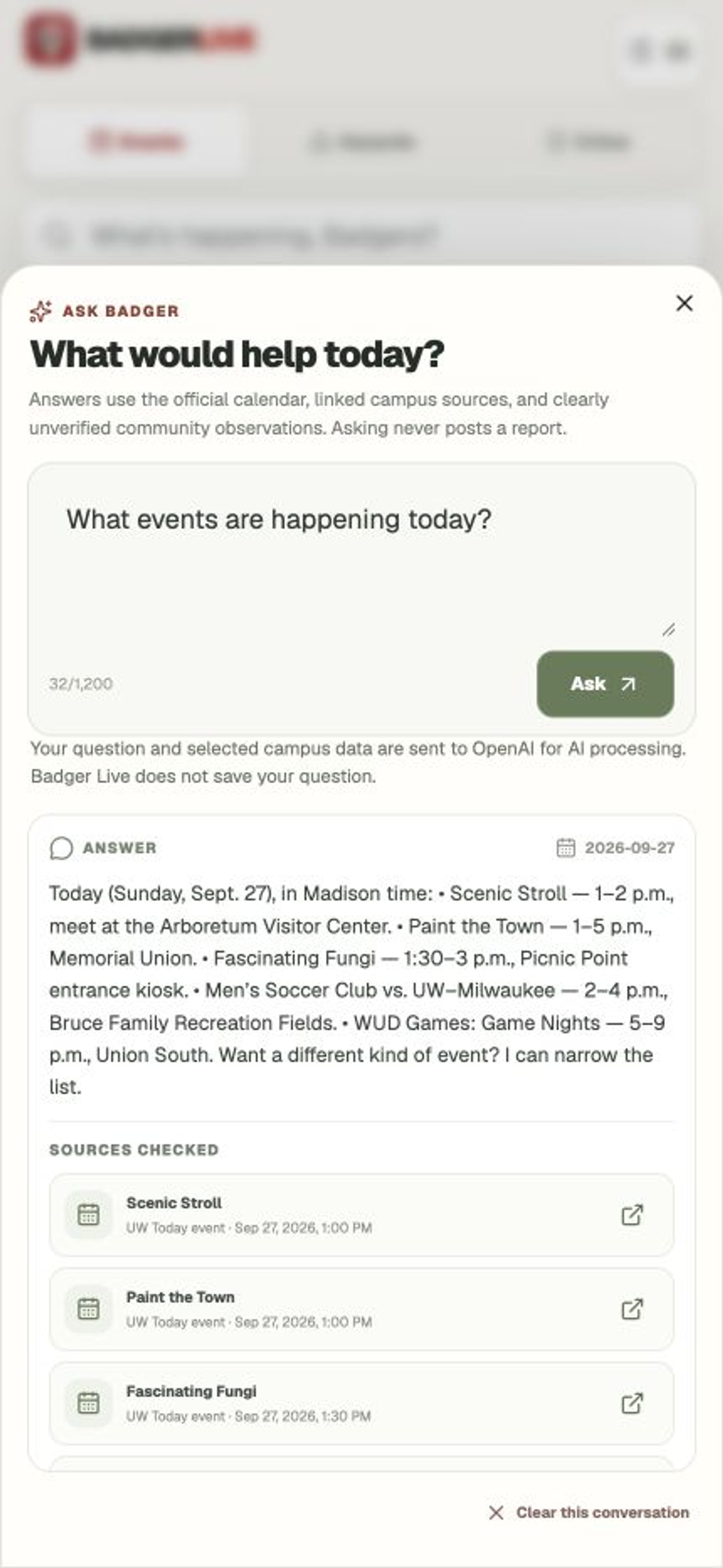
Badger Live is an interactive, AI-first campus platform that brings events, safety information, buildings, and community reports together on one map.
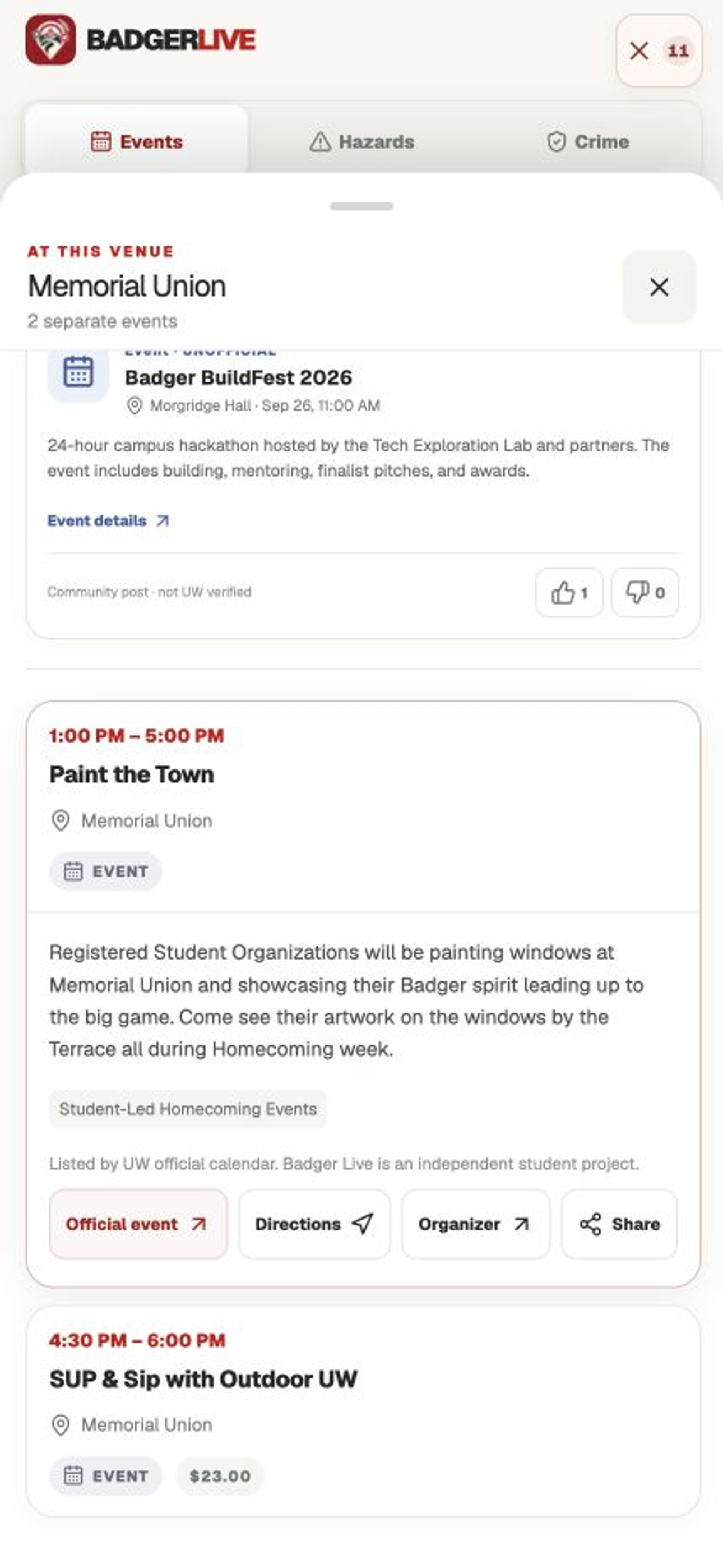
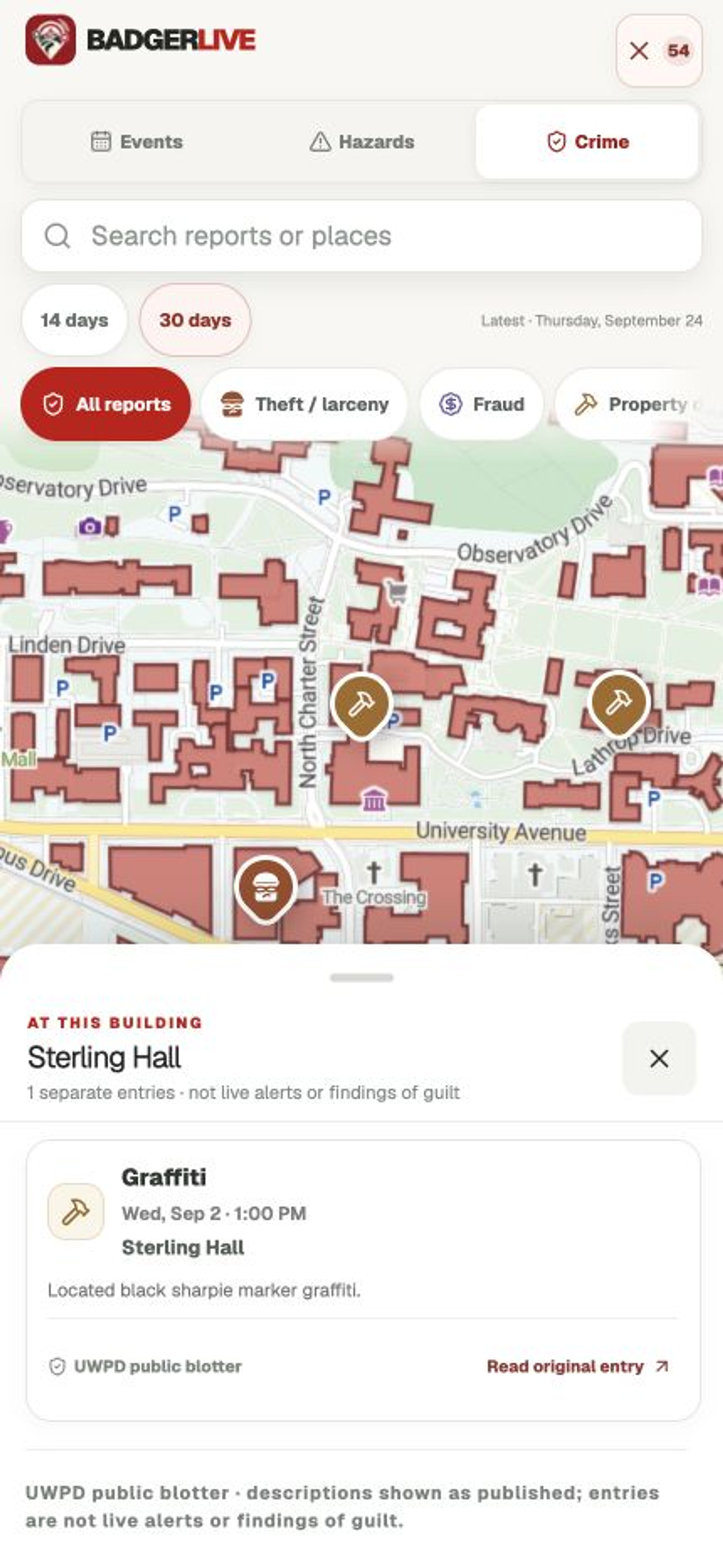
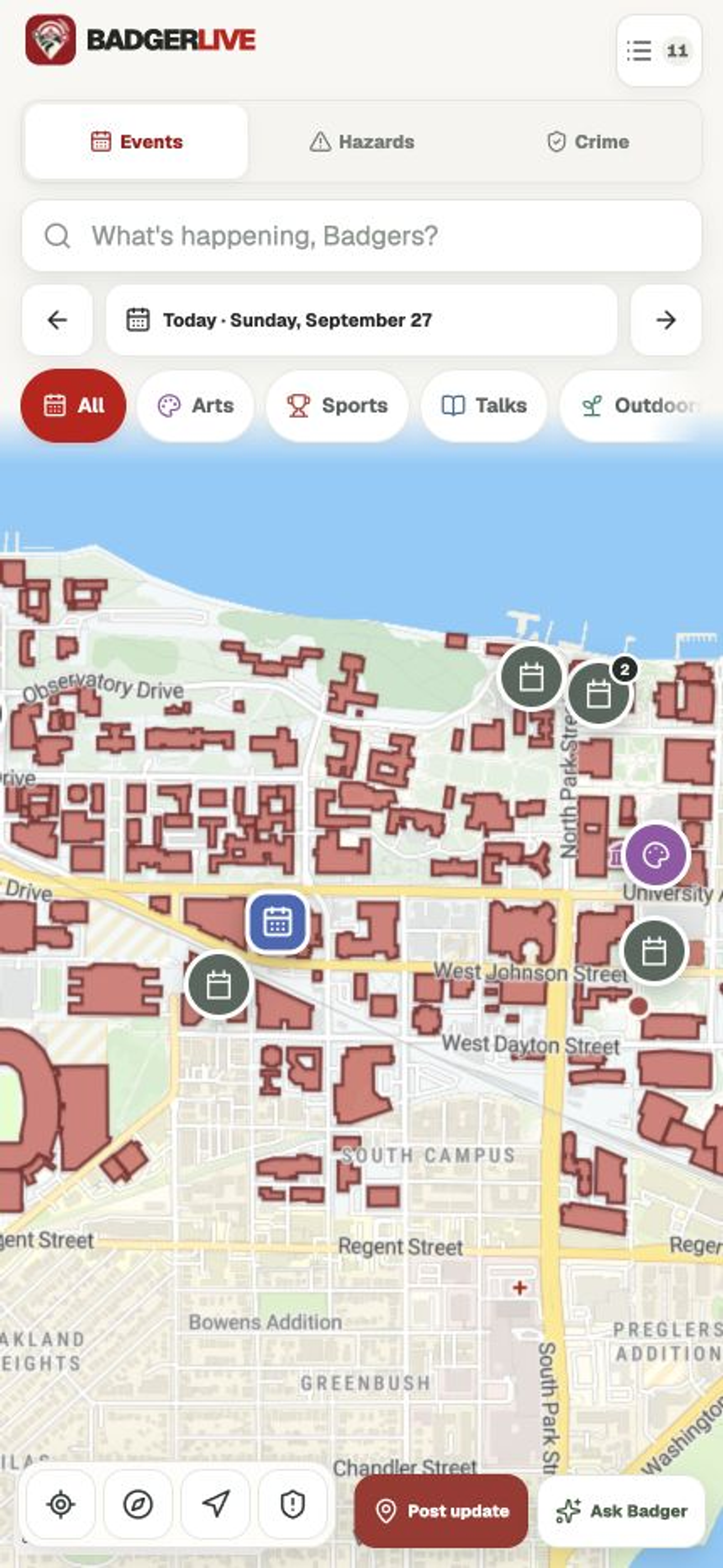
Our prototype integrates university events and publicly available UW Police Department reports. Students can explore campus activities by date and category, locate buildings, view historical incident information, and access original sources directly from the map.
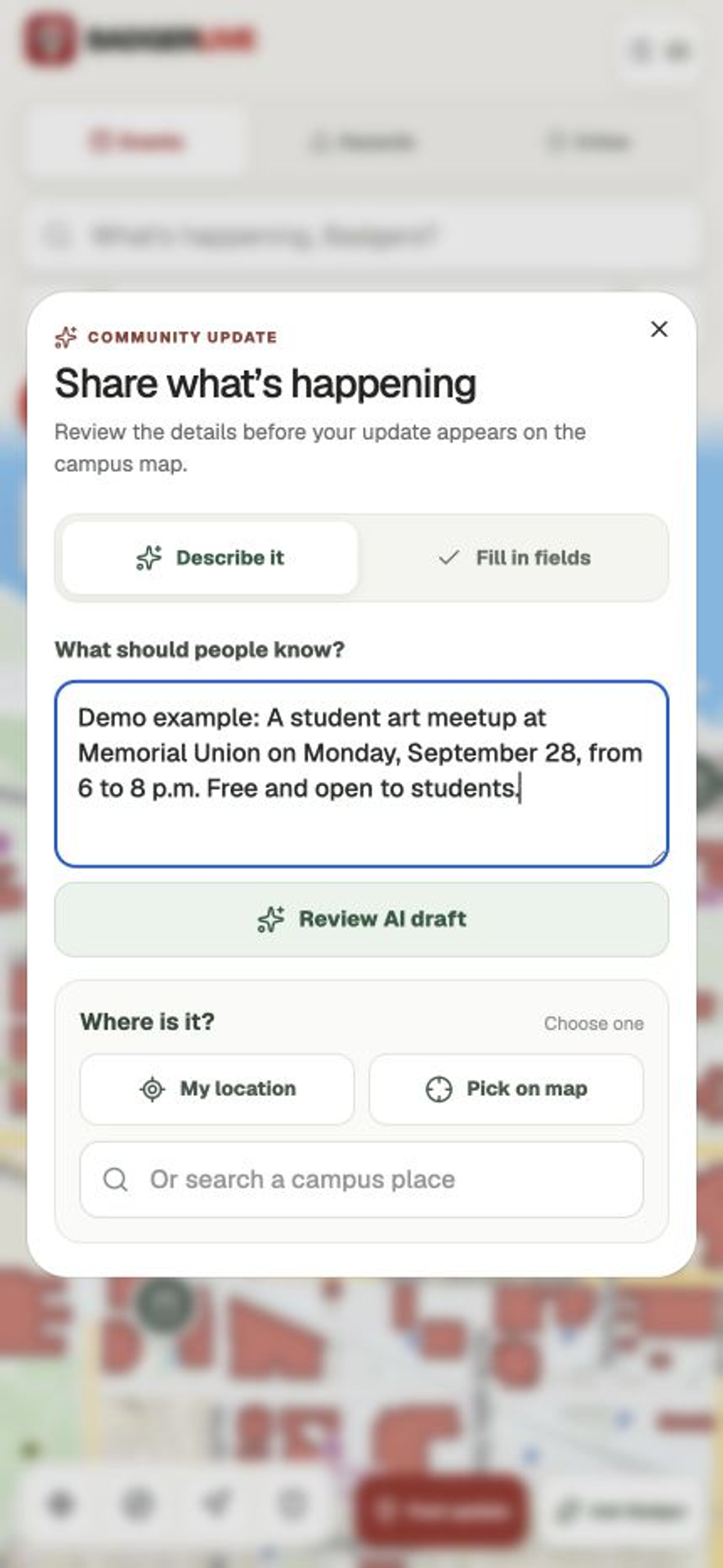
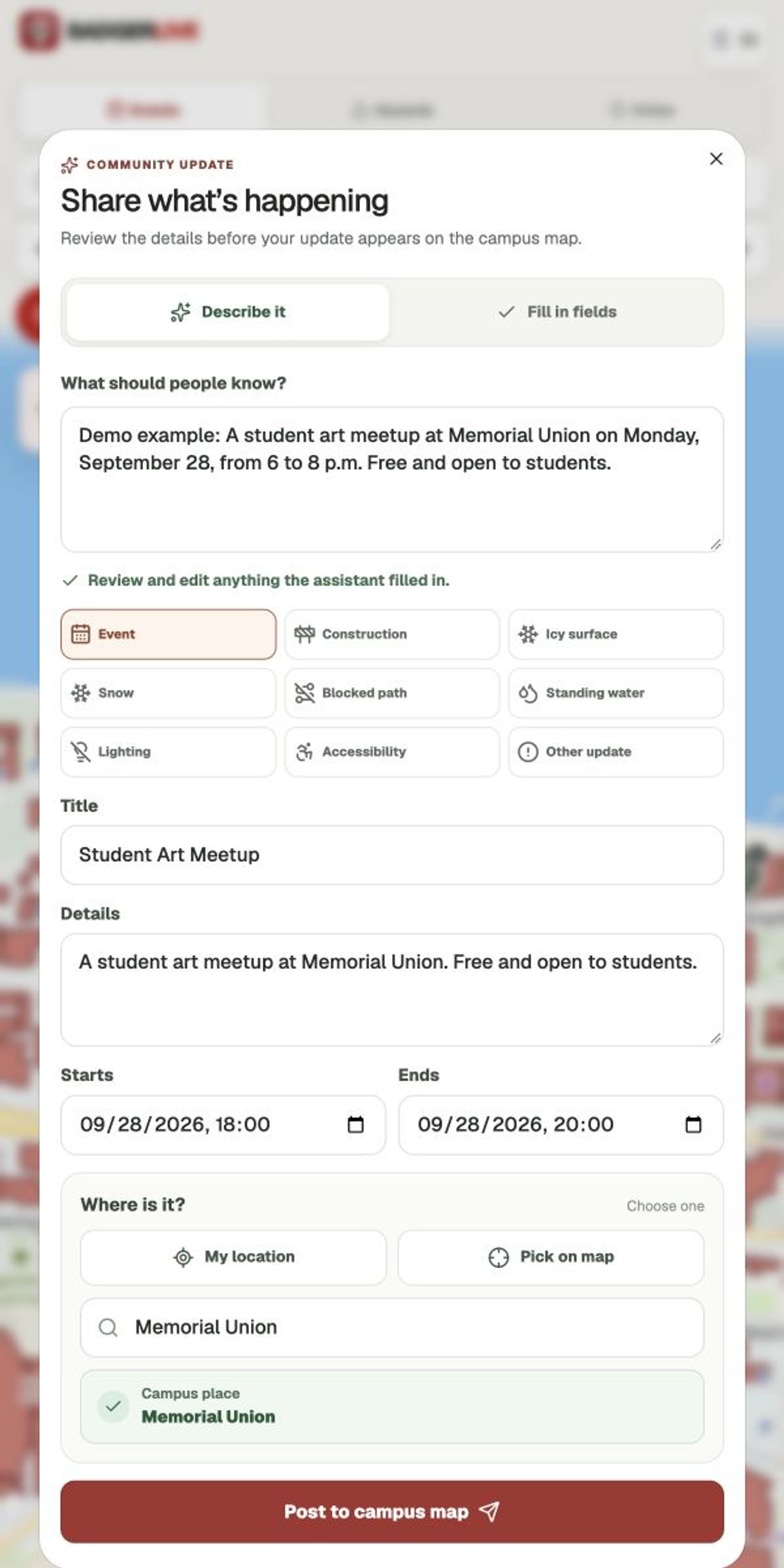
We're extending this foundation with conversational AI reporting. Instead of filling out complicated forms, a student should be able to open Badger Live and say, "There's ice blocking the wheelchair ramp outside Van Vleck Hall."
The assistant is designed to understand natural language, use the student's current location when permitted, identify relevant details, and ask follow-up questions only when necessary. The goal is to make reporting a campus hazard as simple as sending a text message.
Our broader vision includes live community updates, duplicate detection, lost-and-found matching, and navigation that accounts for reported accessibility barriers.
How we built it
We built Badger Live as a mobile-friendly web application using Next.js, TypeScript, MapLibre GL JS, and MapTiler.
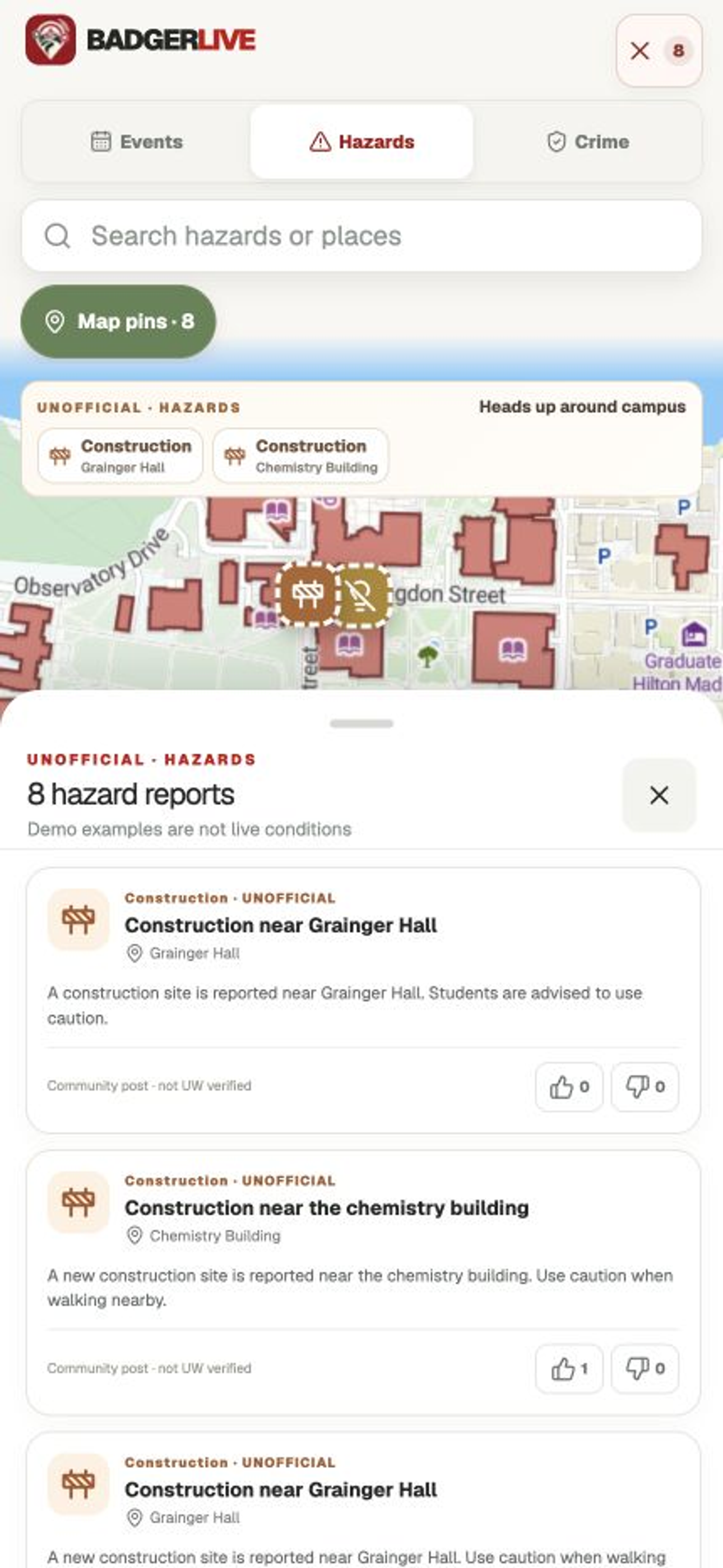
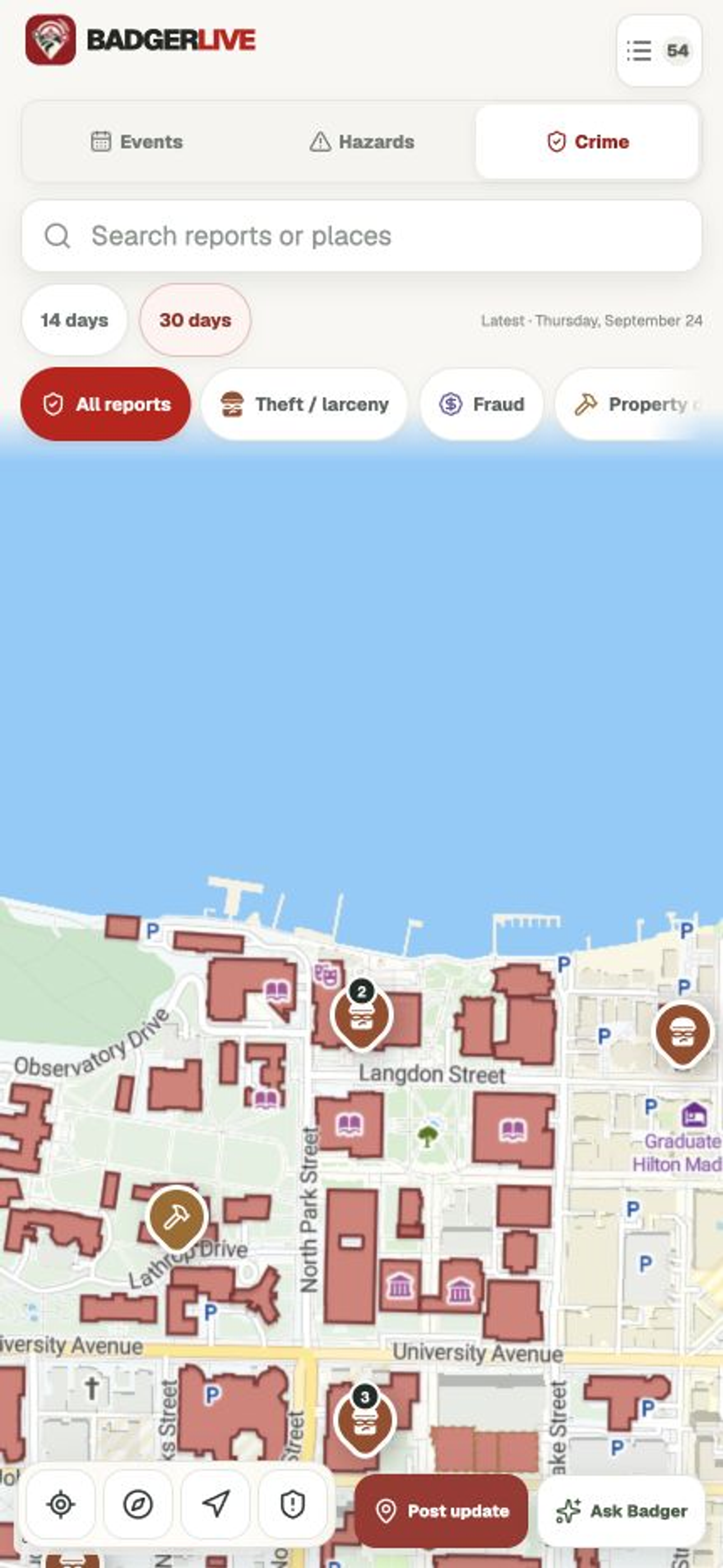
The interactive map brings together building information, university calendar events, and publicly available UWPD blotter entries. We designed custom map markers, category filters, event clustering, and building-specific information panels to make dense campus information easier to explore.
For the AI reporting system, we designed an architecture using GPT-6 Luna to interpret natural-language descriptions and determine when additional information is needed. The planned backend uses Supabase, PostgreSQL, PostGIS, and realtime WebSocket updates to support location-based reports and collaborative observations.
A central design principle is keeping official university information clearly separated from unverified community submissions.
Challenges we faced
One challenge was presenting several types of campus information on a single map without overwhelming users. We needed to balance detailed information with a clean interface that remains usable on mobile devices.
Another challenge was handling location ambiguity. GPS can identify where a student is standing, but the problem they are reporting might be across the street or at a specific building entrance. We designed the reporting workflow to combine device location, named buildings, map context, and targeted follow-up questions.
We also had to consider how to represent safety information responsibly. Historical police reports are not live emergency alerts, and multiple community observations do not automatically establish that an incident has been officially verified.
What we learned
We learned that building a useful campus application involves more than displaying information on a map. Location accuracy, data freshness, source attribution, accessibility, and minimizing user interactions are equally important.
Designing the conversational reporting system also highlighted an important principle: good AI should eliminate unnecessary steps, not introduce more conversation. If a student provides everything necessary in one message, the assistant should be able to act without asking redundant questions.
What's next
Our next priorities are completing AI-assisted reporting, introducing live community hazard updates, and connecting reported obstructions to pedestrian navigation.
Longer term, we want to expand Badger Live to include lost and found, construction updates, parking, accessibility information, and weather-aware hazard monitoring.
Our goal is to make Badger Live a campus companion that helps students discover what's happening around them and share useful information with their community.
Built With
- gpt-6-luna
- maplibre-gl-js
- maptiler
- next.js
- openai-api
- postgis
- postgresql
- react
- supabase
- supabase-realtime
- tailwind-css
- typescript
- vercel
- websockets


Log in or sign up for Devpost to join the conversation.